Ghorepani Poon Hill Trek Overview
The trekking in Nepal through the Ghorepani Poon Hill passes a few days in the Annapurna Conservation Area (ACA). This part of the mountain range lies in Western Nepal.
On one level of interpretation, this trekway actually starts and ends in Pokhara, which is not merely another beautiful and picturesque valley but a city that can be conveniently reached from Kathmandu by car for 6 to 7 hours. As an alternative, you can also hire a helicopter between the two cities. Gurung and Magar are the predominant hill tribe communities who welcome you into several mountain villages during your trek.
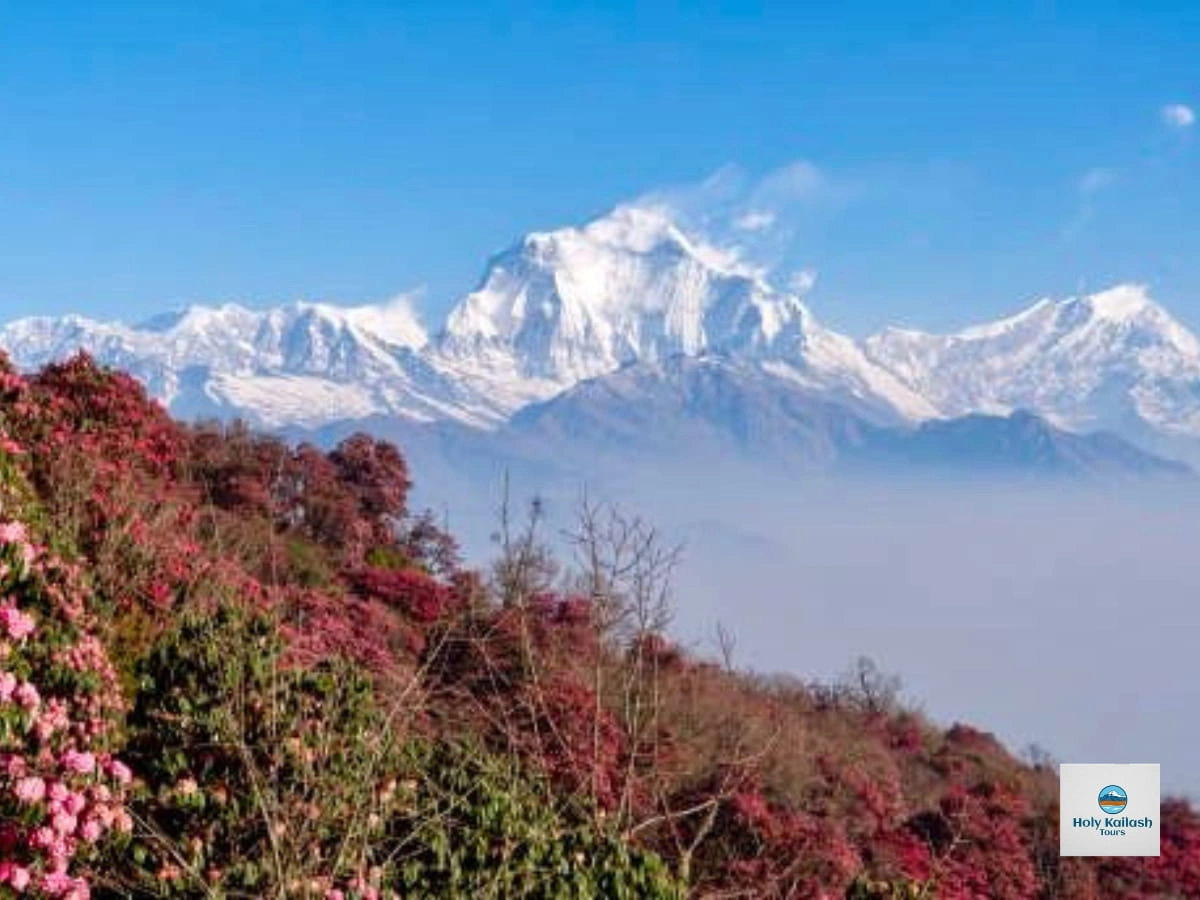
At an altitude of 3,210 m (10,531 feet), Poon Hill is the peak point of the whole trek. For instance, if we take a picture of Poon Hill as a tourist destination, besides the sunrise, we will get the view of all Himalayan peaks in the surrounding, which is really stunning and mesmerizing. Sure thing, seeing such landscapes will take away your breath and make you realize that the trek of the whole 5 days was absolutely worth it.
Generally speaking, the Ghorepani Poon Hill trek is a five-day hike; only one day is a six-hour hike, and the rest of the days are between four hours five-hour hikes. Accommodation at a tea house or guest house with availability of combined meal and lodging deals. Poon Hill View:
Teahouses: We provide accommodation at a Teahouse only—a Teahouse/guesthouse. (It is the type of local village establishment with no hotel or hostel amenities, just a local lodge with a room and a shared kitchen and toilet). Best time to trek: March-June (spring), September-November (autumn). The Ghorepani Poon Hill Trek is most often chosen if the person is a first-time climber in the Himalayas. Naturally, beginners are more likely to seek less demanding hikes rather than, for example, the Everest Base Camp (ABC) hiking, etc.
Low Adventure and Most Prominent Trek in Nepal
Do not let the word "trek" discourage you. The Ghorepani Poon Hill trek is rated as being a rather easy/moderate level of difficulty, and because of this, with a little bit of basic preparation, you (and any fit adult) would be more than enough to get through it.
Really, there are some sections of steep uphill (most of all the stone staircase towards Ulleri and the early morning hike to Poon Hill), but these are really quite manageable. In particular, if one does them slowly and casually.
This is, of course, one of the ideal choices for Nepal Ghorepani trekking for: During all the Ghorepani trekking, there will be villages where you can stay and rest so you will not be trekking the middle of nowhere without shelter or food. The trail is well-worn, and that means one need not take the risk of losing his way or getting into some kind of jungle.
On the flip side, it is not an easy trail, and matters such as height, temperature, and strength will still be factors. We are well-worn; take a look at the difficulty aspect later
Marvelous Sunrise from Poon Hill
This is the ultimate. Miraculously the Ghorepani Poons Hill sunrise trek pulls people from every corner of the globe, and it's worth it. As dawn breaks, you are awakened at 4:30 from your sleep in Ghorepani village.
As so cold is it, and with the dark is it, and you are sure to think of yourself as crazy for having signed on to it. Then you hike 45 mins up towards Poon Hill with everyone else, using your headlamp, until you reach the mountain-top viewing platform and morning begins to set in.
This is so hard that it is practically impossible to describe these two hours without sounding rather melodramatic. The ranges of Annapurna, Dhaulagiri-Machhapuchhre (Fishtail), Nilgiri, and Hiunchuli all begin to emerge from their (obscured) histories gradually.
First as dark shapes, then as colored shapes, then as huge white abscesses of ice and rock glittering in a sun that will stay below the rim of the world, the glow striking the peaks directly. Next, the sky starts shifting every shade of orange.
Next, it shifts to every shade of pink. Then it shifts to a blazing white. Poonhill Ghorepani views from 3210 meters. Annapurna South (7219m) Annapurna I (8,091 m) is the 10th highest mountain on the planet.
Dhaulagiri (8,167 m) World 7 th highest Machhapuchhre (6,993 m) the holy "Fishtail" summit Hiunchuli (6,441 m)Nilgiri. 7,061 m The Ghorepani Poon Hill experience is about going beyond so much more than checking off an 'overview.'
It's also one of the few vantage points where, within such a short span of time, you can get a wide 360-degree view of mountain ranges that stretch as far as your eyes can see. This makes it one of the most photographed spots in the entire Himalayan climbing area.
Why Book with Holy Kailash Tours
Holy Kailash Tours Compared to other trekking companies in Nepal, these are some aspects that can make Holy Kailash Tours special in this particular route. We are no strangers to organizing treks in the Annapurna region. Our professional and friendly guides are qualified by the Nepal Tourism Board and have very good knowledge on the Ghorepani village trails in all seasons. In fact, they are very versatile and can change the pace, timing, or even the route of your trek based on your capability and comfort level. Our strengths
Qualified, highly trained, and very skilled trekking guides holding valid NTB licenses and equipped with certified first aiders and informative guides on the Gurung and Magar culture by experienced local people, allowing for deeper understanding and appreciation at the local level
Personalized trekking packages based on customers' fitness, travel dates, and budget Arrangement of airport transfer to Pokhara and Kathmandu so you are not left stressing to find a taxi
Inbound and outbound assistance and travel support from/to airports and other destinations and emergencies, 24/7 At busy seasons, our staff can also book tea houses in advance for you so that you get a good night's rest and not lose time searching for a room. In advance of your arrival in Nepal, we take care of getting your permits, transportation, and daily logistics settled.
We also do the bookings and preparations for those who plan to combine their Ghorepani Trek in Nepal with the Annapurna Base Camp tour, the Mardi Himal hillside trek, or the Pokhara cultural tour.
Mountains Seen During the Poon Hill Trek
The Poon Hill hike would be more than enough of the hiking in its own right, as one gets to enjoy the view of numerous mountain peaks on top of those visible from Poon Hill. One may get a good view of the Annapurna mountain range from the village of Ghorepani, and it will be visible in the ridgelines between Tadapani and Ghandruk as well as the lower Tikhedhunga trail area when the weather is good.
Main peaks review:
Annapurna South (7219 meters): Poon Hill is where this mountain reaches full viewability on the northern side.
Dhaulagiri (8,167 meters): Dhaulagiri is one of the eight thousanders identified on the globe, and it stands among these as the second highest.
Machhapuchhre (6993 meters): It is a sacred mountain to Hindus. It is the "Fishtail" mountain and also an example of just a few mountains whose summits have not been reached yet.
Nilgiri (7,061 m): It is a series of peaks that shine the first morning light beautifully.
Hiunchuli (6,441 m): This mountain is special, as one can sight its peak from walking along diverse paths.
Multiethnic Culture Around the Valley
The trek to Ghorepani Poon Hill does not simply mean a mountain hike. In the village of Ghorepani and the downhill route to Ghandruk, several village communities, who have been living on these hills since their very beginning, are passed by.
Mainly living in the mountainous areas, the Gurung people (called Tamu in the local language) make up the dominant population there, with Ghandruk being an illustration of the most important Gurung settlement in Nepal.
Historically, they connected with the Gurkhas' martial tradition, and their cultural tradition was quite varied and involved weaving, animistic practices, and various festivals that followed the agricultural cycle. Another indigenous group of Nepal, the Magar communities, inhabit the lower part of the Ghandruk Ghorepani trek path.
It's the journey to the villages that will give you a lot to observe:
Carved wooden window Traditional stone houses with slate roofs
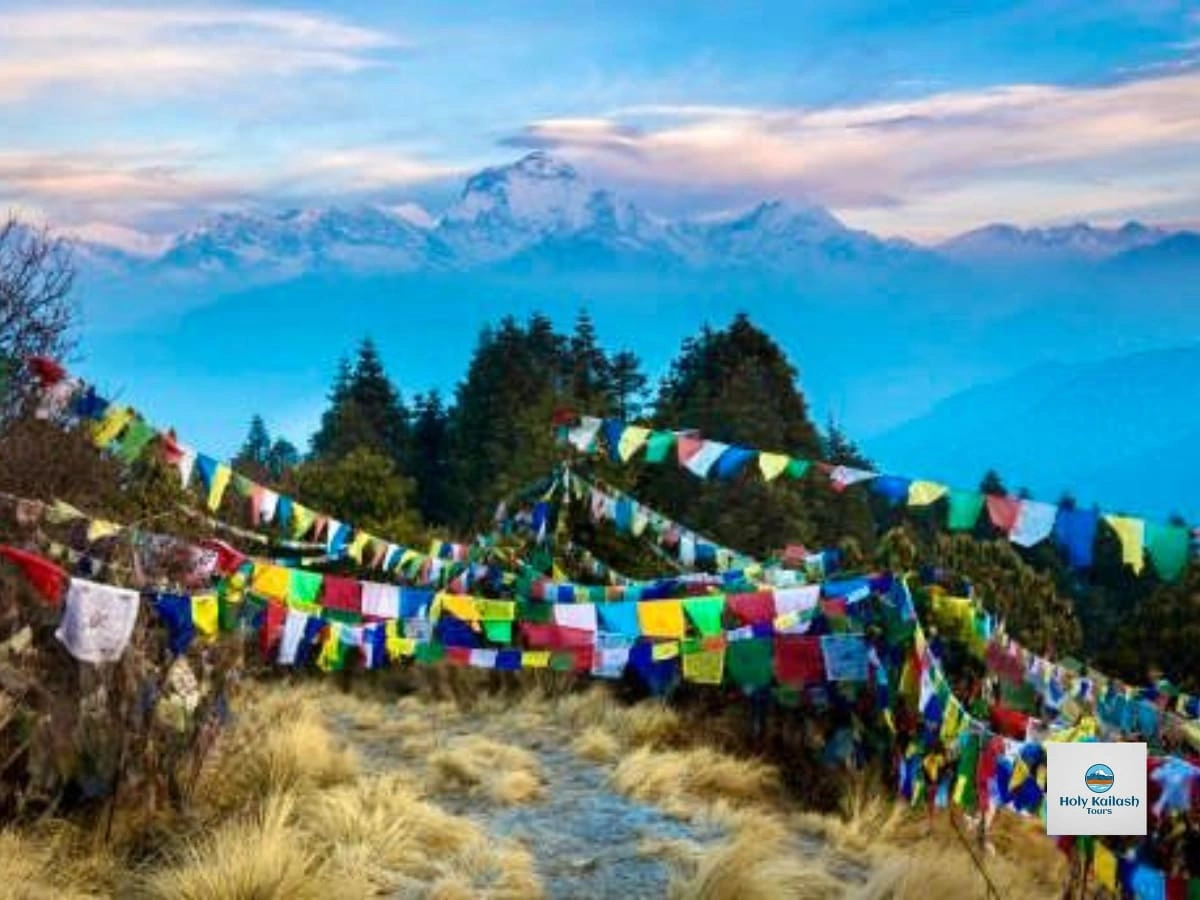
Mani walls and prayer wheels at the entrances to villages
Rhododendron-lined paths used as daily walking routes by locals
Teahouses run by local families, often grandmothers cooking dal bhat while the grandchildren do homework nearby
Why of the trip will be the food only because, for example, dal bhat, which is a type of lentil dish, rice, and vegetables, will be served in such places, and it usually comes with refilling the plate as much as you want in a tea house or a guest house. You can also expect to find there fresh-baked bread, honey produced locally and during the harvest time, and potatoes grown on the terraced farms you pass on a daily basis.
Mixed among the beauty of the mountains, one of the highlights you're going to appreciate about the journey through Ghandruk to Ghorepani will be this unique cultural flavor. The landscape of the ranges alone will be the showpiece, but without the people, the trip would be a hollow shell.
Best Time to Do the Poon Hill Trek
The Ghorepani trek has four seasons. Nepal has four seasons. Every has its own taping season, the best time to make a trip, and blue & white-flawed yellow-red-pink The mountain is covered with well-decorated R-1-do-dendrona blooms, which are the most eye-catching views. At the height of about 2,000–5,000 meters, it is likely you would have a 40-degree coma camera ready.
The days are warm and the nights are cool. It is usually clear, and the mountains can be seen most of the time, but it's not unusual to have a haze in the middle of an April afternoon.
Autumn (Sept-Nov) is the 2nd peak season and possibly the best season for mountain panoramas. With the fresh air, the peaks appear near and crisp following the summer monsoons.
The days are warm and the nights cool. The trucks are busy and in good shape. This one is the best time. During the months of November to February, winter may be cold. In particular during nights at GHorepani when snow is a real possibility. But they tend to be quieter months, and the mountain views are spectacular in the sunshine.
Tough the cold, you're going to have to do it with your gear; winter is a fantastic time to visit. The best time is the monsoon season (Jun-Aug), when it rains day and night, trails become slippery and treacherous, leeches are in plenty in the lower trails, and the summits are enveloped in clouds for much of the day.
Yet, the scenery is green and lush, and the frugal can handle the trek then. Based on the available data, the winter and summer months seemed less effective for those trekking the Ghorepani region, while the best time of year would seem to be March-May and September-November.
Ghorepani Poon Hill Trek Difficulty
Now let's be clear that this trek is not what most people have in mind. The Ghorepani Poon Hill Trek is an easy- to moderate- trek. The trails are clear and well-marked. This is absolutely the longest walk I have ever done, but it's not technical in any way.
There is no glacier crossing and no technical navigation. But it's not the walk to the shops in town either.
(days 1, 2, etc.) you face rocky steps and muddy switchbacks and sometimes get a long uphill stretch. The hardest physical thing to do is the partial climb from Tikhedhunga to Ulleri.
It is a continuous, unbroken stretch of roughly 3,400 stone steps. Everyone found it tough, but it is very doable at a slow pace.
After Ulleri, the trail becomes much flatter and easier. Consider also your excursion to Ghorepani, in which the panoramic terminus is at 3210 m (10523 ft).
Altitude sickness at this level is not quite a frequent thing, but it is a possibility, though. This is in particular true if someone coming from the level of the sea has not the chance to acclimatize.
To minimize this hazard, it is better to take a day off in Pokhara (820 meters) before setting out and go up gradually.
Healthy adults of average fitness who walk/jog regularly. Teens over the age of 14, with a parent; regardless of whether they are a trekker before the study or not. Preparation tips:
Walk for 45 minutes to 1 hour each day to get into shape before a trip, and as much time as allows.
This will be very useful for the hiker, as it will allow him/her to uphold the stamina necessary for the entire trip, including a stair-climb with a backpack-carrying hike gear.
Avoid drinking any alcohol before the trek. To get through a hike, have enough water.
If bringing all your stuff is stressful or it is difficult to get breath at times while going up the hill, you can hire a porter. The porters will carry your luggage, so you will have less effort while trekking.
Though, it still means that you have done the major effort of the climb while your porter carried your belongings.
Poon Hill Trek Short Trekking Route
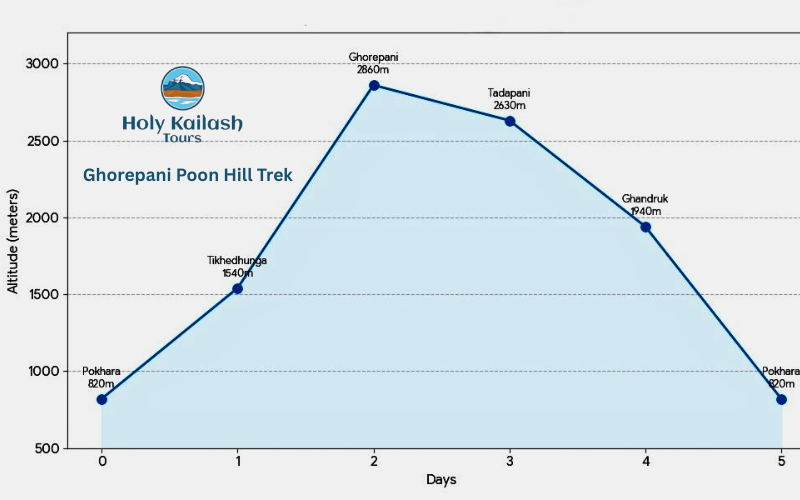
Pokhara (820 m). You reach Nayapul after you drive and leave the vehicle here.
Nayapul (1,070 m). The trekking to Tikhedhunga (1,540 m) starts here; this is also the place where you will have your first night of sleeping while walking.
Ulleri (1,960 m). The trail will change its nature from stone steps to the forest.
Ghorepani (2,860 m). Ghorepani itself is an attractive town filled with many tea houses, the place trekkers like to stop at, and the Poon Hill hike starts from here. Poon Hill is the place where the sun rises with one of the world's most picturesque views.
Tadapani (2,630 m). You take over eastward hiking until you reach
Ghandruk (1,940m). one of the mainly inhabited villages by the Gurung people who are living in it also, which marks the beginning of the downhill part of the journey.
Nayapul (1,070 m). You are here at the end of your trek, and then you go back to Pokhara via car. Although trekking from Nayapul to Ghorepani for 2 days is among some of the most charming treks, trekking from Tadapani to Ghandruk will be the major hike and the only one that is going to be done on foot.
Possible Side Treks from the Poon Hill Trek Route
One advantage of the Ghorepani Poon Hill Trek is that it's located quite close to one of the real jewels of the Himalaya, Annapurna, with amazing trekking options radiating from the trailhead itself. So if you happen to have a few days free, there are real options available.
Annapurna Base Camp Trek(7 to 12 days) After biking away from the Annapurna and Mach Khanghu massifs to the west by doing the 10-day trip of the Poon-Ghorepani area, the opportunity to do the complete 4 days through the highland forests till Annapurna Glacier (4,130m) presents itself. We would have the first views of the mighty peak and more insight into the conditions, and because of this, this walk would in fact improve the whole experience.
Mardi Himal Trek (5 to 7 days): this route is a little bit less traveled. During this trip, you will climb to a night at 4,500 meters high. From your ridge station, you will get the fantastic mountain view of Machhapuchhre as well as Annapurna South, which are very delightful to watch. Besides, it is also feasible to link up this trekking route with the main route to Ghandruk so that you will have a marvelous 10-day walking schedule.
Khopra Ridge Trek (7 to 8 days) A tranquil, though more recently built, trail that heads south over the Annapurna range and up to the high points of Khopra Danda (3,660 m) and Khayer Lake (4,800 m). Perfect for anyone who wants to reach the max and plus (with less traffic) in an absolutely stunning environment.
Mulde View Point Trek (2 to 3 days) A slightly shorter side trip reaching the village at 3,635 m, which offers a great view down onto the Dhaulagiri range and the village itself is far range,crowded than Poon Hill. If one or more of these extensions appeal to you, the knowledgeable travel consultants at Holy Kailash Tours will be pleased to add it to your itinerary. It is just a matter of the days you devote to it and the overall itinerary.
Read Before You Book Ghorepani Poonhill Trek
Number of practical points to be noted before you book for the Ghorepani Poon Hill trek. Permits and TIMS Card: For this trek you will require two permits. Budget around US$10 for the Trekkers' Information Management System (TIMS) card and about US$30 for the Annapurna Conservation Area Permit (ACAP).
Our team at Holy Kailash Tours will arrange both of these before your trek: Travel Insurance: Ensure you have good travel insurance that includes trekking and emergency evacuation. Essential. The cost of helicopter evacuation from the Annapurna area with no emergency cover varies from $3000 to $5000 USD.
Trekking Equipment You don't need any special equipment for your trek, just some essentials: Layered clothing (base layer fleece waterproof jacket) My trekking boots, with ankle support (broken-in before) Walking poles (mainly on the way down and when going up and down the stairs in Uller i) Headlamp, for this early morning walk to Poon Hill) Sunscreen/sun block, a hat, and sunglasses.
There is an ATM at ATM, and the Internet at Pokhara has many ATMs.
Once you are on the trail, an ATM is the only option, as the cash is the only choice. Throughout the Poon Hill trek, the internet will be available in tea houses. Still, most of them will charge for using it (around 1–2 US dollars per day), and the speed is very slow. You must download your maps and other information before leaving Pokhara. Mobile networks Ncell and NTC have coverage while climbing Ghoroppani Poon hill.
The reception is stronger in Ghandruk than Ghorepani. Do not rely on your mobile to guide you. Use a paper map or download an offline app. Charging/Amenities Hot showers are offered for roughly $2-3 USD at most of the teahouses. If you need to charge up your phone or camera batteries, it will probably be an extra dollar or two USD. Bring a power bank.
Altitude Awareness: For all those not feeling well already, Poon Hill is situated 3210 meters above sea level. That shouldn't be a problem for most if you're patient in your ascent. Symptoms of altitude sickness are headache, nausea, and dizziness.
If it occurred, come on down as soon as possible and don't push on. Guides and Porter says: Guides are recommended, in particular for the inexperienced trekker. Porters are available to carry your main bag (up to 15 kg), so your walk-up to Ulleri is a far more enjoyable one.
Ghorepani Poon Hill Trek Cost
The first thing first will be the cost of the Ghorepani Poon Hill trek, which totally depends on which services you include, the size of your group, and if you hire an accompagnator and porter. For instance, it will be like this: Permits:
TIMS Card: US dollar 10 (roughly) ACAP Permit: US$30 (about) Getting to and from: By private jeep for getting to Nayapul from Pokhara, one way: from $30 to $50 USD approximately Come back by jeep for getting from and away for a guide: 30-50 USD approx. again.
Licensed trekking guide: 20 - 30 USD/day for a licensed trekking guide fee During the 5-day trek: about $100 - $150 US dollars in total for the porter guide: 18 to 25 dollars.. US /day For a 5 day trek: (about $90 to $125 USD in total) Lodging at Teahouse:
The lodge fee per night is about USD 5 - $15 (occasionally, if you eat in a teahouse, the lodge charge gets waived. ) Total for the accommodation: $25 to $75 USD (5-day stay) Feed:
A meal can be expected to cost between $5 and $8 US depending upon what teahouse and mountain location you happen to be in.
Daily budget: a limit of between $15 and $25 USD For a period of 5 trekking days, you might have to budget yourself around $75 to $125 USD.
Sleeping bag: per day about $3 - $5 USD Trekking poles: daily cost approximately $4 to $5 USD Down jacket: per day roughly about $5 -$8USD Typical Package Price from Holy Kailash Tours:
Budget group selection: Between $450 & $550 USD for a person's guide permit, transport, teahouse accommodation, meals Standard private package: 600-800 USD for one person.
Travel expenses may vary based on the time of year and the number of people in a group. Guided solo trekkers who can tend to their needs for food and accommodation on their own will tend to face costs of around US dollar 400 to 550 for the expenses of the Ghorepani Poon Hill trek.
Ghorepani Poon Hill Trek Elevation Profile
Elevation Summary Table
|
Day
|
Destination / Point
|
Elevation (m)
|
|
Day 2
|
Pokhara
|
822
|
|
Day 3
|
Kande
|
1,770
|
|
Day 3
|
Forest Camp
|
2,520
|
|
Day 4
|
High Camp
|
3,580
|
|
Day 5
|
Mardi Himal Viewpoint
|
4,500
|
|
Day 5
|
Low Camp
|
2,970
|
|
Day 6
|
Siding Village
|
1,750
|
|
Day 7
|
Kathmandu
|
1,350
|
Ghorepani Poonhill Trek Highlights
- View of sunrise from Poon Hill: If one really wants to take a memorable picture of the Himalayas that they have walked through, Poon Hill is the perfect spot.
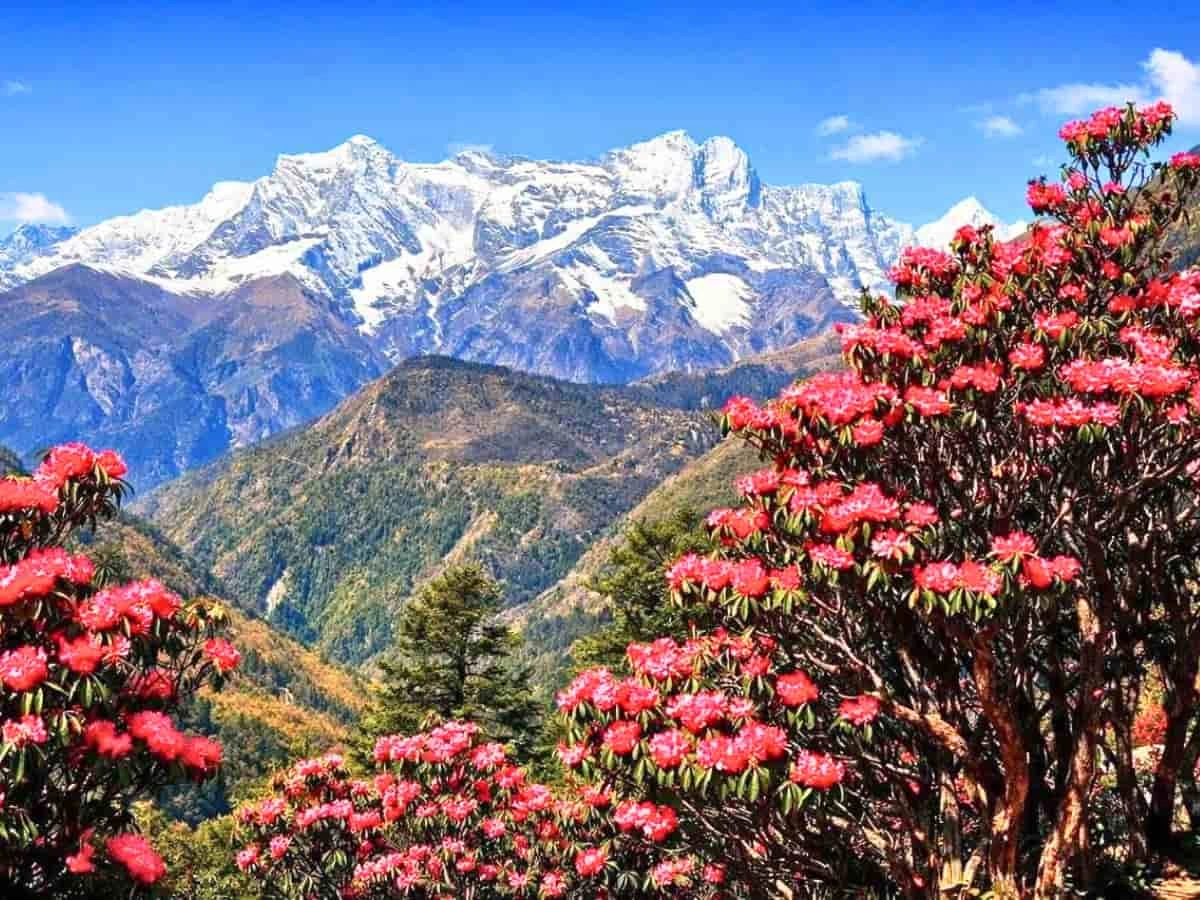
- Rhododendron flowers: Ulleri to Ghorepani is such a beautiful rhododendron-blooming route that it looks great, mainly from March to April.
- Beautiful Himalayan scenes: You can include five mountain peaks in a single photo: Annapurna, Dhaulagiri, Machhapuchhre, Nilgiri, and Hiunchuli.
- Natives in ethnic traditional houses: Actual inhabitants from Gurung or Magar background, and they are the ones that you can interact with, not the ones who pretend to be tour operators.
- Tea-house trekking: Comfortable beds and delicious hot meals are served at each and every rest point.
- Trekking for everyone: Whether you are a person who does not know how to trek properly or have had some treks done and now wants a short and sweet, all are welcome to have a go of the easy trek from Ghorepani Poon Hill.
- Diversity in religion and traditions: Seeing Buddhist monasteries, mani walls (piles of prayer stones), and local celebrations (if they are on the program).
- Options for more treks: You can get a few of the beautiful treks done with just a few extra days on the Annapurna circuit—Annapurna Base Camp, Mardi Himal, Ghandruk village.