Why Trek to the Annapurna Circuit with Tilicho Lake?
The Annapurna Circuit with Tilicho Lake has traditionally been regarded as one of the best trekking routes in the world. But with the addition of Tilicho Lake, an already amazing journey becomes a truly extraordinary Himalayan adventure. The detour to Tilicho Lake not only offers trekkers one of Nepal's most breathtaking natural attractions but also a memorable high-altitude experience.
Note that, unlike many Himalayan lakes that require separate expeditions, Tilicho Lake naturally fits into the Annapurna Circuit itinerary. The route bifurcates at Manang, and Next rejoins the main circuit, allowing trekkers to see both iconic spots in a single adventure.
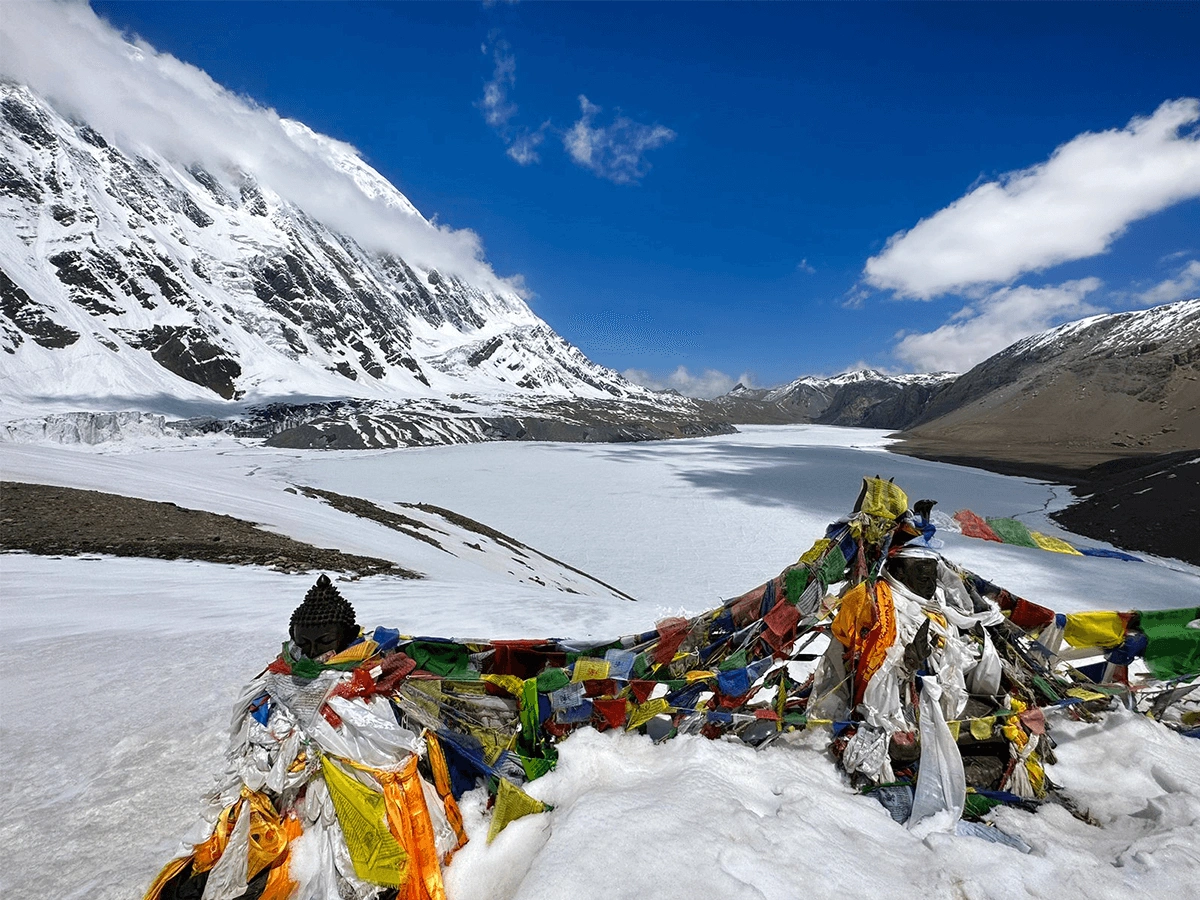
The lake is situated at the base of majestic, snow-capped peaks, producing scenery incomparable to anywhere else in Nepal. In calm weather, the crystal-clear turquoise water serves as an almost perfect mirror of the surrounding mountains, creating marvelous photographic opportunities. Even in winter, the lake is covered with ice most of the time, but as spring progresses, it gradually reveals its stunning blue hue.
What makes the trip even more thrilling is that the trekkers meet the Gurung, Manangi, and Thakali villagers, whose cultural heritage is so well preserved that it seems as if time has stood still. The deep-rooted Buddhist tradition in the region is visible in the ancient monasteries, colourful prayer flags, chortens, and mani walls.
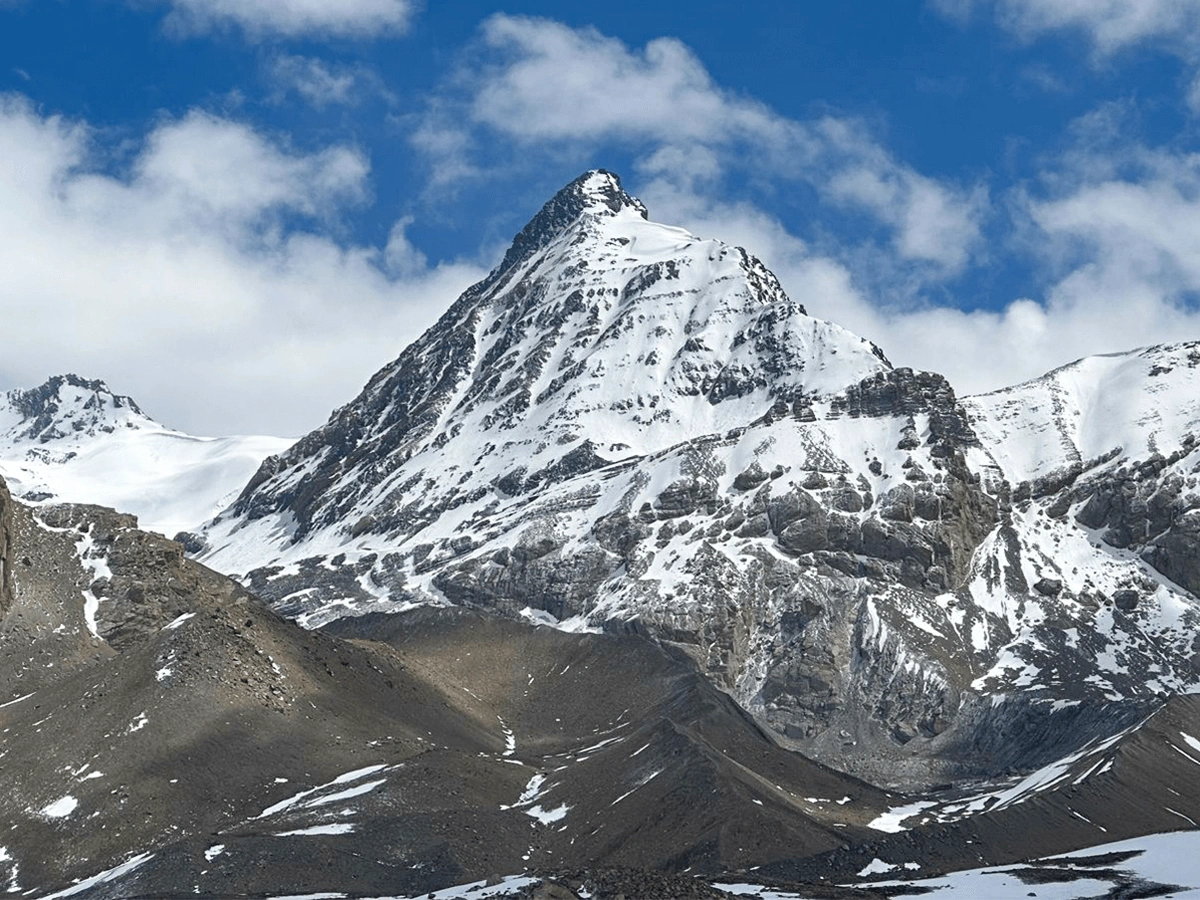
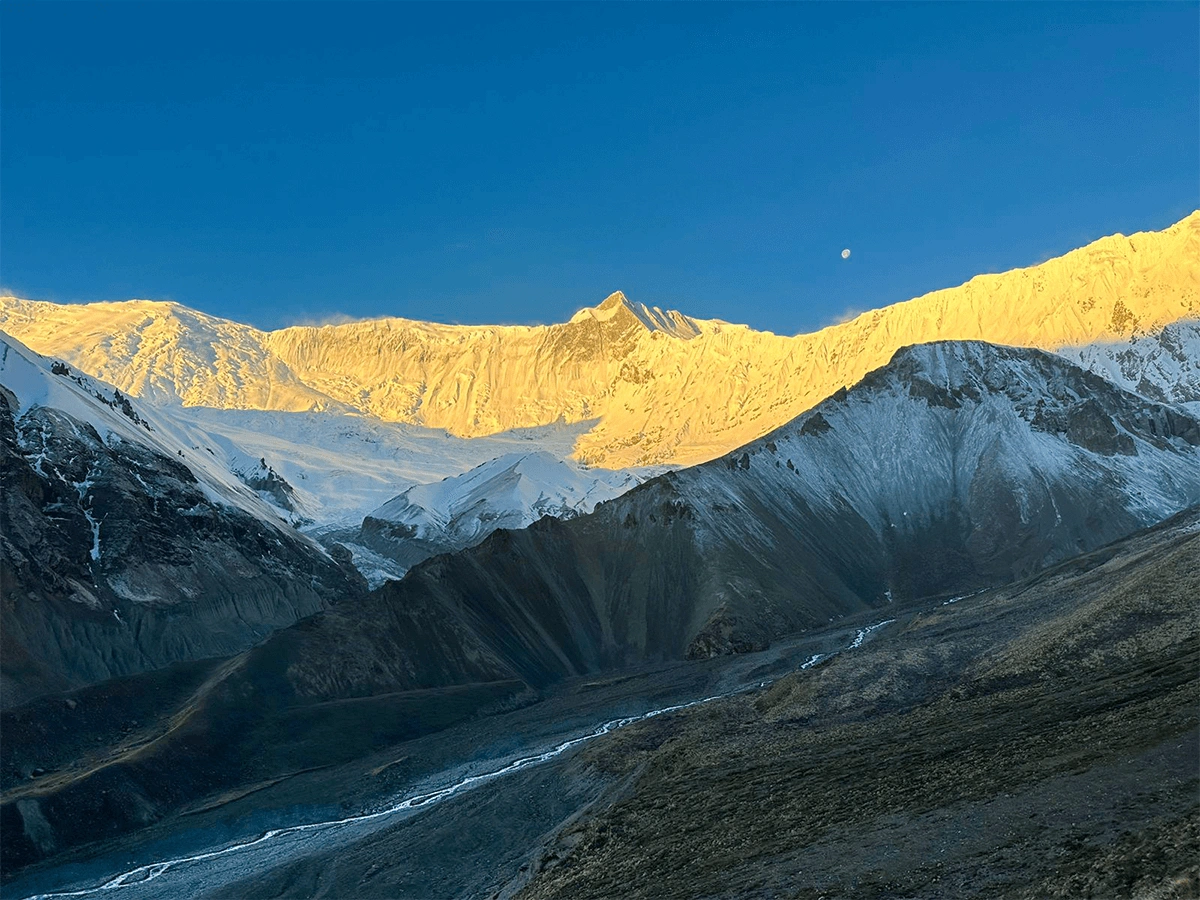
Besides its great scenic beauty, the Annapurna Circuit with Tilicho Lake offers several fantastic mountain views along the way. The view of Annapurna II, Annapurna III, Annapurna IV, Gangapurna, Tilicho Peak, Chulu East, Pisang Peak, and Dhaulagiri is a regular feature of the skyline. You will experience a new one every day, ranging from subtropical forests to high-alpine deserts.
If you are looking for a mix of natural beauty, cultural richness, physical challenge, and personal achievement, very few treks can come close to offering you the Annapurna Circuit with Tilicho Lake.
Is the Annapurna Circuit Trek with Tilicho Lake Very Difficult?
The Annapurna Circuit with Tilicho Lake is a moderately difficult trek that can also be challenging at times. While it doesn't involve technical climbing skills, altitude, long walking days, and varied terrain together make physical fitness and preparation very important.
Most trekking days involve between five and eight hours of walking. The trail features stone staircases, rocky paths, suspension bridges, steep ascents, gradual descents, and in the vicinity of Tilicho Lake, exposed mountain trails. Some landslide-prone sections between Shree Kharka and Tilicho Base Camp require very cautious navigation.
The main difficulty arises from the altitudes reached. When the walkers climb above 3,500 meters, the risk of altitude-related illness also increases. Acclimatization is very important, mainly in Manang, where most itineraries provide a rest day before heading to Tilicho Lake.
The trek's highest point is Thorong La Pass at 5,416 meters, but Tilicho Lake itself is also at a high altitude of 4,919 meters. In these parts, low temperatures, low oxygen levels, and the ever-changing mountain weather can be physically daunting even for experienced walkers.
Even so, the trip is doable for any person who is reasonably fit, really wants it, and has a well-thought-out plan. Regularly doing walking, hiking, cardio exercises, and leg-strengthening exercises before the trip will make the trekking experience much more comfortable.
And getting help from knowledgeable local guides makes the trek safer because they can provide directions, monitor acclimatization, and adjust the plan as needed.
Elevation Gain: Tilicho Lake at 4,919 m (16,138 ft)
On this trekking trip, reaching Tilicho Lake at an altitude of 4,919 meters (16,138 feet) above sea level is the main achievement one could be proud of.
This incredible alpine lake is among the world's highest lakes reachable by trekking.
The journey to the Lake typically starts in Manang, follows the trail via Shree Kharka, and ends at Tilicho Base Camp. After reaching the base camp, travelers set off before sunrise so that by the time they reach the lake, it is in the early, idyllic morning hours. Uphill sections are interspersed with gentle climbing before arriving at the lake.
At close to 5 000m, the air contains much less oxygen than at sea level. Quite often, hikers realize they move more slowly, they breathe more heavily, and fatigue comes more quickly. Such are the natural changes that occur at high altitude, which is why people should climb slowly and get properly acclimatized.
Being at Tilicho Lake is something you will always remember. The strikingly blue water of the lake, surrounded by the sheer walls and the snow-capped peaks, presents a wonderful contrast to the desolate Himalayan terrain. The quietness, isolation, and tranquility are what most people cite as their most special experience in Nepal.
Even though the peak is high, under normal circumstances, with appropriate acclimatization and a steady pace, most hikers will reach the lake without any problems. Consuming enough water, avoiding alcoholic beverages, eating well-balanced meals, and recognizing the early signs of altitude sickness are all factors that can help make the experience less risky.
Annapurna Circuit Trek with Tilicho Lake Trip Information
Including Tilicho Lake in the Annapurna Circuit will probably take you anywhere from 15 to 19 days, depending on which itinerary you follow and how you schedule your acclimatization. Usually, the trek starts with a drive from Kathmandu to Besisahar, followed by a local jeep to Chame, which reduces overall trekking time while still including the most scenic sections.
A gradual ascent from Chame takes the path through Pisang, Manang Shree Kharka, Tilicho Base Camp, and Tilicho Lake before descending to Yak Kharka and continuing on to Thorong Phedi. After crossing Thorong La Pass, the trail enters the Mustang region and then descends to Muktinath, Jomsom, and finally Pokhara.
Spring and autumn are the best seasons for a hike. Both March to May and September to November usually see stable weather, clear skies, and excellent mountain views. The forests of Rhododendron are in full bloom during spring, while autumn offers cool air and great sight lines.
Mostly, the route features family-run tea houses for lodging. Rooms are quite basic but can be made comfortable with twin beds, blankets, and sharing of baths in most villages. Meals usually comprise dal bhat noodles, fried rice, soups, pasta, potatoes, egg, pancakes, tea, and coffee. Due to transport issues, food choices at high elevations are fairly limited.
According to the regulations, trekkers need to have the Annapurna Conservation Area Permit (ACAP) and the Trekkers' Information Management System (TIMS) card. It is highly advisable to have an insurance policy on hand that covers the possibility of an emergency helicopter evacuation, given the area's altitude and remoteness.
Electricity is available in most villages; however, charging your electronic devices will usually require paying a small fee. Cell phone reception is patchy in some parts of the trek, and although Wi-Fi is available in many tea houses, at higher elevations it becomes slow and unreliable.
Thanks to the great infrastructure, friendly locals, and incredible Himalayan views, this trek is considered one of the most accessible high-altitude adventures in Nepal.
Side Trips from Annapurna Circuit Trek with Tilicho Lake Route
There are several interesting side excursions that can be incorporated into the Annapurna Circuit with Tilicho Lake. These side trips will provide trekkers with the opportunity to discover more of the region's natural and cultural features.
Gangapurna Lake is close to Manang and can be reached on a short walk, making it an ideal side trip. The lake beautifully reflects the entire Gangapurna Peak and the glaciers. For excellent views of the valley, the nearby glacier viewpoint is a must. Also, it is a well-known hike for acclimatization purposes.
Trek routes are the Mardi Himal Trek, the Dhaulagiri Circuit Trek, and the Mohare Danda Trek. Note that these treks can be done before or after exploring the Annapurna Circuit with Tilicho Lake (4,600 m).
Ice Lake, which locals call Kicho Tal, is perhaps the best acclimatization hike in the Annapurna region. It is quite high at over 4,600 meters, and because of this, from here, you can enjoy spectacular 360-degree views of Annapurna II, Annapurna III, Gangapurna Chulu East, and other peaks in the area. Even though it is tough, it is a great aid in acclimatization before going to Tilicho Lake or doing the Thorong La Pass.
Many trekkers linger in Muktinath for a while, celebrating their crossing of Thorong La with a visit to the sacred temples there. This is a place of worship for both Hindus and Buddhists from all over the world, attracting pilgrims and tourists from Nepal, India, and around the world
Those with some extra time could continue after Jomsom to visit Kagbeni, a beautiful village steeped in medieval characteristics and considered the gateway to Upper Mustang. The village has very narrow stone alleys, an ancient monastery, and Tibetan-style houses. In short, it is a great place to learn about the life and traditions of people living in the Himalayas.
All these side trips add a lot to the principal trekking experience: deeper cultural insights, a better way to adapt to the altitude, and exposure to nature at its most beautiful and majestic.
Annapurna Circuit with Tilicho Lake Trek Packing List
General
- Trekking backpack (40 to 50 liters)
- Duffel bag (if using porters)
- Waterproof backpack cover
- Daypack (20 to 30 liters)
- Sleeping bag (rated to at least- 15C)
- Trekking poles
- Headlamp with spare batteries
- Reusable water bottles (2 liters total capacity)
- Hydration bladder (optional)
- Water purification tablets or a filter
- Sunglasses with UV protection
- Sun hat
- Warm beanie
- Neck gaiter or buff
- Rain poncho
- Dry bags or packing cubes
- Passport and permits
- Travel insurance documents
- Cash in small denominations
Upper Body
- Moisture-wicking T-shirts (2 to 3)
- Long sleeve trekking shirts (2)
- Lightweight fleece jacket
- Insulated down jacket
- Waterproof and windproof shell jacket
- Thermal base layer top (2)
- Lightweight sweater (optional)
Lower Body
- Trekking pants (2)
- Thermal base layer bottoms (2)
- Waterproof rain pants
- Hiking shorts (optional)
- Comfortable travel pants
- Lightweight camp pants
Hands
- Lightweight trekking gloves
- Insulated waterproof gloves
- Hand warmers (optional)
Feet
- Waterproof trekking boots with ankle support
- Lightweight camp shoes or sandals
- Trekking socks (4 to 6 pairs)
- Thermal wool socks (2 pairs)
- Gaiters (recommended during snow season)
Undergarments
- Moisture-wicking underwear (5 to 7 pairs)
- Sports bras (if needed)
- Sleepwear
- Quick-drying undershirts
First Aid Kits and Medications
- Personal prescription medicines
- Altitude sickness medication (consult your doctor)
- Pain relievers
- Anti-inflammatory tablets
- Cold and flu medicine
- Anti-diarrhea medication
- Oral rehydration salts
- Antiseptic cream
- Bandages
- Blister treatment and moleskin
- Medical tape
- Gauze pads
- Adhesive plasters
- Tweezers
- Small scissors
- Digital thermometer
- Insect repellent
- Sunscreen (SPF 50+)
- Lip balm with SPF
- Hand sanitizer
- Wet wipes
Other Essentials
- Toiletries
- Toothbrush and toothpaste
- Quick-drying towel
- Toilet paper
- Tissue paper
- Biodegradable soap
- Moisturizer
- Nail clippers
- Camera or smartphone
- Power bank
- Charging cables
- Universal travel adapter
- Spare memory cards
- Notebook and pen
- Snacks and energy bars
- Electrolyte powder
- Lightweight plastic bags for waste
- Earplugs
Optional
- Binoculars
- Kindle or book
- Playing cards
- Travel pillow
- Camera tripod
- Oxygen canister (not a necessity, but a few trekkers like to have one)
- Trekking umbrella
- Sewing repair kit
- Duct tape for fast gear repairs
- Compression bags for clothes
- Small lock for a duffel bag
Trip Highlights
- Walk along the shore of Tilicho Lake (4919 m).
- You will traverse Thorong La Pass (5416m), the highest mountain pass on all of your journeys.
- Visit the holy land of Muktinath on a cultural and religious pilgrimage.
- Stroll through the scattered villages of Gurungs and Thakalis.
- Those who wish can also see other mountain ranges such as Tilicho, Nilgiri, and Annapurna.
- See the blue sheep of Yak Kharka.
- Tatopani's hot springs are great for a soak.
- Explore the Barge Monastery and Manang district.