

Introduction to the Upper Mustang Trek
The Upper Mustang Trek is a journey into one of Nepal’s most mysterious and culturally preserved regions, often referred to as the “Last Forbidden Kingdom.” Located in the rain-shadow of the Annapurna and Dhaulagiri ranges, Upper Mustang offers a landscape unlike anywhere else in Nepal—arid deserts, wind-carved cliffs, deep canyons, and ancient cave dwellings set against dramatic Himalayan backdrops.
For centuries, Upper Mustang remained isolated from the outside world, preserving its Tibetan culture, traditions, and way of life. Opened to foreign trekkers only in the early 1990s, the region still retains a strong sense of remoteness and authenticity. Trekking here feels less like a conventional Himalayan hike and more like a cultural expedition through a living museum of Tibetan civilization.
Geography and Landscape
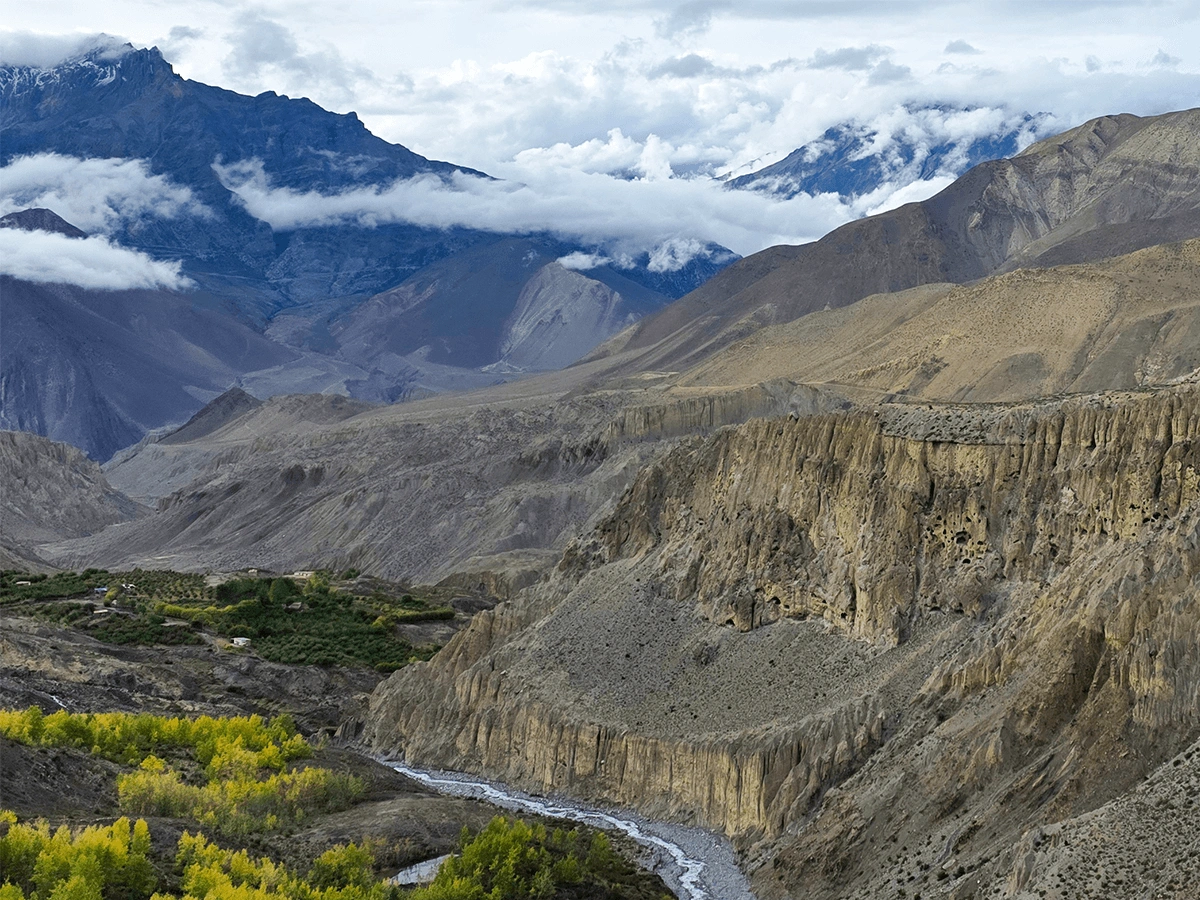
Upper Mustang lies in the trans-Himalayan zone, north of the Annapurna range and close to the Tibetan border. Because the region is sheltered from monsoon rains, its climate is dry and semi-desert in nature. The landscape is characterized by barren hills, colorful rock formations, eroded cliffs, and wide river valleys carved by the Kali Gandaki River.
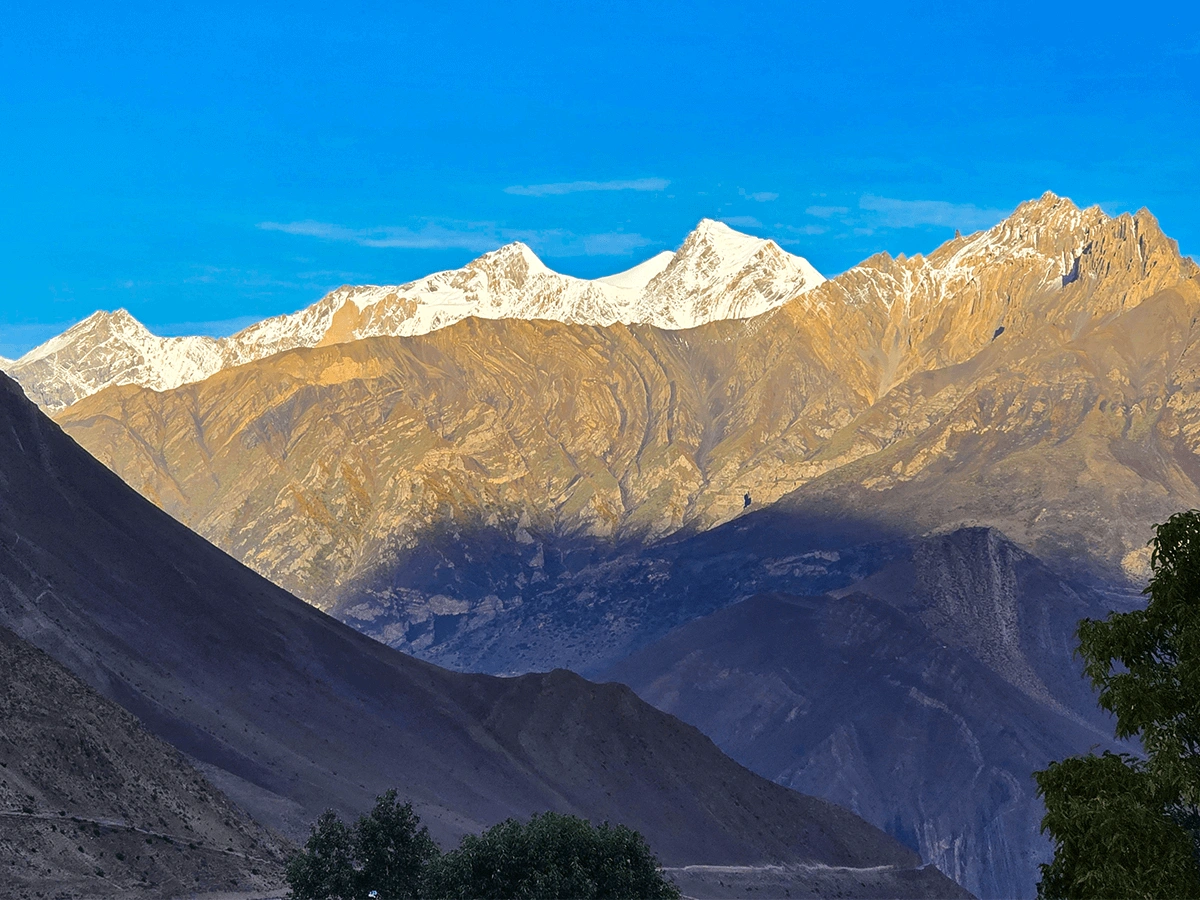
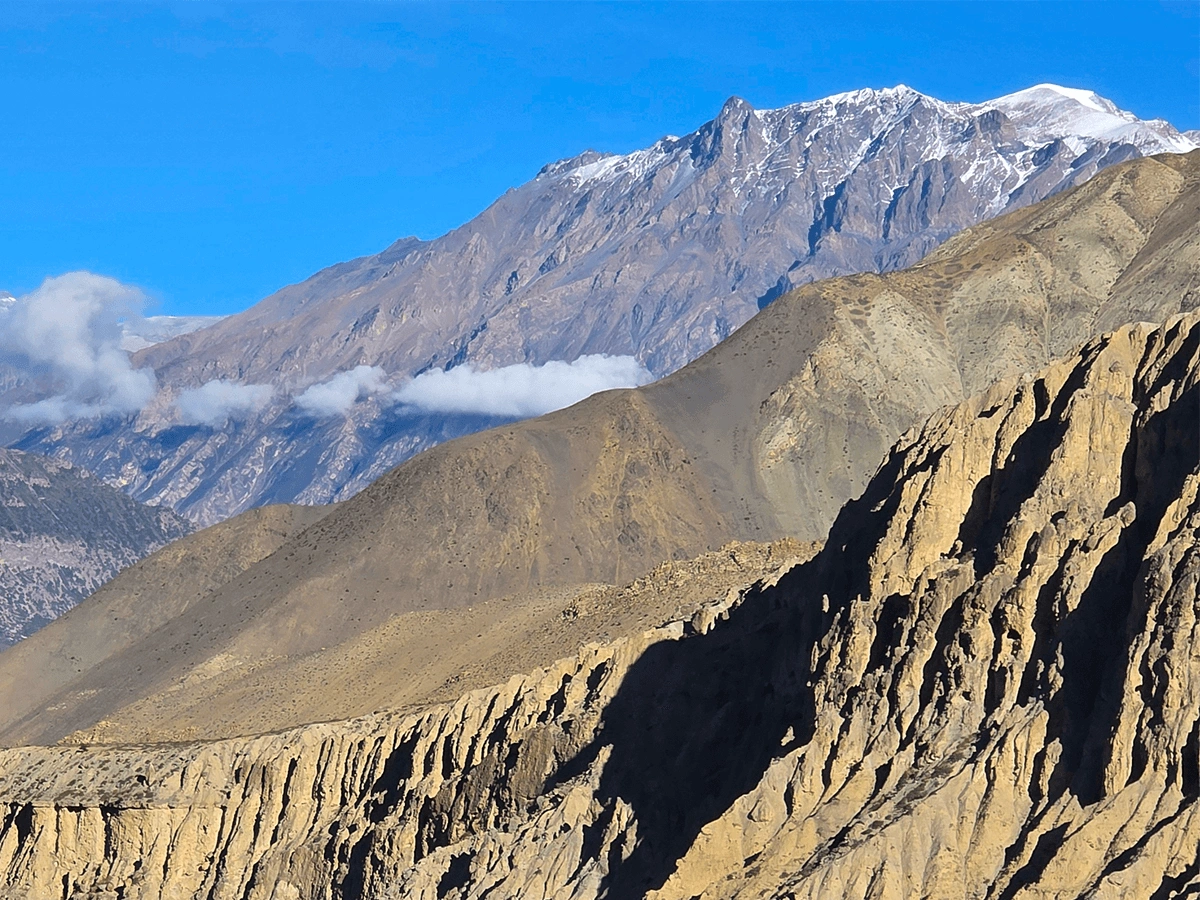
The scenery changes subtly but continuously throughout the trek. Ochre, red, and gray cliffs rise dramatically above the trail, while snow-covered peaks such as Nilgiri, Annapurna, and Dhaulagiri appear in the distance. The contrast between the dry desert terrain and the towering white mountains creates a surreal and unforgettable visual experience.
Cultural and Historical Significance
Upper Mustang is culturally and spiritually rich, deeply influenced by Tibetan Buddhism and Bon traditions. The region was once the Kingdom of Lo, ruled by a monarchy until relatively recent times. Even today, the culture, language, architecture, and lifestyle closely resemble those of Tibet.
Villages are made of whitewashed mud-brick houses with flat roofs, narrow alleys, and ancient monasteries at their center. Prayer flags, chortens, mani walls, and prayer wheels are found throughout the trek. Monasteries such as Lo Gekar, Thubchen Gompa, and Jampa Lhakhang are centuries old and hold immense religious importance.
One of the most fascinating aspects of Upper Mustang is its ancient cave systems, carved into cliff faces high above the valleys. These caves were once used as meditation chambers, burial sites, and shelters, and they remain an important part of the region’s archaeological heritage.
The Trekking Experience
The Upper Mustang Trek usually begins with a flight or drive to Jomsom, followed by a gradual walk northward along the Kali Gandaki Valley. Unlike many Himalayan treks, this route does not involve dense forests or heavy vegetation. Instead, trekkers walk through open landscapes under vast skies, accompanied by constant wind and dramatic geological formations.
The trail passes through traditional villages such as Kagbeni, Chele, Ghami, Tsarang, and finally Lo Manthang, the ancient walled capital of Upper Mustang. Walking days are generally moderate in length, making the trek physically manageable while still adventurous.
The high point of the trek is not defined by altitude but by cultural immersion. Conversations with locals, visits to monasteries, and exploration of historic villages make this trek deeply enriching.
Lo Manthang – The Walled City
Lo Manthang is the cultural and spiritual heart of Upper Mustang. Surrounded by ancient walls, the city feels frozen in time. Narrow streets, royal palaces, monasteries, and traditional homes create a powerful sense of history and continuity.
Trekkers usually spend one or two nights in Lo Manthang, allowing time to explore nearby monasteries, caves, and surrounding villages. The city offers a rare opportunity to witness living Tibetan culture in its most authentic form.
Restricted Area and Permits
Upper Mustang is a restricted trekking area, which helps preserve its unique culture and fragile environment. Trekkers must obtain a special permit and must travel with a licensed guide. This regulation ensures responsible tourism and protects the region’s heritage.
While the permit cost is higher than in other trekking regions, it contributes directly to conservation and community development, making the trek both meaningful and sustainable.
Best Time to Trek Upper Mustang
The best time to trek in Upper Mustang is:
- Spring (March to May): Mild temperatures and clear views
- Summer/Monsoon (June to August): Ideal due to rain-shadow location
- Autumn (September to November): Stable weather and excellent visibility
Unlike most trekking regions in Nepal, Upper Mustang remains accessible even during the monsoon season, making it a great choice for summer trekking.
Accommodation and Facilities
Accommodation along the Upper Mustang Trek consists mainly of local teahouses and guesthouses. Rooms are simple but comfortable, offering basic amenities and warm hospitality. Food options include Nepali, Tibetan, and simple Western dishes.
Electricity and internet may be limited in some villages, providing an opportunity to disconnect and fully immerse in the journey.
Difficulty Level and Fitness
The Upper Mustang Trek is considered moderate in difficulty. Although the altitude is not extreme, the dry climate, wind, and long walking days require good physical fitness. No technical climbing skills are needed, making the trek accessible to most healthy trekkers with prior hiking experience.
Why Choose the Upper Mustang Trek
The Upper Mustang Trek is ideal for trekkers seeking something different from traditional Himalayan routes. It offers:
- Unique desert-like landscapes
- Deep Tibetan cultural immersion
- Fewer crowds and a peaceful atmosphere
- Rich history and ancient heritage sites
- Trekking access is even available during the monsoon season
This trek is not just about mountains—it is about culture, history, and timeless traditions.
The Upper Mustang Trek is a rare opportunity to step into a world that has remained largely unchanged for centuries. With its stark landscapes, sacred monasteries, and preserved Tibetan culture, the region offers a deeply meaningful trekking experience unlike any other in Nepal.
For those looking to explore beyond the usual trails and discover a hidden Himalayan kingdom, the Upper Mustang Trek promises adventure, insight, and unforgettable memories.
Trip Highlights
- Explore the ancient Kingdom of Lo Manthang
- Experience preserved Tibetan culture and lifestyle
- Walk through dramatic desert-like Trans-Himalayan landscapes
- Visit centuries-old monasteries and caves
- Scenic flight between Pokhara and Jomsom
- Restricted area trek with limited tourists
- Rich Buddhist heritage and unique architecture