Why Choose Trishuli River for Rafting?
The Trishuli River is Nepal's most rafted river, and that's not an accident. It's close, it's beautiful, and the rapids are exciting without being punishing. You don't need previous rafting experience. You don't need to be particularly fit. What you do need is a decent sense of adventure and a willingness to get wet.
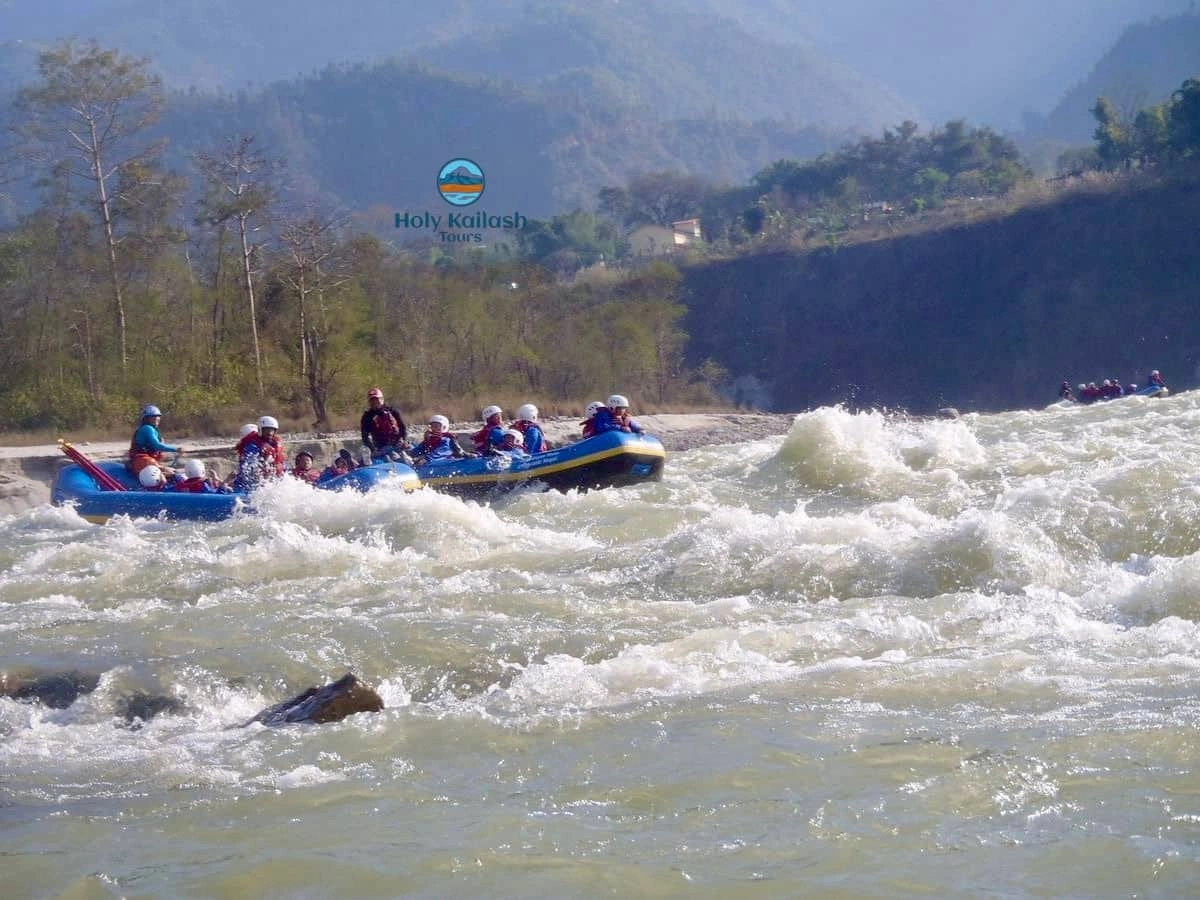
The river runs through a dramatic gorge in central Nepal, with forested hillsides dropping steeply on both sides. Between the rapids, the water calms down enough that you can actually look around and take it all in.
Why do people keep choosing this route?
- Close to Kathmandu (3 to 4 hours by road)
- Suitable for beginners, families, and groups
- Affordable compared to most Himalayan adventure activities
- Both day and overnight options
Good infrastructure, camping spots, and riverside lodges along the route
Where is the Trishuli River Located?
The Trishuli River flows through the Nuwakot and Dhading districts of central Nepal. The most popular rafting section starts at Charaudi, roughly 80 km northwest of Kathmandu, on the Prithvi Highway, the main road connecting Kathmandu to Pokhara.
This is actually one of the river's biggest selling points. You drive along the same road that runs beside the river, so getting there is straightforward. No remote trailheads, no connecting flights. Just a comfortable drive through the hills.
The river eventually joins the Narayani River further south, but the rafting section between Charaudi and Mugling is where the action is.
Best Time for Trishuli River Rafting
You can raft the Trishuli for most of the year, but conditions vary widely by season.
October to November is the sweet spot. The monsoon has just ended, water levels are full, rapids are strong, and skies are clear. This is Nepal's peak trekking season too, so it pairs well with any mountain trip.
March to May (spring) also works well. Temperatures are warm, water is manageable, and the hills around the river are in bloom.
December to February (winter) is still possible, but it will be colder. The water temperature drops, and the rapids are less intense. Good if you want a quieter, milder experience.
June to August (monsoon) is not recommended. Water levels spike dangerously, visibility drops, and landslides can affect road access. Most reputable operators, including Holy Kailash Tours, suspend trips during the peak monsoon.
Season summary:
Season summary:
| Season |
Conditions |
Recommended? |
| Oct to Nov |
Strong rapids, clear weather |
Best time |
| Mar to May |
Warm, lively water |
Very good |
| Dec to Feb |
Calm, cold |
Moderate |
| Jun to Aug |
Monsoon, high risk |
Avoid |
Types of Trishuli River Rafting Packages
Most people choose between two formats, and the right one depends on how much time you have.
One-Day Rafting Trip: Drive out from Kathmandu in the morning, raft for 3 to 4 hours, then drive back in the afternoon. You're home by evening. This is the most popular format for tourists on a tight schedule.
Overnight Rafting Trip: Drive out on day one, raft a longer section, camp on the riverbank overnight, then continue rafting on day two before heading back. This is the better experience if you want to actually settle into the river rather than rush through it.
Multi-Day Trishuli Trips Less common but available. Usually combined with cultural stops, visits to nearby villages, or linked to a Pokhara trip. Good for groups who want a slow, exploratory pace.
Trishuli River Rafting Cost and Package Details
Trishuli rafting is one of the most affordable adventure activities in Nepal. Prices vary depending on the operator, what's included, and the season.
Typical price ranges (per person):
- One-day rafting: USD 50 to USD 70
- Overnight trip (with camping): USD 90 to USD 100
- Multi-day package: USD 150 and above
What affects the price:
- Group size (larger groups often get better rates)
- Quality of accommodation and meals
- Whether transport from Kathmandu is included
- Equipment quality and guide experience
At Holy Kailash Tours, we price our packages to include transport, equipment, safety gear, a licensed guide, and meals where applicable. Nothing hidden.
One Day Trishuli River Rafting Itinerary
Morning Depart Kathmandu early (around 6:30 to 7:00 AM). Drive along the Prithvi Highway toward Charaudi. The drive takes 3 to 4 hours, depending on traffic. There's usually a tea stop along the way.
At the Put-In, arrive at Charaudi. Your guide gives a full safety briefing, fits you with a life jacket and helmet, and walks you through paddle commands. This takes 20 to 30 minutes.
On the water, you raft downstream for 3 to 4 hours, covering roughly 15 to 20 km. The rapids hit hardest in the first half. The second half is a mix of calmer stretches and smaller rapids. Lunch break on a sandbar in the middle.
Afternoon Pull out at the take-out point near Mugling or Benighat, depending on the package. Load gear onto the vehicle and head back to Kathmandu. Arrive by early evening.
What to Expect During the Rafting Adventure
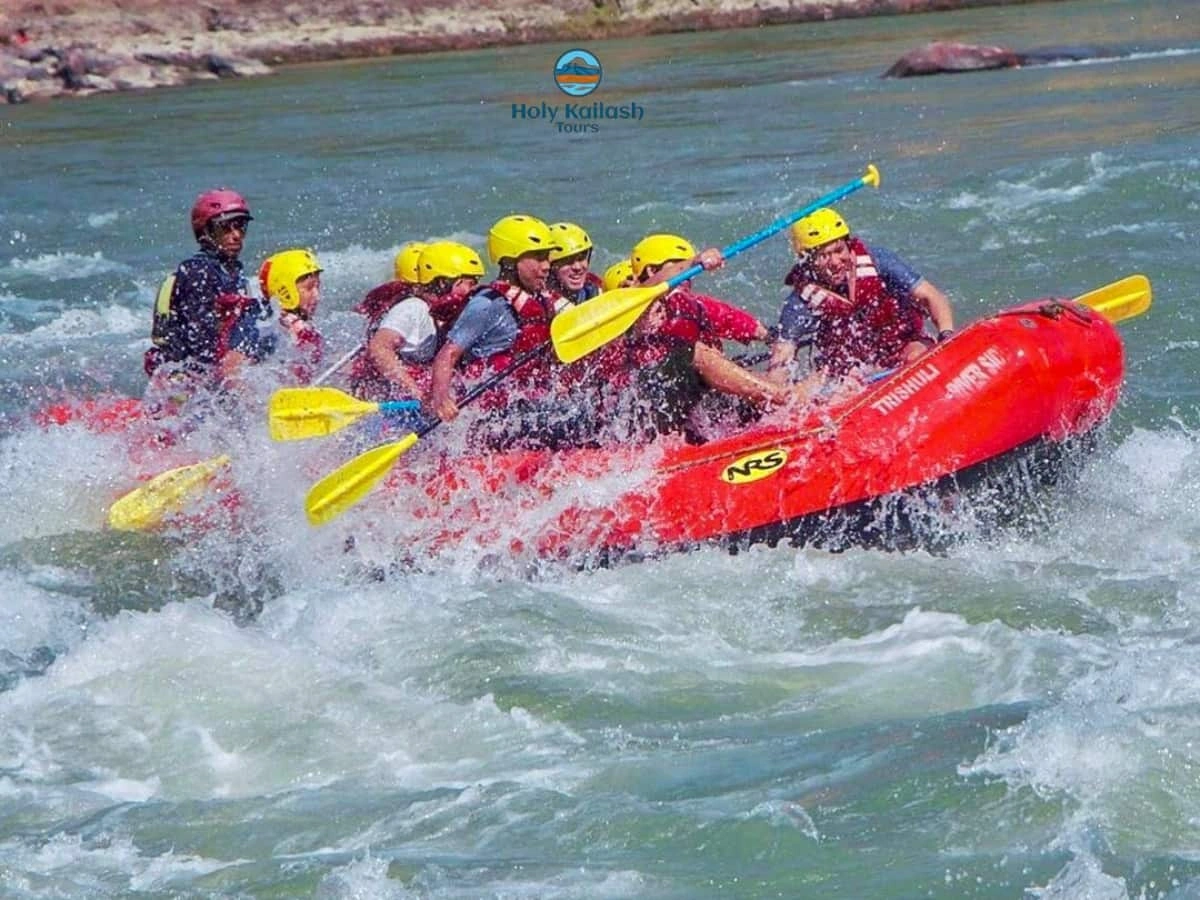
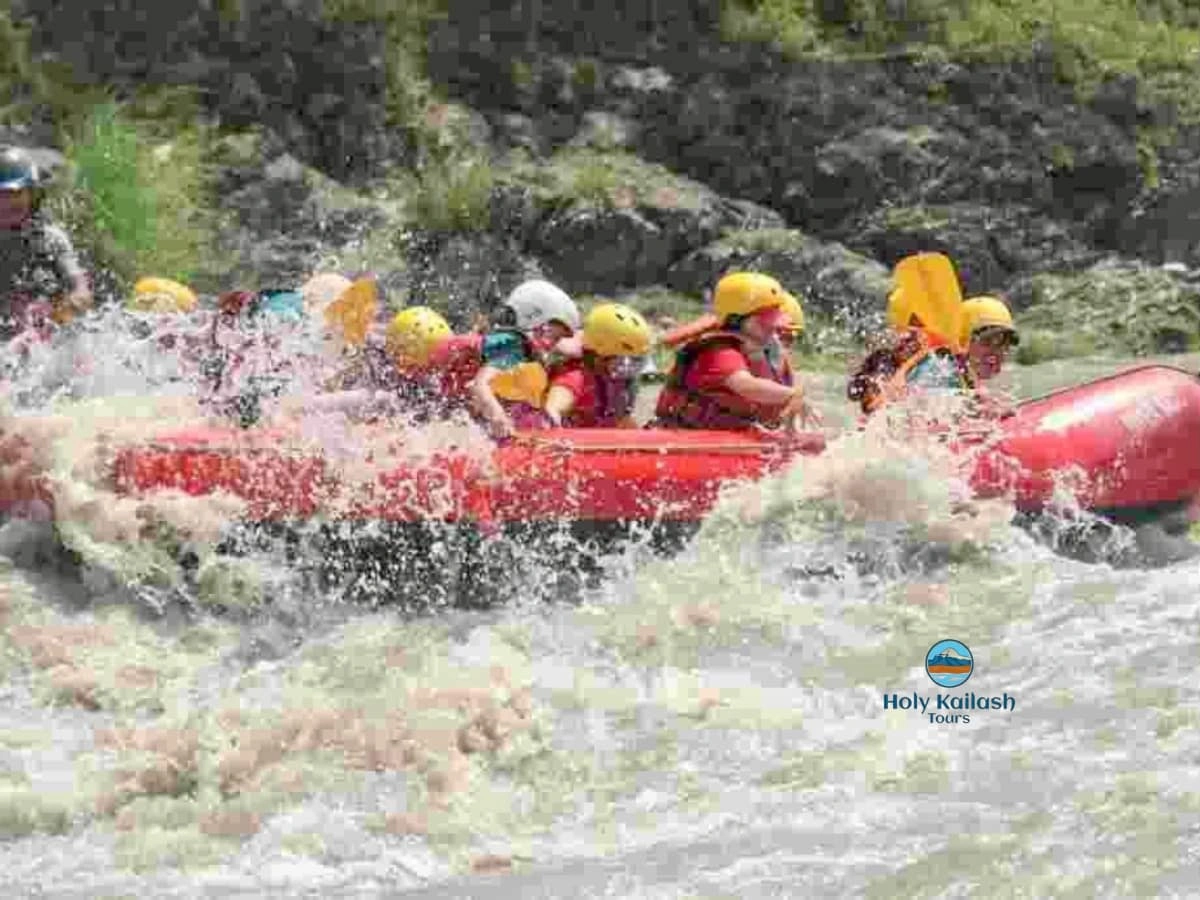
The Trishuli isn't the most extreme river in Nepal, but it keeps you busy. Expect to paddle hard through the main rapids, get splashed thoroughly, and probably get dunped at least once if you're on a lively section.
Between rapids, the river moves at a comfortable pace. The gorge walls close in at certain points, then open up again into wider valleys. You'll pass small fishing communities, suspension bridges, and the occasional Hindu shrine carved into the rock above the waterline.
What you'll actually experience:
- A proper paddling workout through Class III rapids
- Calm pools where you can jump in and float
- Close-up views of the river gorge that you can't get from the road
- A riverside lunch on a sandbar
- Cold water (bring it up with your guide if you want a wetsuit)
Rapids and Difficulty Level of the Trishuli River
The Trishuli runs mostly Class II to Class III rapids, with a few Class III-plus sections depending on water levels.
For context:
- Class I to II: Easy, gentle current, small waves. Good for complete beginners.
- Class III: Moderate rapids with irregular waves and some maneuvering required. Exciting but manageable.
- Class III-plus: Strong, irregular waves. Requires active paddling. Still accessible to beginners with a good guide.
- Class IV and above: Not typically found on the main Trishuli rafting section.
Named rapids on the route include Monsoon, Sniper, and Upset. The names give you an idea of what to expect. None of them are technically demanding, but they'll get your heart rate up.
The Trishuli is categorized as a beginner-to-intermediate river. It's genuinely fun without being dangerous under normal water conditions.
Safety Measures During Trishuli River Rafting
Safety on the Trishuli is well-established. The route has been run commercially for decades, and most reputable operators have solid systems in place.
What Holy Kailash Tours does before you get on the water:
- Full pre-trip safety briefing covering swimming position, paddle commands, and what to do if you fall out
- Properly fitted life jackets and helmets for every person
- Certified and experienced river guides who know the route well
- Rescue equipment (throw bags, first aid kit) on every raft
- Communication plan for emergencies
What you should do:
- Listen to the briefing, even if you've rafted before
- Follow your guide's paddle commands
- Never stand up in fast-moving water if you fall in
- Float on your back with feet up and downstream until help reaches you
- Tell your guide about any medical conditions beforehand
The river is safe when run responsibly. Accidents on the Trishuli are rare and almost always tied to ignoring guide instructions or going with unlicensed operators.
What to Pack for Trishuli River Rafting
You don't need much. The simpler, the better.
Wear:
- Swimwear or quick-dry shorts and a t-shirt
- Secure footwear (old sneakers or sandals with straps, no flip-flops)
- Sunglasses with a strap (they will come off otherwise)
- Sunscreen applied before you leave (reapply won't be easy on the water)
Bring:
- A dry bag or waterproof pouch for your phone and wallet
- A change of clothes for after
- A small towel
- Water bottle
- Snacks if you get hungry easily
Leave behind:
- Jewelry
- Expensive watches
- Loose items that can't get wet or can't be secured
Your guide will have a dry bag for the group's valuables. Use it.
How to Reach the Trishuli River from Kathmandu and Pokhara
From Kathmandu, the drive to Charaudi (the main put-in point) is about 80 km along the Prithvi Highway. It takes 3 to 4 hours, depending on traffic, which can be heavy leaving Kathmandu in the morning. Most tours depart between 6:30 and 7:30 AM to avoid congestion.
Pokhara is about 3 to 4 hours from Mugling. Some itineraries run the Trishuli as part of a Kathmandu-to-Pokhara road trip, which makes good practical sense since the highway runs right alongside the river.
Transport options:
- Private vehicle arranged through your tour operator (most common and most convenient)
- Tourist bus from Kathmandu to Mugling (budget option, less flexible)
- Self-drive if you're comfortable on Nepali roads
Holy Kailash Tours includes round-trip transport from Kathmandu in our standard day package.
Food and Accommodation Options
For day trips, lunch is usually included and eaten on a sandbar mid-river. It's simple food, rice, dal, vegetables, maybe some local snacks. Plenty of it.
For overnight trips: You camp on the riverbank or stay at a riverside lodge, depending on the package. Camping on a Trishuli sandbar under a clear sky is genuinely one of the better experiences you can have in Nepal. Meals are cooked at camp. Basic but good.
Lodges near the river: There are a handful of riverside resorts between Charaudi and Mugling, catering to rafters. They're basic by hotel standards, comfortable by camping standards. Beds, hot showers, and local food. A few steps up from tents if that matters to you.
Accommodation near Trishuli River options:
- Riverside camping (most atmospheric)
- Trishuli riverbank lodges and resorts (more comfortable)
- Staying in Mugling or nearby towns (budget-friendly)
Trishuli River Rafting for Beginners
The Trishuli River rafting is probably the best first rafting river in Nepal. It has real rapids, real excitement, and real scenery, but it doesn't demand anything extreme from you.
What makes it beginner-friendly:
- No prior experience needed
- Safety briefing covers everything you need to know
- Guides manage all the technical decisions
- Rapids are exciting but not punishing
- Short enough to complete without exhaustion
If you've never rafted before, this is the place to start. Children from around age 10 can usually join (check with your operator on age restrictions and water conditions). Older adults raft it comfortably, too.
Family and Group Rafting Experience
Trishuli River rafting is a solid family activity if your kids are old enough and confident in the water. Groups of 6 to 8 fit comfortably on one raft, making it easy for teams, travel groups, or families to stay together on the water.
For groups:
- You can arrange multiple rafts for larger parties
- Pricing usually improves with group size
- It's a good team-building activity, genuinely cooperative paddling, not just sitting in a boat
- Corporate groups use it regularly for that reason
The river has enough to keep teenagers interested without scaring younger kids or less adventurous adults. That balance is harder to find than you'd think.
Combining Trishuli River Rafting with Other Activities
The location works well for combinations. Some popular pairings:
Rafting plus Pokhara trip: Run the Trishuli on your way from Kathmandu to Pokhara. Raft in the morning, continue to Pokhara in the afternoon. Good use of a travel day.
Rafting plus Chitwan: A few operators run packages that combine Trishuli rafting with a Chitwan National Park wildlife safari. Takes two to three days total.
Rafting plus trekking: If you're on a longer Nepal trip, the Trishuli can be a rest-day option after a trek. The physical demands are low enough that it works even on slightly tired legs.
Rafting plus bungee or canyoning: For people who want a full day of adrenaline, some Nepal adventure operators combine activities near the Bhote Koshi or Jalbire area. Ask Holy Kailash Tours about multi-activity day packages.
Trishuli River Rafting vs Bhotekoshi River Rafting
People often compare these two, and they're genuinely different experiences.
| |
Trishuli |
Bhotekoshi |
| Distance from Kathmandu |
3 to 4 hours |
3 to 4 hours |
| Difficulty |
Class II to III |
Class IV to V |
| Suitable for beginners |
Yes |
No |
| Trip length options |
Half day, full day, overnight |
Usually half a day, full Day |
| Scenery |
Wide gorge, forested hills |
Steep, dramatic canyon |
| Price |
Lower |
Higher |
The Bhotekoshi is one of the steepest commercially rafted rivers in the world. It's for people who have rafted before and want something genuinely intense. The Trishuli is for everyone else, which is most people.
If this is your first time rafting, do the Trishuli. If you've done the Trishuli and want more, the Bhotekoshi is your next step.
Tips for First-Time Rafters
A few things worth knowing before you get on the water:
- Go early in the day. Afternoons can bring wind, which makes paddling harder and less fun.
- Eat something light beforehand. Not too full, not empty. A big meal right before hitting rapids is uncomfortable.
- Don't death-grip the paddle. Relax your hands. Your arms will last much longer.
- Trust your guide's calls. When they say paddle hard, paddle hard. When they say hold, stop immediately.
- Falling out is normal. Especially on the first rapid of the day. It's not dangerous if you follow the swim position your guide taught you.
- Take your glasses off before the big rapids. Or secure them very well.
- The dry bag is your friend. Put your phone in it before you get on the water, not after you've already been splashed.
Environmental Importance of the Trishuli River
The Trishuli is more than a rafting venue. It's a major water source for communities across central Nepal, feeds into the Narayani River system, and drains into the Ganges basin further downstream.
Hydropower projects along the river have changed some sections over the years, and there are ongoing conversations in Nepal about balancing development with river health.
When rafting responsibly:
- Don't throw anything in the river. Nothing.
- Use biodegradable sunscreen where possible
- Pack out everything you bring in on camping trips
- Respect the river communities you pass through
Holy Kailash Tours follows a strict no-littering policy on all river trips. We ask every group to do the same.
Why Book with Holy Kailash Tours
Holy Kailash Tours is based in Kathmandu and runs rafting trips on the Trishuli alongside our pilgrimage and trekking programs. We've been arranging Nepal adventures for a long time, and river trips are part of our core offering.
What we actually do for you:
- Licensed, experienced river guides who know the Trishuli well
- Proper safety equipment, not borrowed or undersized gear
- Clear pricing with nothing hidden
- Transport from Kathmandu is included in standard packages
- Flexible itineraries for day trips, overnight stays, or combination tours
- Support throughout your trip, not just at the booking stage
You can reach us via our website or visit our Kathmandu office to discuss options before booking. We'll match a package to what you actually want to do, not just what's easiest to sell.
Trip Highlights
- Real Class II to III white-water rapids through a dramatic river gorge
- Scenic drive along the Prithvi Highway between Kathmandu and Pokhara
- Riverside lunch on a sandbar mid-river
- Friendly, licensed guides with solid local knowledge
- One of the most accessible adventure activities in Nepal
- Option to camp overnight on the riverbank (overnight packages)
- Affordable pricing with transport included