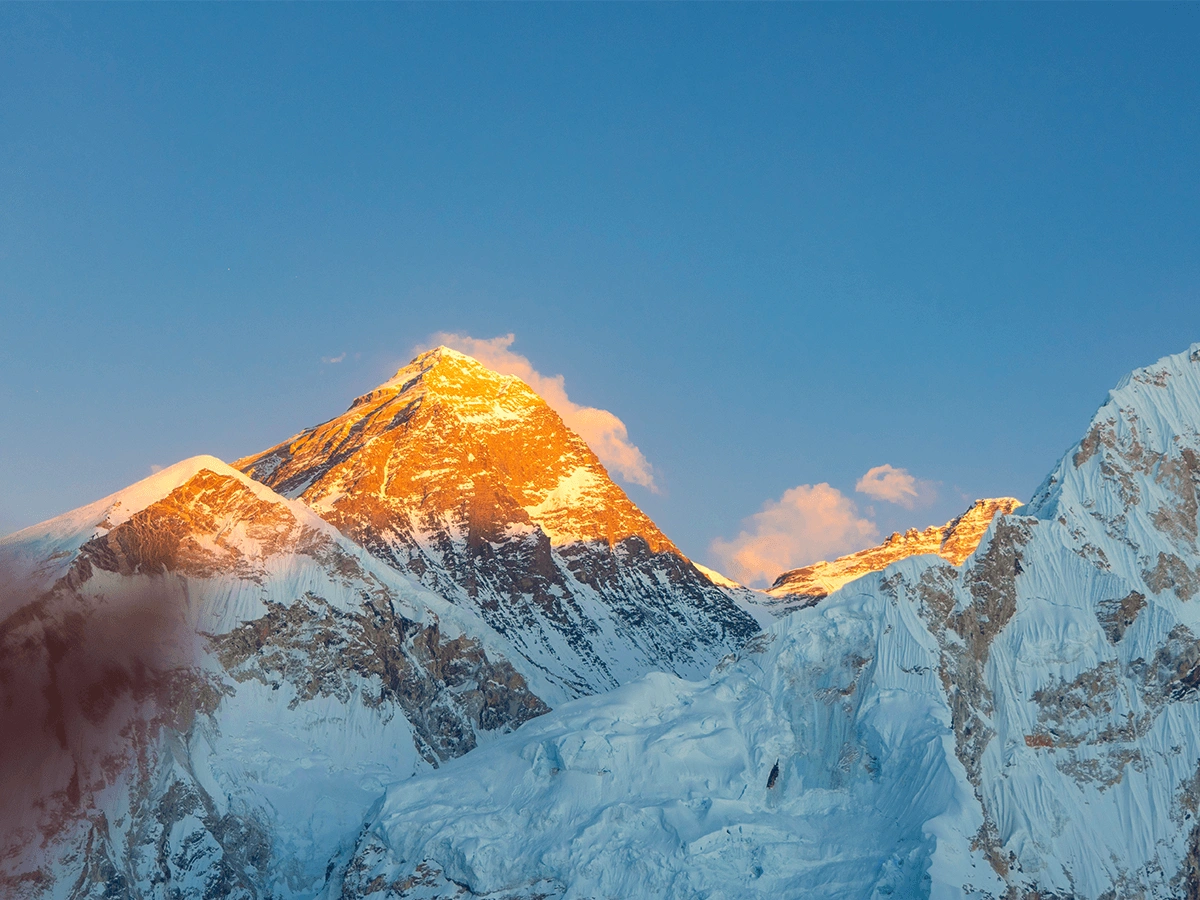
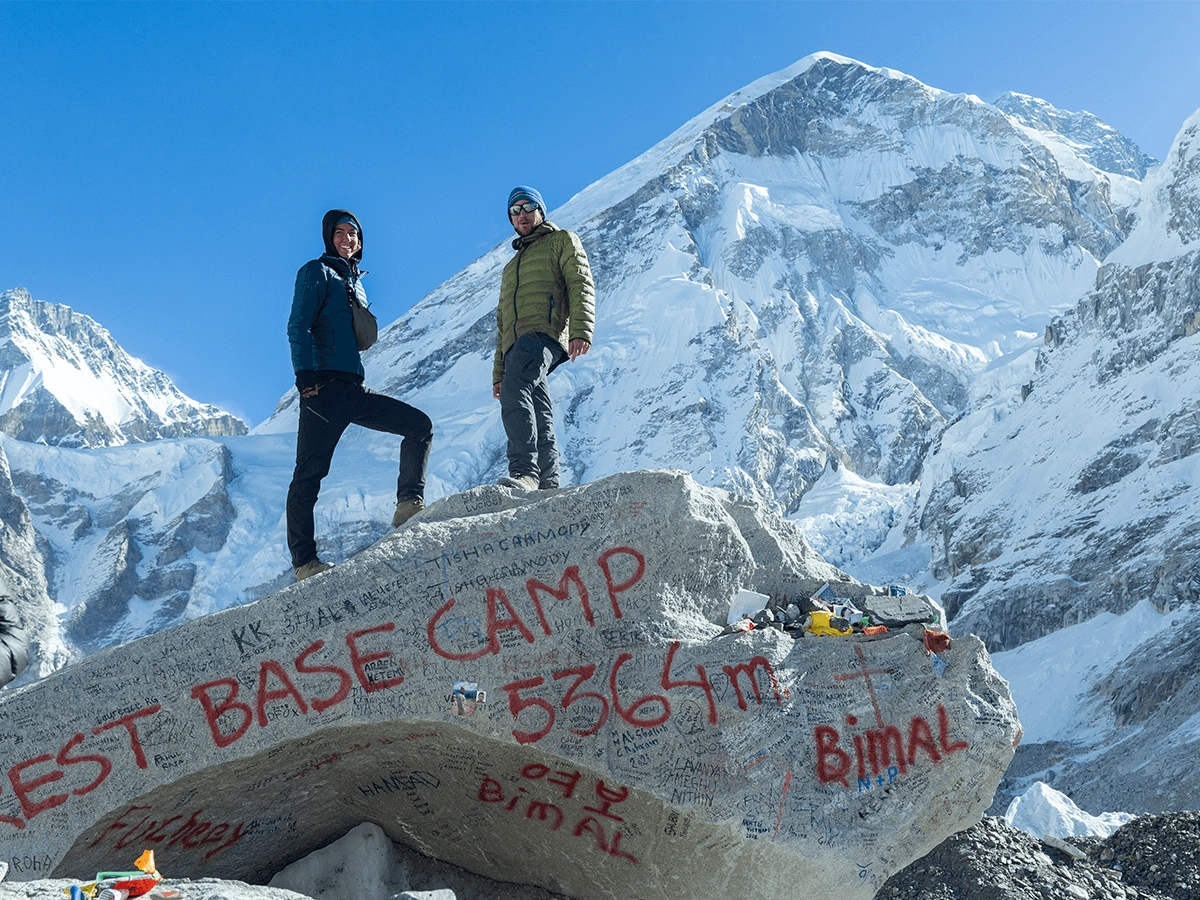
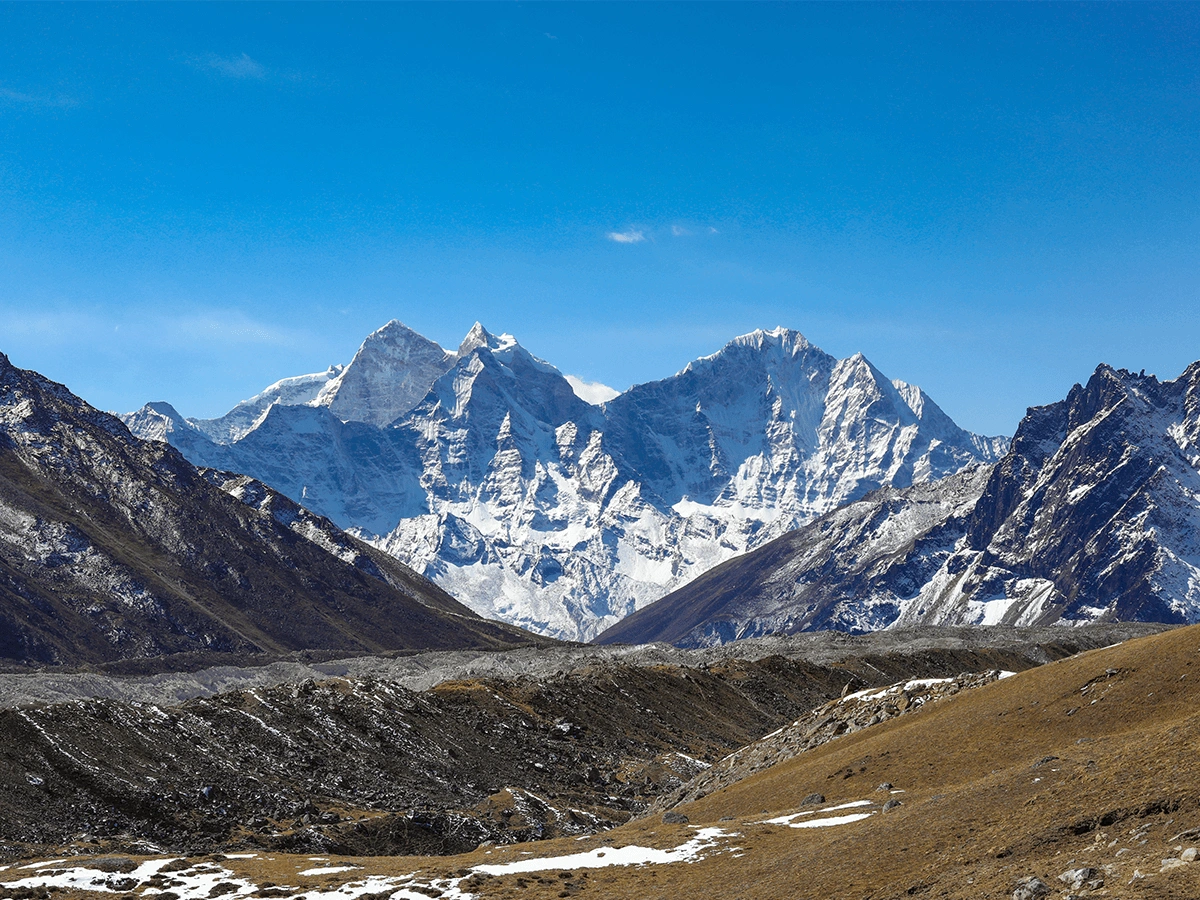
The journey towards the abode of the world’s tallest mountain is never an ordinary holiday activity. It is indeed a momentous event that can surpass anything you have ever done in life. EBC Trekking in Nepal, you can view legendary peaks such as Lhotse, Mount Everest (8,848.86 m), Nuptse, and Ama Dablam.
Therefore, the Everest Base Camp Trek has greater significance. In addition, travelling with the crew members of the Holy Kailash Tour can surely enhance the entire Nepal trekking experience from a hospitality and service perspective.
Make sure you contact our travel planners to plan a mesmerizing walking holiday to the foothills of the world’s tallest mountain, Mt. Everest. Walking to Everest Base Camp requires meticulous planning and preparation.
Therefore, you need an experienced team of professionals to manage your trip. We are definitely the reliable travel company that guarantees hassle-free trekking trips full of memorable travel tales worth sharing with generations to come.
Why Choose the Everest Base Camp Trek?
Everest Base Camp Trek isn't just another trek on a list. It's the trail that put Nepal on the map for trekkers, and walking it still feels like a milestone. You're not climbing Everest, but you're standing at the foot of it, in the same valley Sherpas have called home for generations.
What makes this trek different is the mix you get in one trip. You walk through Sherpa villages where prayer flags outnumber people, past monasteries that have stood for hundreds of years, and through pine forests that open up into views of some of the tallest peaks on earth. Namche Bazaar alone, with its bowl-shaped streets and bakery smells, is worth the trip on its own.
It's also a trek that doesn't require mountaineering skills. You need fitness and patience for the altitude, but no ropes, no climbing permit, no technical training.
I've led groups through this valley for 15 years now, and the thing that surprises first-timers most isn't the scenery, it's how normal daily life looks up there, even at 4,000 meters. Holy Kailash Tours runs this trek with small groups and guides who grew up in the region, so you get context for what you're looking at, not just a photo stop.
Trekking Distance, Duration & Difficulty Level
The classic Everest Base Camp trek covers around 130 kilometers round-trip, starting and ending in Lukla. Most itineraries run 12 to 14 days, including the flight in and out of Lukla and two acclimatization days built into the schedule. Shorter versions exist, but cutting days usually means cutting the rest your body needs at altitude, and that's where things go wrong.
There's no rock climbing, no fixed ropes, no glacier crossing with crampons. What makes it hard is the altitude and the daily walking, often five to seven hours on uneven trails, with steep sections near Namche Bazaar and the final push to Base Camp itself.
Most guidebooks rate it moderate to challenging. You don't need prior mountaineering experience, but you do need decent fitness and the patience to walk slowly at altitude, since rushing is one of the main causes of altitude sickness.
In my time leading Everest treks, the groups that struggle most are rarely the ones who trained the hardest; they're the ones who tried to keep pace with someone faster instead of walking at their own pace. Holy Kailash Tours builds rest days into every itinerary and keeps daily walking hours realistic, rather than packing in extra distance to shorten the trip on paper.
Everest Base Camp Journey: Elevation & Acclimatization
Lukla is at 2,860 meters, and Everest Base Camp tops out at 5,364 meters. That's a gain of over 2,500 meters, and it's the single biggest factor in how this trek goes for you. Altitude sickness doesn't care how fit you are. It cares about how fast you go up.
The standard route includes two acclimatization days, usually in Namche Bazaar (3,440m) and Dingboche (4,410m). On these days, you hike up to a higher point during the day and sleep back down at a lower elevation, which is the most effective way to let your body adjust before sleeping at that altitude permanently.
Symptoms to watch for include headaches, nausea, and trouble sleeping. Mild symptoms are common and usually pass with rest and water. Anything worse, confusion or breathing trouble at rest, means you go down, not up, no exceptions.
I had a trekker in Dingboche a few seasons back who insisted his headache was just dehydration. It wasn't, and we turned him back a day early. He thanked us for it later, once he'd had time to read up on what untreated altitude sickness can turn into. Holy Kailash Tours guides carry oxygen and pulse oximeters and check on trekkers daily, not just when someone speaks up.
Required Permits for Everest Base Camp Trek
You need two permits for this trek, and both are non-negotiable. The first is the Sagarmatha National Park entry permit, since the trail runs through the park for most of its length. Foreigners pay NPR 3,000 per entry, SAARC nationals NPR 1,500, and Nepali citizens NPR 25, according to the Nepal Tourism Board. The second is the Khumbu Pasang Lhamu Rural Municipality entry permit, which replaced the old TIMS card for this region in 2018. Nepal Tourism Board
Both permits get checked at points along the trail, usually in Monjo near the park entrance. The Sagarmatha National Park permit isn't sold in Kathmandu anymore for most trekkers; it's issued at the entry gate or in Monjo, while the rural municipality permit can be arranged in Kathmandu or Lukla. Permit prices have shifted several times over the years (the Sagarmatha fee alone has roughly tripled since 2008), so it's worth confirming current rates directly with the Nepal Tourism Board rather than relying on an old blog post.
Holy Kailash Tours guides manage both permits as part of the Everest Base Camp trek package, including paperwork and checkpoint stops, so you're not standing at a gate digging through your bag while your group waits.
Physical Fitness & Trek Preparation
You don't need to be an athlete for the Everest trek, but you do need to show up in reasonable shape. Walking five to seven hours a day at altitude for nearly two weeks adds up fast if your legs and lungs aren't ready for it.
A decent prep plan starts two to three months out. Cardio matters most: hiking, running, cycling, or stair climbing a few times a week. Add some strength work for your legs and core, since carrying a daypack uphill for hours uses muscles you don't always train. If you can, get out on real hills or stairs with a loaded pack. That's closer to what the trail demands than flat treadmill walking ever will be.
Mental prep matters too. Cold mornings, basic teahouse rooms, and slow days at altitude test patience as much as fitness, something most training plans never mention.
After watching hundreds of trekkers come through, I'd say the ones who struggle on the trail rarely lack fitness; they just trained for the wrong thing, more gym, less hill walking. Holy Kailash Tours sends a training guide before departure and remains reachable by phone or email if questions arise beforehand.
Customisation & Private Trek Options
Not every trekker wants the same itinerary, and the standard 12-day group package isn't the only option. Some people want extra acclimatization days. Others want an EBC with a helicopter return instead of walking back down, or a side trip to the Gokyo Lakes added.
Private treks make sense if you're traveling with family, want a flexible pace, or just don't want to sync up with strangers' schedules. Couples, small groups, and solo trekkers who want a dedicated guide often choose this route over a fixed departure. For family and business people who don't have enough time, Everest Base Camp Helicopter Tours are a better option
Customization isn't only about add-ons, either. It can mean slower pacing for older trekkers, kid-friendly stops for families, or extra time built in for photographers who actually want to use their camera instead of rushing past a view.
We've built itineraries for trekkers in their seventies and for trekkers carrying toddlers in backpacks, and the planning looks completely different each time. Holy Kailash Tours builds private itineraries around what you actually want from the trip, rather than handing you a fixed template and asking you to fit into it.
Why Trek to Everest Base Camp With Us?
Plenty of companies run the Everest Base Camp trek. What sets Holy Kailash Tours apart is experience with the terrain itself, not just the booking process. Our guides are from the Khumbu region, which means they're not reading altitude symptoms off a checklist; they've seen them, dealt with them, and know when a headache is normal and when it isn't.
We keep groups small enough that guides actually know each trekker's pace and condition, instead of managing a crowd. Permits, teahouse bookings, and Lukla flight logistics are sorted before you land in Kathmandu, so your trip doesn't start with paperwork stress.
Safety planning includes oxygen, pulse oximeters, and clear evacuation steps, but it also includes something simpler: realistic pacing. We don't compress the schedule to undercut competitors on price, because that's usually exactly where altitude problems start.
Based in Kathmandu, Holy Kailash Tours has spent 15 years organizing treks to Everest Base Camp, Annapurna Base Camp, Annapurna Circuit, Langtang Valley, Manaslu, Upper Mustang, and the Kailash Mansarovar Yatra, with thousands of treks completed and guided by guides registered with Nepal's trekking agency association. That background shows up in how the trip is planned, not just how it's sold.
Written by Ram Sharan Adhikari, Lead Trek Coordinator at Holy Kailash Tours, who has led over 1000 treks to Everest Base Camp for 15 years. Reviewed for accuracy against the current Nepal Tourism Board permit rates.
Book today, the Everest Base Camp Trek, and relish the wilderness adventure experiences in the heart of Sherpa villages and the home of the Himalayas.
Elevation chart: Everest Base Camp
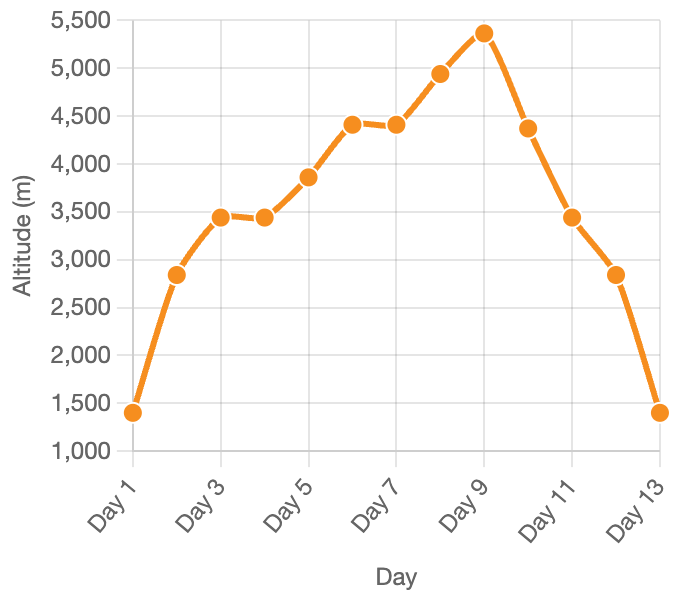
Elevation Profile Chart (Day by Day)
The main difference compared to the EBC trek is the major net elevation gain and loss every day as the route goes through the Khumbu Valley, and there are more frequent and bigger upward and downward movements.
|
Day
|
Route
|
Sleep Altitude (ft)
|
Sleep Altitude (m)
|
Approx. Gain (ft)
|
|
1
|
Fly to Lukla, Trek to Phakding
|
8,563 ft
|
2,610 m
|
-250 m (descent)
|
|
2
|
Phakding → Namche Bazaar
|
11,286 ft
|
3,440 m
|
+830 m
|
|
3
|
Acclimatization Day (Namche)
|
11,286 ft
|
3,440 m
|
Hike high, sleep low
|
|
4
|
Namche → Tengboche
|
12,664 ft
|
3,860 m
|
+420 m
|
|
5
|
Tengboche → Dingboche
|
14,469 ft
|
4410 m
|
+550m
|
|
6
|
Acclimatization Day (Dingboche)
|
14,469 ft
|
4410 m
|
Hike to ~16,700 ft
|
|
7
|
Dingboche → Lobuche
|
16,207 ft
|
4940 m
|
+530 m
|
|
8
|
Lobuche → Gorak Shep → EBC
|
16,942 ft (sleep)
|
5,164 m (sleep)
|
+440 m (to EBC)
|
|
9
|
Gorak Shep → Kala Patthar → Pheriche
|
14,340 ft
|
4,371 m
|
Highest: +480m to Kala Patthar
|
|
10
|
Pheriche → Namche Bazaar
|
11,286 ft
|
3,440 m
|
-1,000 m (descent)
|
|
11
|
Namche → Lukla
|
9,383 ft
|
2,860 m
|
-580 m (descent)
|
|
12
|
Fly back to Kathmandu
|
4,593 ft
|
1,400 m
|
-
|
Critical Acclimatization Zones
The danger of getting Altitude Sickness is quite great when one goes above 3000m/9800ft, which is most of the trek. The biggest single-day altitude increases are, per the search results, Day 2 (Phakding to Namche) and Day 7 (Dingboche to Lobuche)
|
Altitude Zone
|
Day
|
Risk Level
|
Action Required
|
|
Above 12,000 ft
|
Days 2-4
|
Moderate
|
Start your acclimatization. Drink 3-4 liters of water daily. No alcohol.
|
|
Above 14,000 ft
|
Days 5-6 (Dingboche)
|
High
|
This is a critical acclimatization point. Do the side hike to Nagarjun Hill (~5,100m) to "climb high, sleep low"
|
|
Above 16,000 ft
|
Days 7-9 (Lobuche/Gorak Shep)
|
Severe
|
This is where AMS is most likely. Do not sleep at a higher altitude than the previous night by more than 500m. The "climb high, sleep low" rule is essential
|
Related Everest Packages
EBC Gokyo Cho La Pass Trek 16 Days
Everest Three High Passes Trek 18 Days
Everest Base Camp Luxury Trek 14 Days
Everest Base Camp Trek With Helicopter Return 11 Days
Gokyo Lake Trek 13 Days
Everest View Trek 5 Days5 Days
Everest Base Camp Helicopter Tour 1 Day
Everest Base Camp Trek 14 Days
Highlights of the Everest Base Camp Trek in Nepal
- Trek to the base of Mount Everest itself, the highest point on the planet at 5,364 meters.
- Fly into Lukla on one of the most scenic and steepest mountain approaches in the Himalaya.
- Walk through Sagarmatha National Park, a UNESCO World Heritage Site where snow leopards and red pandas share the slopes with some of the most striking alpine scenery anywhere.
- Stop in Namche Bazaar, the gateway town and cultural hub of the Khumbu, with bakeries and gear shops tucked into a hillside bowl.
- Pass through Sherpa villages, with prayer wheels lining the trail and lodges run by the same families for generations.
- Stay near Hotel Everest View, one of the highest-elevation hotels in the world, for mountain views without the extra climb.
- Visit Tengboche Monastery, the oldest in the region, with Ama Dablam rising right behind it.
- Walk alongside the Khumbu Glacier and icefall, the point where the trail starts to feel like serious mountain terrain.
- Climb Kala Patthar (5,555 m) or Nangkartshang Peak (5,083 m) before dawn for the best sunrise view of Everest on the route.
- See legendary Mount Everest, Ama Dablam, Lhotse, Nuptse, Thamserku, and Cho Oyu from a single stretch of trail, a lineup few other treks can match.