Everest Base Camp Trek Trip Facts
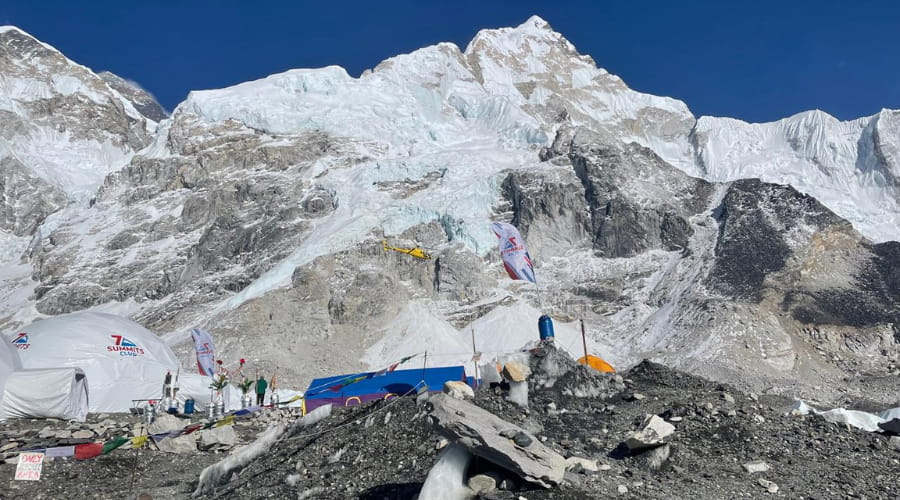
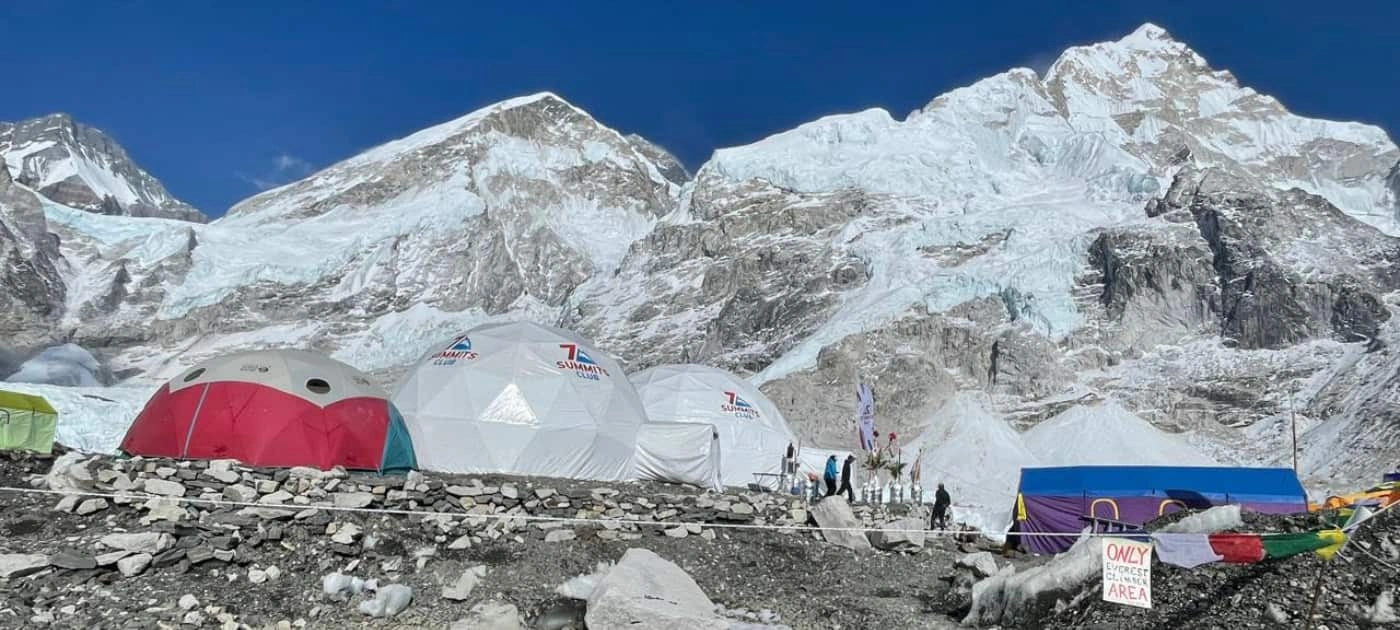
The Everest Base Camp trekis the highest-altitude trek in Nepal, traversing the picturesque Khumbu region toEverest Base Camp. Besides showcasing mountain panoramas, this trek also reveals Sherpa life and offers adventurers a thrilling experience. Following Holy Kailash Tours' guidance will ensure a safe, well-organized trek.
Trek Duration: 12 to 14 days
Maximum Altitude: 5,364 meters (Everest Base Camp)
Highest Point: 5,545 meters (Kala Patthar)
Starting Point: Lukla Airport
Ending Point: Lukla
Trek Difficulty: Moderate to challenging
Best Seasons: Spring (March to May) and Autumn (September to November)
Accommodation: Tea houses, hotels, and lodges
Permits Required: Sagarmatha National Park Permit and Khumbu Pasang Lhamu Rural Municipality Permit
Daily Walking Hours: 5 to 7 hours on average
Major Highlights: Namche Bazaar, Tengboche Monastery, Dingboche, Everest Base Camp, Kala Patthar
Fitness Level: Basic to good physical fitness required
Guide and Porter: Recommended for safety and support
Short Day-to-day Itinerary
Day 1: Arrival in Kathmandu (1,400m)
Day 2: Fly Kathmandu to Lukla (2,840m) & Trek to Phakding (2,610m)3–4 hours
Day 3: Trek from Phakding (2,610m) to Namche Bazaar (3,440m), 6–7 hours
Day 4: Acclimatization Day at Namche Bazaar (3,440m)3–4 hours
Day 5: Trek from Namche Bazaar (3,440m) to Tengboche (3,860m), 5–6 hours
Day 6: Trek from Tengboche (3,860m) to Dingboche (4,410m), 5–6 hours
Day 7: Acclimatization Day at Dingboche (4,410m)3–4 hours
Day 8: Trek from Dingboche (4,410m) to Lobuche (4,940m), 5–6 hours
Day 9: Trek from Lobuche (4,940m) to Gorakshep (5,164m) & Visit Everest Base Camp (5,364m); 7–8 hours
Day 10: Hike to Kala Patthar (5,545m) & Trek to Pheriche (4,371m); 6–7 hours
Day 11: Trek from Pheriche (4,371m) to Namche Bazaar (3,440m); 6–7 hours
Day 12: Trek from Namche Bazaar (3,440m) to Lukla (2,840m); 6–7 hours
Day 13: Fly from Lukla to Kathmandu (1,400m)
Day 14: Final Departure from Kathmandu
Why Altitude Sickness Happens on the Everest Base Camp Route?
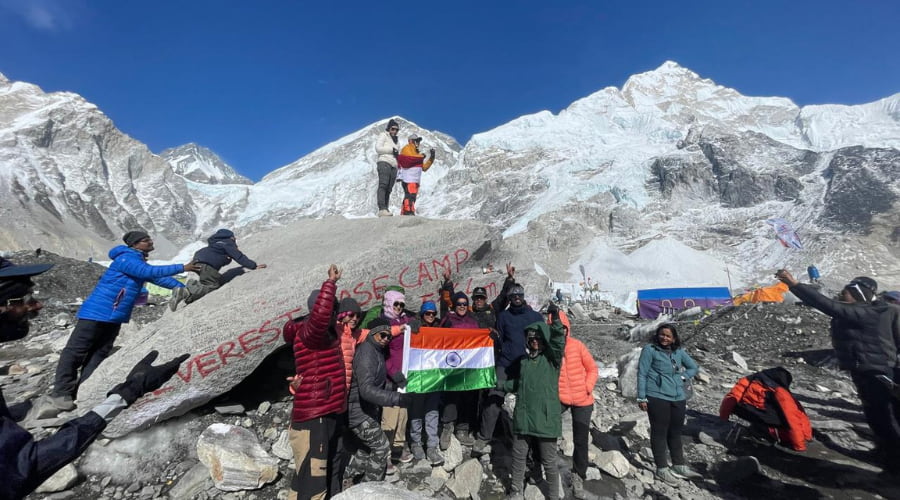
Understanding altitude sickness helps explain what happens inside the body when climbing. The air at sea level that contacts your lungs contains 21% oxygen. This oxygen percentage remains constant as you go higher, but atmospheric pressure decreases. Lower pressure means fewer oxygen molecules in each breath. Your body at Everest Base Campworks with only about half the oxygen it gets at sea level.
Your body is intelligent and can adjust to lower oxygen levels, but it requires time. When you go up too fast, your blood oxygen levels drop more rapidly than your body can adjust. This is called hypoxia, and it sets off a chain of events. Your brain swells a bit. Your blood vessels get wider. Fluid can start building up where it usually doesn't. The end product of all this is altitude sickness.
Usually, on the Everest Base Camp route, trekkers fly into Lukla at 2,860 meters and then walk up for approximately 12 to 14 days. In some stretches, the elevation gain is gradual, but the cumulative altitude increase is significant. When you get to Gorak Shep at 5,164 meters or Everest Base Camp itself, how quickly you rise is a huge factor here.
Most trekkers take a 35-minute flight from Kathmandu to Lukla. What happens to your body in those 35 minutes, when you jump from about 1,400 meters in Kathmandu to 2,860 meters in Lukla, is what it would take you days to walk to cover.
That sudden jump is your first real test on this trail. Identifying symptoms of altitude sickness is the most important skill you can acquire before setting out on this trek. Your body has almost climbed 2,500 meters up from Lukla. That's a lot for any human body to cope with, regardless of how prepared you feel.
Common Symptoms of Altitude Sickness on the Trek
The earlier you spot it, the more manageable it is. The primary symptom is a headache. Generally, it is a mild, pulsing aching feeling around your temples or the back of your head. Often, you feel it more strongly when you get up in the morning, especially after the first night at a new altitude. Lots of trekkers think it is due to dehydration, which sometimes it is. But if you get it along with other symptoms, you should be extra vigilant.
Next for many people is nausea. You may get sick to your stomach after eating or even when you haven't had any food. Some trekkers throw up. Besides feeling sick, you will most likely experience fatigue that sleep doesn't seem to cure.
You may have had a full night's sleep, but your body still feels extremely heavy and debilitating. This tiredness is your body allocating energy to dealing with the lack of oxygen. Feeling dizzy and generally "off" are also typical.
Some trekkers compare it to being slightly intoxicated or in a fog. Trouble sleeping is another indication, and it can be very annoying because your body is craving rest.
Loss of appetite is one of the most common symptoms at high altitudes and should not be ignored. Physiologically, your body frantically seeks food to aid in acclimatization, but if you deprive it of nourishment, you will, in effect, be setting yourself back in the process. If you catch and address the initial signs of AMS quickly, you can actually live through them without much trouble.
Symptoms that indicate the condition is deteriorating include a severe headache that does not go away even when one rests or takes medicine, confusion or difficulty with clear thinking, a dry cough that becomes wet or productive, and breathlessness even at rest. If any of these manifestations come to your attention, consider it a matter of life and death. "
What Types of Altitude Sickness Should You Know About?
Altitude sickness symptoms vary. Knowing the three main types will help us determine the extent of a situation's danger and what to do about it. Acute Mountain Sickness (AMS) is the most common type. It's a typical experience of most trekkers going too high too fast. Headache, nausea, tiredness, vertigo, and insomnia are some symptoms.
AMS is quite uncomfortable but can be handled in many cases. Rest, lots of fluids, and no further climbing help in most cases. Descending even a small amount, 300-500 meters, often brings quick relief. High Altitude Pulmonary Edema, or HAPE, is a more serious issue.
The condition is marked by the accumulation of fluid in the lungs. It makes the lungs less efficient at oxygenating the blood, resulting in a further drop in blood oxygen levels. Trekkers with HAPE are breathless not only on exertion but even at rest. They may also have a cough that produces pink or foamy phlegm.
Their lips or fingertips could turn blue or gray. If the HAPE condition is not treated in time, it can lead to death. Descending to a lower altitude and using oxygen are the first measures, and a medical evacuation is often required.
High Altitude Cerebral Edema, or HACE, is characterized by the accumulation of fluid in the brain. It is the rarest but the most dangerous one. Trekker(s) undergoing HACE suffer(s) from intense headache disorientation inability in coordination, and in extreme cases, unconsciousness.
A person with HACE cannot walk in a straight line and may be disoriented. Both High-Altitude Pulmonary Edema (HAPE) and High-Altitude Cerebral Edema (HACE) can occur suddenly after a person has had Acute Mountain Sickness (AMS) but did not recognize or properly manage the condition.
This is the main reason why you should not only recognize the first symptoms of mountain sickness but also take action immediately.
Risk Factors for Altitude Sickness in the Everest Region
You can suffer altitude sickness regardless. This is the first point that you should grasp. No definite pattern has been found distinguishing those who have been affected from those who have not. However, a few characteristics have been identified as indicators of susceptibility.
The biggest factor is rising in altitude too fast. Do not expect your body to cope with something it has not been prepared for if you ignore rest days or attempt to increase your elevation gain beyond what is recommended daily. The basic rule of thumb is to increase your sleeping altitude by 300-500 meters each day, up to a maximum of 3,000 meters.
Altitude sickness is a latent potential in your health records. The past predicts the future. You are more likely to get altitude sickness if you have suffered from it before. This does not imply that you will have to give up on your dream of the Everest Base Camp, the Everest Three Pass trek, or the Everest Base Camp with Chola Pass trek, but it does suggest that you should be more cautious in your planning and allow for more acclimatization time.
We often wrongly associate physical fitness with altitude sickness. Being physically fit will definitely enable you to cope better with the physical exertion of the trek, the extensive walking and climbing days. However, fitness will not make you immune to altitude sickness.
Statistics show that many well-conditioned subjects have ignored warning signs of altitude sickness because they believed the symptoms were caused only by fatigue. Also, it is dangerous to rely solely on your physical fitness at high altitude.
Unbeknownst to most trekkers, dehydration is a major risk factor. When at high altitude, you tend to breathe more rapidly. There is no way to wait it out.
Dehydration is a major risk factor for trekkers that is often ignored. When you are at altitude, your breathing rate increases, and therefore, you lose more water through respiration. Besides that, you even sweat more than you think in cold and dry air conditioning.
So, if you do not have a habit of drinking at least three to four liters of water per day, you are most probably dehydrated, and being dehydrated will make the symptoms of altitude sickness much more prominent.
Age is a factor that comes up from time to time, but studies provide inconsistent results. Being an older trekker doesn't mean you are at greater risk than the youngsters. In fact, children and the youngest individuals may even be more vulnerable.
The best policy is to accept that everyone, irrespective of age, should be handled with equal caution. Besides that, alcohol and certain drugs like sleeping pills may lower your breathing rate during the night and, as a result, decrease your blood oxygen while you are asleep. This results in slower acclimatization and worsening of symptoms. So, you'd better not consume alcohol during your first days at elevation.
How to Avoid Getting Altitude Sickness During the Trek
Preventing the disease is your main move. Careful planning, both initially and along the way, can drastically decrease your risk of serious illness. Begin with your travel plan. Pick a path and time frame that features allowances for good acclimatization days. Be patient. Everest Base Camp trek is not about speed.
Even adding one or two extra days can greatly improve your body's adjustment. Keep drinking fluids all the time. Have water before you get thirsty. Always have a water bottle with you and fill it up at every teahouse. What you drink also counts - herbal teas, soup, warm beverages, etc. Stay away from caffeine and alcohol, especially in the first week.
Go slowly. It may seem so and sound so, but several trekkers tend to ignore this advice and go straight past it. The Nepali phrase for trekking, "bistari bistari," which means "slowly, slowly," has a reason for its existence.
Finding a walking rhythm that still allows you to chat with your partner without any problem would be just right. If you get to the point where you're breathing hard and can't talk comfortably, you need to slow down.
Eating properly does not mean only when you are hungry. Your body starts using up much more energy at altitude. Carbs are really excellent fuel for high mounts. Dal bhat, the staple Nepali meal of rice, lentils, and vegetables, is truly one of the most delicious things you can eat on this trail.
Consulting your physician before starting medication is a good idea. Acetazolamide (Diamox) can help prevent and treat AMS by promoting deeper breathing and increasing oxygen intake. It can cause side effects, such as more frequent urination and tingling in the fingers and toes; therefore, it is best to talk to a doctor first.
Some trekkers begin taking the medication a day or two before arriving at Namche Bazaar. If you choose to trek with a highly skilled team like Holy Kailash Tours, your daily travel plan would incorporate acclimatization as a major part of the program. Days set aside for rest at various elevations are not just extra options but vital elements of a well-thought-out, safe plan that veteran operators implement to ensure that trekkers remain fit from the Everest Base Camp to their return.
Acclimatization means your body is adapting to lower air availability. Motivation or physicality will not reach the level of acclimatization required. Getting time is the main requirement of the body.
Acclimatization Plan for Everest Base Camp Trek
Acclimatization is the physiological change our body undergoes to adapt to reduced oxygen levels. It's not something that can be forced by willpower or getting in shape. You simply have to be patient.
Namche Bazaar and Dingboche are two places where your acclimatization really depends on when you plan to go to Everest Base Camp.
Namche Bazaar is located at an altitude of 3,440 meters; it is the main center of the Khumbu area. Usually, most standard schedules include at least two nights here and one day for a longer walk and return.
The typical acclimatization walk is to the Everest View Hotel, at about 3,880 meters, offering fantastic views of the mountain, and then back to Namche to relax. The "climb high, sleep low" method is one of the most efficient ways to help your body adapt to a new environment.
Dingboche, at 4,410 meters, is the second major acclimatization stop. Most of the time, the itinerary will have a rest day here with a short trek to a higher point, most of the time Nagarjun Hill at around 5,100 meters, before going down to sleep. By the time you leave Dingboche, your body should have adapted quite well to high altitude.
Lobuche at 4,940 meters and Gorak Shep at 5,164 meters are the last two steps before the Everest trek. At these heights, your body is still acclimatizing, but it is very fragile. Even a short run or carrying a heavy load can increase your heart rate and cause symptoms. So take your time and be careful.
People do use pulse oximeters, these little gadgets that you put on your finger, and they tell you the amount of oxygen in your blood, quite frequently on this path. A value above 90% is considered fine. Numbers below 80% at rest are serious, and you should talk to your guide right away. There are lots of teahouses that have these, and at the medical posts, definitely, so having your own is a wise move.
What to Do If You Get Altitude Sickness?
If symptoms arise, the most crucial rule is: do not go higher until the symptoms completely disappear.
First, stay at your present altitude. Give your body a day to adjust to the situation, and check whether the symptoms improve. Besides, you should drink a lot of fluids, eat very little, and not do any kind of physical exertion. The method can be very effective for the condition of slightly problematic AMS when there is only a headache and barely vivid nausea.
If the headache doesn't get better even after you rest, or if it worsens, the solution is to descend. A decrease of only 300 to 500 meters can bring a very noticeable relief quite rapidly. As soon as you reach a lower altitude, your body begins its healing process.
Also, you can take ibuprofen or acetaminophen for your headache, but remember that you cannot heal the cause of the problem just by treating the symptom. Don't let yourself use medication for pain so that you can ignore the symptoms and continue to ascend.
The signs of confusion, loss of coordination, or breathlessness at rest should never be disregarded. They are a manifestation of HAPE or HACE and require an immediate descent, regardless of the time of day or weather conditions.
Communicate with your guide. It's very important to do. Most of the time, trekkers don't admit their symptoms because they don't want to slow the group down or be seen as weak. However, your guide is responsible for your safety, and if they don't know what is going on, they won't be able to help you. Absolutely any reputable guide will consider your symptoms seriously.
Medical Support and Emergency Options on the Trail
Compared to other treks at high altitude around the world, the route to Everest Base Camp has reasonably good medical facilities. The Himalayan Rescue Association runs a clinic at Pheriche, which is at an altitude of 4,240 meters. It is open during the main trekking seasons and offers altitude medicine consultations, treatment, and referrals.
If you're having problems on this part of the trail, you should try to make it to Pheriche as soon as possible. Besides this, there are also health posts in Namche Bazaar and at several other major stops. You shouldn't expect these health posts to have the facilities of a full hospital, but they do have trained staff and basic equipment, such as supplemental oxygen.
A guide will also carry medicine and understand the symptoms to watch for. The guide should visit the trekkers every day, help them regulate their pace, and also directly ask how they are feeling. You should not neglect these check-ins and be truthful in your answers.
Gamow bags work like small hyperbaric chambers, increasing the air pressure around the patient to simulate descent. They're available at some medical posts along the trail and provide temporary relief while awaiting proper evacuation. Helicopter evacuation is an option and is often the quickest way to bring a seriously ill trekker to safety.
However, it is quite costly, and for this reason, a travel insurance policy that includes high-altitude helicopter evacuation coverage cannot be considered optional. It is a must. Ensure your policy covers rescue from altitudes up to 5,000 meters, as well as medical evacuation to Kathmandu.
Safe Trekking Tips for Beginners in High Altitude
If you are planning a high-altitude trek for the first time, here is a list of the most practical things to help ensure a safe and successful experience.
First of all, don't book your trek with very little time. This is the main cause of rushing, which is leading to altitude sickness on this path. A correct Everest Base Camp itinerary is about 12 to 14 days from Lukla. Anything less than that is risking your health.
Secondly, prepare physically for the trip. You don't have to become an elite athlete; however, spending 6-8 hours walking on varied terrain shouldn't be a problem. Before the trip, practice cardiovascular fitness and uphill hiking with a loaded pack to build leg endurance.
You could also bring a personal first-aid kit containing ibuprofen, rehydration salts, blister treatment, and a pulse oximeter. Consult your doctor for Diamox and see if it is suitable for you.
Thirdly, take care of your body most of all. The mountain will be there waiting for you if you decide to take a rest day. Besides reaching Everest Base Camp, the aim is to get there safely and return healthy.
Last but not least, go with a certified guide. Trekking alone on this trail is possible; however, having an experienced local guide who speaks Nepali, knows the local medical facilities, and can assist you in case of an emergency is indeed priceless. Holy Kailash Tours offers guides with extensive Himalayan experience who are well-versed in the geography and medical conditions of high-altitude travel.
Before you set off, ensure you have purchased a widespread travel insurance plan that suits your needs. Read the fine print very carefully and make sure the policy not only includes cover for very high-altitude walking but also the very expensive helicopter evacuation if required. Along with a digital copy, don't forget to carry a physical copy of your insurance document when you go trekking.
Hydrate your body well in advance of the trek, even a few days before, not only on the first day. When you arrive in Kathmandu already well-hydrated, your body will have a much better starting point.
Final Thoughts
Altitude sickness is a very real phenomenon; it affects many people and can be dangerous. Having said that, it is also something you can handle if you prepare well for the trek and keep a respectful attitude towards the changes high altitude brings to the human body.
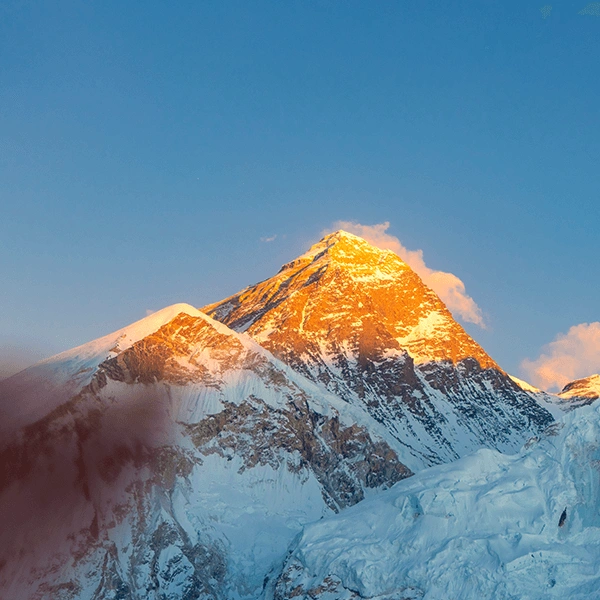
The Everest Base Camp trek can be a path-changing experience. Walking the trail through the Khumbu region, passing Tengboche Monastery above the clouds and surrounded by the highest mountains on earth, is something that will remain with you forever. Everest Base Camp visits and standing in front of Everest are indescribable moments shared by those few lucky enough to experience them.
The key to arriving unscathed is pacing oneself, tuning in to one's body, avoiding arrogance that can override real danger signs, and selecting an itinerary with proper acclimatization step-ups. Besides, one must drink water nonstop, maintain a healthy diet, and sleep even before they become overtired.
There is no need for altitude problems to abort your trekking plan. Most trekkers who adequately prepare and make wise choices while on the trail accomplish their mission without even minor problems. Familiarize yourself with the symptoms. Have faith in your guide. If you are traveling downhill, there is no harm. And if this time things don't go your way, you come back prepared to try again.
One reality common to all Everest Base Camp trekkers' narratives is that getting there and back successfully is not necessarily a matter of being super-fit or experienced. It's those who reckon the altitude seriously right from the start.
Holy Kailash Tours, we believe that trekking should evoke a sense of power rather than overwhelm. Also, our local expertise, personalised attention, and emphasis on safety play a crucial part in turning a question like "Everest Base Camp Trek Altitude Sickness" into a question like "When can we go again? "
If you are interested in experiencing Nepal's magic safely and happily, feel free to contact us. The paths are waiting, and the image of the Everest Base Camp trek will be a part of you forever. Trek responsibly, prepare properly, and the Himalayas will reward your effort.
FAQs
1. What is the highest point on the Everest Base Camp trek, and how does it impact the risk of altitude sickness?
The highest point for most trekkers is Kala Patthar at 5,644 meters, higher than the Base Camp at 5,364 meters. The last three days of hiking from Lobuche to Gorak Shep to Kala Patthar are also when the risk of altitude sickness is highest, since your body has had the least time to acclimate to such high elevations, and any physical exertion is harder as well. Many people who trek to Kala Patthar do so in the early morning to avoid the cold and altitude fatigue that sets in by midday.
2. Can I completely avoid altitude sickness?
No, not completely. You can significantly reduce your risk by properly acclimatizing, staying hydrated, taking it slow on the ascent, and taking medication if necessary. But there are no guarantees. Some people have a genetic predisposition to altitude sickness and might have issues even with the best preparation. Prevention is not about eliminating risk. It is about reducing it and recognizing problems early.
3. Is Diamox (acetazolamide) a safe medication to use while trekking to Everest Base Camp?
Diamox is a frequently used, highly effective medication for preventing and treating AMS. It increases your breathing rate, helping your body get more oxygen. Generally, people do well with it, but it can lead to increased urination and tingling in the hands and feet. Also, some people are allergic to it, especially those who have sulfa allergies. Before taking it, you should always talk to a doctor.
4. How long does it take to recover from altitude sickness?
Mild AMS usually improves after 24 to 48 hours if you stay at the same altitude or descend by 300 to 500 meters. HAPE and HACE are very serious and need strong medicine, a quick descent, and medical help. It may take a few days to get better after that. Sometimes, hikers who have been sick try to go up again after taking a few days of rest at a lower altitude, and they get good results.
5. What is the oxygen level at Everest Base Camp?
At 5,364 meters, the atmospheric pressure at Base Camp is roughly half of what it is at sea level. Your blood oxygen saturation at Base Camp typically drops to 80%-90%, even in healthy, well-acclimatized trekkers. At sea level, a normal reading is 95% to 99%. A reading below 80% at rest at altitude is a medical concern.
6. What's the difference between feeling tired at altitude and having altitude sickness?
This is a fair and important question. Feeling tired after a long day of trekking is completely normal. The difference is whether rest makes it better. With general fatigue, a night of sleep and a rest day typically restores your energy. With AMS, you wake up still feeling lousy, or worse than you did the night before. Headache, nausea, and dizziness, along with fatigue, are key signals that something beyond tiredness is happening.
7. Is it necessary to carry supplemental oxygen while trekking to Everest Base Camp?
Generally, personal supplemental oxygen is not even considered by most regular trekkers. Besides being a burden to carry, the device is costly and provides only relief for the user's symptoms, not the real reason, i.e., acclimatization or descent. Rescue teams and lodging at elevated places usually have emergency oxygen for the critical cases. In the absence of a respiratory ailment, adding supplemental oxygen to your trekking equipment is unnecessary when heading to Base Camp.
8. Are children capable of trekking to Everest Base Camp safely?
Indeed, it is an option; children can complete this trekking route, but they require proper planning and extra caution. Monitoring becomes more difficult as children may not be able to communicate their suffering due to symptoms. Starting with age tolerance, children are no better than adults, and some studies suggest they are more vulnerable. If you want to take children, use a reliable tour agency, set aside enough time for the trip, and plan for a fast descent.
9. What are the most important factors to consider when selecting a trekking operator to help manage altitude sickness risks?
Acclimatization days have to be part of the itinerary in the first place, and not only as optional extras by operators, but they should also definitely be taken into account. Check whether their guides are qualified in wilderness first aid or are familiar with Himalayan rescue protocols.
Find out if they own the equipment, such as pulse oximeters and emergency oxygen. An excellent operator will lay out a detailed procedure for the steps to be taken if a trekker manifests serious symptoms of altitude sickness, including who has the authority to decide on the descent and how the evacuation is organized.
Everest Base Camp Related Blog