ABC Trip Fact
-
Total Difficulty: Moderate
-
Highest Point: 4,130m (Annapurna Base Camp)
-
Technical Skills: None required
-
Best Training: Cardio and stair climbing
-
Best Time: Spring (March – May) and Autumn (September – November
-
Duration: 11 Days
-
Group Size: Flexible (Private Tours or Group Departures)
-
Starts: Kathmandu
-
Ends: Kathmandu
Trip Highlights of Annapurna Base Camp Trek
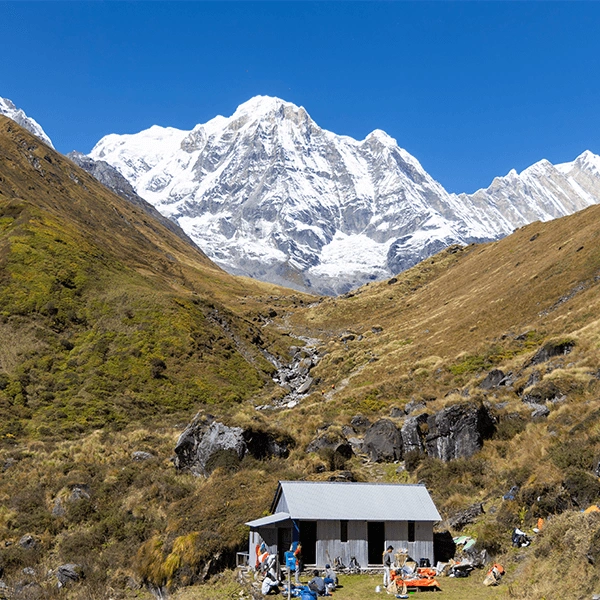
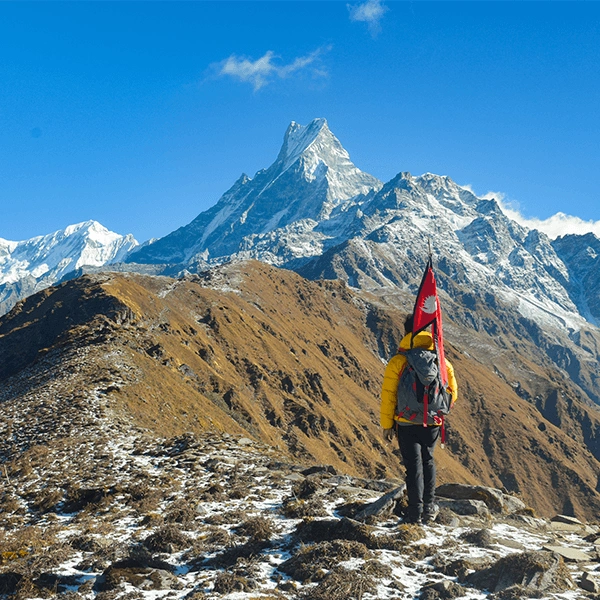
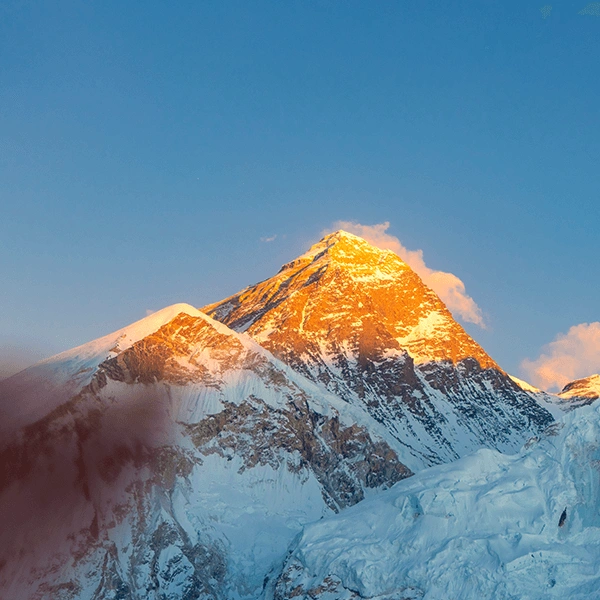
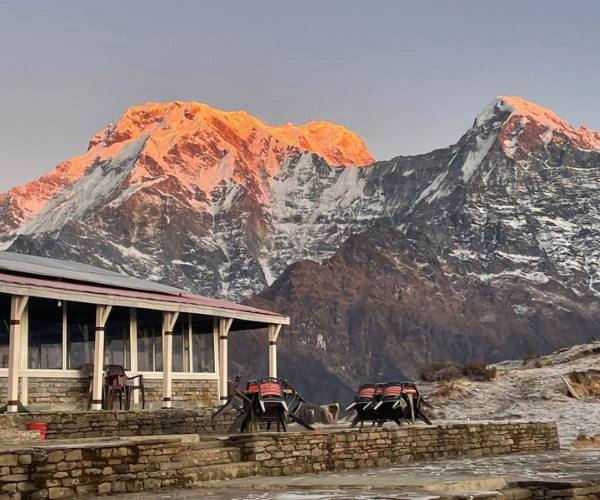
- Standing at Annapurna Base Camp (4,130m): Experience a breathtaking 360° panorama of Annapurna I, Machapuchhre (Fishtail), and surrounding peaks in the heart of the Annapurna Sanctuary – the ultimate reward for the trek's moderate difficulty.
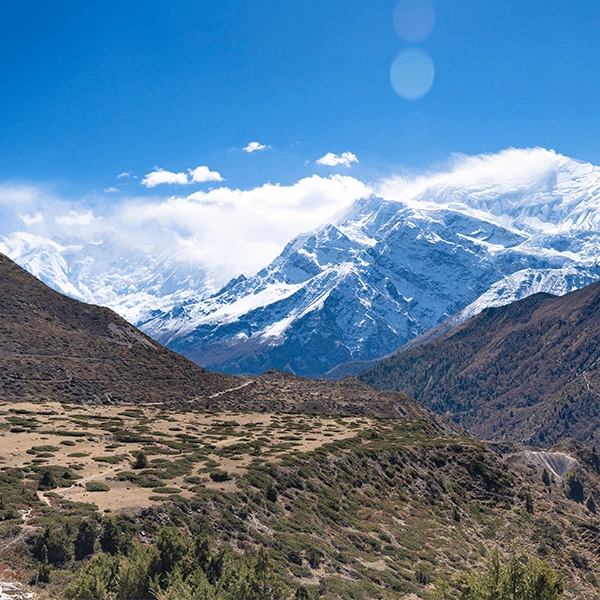
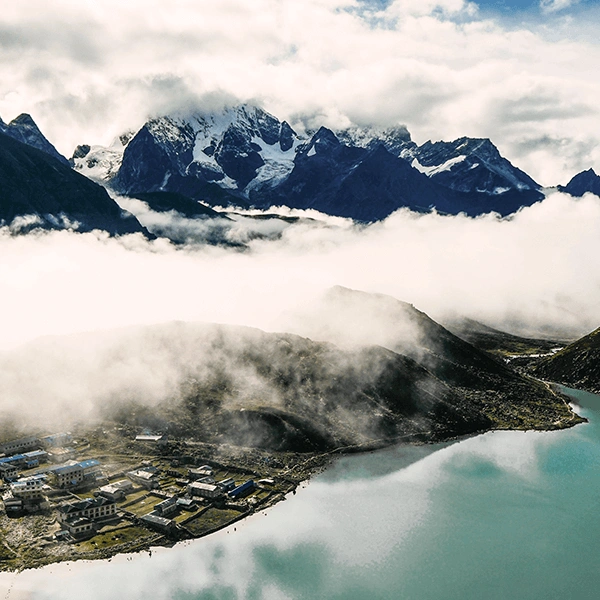
- Diverse Landscapes: Walk through lush rhododendron forests, cross suspension bridges over roaring rivers, and reach high-alpine meadows, showcasing the dramatic scenery changes that make the ABC trek unforgettable.
- Authentic Gurung Villages: Immerse yourself in warm local culture in traditional villages like Ghandruk and Chhomrong, where stone houses, terraced fields, and friendly smiles add rich cultural depth to the journey.
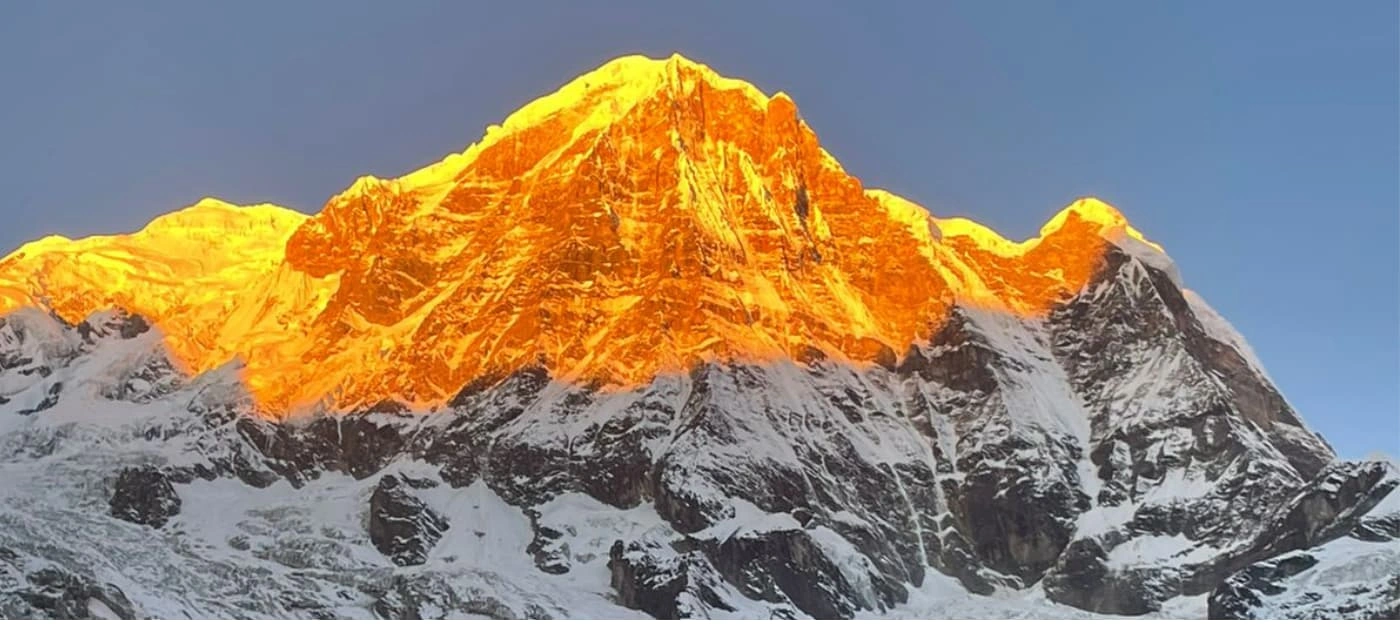
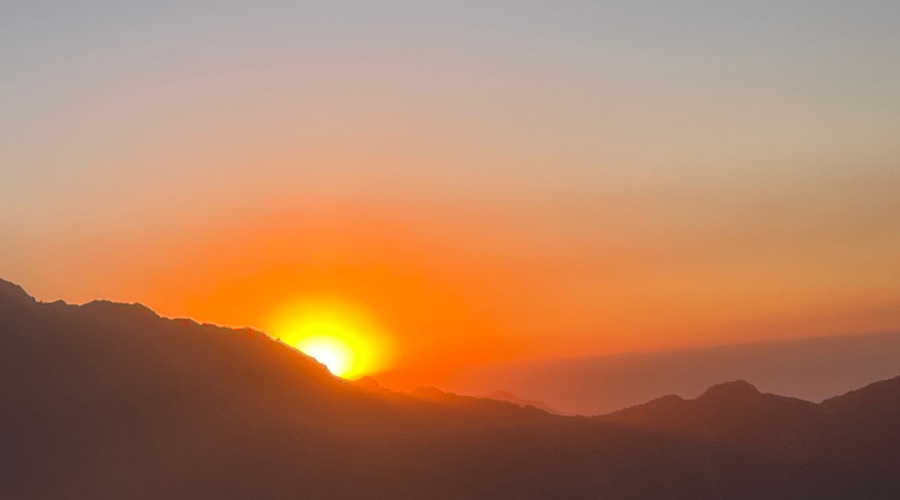
- Magical Sunrise at Machapuchhre Base Camp: Wake up to golden sunlight painting the iconic Fishtail Peak – one of the most beautiful and memorable moments on the entire trek.
- Challenging Stone Staircases: Conquer the long, steep stone steps (especially around Chhomrong) that test your legs but deliver stunning valley views and a strong sense of achievement.
- Stunning Waterfalls and River Crossings: Enjoy powerful waterfalls and thrilling suspension bridges across the Modi Khola, creating dramatic, photogenic scenes throughout the trail.
- Personal Growth and Sense of Accomplishment: Push your limits, manage altitude, and return home more confident and inspired – a life-changing highlight for beginners and experienced trekkers alike.
Is the Annapurna Base Camp Trek Difficult?
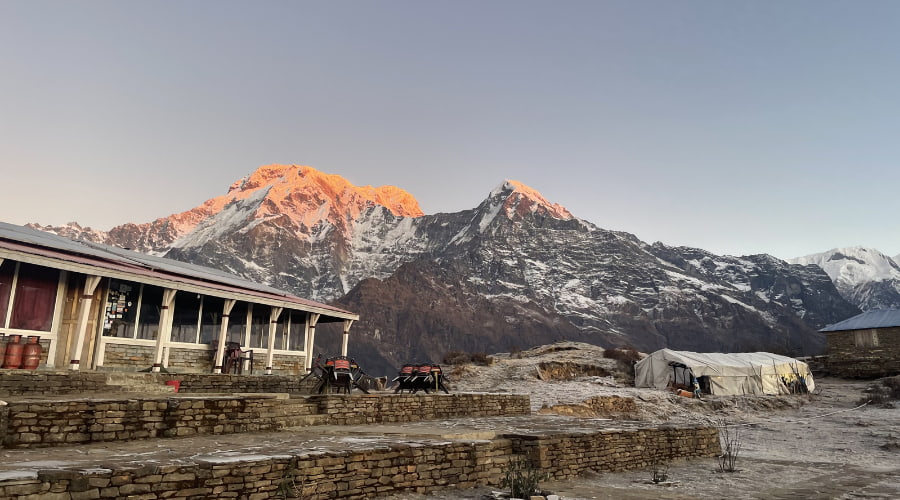
One truth is always the same: The Annapurna Base Camp Trek shows you when you get worn out, but in the end, it leaves you satisfied. In Nepal's trekking rating system, it is rated 'moderate' or average. You won't be needing any crampons, ice axes, or mountaineering expertise here. The trail is continuously well-marked; also, tea-house lodges are your source for beds, hot meals, and basic facilities along the way.
Who can actually do it?
- Adults in good health and with moderate fitness, who prepare for 68 weeks before the trip, physically.
- Beginners who are okay with walking 57 hours every day and are ready to listen to their bodies.
- People who acknowledge the impact of altitude and adhere to a gradual pace.
Who may find it a bit difficult?
- People with barely any stamina or who haven't been doing any physical activity lately.
- Those who think it's going to be a piece of cake or that they can just carry on trekking regardless of the symptoms they feel.
- People with serious respiratory, heart, or joint problems who have not been medically cleared.
The round-trip distance is about 110-120 km, depending on your exact starting point (most commonly Nayapul or a jeep drop closer to the trail). The daily distances range from 6-15 km, but the real difficulty lies in the cumulative nature of the repeated steep ascents, stone staircases, and thin air. When considering all the ups and downs, the total elevation gain amounts to several thousand meters, even though the net gain from your starting point at around 1,070m is 4,130m.
Many trekkers single out physical exertion as something they can handle reasonably well if they make a steady effort. However, the mental aspect of keeping going during a long, strenuous, uphill day, when even the body seems exhausted, is the bigger challenge for most people.
One fact is clear: moving at a slow, steady pace is the winning strategy. In fact, rushing will only bring your exhaustion or altitude sickness much sooner than anything else.
Key Factors That Affect Annapurna Base Camp Trek Difficulty
Several elements shape how hard the trek feels for any individual.
Trek Duration and Distance
Most typical tours last 7 to 12 days, with 8 to 10 days considered the best for first-time visitors, providing a good balance of work and rest. Usually, one would walk for 5 to 7 hours per day, sometimes up to 8 hours on the challenging parts.
The normal distance is around 8 to 12 km daily, but the condition of the paths makes one feel as if they have walked twice that distance. There are also shorter, hasty versions (5 to 7 days), but these drastically increase the difficulty level, as one has less time for acclimatization and recovery. A well-balanced schedule will help to turn a situation that might be perceived as a challenge or hardship into an enjoyable experience of making progress.
Altitude and Acclimatization
Although the highest altitude of the trek is 4,130 meters, it is still much more accessible for the average person than the 5,364 meters of Mount Everest Base Camp. You will, however, be going up from the subtropical lowlands to a very high alpine environment where the level of oxygen becomes quite low. At altitudes above 3,000 meters, the body needs time to acclimate to the environment.
Why is a slow ascent important? Rapid height gain can lead to acute mountain sickness (AMS), with common symptoms including headache, nausea, fatigue, or dizziness. On the Annapurna Base Camp trek, the risk of getting sick remains lower than on higher treks, but around 10% of trekkers are affected if they don't follow the pacing rules.
The golden rule is to limit your elevation gain to 300-500 meters while you are sleeping after 3,000 meters. You also need to have "climb high, sleep low" days, where you go up for a hike and come back to a lower elevation for the night.
Proper acclimatization is exactly what turns altitude from a major problem into an easily handled factor. Many who have felt really good at lower elevations also notice that their breathing becomes heavier and their pace slows at Machapuchhre Base Camp (3,700m) or at Annapurna Base Camp itself.
Trail Conditions
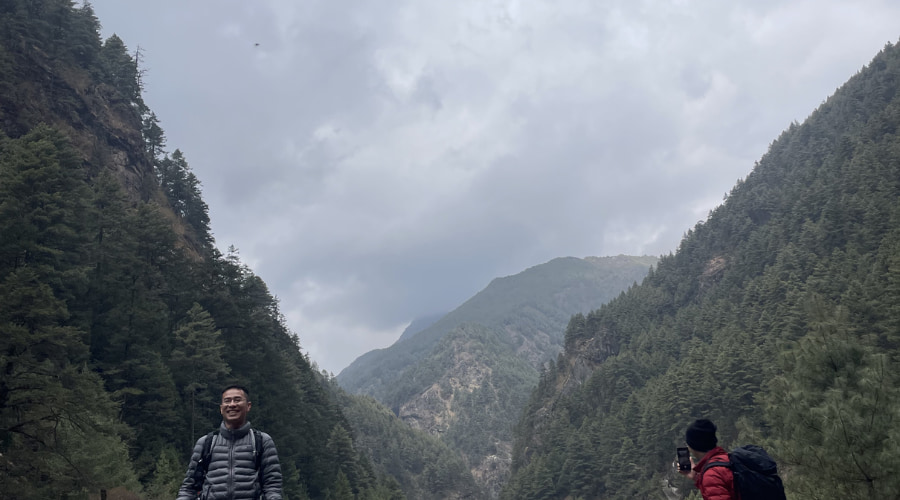
The route features a combination of scenic forest trails, suspension bridges, stone stairways, and difficult rocky stretches. The first days take you through dense forests of rhododendrons and bamboo. At higher altitudes, the trail becomes a narrow path offering spectacular views but is also more exposed.
One of the most challenging parts is the continuous stone steps going down into and up out of Chhomrong, the longest and steepest part that really works the quads and knees. The rain makes parts of the trail muddy and slippery, whereas dry weather turns them into dusty paths.
The last part from Machapuchhre Base Camp to Annapurna Base Camp is mainly a long climb along the side of a moraine, but the scenery makes the effort worthwhile. Only when you really push the limits will there be monsoon mud or winter snow and ice that may cause major confrontations with the trail. Even during the best seasons, an unfortunate misstep on the slippery, uneven stairs could lead to a twisted ankle.
Weather and Season
Weather dramatically influences perceived difficulty:
Spring (MarchMay): Usually perfect, more blue sky, blooming rhododendrons, trails firm and safe. Days become quite warm, but nights remain freezing higher up. Although there are more people, the views are stunning and worth the effort.
Autumn (SeptemberNovember): Another excellent season with refreshing cool air, superb visibility, and a lower chance of rain. It is quite pleasant temperature-wise during the day.
Winter (DecemberFebruary): Much colder, with the possibility of snow in higher areas. The days are shorter and the nights freezing, so it is harder, but it is also quieter and more peaceful. Certain lodges may not be open.
Monsoon (JuneAugust): Almost always a no-go period. The heavy drain turns the trails slippery and infested with leeches, visibility drops, and the risk of landslides increases. The mountains often stay covered by clouds.
Picking the right season will make a notable difference in the difficulty of the Annapurna Base Camp trek. The majority of experienced hikers recommend spring or autumn for beginners who want to experience the very best balance of weather, safety, and scenery.
Annapurna Base Camp Trek Difficulty for Beginners
First of all, beginners can definitely try to complete the Annapurna Base Camp trek. Some of our clients at Holy Kailash Tours come to us with no or very limited hiking experience, and they manage brilliantly as long as they prepare properly. What kind of fitness is best? You should have enough cardio fitness to walk 5-7 hours carrying a daypack (5-8 kg) without getting out of breath.
Strong legs are a bonus for stairs, though, and simple stamina will keep you from running out of energy quickly. You can be a couch potato and still do this one, just be a regular one.
In fact, the very first mistake a beginner makes is the following: I am puzzled by the fact that the force of gravity seems to increase with each passing day.
- Carrying a necessary amount of luggage.
- Dismissing the symptoms of altitude sickness and continuing the trek.
- Trying to keep up with the speed of the fastest pace of the group members instead of going at their own sustainable rhythm.
- No pre-trek training because the trail is presumed to be nice and gentle.
Real example: A 45-year-old office worker from Europe joined one of our groups. She trained by walking 8–10 km with hills three times a week for two months. On the trek, she found the Chhomrong stairs tough but managed by taking micro-breaks and staying hydrated. She reached Annapurna Base Camp trek feeling proud rather than broken.
Fitness Level Required for ABC Trek:
Focus on three areas:
1. Walking Endurance: Do long walks (46 hours) on various terrains, preferably with some elevation, weekly. Gradually work up to carrying a loaded daypack.
2. Leg Strength: Squats, lunges, and step-ups are the best ways to strengthen the muscles used on the endless Nepali stairs.
Downhill training also helps your knees.
3. Basic Cardio Fitness: Running, cycling, or brisk walking will all increase your oxygen efficiency, which is very helpful when you are at high altitudes.
Somewhat of a yardstick: If you can hike 10 km over gently rolling ground in less than 2. 5 to 3 hours without feeling very tired, then it is a good sign. Also, if you can jog 5 km in approximately 30-35 minutes without being totally out of breath, then you have come to a good place.
Training does not have to be extreme. Six to eight weeks of regular work is much better than doing a lot of work at the last moment. If you can, do some hikes at higher altitudes to get a feel for it.
Real Challenges ABC Trekkers Face
These are some of the challenges even seasoned hikers may face:
- Challenging staircases around Chhomrong (down hundreds of steps, then back up), along with long uphill walks.
- At night and at higher elevations, the temperature can be quite cold. Plan on temperatures dropping to freezing or even below at ABC.
- Accommodation conditions are quite basic: Teahouses provide simple rooms with thin mattresses and shared facilities. Hot showers (when available) are an extra charge and may be run on a solar system.
- Mental tiredness: On many days, the trekkers lose track of time, feel their motivation dip when the views are obscured by clouds, and have their willpower tested by the monotonous rhythm of the days.
- Altitude sickness: Even mild symptoms can cause fatigue and decreased appetite.
- Overuse of knees and ankles during prolonged descents.
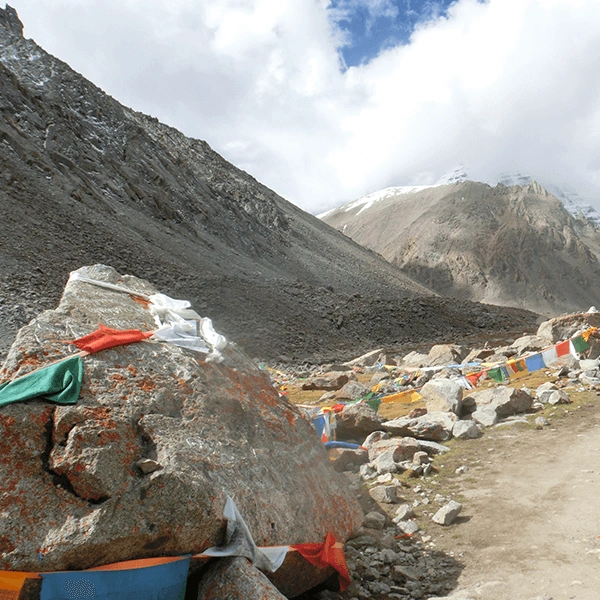
The above problems are quite tangible but hardly ever sealing ones. The adamant beauty of nature in every aspect, rushing water, Gurung settlements, prayer flags dancing in the wind alongside gigantic Himalayas, always serves as the freshest source of motivation.
How to Make the ABC Trek Easier?
Brilliant tactics make the trek less hardcore:
- Maintain a regular, comfortable pace. "Nepali flat" denotes continuous little ups and downs; keep your energy in reserve.
- Drink plenty of fluids: Set a goal to have 34 litres per day. Being dehydrated will aggravate symptoms of altitude sickness.
- Give yourself plenty of time for proper rest: Take short breaks every hour, enjoy longer lunches, and use complete rest days if you feel like it.
- Lighten your load: Try to reduce your duffel bag to 1012 kg (porters or guides can assist you). Take only the essentials in your daypack.
- Employ a guide or porter: Native professionals deal with navigation, safety, and logistics, so you can simply concentrate on the pleasure of the trip.
At Holy Kailash Tours, we understand how difficult these experiences can be, and we specialise in ways that make managing them easier. Our expert guides not only keep track of every trekker's pace and health daily, but they also know how and when to change the routes if a person feels the need to have more rest or to go at a slower pace.
Besides that, we ensure providing top-notch equipment, serving delicious meals tailored to energy requirements, and implementing emergency procedures involving oxygen and evacuation facilities.
On the whole, we heard multiple times from our customers that our devoted care helped change the scenario where they would have faced difficulties into one that turned out to be their most unforgettable adventure. No matter if you decide to go alone or with a bunch of people, our squad will be there to make you feel safe at every phase of your trekking experience.
Best Itinerary to Reduce Difficulty
One of the major factors contributing to overall difficulty reduction is a gradual plan. Here's a 10-12 day option focusing heavily on acclimatization (can be modified according to your level of fitness):
Day 1: Get to Pokhara (or Kathmandu to Pokhara transfer). Take rest and organise yourself.
Day 2: Travel by road to the start point of the trail (e.g., Nayapul or the closest jeep point) and hike to the Tikhedhunga or Ghandruk region (easy start, 45 hours of walking).
Day 3-4: Walk in the woods and gradually go up to Chhomrong, taking ample time for the large set of stairs.
Day 5: From Chhomrong to Bamboo or Dovangain, the altitude gradually increases as you move through the jungle.
Day 6: Head out to Deurali or Machapuchhre Base Camp vicinity with an altitude check.
Day 7: One day for getting used to the environment/rest, or a little hike higher before going to ABC.
Day 8: Arrive at Annapurna Base Camp, viewing the sunrise or the sunset makes you forget the hardship.
Days 9-11: Different modes of going down, probably through alternative routes or side visits.
Day 12: Return to Pokhara.
This kind of plan not only maintains moderate daily elevation gain but also has extra days in hand. Seven-day shorter options are available, but they require a very good level of fitness and may increase the risk of tiredness or AMS.
Tips from Local Experts
There are a few practical tips from Holy Kailash Tours Guides who have been on the trek for quite a long period of time:
- To avoid the afternoon heat and clouds, it is recommended to start early each day and walk during daylight hours.
- Proper nutrition is the key - carbohydrates and proteins provide energy; even if the appetite disappears due to high altitude, having small, frequent meals is the way to go.
- Pay attention to your body's signals: if you have a mild headache, take a break and drink water. If your symptoms are worsening, act immediately and go down.
- Don't hurry - the mountains won't go away. Visit villages, meet locals, and immerse yourself in their culture.
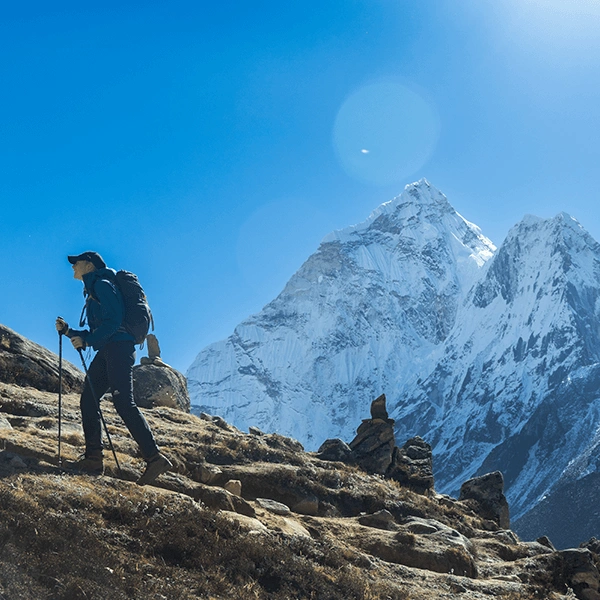
- Trekking poles will help you with balance on stairs and descents, besides saving your knees a lot.
- Smart layering: in the mornings and evenings, it is cold, but during the day it warms up quickly.
Who Should Avoid ABC Trek?
Being honest with yourself is an absolute must.
- Don't do it or greatly change what is written if you have: Major heart, lung, or blood pressure issues without the green light from your doctor.
- Recently, major injuries or operations on body parts have limited mobility.
- Very poor physical condition, and also no possibility for physical training.
- Aversion to the simplicity of the facilities and/or the elemental level of effort during multiple days.
- Preparation, in most cases, is the way that converts scepticism into a state of achievement.
Related Blog of Annapurna Region
Final Thought
The Annapurna Base Camp Trek offers a splendid combination of challenge and magnificent nature. The hike's moderate difficulty means it is relatively accessible, but the daily endeavours and the high-altitude setting will definitely give you the feeling of genuine achievement. With a well-thought-out plan, gradual itinerary, sensible exercises, and dependable support, you will be able to reach the altitude of 4,130m among the giant peaks and feel a sense of pride in what your body did.
At Holy Kailash Tours, we believe that trekking should evoke a sense of power rather than overwhelm. Also, our local expertise, personalised attention, and emphasis on safety play a crucial part in turning a question like "How difficult is the Annapurna Base Camp Trek?" into a question like "When can we go again? "
If you are interested in experiencing Nepal's magic safely and happily, feel free to contact us. The paths are waiting, and the image of the Annapurna base camp trek will be a part of you forever. Trek responsibly, prepare properly, and the Himalayas will reward your effort.
Annapurna Base Camp Trek FAQ
1. Is Annapurna Base Camp Trek harder than Everest Base Camp?
In general, the Annapurna Base Camp Trek goes to a lower altitude (4,130m vs 5,364m), so the risk of altitude sickness is lower. To be honest, ABC has steeper stone staircases that can be very physically demanding for legs and knees. Everest Base Camp is usually associated with longer overall days in a tougher, more isolated environment. That is why many people find Annapurna Base Camp more suitable for beginners.
2. Is it possible for beginners to do the ABC trek?
Yes, if fitness training is done properly and the itinerary is paced. Besides those who never did it the first time, about thousands go through it successfully each year. In fact, endurance building is important, along with choosing a well-known operator such as Holy Kailash Tours for your guidance. ,
3. How long do you walk every day on the ABC trek?
Generally, it's from 5 to 7 hours. It depends on days and paces. Sometimes days are so short (about 4 hours), and on others they are very long (up to 8 hours during heavy up/down days). What is actually most important in the end is to continuously and steadily move forward.
4. Is altitude sickness common on the ABC trek?
It is possible to get it, but it is still not very frequent and usually very mild compared to other higher treks. Only about a tenth of trekkers experience symptoms if they go up too fast. Still, most of the time, people are quite comfortable if they maintain a good walking pace, drink a lot of water, and take breaks.
5. What fitness level is needed for the ABC trek?
Moderate cardio and leg strength training to manage 5-7 hours of walking every day on hills, and working out regularly for 6-8 weeks beforehand, are enough for most healthy adults.
6. What is the ideal time to do the Annapurna Base Camp Trek?
Spring (March-May) and autumn (September-November) provide the best mix of weather, visibility, and trail conditions.
4. How much elevation gain occurs daily?
Take your daily uphill between 400 and 1000 meters, depending on the section, with quite a bit of up and down. The overall net progress should be gradual with a good itinerary.
5. How important is a guide or porter for the ABC trek?
Talk about guides and porters: they certainly are not required by law for all, but from the safety, learning/location, and physical workload-reduction (esp. for beginners) points of view, they are as necessary as highly recommended. Besides, the pros and their services generally make the trip more enjoyable and safer.
6. What physical condition is required for ABC Trek?
You need a fair level of cardio fitness and strong legs to cope with 57 hours of walking on hilly terrain every day. Most healthy adults who train regularly for 68 weeks will be well prepared.
7. When is the best time for the Annapurna Base Camp Trek?
During spring (March to May) and autumn (September to November), you will get the best combination of weather, visibility, and trail conditions.
8. How much altitude difference do you have to climb daily?
The daily climbs range from 400 to 1,000m, depending on the section of the trail, with quite a few ups and downs. A good route plan will keep the overall climb steady.
9. Guide or porter for ABC trek - is it necessary?
It is not a legal requirement for everyone. Still, it is a very good idea, especially if you are a beginner, as a guide can ensure safety, help with navigation, and you can lighten your load by carrying only a day pack if a porter is hired. Besides safety, professional assistance will also improve your overall trekking experience and make it more enjoyable.
10. What difficulties will beginners face on ABC?
The main issues for beginners are walking for multiple days, fatigue, the effects of high altitude, very steep stair sections, and getting used to the simple lifestyle in teahouses. However, with the right preparation and support, these challenges will be overcome.
Holy Kailash Trip Packages