Here are the quick facts you need before diving deeper:
- Annapurna Base Camp, 4,130 m (13,550 ft)
- Trek duration: 10 to 14 days, depending on your starting point and pace.
- Starting point: Nayapul or Phedi, reachable from Pokhara.
- Trek type: Point-to-point or loop (most finish at Jhinu Danda for natural hot springs)
- Difficulty level: Moderate. Best season: March to May (spring) and September to November (autumn).
- Total distance: Approximately 110 to 115 km round trip.
The Annapurna Base Camp trek is popular for good reason. So it offers a high-altitude alpine experience without requiring technical climbing skills. You don't need ropes or crampons. Plus, you don't need years of mountaineering experience.
What you need is a reasonable fitness level, the right gear, a good mindset, and a well-planned itinerary. The trail passes through diverse ecological zones, from subtropical forests at lower elevations to bare glacial terrain near the Annapurna base camp. Along the way, you'll cross bamboo bridges, soak in natural hot springs at Jhinu Danda, share tea with locals in small villages, and sleep in cozy teahouses with views that cost nothing extra.
Annapurna Base Camp Trek Distance and Route Details
The Annapurna Base Camp trek covers about 110-115 km; the distance varies depending on where you start and finish. Most people begin in Nayapul, a roadside stop around 42 km from Pokhara, and head back to the same spot or end at Jhinu Danda.
From Nayapul's 1,070 m elevation, the trail climbs bit by bit to Annapurna Base Camp at 4,130 m, gaining over 3,000 meters across several days. The path is clear and used often—no confusion for beginners.
Key stops on the route:
- Nayapul (1,070m): Easily reached by jeep or bus from Pokhara in under two hours.
- Tikhedhunga (1,540m): A quiet village with teahouses. Many use it as their first night stop.
- Ghorepani (2,860 m): Known for the sunrise climb to Poon Hill (3,210 m), where Himalayan peaks stretch out in full view—mostly clear on dry mornings.
- Tadapani (2,630m): A forested area before Chhomrong.
- Chhomrong (2,170m): The final Gurung settlement along the way and a vital rest point for adjusting to altitude.
- Bamboo (2,310 m): Named for thick stands of bamboo covering the ground here, quiet and green.
- Deurali (3,230m): The trail gets narrow here. Clouds roll in regularly during spring and early summer.
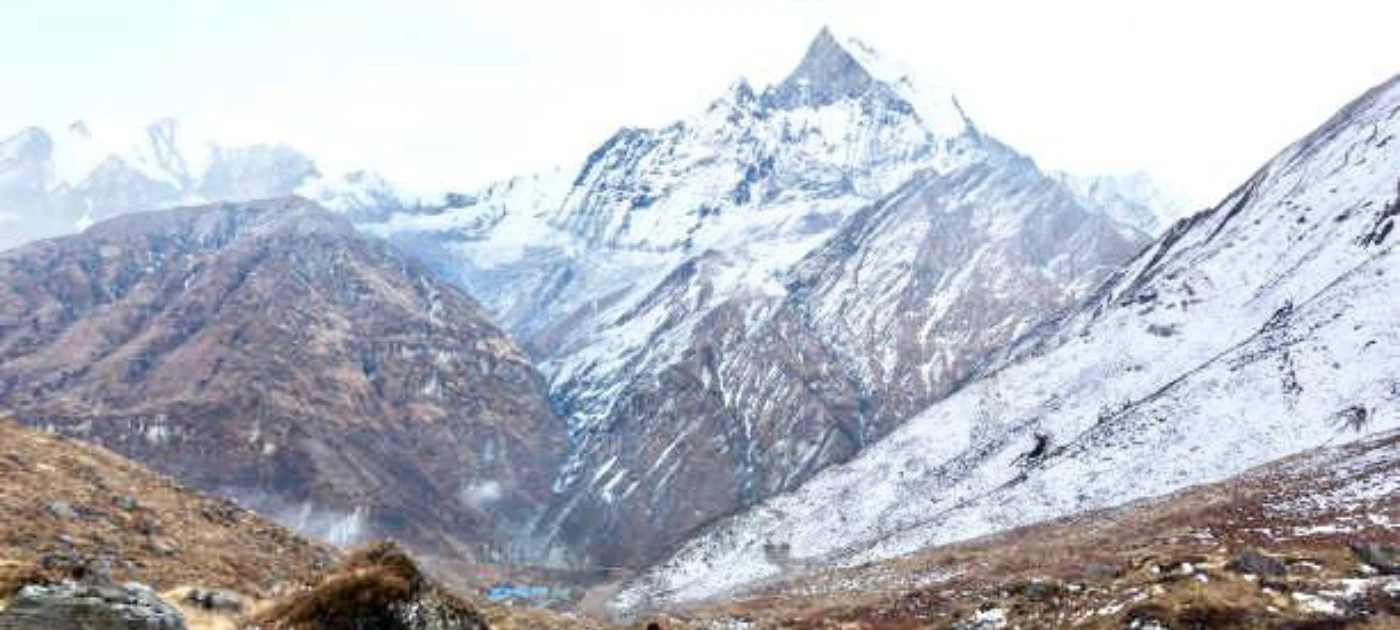
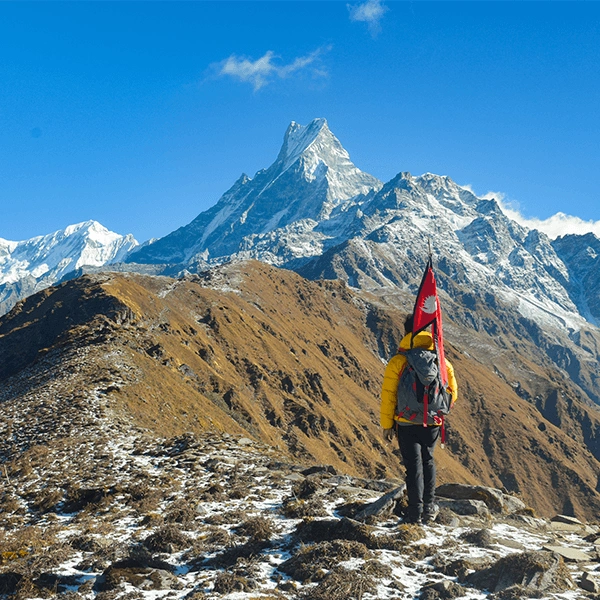
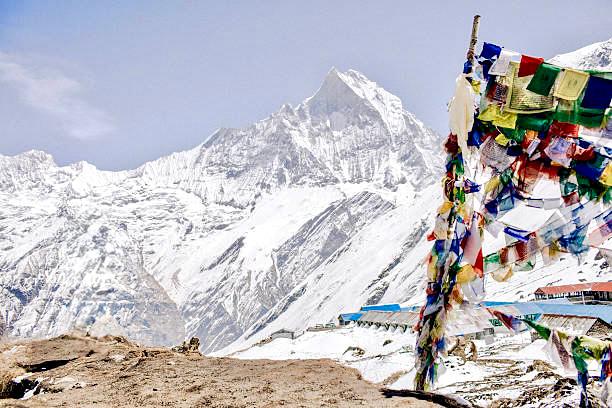
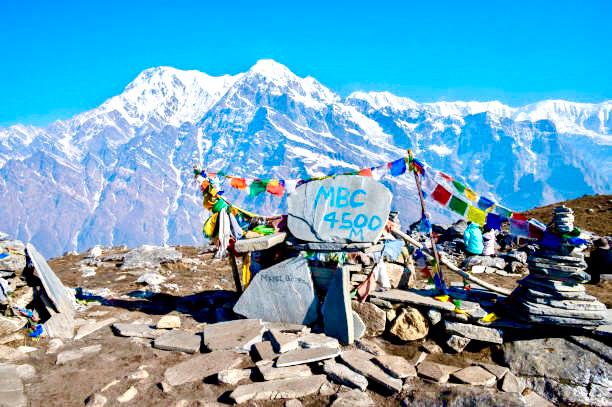
- Machapuchare Base Camp / MBC (3,700 m): A striking overlook beneath the sacred fishtail peak, a place trekkers don't rush past, it seems worth pausing at.
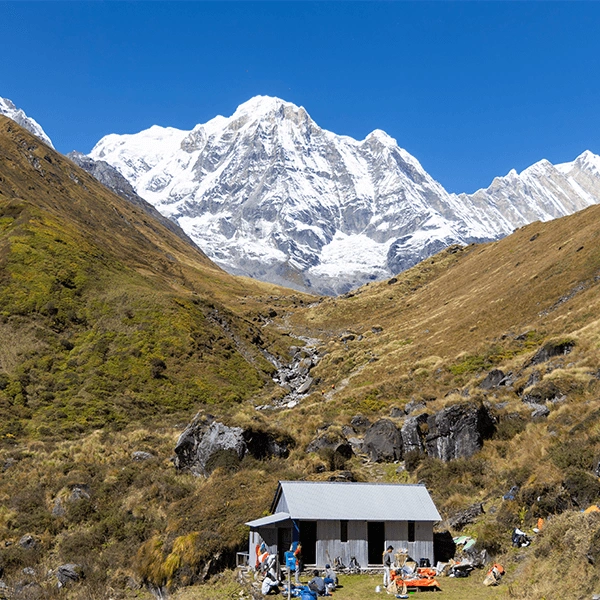
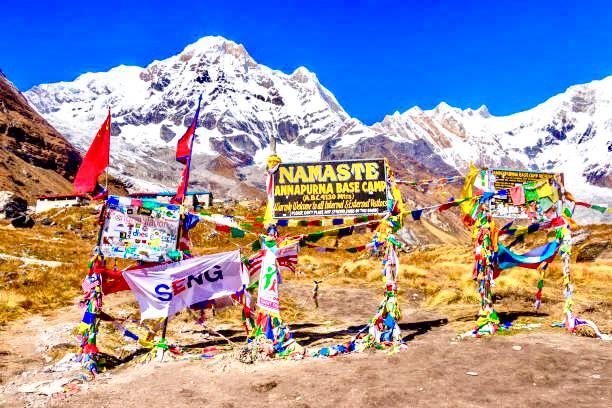
- Annapurna Base Camp / ABC (4,130m): The goal of the trek, sitting inside the Annapurna Sanctuary.
- Jhinu Danda (1,760m): The rewarding finish line with natural hot springs along the Modi Khola river.
The distance from Chhomrong to Annapurna Base Camp is about 22 km one way. From Nayapul, it is roughly 55-58 km one way. The full loop, including the ghorepani-Poon Hill detour, is about 110-120 km.
Most of the second half travels along the Modi Khola river valley. Higher up, the valley tightens into a gorge surrounded by huge rock walls and glaciers. It's still remote despite solid teahouse support.
Annapurna Base Camp Trip Highlights
- Explore the numerous natural landmarks of the Pokhara Valley.
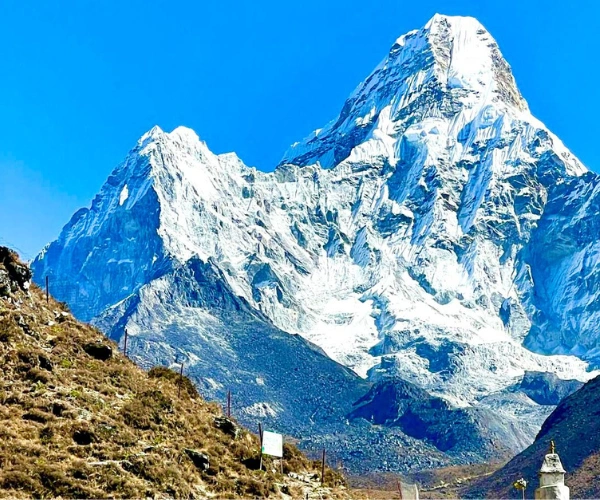
- Observe the panoramic views of the Dhaulagiri and Annapurna ranges along with Mt. Machhapuchhre (6997 m).
- Enjoy Gurung culture and hospitality on the trek
- Trek through the enchanting Annapurna Conservation Area
Annapurna Base Camp Trek Detailed Itinerary
Day 1: Arrival
Our airport representative will receive you at the airport and transfer you to the hotel in Kathmandu. All the trip details will be discussed, and formalities will be completed. The company representative will host a welcome dinner in a typical traditional Nepalese restaurant. You will be introduced to your trekking guide. Overnight in a hotel
Day 2: Fly to Pokhara; Drive to Ulleri
Early in the morning, the trekking guide will pick you up from the hotel and transfer you to the domestic airport. We will board the flight and travel to Pokhara. The flight duration is about 25 minutes to 35 minutes. After landing in Pokhara, we will hop on the jeep and head towards Ulleri Village. On the way to the Ulleri Village, we will stop at Birethanti for ACAP permit verification.
The road from Birethanti to Ulleri is off-road, and expect a bumpy ride. The scenery of the river, terraced farmlands, and forests can help you forget all the bumpy ride experiences. Upon reaching the Ulleri Village, we will be welcomed by the best sight of the mountain popping out of two hills. In the evening, you can stroll around the village and learn about the local lifestyle. Overnight in a tea house
Max. Altitude: 2,050m (6,725ft)Duration: 25-35 min flightMeals: Breakfast, Lunch, Dinner Accommodation: Tea House
Day 3: Trek to Ghorepani
Today is the first day of the trek. Therefore, we will wake up early and do some stretching. After breakfast, we will start our trek for the first time. We will be walking through the village and terraced farmlands until we reach the Upper Ulleri village at the crossroads between the Ghorepani trail and the Mohare Danda Trek trail. As we cross the river, we will enter the forests.
The smell of forests, cool fresh air, and chirping sounds of birds keep pushing us to walk this uphill section of the trek. Today's trek is completely uphill all the way to the village of Ghorepani. We will have lunch in Banthanti and continue walking uphill. Our permits will also be checked at the entrance in Lower Ghorepani. We will settle in our tea house. The view of the cascading hills and mountains from the village is so astounding. If the weather permits, we will get the best view of the mountains and hills before our dinner. Overnight in a tea house
Max. Altitude: 2,860m (9,383ft)Duration: 6 – 7 hrsMeals: Breakfast, Lunch, Dinner Accommodation: Tea House / Lodge
Day 4: Poon Hill Hike (3210 m); Trek to Tadapani (2630 m)
Early in the morning, before dawn, we will begin our hike to Poon Hill. The hike is about 45 minutes to 1 hour with the help of torchlight through the green, lush forests. We will wait anxiously for the sun to rise from near Machhapuchhre Mountain. The sight of the mountains before sunrise and after sunrise changes drastically, which is also the highlight of this hike.
Mountains line up in front of our eyes, starting from Mt. Dhaulagiri to Machhapuchhre, including all the mountains of the Annapurna Himalayan range. After spending an hour, we will head back to our tea house in Ghorepani for breakfast. The trek continues after breakfast towards the village of Tadapani. At first, we will have to walk up the hill to the top of Gurung Hill before descending all the way to Tadapani Village.
We will have lunch in Nangethanti before descending to Tadapani Khola and climbing for about 30-40 minutes to reach Tadapani. The best views of Annapurna South and Machhapuchhre are from the village. It is a small village full of tea houses and eateries, and it is also at a crossroad between the Annapurna Base Camp Trek route, the Khopra Ridge Trek, and the Ghandruk Village. Overnight in a tea house
Duration: 6-7 hrs
Day 5: Trek to Chhomrong (2170 m)
After breakfast, we will begin our trek. At first, we will trek downhill through the lush green forests, then take the traditional flat trail through the bamboo forests to reach Chhomrong Village. We will have lunch on the way, and today's trek must be meticulously done.
We will be descending rapidly, which can be detrimental to the leg muscles. Make sure you are hydrated frequently. We will meet the trail coming from the New Bridge Jhinu. In the evening, you can observe the surroundings or talk with the porters or the tea house owners about the lifestyle of people living in this village. Overnight in a tea house
Duration: 5 – 6 hrs
Day 6:Trek to Dovan or Himalaya (2500 m – 2900 m)
Gear up for the gradual uphill trail from this day onwards. Note down that there are some steep uphill sections too, but the trail has mixed slopes. We have to walk on a gentle Nepalese flat as well as on uphill sections multiple times. The trail runs side by side with the deep gorge river, which you may not see but hear only due to the lush forests blocking the view.
The gigantic hills on either side can be an enticing sight to behold while we struggle to climb. On the way to the Himalaya, we will also observe the Hinku cave and learn about the facts related to this natural cave. The guide will decide whether to stay in Dovan or in Himalaya. During the peak trekking season, you may have to compromise in between and leave the decision to be made by a trekking guide. Overnight in a tea house
Duration: 6 – 7 hrs
Day 7:Trek to Machhapuchhre Base Camp (3700 m)
Today is the shortest day of the trek, but equally tiring. At first, we will have to trek uphill to the village of Deurali, which is a steep ascent. The tree lines start to fade from Deurali, and the trail becomes rugged. We will be walking through the big boulders, crossing the river, and entering the Machhapuchhre Base Camp zone. The trail passes through narrow valleys and opens up once we reach Machhapuchhre Base Camp.
It is in the foothills of the hill, and you can get the astounding scenery of Machhapuchhre and Himalchuli. We will rest today in this high altitude, adjusting to the demands of higher elevations. After lunch, you can trek to the nearby hill and then return to the tea house as part of an acclimatisation exercise. Overnight in a tea house
Duration: 4-5 hrs
Day 8:Trek to Annapurna Base Camp (4130 m); Trek back to Deurali or Dovan
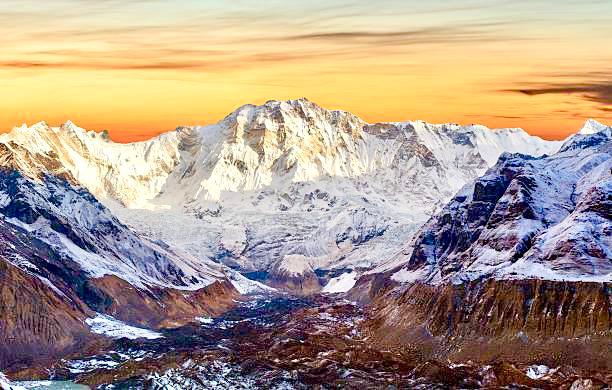
Finally, we will reach the most coveted base camp of the world's 10th-tallest mountain, Mt. Annapurna (8091 m). The first phase of about 30 to 40 minutes is uphill, but the trail becomes Nepalese flat through the narrow valley showcasing the lineups of lofty Himalayas starting from Himchuli.
We will stop at the Annapurna Base Camp Hoarding Board and capture the moment of achievement. We will explore the Annapurna Base Camp and witness the majestic scenery of mountains like Himchuli, Annapurna South, Annapurna I, Annapurna III, Gandharva Chuli, Barasikhar, Machhapuchhre, etc.
After lunch at the Annapurna Base Camp, we will then retrace the same trail back to Deurali or Dovan. If we have time left and energy left, then we will descend to Dovan; otherwise, we will stay overnight in Deurali. Overnight in a tea house
Duration: 5 – 7 hrs
Day 9:Trek to Jhinu Danda (1780 m) & Drive to Pokhara
We will retrace the same trail back to Jhinu Danda. After having lunch in the village, we will walk for a few minutes and cross the suspension bridge,finishing up our trek. We will hop on the jeep and drive to Pokhara. In the evening, you can enjoy the magnificent nightlife around the Lakeside area. It is free time for you to explore Lake City Pokhara. Overnight in a hotel
Day 10: Flight to Kathmandu
After breakfast, you will be picked up from a hotel and transferred to the Pokhara Airport for the flight to Kathmandu. Upon reaching Kathmandu, you will be checked in at the hotel, and the company representative will host the farewell dinner in a Nepalese traditional restaurant. All the trip reviews will be done over dinner. You can do some shopping around the marketplace of Thamel. Overnight in a hotel
Day 11: Departure
Our airport representative will take you to the International Airport for the final departure. We will bid farewell with a promise to meet again for another exciting adventure in Nepal.
Cost Details
What's Included
- Airport pickup and drop-off by private vehicle.
- 3 nights' accommodation in Kathmandu on a bed and breakfast basis.
- 2 nights' accommodation in Pokhara on a bed and breakfast basis.
- Kathmandu sightseeing with a private guide and private transportation
- Kathmandu – Pokhara – Kathmandu by private transportation.
- All ground transportation by private vehicle.
- Your standard meals (breakfast, lunch, and dinner) during the trek.
- All necessary paperwork, conservation area, and restricted area entry permits.
- All accommodations are in hotels, lodges, or tea houses during the trek.
- An experienced government-licensed guide and porters.
- Medical supplies (a first aid kit will be available).
- Farewell dinner at a typical Nepali restaurant
- All government taxes.
What's Not Included
- International Airfare
- Nepal entry visa
- Personal Expenses
- Travel and Rescue Insurance
- Extra accommodation and food charges in Kathmandu
- Tips and gratitude to the guide, porters, and drivers
Annapurna Base Camp Trek Cost Breakdown
The traveller asking the biggest question has is how much does the Annapurna Base Camp trek cost? The honest answer depends on the weather, booking duration, time packages, hotel category, and group size
You require two permits to trek in the Annapurna Base Camp
Total permit cost:
approximately NPR 5,000 (USD 37 to 40). Although having a guide is not compulsory on the Annapurna Base Camp trek, it would definitely be a wise choice, especially if it is your first time! A guide can make a positive difference in a number of areas such as safety, firsthand knowledge about the local culture, and a better understanding of the cultural elements of the region: For a trek lasting between 10 to 12 days, the guide's fee is approximately in the USD 200 to 300 range while the porter's fee is in the USD 180 to 250 range.
- Annapurna Conservation Area Project (ACAP) permit: NPR 3,000 per person (roughly USD 22 to 25)
- TIMS card (Trekkers' Information Management System): NPR 2,000 per person (roughly USD 15)
- Total permit cost: around NPR 5,000 (USD 37 to 40)
Guide and Porter Costs
- Licensed guide: USD 25 to 35 per day
- Porter (carries up to 20 to 25 kg): USD 20 to 25 per day
- For a 10 to 12-day trek, guide cost runs USD 200 to 300, and porter cost runs USD 180 to 250.
If you go through a trekking agency like Holy Kailash Tours, the guide and porter costs are included in the package price, so you don't need to negotiate them separately.
Accommodation and Food
The Annapurna Base Camp trail is well serviced by teahouses, from Nayapul to the Annapurna Base Camp. The rooms are generally quite basic but clean. Most rooms have a bed and a blanket, and sometimes an attached bathroom at lower elevations.
- Room cost: USD 10 to 15 per night (often subsidized if you eat at the same teahouse)
- Meals: USD 10 to 15 per meal, depending on altitude (prices go up as you climb)
- Daily food and accommodation budget: USD 40 to 60 per day for a mid-range experience
Transport
- Kathmandu to Pokhara (flight): USD 80 to 120 one way
- Kathmandu to Pokhara (bus): USD 20 to 40
- Pokhara to Nayapul (jeep/bus): USD 15 to 20 one way
Total Cost Summary
Category Estimated Cost (USD)
Permits (ACAP + TIMS). USD 37 to 40
Guide (12 days). USD 200 to 320
Porter (12 days, optional). USD 200 to 250
Food and accommodation USD 240 to 480
Transport (round trip) USD 100 to 250
Total (independent) USD 893 to 1,490
For a complete and well-structured Annapurna Base Camp trekking package through a well-known agency, one should be prepared to pay around USD 700 to 1,200 per person. The package generally covers a guide porter permit, teahouse accommodation, and meals on the trail. Air tickets and personal equipment are usually costs that one will have to bear separately.
The budget trekkers who are doing the trek solo, or mostly alone, can get by at about USD 70 to 90 per day on the trail. Trekkers in the middle range with guide will be spending at least USD 80 to 100 daily.
Best Time for Annapurna Base Camp Trek in Nepal
The Annapurna Base Camp trek is very dependent on timing. It is very good to understand that the weather in the Nepalese Himalayan foothills is affected by the monsoon cycle, so your choice of season will largely determine the visibility, trail conditions, and overall pleasure of the trip.
Spring (March to May): The Best Season
There are many reasons that make spring the leading time for trekking to Annapurna Base Camp among a great majority of people. The weather is nice and mostly clear during the entire time in the mornings. Temperatures in the lower regions are comfortable and warm.
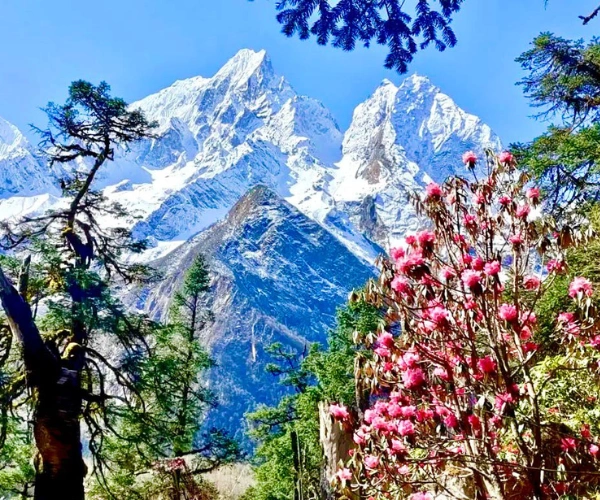
The rhododendrons will be in full bloom, and the colors red, pink, and white will be covering the hillsides along the trail from Ghorepani to Chhomrong.
- Visibility: Excellent, especially in March and April
- Trail conditions: Good (some snow possible above 3,500m in March)
- Crowds: Moderate to busy
- Temperatures at ABC: -5°C to 10°C during the day
April is generally seen as the best time of the year, as it usually brings with it both stable weather and blooming rhododendrons in full glory.
Autumn (September to November): The Second Best Season
The Season That Comes Close To Being The Best. Once the monsoon is over in September, the weather gets clear, and the views get so fresh that one can almost touch them. It is said that October and November are the months when Nepal trekking reaches its peak. This is the time when the majority of the visitors come for the most popular tracks.
- Visibility: Excellent
- Trail conditions: Dry and stable
- Crowds: High (October especially)
- Temperatures at ABC: -8°C to 8°C during the day
October is well-known to offer some of the clearest skies throughout the entire year. November experiences a significant drop in temperature, especially for those going above 3,500m; however, this month is calmer.
Monsoon (June to August): Not Recommended
The monsoon season heralds heavy rainfall in the Annapurna region. Further, the leeches make their appearance on the lower trails; landslides are a common occurrence, and mountain views remain mostly hidden due to the clouds. Although trekking during this period is still doable, it can be quite uncomfortable and, more importantly, the safety risks are real.
Winter (December to February): Cold but Feasible
Winter trekking can always be considered a possibility. However, it does come with a certain level of challenge. Trails at higher elevations get covered with snow in January and February, and the temperatures at Annapurna Base Camp can be as low as -10 °C or even colder at night. For those who have both the experience and proper equipment, winter offers the perk of having very few other trekkers around.
Annapurna Base Camp Trek Difficulty Level Explained
The Annapurna Base Camp trek has been rated as a moderate-level trek, thereby attracting a majority of reasonably fit people. It is not necessary for you to be an experienced trekker or have any kind of technical skills; however, you will need to get ready.
Is It Beginner Friendly?
Of course, if you do the preparation. Plenty of first-time trekkers have the Annapurna Base Camp trek as their first major successful expedition without any problems. The trails are easily noticeable, the teahouse infrastructure is trustworthy, and also altitude sickness is not a big concern here as compared to the trekking routes above like the Everest Base Camp and Manaslu Circuit trek.
However, you need to know that physically, the trek will challenge you in some ways. For example, day 3 (Tikhedhunga to Ghorepani) includes more than 1,300m of elevation gain on stone stairs. On day 8, you go above 4,000m, where the thin air causes even small movements to feel difficult. If you never walk more than a few hours, then get a couple of months to improve your fitness before the trip.
Required Fitness Level
You should be able to:
- Walk 5 to 8 hours per day at a comfortable pace, even on rough paths.
- Handle steep climbs and drops on uneven ground.
- Carry a 5 to 7 kg pack for multiple days without issue.
Cardiovascular endurance is the key factor. Hiking, jogging, stair work, or cycling before departure builds real stamina.
- Daily walking effort varies by terrain.
- Easy days last 3 to 4 hours on flat routes.
- Moderate days stretch to 5 to 6 hours with heavy elevation change.
- Hard days include Day 3 - Tikhedhunga to Ghorepani - and Day 8 - Deurali to ABC. These are the two toughest segments
The downhill leg stresses your knees more than the uphill part. Trekking poles are not optional - they cut knee strain by half, Mostly on long descents.
Permits Required for Annapurna Base Camp Trek
You need two separate permits to trek in the Annapurna Base Camp. Both are non-negotiable and checked at multiple checkpoints along the route.
The Annapurna Conservation Area Project (ACAP)
A permit is issued by the Nepal Tourism Board (NTB) and covers entry into the Annapurna Conservation Area, the largest protected area in Nepal. This permit directly funds conservation efforts, wildlife protection, and local community development in the region.
- Cost: NPR 3,000 per person (approximately USD 22 to 25).
- Valid for: Your entire stay in the conservation area.
- Where to get it: Nepal Tourism Board offices in Kathmandu (Bhrikutimandap) or Pokhara (Damside).
The TIMS Card (Trekkers' Information Management System)
The system is a safety and registration system that tracks trekkers on all major routes in Nepal. Now, it was introduced to improve emergency response and record trekker movements in remote areas.
- Cost: NPR 2,000 per person for individual trekkers (NPR 1,000 if trekking through a registered agency).
- Where to get it: Nepal Tourism Board offices or the Trekking Agencies' Association of Nepal (TAAN) offices in Kathmandu or Pokhara.
Where to Obtain Both Permits
You can pick up the two permits at the Nepal Tourism Board (NTB) office in Pokhara near the Damside area, or at the NTB Kathmandu office in Bhrikutimandap. Don't forget to bring passport-sized photos and a copy of your passport. Most trekkers find it convenient and common to get their permits in Pokhara a day before their trek. If you decide to book the trek through a trekking agency, Holy Kailash Tours arranges the required documents; they usually handle the permits arrangement for you before the trek starts.
Permit Checkpoints
The primary checkpoint is located in Birethanti, a little beyond Nayapul. Here, you are required to present both of your permits. You'll find further checkpoints in Chhomrong and closer to the entrance of the sanctuary, so it is advisable to always have your permits handy.
Annapurna Base Camp Trek Packing List
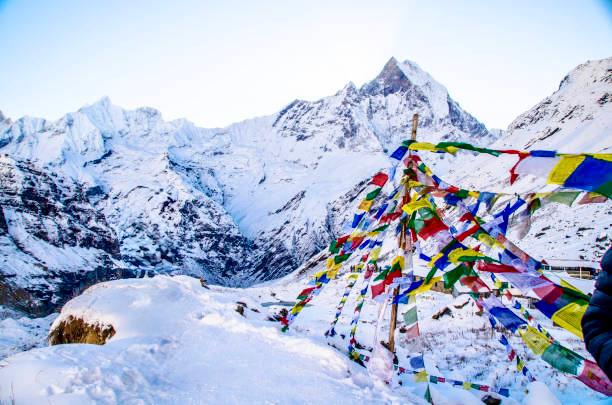
Proper packing can truly enhance your trekking experience. Bringing everything you have is not the answer, but not carrying enough will definitely expose you to the cold and leave you underprepared at altitudes higher than 3,500m. Below is a sensible list that is based on actual trial experience.
Clothing
- Wicking base layers (2 sets) keep skin dry under pressure.
- With the fleece midlayer, you get insulation without bulk.
- A lightweight down jacket works in variable temps.
- The waterproof hardshell keeps rain out.
- Trekking pants (2 pairs) fit well on long walks.
- Warm hats and sun hats cover the head in all conditions.
- Lightweight gloves handle cold hands.
- Warmer gloves are key when the wind bites.
- ABC Wool or synthetic socks (4 to 5 pairs) keep feet dry and insulated.
- Gaiters prevent snow from seeping in above Deurali, particularly in spring and winter. Boots must be broken in before the trip.
Footwear
- sturdy and water-resistant with ankle support.
- Sandals or camp shoes are suitable for evenings at teahouses.
Gear and Equipment
- A 30 to 40L daypack with a rain cover fits gear easily.
- Sleeping bag rated to -10C offers backup when teahouse blankets fail at high camps.
- Headlamp with spare batteries lights the trail after dark.
- Sunglasses with UV protection guard eyes at altitude.
- Sunscreen SPF 50 combats strong sun above 3,000m.
Health and Safety
- A trekking map or downloaded GPS trail data helps when signals fade.
- First aid kit includes bandages, blister pads, and antiseptic.
- Diamox for altitude sickness calls for doctor approval before departure.
- Water purification tablets or a portable filter clean untrusted sources.
- Hand sanitizer keeps hands safe during stops. Quick-dry travel towel dries fast after use.
Electronics and Documents
- Power bank handles limited charging at higher teahouses where power costs extra.
- A camera or phone with offline maps stays functional without internet access.
- Passport copy and travel insurance
You can rent or buy most gear in Pokhara's Lakeside area at reasonable prices, so don't stress if you're missing something before departure. holy Kailash Team will assist you
Altitude Sickness and Safety Tips for ABC Trek
One of the primary health risks when doing the ABC trek is altitude sickness. The base camp is located at 4 130m which is enough for anyone to start feeling the effects of lowered oxygen. With proper acclimatization, most healthy individuals will be able to withstand this altitude, but it still demands attention and planning.
What exactly is altitude sickness?
Altitude sickness (commonly referred to as Acute Mountain Sickness or AMS) occurs when your body is not given sufficient time to adapt to lower oxygen levels at higher altitudes. This condition can strike anyone, regardless of age or physical fitness.
Here are some of the symptoms:
- Headache (the earliest and the most common symptom)
- Nausea or vomiting
- Dizziness or lightheadedness
- Loss of appetite
- Excessive fatigue Difficulty sleeping
- Shortness of breath,
Even at rest In extreme cases, the lungs may fill with fluid (HAPE) or the brain may swell (HACE). These are medical emergencies that call for immediate descent.
Prevention Tips
- Climb slow. Try to follow the "climb high, sleep low" rule when you can.
- Aim for 3 to 4 liters of water daily, even on the trail.
- Skip alcohol and sleeping pills, as they can block breathing at night.
- Light meals work better at altitude because heavy food doesn't digest well.
- Pay attention to how you feel.
- If symptoms get worse, stop pushing through them.
Acclimatization on the ABC Route
Rest and acclimatization are naturally included in the Annapurna Base Camp itinerary. Additional space in the Chhomrong area (Day 5), as well as not going above Deurali too quickly, will give your body a chance to adapt. The stay at Machapuchare Base Camp before Annapurna Base Camp is also beneficial.
When to Descend
In case of severe headache, inability to walk straight, continuous vomiting, or confusion, descend without delay. Even a 500m descent can lead to a quick recovery. Don't wait to see if symptoms get better at altitude.
You should have a pulse oximeter to keep track of your blood oxygen levels. At 3,000m and above, if the readings show less than 85% saturation, you need to be careful and keep monitoring.
Fly Back by Helicopter from Annapurna Base Camp
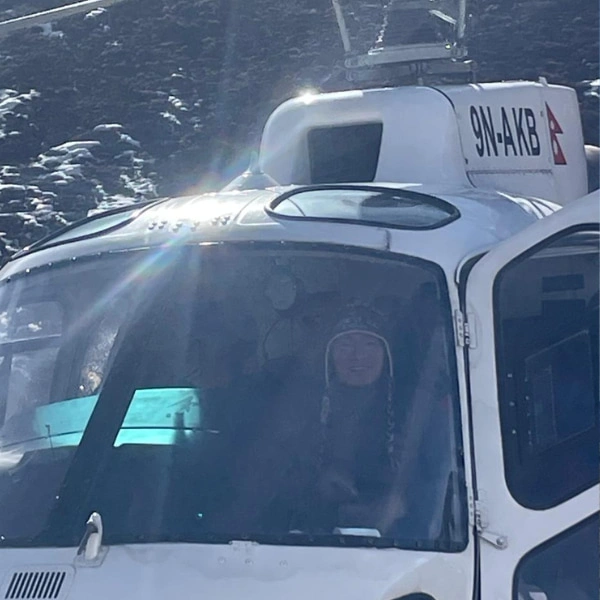
Some people don't want to walk down the same path for days. If you were already taking in the scenery, reached the top, and now want to get back in style, a helicopter ride from Annapurna Base Camp is a possibility that a lot of trekkers are opting for every year. The helicopter takes off from Annapurna Base Camp or Machapuchare Base Camp and returns to Pokhara in about 20 to 25 minutes.
What you spent several days walking to and from is now done in less than half an hour by air. Plus, seeing the Annapurna massif, the Modi Khola valley, and the terraced hills from the air is breathtaking. This is a great option for those short on time, those whose knees don't hold up well on the descent, or anyone who simply wants to end the journey with an amazing moment.
A helicopter ride from Annapurna Base Camp to Pokhara generally costs around USD 800 to 1000 per person, depending on the size of the group and the season. If you share the flight with other trekkers, the price goes down significantly. Holy Kailash Tours can also organize helicopter return flights that are included in your trekking package. Just tell us before your trip, and we will take care of the rest.
Accommodation and Food on the ABC Trek
The teahouse system on the Annapurna Base Camp trail is one of the best in Nepal, at least in theory. You will not be camping or carrying a tent. From Nayapul all the way to Annapurna Base Camp, family-run guesthouses line the route and offer food, beds, and a warm common room.
What Are Teahouses Like?
Teahouses are simple lodges run mostly by local families. At lower elevations, you will often find attached bathrooms, hot showers (solar-heated or electric), and even Wi-Fi. As you climb higher, facilities become more basic. Above 3,500m, shared squat toilets and bucket-wash hot water are the norm.
Rooms typically have two single beds, a wooden frame, thin mattresses, and a small window. Bring your own sleeping bag liner and a padlock for your room door. Electricity is available almost everywhere, but charging your devices often costs NPR 200 to 500 per charge at higher camps.
Food on the Trail
Food on the trail is genuinely good, especially at lower-elevation teahouses, where kitchens are well-stocked. Here's what you'll find on most menus: The meals include dal bhat, momos, noodles, bread with chutney, and fresh fruit.
The classic Nepali meal of rice, lentil soup, vegetable curry, and pickle. Solid energy. Usually refillable. Thing is, it's the go-to for most trekkers.
- Noodle soup: Warms you on cold nights.
- Pasta and fried rice: Found in teahouses from Ghorepani up.
- Tsampa porridge: A traditional Tibetan roasted barley dish, common at high camps.
- Eggs: Boiled, fried, or in omelets - cheap and full of protein.
- Pancakes and honey: Big hit for breakfast on the trail.
- Ginger lemon honey tea: Becomes a must-have above 3,000m.
A plate that costs NPR 400 in Tikhedhunga can jump to NPR 900 at Annapurna Base Camp. Prices rise with altitude. Budget early and factor in cost increases when planning meals.
The golden rule? Always eat at the teahouse where you sleep. Most owners keep rooms low or free, assuming you'll buy food. It is a fair deal that helps local families who rely on trekking tourism.
Why Choose Holy Kailash Tours for Annapurna Base Camp Trek
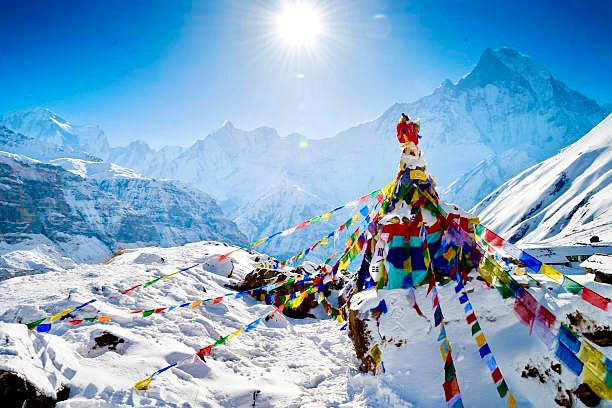
Planning a Himalayan trek involves many moving parts, and you don't need to handle permits, transport, or guide selection on your own. That's a lot of moving parts. Holy Kailash Tours covers it all. We've been running treks in the Annapurna, Everest base camp, and Kailash Mansarovar areas for over a decade. Every trip is handled as if we were managing our own family heading into the high country.
Here's what sets us apart:
Experienced Local Guides
Our guides are government-certified. They've walked the Annapurna Base Camp route fifty times. They know trail conditions inside out. And they know the teahouse owners by name. Also, they spot early signs of altitude sickness before symptoms show.
English is their first language - they explain cultural and ecological details with clarity. Safety is just part of it. Having someone who truly understands the region makes the experience far more meaningful.
Safety-Focused Itineraries
At our company, Holy Kailash, we never rush. Our careful planning minimizes the effects of altitude, and we set our daily walking goals at a level that you can realistically achieve. Every trek carries a simple first aid kit and a pulse oximeter. Besides being trained in wilderness first aid, our guides also have the know-how to identify the situation in which they have to suggest a descent instead of rest. Real Human Pacing and Attention
Personalized Service
Our goal is a personalized experience, tailored to your pace and needs. Since we deal only with small groups or individuals, we can make itinerary changes based on your fitness level, preferences, and pace. Besides a normal Chhomrong day, you can also opt for one extra day. If you want to include Poon Hill in your itinerary, it is already in the plan.
Transparent Pricing
We provide a transparent cost structure in advance with no hidden fees. Our package prices include permits guide,  porter, accommodation along with meals on the trail. Additionally, we recommend a detailed gear list and provide you with a pre-departure briefing and ongoing contact with our team during the trip.
Travelling with Holy Kailash Tours is not simply a matter of hiring a guide. It is the chance to meet mountain lovers who aim to make your trip memorable for the right reasons.
FAQs About Annapurna Base Camp Trek
1: How long is the Annapurna Base Camp trek?
Most people spend 10 to 14 days on it, depending on where they start and how fast they go. From Pokhara, a common route takes 12 days round-trip. The trail covers about 110 to 115 km total. And if you skip the poon-Hill stop, it's just under a week longer.
2: But what happens if you're not used to high elevations?
That's where risks increase sharply. The path is well-used and not dangerous in theory, but altitude sickness can strike anyone suddenly. Still, guides are recommended, mainly for first-time trekkers. They know local teahouses, read signs in Nepali, check your breathing patterns, and keep you from getting stranded. Without one, you're relying on memory and chance alone.
3: Is that really safe to trek to Annapurna Base Camp?
Yes A guide helps you stay on track and reduces stress at every turn. The government says solo travelers must carry a TIMS card - but doesn't require a guide. So the rule isn't strict, and it's just a formality.
4: Do I need prior trekking experience?
The answer is no, trekking experience is not mandatory. The only requirement is that you should have a decent level of fitness. Ideally, you should be able to walk for 5 to 6 hours on a moderate trail without getting completely exhausted. If this sounds like you, then with proper training, you can do the Annapurna Base Camp trek.
5: What is the highest point on the ABC trek?
Annapurna Base Camp is located at an elevation of 4,130m (13,550 ft). The Machapuchare Base Camp at 3,700m is the last stop before ABC and is often used as a natural point where people check how their bodies are adjusting to the altitude.
6: Can I get Wi-Fi on the trail?
Yes, several lodges, especially at places like Ghorepani and Chhomrong, and some stops higher up, do provide Wi-Fi. The speed of the connection is quite variable and sometimes can be completely absent. It is a good idea to buy a Nepali SIM card (Ncell or NTC) before your trek so that you can have data coverage at the lower elevations. Do not rely on the internet above 3,500m as it is unlikely to be available.
7: What should I eat to stay energized on the trek?
Dal Bhat is undoubtedly the best food you can get on the trail. It is very satisfying and also nutritious. Most of the time, it includes unlimited refills. For snacks between meals, you should carry energy bars, nuts, and dried fruit. Throughout the day, it is good to drink hot ginger or lemon tea as it keeps you warm and hydrated.
8: Is travel insurance necessary?
Yes! It is better to be totally covered by a travel insurance policy than to be sorry if something happens. Often, high-altitude trekking (above 4,000m) and even emergency helicopter evacuation are not part of basic travel insurance.
However, such assistance does not come cheaply in remote places like ABC: In case the weather conditions are extremely bad and the helicopter rescue is imperative, the rescuer might ask for as much as USD 3,000 to 5,000 - quite exorbitant figures not everyone can afford right away. Having the right insurance policy will cover the costs as you pay the premiums rather than face the hefty charges on the spot.
9: When should I start trekking each morning?
Start as early as possible, ideally by 7 to 8 AM. Scheduling the trek in the early hours of the day is a wise decision for two reasons: you will most likely have stand out and colorful views, plus the temperatures are at their lowest point in the day making the walking less strenuous.
Book Your Annapurna Base Camp Trek with Holy Kailash Tours
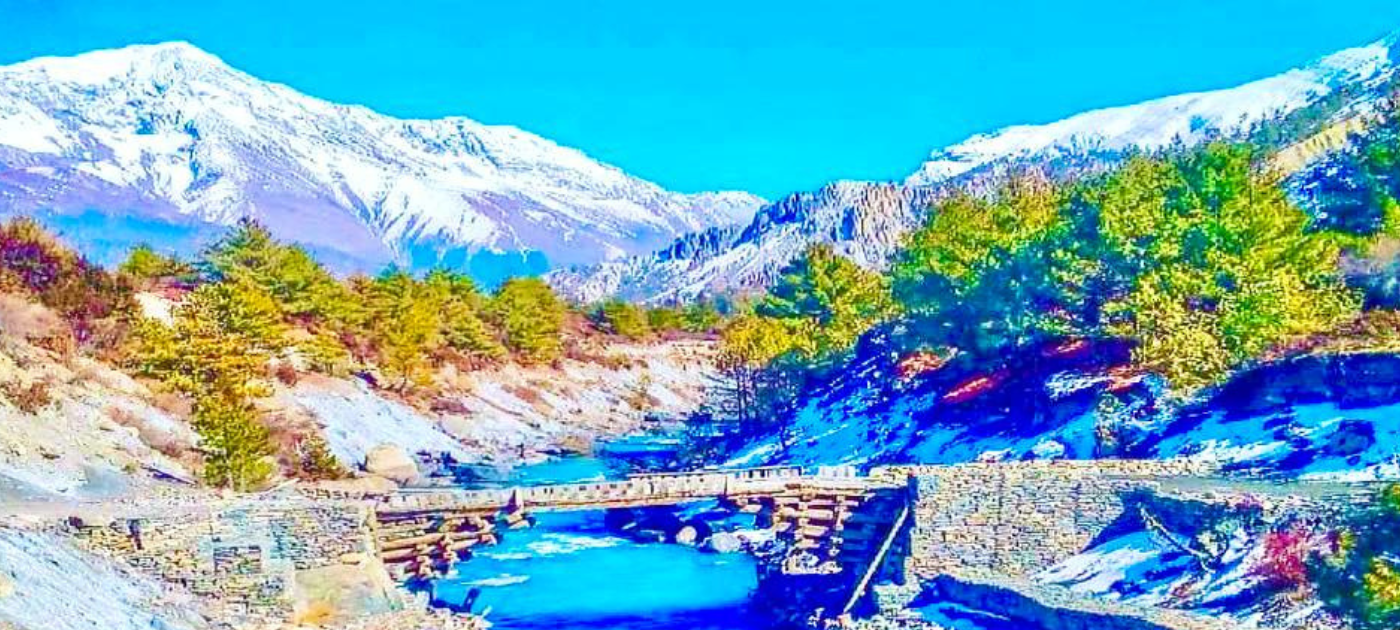
The Annapurna Base Camp is truly one of the classic adventures that Nepal has to offer. Along the way, you can see villages full of life, walk through ancient forests, follow the river valleys, and ultimately, encounter the world's most breathtaking mountain panoramas.
However, it is not only about the physical effort, but such a journey also profoundly impacts one's worldview. If you are willing to take the first step, Holy Kailash Tours is at your service. We will take care of all the planning, permits, guides, and logistics so that you can relax and enjoy the trip.
Travel alone, with your loved one, or in a group? We will prepare a suitable program for you, which will be adjusted according to your pace and level of comfort. Contact us today if you want to begin your Annapurna Base Camp trek.
You can send us a message using our website, and we'll respond with a comprehensive quote, a bespoke itinerary, and reply to any questions you might have. The mountains are calling you, and if you want to go, the best time is sooner than you imagine.
Final Thoughts
The Annapurna Base Camp trek is an excellent option for anyone who wants to visit the Himalayas without going through very hard experiences. It provides marvelous mountain landscapes, an atmosphere full of local culture, and excellent trails suitable for both newbie trekkers and seasoned ones.
If you are organizing your trip, holy kailash tours can be at your service throughout your adventure. We take care of the entire process from getting tickets to finding guides, so you only have to concentrate on enjoying the journey.
Book your Annapurna Base Camp trek with Holy Kailash Tours today and embark on a well-prepared Himalayan adventure.