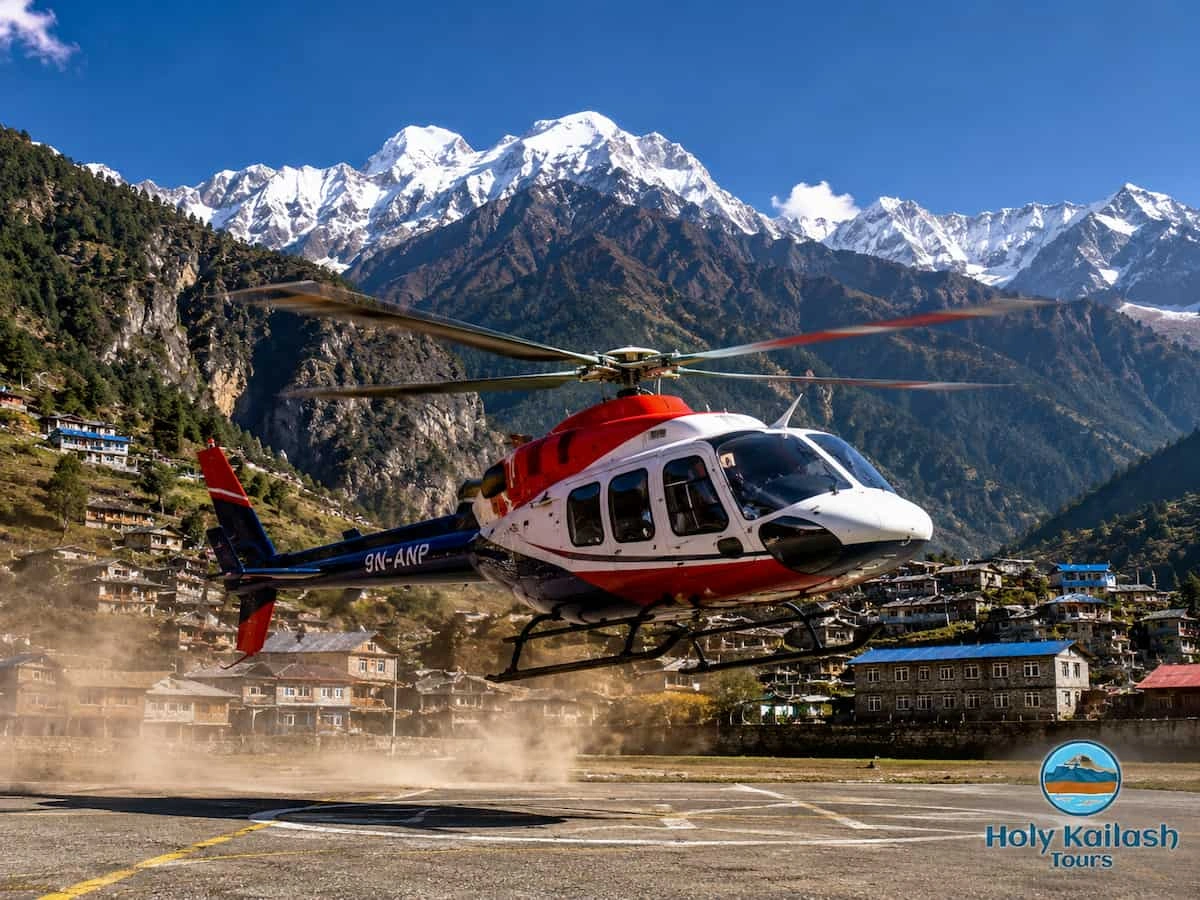
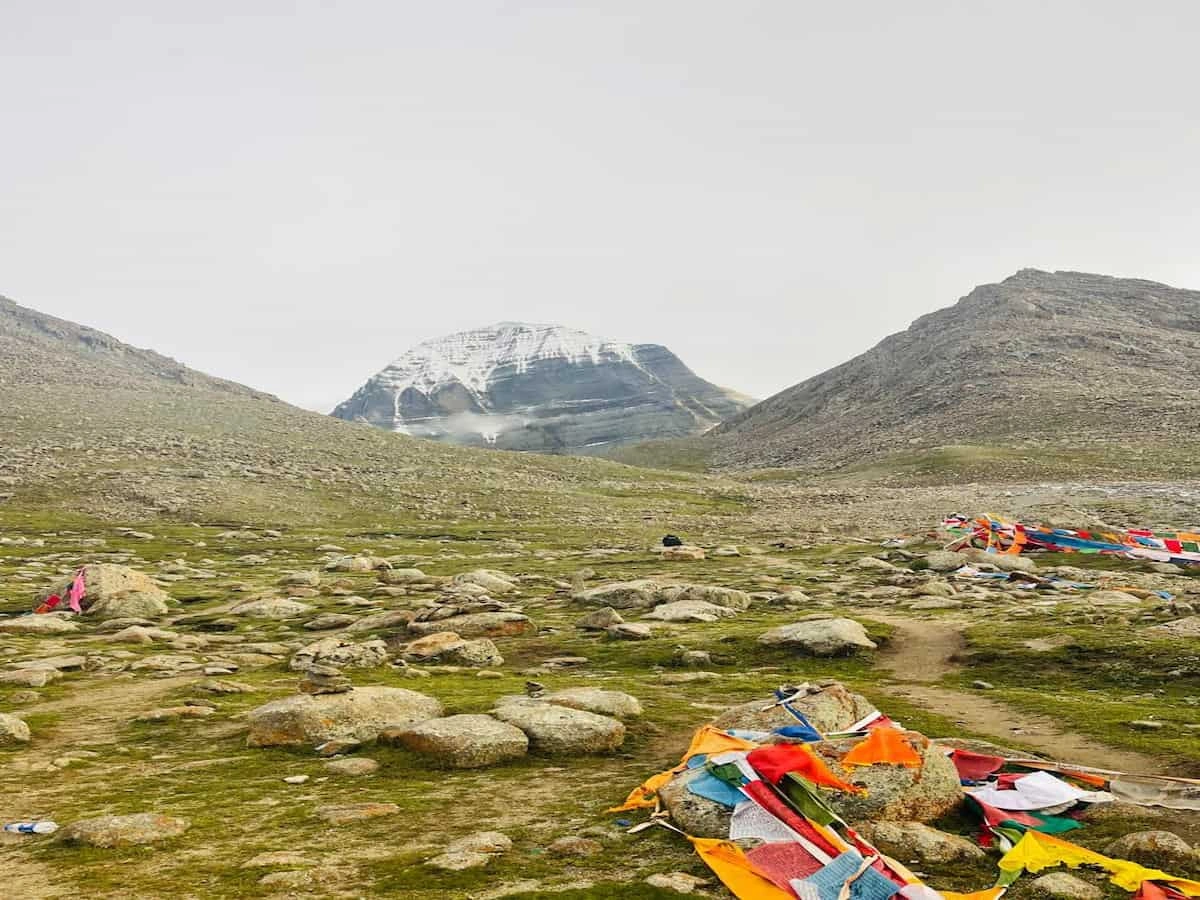
Kailash Mansarovar Yatra is an 11-day journey that takes you from Kathmandu to Nepalgunj, then Simikot, then by helicopter over the Himalaya to Hilsa on the Tibet border. From there, you drive to Taklakot (also called Purang) for acclimatization, then continue to Lake Mansarovar and Darchen, the small town at the base of Mount Kailash.
The heart of the trip is the three-day Kailash Kora, a walk around the mountain that Hindus, Buddhists, Jains, and Bon followers have done for over a thousand years. You'll cross Dolma La Pass at 5,630 meters, the highest point of the whole trip, before dropping back down to Darchen and flying home.
Kathmandu -> Nepalgunj -> Simikot -> Hilsa -> Purang -> Lake Mansarovar -> Darchen -> Mt. Kailash
Who Is the Helicopter Tour Best Suited For?
The Kailash Yatra by helicopter route is ideal for travellers who have very little time on schedule or those who are more suited to shorter road journeys and shorter walking distances. An NRI's helicopter pilgrimage to Kailash Mansarovar would be most of all practical, while Indian citizens who travel to Kailash via a helicopter tour from Kathmandu can find Nepal to be a most convenient location to start their Kailash yatra. Kailash-Manasarovar helicopter tour fitness requirements are not to be taken lightly, as altitude remains a factor even though helicopter transfers A lot reduce walking.
Kailash Mansarovar and Its Spiritual Significance
The Kailash Mansarovar Yatra is mainly a pilgrimage to the sacred spots like Mount Kailash and Lake Mansarovar that are considered very holy by the faithful of Hinduism, Buddhism, Jainism, and the followers of the Bon faith. This union between Mount Kailash and Mansarovar has given a more profound meaning to the pilgrimage. To the devotees, Mansarovar Lake in the Himalayas, Manas Sarovar, and Kailash Mansarovar Himalaya are not ordinary spots. They form a holy, sacred landscape.
The journey is commonly associated with terms such as Kailash Mansarovar Yatra, Mansarovar Yatra, Mansarovar Kailash, Kailas Manas Sarovar, Kailas Mt., etc. At Holy Kailash Tours, we portray the journey as a blend of spirituality and culture, providing the tourist with the necessary practical details on the altitude, permits, border crossings, accommodation, and the travel conditions one can expect on a day-to-day basis.
Why Choose Kailash Yatra by Helicopter?
The helicopter path may a lot reduce the drive from Nepal to Tibet a lot. For a budget Kailash yatra by helicopter from Kathmandu, the basic needs are to be considered while arranging things, but a luxury Kailash Mansarovar helicopter tour with upgraded accommodations and private arrangements could be arranged where possible. As a rule, tourists should be careful when comparing the Kailash Mansarovar helicopter tour package price because the prices differ according to the number of permits, transportation type, accommodation, group size, seasonal factors, and the range of services offered.
For those who are preparing a Kailash Mansarovar tour with helicopter packages from Kathmandu to be booked in advance, border arrangements, permits to Tibet, transport, and operational conditions based on season must be synchronized. Based on the timing of the trip, a 9-day Kailash Mansarovar helicopter tour or an 11-day Kathmandu-Kailash helicopter tour can be suggested.
Where Are Mount Kailash and Lake Mansarovar?
Located in southwestern Tibet, Mount Kailash—also known as Kailash Parbat, Kailash Parvat, and Mt. Kailash—rises as one of the most sacred places in Hinduism, Buddhism, Jainism, and Bon. Its location puts it in the Trans-Himalayan region. Manasarovar Lake, which is also referred to as Lake Manasarovar and Manas Sarovar, is located near the hill, offering a view of the surrounding mountains and being on the pilgrim's route from Dharamsala. The pilgrims usually follow the trail around Kailash Mountain and visit the nearby sacred lakes and temples before they start their circle walk.
The landscape of Mount Kailash, the Himalayas, Kailash Tibet, Tibet Mountain Kailash, Kailash Mountain, Kailash Himalayas, etc., is not easy: it's harsh, high, and isolated. People frequently go for Mount Kailash Images, Mount Kailash helicopter tour photos, and the top view of Mount Kailash; though no photo can capture the true scale of the Himalayas surrounding it, one has to go there and see with one's own eyes.
Kathmandu to Nepalgunj Flight
The Kailash Yatra Helicopter trip usually starts with a flight from Kathmandu to a more western town of Nepal, to be accurate, Nepalgunj. This aviation sector is the first important segment of the Kathmandu-Nepalgunj-Simikot-Kailash route, connecting the capital with the far western region that gives access to the Hilsa border.
If you are planning the Shortest Kailash Mansarovar tour from Nepal, this is a route that will save a large part of the road journey. Yet, you might find variations in flight scheduling because the route is exposed to weather and other operational conditions, so it is better to make your plans with some degree of flexibility.
Nepalgunj to Simikot Flight
Those who set off from Nepalgunj will proceed onwards by plane to Simikot, the capital city of Humla district. On boarding the plane after Nepalgunj, the view of mountain valleys comes quickly through the windows. Simikot is the base from which a helicopter will take you further toward Hilsa.
This is really a crucial phase for high-altitude acclimatization. While travelers don't make the whole hiking journey but instead take the helicopter to Kailash Mansarovar Yatra, they still need to prepare themselves psychologically and physically for a sudden move to the high altitude. It's responsible to drink an ample quantity of water, to get enough sleep, and to know the signs and symptoms of altitude sickness.
Simikot to Hilsa by Helicopter
The part from Simikot to the Hilsa mountain pass is one of the most unforgettable elements of this religious tour. Pilgrims have the option of taking a small plane from Simikot to Hilsa helicopter flight time is short, and most of the time this flight lasts around two and a half hours. Still, the final result always changes slightly based on the conditions in the air, on land, the availability of the different aircraft, and, of course, local situations as well. Kailash Tour through the helicopter route from Hilsa, passing this mountain pass as the gateway of the pilgrimage from connecting Nepal with the Tibet Autonomous Region.
It is very unlikely for a pilot to take you in one go from Kathmandu to one of the main places of pilgrimage in India. So, the trip will usually go via several stages, which mainly include Kathmandu, Nepalgunj, Simikot, and Hilsa before arriving at the region. For this reason, different Kailash Mansarovar Tours, in particular with different helicopter services, have their routes presented differently.
Crossing the Hilsa Border into Tibet
Hilsa is the Nepali border gateway to this pilgrimage route. After the necessary procedures are completed, pilgrims are allowed to enter Tibet and then proceed to Purang, which is also called Taklakot. The process includes proper documentation and early preparations. Besides the helicopter permit from Kathmandu to Tibet, which may be required as a special arrangement, one has to secure the permits and clearances for traveling in Tibet.
The exact Kathmandu to Mount Kailash helicopter tour requirements may differ according to a traveler's nationality, travel policy regulations, permits, and availability during the operating seasons. Visitors who are citizens of India, non-resident Indians, and other international tourists should verify with the authorities the required documents that they need to get their final package of Kailash Mansarovar tour bookings.
Hilsa to Taklakot for Acclimatization
Border crossing is the first step for most visitors heading to Kailash Pilgrimages. Then travelers spend some time at Taklakot for altitude adaptation. Do not see this break as wasted time; it's your body getting ready to handle that enormous elevation when you finally reach the Mount Kailash Pilgrimage Circuit and sacred circle.
The Kailash Tourism experience in general is a combination of a scenic mountainous area that is hardly populated, a blend of Tibetan culture, and, of course, the pilgrimage aspect. Unlike any other Himalayan trekking tour, the Kailash Tour will provide a spiritual experience only. It is important not only to consider the advertised price of a trip but also other factors, like whether and when it will be possible for you to simply climb Kailash or try to get up to the main summit, because it is not allowed to climb Kailash.
Mount Kailash is a holy peak, and climbing is not allowed. In other words, visitors should not treat it as a regular climbing destination. The Kailash Mansarovar Yatra tour from India to Nepal is a pilgrimage, and visitors are prohibited from climbing the main summit of Kailash, which is regarded as holy and forbidden.
Best time for the Kailash Mansarovar helicopter tour
The ideal time (best month) for the Kailash Mansarovar helicopter tour is mostly during the peak pilgrimage time, when access to the border and mountain conditions are fine, but there can be some fluctuations in the exact operating time frame. Weather is still one of the key aspects while traveling in Nepal, as the mountain flights to Simikot and Hilsa are mostly concerned with visibility and conditions of the place.
Travelers should also carry a potential packing list for the Kailash helicopter yatra: warm layered clothing, walking shoes, sunscreen, personal medicines, water bottles, gloves, a hat, and personal necessities.
The age limit for the Kailash Mansarovar helicopter yatra is not just one single number; it depends upon health, physical fitness, and rules of traveling as well as the need of the individual boatman and other authorities concerned. From the holy waters of Mansarovar, passing through the dramatic sight of Kailash, the journey merges Himalayan wonders with Tibetan scenery and age-old journeys for pilgrimage.
It is quite different from journeying to places like Kedarnath Temple or Mahakaleshwar Temple and, as such, should be planned as a high-altitude pilgrimage and not a holiday. The environment of Kailash in the Himalayas, Kailash Himalaya, Mount Kailash Top, and the Mt. Kailash location still draws pilgrims from all over the world.
Cultural mannerisms that depend on festivities like the Tibetan Losar Festival and Nepalese Dashain and Tihar can be seen to describe the cultural setting of many Himalayan experiences. If you are looking for Kailash Mansarovar pilgrimage, Kailash Mansarovar yatra packages, Kailash tours, or KAILASH MANSAROVAR TRIPS,Holy Kailash Tours is the ultimate place for travelers to know about the route schedules, permits, acclimatization and pre-departure practicalities so that the pilgrimage is made clear and well prepared from Kathmandu to the Holy Kailash Mansarovar area.
Kailash Mansarovar Tour by Helicopter from Kathmandu Cost
The helicopter-based Kailash Mansarovar Tour from Kathmandu will cost USD 3,299 per person. The package has been tailored to make it convenient for the devotees who wish to be in the Kailash region by choosing the helicopter route through Nepal without undergoing long journeys by land. The price generally includes the main aspects that are needed for the spiritual trek, but the exact things that you will be getting also depend on the chosen day and package conditions.
Our company at Holy Kailash Tours will show you the list of components and price of a Kailash Mansarovar tour helicopter package before the booking, like transport, hotel lodgings, meals, permits, border crossings, and other assistance.
Helicopters usually connect Kathmandu through Nepalgunj, Simikot, and Hilsa for onward trips to Tibet. As the activities may vary due to changes in weather, permissions, flight plans, and border situations, travellers are recommended to get the latest version of the tour plans and confirm before booking.
To give you an example, a helicopter tour of Kailash Mansarovar departing from Kathmandu priced at USD 3,299 per person is a good alternative for those wishing to do a spiritual Himalayan pilgrimage on a tight schedule.
Kailash Tour by Helicopter Highlights
- A 25-minute helicopter flight from Simikot to Hilsa, replacing 2 days of overland travel
- Sacred bath and rituals at Lake Mansarovar, the largest freshwater lake on earth
- The 3-day, roughly 52 km Kailash Kora circuit around the mountain's base
- Crossing Dolma La Pass at 5,630 m, the trip's highest and most demanding point
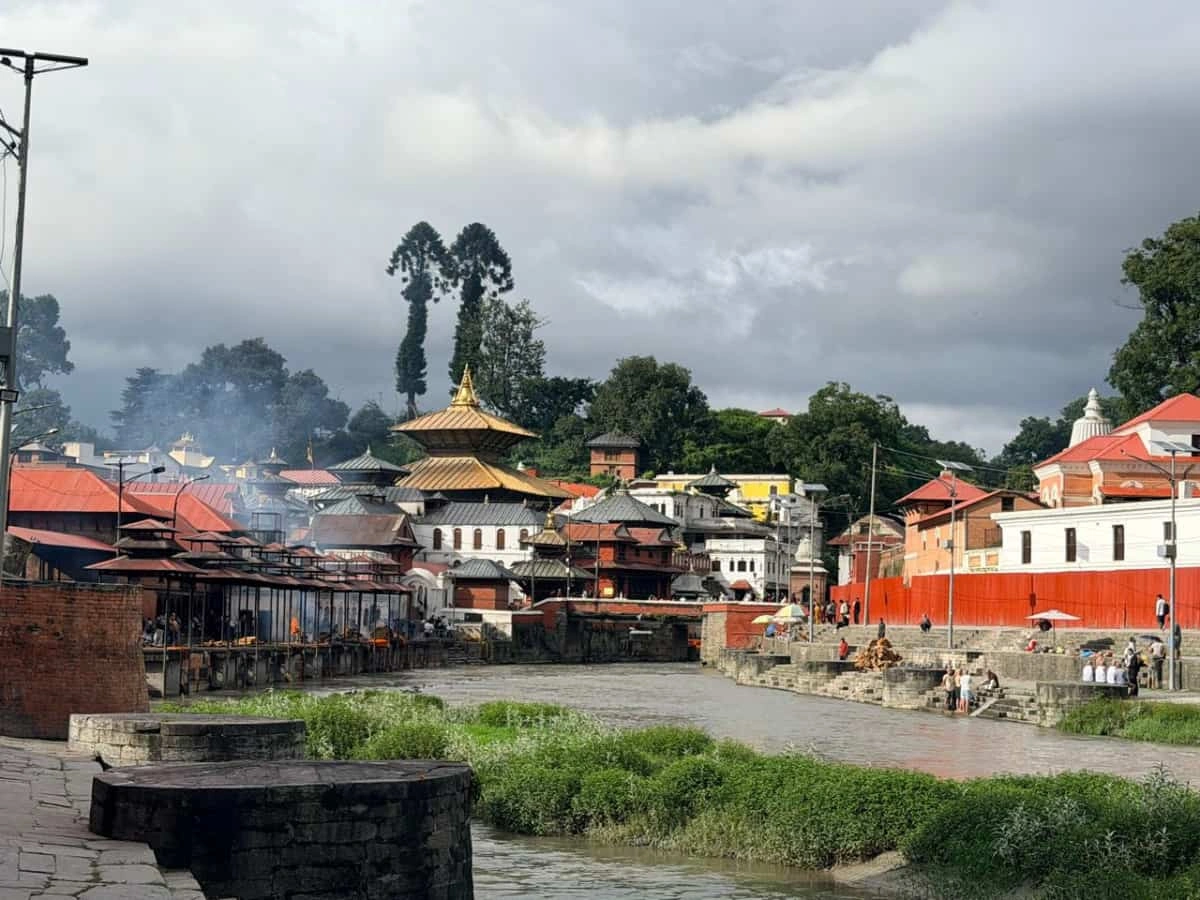
- Special puja and darshan at Pashupatinath Temple in Kathmandu before departure
- Views of the Rakshastal lake, sitting right beside the Mansarovar, but carrying a very different legend
- Time in Taklakot, a real Tibetan trading town most travelers never see