Trip Highlights
- Stand on the summit of Mera Peak (6,461m), the highest trekking peak in Nepal
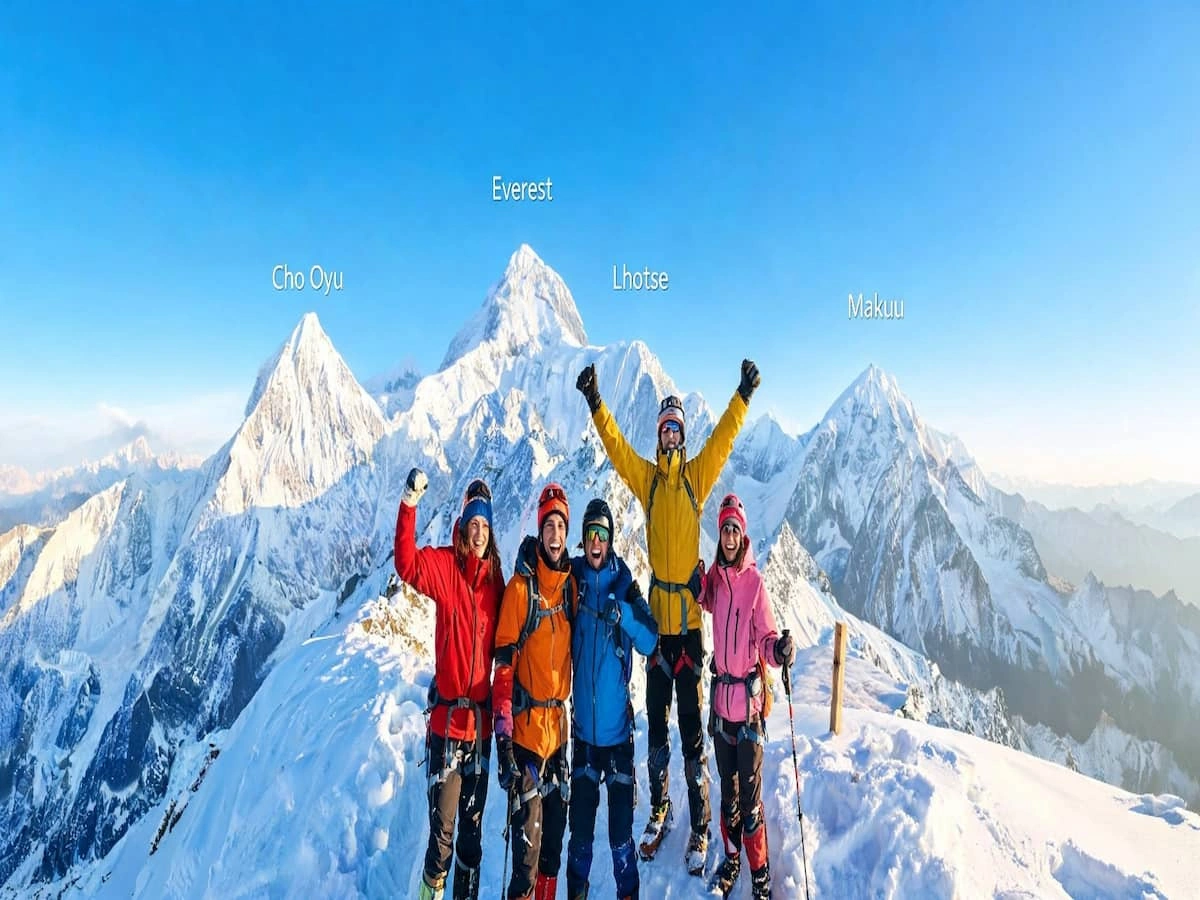
- See Everest, Lhotse, Makalu, Kanchenjunga, and Cho Oyu from one viewpoint
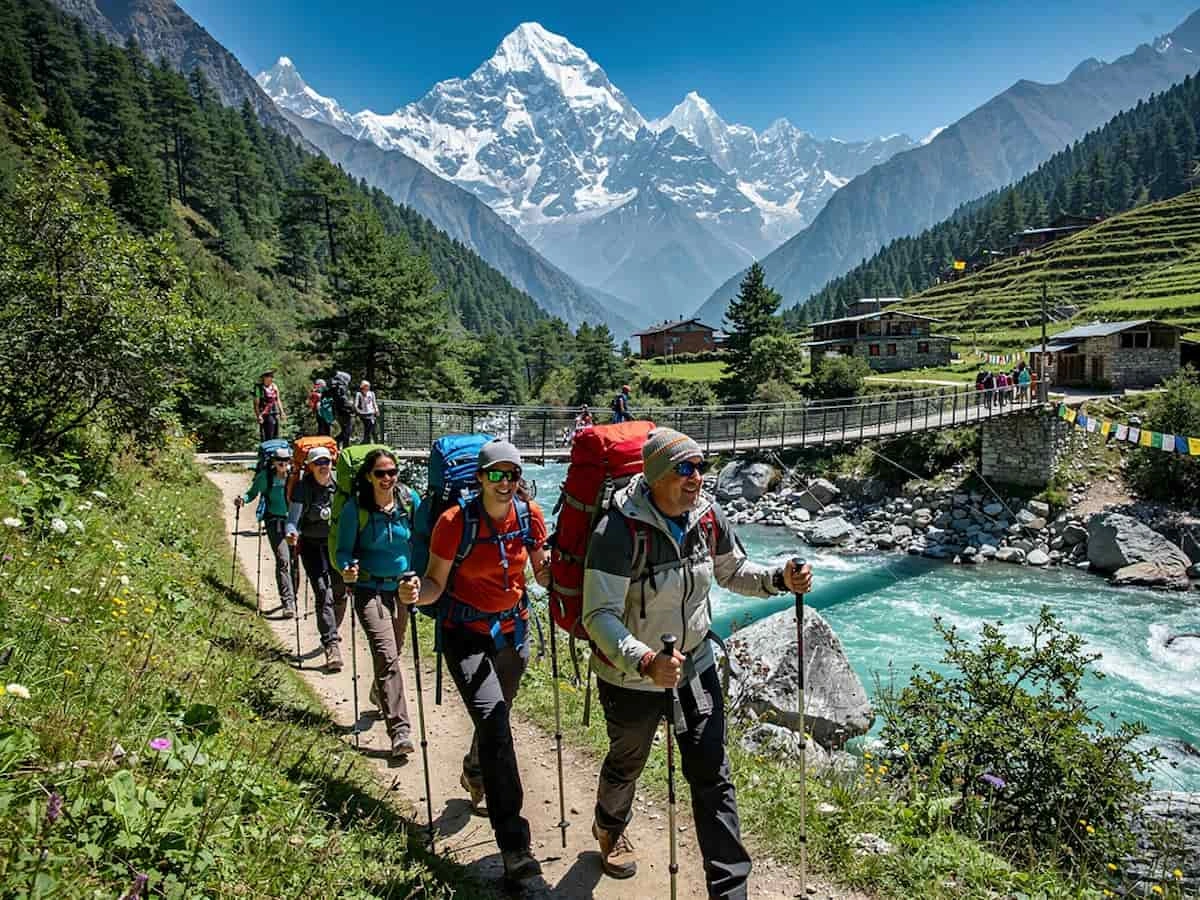
- Trek through the remote, rarely crowded Hinku and Hinku Nup valleys
- Cross the dramatic Zatrwa La pass (4,610m) on the return route
- Get hands-on glacier and ice climbing training at Khare before summit day
- Experience authentic Sherpa, Rai, and Kulung village life away from the main Everest trail
- Climb with IFMGA-trained guides and full Sherpa support, including ropes fixed on summit day
- Built-in acclimatization days and a reserve day for weather, so the schedule doesn't force risky decisions
What Makes the Mera Peak So Special?
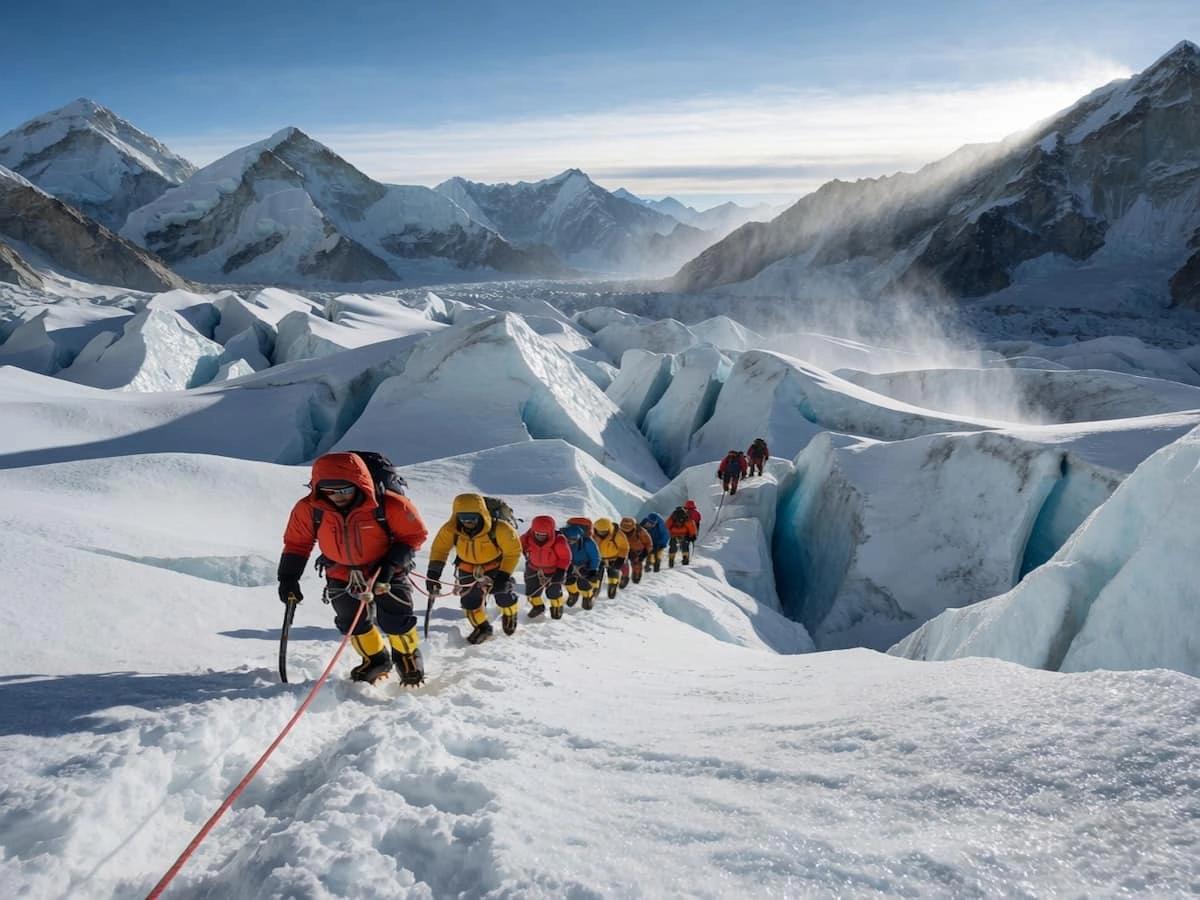
Mera Peak Climbing gives you a real Himalayan summit experience without demanding years of technical climbing background. The standard route up the Mera La glacier is mostly a steady, roped walk on snow, not vertical ice climbing, which means motivated trekkers with solid fitness and proper training can reasonably attempt it.
What sets it apart from other peaks at similar elevation is the summit view itself. Because Mera stands somewhat apart from the main Khumbu ridge lines, you get an open, unobstructed look at five of the world's fourteen 8,000m peaks at once. Few summits in Nepal offer that kind of payoff for a non-technical climb.
Why Choose Mera Peak Climbing?
If you want to know what it actually feels like to stand above 6,000m in the Himalayas, but you're not ready for the technical demands of Island Peak's headwall or the commitment of an 8,000m expedition, Mera Peak is the logical next step. It bridges the gap between high-altitude trekking and mountaineering.
You'll learn to use crampons, an ice axe, and a fixed rope under guidance, get a genuine taste of expedition life at high camp, and come away with both a summit and real skills for bigger climbs later. The Hinku Valley approach also means you're not sharing trails with the Everest Base Camp crowds, so the journey itself feels like an expedition rather than a queue.
Where Is Mera Peak Located?
Mera Peak Climbing is located in the Makalu-Barun region of eastern Nepal, within the Hinku Valley, roughly 25km south of Mount Everest. It sits on the border between the Solukhumbu and Sankhuwasabha districts.
Most climbs begin with a short flight from Kathmandu to Lukla, the same gateway used for Everest Base Camp treks, but instead of heading north toward the Khumbu, the Mera route turns south and east into the quieter Hinku drainage, reaching the mountain's base near the small settlement of Khare.
Stunning Himalayan Views Throughout the Journey
The views start early and don't really stop. From the ridges above Panggom and Ningsow, you get your first real look at Himalayan giants framed by rhododendron forest and prayer flags. Higher up, past Kothe and Thaknak, the Hinku Valley opens into glacier-carved terrain with close-up views of Mera Peak's south face.
Khare itself sits in a natural amphitheatre of rock and ice. But the summit is where it all comes together. On a clear morning, you'll see Everest, Lhotse, and Makalu (three of the world's four highest mountains) alongside Kanchenjunga and Cho Oyu, all in a single 360-degree sweep. Few treks in Nepal offer a payoff this large for the effort involved.
Mera Peak Climbing Route and Itinerary
The route runs from Lukla through the lower Hinku Valley to Khare, then up onto the Mera glacier to High Camp and the summit, before returning over the Zatrwa La pass back to Lukla. Below is the day-by-day structure used in this 18-day itinerary.
- Days 1 to 2: Arrival and a free acclimatization day in Kathmandu
- Days 3 to 7: Fly to Lukla, trek through Paiya, Panggom, Ningsow, and Chhetra Khola to Kothe
- Days 8 to 9: Climb from Kothe to Thaknak, then on to Khare, gaining serious altitude
- Day 10: Acclimatization and pre-climb skills training at Khare
- Days 11 to 13: Move to Mera High Camp, summit Mera Peak, and use a built-in reserve day
- Days 14 to 16: Descend back through Kothe and Thuli Kharka, crossing Zatrwa La to Lukla
- Days 17 to 18: Fly back to Kathmandu and depart
Required Physical Fitness and Training
Mera Peak doesn't demand technical climbing skills, but it does demand stamina. You're walking 5 to 8 hours a day for over a week, often at altitude, and summit day alone can run 10 to 12 hours round trip in cold, thin air. Prepare seriously before you arrive.
- Build a base of cardio fitness: hiking, running, or cycling for 3 to 4 months before departure
- Train on stairs or hills with a loaded backpack (10 to 12kg) to mimic trekking days
- Add strength work for legs, core, and lower back to handle long days with a pack
- Practice multi-day hiking if possible, back-to-back long days build real trail stamina
- Spend a few sessions getting comfortable wearing crampons, even just walking around in them
- If you've never used an ice axe, watch instructional videos beforehand so the Khare training day builds on something, not starts from zero
Required Permits for Mera Peak Climbing
Because Mera Peak is classified as a trekking peak, the permit process is more straightforward than for expedition peaks, but it still involves a few separate documents.
- Mera Peak Climbing Permit, issued by the Nepal Mountaineering Association (NMA)
- Sagarmatha National Park entry permit, required since the route passes through the park
- Makalu Barun National Park permit, for the section of the route within that conservation area
- Local area permit (Hinku/Khumbu rural municipality fee), collected en route
- TIMS (Trekkers' Information Management System) card is not required for peak climbing routes managed through the NMA, but your guide will confirm current local requirements before departure
Holy Kailash Tours manages all permit paperwork as part of the package, so you won't need to track down offices in Kathmandu yourself.
Experienced Guides and Sherpa Support
Every Mera Peak climb with Holy Kailash Tours is led by government-licensed climbing guides with years of experience on Nepal's trekking peaks, supported by Sherpa climbing staff who fix ropes, carry shared gear, and manage the technical sections above Khare.
Your guide will run a proper skills day before the summit push, covering crampon technique, ice axe use, and rope work on a glacier near Khare, so nobody is learning these skills for the first time on summit night.
Porters handle the bulk of group equipment between villages, and a separate climbing crew supports the high-altitude stages, which means you're climbing with people who know this specific mountain, not generalists working from a script.
Tips for a Successful Mera Peak Climbing Adventure
A successful climb comes down to pacing, preparation, and a willingness to turn back if conditions say so. A few things matter more than people expect.
- Drink 3 to 4 litres of water daily above 3,500m; dehydration makes altitude symptoms worse
- Walk slowly on acclimatization days; the goal is gaining altitude, not speed
- Layer clothing rather than relying on one heavy jacket, as conditions change fast above Khare
- Test all your gear, especially boots and crampons, before you leave home
- Eat even when you don't feel hungry; your appetite drops at altitude, but your body still needs fuel
- Tell your guide immediately about headaches, nausea, or unusual fatigue, don't wait it out
- Keep a spare set of batteries warm in an inner pocket; cold drains them fast
- Build in buffer time mentally for weather delays; the reserve day exists for a reason
Why Choose Holy Kailash Tours for Mera Peak Climbing
Holy Kailash Tours is a Kathmandu-based operator with deep experience running high-altitude treks and climbs across Nepal, including Everest Base Camp and Annapurna Base Camp trek, and the same standards apply to Mera Peak: licensed guides, properly paced acclimatization, and full permit handling so you can focus on the climb itself.
The team plans realistic itineraries with a genuine reserve day, not a rushed schedule that gambles on good weather. You get transparent costing, honest communication about what the climb actually demands, and a crew that has spent real time in the Hinku Valley and on the Mera glacier, not just on paper.