Overview of the Everest Base Camp and Island Peak
Usually, the EBC with Island Peak combined adventure lasts between 18 and 22 days, with the difference mostly down to the tour operator and the pace of the itinerary. The general plan is to reach Lukla (2,860 meters) by plane, then trek through the Khumbu Valley to Everest Base Camp, and from there return before heading to the Imja Valley for the Island Peak climb. Altogether, you will be covering approximately 130 kilometres of trails, with the highest point reached being the Island Peak at 6,189 meters.
The great thing about this trip is that it gradually prepares you for the mountaineering part. In fact, for the first 10 to 12 days, you will only be trekking (which will increase your fitness level), and you will also be going through the natural process of acclimatization without even realizing it.
At the time you get to the Island Peak Everest Base Camp, body adaptation to altitudes above 5,000 meters will already be achieved. You will have experienced the Khumbu Icefall, Base Camp glacial moraine, and the wonders of the planet's most breathtaking scenery. Because of this, the climbing just feels like one of those natural progressions.
Typically, those who sign up for this trip with Holy Kailash Tours spend between 30,000 and 100,000 NPR on the climbing portion (permits, guides, and gear rental), with the total expedition cost being much higher when flights, accommodation, and food are added in.
Besides, you can tell that it's no ordinary vacation, while at the same time, it's not a full-on mountaineering expedition either. It all depends on the level of preparation, and fit trekkers without any prior climbing experience can make it to the summit.
Combining High-Altitude Trekking with Technical Mountaineering
What makes this itinerary so wonderful is the way it fuses together two very different areas of learning. Walking the trail part is mainly about physical fitness, mental strength, and getting used to the altitude, little by little.
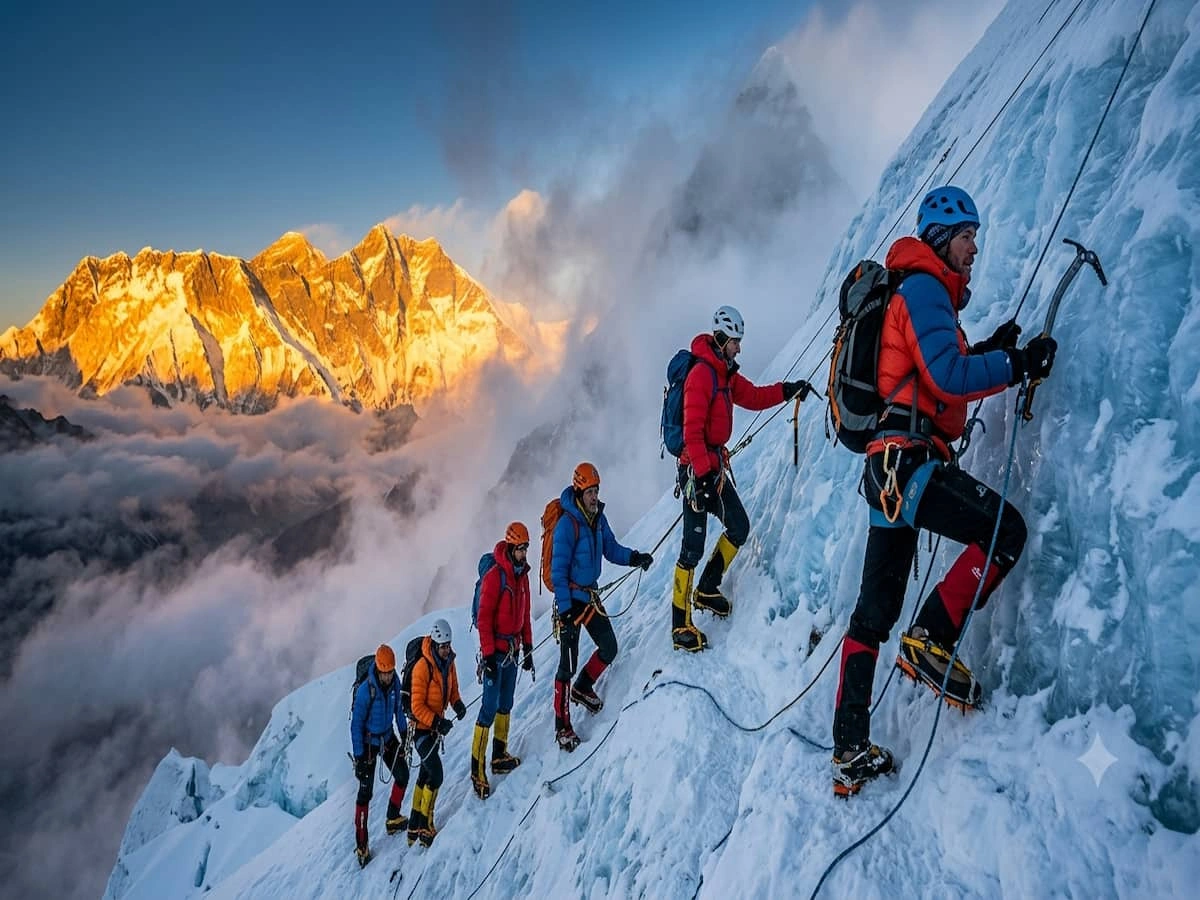
But the mountaineering part asks for very specific stuff: how to walk with crampons, how to climb a fixed rope with a jumar, and how to be on a glacier hanging from a rope and with an ice axe. At their core, these are very separate skill sets, and this journey gives you a chance to improve both.
Hiking is going to be where you get stronger and also get used to altitude, day by day. You will also learn some breathing techniques from your guides, and they will keep track of how much oxygen is in your blood at certain spots.
Though once you get to Island Peak and Base Camp, you will change things completely. Typically, there is a half-day session where you learn the basics of walking with crampons on ice, how to clip into fixed ropes, and how to practice ice axe self-arrest.
What really excites people about this expedition is how it changes them from a simple hiker to a climber. You come as someone who only walks, and you go as one who has reached the summit of a 6,000-meter peak. Such a change is significant, and it can lead you to higher peaks like Mera Peak (6,476 meters) or even Ama Dablam if you want to keep your adventure going in the Himalayas.
Key Highlights: Khumbu Icefall Views and Imja Tse Summit
The expedition is marked with two very special moments. The first one happens at the base camp of Mount Everest, where you can spot the massive and beautifully disheveled Khumbu Icefall coming down the Western Cwm. Being there during the climbing period, you might see climbers making their way between the ice towers. The magnitude of it is nearly beyond understanding until you've seen it with your own eyes.
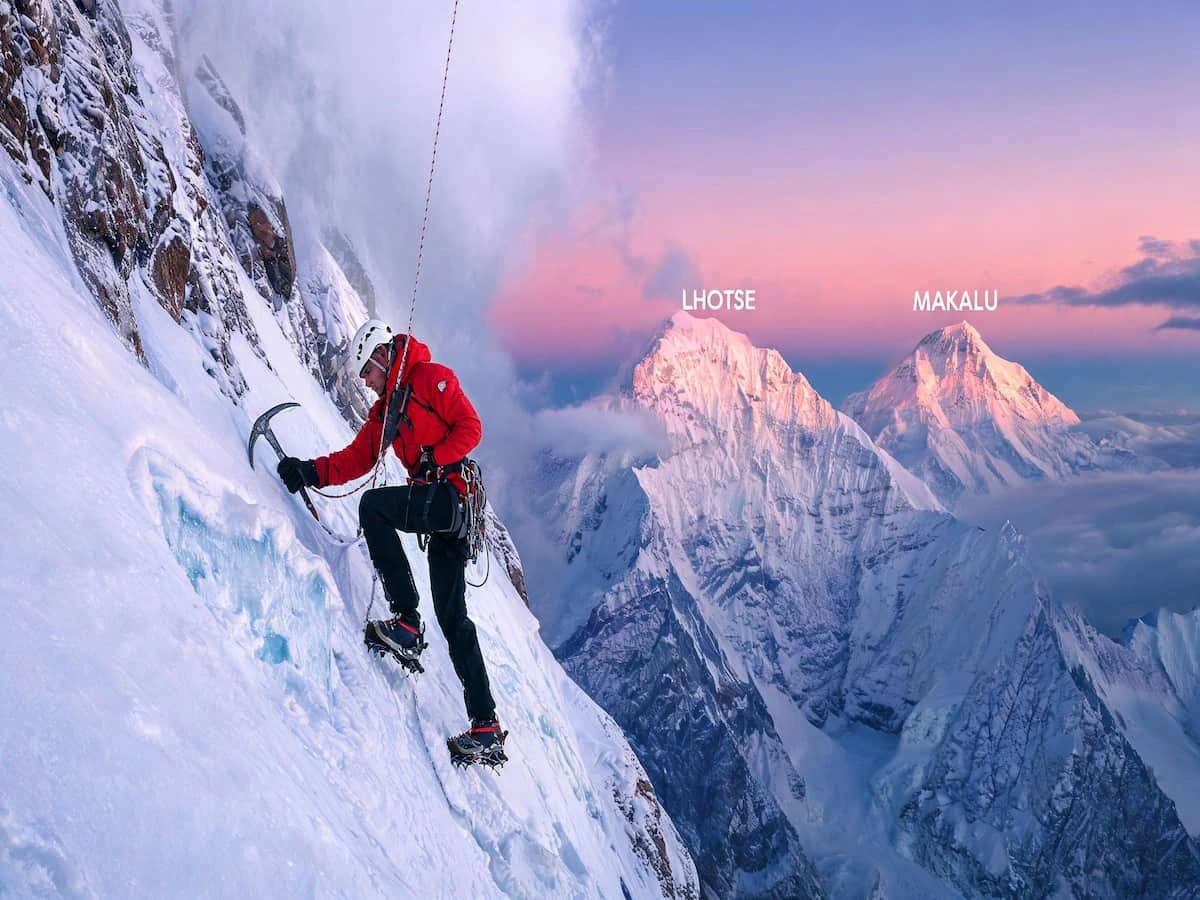
Your second unforgettable experience will be the Island Peak summit. Upon reaching the headwall at sunrise after a night ascent, the last bit of the summit ridge with great exposure on both sides and Lhotse's gigantic south wall dominating the sky is a part of your life that just never fades.
If it is a fine day, you get the sights of Makalu, Baruntse, Ama Dablam, and, obviously, Everest. The view from the top of Imja Tse is possibly even more spectacular than the view from Everest Base Camp, since you are literally standing above everything around you.
The Classic Trek to Everest Base Camp
The trek starts with a flight from Kathmandu to Tenzing-Hillary Airport in Lukla, which has one of the world's most breathtaking runway approaches. From Lukla, you go down to the Dudh Koshi River and start following the river upstream in the midst of rhododendron forests, by waterfalls, and crossing suspension bridges that are festooned with prayer flags. The first several days are quite straightforward with daily elevation gains of 300 to 500 meters.
Passing through Phakding (2,610 meters), you soon face the tough climb up to Namche Bazaar (3,440 meters), the Khumbu trading center. The track from Phakding to Namche is also the point where most trekkers face their first real ordeal: a steady five- to seven-hour hike. But the view at the top makes it all worthwhile. Namche sits at the bottom of a natural amphitheater, and you can see Kongde Ri and, if the sky is clear, your first look at Everest beyond the Lhotse-Nuptse ridge.
Acclimatization Strategy in Namche Bazaar
Namche is not only where you will spend your first day acclimatizing, but also, most importantly, one of the major days of the entire trip. The usual practice is to "climb high, sleep low, " which means that from time to time you will walk up to the Everest View Hotel (3,880 meters) or to the Syangboche airstrip, and after that, you will go down to Namche for your sleep. This way, you will expose your body to a higher altitude while allowing it to recover overnight at a lower elevation.
Holy Kailash Tours' guides are at your service to measure your blood oxygen saturation (SpO2) using a pulse oximeter. At this altitude, a measurement above 85% is generally regarded as good. If it is below 80%, you will most likely be given a rest day or, if necessary, asked to descend. Headaches, nausea, and poor sleep are some of the symptoms you might experience on the first night in Namche; Still, they should disappear within 24 to 48 hours.
Besides that, Namche is pretty well developed. For instance, you can find bakeries that offer fresh cinnamon rolls, shops with numerous types of trekking gear, and, not to mention, there are a few bars with pool tables. A meal of dal bhat costs roughly 10-15 USD, while a hot shower costs around 500 NPR. Make sure you buy the ones you forgot to carry while there, since the higher you go, the prices will skyrocket.
The Spiritual Heart: Tengboche Monastery and Sherpa Culture
After Namche, the path passes through progressively less vegetation before finally reaching Tengboche (3,867 meters), the site of the largest monastery in the Khumbu region.
The monastery, after having been reconstructed following another earlier shock, a total fire which occurred in 1989, is actually found on a wooded ridge with Ama Dablam rising right at the back. If you choose to enter during the monks' afternoon prayer, you will be able to see them chanting as the butter lamps flicker in the dim light.
The Sherpa way of life is deeply rooted throughout this trek. Mani stones, on which the mantra "Om Mani Padme Hum" is carved, are found all over, and passing them on the left is a way to show respect. Really, Sherpas are not just guides and porters; they do pretty much everything you would expect them to do.
They are, in fact, the cultural backbone of the area. For several generations, many families have been living in the Khumbu, and their Buddhist ways influence not only the houses they build for tourists but also the native festivals and the seasons.
The Mani Rimdu festival, which takes place at Tengboche from the end of October to the first half of November, comprises masked dances, religious ceremonies, and social get-togethers.
If coming to be a part of this event is the reason for your trek, it is definitely a wonderful cultural experience, one that stays in one's memory for a long time. Besides the rhododendron woods, which are a natural habitat for Himalayan tahr, musk deer, and the rare red panda, sightings of the latter are few and far between.
Reaching the Base of the World's Highest Peak
From Tengboche, the path continues to Dingboche (4,410 meters) or Pheriche (4,371 meters), both of which are common places to rest and recover after altitude changes. In fact, another day of relaxing here is imperative.
Lots of walkers climb Nangkartshang Peak (5,083 meters) for acclimatization and to enjoy views stretching from Makalu to Cho Oyu.
The last effort to reach Everest Base Camp passes through Lobuche (4,940 meters) and Gorak Shep (5,164 meters). Gorak Shep is the last habitation before Base Camp, and you will be based there overnight before going on a two-to-three-hour stroll to EBC itself.
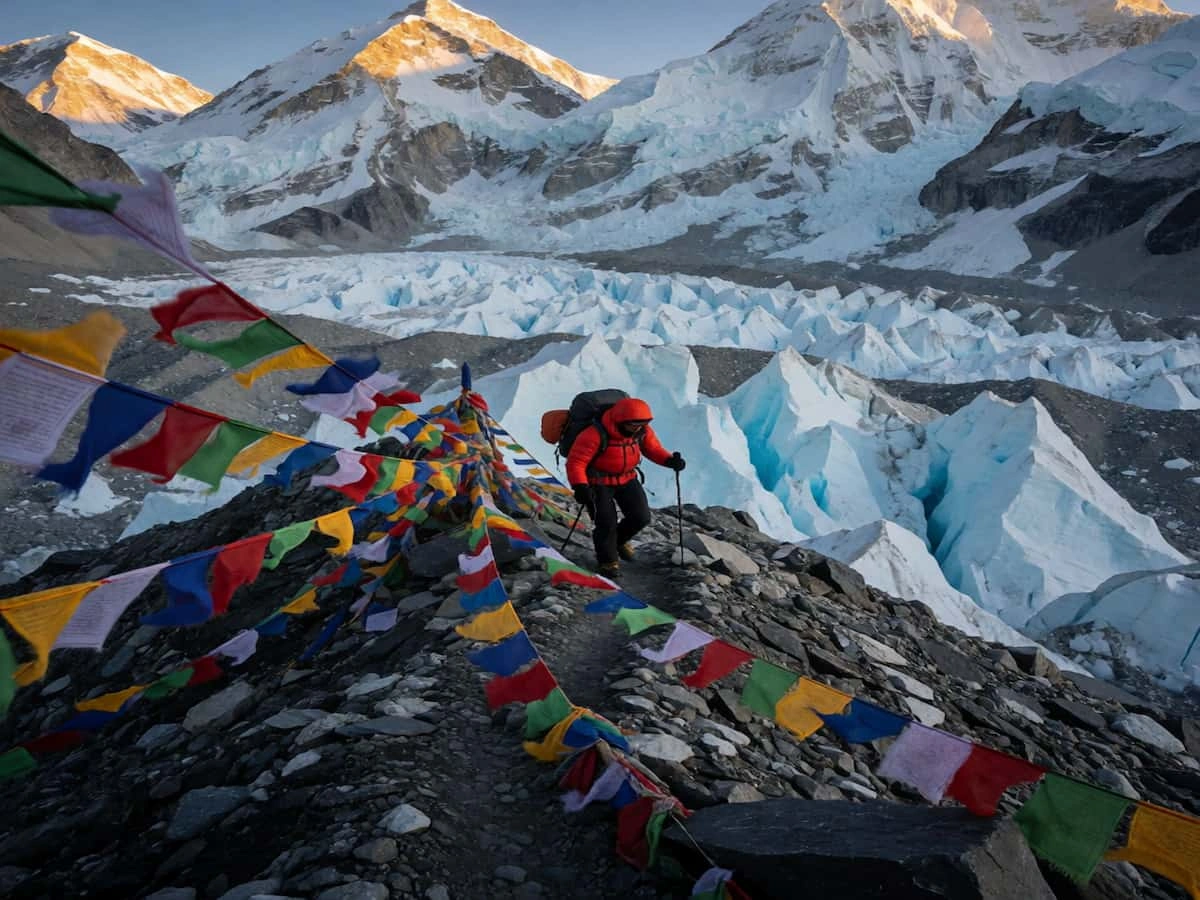
The path traverses the Khumbu Glacier's lateral moraine, a terrain of gray rubbish and ice that is almost unbelievable, as if it were from outer space.
Everest Base Camp (5,364 meters) is, during the season, a small city of bright tents, solar panels, and satellite dishes. When out of season, it's simply a barren stretch of glacial debris.
In any case, the feeling of fulfillment upon arriving is genuine. You've walked for over a week covering some of the most difficult terrains on the planet, and here you are standing at the very base of the tallest mountain in the world. In fact, a number of trekkers also go up Kala Patthar (5,644 meters) from Gorak Shep for the official Everest sunrise picture, and it's definitely worth getting up so early in the morning.
Transitioning from Trekking to Climbing
From as far as reaching the Everest Base Camp trek, most of the plans take you back through Lobuche and then head towards Chhukung (4,730 meters) either by the trail over Kongma La or through Dingboche. This is the time where character of the expedition completely changes. The crowd in teahouses decreases, the trails grow quieter, and attention shifts from trekking milestones to preparation for the climb.
The Imja Valley is quite distinct from the main Everest trail. Besides being wilder and less developed, the mountains seem to press the valley more tightly. You can easily spot Island Peak from Chhukung, and that moment of being face-to-face with the mountain that you intend to climb generates such a combination of thrill and anxiety that it is quite incomparable.
Progressing from Gorak Shep to Island Peak Base Camp
The journey from Gorak Shep to Island Peak Base Camp normally takes two days, with a stopover in Chhukung. From Chhukung, the final four-to-five-hour walk to Island Peak Base Camp (5,087 meters) is generally done by following the Imja Khola upstream, passing through yak pastures and glacial lakes. In fact, the trail is pretty easy from a technical standpoint, but at this elevation, even the flat ground can be quite exhausting.
Island Peak Base Camp is positioned on a grassy section over the Imja Glacier. It's very much a minimalist type of place: just a few tents, a cook facility tent, and that's about it. Your climbing team will have the requisite gear pre-positioned here, such as ropes, harnesses, and group equipment. Just before you move on to High Camp, this is actually your resting place the previous night, and from a relative comfort perspective, it is also your last opportunity to relax.
The Imja Glacial Lake, visible from the trail leading to the camp, has been steadily filling with meltwater as the glacier retreats. This is a highly impactful visual representation of the profound changes caused by climate change in the Himalayan region, and Holy Kailash Tours is actively engaging its customers in a conversation about climate change and the environment as part of its core values of ecological sustainability.
Pre-Climb Training: Crampon and Fixed Rope Skills
Your climbing guide at Base Camp will conduct a training session lasting around three to four hours. You'll get the hang of walking with crampons on ice, which may seem quite strange at first but soon becomes second nature. The main technique to master is flat-footing, where you place all the crampon points at the same time rather than walking heel-to-toe as usual.
Besides that, you'll be shown how to operate a jumar (ascending device) on a fixed rope. This is precisely what you'll do on the headwall, where the slope is too steep for just walking. The movement follows a beat: pull the jumar up, lift your foot, pull lift. Also, your guide will introduce you to basic crevasse rescue methods and show you how to attach yourself and move between fixed rope sections using carabiners and a figure-eight descender.
In case you've never been acquainted with any of this gear, don't worry. The training is arranged for those who haven't a clue, and your instructors have trained hundreds of newbies. Anyway, a little crampon and harness rehearsing at home, even if it's just your backyard, helps a lot in making the training far more effective.
Trip Highlights
- Trek through the famous Khumbu Valley and Sagarmatha National Park
- Stand at Everest Base Camp (5,364 m) with the Khumbu Glacier in front of you
- Sunrise views from Kala Patthar (5,555 m), the best vantage point for Everest
- Visit Tengboche Monastery, the spiritual heart of the Khumbu region
- Acclimatize properly with built-in rest days at Namche Bazaar and Dingboche
- Climb Island Peak (6,189 m), one of Nepal's most popular trekking peaks
- Walk through Sherpa villages like Khumjung and experience local culture up close
- Guided by experienced climbing Sherpas and trekking guides who know the terrain
- Fly between Lukla and Kathmandu (or via Manthali) for short, scenic mountain flights