Why Climbers Choose Island Peak
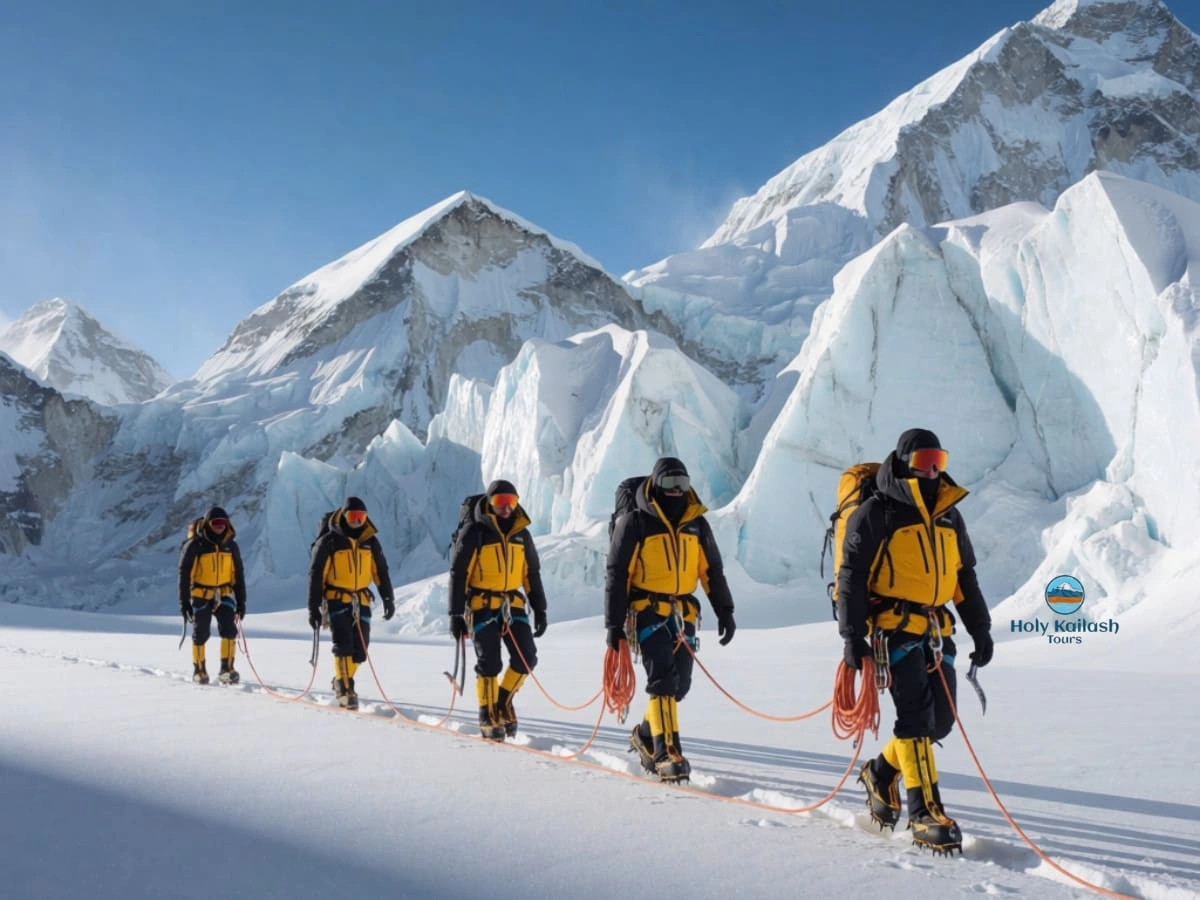
Most climbers pick Island Peak because it bridges the gap between trekking and serious mountaineering. You'll use a harness, crampons, an ice axe, and fixed ropes, but you don't need years of alpine training to do it safely.
No technical climbing background required
- Guides teach gear use directly at Base Camp before the summit push
- One guide works with 3 to 4 climbers, adjusted based on the group's experience level
- The summit sits at 6,189 meters, high enough to feel like a real achievement
The Trek Before the Climb
The trip starts with a flight into Lukla, one of the more dramatic airport landings you'll experience anywhere. From there, the trail runs through familiar Everest region territory: Namche Bazaar, then Tengboche, home to the highest monastery in the area.
You'll reach Kalapatthar at 5,545 meters, the best viewpoint for Mt Everest and the peaks around it, and spend a night at Gorakshep above 5,000 meters. Everest Base Camp is part of the route, too. Skipping it would be a waste, given how close you already are.
Where the Real Climb Begins
This is where Island Peak climbers part ways with standard Everest Base Camp trekkers. After Gorakshep, you descend to Lobuche, then cross Khongma La Pass on the way to Chukung. Khongma La is widely considered the toughest of the Everest Three High Passes, so this stretch tests your legs more than anything before it.
From Chukung, the trail leads to Island Peak Base Camp. Accommodation here is tents only. There's no teahouse, no dining hall, just you, your gear, and the mountain ahead.
Summit Night
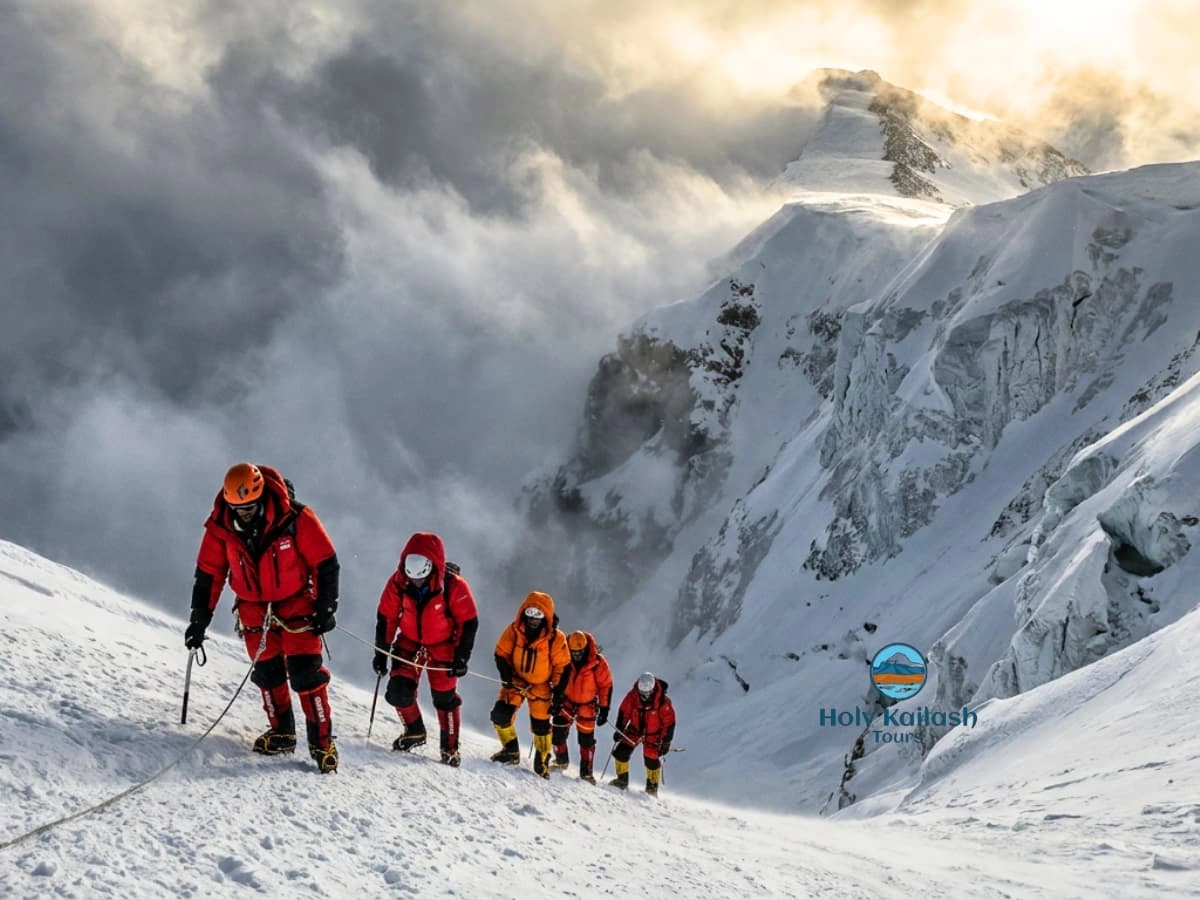
Climbers leave Base Camp around 1 am to reach the summit before the wind picks up. The early hours are cold and slow, but the payoff is real: watching sunrise break over the Himalayas from a 6,000-meter summit isn't something you forget.
After the descent, you trek down to Dingboche, where the route rejoins the standard Everest Base Camp trail back to Lukla.
Best Time to Climb
Two windows work well for Island Peak:
- April to May, when spring weather is stable, and skies are usually clear
- October to November, the post-monsoon season, with similarly reliable conditions
Outside these windows, wind and snow conditions become harder to predict, which is why Holy Kailash Tours schedules climbs around these months.
Local Sherpa Support
Holy Kailash Tours works with Sherpa guides based in Dingboche and Chukung, not guides flown in from elsewhere. These are the people who live near the mountain and climb it season after season. They know the route's moods: where the ice shifts, when the wind turns dangerous, and how to read conditions that don't show up in a forecast.
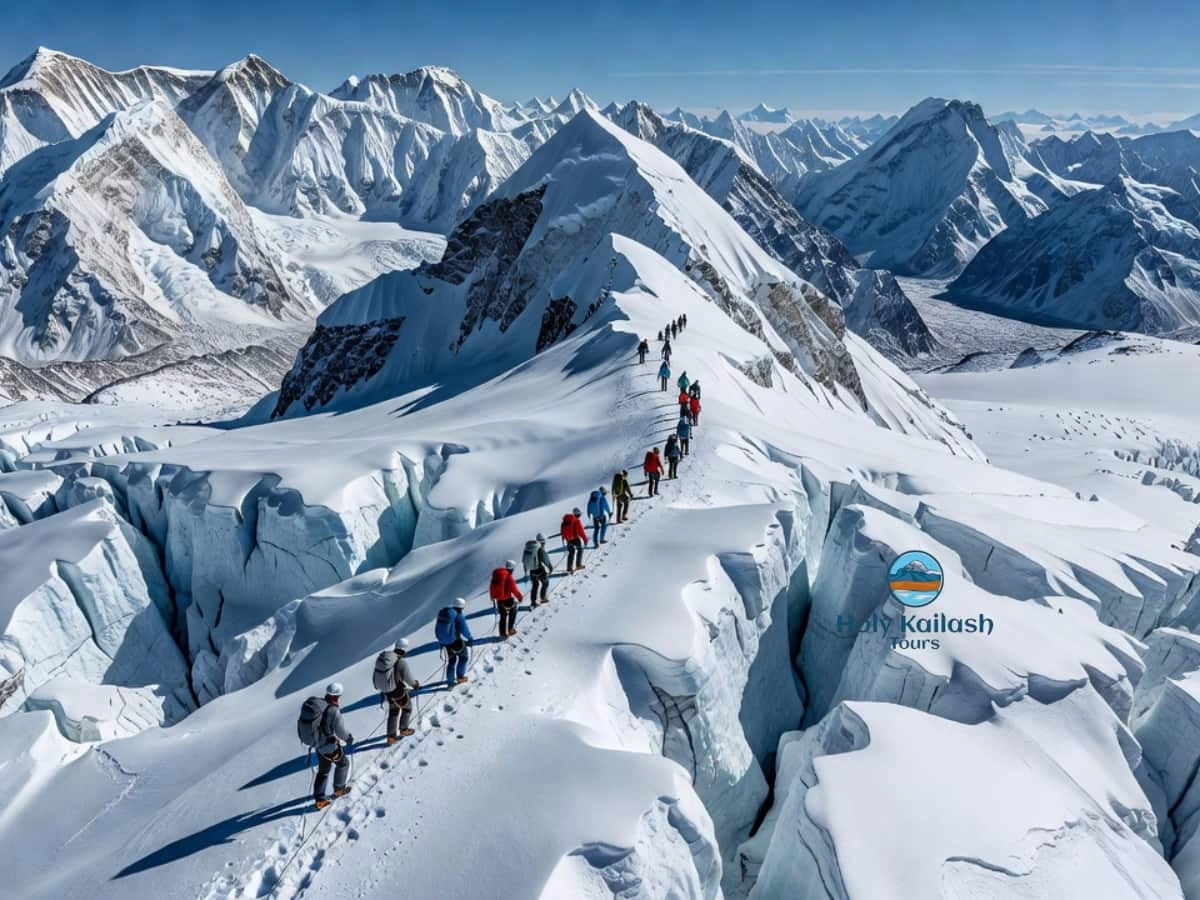
That local knowledge matters more on Island Peak than people expect. The final summit ridge and the glacier crossing both change year to year, and a guide who climbed it last week knows more than any guidebook.
What to Expect From the Climb Itself
The technical section near the summit involves a short, steep ice wall and a fixed-rope traverse. It sounds intimidating on paper, but with proper instruction at Base Camp, most climbers manage it without trouble. The harder part for most people isn't the technical climbing. It's the altitude and the early wake-up call.
- Crampon and ice axe training happens at Base Camp, not on the mountain
- Fixed ropes guide you through the steepest sections
- Guides assess each climber's pace and adjust the group accordingly
- Weather windows can shift summit day by a day or two
Planning Your Climb
If you're trekking to Everest Base Camp anyway, adding Island Peak extends the trip by roughly a week and turns a strong trek into an actual climb. Holy Kailash Tours builds the itinerary around acclimatization first, since altitude, not technical difficulty, causes most problems on this route.
Anyone reasonably fit, comfortable with multi-day trekking, and willing to follow a guide's instructions can take this on. You don't need to have climbed before. You just need to commit to the training your guide gives you at Base Camp.
Island Peak Climbing Packing List
Holy Kailash Tours has watched climbers struggle on summit night because of one missing item, usually something small they assumed they wouldn't need. This list comes from what our guides actually see work on the mountain, not a generic checklist copied from a gear shop website.
Documents and Money
- Passport with at least 6 months' validity
- Nepal visa (or visa fee in cash to get one on arrival)
- Passport-sized photos (4 to 6 copies)
- Travel insurance details, including coverage for emergency helicopter evacuation above 6,000 meters
- Nepali rupees in cash for personal expenses on the trail, since ATMs disappear after Namche Bazaar
Upper Body Layers
- Thermal base layers (2 to 3 sets)
- Fleece or light down mid-layer
- Insulated down jacket rated for at least minus 20°C
- Hard-shell waterproof and windproof jacket
- Sun-protective trekking shirts for lower altitude days
Lower Body Layers
- Thermal base layer leggings (2 sets)
- Trekking trousers, lightweight and quick-drying
- Waterproof and windproof shell trousers
- Insulated climbing trousers for summit night
Headwear and Hands
- Warm fleece or wool hat
- Sun hat or cap for lower altitude trekking days
- Buff or neck gaiter
- Climbing helmet (some guides provide this as part of the group kit)
- Liner gloves for everyday trekking
- Insulated, waterproof summit gloves or mitts for the climb itself
Footwear
- Sturdy, broken-in trekking boots for the approach trek
- Insulated mountaineering boots compatible with crampons for the summit climb
- Wool trekking socks (4 to 5 pairs)
- Liner socks to reduce blisters
- Gaiters to keep snow out of your boots
Technical Climbing Gear
- Crampons fitted to your mountaineering boots
- Climbing harness
- Ice axe
- Ascender (jumar)
- Carabiners (at least 3, a mix of locking and non-locking)
- Figure-8 descender or similar rappel device
- Climbing helmet, if not already covered above
- Headlamp with spare batteries, essential for the 1 am summit start
Sleeping and Camping
- Sleeping bag rated to at least minus 20°C for Island Peak Base Camp
- Sleeping bag liner for extra warmth and hygiene
- Inflatable sleeping pad
- Lightweight trekking towel
Health and Personal Care
- Personal first aid kit, including blister plasters, painkillers, and any prescribed medication
- Diamox or other altitude sickness medication, after consulting your doctor
- Water purification tablets or a filter bottle
- Hand sanitiser and biodegradable wet wipes
- Sunscreen (SPF 50 or higher) and lip balm with sun protection
- Sunglasses rated for high-altitude UV exposure, ideally glacier glasses with side coverage
Other Essentials
- Trekking poles
- Daypack (30 to 40 litres) for daily trekking
- Duffel bag for porters to carry your main gear
- Reusable water bottles or a hydration bladder
- Power bank, since charging is limited and often paid for above Namche Bazaar
- Snacks: energy bars, nuts, or dried fruit for summit night when appetite usually drops
Island Peak Climbing Highlights
- Stand on a 6,189-meter summit without needing prior mountaineering experience
- Get close-up views of Everest, Lhotse, Nuptse, and Makalu from the summit ridge
- Cross Kongma La, the toughest of the Everest Three High Passes, on the way to Chhukung
- Walk through Sherpa villages and Buddhist monasteries, including Tengboche, the highest in the region
- Watch sunrise from Kalapatthar, the closest viewpoint to Everest without a permit to climb it
- Train in technical climbing skills directly from certified guides at Island Peak Base Camp
- Trek through Sagarmatha National Park, a UNESCO World Heritage Site
- Combine a full Everest Base Camp trek with an actual mountain summit in one trip
- Get guided by local Sherpa staff from Dingboche and Chukung who climb this route every season