Why Choose the Lhasa to Everest Base Camp Route?
For most people, it is only a few weeks to get from Lukla (in Nepal) to the Everest Base Camp along the main trail. The trek to Tibet has some distinctions and may be the more feasible one given one's time and physical condition. This is something to do by car, rather than these.
To go up to base camp on the Tibetan side, some guy should be driven along the asphalt "road" that runs for only hundreds of meters down from Lukla. It is still a trekking that one should survive for a few days.
But nobody has to take a huge backpack on him/her for twelve days. Since this is a view one, it was the Everest Base Camp north wall that got the most attention since not many people took pictures of it (other than the Everest north face).
The picture of Mount Everest that you could find on the website came mostly from the south side in Nepal. The view from the north wall of the mountain was very different, and again, not many tourists went out to take pictures there.
Or combining both the Lhasa temples and palaces. Trekking from the Nepal side will lead to mountains and visits to Sherpa villages. So, in this way, you will be getting not only such an experience but also the spiritual and political hub of Tibetan Buddhism. You could also choose a tight schedule as interesting as leading from Lhasa, then the Enboy car to the western part of Tibet, and then the Everest Base Camp within 8-12 days.
While the normal trek through the Nepal route still needs at least two weeks. Getting a permit is much easier. In Tibet you will need a Tibet Travel Permit and the Aliyen Travel Permit; you should plan to get these in advance through an official agent. It may seem a boring task, but it's highly simple because you would get straightforward directions.
Major Attractions of Lhasa City
Potala Palace Experience
Perched at the top of a hill and miles away from the city, Potala Place is a symbol. This reddish-white and thirteen-story structure has remained a center for the Tibetan rulers' government of Tibet. Inside the palace, only the faint light from butter lamps can be observed in the otherwise darkened rooms, which are adorned by gold statue murals, and the chortens, which have only seen major renovations done by the monks themselves generation after generation.
You are only given a limited number of tickets, so a travel agent has to arrange a particular hour on a slot in a specified time window of your arrival for the entry permit. You might not like to be stuck there for long because the Chinese officials restrict the period per a group of people in a single room of the Potala Palace.
Temple Jokhang
Jokhang, which stands in the central part of Lhasa, has continuously been the spiritual center that holds most reverence in the Tibetan hearts. This center of Buddhist faith also draws followers across different religions and countries. Performing rituals by walking around the temple, offering objects, even to the degree of prostration, where one lies down with full body, hands, and legs flat, are among the temple-related rites.
A gold statue that is housed inside the temple named Jowo Sakyamuni is said to have been made by hand and touched by the Buddha himself as per earthly lifetime legends. A pleasant mixture composed of yak butter and juniper incense will greet your nostrils even before you can open the door of the Jokhang temple.
Barkhor Street
Barkhor surrounded Jokhang the way the Path did: an approximate five-mile circular route. Different groups walked around Jokhang, some with a focus on the direction, others on the prayers. They turned prayer wheels clockwise, while some counted their rounds by the number of beads worn as an ornament.
Several shopkeepers stood by, waiting for customers to pass by and selling to them prayer-flags that are very popular among pilgrims, besides turquoise jewelries and yak fleece warm clothing, Lhasa has still quite few streets that are going to be washed with melody of city life.
Dadong Village
If I were you, I would take it easy and hang around these farmer people on the countryside to observe them in their normal routine, just west of Lhasa, away from the hustle and bustle that takes place when you are just outside the temples in such cities as Lhasa.
Really, a very great place to stop for at least a half-day if you are a bit bored and looking to kill time. There you would find houses made of stone, little fields with barley crops, and in general you would get a feeling of a much slower pace of daily life.
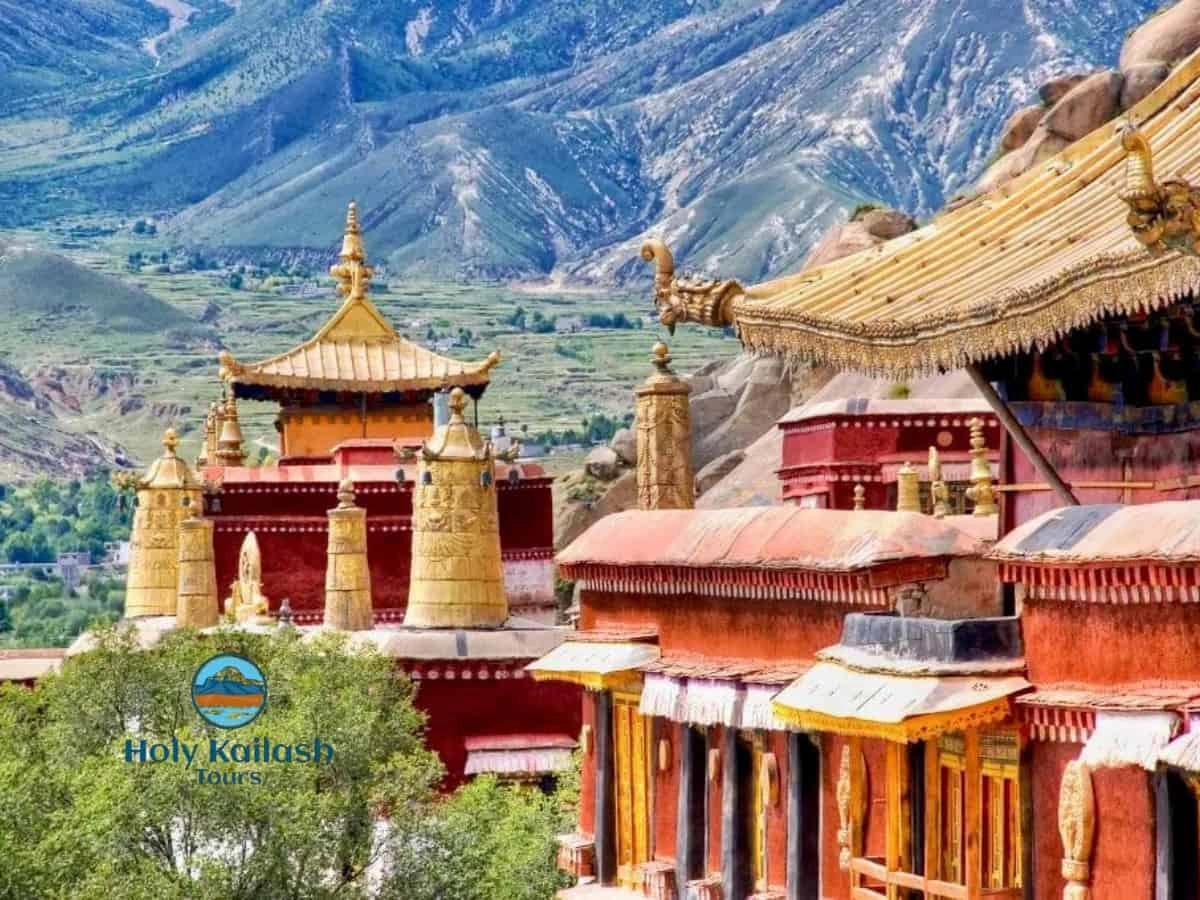
Drepung Monastery
The Drepung was never really a major monastery. Up until 1959 it had accommodated over 10,000 monks, but since then there has only been a very small number living there. In fact, the Drepung is now the single largest monastery in the world. It is interesting to see the scale and proportions from the hillside of the white.
Imagine for a moment that you are among the monks, laboring in the kitchen at a time when 10,000 monks had to be fed. Moving on, imagine yourself in a prayer hall where priests, even the head priest, hold their morning services. Only the debate sessions are left of the old ways.
Sera Monastery.
After lunch (except on Sunday) all the young monks gather in a gravel courtyard to debate Buddhist philosophy. They stamp their conclusions into the dust while making a loud "sounding clap-clap" with their palm-to-palm meetings.
Yamdrok Lake
Chaotic, noisy, surreal. This picture is surely a weird photograph of Tibet. Yamdrok Lake is so blue a lake you might identify a picture of it at first glance even without a caption. Head west from Lhasa for some 50 km. You'll first reach the highest point of Kamba La mountain and then look down with a great view of Yamdrok Tso from the hilltop.
Karola Glacier
Karola Glacier: Just a bit off the highway connecting Lhasa & Gyantse, you have Karola Glacier. If you just want to walk away from your car for a bit, to the ice you don't need to bring any technical gear. One of the few glaciers where you can just stop by without prior arrangement; a great option if you are travelling and the distance between your stops gives you enough time for this.
Gyantse Kumbum Stupa
Kumbum Stupa, with its multiple stories and white color, has plenty of tiny chapels filled with many statues and murals. You can look down at an expansive view of Gyantse town and an ancient fort, which is built above the hill, after you reach the top level.
Tashilhunpo Shigatse Monastery
Pelkor Mona: Among the numerous sacred places venerated by the Tibetans There is one of the most important holy sites for the Tibetans that Tashilhunpo In addition, it is a very significant Buddhist monastery since it houses the Panchen Lama, the second-highest-revered Tibetan Buddhist leader, following the Dalai Lama. At this monastery, it is possible to witness a giant idol of Maitreya Buddha. It will be 29 meters in height and is the world's largest Buddha statue, which has been crafted out of pure gold and copper
Pelkor Monastery
Covering the Pelkor monastery is one of the unique monasteries of Tibet since, besides being the residence of monks of one tradition, it has also provided shelter to monks of other traditions. In other words, besides monks of the Sakya sect living in Pelkor monastery for hundreds of years, monks from the Kadam and Gelug sects are the other users of this place.
There are several examples of murals here, and among the paintings that are done first in India and then brought to Nepal Here there are the paintings in the form of murals, which are considered to be
among the most well-preserved paintings. From the paintings, there were several stages through which the styles developed. First of all, these were the styles used in India, which were then introduced and developed in Nepal, where these monks lived for a long time.
Major Attractions of the North Everest Base Camp
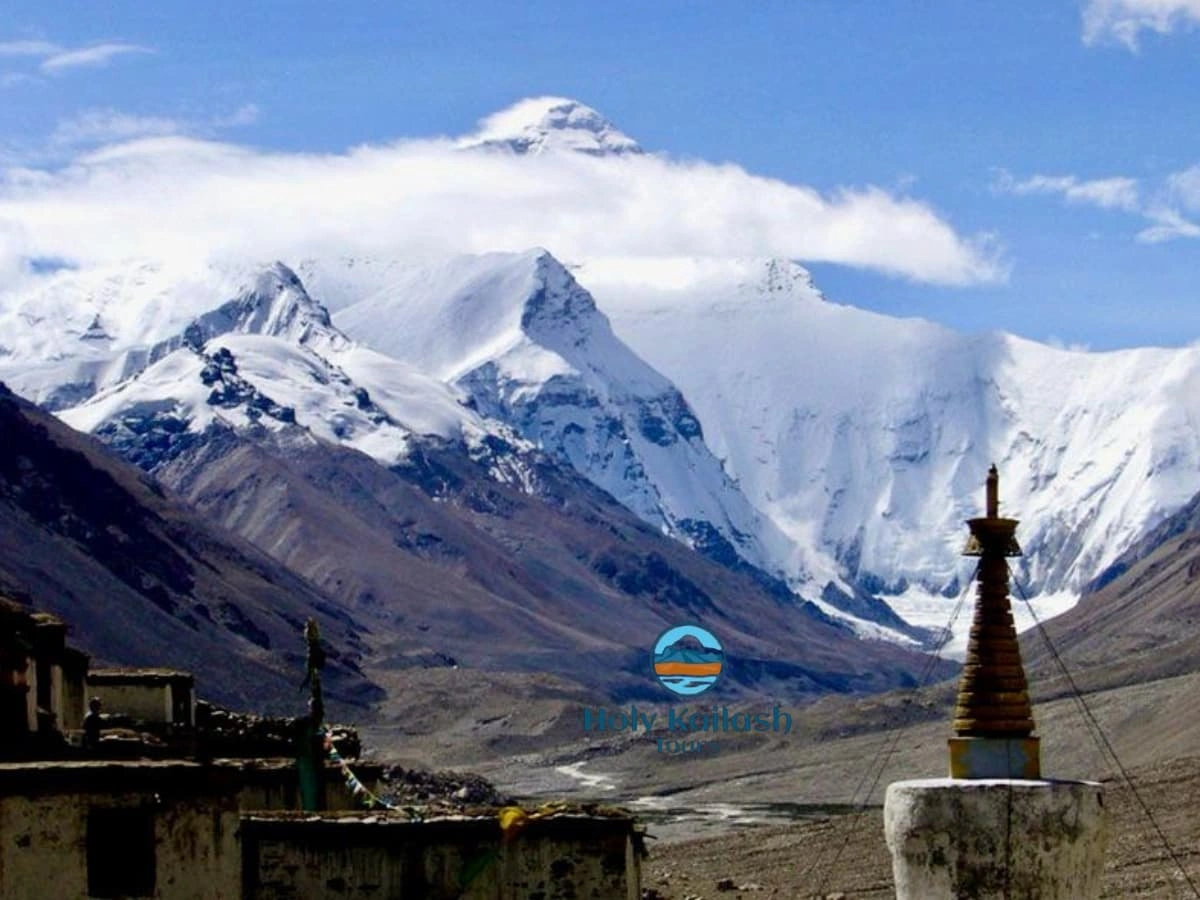
Spectacular Views of Mount Everest
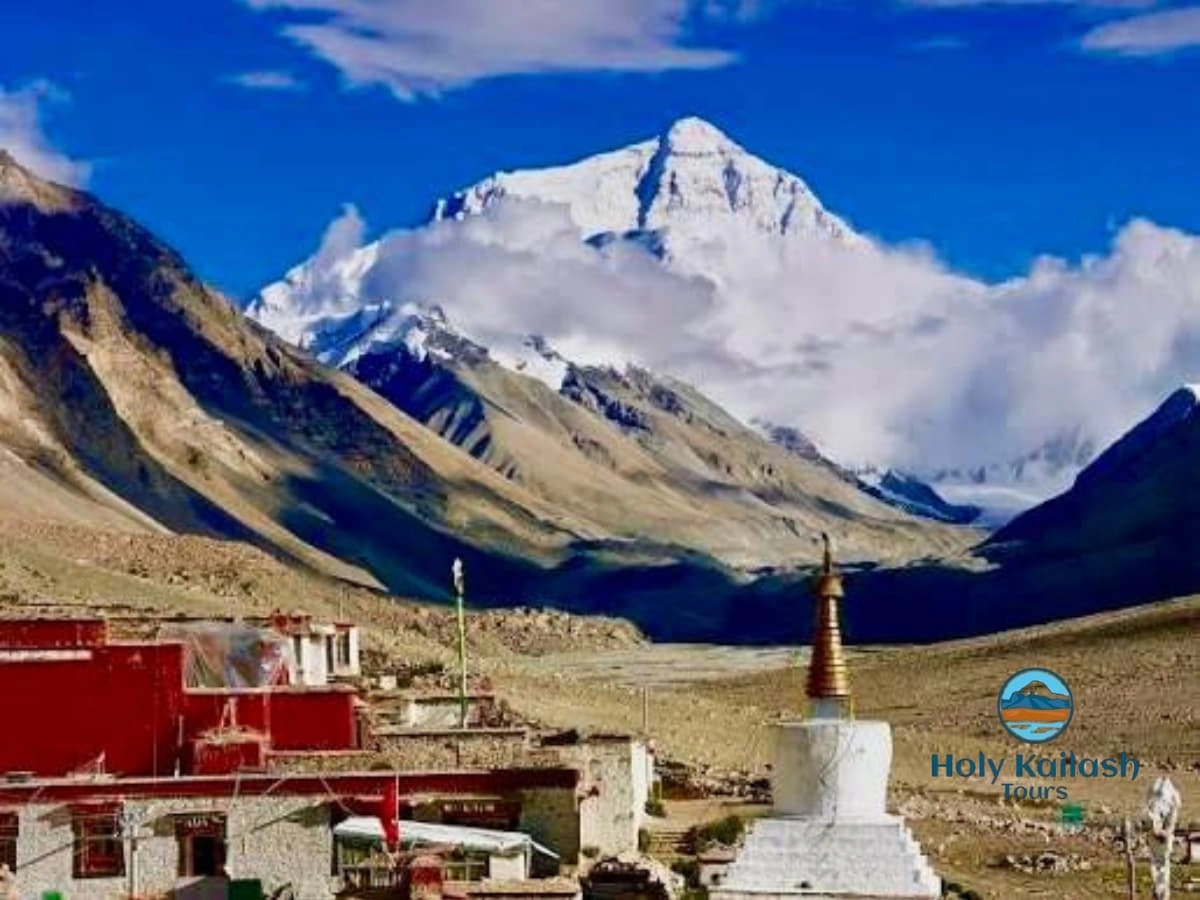
The north face of Everest seems to be a tougher terrain, and it is more vertical as well than the south side. To some extent, this is only a matter of how the mountain is seen, but however, it also depends on how clear the air is due to your being a distance away from the Himalayan rain belt. On an excellent weather day, one can already see the mountain peak from the distance of 100+ miles before even reaching Everest Base Camp.
Rongbuk Monastery
Rongbuk Monastery is reportedly the tallest monastery in the world, as it is perched at about 5000 meters with a view of Everest behind it. It is only a few monks and nuns that are actually residing in this place throughout the whole year.
Sunrise and Sunset Over Everest
Sighting of mountaineers is a rare event in the area of Mount Everest, in particular on the Tibetan side, which is the northern aspect. Seeing a beautiful sunrise and a stunning sunrise with Mount Everest as a backdrop is something beyond human comprehension and feeling, which is not only a very beautiful experience but even something transcendental.
The first rays of light at daybreak light the famous face of limestone on the top with an incredible brilliance of fire and color, while the whole world becomes lit in beautiful golden rays.
When nighttime comes again, the diminishing mountain light is reflected on the endless, wild plateau with its violet depth and its silence and gives a soulful, breathtaking mountain spectacle, which is a vivid reflection and a source of inspiration in the spirit of the Himalayas.
Scenic Journey Across the Tibetan Plateau
When your eyes get the opportunity to witness a scenery transformation with the setting sun, you will not feel the need to have brought any other clothing apart from the one you are putting on right now.
It will have a place for you to be a part of everything; the road is not only the means by which you travel to a lot of different places and get rid of all the dull bits, but it also comes with its own pleasures as well.
Looking on the endless open plateau, snow-covered ranges of distant mountains, and an apparently immense sky, which seems to defy the rules of physics by allowing the viewer to be on its surface. The road rarely offers such an expansive visual inside the confines of a car.
Tibetan Nomadic Culture
All along the trail, we might encounter nomadic herders accompanied by yaks and sheep roaming across the vast grassland that scarcely seems able to provide enough sustenance for life. Only in this area of the world can you spot some families living in the felt tents at certain times of the year, although this lifestyle is gradually disappearing, and yet it is still present.
Pang La Pass Panorama
Pang La Pass reaches an altitude of 5200 m and Some say to be the best all-round panoramic view during the whole journey when you get the world's six highest mountains right in front in this single view: Everest, Lhotshe, Makalu, and Cho Oyu. Babi Driver often takes a pause, mainly for taking photos.
Star-Filled Night Sky
A near-perfect sky studded with numerous brilliant stars is seen near base camp because of the very little illumination by lights and the thin, dry air. A headlamp is needed. You'll have to dress warmly, allow your eyes to adjust in the first ten minutes, and if you're not convinced, you will just stay indoors.
Tirp Highlights
- Come flying from Kathmandu over the Himalayan range to Lhasa.
- Gaze at the beauty of Potala Palace, Jokhang Temple, and experience a walk on a traditional Tibetan Barkhor Street.
- Learn about Buddhism with a visit to the monk debates at Sera Monastery.
- See the stunning Yamdrok Lake and Karola Glacier with its turquoise color.
- Visit Tashilhunpo Monastery and the Gyantse Kumbum Stupa.
- Go to Everest Base Camp on the Tibetan side and see the mighty north face up close.
- Cross through the beautiful Pang La Pass and experience the sight of five 8,000-meter peaks at once.
- One night staying near Rongbuk Monastery which lies at a record height will be a unique opportunity.
- Travel back to Nepal through the border at Gyirong.
l