A lot of people imagine that doing the Everest Base Camp trek involves a two-week trek, which implies walking through dusty mountain trails and having tired legs and headaches from high altitude. This is a reality, and it will be worthwhile for those who do have time. Still, one can go and explore one of the most amazing areas in the world in another way, and it will only take you one day to do it!
Imagine sitting on a cozy living room sofa drinking your first cup of coffee. Now compare it to a situation when you are already several thousand meters above the ground and still flying high to reach the Everest Base Camp helicopter tour! A helicopter ride can easily make you see the beautiful Himalayas and their glaciers and ridgelines, which normally a trekking team takes a week to reach! The climate is cold and the atmosphere quiet, while you're surrounded on all sides by Mount Everest from its base to the top.
This is the actual experience of the Everest Base Camp (EBC) helicopter tour. If you plan to take one, you can learn everything from route costs, weight restrictions, and safety in this article. We will also give tips on how to book a flight, what gear to carry, and the actual weather patterns to expect at different times of the year.
We have run dozens of these tours at Holy Kailash Tours, so this article will be based on our real experience rather than on brochures.
About Everest Base Camp Helicopter Tour
The EBC Helicopter Tour is a 3-hour helicopter Everest view tour flight from Kathmandu in the EBC region. The helicopter will leave from Tribhuvan International Airport at 6 AM and go nort-heast to the Himalayan foothills in Lukla. The atmosphere of Khumbu Valley is really dramatic.
On the outbound you can see Ama Dablam Lhotse Nuptse and finally Everest; on the way down to Kala Patthar, a rocky ridge 5,545 m high which gives by far the best overland view of Everest's south face and the Khumbu Icefall, you have a clear view of the whole route over which climbers make their way to the summit of Everest.
Upon landing, the helicopter will then switch off at the Everest View Hotel near Namche Bazaar (as many of the package deals include breakfast at the hotel with an amazing view of Everest with direct line of sight from the terrace) before returning to Kathmandu.
The day ends normally by midmorning. The total time of flight from Kathmandu to Everest and back is of about 3-4 hours with stops. The whole trip takes about 5-6 hours. The ideal way to do the Everest view trek. For others: short-time travellers, older pilgrims and non-trekkers at altitude, or those wishing to combine an aerial Himalayan journey with a Nepal holiday. Holy Kailash Tours customizes these packages for every pilgrim, from the senior citizen to the novice, by adding the helicopter to an established Nepal package.
Everest Base Camp Helicopter Tour with Landing
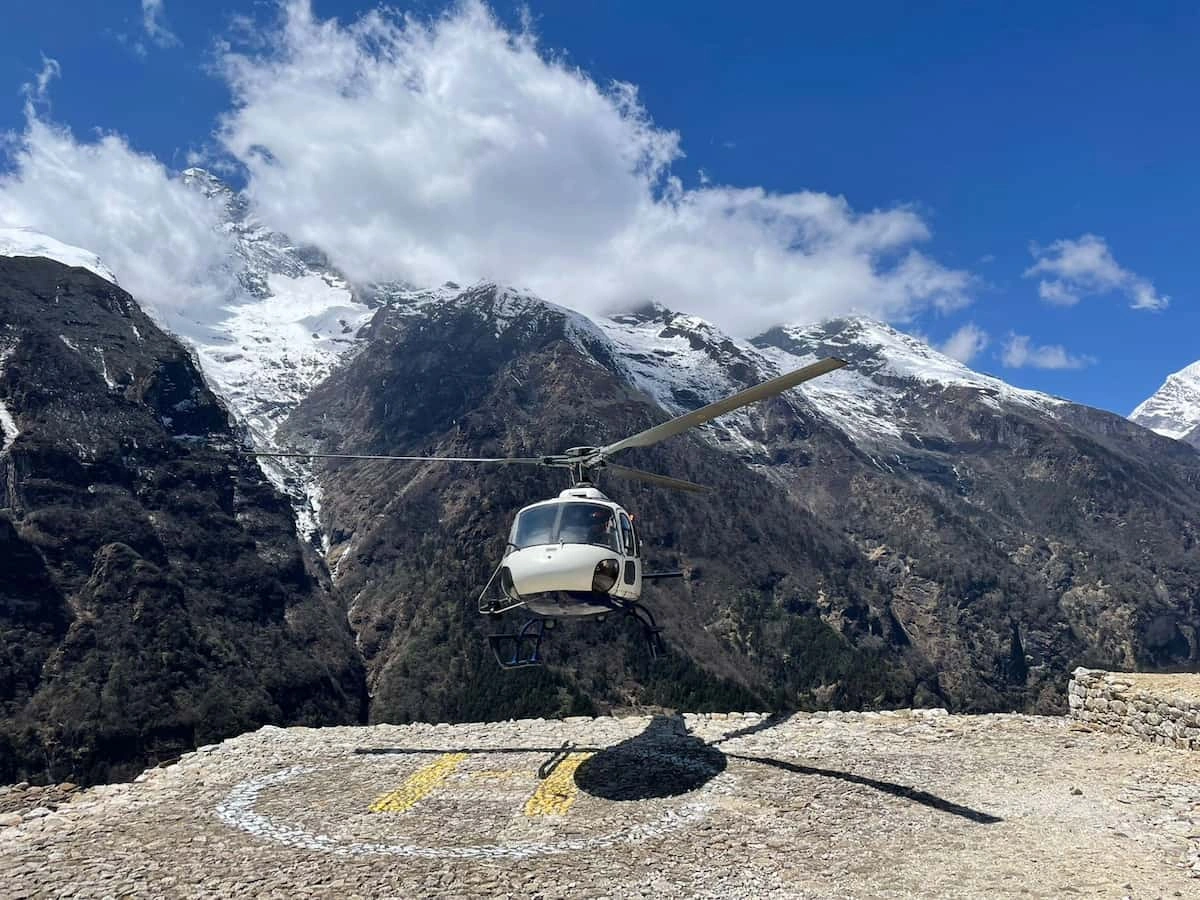
Landing: This is why a sightseeing flight is a memorable experience. Most EBC helicopter sightseeing flights land touch down at Kala Patthar (50545m) above Namche, a point higher than Everest Base Camp with superior sights.
Here the impressive Khumbu Icefall is viewed from the front, the upper Western Cwm is even higher above, and of course the upper Southeast Ridge which the ascending climber uses to reach the summit. What can only be described as simply stunning lighting strikes the south face of the great mountain on a clear morning as you stand entranced...
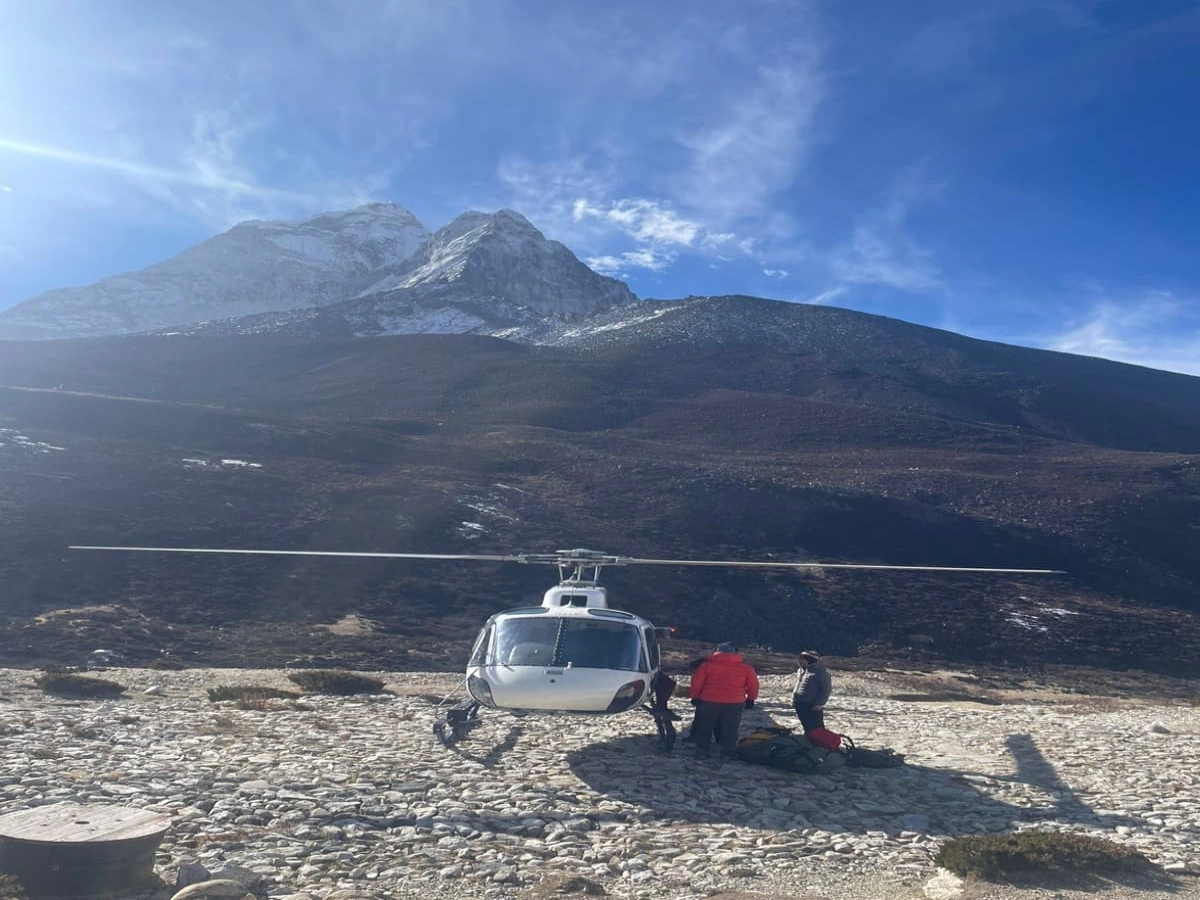
The touchdown at Kala Patthar is weather-dependent: wind, clouds, and visibility dictates the decision as to whether pilots can land the aircraft. Sometimes, the helicopter remains in hover and the passengers shoot in the cabin. Other mornings, the landing is just as scheduled.
The expert flying crew at Holy Kailash Tours decide the landing spot in real time, so risky high-altitude landings are a thing of the past. The helicopter arrives at the Everest View Hotel, which is a tiny bit elevated over Namche Bazaar at 3880 m. The hotel not only offers a spectacular breakfast on the terrace of the Roof of the World in the Himalayas but also gives you Everest, Lhotse and An Dablam as you have your first mug of tea. It is an uncanny feeling, sitting with tea and the whole of the Everest massif in the window.
Photographers would love it here. Morning has gentle light before the clouds build up, and both sites have composition opportunities that just can't be had from trekking on the ground. Carry a good camera, or ensure your phone has a decent bright-sky-sensing chip.
How Safe Is the Everest Base Camp Helicopter Tour?
If you follow the lines of a mountain, you may end up on a helicopter tour. Many people would ask themselves that question, yet the answer is only honest if they do. As long as operators are licensed and pilots are experienced, Everest helicopter tours are safe.
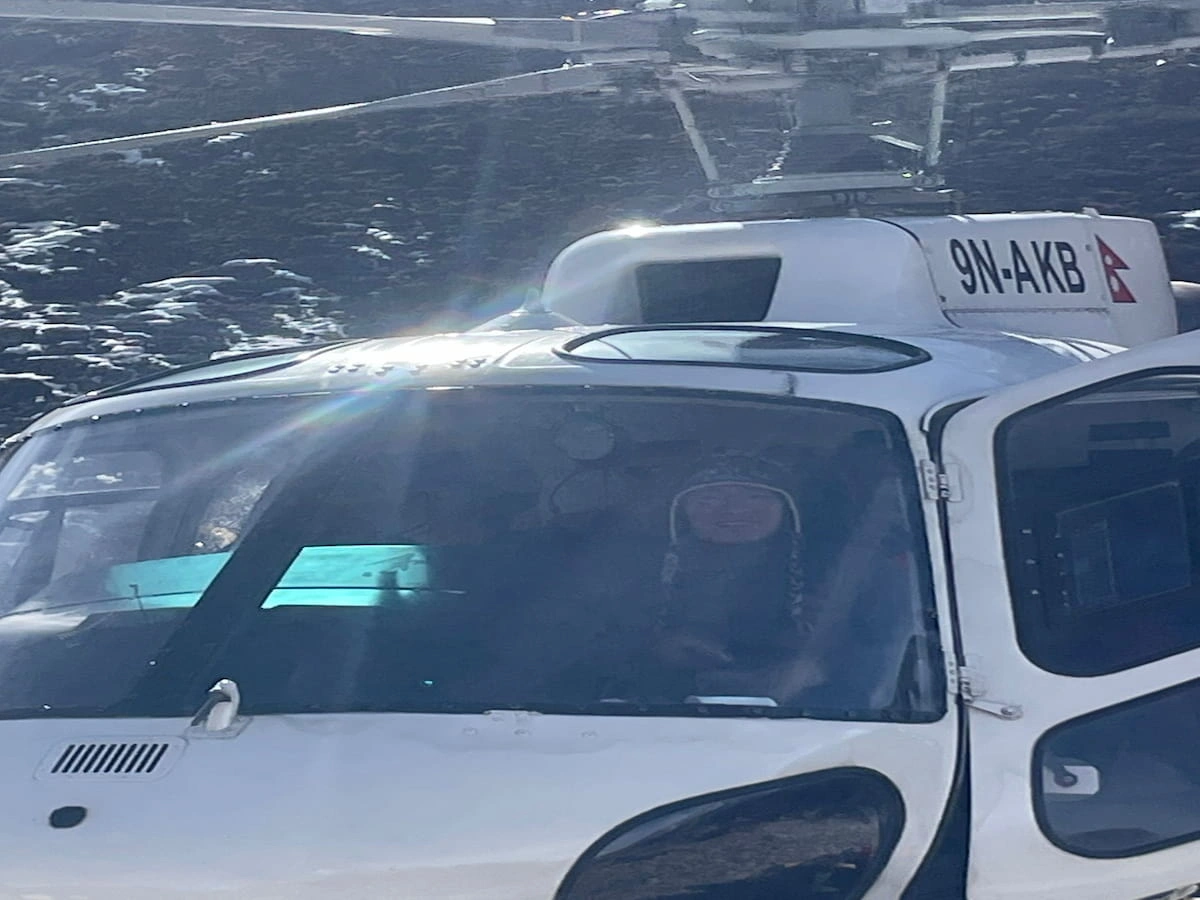
But Nepal's high-altitude flying is definitely not free of dangers, and no traveler is supposed to ignore these. Nepal's Civil Aviation Authority (CAAN) governs the whole area. For licensed helicopter pilots, besides aircraft maintenance standards, pilot qualification and route approval are the other elements. Helicopters that are commonly deployed for Everest Base Camp (EBC) tours are the AS350 B3e or similar high-altitude-capable aircraft, built exclusively for thin-air performance at 5,000 meter altitude and above.
The pilots of this route have flown for hundreds, or even thousands, of hours through the mountains. Monitoring weather is something they don't stop doing, and if it changes during the flight, they can make experienced pilots change course or even land or return without thinking. It is against all reasonable standards for a legitimate helicopter operator to push pilots to fly in unsafe weather.
Due to the altitude, the air is very thin. A short helicopter tour up high can't expose you to the development of AMS, a condition that generally needs hours or even days to appear. Though, after the short stay at Kala Patthar, one or two people might get breathless or feel light-headed. Almost all of them get back to normal very soon. Before booking, if you have cardiac or respiratory complications, be sure to see your physician.
We only partner with CAAN-approved companies. Our staff keeps tabs on the weather forecasts, liaises with the pilots in person, and gives the pre-flight briefing so they know what to expect throughout the flight. Besides, we maintain active emergency contacts during every tour.
Why Popular Everest Base Camp Helicopter Tour in Nepal?
A few different formats are available for the Everest helicopter tour, and it's good to know which you might opt for before you purchase. This comes down to a matter of finances, the number of people in your party, and the kind of trip you're looking for. Shared / Group Joining Heli Tour
This is the most popular choice. You will travel with a group of 4-5 other passengers and all share the cost of the helicopter charter. Separate seats are sold, rather than the whole helicopter.
This works well for split couples and small groups traveling on a budget. There is a set schedule, and you will be sharing the helicopter with other travelers. In general, most people feel comfortable traveling in this manner for a morning flight.
You hire the whole helicopter for your group. No other passengers, totally flexible times, and you can treat stops a little.
This is the option for families, groups with extra requirements, or travelers wanting a more customized trip. It's more expensive per passenger unless you're taking all five seats yourself, but the flexibility can make up for this.
A mix of what I just said. Anirudh Shetty Version: together with a sit-down breakfast in the Everest View Hotel. The best-selling package for the traveller wishing to have both the landing and a true breathing space in the mountains rather than a turnaround on the helipad. This has been built into our standard packages at Holy Kailash Tours.
The universal package. You leave early, do the Kala Patthar landing, have breakfast at Everest View Hotel, and reach Kathmandu well before noon.
Concise and efficient. This is 'what most foreigners book when they are in Nepal only for a short time and wish to see Everest without the need of a long trek.'
Everest Base Camp Helicopter Flight Route
The two-engine helicopter takes off from Kathmandu, up to the small airstrip in the Everest Base Camp region, and takes along a specific route; this is a path heading northeast into the Khumbu region. This will help you determine when you can have your camera ready so that you don't miss any shot.
The flight that goes out of Kathmandu to Lukla usually starts from the Tribhuvan International Airport and heads towards the northeast. Within 20 to 30 minutes, you turn your gaze out of the window and witness a sight of the incredible Mahalangur Range, which is among the highest mountains of the Himalayas.
In the space of a few feet, the ground beneath you could go from deep green slopes to jagged, ridged crags. Followed by you arrive very close to the Tenzing-Hillary airport of Lukla, which people see as one of the hardest short-airfield airports in the world, as it is built on a ledge built into the side of a mountainside.
Just past Past Lukla, the Dudh Koshie Cunassea opens to reveal its valley beneath. Namche Bazaar comprises huts and tea houses fashioned like a half moon directly on the hillside.
As the Hondicater rises, the valley struts to the southeast, Thamserku and Kangtega. Cross the Tengboche ridge into the most famous view in the world, the world's highest monastery, right on the edge of the treeline.
Pro-focused view of Kala Patthar / Everest Base Camp (5,364 m - 5,545 m) This is the. Everest appears behind the ridge of the Nuptse. The Khumbu Icefall, seen from the South Col. It is the 4th highest mountain in the world, behind Everest's base camp and Lhotse.
The helicopter will land at Kala Patthar, either to preserve time or to enjoy prolonged sightseeing over the scenery. On return flight, the helicopter on the way stops at Syangboche for breakfast at Everest View Hotel.
The flight path is a descent in the Namche area with spectacular views of Ama Dablam on the right side.
Everest View Hotel to Kathmandu The return flight will use the same track as the outward journey: back south down the valley, passing over Lukla and then westward again over the hills back to Kathmandu (this will take about 90 minutes).
Helicopter Service in the Everest Region
The Everest region has an established helicopter network, which functions not just for recreational purposes but also for work. It is actually a very active aviation corridor. Mention of rescue helicopters that come for the injured or sick trekkers is common. These rescue operations are done day and night during the peak months.
Helicopters of similar operators also do the jobs of supplying the mountain lodges and chartering passengers to film crews, as well as delivering goods in the Himalayas. Sightseeing helicopter tours are also part of this aviation ecosystem operated by the same helicopter companies, subject to the same Civil Aviation Authority of Nepal (CAAN) regulations. Here is the description of major helicopter routes being operated in the Everest area.
Kathmandu to Lukla and Lukla to Kathmandu heli-flight: Kathmandu to Lukla is one of the busiest helicopter routes in the entire country. Travelers book this as an option if they want to bypass the long delays related to fixed-wing planes at Lukla. The choppers usually take about 45-60 minutes for one side trip from Kathmandu.
Via the flight, one passes over Charikot and the Dudhkosi River Valley. If the weather is good at the time of flight, then one enjoys the first Himalayan views before landing at Lukla's Tenzing-Hillary Airport. The same route is followed on the flight back. It is a quick, spectacular, and more trusted option versus the propeller plane flights that constantly get canceled during bad weather.
Expense: On average, USD 200 to 350 according to a person's choice. It is sometimes decided by the hikers who have walked to back to Kathmandu through a helicopter from Gorekshep or Everest Base Camp rather than the trek back to Lukla.
It will be part of the EBC trek with a helicopter return package, where they will trek up and will fly back. The time taken for a flight from the Gorakshep Everest Base Camp trek with helicopter return to Kathmandu is almost 2 hours. Through this, the whole Khumbu region of Nepal is traversed in reverse (as was the journey while on foot). It's quite a dramatic way to end your trek. A walk taking a week is covered in only 2 hours! Users of this flight: Those EBC trekkers who want to save about 5 to 7 days on their return, or those with an injury, or who have to catch a flight before a particular time.
Everest View Hotel to Everest Base Camp Helicopter Flight
This hike lasts only a few minutes from the lower Namche area to the Everest Base Camp. It is a very popular hike done to take pictures in front of Everest Base Camp. Sometimes the route is used as an independent activity by the guests of the Everest View Hotel who want to see the area without having to do the whole sightseeing program.
It is a one-way flight for Everest View Hotel and Namche Bazaar lodge guests. The flight time is around 60 to 75 minutes. Mountain tourers who have flown to the Namche region and have to return to Kathmandu on a certain day will find this the most suitable option.
Everest Base Camp to Lukla Helicopter Flight
A rescue and transfer route. Injured trekkers and sick hikers are evacuated from Base Camp to Lukla, where they can then connect to onward flights. The weather is critical on this route because Base Camp sits in a valley flanked by glacial winds. Pilots typically do these flights early in the morning before afternoon winds build.
Lukla to Kalapatthar via Everest Base Camp Helicopter Flight
A unique flying Everest experience starts from Lukla instead of Kathmandu. Visitors in the Khumbu region often do this if they want to enjoy a view from the air of the Upper Khumbu without having to trek to the altitude of 5545 meters. After flying over Lukla, the EBC is reached by a flight, and the plane lands at Kala Patthar for a helicopter loop of the aerial Kala Patthar before coming back. Major scenic points: the majestic Ama Dablam, the Nuptse ridge, the beautiful Khumbu Glacier, and Everest's south face, it is one of the most famous climbing routes on the mountain.
Gorakshep to Kathmandu Helicopter Flight
Gorakshep is the furthest and the last settlement along the route to Everest Base Camp, You cannot get any closer to Everest Base Camp than to this place, as it is located at an altitude of 5,164 meters. You just need about 90 minutes to reach Kathmandu by helicopter from there. Generally, this helicopter route is only for rescuing someone who needs to get down fast to lower altitude or for a trekker who wants to return back by helicopter, having finished the hiking around Everest Base Camp.
Contrary to that, this flight path is not popular with regular tour groups, as they usually land at Kala Patthar. Still, there are certain private chartered tours that go straight into Gorakshep. From there, travelers can walk a little further to Everest Base Camp on the glacier without being airborne.
Everest Regions Helicopter Tour
Gokyo of western Khumbu, located right next to Ngozumpa Glacier and the renowned Gokyo Lakes. The helicopter from Lukla to Gokyo may take approximately 2030 minutes, providing an extraordinary bird's-eye view of the immense glacier system and the emerald-green lakes at around 4,700 and 5,000 meters.
Who's it for: Trekkers moving between the Everest and Gokyo circuits, or travelers who want to view both areas without taking a multi-day trek between the valleys. Positioned at 4,240 meters above sea level, Pheriche is an important point of acclimatisation along the EBC trek route.
Helicopter flights from Pheriche to EBC generally last from 15 to 20 minutes and are utilized mainly for rescue operations and transfers. A number of trekkers who are unable to progress to EBC from Pheriche due to altitude sickness are airlifted from here to Kathmandu. A direct itinerary from Pheriche 4,240 meters to Kathmandu.
Flight duration from Pheriche to Kathmandu is approximately 60 to 75 minutes. This is one of the most popular emergency evacuation routes by trekkers for altitude illness after Namche but before reaching Base Camp.
Tengboche (3,867 m) is well known for its Buddhist monastery and the beautiful views of Ama Dablam. The helicopter ride from Tengboche to EBC can take between 20–25 minutes and flies directly above the upper Khumbu Valley itself. A few private tours also use hotels in mid-route points. A transfer or return route.
Tengboche to Lukla is a very short flight of about 10 to 15 minutes. Tengboche to Kathmandu is approximately 60 minutes. Routes like this are used by trekkers with medical problems, on the clock, or for private charters, building a private Khumba tour.
Dingboche (4,410 m.) is the other acclimatisation camp before heading to the high Khumbu. Emergency evacuation to Kathmandu from this place takes around 70 to 80 minutes. It is common to fly this track during the peak trekking season when altitude sickness occurs more frequently.
Lobuche 4910 m, 16041 ft, is the final camp before Gorakshep. Emergency helicopter flights from here are considered very important since altitude sickness at the camp can develop rapidly and the weather windows that permit these flights are very short. Flight time to Kathmandu is approximately 75 to 90 minutes. Gokyo Valley by helicopter out of here is a brilliant flight.
The helicopter from Gokyo (5,300 ft.) flies south over the Ngozumpa Glacier and down the lower Khumbu hills to Kathmandu in about 60 to 75 minutes. Most trekkers completing the Gokyo trek get a helicopter out to save the long walk back to Lukla.
Everest Base Camp Helicopter Tour Departure Date
EBC flights operate several times a week during the spring and fall seasons, which last roughly a month after February and March and from May to August (September to November). Most flights start early in the day and depart between 6:00 and 7:30 AM if the weather is fine.
You can reserve a flight seat even a bit before the peak travel period October and April, if you really want to see some of EBC's beauty through flights. Since the seat number per a tour is limited and most of them are on a group basis, seats get filled up very fast. Our company is suggesting customers reserve a seat about 2-3 weeks before peak season and 1 week before off-season months.
Weather disruptions also take place sometimes, although the situation gets resolved fairly quickly. A lot of times morning flights are canceled due to a blanket of cloud or fog, and they get rearranged for the next possible sunny day. Our crew keeps tabs on the weather reports throughout and informs passengers via phone or email on the night before (if they need to change their plans).
Mount Everest Base Camp Helicopter Tour
The whole heli tour to Mount Everest can perhaps be viewed as a three-part tour: the ascent by helicopter, the landing, and the way back. A 120-minute journey northeast of the capital leads you right from the subtropical hills to a pure Himalayan landscape. It's a quick change. Mountains do not grow slowly; they simply pop up from the ground. Mount Everest stays covered by the Nuptse ridge until a certain angle brings the helicopter in the direction of Khumbu Valley. As such, its sheer mountain wall is now in front of us. It stretches from one horizon to the other.
For a short period of time, around 15-20 minutes, the visitor at a high altitude of 5,545 m Kala Patthar is only able to feel the air of the place, and appreciate the view of the mountain, and be aware of what he is actually looking at. The southeast ridge of Everest is straight ahead of the person. Below this, the Khumbu Icefall is frozen over like an immovable river that stopped in mid-motion. Above it, the Western Cwm disappears into cloud. The stop for having breakfast at Everest View Hotel takes the visitor slowly back down to earth. You have hearty food, and the mountain is still visible outside on the window. The experience of this hotel is so unique that it is quite surreal after spending the day at the altitude where only a couple of people can survive naturally.
Bhuller Adventure is the only company in Nepal that arranges this complete tour as a package. It works fine for all travelers based on their physical conditions since a helicopter is involved. It's one of the most beautiful moments if you get the chance to see the mountain, even if just to check it off your list.
Things You Should Carry During the Everest Base Camp Helicopter Tour
You really don't need that much. It's only one morning tour, and you are back in Kathmandu by lunchtime. Still, there are a few essentials that you really notice the difference in at altitude. A warm jacket or down layer.
It is cold on Kala Patthar at 5,545 meters even during spring and autumn. Wind will also make it colder. You should bring a packable down jacket or insulated layer even if you are fine in Kathmandu. Gloves.
Ditto previous. The landing site is not protected, and your hands will be freezing at that altitude, mainly if you are trying to take photographs. Sunglasses. At 5,500 meters, UV exposure is critical.
Get some UV-rated spectacles (not tinted glasses). Snow blindness can be extremely sore without protection. Lip balm, sunscreen, altitude, UV, and the hits. A small tube of SPF lip balm is really handy; it takes no room, and you'll need it. Camera or phone with a fully charged battery. Cold more quickly kills the batteries in your camera or phone than altitude kills the appetite.
The phone should be kept in an outer pocket to keep warm and only taken out when you're shooting. Copy of passport. ID required at check-in. Leave a photocopy clearly visible. Shoes you can walk comfortably in.
The main landing at Kala Patthar is thick with rocks and a little bit uneven. So you'll be doing no marathon, but you don't want your heels slithering and spewing things out on treacherous chunks of mountain rock. Water bottle. Remember hydration at altitude. The tour is brief, but drinking fluids before and during can help counteract any dizziness experienced at the high landing site.
Booking and Payment Policy
For Reservation, Confirmation, and Booking & Payment Policy After confirming the helicopter tour reservation, a deposit is necessary. For group joining tours, usually we collect 25% of the total cost at the time of booking. If you prefer the private charter, with the 30% deposit, we will keep your date free for you.
A passport copy with the visa page stamped by Nepal should be supplied for aviation documentation issued to CAAN. Without it, registration for the helicopter is impossible. You will get an email confirmation within 24 hours of receiving the deposit. The period April and October is one of the busy times. The helicopters fill up quickly, so please make yourselves ready in advance of your intended travel date. A maximum of 48 hours can be held by the reservation without payment if there is some delay in travel coordination by you.
Cancellation for the Flight In case a weather-related cancellation or delay happens, the new date will be offered without any extra cost. Since Nepal's mountaineering weather is unpredictable, rescheduling is an accepted part of the helicopter tourist operations around the area.
Cancellation made by the guest: Departing more than 14 days in advance: Full refunds less bank transfer fees (if applicable) will be issued. 7 and 14 days before departure: You will get back only half the payment. Departing less than 7 days: No refund. Rescheduling may be carried out in case there are availability.
It will be possible to claim a full refund only in three consecutive days of canceled flights due to weather conditions that prevent the operation of the flight. You receive all communications like these in writing at the time of booking, so no one is surprised.
Why Book With Us for the Everest Base Camp Helicopter Tour?
Highly Experienced Licensed Team
Holy Kailash Tours has been handling Himalayan travel for years. Our staff includes our own licensed trekking guides, our own airfare booking team, our own guest ground guys (Kathmandu and Khumbu), and every helicopter partner we have is CAAN approved.
We don't operate with operators I haven't personally checked. We have planned our EBC helicopter tour to leave early, stop at Kala Patthar if the weather permits, have breakfast at the Everest View Hotel, and then meander back at a slow pace. Nothing will be hurried.
This timing is intended to catch the bright, clear morning before clouds gather over the Khumbu during the afternoon. We have good rates for both group joining as well as private charter. The price of the Everest helicopter tour by Holy Kailash Tours is clear: how much it includes, how much is not included, and how much optional extras would cost.
Payments are accepted by bank transfer, all major credit cards, and secure online payment. All bookings will have written confirmation of payments. You will be given receipts of your deposit and balance for each booking.
24/7 Customer Service
Our staff and representatives are available by phone/email 24/7 during your trip. For a delay or reschedule flight, we will contact you the night before and not the morning of. We also have locals in Kathmandu to help you get your hotel if a multi-day weather delay occurs.
Despite a number of ways helicopter tourism can trump over road-based group travel, our environmental responsibility remains a top concern. Holy Kailash Tours works with operators adhering to CAAN's environmental standards if flying to Khumbu. Our contribution to the local conservation fund is a part of our operational expenses.
Related Everest Packages
EBC Gokyo Chola Pass Trek 16 Days
Everest Three High Passes Trek 18 Days
Everest Base Camp Luxury Trek 14 Days
Everest Base Camp Trek With Helicopter Return 11 Days
Gokyo Lake Trek 13 Days
Everest View Trek 5 Days 5 Days
Everest Base Camp Helicopter Tour 1 Day
Everest Base Camp Trek 14 Days
Trip Highlights
- Fly Over Mount Everest: Everest Lhotse Nuptse, Ama Dablam and a panoramic view of the majestic Himalayan range are all from an eye-in-the-sky perspective as you soar through the sky.
- A view of Everest from Kala Patthar: Kala Patthar at the elevation of 5,545 m is one of the best viewpoints in the world for a close view of Mount Everest and Khumbu.
- Breakfast with Everest: Breakfast at Everest View Hotel will definitely not disappoint when the massive Everest is across the horizon.
- A Flight Through the Clouds: The opportunity will be given to those who are lucky to fly the helicopter to take the most extraordinary photo of snow-covered Himalayas peeking between the clouds.
- View the Khumbu Valley from the sky: The helicopter window will allow viewing the Sherpa villages, glaciers, valleys, and trekking the legendary footpaths.
- One morning will last a lifetime: The highlights of the Everest region will be experienced without trekking for two weeks.
- Himalayan Flight Experience for a premium traveler: The traveler on the limited time wishing to experience Everest but not spending two weeks on the expedition will enjoy a luxury helicopter ride as comfortable as scenic.
- Photography of the mountains is spectacular: the helicopter will capture rare aerial views of Everest, Ama Dablam, Nuptse Lhotse, and the surrounding Himalayas.
- Go back to Kathmandu for lunch: The Everest helicopter ride will be concluded with your morning activity and you will be left with the rest of the afternoon to relax or explore Kathmandu.