Dhaulagiri Circuit Trek Overview
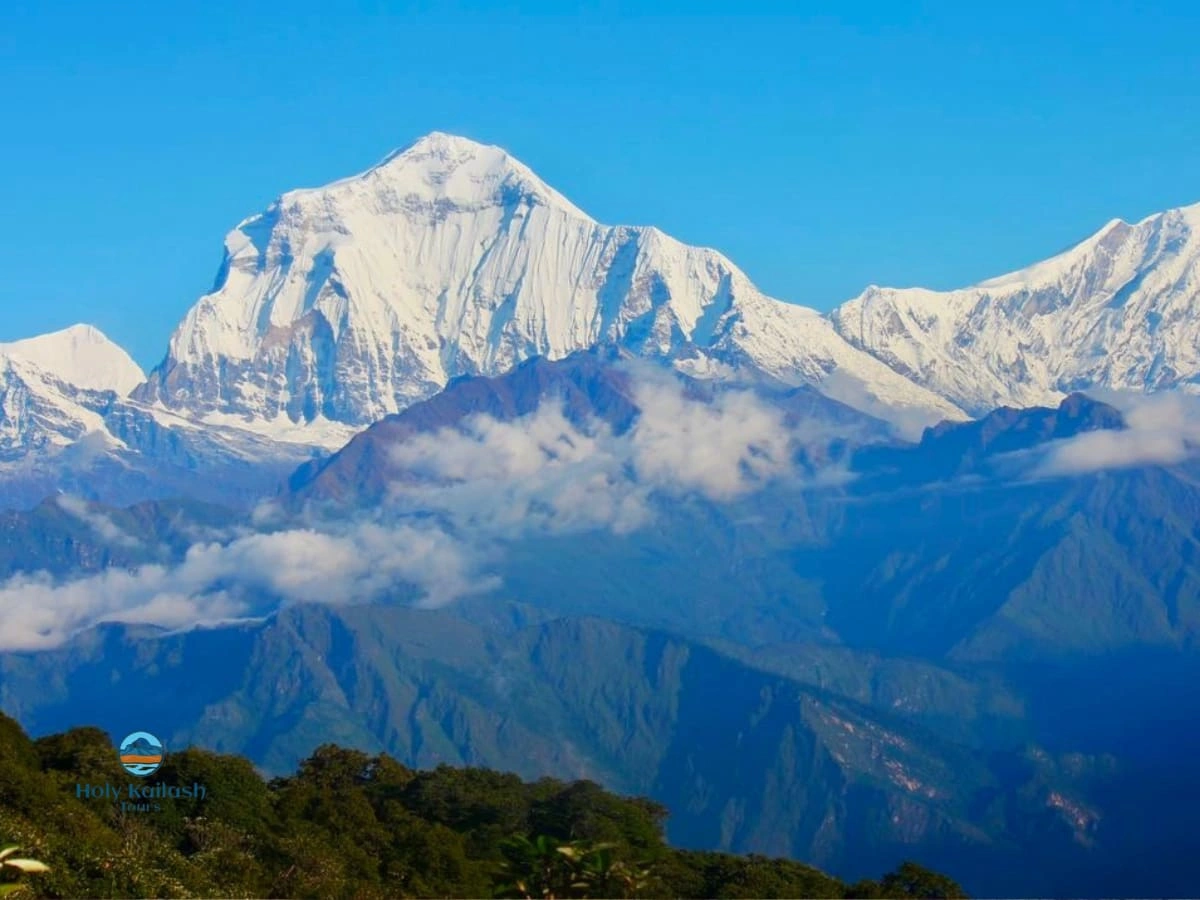
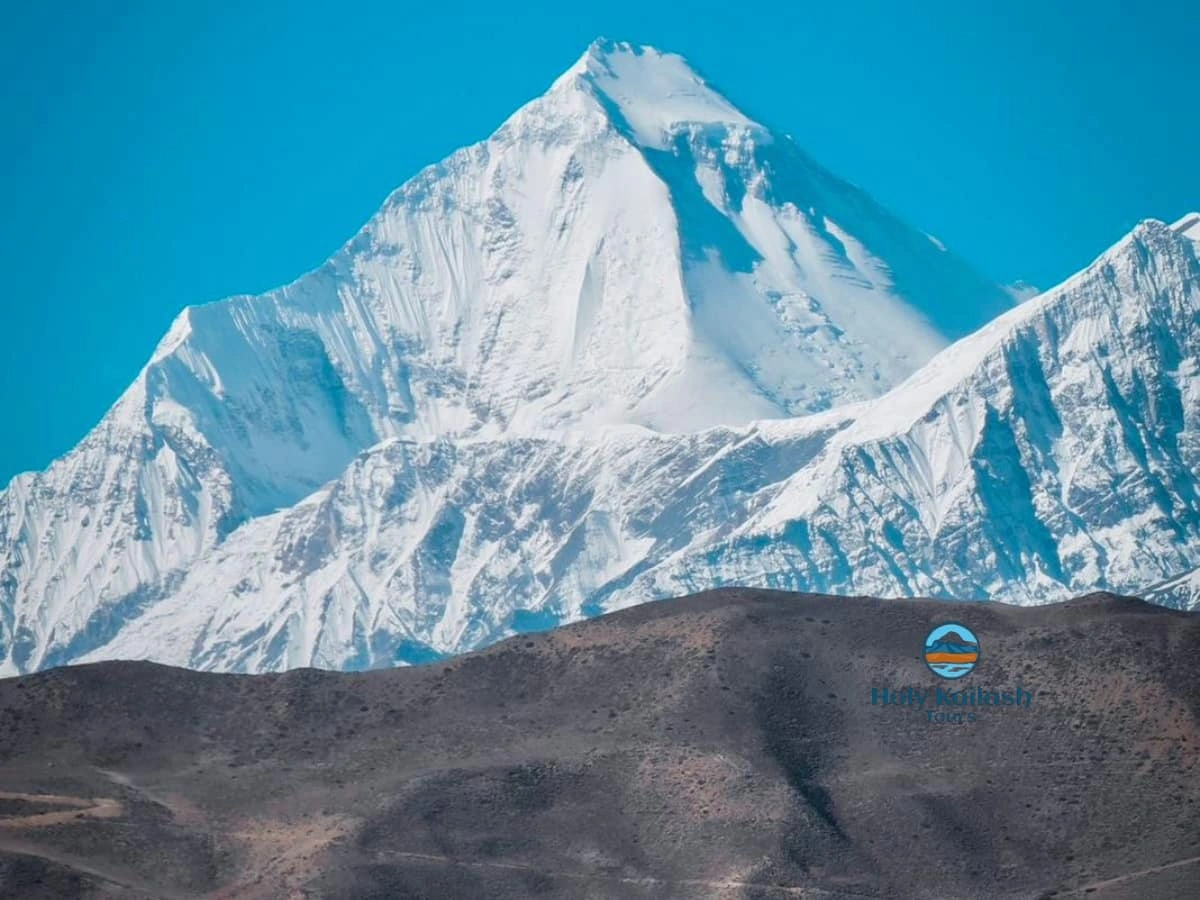
Mount Dhaulagiri I is 8,167 meters high, making it the seventh-highest mountain in the world. The circuit trek loops around the entire Dhaulagiri massif, starting in the lowlands of Myagdi district and finishing in the dry, high-altitude landscapes of Mustang near Marpha.
The trekking route takes you through an extraordinary range of environments in a short period. You start in warm, forested river valleys. Within a few days, you're at a base camp used by mountaineering expeditions. A few days after that, you're crossing a glacier at over 5,000 meters. The transition is rapid, and the body has to work to keep up.
This isn't a trek for people on their first or second Himalayan trip. The terrain is technical in places, the facilities are minimal, and rescue from the higher sections is complicated. But trekkers who are physically prepared and come with experienced guides consistently describe this as the most rewarding trek they've done in Nepal.
Holy Kailash Tours organizes the Dhaulagiri Circuit trek for small groups and private parties. We've learned what preparation actually looks like for this route, and we build our itineraries with that knowledge.
Key Features of the Dhaulagiri Circuit Trek
Remote wilderness with almost no crowds. The around Dhaulagiri trek sees a fraction of the traffic that Everest Base Camp or the Annapurna Circuit gets. On many days above Boghara, your team will be the only people on the trail.
True glacier trekking. Crossing the Northeast Glacier is one of the most physically demanding and visually striking sections of any Nepal trek. Crampons or microspikes are necessary. The ice is real, the crevasse risk is real, and the views from up there are extraordinary.
Expedition-style camping. Most of the upper circuit has no tea houses. You'll sleep in tents, eat meals cooked by your camp crew, and carry what you need. It's harder than a tea house trek, but many trekkers find it far more satisfying.
Authentic local villages. The lower sections of the route pass through small Magar communities, including Muri, Boghara, and Darbang. These aren't tourist stops. Life here moves at its own pace, and glimpsing it is one of the quieter pleasures of the trek.
The Mustang finished. Coming down from Dhampus Pass into Marpha feels like landing on another planet. The landscape shifts from glacial ice to the dry, wind-scoured valleys of Mustang almost overnight. Marpha is famous for its apple brandy, and after two-plus weeks on the trail, you'll probably want some.
Dhaulagiri Circuit Trek Route
The classic round Dhaulagiri trek runs roughly west to east, starting near Darbang and finishing in Marpha or Jomsom. Here's the route in sequence:
Kathmandu to Pokhara: Flight or road journey to Nepal's second largest city, the main hub for western trekking routes.
Pokhara to Darbang: A several-hour road journey into Myagdi district, the starting point for most Dhaulagiri treks.
Darbang to Muri: The trail follows the Myagdi Khola river valley through forested terrain, steadily gaining altitude.
Muri to Boghara: One of the more demanding lower sections. The trail climbs steeply through rhododendron and oak forests. Boghara (2,517 m) is a small Magar village and an important rest point.
Boghara to Italian Base Camp: The valley narrows, and the terrain opens up into high alpine territory. Italian Base Camp sits at around 3,660 m and was used by Italian mountaineers during Dhaulagiri expeditions.
Italian Base Camp to Dhaulagiri Base Camp: You gain significant altitude here as the trail crosses glacial terrain. Dhaulagiri Base Camp (4,750 m) is a proper mountaineering camp with a stark, dramatic setting below the south face of the mountain.
Dhaulagiri Base Camp to French Pass: This is the crux of the trek. The approach to French Pass (5,360 m) crosses the Northeast Glacier and involves a steep, technically demanding climb. The views from the pass are enormous.
French Pass to Hidden Valley: Hidden Valley sits at around 5,100 m and feels like one of the most isolated places on the route. The flat glacial basin is surrounded by peaks and often holds snow even in October.
Hidden Valley to Dhampus Pass: The second major high pass on the circuit at 5,244 m. The descent from here is long and steep, dropping toward the Mustang side of the mountain.
Dhampus Pass to Marpha: The trail descends rapidly into the warmer, drier climate of the Mustang valley. Marpha is a well-preserved traditional village with stone-paved streets and apple orchards.
Diverse Landscapes on the Dhaulagiri Circuit
Few treks in Nepal put you through as many different landscapes as this one. The lower route follows the Myagdi Khola on trails that cut through dense subtropical forest, crossing rope bridges and scrambling over riverbanks. Higher up, the forest gives way to open alpine meadows and scrubby hillsides.
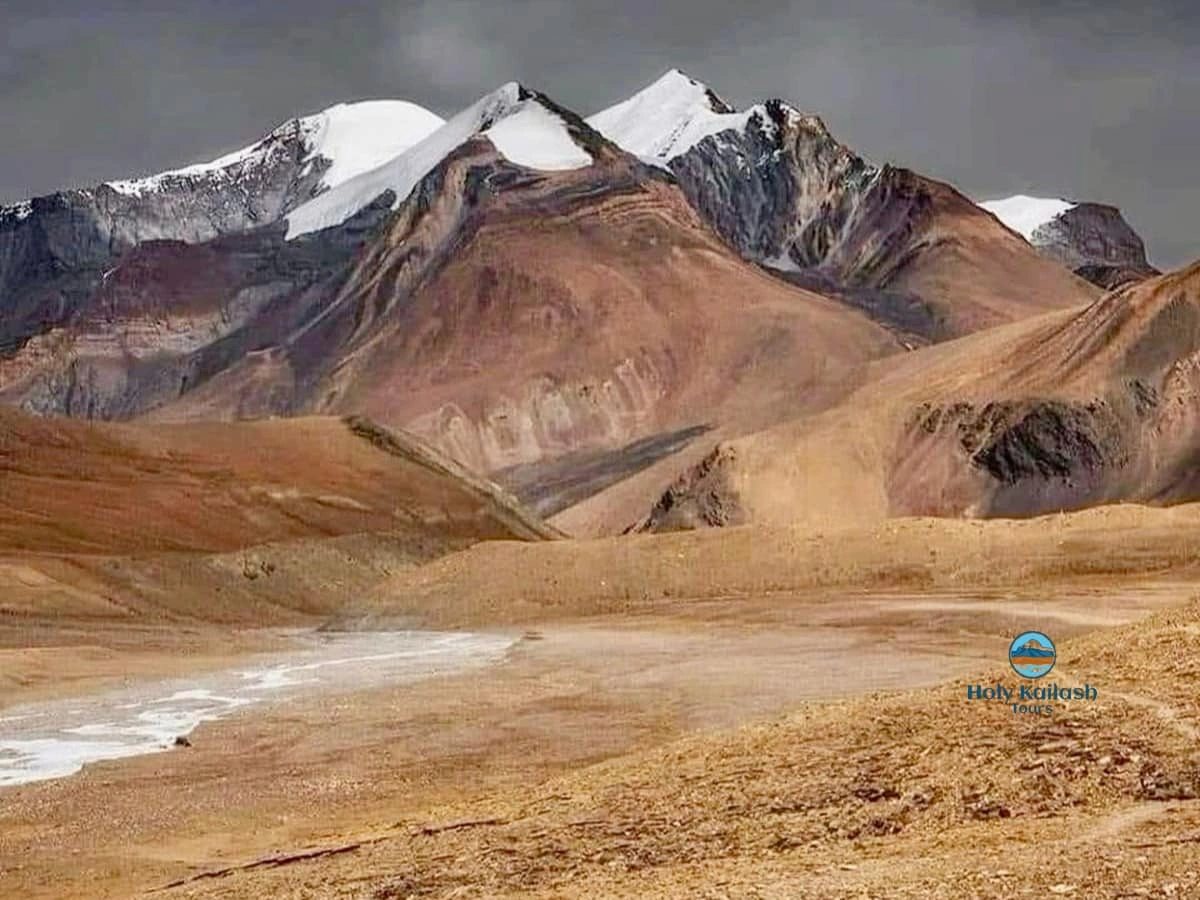
Above the tree line, the trail's character changes completely. Glacial moraines replace soil underfoot. The scale of the mountains becomes fully apparent. The Northeast Glacier crossing involves walking on actual ice, with crevasses visible on either side. Coming down into the Mustang valley, you pass through a landscape that looks more like central Asia than the Nepal most people picture.
The biodiversity in the lower sections is genuinely impressive. Snow leopard territory, Himalayan tahr, and a wide range of high-altitude bird species all inhabit this corridor. You probably won't see a snow leopard, but you might.
Trekking Experience and Trail Highlights
The daily experience on this trek varies a lot. Lower-altitude days involve steady walking on forest trails, crossing suspension bridges, and moving through villages where children are curious, and the teahouses serve basic but filling food. These days feel manageable even when they're long.
Higher up, days get harder. The trail becomes less defined. Altitude affects your sleep, your appetite, and your mood in ways that are difficult to predict. Glacier days require full concentration and slow movement. Rest days at base camp or Hidden Valley feel necessary rather than optional.
The rewards are proportional. Standing on French Pass with Dhaulagiri's north face above you and the Hidden Valley stretching out below is a moment that trekkers consistently describe as one of the best of their lives. It's not accessible to everyone, which is part of why it hits differently.
Holy Kailash Tours plans every Dhaulagiri trek with extra buffer days built in precisely because this route doesn't always cooperate with fixed schedules.
Essential Information: Dhaulagiri Circuit Trek
Detail Information
Trek duration 17–21 days
Maximum altitude 5,360 m (French Pass)
Trek start Darbang (via Pokhara)
Trek end Marpha or Jomsom
Accommodation Camping (upper route), basic tea houses (lower sections)
Permits required ACAP, TIMS Card
Guide requirement Mandatory (terrain demands it)
Mobile network Very limited above Boghara
Electricity Available only in lower villages
Drinking water Streams and purification are required above the villages
Why Choose the Dhaulagiri Circuit Trek?
If the appeal of trekking is being in genuinely wild terrain without a crowd, this route delivers. The Dhaulagiri circuit sees a small fraction of the visitors that the Annapurna and Everest regions attract. On the upper sections, your camp often feels completely alone in the mountains.
The route also combines two things that most other Nepal treks don't: proper glacier travel and a dramatic landscape transition. You start in a subtropical forest and finish in a high-altitude semi-desert. That range is unusual.
For trekkers who've done Everest Base Camp or the Annapurna Circuit and want something that asks more of them, the Dhaulagiri Circuit is the logical next step. It's harder, more remote, and more rewarding. The trek to Dhaulagiri experience genuinely can't be replicated on a more popular trail.
Why Trek the Dhaulagiri Circuit with Holy Kailash Tours?
Planning a remote, camping-based trek at high altitude isn't something you want to do with an inexperienced operator. The margin for error is small.
Holy Kailash Tours, our guides have walked this route dozens of times. They know where the trail becomes ambiguous, which glacier sections require the most care, and when weather patterns suggest a day should be extended or shortened. That local knowledge matters more here than on almost any other Nepal trek.
Here's what we bring to the Dhaulagiri Circuit:
- Experienced mountain guides with Himalayan Rescue Association training and high-altitude certification
- Full camping logistics, including quality tents, sleeping equipment, and a cooking crew
- Acclimatization-aware itineraries with rest days built in at strategic elevations
- Emergency protocols, including satellite communication and helicopter evacuation coordination
- Flexible scheduling so that weather delays don't derail the entire trip
- Transparent pricing with no hidden fees and a clear breakdown of what's included
- Pre-trek support, including permit handling, gear advice, and fitness guidance
We've guided trekkers from across Europe, North America, Australia, and Asia on this route. The feedback we hear most consistently is that the preparation we provide made the difference between a successful summit and a turnaround.
Dhaulagiri Trek Trip Highlights
- Journey to the foothills of the majestic Dhaulagiri Himalayan Range
- Cross French Pass (5,360 m) and Dhampus Pass (5,240 m), both above 5,000 m
- Walk directly beneath Dhaulagiri I (8,167 m) and camp at its base
- Pass through the small Myagdi valley villages before the trail enters full wilderness
- Navigate a glacier crossing near Dhaulagiri Base Camp
- Camp in Hidden Valley, a glacial basin at 5,100 m.
- Spend most of the upper circuit without other groups on the trail
- Trek through subtropical forest, glacial moraine, and the open Mustang landscape in a single trip