Major Attractions in the Kathmandu Valley
The Kathmandu Valley has more UNESCO World Heritage Sites per square kilometer than almost anywhere on Earth. That's not a marketing line. It's just a fact. Seven monuments are officially listed, and most are still active religious and cultural spaces, not museum pieces.
Here's what you'll visit on this Kathmandu city tour:
Kathmandu Durbar Square
This is the old royal palace complex at the heart of the old city. It's a mix of medieval courtyards, carved wooden windows, and temples built between the 12th and 18th centuries. The Kumari Chowk, also known as the home of the living goddess, sits right inside. The square sustained damage in the 2015 earthquake, but restoration work has been ongoing, and it's well worth seeing.
Walk slowly here. The details in the woodwork alone take time.
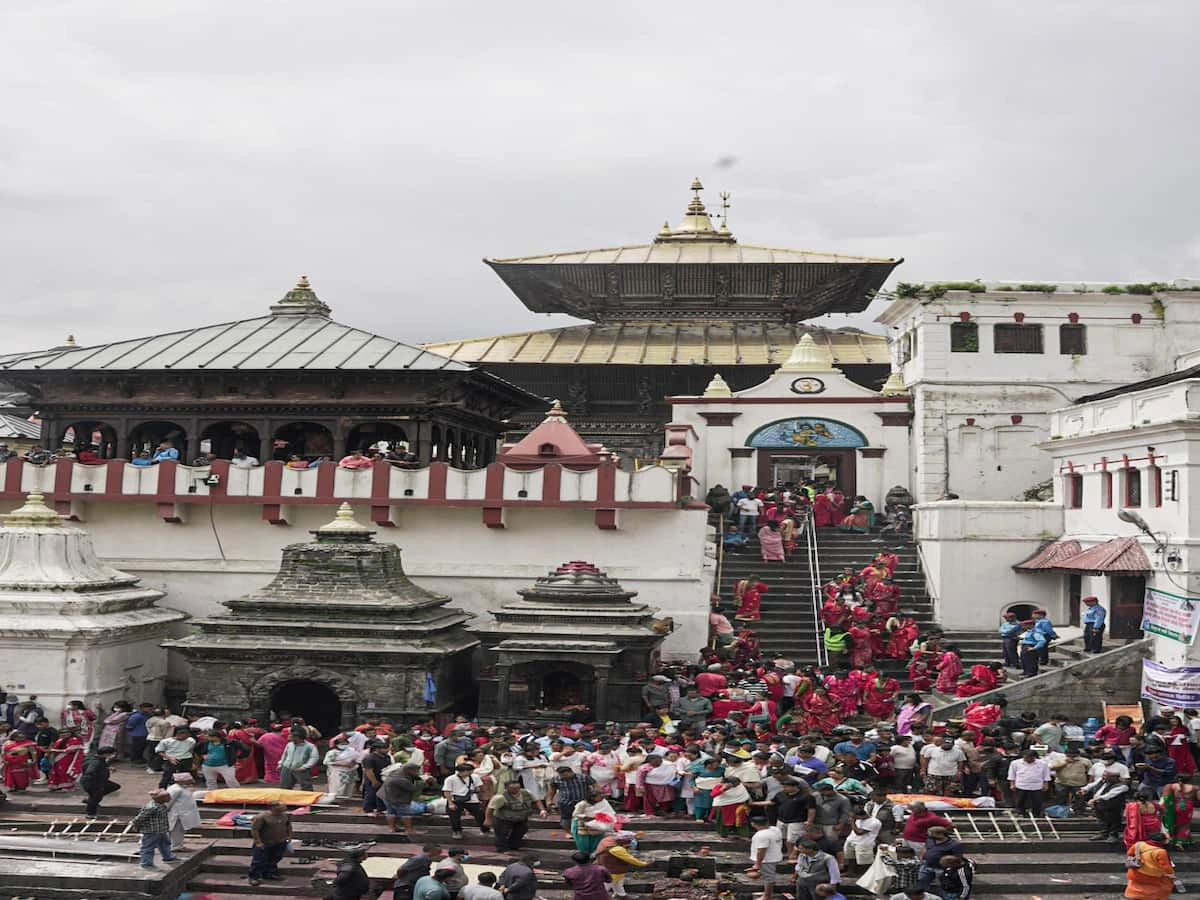
Pashupatinath Temple
One of the most sacred Shiva temples in the world and the most important Hindu temple in Nepal. It sits on the banks of the Bagmati River and draws pilgrims from across South Asia. Non-Hindus cannot enter the main temple, but you can walk the ghats and observe the rituals from across the river. The Bagmati ghats are where cremation ceremonies take place. It's intense and humbling.
Sadhus (wandering ascetics) often gather here and are happy to be photographed for a small tip.
Boudhanath Stupa
The largest stupa in Nepal and one of the largest in the world. It anchors the Tibetan Buddhist community in Kathmandu, and the atmosphere around it is completely different from the Hindu sites nearby. Dozens of monasteries ring the stupa. Monks in saffron robes, prayer wheels spinning, butter lamps flickering.
Walk the kora (circumambulation path) clockwise. Sit at one of the rooftop cafes. Give it a full hour, not a half.
Swayambhunath Stupa (Monkey Temple)
Perched on a hill west of Kathmandu, Swayambhunath is one of Nepal's oldest religious sites, with a history dating back over 2,500 years. The climb up 365 steps gives you views across the entire valley. The resident rhesus monkeys are everywhere and entirely unafraid of tourists.
The stupa's all-seeing Buddha eyes painted on all four sides of the tower are the most photographed symbol in Nepal for good reason.
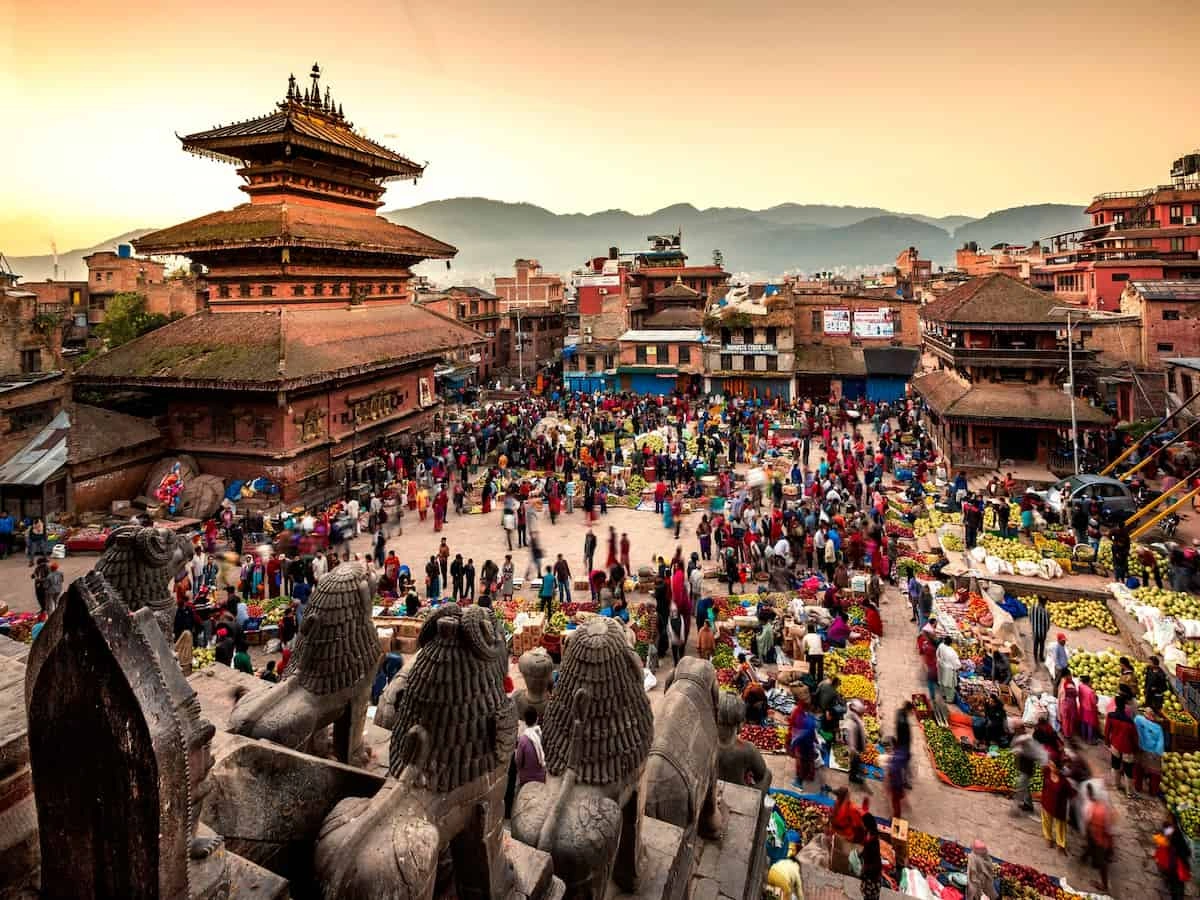
Bhaktapur Durbar Square
Bhaktapur is a different city from Kathmandu, about 12 km east, and it feels it. The medieval architecture is better preserved, the streets are narrower and quieter, and the traditional Newari culture is still very much alive here. The 55-Window Palace, the Golden Gate, and the Nyatapola Temple (Nepal's tallest pagoda) are all here.
Budget a half-day minimum. Bhaktapur is the kind of place you keep stopping in.
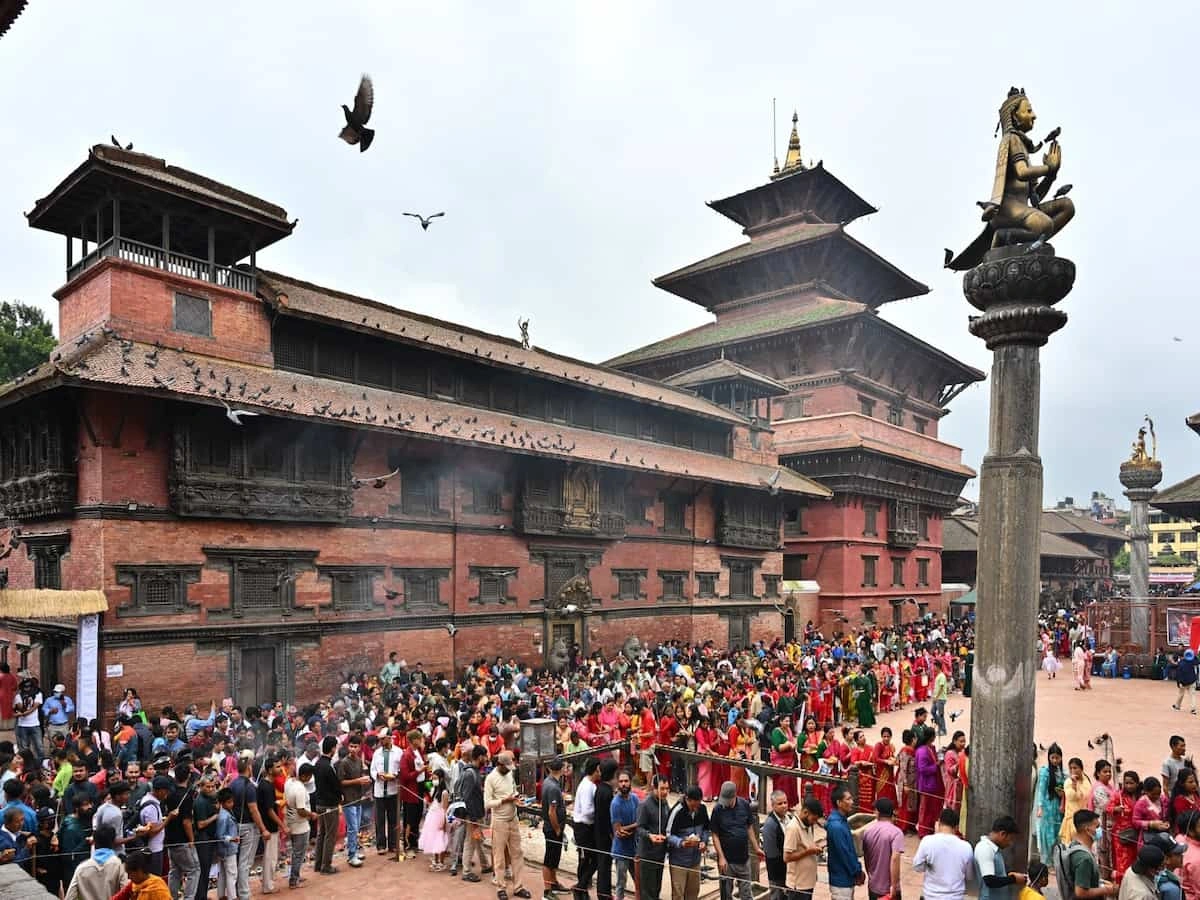
Patan Durbar Square
Patan (also called Lalitpur) has one of the finest collections of Newar architecture in the world. The Krishna Mandir, built entirely from stone in the 17th century, looks like it belongs in South India. The Hiranya Varna Mahavihar (Golden Temple) nearby has monks and a quiet courtyard that most visitors walk right past.
Patan's old city grid is easy to walk, and the craft shops around the square sell real, locally made work.
Major Attractions & Mountain Views from Pokhara Valley
Pokhara sits at roughly 820m, and the Annapurna range fills the northern horizon. On a clear morning, you can see Machhapuchhre (Fishtail Mountain), Annapurna I, Annapurna II, Annapurna III, Annapurna IV, Hiunchuli, and Dhaulagiri all at once, without hiking a single step.
The Pokhara Valley tour covers both the city's natural and cultural highlights:
Phewa Lake
The second-largest lake in Nepal. You reach the Tal Barahi Temple, a small Hindu shrine on an island in the middle of the lake, by rowboat. The boat ride at dusk, with the Annapurna range reflecting in the water, is one of those moments that doesn't photograph well but stays with you.
Renting a boat yourself is easy and cheap. Most travelers spend an hour or two out on the water.
Barahi Temple
Sitting on a small island in Phewa Lake, Barahi Temple is dedicated to the boar-headed goddess Barahi. It's an active place of worship. Locals and pilgrims row out to offer prayers. Visiting involves hiring a rowboat from the lakeside, which costs a few hundred rupees and takes about 10 minutes each way.
Seti Gandaki (Seti River Gorge)
The Seti Gandaki runs through Pokhara but mostly underground. At several points around the city, you can look down into narrow gorges where the white glacial river appears far below. Mahendra Pul Bridge in the city center is one of the easiest places to view. It's surprising: a city river that disappears.
Davis Falls (Patale Chhango)
When the water level is high, Davis Falls is genuinely impressive. The Pardi Khola stream drops through a narrow crack in the rock and disappears underground. The Nepali name, Patale Chhango, means "underworld waterfall." The falls connect underground to Gupteshwor Cave across the road, which is worth seeing for that reason alone.
Best visited during or just after the monsoon (August to October) when the flow is strongest.
Mahendra Cave
A natural limestone cave about 4km north of Lakeside, Mahendra Cave features some interesting stalactite and stalagmite formations. It's a short visit, maybe 30 to 40 minutes, and can be combined with Bat Cave nearby.
The Old Bazaar
Pokhara's old bazaar area along Prithvi Narayan Road is the commercial heart of the older city, distinct from the tourist-heavy Lakeside strip. It's busy, functional, and gives you a clearer picture of how the city actually works. Good spot for local food, cheap fabric, and people-watching.
Museums
The International Mountain Museum is the standout. It covers the history of Himalayan climbing, the geography of Nepal's mountain ranges, and the cultures of Nepal's mountain peoples in real depth. Not a quick stop. Give it 90 minutes. There's also the Annapurna Natural History Museum and the Pokhara Regional Museum nearby.
Surrounding Areas
A short drive or hike from the city takes you to:
- Sarangkot sunrise: The most popular viewpoint in Pokhara, at 1,600m, with sunrise views of Annapurna and Machhapuchhre. Go early. The colors hit fast and change quickly.
- World Peace Pagoda (Shanti Stupa): A Japanese-built Buddhist monument on a ridge south of the lake at 1,100m. The hike up takes about 45 minutes from the lakeside trail. The view from the top looks across Phewa Lake and toward the Himalayas.
- Buddhist Monastery: Several monasteries sit in the hills above Pokhara. Tashi Palkhiel Tibetan Refugee Camp monastery is one of the most accessible and gives genuine insight into the Tibetan refugee community that settled here after 1959.
- Gupteshwor Cave: A sacred Hindu cave shrine dedicated to Shiva, directly across from Davis Falls. The cave goes surprisingly deep. Inside, a natural window looks back through the rock toward the underside of Davis Falls when it's flowing.
- Bindhyabasini Temple: The oldest temple in Pokhara, on a small hill near the old bazaar. Dedicated to the goddess Bhagwati, it's a working temple with a steady stream of local worshippers, not typically on tourist itineraries, but worth 20 minutes.
Trip Highlights
- 7 UNESCO World Heritage Sites across the Kathmandu Valley
- Boudhanath Stupa, Pashupatinath Temple, and Swayambhunath in one day
- Bhaktapur and Patan Durbar Square on a full dedicated day
- Phewa Lake boat ride and Tal Barahi Temple visit
- Sarangkot sunrise with Annapurna and Dhaulagiri views
- World Peace Pagoda hike, Davis Falls, Gupteshwor Cave, International Mountain Museum
- Local English-speaking guide throughout, private vehicle available
- Mountain history and climbing culture at the International Mountain Museum