Everest Base Camp Total Trekking Distance: One Way and Round Trip
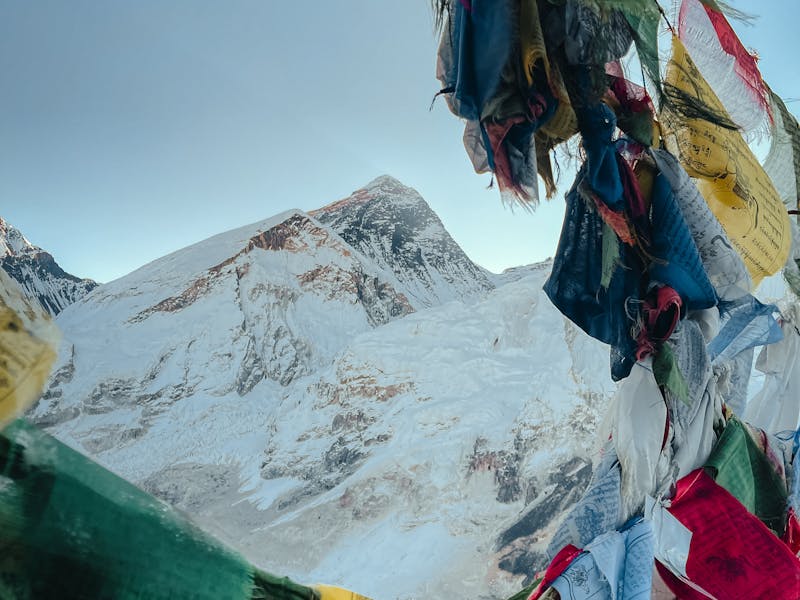
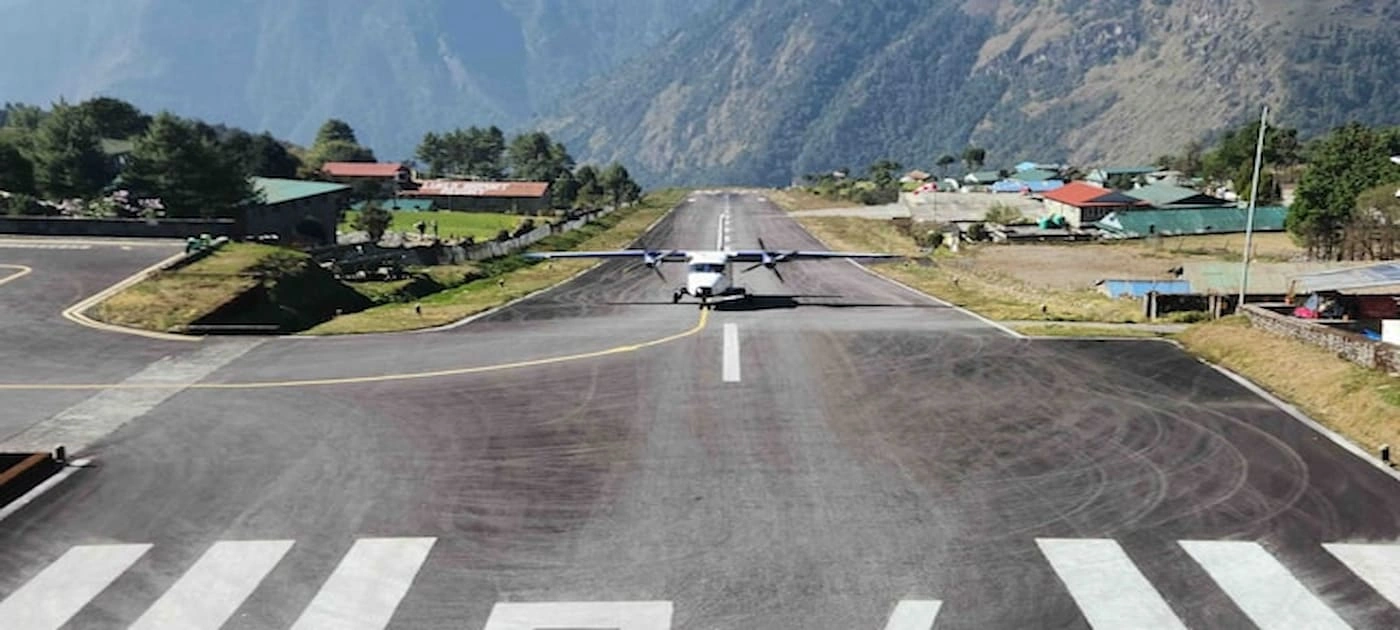
The standard Everest Base Camp trek starts in Lukla, after a short flight from Kathmandu. From Lukla to Everest Base Camp (5,364 m), the one-way distance is roughly 65 kilometers (about 40 miles).
The full round trip, going up and coming back down the same route, covers approximately 130 kilometers (around 80 miles).
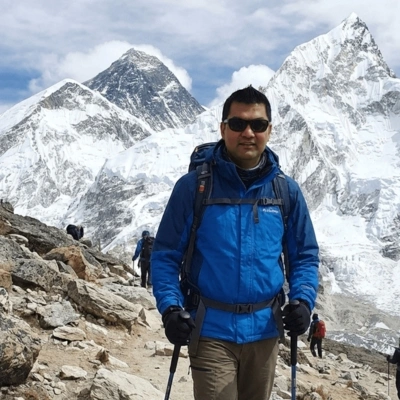
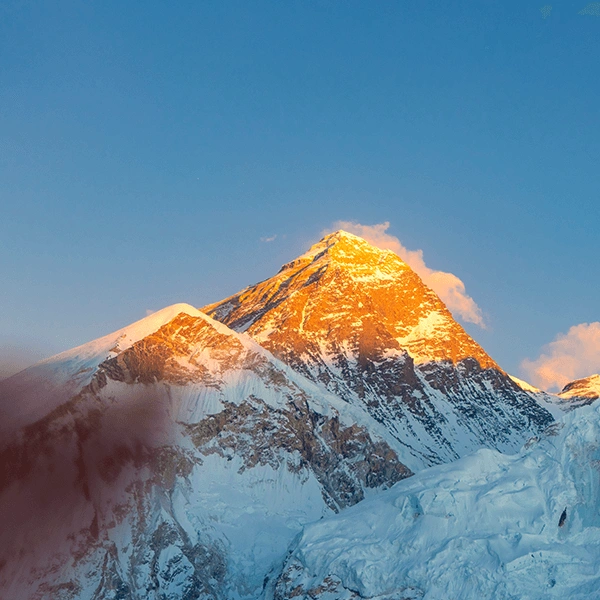
Some trekkers return via a slightly different path through Namche Bazaar or take a side trip to Kala Patthar, which adds a few extra kilometers. Kala Patthar (5,545 m) is actually higher than Everest Base Camp and offers a better view of Everest's summit. Many people include this in their itinerary, adding around 4 to 6 kilometers to the total.
So if you include Kala Patthar, you're looking at about 135 to 140 kilometers for the full round trip.
Key distances to know:
- Lukla to Namche Bazaar: approximately 19 km
- Namche Bazaar to Tengboche: approximately 14 km
- Tengboche to Dingboche: approximately 13 km
- Dingboche to Lobuche: approximately 13 km
- Lobuche to Gorak Shep: approximately 8 km
- Gorak Shep to Everest Base Camp: approximately 6 km
- Gorak Shep to Kala Patthar: approximately 2 km one way
These are rough figures. Trail conditions, detours, and the way the path winds through villages can change the actual distance you walk slightly
Everest Trek Average Walking Distance Per Day
On a standard 12 to 14-day Everest Base Camp itinerary, the average daily walking distance is between 8 and 14 kilometers. Some days are shorter because of acclimatization rest days. Others push a bit longer.
Here's a rough breakdown:
- Short acclimatization days: 5 to 8 km
- Normal walking days: 10 to 14 km
- Summit push days (like Base Camp or Kala Patthar): 10 to 16 km total with significant altitude gain
You won't be doing 25 km days as some long-distance trail hikers might. The pace on this trek is deliberately slow. That's not because the terrain requires it (though sometimes it does), but because your body needs time to adjust to thinner air.
Most trekkers walk between 4 and 7 hours per day. That includes rest breaks, tea stops, and time at viewpoints. If you push too hard early on, you're risking altitude sickness later.
Typical Everest Trekking Duration and Altitude Gain
A standard Everest Base Camp trek takes 12 to 14 days from Lukla. With travel days to and from Kathmandu, most people budget about 16 to 18 days total for the trip.
Here's why it takes that long: the altitude gain. Lukla sits at 2,860 meters. Base Camp is at 5,364 meters. That's a gain of around 2,500 meters over roughly 65 kilometers.
Altitude gain per day matters more than horizontal distance on this trek. A general rule of thumb for guides and medical professionals is not to gain more than 300 to 500 meters of sleep altitude per day above 3,000 meters. This is why itineraries include acclimatization days in Namche (3,440 m) and Dingboche (4,410 m).
A realistic daily altitude gain:
- Day 1 (Lukla to Phakding): descent from 2,860 m to 2,610 m
- Day 2 (Phakding to Namche Bazaar): climb to 3,440 m
- Day 3 (Namche acclimatization): hike to 3,880 m, sleep at 3,440 m
- Day 4 (Namche to Tengboche): 3,860 m
- Day 5 (Tengboche to Dingboche): 4,410 m
- Day 6 (Dingboche acclimatization): hike to 5,100 m, sleep at 4,410 m
- Day 7 (Dingboche to Lobuche): 4,940 m
- Day 8 (Lobuche to Gorak Shep, then EBC): 5,364 m
This schedule looks clean on paper. In practice, you may need extra rest days depending on how you feel.
Short Day-to-day Itinerary
Day 1: Arrival in Kathmandu (1,400m)
Day 2: Fly Kathmandu to Lukla (2,840m) & Trek to Phakding (2,610m)3–4 hours
Day 3: Trek from Phakding (2,610m) to Namche Bazaar (3,440m)6–7 hours
Day 4: Acclimatization Day at Namche Bazaar (3,440m)3–4 hours
Day 5: Trek from Namche Bazaar (3,440m) to Tengboche (3,860m)5–6 hours
Day 6: Trek from Tengboche (3,860m) to Dingboche (4,410m)5–6 hours
Day 7: Acclimatization Day at Dingboche (4,410m)3–4 hours
Day 8: Trek from Dingboche (4,410m) to Lobuche (4,940m)5–6 hours
Day 9: Trek from Lobuche (4,940m) to Gorakshep (5,164m) & Visit Everest Base Camp (5,364m); 7–8 hours
Day 10: Hike to Kala Patthar (5,545m) & Trek to Pheriche (4,371m); 6–7 hours
Day 11: Trek from Pheriche (4,371m) to Namche Bazaar (3,440m); 6–7 hours
Day 12: Trek from Namche Bazaar (3,440m) to Lukla (2,840m); 6–7 hours
Day 13: Fly from Lukla to Kathmandu (1,400m)
Day 14: Final Departure from Kathmandu
Everest Trek Cost Details
What’s Included
- Sagarmatha National Park entry permit
- 3 nights’ accommodation in Kathmandu on a bed and breakfast basis.
- Kathmandu sightseeing with a private guide and private transportation
- Khumbu Pasang Lhamu / rural municipality permit & TIMS card
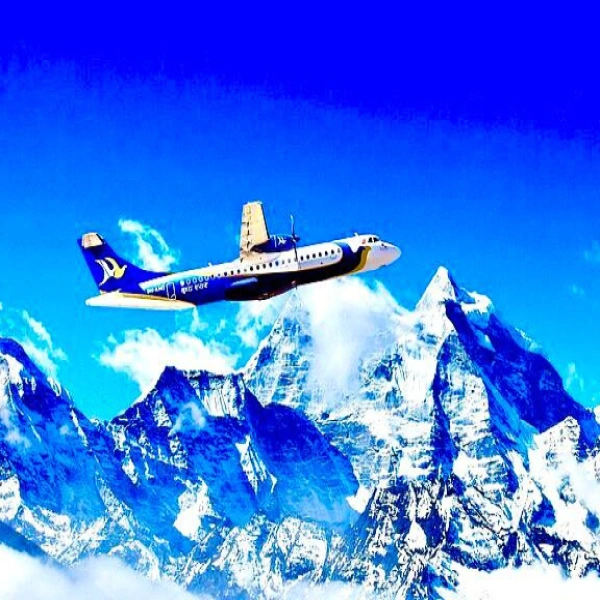
- Domestic flights (Kathmandu-Lukla) with airport taxes
- Airport arrival and departure transfers in Kathmandu
- All ground transportation as per the itinerary
- Government-licensed English-speaking trekking guide
- Porter(s) to carry luggage (wages, food, and insurance included)
- Tea-house / lodge accommodation during the trek (twin sharing)
- Meals during the trek (typically breakfast, lunch, and dinner)
- Basic first-aid kit and medical supplies carried by the guide
- Trekking gear on loan (e.g., down jacket, sleeping bag) in some packages
- Government and local taxes/service charges
What’s Not Included
- International airfare to/from Nepal
- Nepal entry visa fee
- Meals in Kathmandu (unless specified)
- Bottled water, beverages, hot drinks, and alcohol
- Travel insurance (including helicopter evacuation and emergency coverage)
- Personal trekking gear (boots, poles, clothing)
- Tips/gratuities for guide(s), porter(s), and drivers
- Hot showers, Wi-Fi, and battery charging fees during the trek
- Laundry, phone calls, snacks, and extra menu items
- Extra porter(s) or additional services beyond the package
- Additional accommodation due to delays (weather, flight delays)
- Emergency evacuation costs are not covered by insurance
- Unforeseen costs due to itinerary changes (strikes, natural events)
Why Does Distance Feel Harder Due to Elevation?
This is the part most people don't fully understand until they're actually on the trail.
At sea level, walking 10 kilometers takes maybe 2 to 2.5 hours at a moderate pace. At 4,500 meters, that same 10 kilometers can take 4 to 5 hours. The air has less oxygen, your breathing becomes harder, your heart rate goes up, and your legs feel heavier than they should.
Above 4,000 meters, the air pressure drops significantly. You're getting roughly 60% of the oxygen available at sea level. That doesn't mean you can't breathe, but it means every step costs more energy. Your body works harder just to keep you moving.
Common symptoms that slow people down:
- Increased heart rate even on flat ground
- Shortness of breath on gentle uphill sections
- Fatigue that sets in faster than usual
- Headaches, especially in the afternoon
- Disrupted sleep, which makes each morning feel harder
The trail itself isn't flat either. It's full of stone steps, loose rocks, suspension bridges, and steep switchbacks. Even a 5 km stretch can feel like a 10 km walk back home.
This is why experienced guides at Holy Kailash Tours always tell trekkers: forget the distance. Focus on the pace and the symptoms. If you feel good, the kilometers take care of themselves.
EBC Trail Conditions and Land Tips
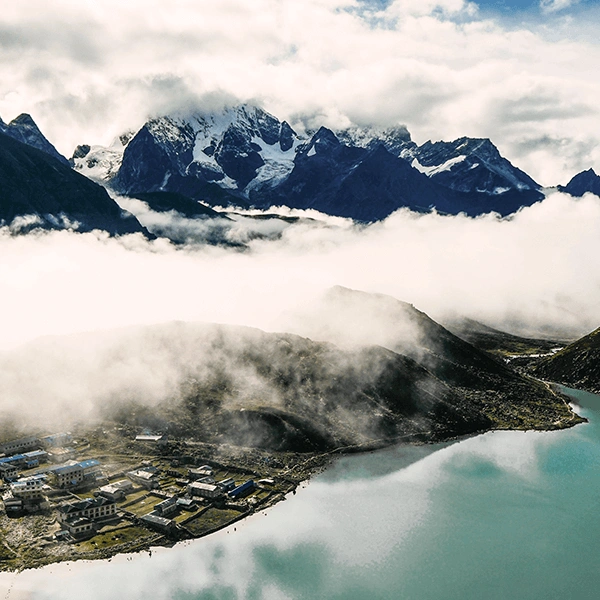
The Everest Base Camp trail runs through the Khumbu valley, and the terrain changes a lot as you go higher.
From Lukla to Namche Bazaar, the trail passes through rhododendron and pine forests, crosses several suspension bridges over the Dudh Koshi river, and follows well-maintained stone paths. It's not easy, but it's manageable and well-marked.
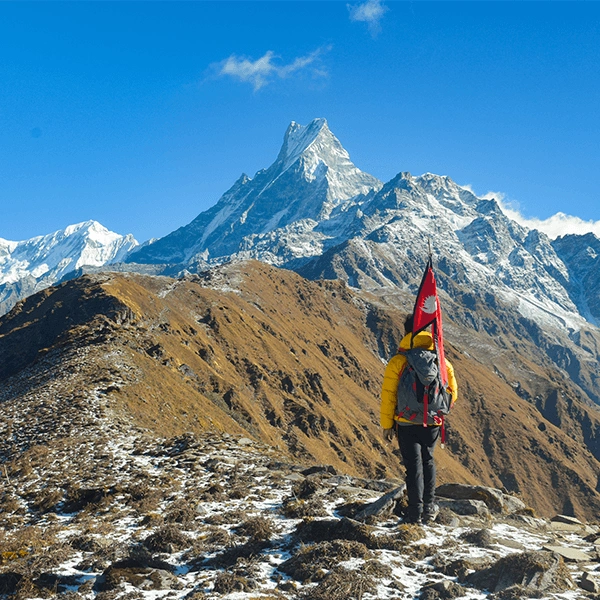
From Namche to Tengboche, the trail opens up. You get your first clear views of the Everest trek, Lhotse, and Ama Dablam. The path winds through open moorland and around ridges. The exposure to wind increases.
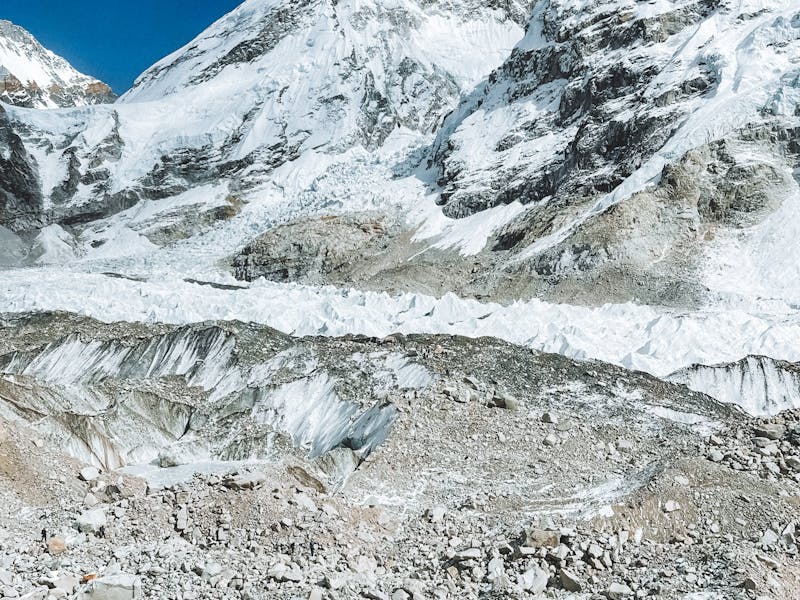
Above Tengboche, the landscape shifts. Vegetation thins out. The ground becomes rocky and barren. Above Lobuche, you're on a glacier moraine, a loose, uneven rock surface. Watch your footing here. Twisted ankles happen.
Practical tips for the trail:
- Use trekking poles from day one. They save your knees on descents and give you stability on rocky sections.
- Wear trail running shoes or lightweight hiking boots with ankle support. Heavy mountaineering boots are not needed for the trail.
- Go slow. The Nepali phrase "Bistari bistari" means "slowly slowly." The locals say it for a reason.
- Watch where you put your feet, especially near yak caravans. Yaks have the right of way, and they don't stop for you.
- Stay on the uphill side of the trail when yaks pass. Being knocked down hill by a yak is a real risk.
- Carry a small daypack with water, snacks, sunscreen, a light down jacket, and a rain cover. Conditions can change fast.
Tips to Handle Long Walking Days
Even the longer days on the Everest Base Camp trek aren't extreme by trail standards. But the altitude makes them feel longer.
Here's what helps:
Start early. Most trekkers aim to leave their teahouse by 7 or 8 AM. This gives you the whole morning to cover distance before the afternoon wind and clouds roll in. Afternoons at altitude are often cold and misty.
Eat breakfast even if you're not hungry. Altitude suppresses appetite in many people, but your body needs fuel. Porridge, eggs, and bread are common and easy to digest.
Drink a lot of water. At altitude, you dehydrate faster than you realize. Aim for at least 3 to 4 liters per day. Avoid alcohol, especially in the first week. It accelerates dehydration and can worsen altitude symptoms.
Take breaks before you feel like you need them. Sitting for 5 minutes every hour keeps your energy more consistent than walking until you're exhausted.
Don't rush the last hour. The temptation to push hard when you can see the destination ahead is real. That last push often leads to headaches and a bad night's sleep. Steady wins here.
Comparison Evererst With Other Popular Treks
How does Everest Base Camp stack up against other world-class routes?
Trek Name. Distance (Round Trip). Max Altitude. Difficulty
Everest Base Camp. 130 km. 5,545m. Challenging
Annapurna Circuit 1 60-230 km. 5,416m. Moderate/Challenging
Inca Trail (Peru). 42 km. 4,215m. Moderate
Kilimanjaro (Machame). 62 km. 5,895m Strenuous
Understanding how EBC compares to other treks helps set expectations.
EBC vs. Annapurna Circuit: The Annapurna Circuit trek covers 160-230 km, depending on the route. It's longer in total distance but doesn't go as high (Thorong La Pass at 5,416 m is the highest point). Altitude gain is similar, but Everest Base Camp has fewer escape routes if things go wrong.
EBC vs. Annapurna Base Camp (ABC): Annapurna Base Camp is a shorter, lower trek. The round trip is about 110 km and reaches a maximum altitude of 4,130 m. It's significantly less demanding than Everest Base Camp and better suited to beginners. Holy Kailash Tours offers guided treks to both, and the team often recommends ABC as preparation for those planning to do Everest Base Camp in future seasons.
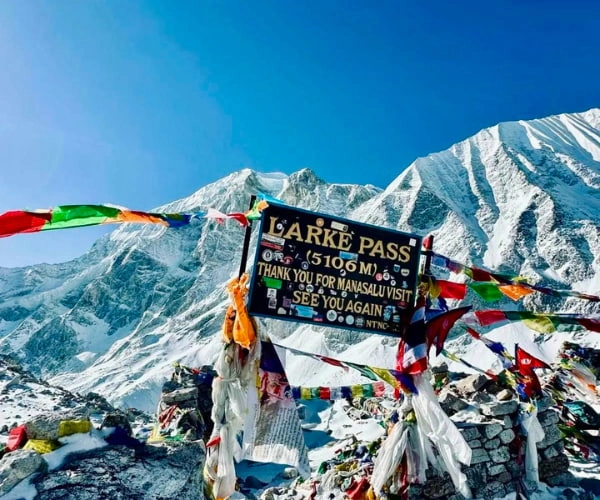
EBC vs. Manaslu Circuit: The Manaslu Circuit trekis more remote and less crowded. It covers around 177 km and crosses the Larkya La Pass at 5,160 m. It's considered harder than Everest Base Camp in terms of trail conditions and remoteness, but lower in maximum altitude.
EBC vs. Kilimanjaro: Kilimanjaro (5,895 m) is higher than Base Camp but involves no technical climbing if you use one of the standard routes. The trekking distance is much shorter (about 35-60 km round-trip, depending on the route). The altitude acclimatization window is tighter, which makes Kilimanjaro in some ways harder physiologically, even if the trail itself is less technical.
Everest Base Camp stands in the middle: moderately long, genuinely high, demanding but achievable for fit trekkers without mountaineering experience.
Why You Should Choose Holy Kailash Tours for the EBC Trek
There are dozens of trekking companies operating in Nepal. What makes Holy Kailash Tours different is the depth of knowledge their guides carry about the Himalayan terrain, not just the trails, but the conditions, the people, and the pace that actually works.
The team at Holy Kailash Tours includes guides who grew up in the Khumbu region. They know which teahouses have better food at high altitude, where the water sources are reliable, and how to read the sky for incoming weather. That local knowledge is genuinely useful in the field.
What the company handles for you:
- Permits (TIMS card and Sagarmatha National Park entry permit)
- Teahouse bookings along the route
- Airport pickup and drop-off in Kathmandu
- Gear advice before departure
- An experienced guide for the full duration
- Porter services to carry your main pack
- Acclimatization planning based on how your body responds
For first-time trekkers, especially, having a company like Holy Kailash Tours behind you changes the experience. You're not making solo decisions about whether to push higher or rest another day. You have someone with you who's done this route dozens of times and can tell you honestly what's safe.
Everest Base Camp Trek Route Overview
The classic route goes like this:
Day 1: Fly from Kathmandu to Lukla (2,860 m). Trek to Phakding (2,610 m). About 8 km.
Day 2:Phakding to Namche Bazaar (3,440 m). This is one of the harder days, with a significant climb in the afternoon. About 11 km.
Day 3:Acclimatization day in Namche. Hike up to Everest View Hotel or the Sagarmatha National Park visitor center for views. Sleep in Namche again.
Day 4:Namche to Tengboche (3,860 m). About 10 km through stunning mountain scenery. The Tengboche Monastery is one of the most visited spots on the whole route.
Day 5:Tengboche to Dingboche (4,410 m). About 12 km. The landscape becomes more barren. Views of Makalu and Island Peak appear.
Day 6:Acclimatization hike from Dingboche. Most people hike to Nangkartshang Peak (5,100 m) for a high-altitude acclimatization day before returning to sleep at Dingboche.
Day 7:Dingboche to Lobuche (4,940 m). About 13 km. You pass the memorial for climbers who died on Everest, which is a sobering experience.
Day 8:Lobuche to Gorak Shep (5,164 m), then continue to Everest Base Camp (5,364 m), and back to Gorak Shep to sleep. This is the longest and hardest day, around 14 to 16 km.
Day 9: Hike Kala Patthar (5,545 m) early morning for sunrise views of Everest, then descend to Pheriche (4,280 m). Around 12 km.
Day 10 onward: Descend via Tengboche, Namche, Phakding, and back to Lukla. Then fly back to Kathmandu.
Everest Base Camp Trek Distance and Duration
To summarize the numbers clearly:
- One-way distance (Lukla to EBC): approximately 65 km
- Round-trip distance: approximately 130 km
- With Kala Patthar: approximately 135 to 140 km
- Average daily distance: 8 to 14 km
- Total trekking days: 12 to 14
- Total trip duration including travel: 16 to 18 days
These are averages. If you need extra acclimatization days, your total can reach 20. Good operators like Holy Kailash Tours build some flexibility into their itineraries for this reason.
Everest Base Camp Trek Difficulty Level
Everest Base Camp is listed as a moderate-to-challenging trek. That means it's not a casual hiking trail, but it's also not something only elite athletes can do.
The real difficulty factors are:
Altitude. This is the main challenge. You don't need to be super fit to handle the distance. You need to acclimatize properly. People who skip rest days or rush the itinerary are the ones who end up turning back.
Trail terrain. Rocky paths, stone steps, unstable moraine, and river crossings require attention and sure footing. It's not technical climbing, but it's not a smooth footpath either.
Weather. Cold nights, strong afternoon winds, and the chance of snow above 4,500 m mean you need proper gear and the mental resilience to keep moving when conditions aren't perfect.
Duration. Two weeks of walking, sleeping in basic teahouses, eating local food, and being far from modern facilities tests your patience and adaptability as much as your fitness.
Who can do it: people who exercise regularly, have some hiking experience, and are willing to take the pace seriously. You don't need to be a marathon runner. Plenty of people in their 50s and 60s complete the Everest Base Camp every year.
Who should think twice: people with heart or lung conditions, anyone who hasn't been physically active in a long time, or anyone who thinks they can power through altitude sickness by force of will. You can't.
Best Time to Trek Everest Base Camp
Two main windows:
Spring (March to May): This is peak season. The weather is generally clear, rhododendrons are in bloom below 4,000 m, and the mountain views are spectacular. It's also when Everest summit expeditions are active, so the higher sections of the trail are busier. May is the most popular month for summiting, so expect teahouses in Gorak Shep and Lobuche to fill up fast.
Autumn (September to November): Also excellent. The monsoon clears out by late September, leaving crisp air and stable skies. October and November are considered the most reliable months for visibility and trail conditions. Less crowded than spring in most areas.
Monsoon (June to August): The trail is wet, leechy below 3,000 m, and cloud cover ruins many mountain views. Not recommended unless you specifically want a quiet, challenging experience and don't mind low visibility.
Winter (December to February): Possible but cold. Very cold. Temperatures at Gorak Shep can drop to-20°C at night. Fewer trekkers, quieter trails, but some higher teahouses are closed. Only for experienced winter hikers with proper gear.
For most people planning their first Everest Base Camp trek, October is the sweet spot.
Everest Base Camp Trek Cost Breakdown
Costs vary depending on how you travel, whether you join a group or go private, and how many extra nights or side trips you add.
Here's a realistic breakdown for a 16-day trip:
Flights:
- International return flights to Kathmandu: vary widely by origin, roughly USD 1500 to 2,500
- Kathmandu to Lukla return flight: approximately USD 500 to 550
Permits:
- TIMS card: approximately USD 15 to 20
- Sagarmatha National Park permit: approximately USD 30
Guided trek package (guide, porter, accommodation, meals on trail):
- Budget packages: approximately USD 1500 to 1,800
- Mid-range packages: approximately USD 1,800 to 2,500
- Premium private packages: USD 3,000 and above
Personal expenses:
- Extra snacks, drinks, wifi, hot showers on trail: USD 150 to 300
- Gear purchase or rental if needed: variable
Total estimate (excluding international flights):
Budget trekker: USD 1,500 to 1,800 Mid-range trekker: USD 1,800 to 2,500
These are rough numbers. A reputable operator like Holy Kailash Tours provides clear, itemized quotes before you commit. Always confirm what's included in any package: meals, accommodation, guide fees, porter fees, and permits.
Everest Base Camp Trek Required Permits
You need two permits to trek in the Everest region:
TIMS Card (Trekkers' Information Management System): This is a general trekking permit required for most treks in Nepal. It costs around USD 10 to 20 depending on whether you're trekking independently or through an agency.
Sagarmatha National Park Permit: Sagarmatha National Park covers the entire Everest region. You need this permit to enter the park. As of recent years, the cost is around USD 30 (NPR 3,000 for SAARC nationals, USD 30 for others). You pay this at the park entry gate in Monjo, a village just below Namche Bazaar.
Both permits are checked multiple times along the route, so don't lose them. Keep them in an accessible pocket.
If you're booking through Holy Kailash Tours, permit arrangements are typically included in the package. You still need to provide your passport details and photos, but the logistics are handled for you.
Everest Base Camp Trek Accommodation and Food
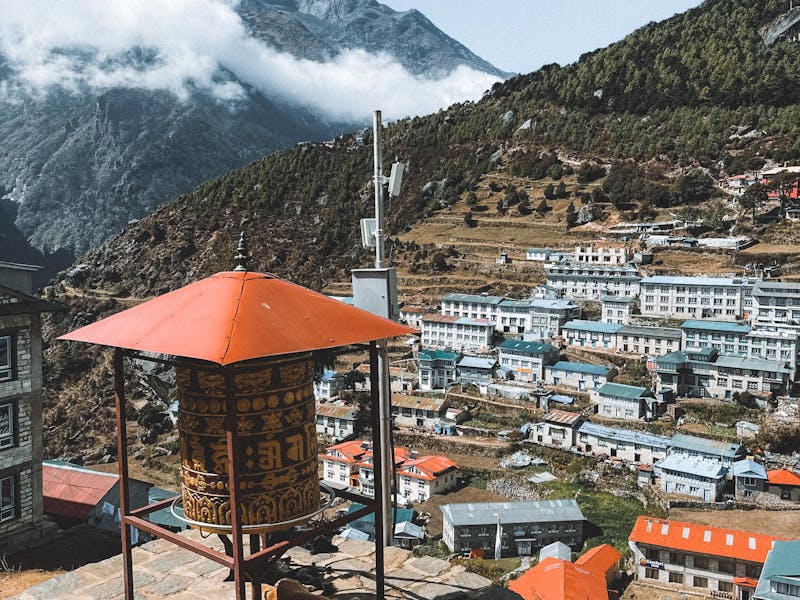
Accommodation:
The Everest Base Camp trail has a well-developed teahouse network. Teahouses are basic guesthouses run by local families. They range from simple wooden rooms with thin walls to slightly more comfortable lodges in bigger villages like Namche and Tengboche.
Rooms are basic but sufficient: a bed, a blanket, and sometimes a window. At higher altitudes (Lobuche, Gorak Shep), expect cold rooms, shared toilets, and no hot showers unless you pay for them separately.
Namche Bazaar is the most comfortable stop on the trek. It has wifi, bakeries, gear shops, and teahouses with better insulation. Many trekkers use their acclimatization day in Namche to rest and eat well before pushing higher.
Food:
Teahouse menus follow a similar pattern across the region: Dal Bhat (rice, lentil soup, vegetables), noodles, pasta, fried rice, eggs, bread, and soup. Dal Bhat is the best value and gives you the most energy. It often comes with unlimited refills.
As you go higher, food prices increase significantly. A plate of noodles that costs USD 4 in Namche might cost USD 8 in Gorak Shep. This is normal. Everything has to be carried up by porters or yaks.
Drink boiled or filtered water. Don't drink tap water. Most teahouses sell bottled water, but for environmental reasons, many trekkers carry a water filter or purification tablets and refill from natural sources.
Carry your own snacks for the trail: energy bars, nuts, dried fruit, and chocolate. You won't always find a teahouse exactly when you want one.
Packing List
You don't need to pack like you're going to climb a mountain. But you do need the right gear. Here's what matters:
Clothing:
- Moisture-wicking base layers (2 tops, 2 bottoms)
- Fleece mid-layer
- Down jacket (essential above 4,000 m)
- Waterproof outer shell jacket and pants
- Trekking pants (2 pairs)
- Warm hat, sun hat, gloves, and buff/neck gaiter
- Merino wool socks (4 to 5 pairs)
- Underwear (4 to 5 pairs, quick-dry)
Footwear:
- Lightweight hiking boots with ankle support and good grip
- Sandals or camp shoes for evenings at teahouses
- Gaiters (useful above Lobuche, where you may encounter snow)
Gear:
- Trekking poles
- Headlamp with extra batteries
- 40 to 50L main backpack (carried by porter) and a 20 to 25L daypack (carried by you)
- Sleeping bag rated to at least- 10°C
- Sunglasses with UV400 or polarized lenses (the reflection off snow is brutal)
- Sunscreen SPF 50+
- Lip balm with SPF
- Water bottle or hydration bladder plus purification tablets or a filter
Medical kit:
- Diamox (acetazolamide) for altitude sickness prevention (consult your doctor before the trip)
- Ibuprofen and paracetamol
- Blister plasters
- Rehydration salts
- Basic first aid supplies
Documents and electronics:
- Passport, permit photocopies
- Travel insurance documents (make sure it covers high-altitude trekking and emergency evacuation)
- Portable power bank
- Universal travel adapter
You don't need to buy everything new. Holy Kailash Tours can advise on gear rental in Kathmandu for items like sleeping bags and trekking poles if you don't want to bring them from home.
Everest Base Camp Trek Altitude and Safety Tips
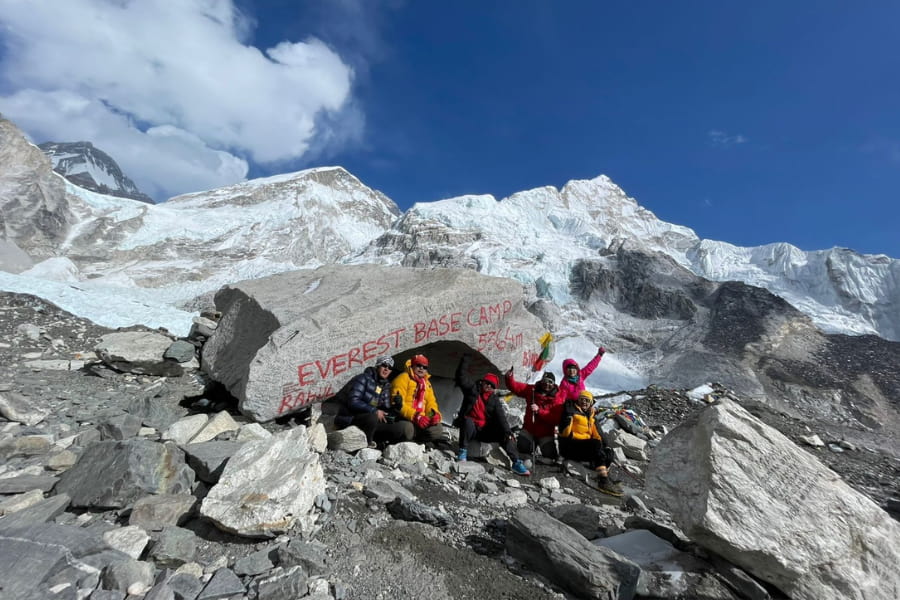
Altitude sickness (Acute Mountain Sickness or AMS) is the main health risk on this trek. It affects people regardless of age or fitness level. There's no reliable way to predict who will get it.
Early symptoms of AMS:
- Headache
- Nausea or vomiting
- Fatigue
- Dizziness
- Loss of appetite
- Difficulty sleeping
If you notice these symptoms, don't go higher. Rest at your current altitude. Drink water. If symptoms worsen after 24 hours or you develop symptoms of High Altitude Pulmonary Edema (HAPE) or High Altitude Cerebral Edema (HACE), which include chest tightness, confusion, loss of coordination, or severe shortness of breath, descend immediately and seek medical help.
Key safety rules:
- Never ascend with AMS symptoms. Rest or descend.
- Don't drink alcohol in the first week. It dehydrates you and masks AMS symptoms.
- Eat and drink properly even when your appetite is low.
- Take the acclimatization days seriously. They're not optional extras.
- Know your travel insurance details. Emergency helicopter evacuation from high altitude is expensive (often USD 3,000 to 5,000 or more). Make sure your policy covers it.
- Walk slowly. Your ego will tell you to keep up with others. Your body will thank you for ignoring it.
Diamox is widely used to prevent and treat AMS. It works by stimulating faster breathing, which helps oxygenate the blood. Common side effects include increased urination and tingling in the hands and feet. Talk to a doctor before your trip to see if it's appropriate for you
Everest Base Camp Trek Weather Conditions
The weather on the Everest Base Camp trail is fairly predictable in the main trekking seasons, but it can change fast in the mountains.
Morning: Usually clear and calm. Best time for mountain views and walking.
Afternoon: Clouds build up over the Himalayas. Light rain or snow above 4,000 m is common. Wind picks up.
Evening: Often clears again. Cold sets in quickly after sunset.
Above 4,000 m, temperatures can drop to -5 to -15 °C at night, even in October. At Gorak Shep (5,164 m), minus 20°C nights are not unusual in November.
Wind is a serious factor above 4,500 m. On Kala Patthar, especially, gusts can be strong enough to knock you off balance. A good outer shell that blocks wind is as important as warmth at that altitude.
Rain below 4,000 m is possible in both spring and autumn. Pack a waterproof cover for your daypack and always carry your rain jacket within easy reach.
Everest Base Camp Trek Tips for Beginners
If this is your first time on a serious trek, here's honest advice:
Train before you go. You don't need to be an elite runner. But you should be able to walk for 4 to 6 hours with a light pack, including uphill sections, without feeling destroyed. Start training 3 to 4 months before the trip if you're not regularly active. Hiking on hilly terrain, stair climbing, and cardio work all help.
Let go of the schedule mentality. At home, you probably feel like you're failing if you're slow. On this trek, slow is the strategy. Being the last person into camp every day, yet feeling great, is far better than being first and developing a splitting headache.
Tell your guide how you feel. Every day, every symptom. Don't hide it out of embarrassment or stubbornness. A good guide, including those who work with Holy Kailash Tours, will adjust the plan if needed. They'd much rather take a rest day than evacuate you by helicopter.
Embrace the teahouse culture. Evenings around the dining room heater with other trekkers from around the world are genuinely one of the best parts of this trip. Don't rush through meals or spend the whole evening on your phone.
Expect bad days. Some days you'll feel strong. Some days you'll wonder why you thought this was a good idea. That's completely normal at altitude. The next morning, things often feel different.
Acclimatize in Kathmandu if you can. If your schedule allows, spend 2 to 3 days in Kathmandu before flying to Lukla. It gives your body a tiny head start at a modest altitude (1,400 m) and gives you time to sort any last-minute gear needs.
Why Book with a Local Nepal-Based Company?
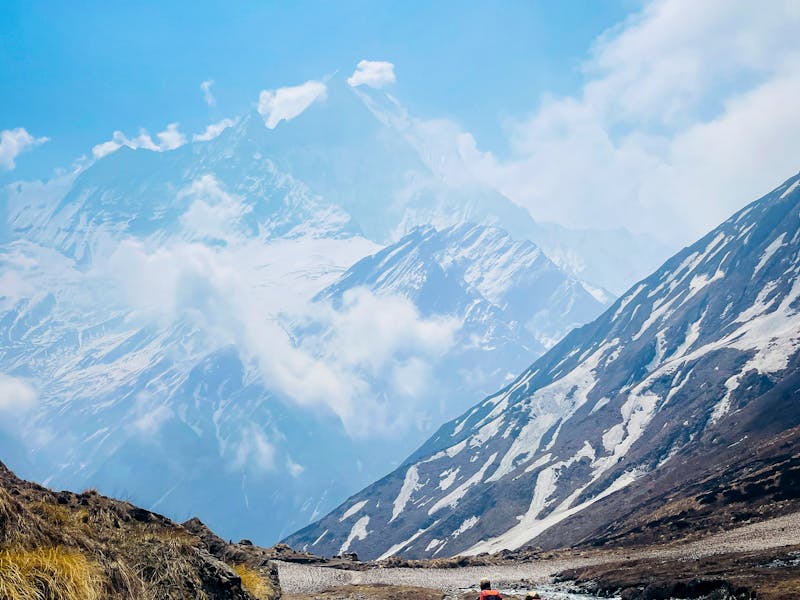
There are trekking agencies worldwide selling EBC packages. Many of them outsource the actual guiding to Nepal-based operators anyway, adding a middleman margin to the price.
Booking directly with a Nepal-based company cuts out that layer and gives you more for your money. But beyond price, there are real practical reasons to work with local operators.
They know the current trail conditions. Trails change. Landslides, bridge repairs, and new teahouse openings happen regularly. A company in Kathmandu gets that information in real time from guides on the ground.
They can respond to problems. If something goes wrong on the trail, whether it's altitude sickness, a weather issue, or a flight delay, a local company can act immediately. They have relationships with lodges, helicopter services, and local health posts.
They support the local economy directly. Guides, porters, and teahouse owners in the Khumbu valley depend on trekking income. When you book locally, more of that money stays in the community.
They have genuine expertise. The guides at Holy Kailash Tours, for example, have spent years on these trails. Some were born in the region. That's not something you can replicate from an office in London or New York.
If you're weighing your options, ask any potential operator: Where are your guides from? How many years of EBC guiding experience do they have? What's your emergency protocol if a trekker gets AMS? The answers will tell you a lot.
Conclusion
The Everest Base Camp trek is about 130 kilometers round-trip. It takes most people 12 to 14 days on the trail. The daily distance isn't extreme, but the altitude makes every kilometer harder than it looks on a map.
The distance alone won't stop you. What matters is acclimatization, preparation, and having the right people with you on the trail.
Holy Kailash Tours has helped trekkers of all backgrounds complete this journey safely and with real purpose. Their team knows these trails, the altitude, and when a trekker needs to push forward or slow down.
If you're planning your first EBC trek, start with the basics: get your fitness up, sort your gear, pick a reliable operator, and give yourself enough time. Don't rush the itinerary to save a day. The mountain isn't going anywhere.
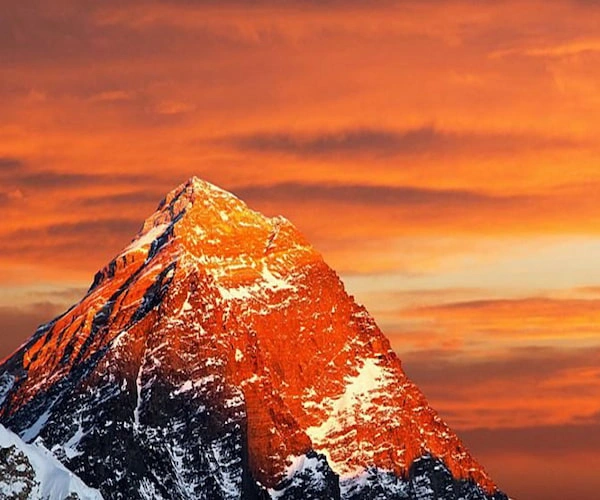
The experience of standing at Base Camp or watching the sun rise over Everest from Kala Patthar is something most trekkers describe as genuinely life-changing. Not because of the distance they covered, but because of what it takes to get there. Preparation, patience, and honest respect for what the altitude demands.
That's the real story of the EBC trek. Contact Us, and now you have a clearer picture of what you're actually signing up for.
Everest Base Camp Trek FAQS
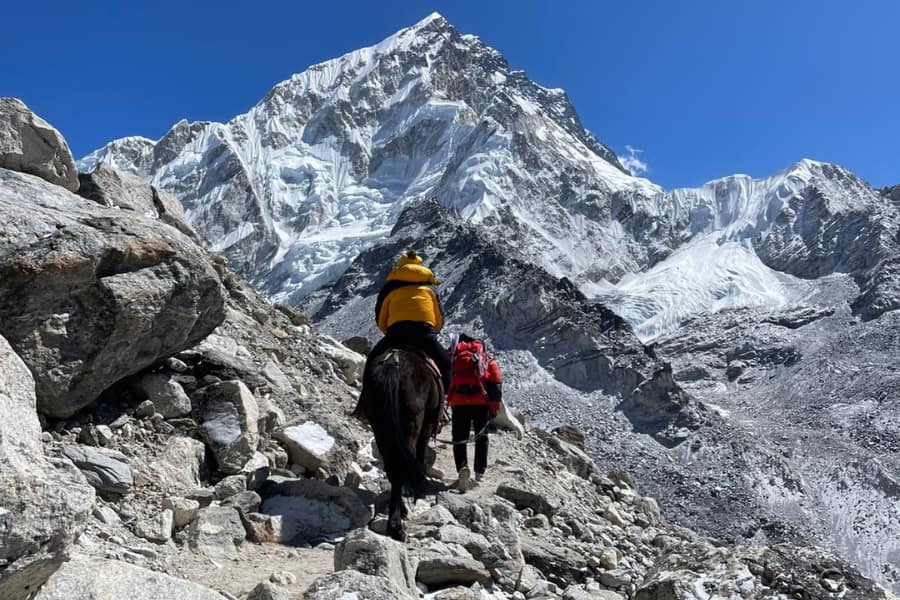
1. How many miles is the Everest Base Camp trek?
The total round-trip distance from Lukla to Everest Base Camp is approximately 80 miles (130 kilometers). If you are walking one-way to the base camp, it is roughly 40 miles (65 kilometers), typically spread over 8 or 9 days to allow for safe altitude acclimatization.
2. Can a beginner trek to Everest Base Camp?
Yes. You do not need professional climbing experience or technical skills. However, you should have a good level of cardiovascular fitness and the mental stamina to walk for 5–7 hours a day over rocky terrain. We recommend a 3-month training regimen of hiking and cardio before your arrival.
3. What is the success rate of the EBC trek?
While official statistics vary, most reputable trekking agencies report a 90% to 95% success rate. The primary reason people do not finish is Altitude Sickness (AMS). By following a professional 14-day itinerary with built-in acclimatization days, your chances of reaching the top are very high.
4. Is there Wi-Fi and electricity on the trail?
Yes, but it is not free. Most tea houses offer Wi-Fi (often via "Everest Link" cards) and charging stations for a fee, usually ranging from $3 to $7 USD. As you get higher, the price increases and the reliability decreases. We recommend bringing a high-capacity power bank.
5. Do I need to worry about "The Khumbu Cough"?
The "Khumbu Cough" is a dry, persistent cough caused by the cold, dry air at high altitudes. You can minimize the risk by wearing a buff or mask to warm the air before you breathe it in, staying hydrated, and avoiding overexertion.
6. Can I trek to EBC without a guide?
As of April 2023, the Nepal Tourism Board implemented regulations requiring trekkers in most national parks to be accompanied by a licensed guide. Regardless of the rules, hiring a guide is highly recommended for safety, navigating tea house bookings, and emergency medical coordination.
7. How much should I tip my guide and porter?
Tipping is a standard practice in Nepal. A general rule of thumb is to tip about 10% to 15% of the total trek cost, distributed among the crew. This is a vital part of the local economy and rewards the incredible hard work of your support team.
8. What happens if I get Altitude Sickness?
Our guides are trained to spot early symptoms of AMS (headaches, nausea, dizziness). If symptoms are mild, you stay at your current altitude. If they worsen, the only cure is to descend immediately. In severe cases, we coordinate an emergency helicopter evacuation to Kathmandu.
9. Are there ATMs on the Everest Base Camp trail?
There are ATMs in Namche Bazaar, but they are occasionally out of order or out of cash. It is best to withdraw all the Nepalese Rupees you need for the trek (for snacks, hot showers, and charging) while you are in Kathmandu.
10. Is the water safe to drink?
No, do not drink tap or stream water. You should use water purification tablets or a Steripen on the water provided at tea houses. While bottled water is available for purchase, we encourage using purification methods to reduce the plastic waste footprint in the sensitive Himalayan ecosystem.