Why Start Your Pilgrimage from Kathmandu?
Kathmandu opens the spiritual gate to the Himalayan mountains and is the most reasonable option for a Kailash Mansarovar Tour from Lhasa. A pilgrim journey can take in sacred Hindu sites like the sacred Pashupatinath temple for blessings and further travel. Being the capital city of the Himalayas, Kathmandu is the primary transportation hub for people going to distant areas. The city gives easy flight access to Lhasa. Beginning from Kathmandu gives pilgrims a chance to get spiritual preparation, handle their administrative matters, and also be emotionally ready for the holy journey that lies ahead.
Scenic Flight to the Roof of the World.
The aeroplane flight between Kathmandu and Lhasa unquestionably ranks among the most awe-inspiring Himalayan air routes in the entire world. On clear days, a window seat becomes a gallery of a great painting where one can catch glimpses of Mount Everest, as well as the peaks of Cho Oyu, Shishapangma, and countless other mountains that simply do not exist without the Himalayas from the sky. And it would be difficult to resist a pleasant, scenic change - when this flight takes you from the verdant valleys of Nepal to a huge, mysterious Tibetan highland with little vegetation but many mountains. Upon arrival at Lhasa, visitors can sense right away the Tibetan spiritual ambience, a result of a combination of faith, silence, and devotion, which have long dominated the lifestyle of the people living here.
Essential Altitude Acclimatization.
One of the best benefits of the Kailash Mansarovar Tour via Lhasa is that it brings a natural way to get used to high altitude. Sitting at 3,650 meters, Lhasa gives the body ample time to adjust as one continues to higher altitudes in the tour. Staying for a lot of nights in Lhasa and then slowly traveling on land to Shigatse and Saga drastically reduces the chances of altitude sickness. This makes the Lhasa route a much better and safer option for older pilgrims and those who have just started visiting high-altitude areas.
Exploring Sacred Monasteries & Historic Palaces.
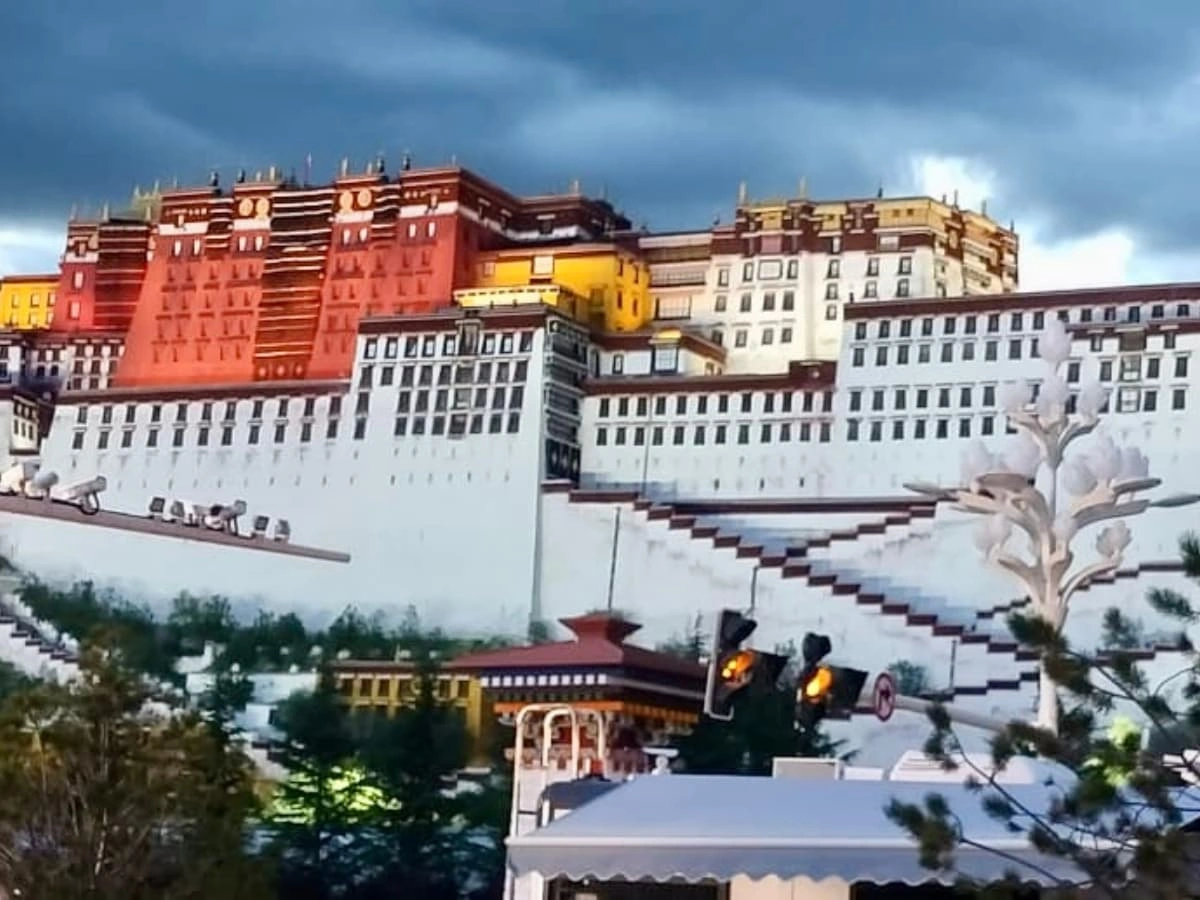
Lhasa is basically a major religious destination in Tibet. By making pilgrimage visits to holy places such as the Potala Palace, Jokhang Temple, Barkhor Street, Drepung Monastery, and Sera Monastery, worshippers will gain a thorough understanding of Tibetan Buddhism through their participation in such activities. And seeing monks debating philosophy, devotees practicing the full-body prostrations, and prayer wheels spinning nonstop will create a very spiritual, durable, and deep impression on the visitors. Such a journey is a mental and emotional preparation for a pilgrim before they finally leave for the holy Kailash area.
Crossing the Majestic Trans-Himalayan Plateau.
On our way out of Lhasa, we continue our route to the west through the Tibetan Plateau. One of the few areas on Earth that retain their virgin state: its immense space, rolling plains covered with a carpet of tiny grass, majestic snow-capped mountains that appear like white crowns on the mountain summits, and the scattered clusters of yak-herding Tibetan nomads, together with the glacier-fed turquoise lakes that are a real treat to the eyes, will give you the sense that you are walking in a different world. The long stretches of the plateau road are interrupted by many breaks to refresh the travellers and also enjoy the picturesque scenes or take acclimatization walks. The stillness that surrounds the mountain people is a great opportunity to get together to think, pray, or simply relax and take in what's happening around.
Arriving at the Sacred Lake.
Reaching Lake Mansarovar is a deeply moving experience for many. Located at an elevation of 4,590 meters above sea level, the waters of Lakshmanasagara (a Sanskrit compound word which literally means "the lake that is the reflection of the Lord") mirror the sky above and emanate a pure and peaceful essence. The devotees here worship and offer prayers in several forms: Puja, meditation, Homa (fire sacrifice), and ritual bathing (the immersion of oneself in water with a specific motive). Even those who are averse to water immerse or dip to come to experience the incredible strength and life-giving energy of this holy lake. Being alone with nature and yourself at Lake Mansarovar for a while is a journey that is bound to lead to a flood of tears, a feeling of getting unburdened, and being filled with new lightness and peace.
Preparing at the Base Camp (Darchen).
Darchen is a little town but with great spiritual importance since it is so close to Mount Kailash. The city is also from where the Kailash Parikrama circumambulation starts and finishes. Here, pilgrims complete their physical and mental conditioning and prepare themselves to face the long mountain path. They also attend informative sessions about their spiritual trek, take a decision about getting a yak or a porter, and emotionally prepare for the three-day physically demanding walk around the holy mountain. Darchen, being the last town before the pilgrims depart for the walk, is also the only town where photographs of Mount
The Sacred 3-Day Kora (The Parikrama).
Walking the mountain circuit that spans three days, a Kailash Parikrama, is a pilgrimage in its true form that the faithful will always remember. By walking around Kailash Mountain counterclockwise, people think their actions will no longer bind them, and instead they shall be free from all karma. The trek goes over Dolma La Pass (5660 m), going through valleys, rivers, monasteries, prayer flags, and other sacred places. To be in Kailash Parikrama Kora means to be part of a religious journey through the most sacred sites on the earth. There, one is surrounded by prayers, chants, and silence the whole time, so that this walk is very intimate and, at the same time, life-altering.
The Ultimate Ascent: Over Dolma La Pass.
On the second day of the parikrama, we pass over the Dolma La Pass, which is at an altitude of 5,660 meters, and it is the highest point in the entire route. It is definitely the hardest day physically and spiritually in the parikrama. At the pass, people make their offerings, which represent the letting go of ego, suffering, and past burdens. The summit is the place where tears and gratitude well up, and one has the feeling of a new birth. The downhill walk that follows seems to be light both in body and mind.
Completing the Holy Circuit.
It is considered a divine gift to finish the Kailash Parikrama. As you walk back towards Darchen after all the rituals and penances at the holy site, one experiences inner peace, a profound sense of gratitude, and quiet joy. Many of the devotees who have taken this sacred walk report experiencing an inner transformation and a deep feeling of peace and spiritual satisfaction, something so intense and profound that very probably they cannot adequately express it through words.
The gradual descent towards the city along the journey through Saga, Shigatse, and Lhasa allows the body to get used to the change in altitude. A kind of peace settles in the mind of the devotee, and the memories and experiences of these moments will remain in one's heart forever. In fact, it may be said that the pilgrims return not with a piece of souvenir paper bag but with an unforgettable spiritual experience imprinted in their hearts that remains for life.
Who Should Join the Kailash Mansarovar Tour via Lhasa?
This Kailash Mansarovar tour through Lhasa is specially designed for spiritually inclined seekers and pilgrims who would like to experience the sacred journey of Kailash and explore Tibetan culture. This route also allows travellers to get properly acclimatised in Lhasa at the lower altitude before they reach the high Kailash region, which is an essential factor given that doing the Kailash Parikrama or circuit will involve a high-altitude trek reaching as high as 5,600 m.
A moderate level of physical fitness, some stamina, and the ability to cope with challenging altitude conditions are important requirements for travellers, besides a lot of preparation. Those travellers who want to get close and personal with Mount Kailash, Manasarovar Lake, and Tibetan monasteries and prefer a well-organised pilgrimage where they would not only have permits but also local help at every step would find this mode of pilgrimage ideal.
Tibet Permits & Visas for Non-Resident Indians (NRIs).
Managing Your Tibet Permits & Visas Easily
If you've already been doing your online research to get to Mount Kailash, you know that securing the permits to access Tibet could be the most nerve-racking part. Because it's a tightly monitored and protected country, you can't simply request a tourist visa on arrival. But that's where we come in. As an approved agency, our staff will take care of everything so you can leave all the bureaucracy and your confusion to us.
- Ensuring Your Place Well in Advance: Roughly 45 to 60 days before we depart, we require an up-to-date photograph and a clear colour scan of your passport. Your passport simply needs to be valid for a minimum of six months from our departure date.
- Group China Visa processing: If you're travelling to Nepal first, you should arrive in Kathmandu at least 3 business days before the start of your tour. We'll take your on hand and bring it to the Chinese Embassy here in Kathmandu to obtain your Group Visa. If you're entering Tibet through mainland China, you'll need to travel to Tibet on a normal Chinese visa, and we'll ensure your Tibet Travel Permit is ready and waiting for you in your transit city.
- Open the Restricted Zones: After your majority entry permit has been granted, others from Lakpa Sherpa Assist will get behind the scenes to arrange the additional military passes, alien travel document, and foreign affairs permits to step on the holy Parikrama.
- Meet Your Guide: Don't be concerned about travelling with shapeless, cumbersome entry papers during international flights. Our native Tibetan guide will be waiting to greet you just outside the Lhasa airport, ready with your original paper permits to greet you at the ROOF OF THE WORLD. Contact Holy Kailash Tours for your requirements
Everything You Need to Pack.
Clothing
- 2 to 3 thermal base layers
- 2 to 3 warm trekking trousers
- 2 to 3 T-shirts
- 1 fleece or wool sweater
- 1 warm down jacket
- 1 waterproof and windproof jacket
- 1 waterproof trekking trouser
- 4 to 5 pairs of warm socks
- 5 to 7 sets of underwear
- 1 warm winter hat
- 1 sun hat or cap
- 1 pair of warm gloves
- 1 neck gaiter or scarf
Footwear
- Waterproof, ankle-supporting trekking boots
- Comfortable camp shoes or sandals
- 1 pair of gaiters for snow, mud, and dust
- Spare shoelaces
- Blister pads or medical tape
Trekking Gear
- 20 to 30 liter daypack
- Trekking poles
- Durable main luggage or duffel bag
- Warm sleeping bag, if required by the accommodation
- Headlamp with spare batteries
- Reusable water bottle with 1 to 2 liter capacity
- Backpack rain cover
- Small dry bags for protecting valuables
Sun and Weather Protection
- SPF 50 sunscreen
- SPF lip balm
- UV-protected sunglasses
- Wide-brimmed hat or cap
- Moisturizer
- Waterproof jacket and trousers
Health and Personal Essentials
- Personal prescription medicines
- Basic first aid kit
- Pain relief medicine
- Bandages and antiseptic wipes
- Blister treatment
- Oral rehydration salts
- Personal toiletries
- Quick-drying towel
- Toilet paper and tissues
- Wet wipes
- Hand sanitizer
Documents and Money
- Valid passport
- Copies of passport and important documents
- Required Tibet travel permits and travel documents
- Travel insurance documents
- Wallet and some local cash
- Small waterproof document pouch
Electronics
- Mobile phone
- Power bank
- Charging cables
- Universal travel adapter
- Camera and spare batteries, if needed
- Waterproof pouch for electronics
Snacks
- Energy bars
- Chocolate
- Nuts and dried fruit
- Biscuits or other lightweight snacks
Useful Extras
- Ziplock bags
- Plastic bags for wet or dirty clothes
- Small padlock
- Earplugs
- Small sewing kit
- Lightweight backpack rain cover
Holy Kailash Tours suggests that pilgrims can easily change their clothing in small increments through layering, so they should not be surprised by a temperature change.
Mount Kailash-Related Package
Kailash Mansarovar Yatra Overland 14 Days
Kailash Mansarovar Tour via Lhasa
The Kailash Yatra by Helicopter from Lucknow
Tibet Trek to Advanced Base Camp on Everest, 18 Days
Explore the Forbidden City, Lhasa, 5 Days
Ganden to Samye Trek: 11 Days
Lhasa With Everest Base Camp Tour: 8 Days
Namtso Lake, Lhasa Tours, 5 Days
Lhasa to Yamdrok Lake Tour: 7 Days
Lhasa Shigatse Everest Base Camp Tour 8 Days
Trip Highlights
- Experience an epic journey by flying from Kathmandu, Nepal, to Lhasa, China.
- Be amazed at the sight of the world's highest peaks
- You will learn about ancient and sacred beliefs practiced in India and Tibet through Lhasa
- Slow and safe acclimation through Lhasa
- Trekking over the challenging Dolma La Pass at a peak altitude of 5,630 meters
- Bathing and praying at the holy lakes of Mansarovar
- Kailash Parikrama (Circumambulation) completed.
- Nepalese and Tibetan expert professional guides
- Join a small group for a spiritual tour.