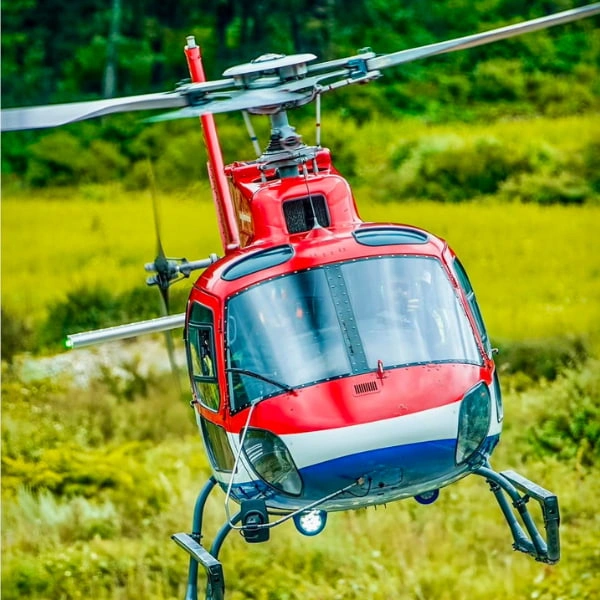
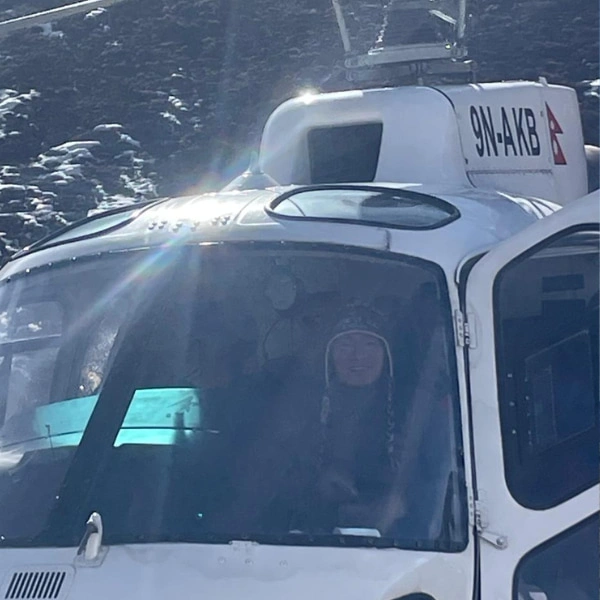
Travelling to the Kailash Mansarovar Yatra by helicopter in 2027 may reduce the time taken for the yatra, but it won't cut down on the time for the rest of your journey. It simply changes your mode of transportation. A helicopter-assisted Kailash Mansarovar Yatra route skips a few days of Indian and Tibetan border road travel and starts with a Nepalese Airlines flight from Kathmandu to Nepalgunj-Simikot, with another flight or a helicopter sector to Hilsa. From the Chinese border village, the group takes the highway through the Purang valley to Kailash Mansarovar, Darchen, Deirapuk, and Kailash Kora.
The 12-day yatra trip going from Kathmandu to Kathmandu via flight is the most common travel schedule for a helicopter-assisted Kailash Mansarovar Yatra 2027. What is the significance of the helicopter ride factor? The helicopter riding mode is going to cut your travel time a lot, on the other hand.
Why do pilgrims choose the helicopter route?
Kailash Yatra by Helicopter
The main benefit is not just a helicopter ride.
It's the decrease in road travel time from western Nepal to the Tibet border.
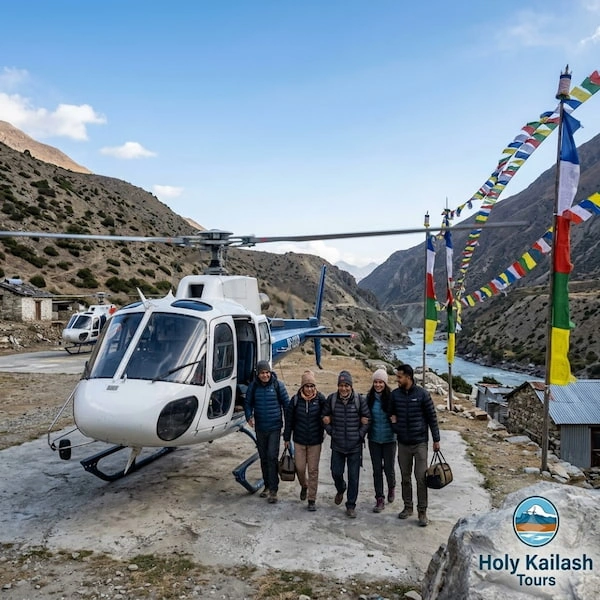
A common route is from Kathmandu to Nepalgunj and Simikot, then continuing toward Hilsa by helicopter.
Pilgrims go to Tibet via Hilsa, where they visit Purang, Lake Mansarovar, and Darchen.
This is really beneficial for senior pilgrims or those who prefer not to spend another few days on the bumpy mountain roads.
Still, a problem is that you are still required to spend time getting used to high altitude.
The village of Purang is already at about 3,900 m above sea level. Lake Mansarovar and Darchen are at even higher altitudes. You can go to a higher elevation when doing the Kailash Kora. One of the challenges is the ascent on the Dolma La pass, which, per most of the pilgrims, has a height of more than 5,630 meters.
This Simikot to Hilsa route by helicopter is one of the highlights of a journey.
The remote Simikot is in the mountainous Humla region of Nepal, whereas Hilsa is an important transit border for crossing into Tibet from Nepal.
By using helicopter transport between the two points, instead of traversing this very tough Himalayan part through the whole roads, the travellers save themselves from many difficulties.
The main point is that, in the helicopter sector, one does not just see the scenery from above.
Instead, one uses it as a means of overcoming the transport challenge.
That means this difference highlights one important issue when we are comparing Mount Kailash packages:
A more affordable overland tour and a helicopter-package tour could ultimately lead you to the same holy ground, but the process of getting there might be quite different in your experience, which will determine your choice of one or the other.
What happens after you reach Tibet?
Horse Riding during Kailash Parikrama
Some ads can give the incorrect impression.
The helicopter just serves the purpose of transporting people to the vicinity of Mount Kailash and not the summit directly. Once the party has crossed over at Hilsa, they keep heading northwards until they reach Purang, a town also designated as Taklakot.
This point is really important for getting acclimatized before proceeding towards Lake Mansarovar and Darchen.
That stretch should not be considered a mere detour.
It has every bit the value that the rest of the journey has.
At such altitudes, you are only getting about a third of the oxygen level of Kathmandu, which explains why many people get ill quickly. A good itinerary will allow travelers sufficient time to adjust to the conditions without trying to rush everyone to Kora.
This is yet another reason Holy Kailash Tours does not consider a Kailash itinerary to be just a sequence of destinations.
The order is significant.
Kathmandu is the starting point. The group first goes from there to lower-altitude western Nepal, then to Simikot, Hilsa, and finally Purang, from where only you can go towards Lake Mansarovar, Darchen, and the Kora.
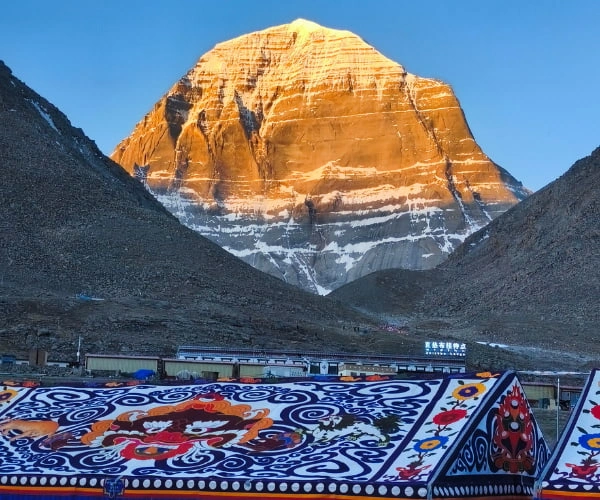
Lake Mansarovar is not the same experience as Mount Kailash.
Lake Mansarovar can hardly rival Mount Kailash's appeal. Many visitors are surprised to find that these two places, despite commonly being linked, really are different experiences.
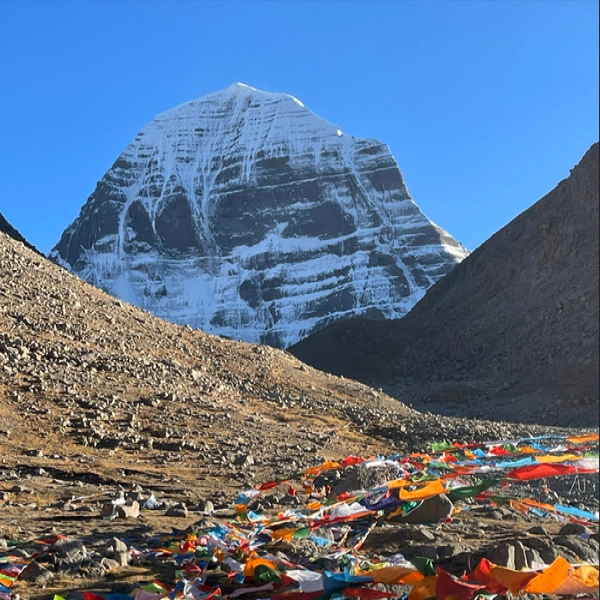
Mount Kailash is sacred to Hindus, Buddhists, Jains, and Bon practitioners alike. Pilgrims make a circle around the mountain on their knees instead of going up the mountain. Pilgrimage Lake Mansarovar is another such site.
Some spiritual travelers might feel like they've gone far when they finally arrive at Lake Mansarovar. The next stop in the tour is called Darchen.
It is actually at this very spot that the three-day Kailash Kora commences. That's why the nature of the trip changes yet again.
You're now more than an observer; you have got to do the walking!
Still, the Kailash Kora is the hardest part.
Kailash Yatra in Kora
The helicopter route only gets you part of the way around Mt. Kailash.
The Kailash Kora has to be done on foot. Itineraries that are published usually mention a three-day circuit starting from Darchen, going through Dirapuk to Dolma La, passing through Zuthulpuk and then back to Darchen.
It says that the total walking route is approximately 52 kilometers. Based on the exact route and the way of measurement, the distances can fluctuate. The most challenging bit is climbing towards Dolma La.
It is for this reason that, in our view, a helicopter itinerary should not be the pilgrim's decision solely on age, budget, or simply wanting to travel faster. The fact is that the walking capability at high altitudes is more important than the helicopter, which makes the tour more comfortable.
Those people who are used to walking for a long time and those who have their preparations in order may even be able to manage the Kora. Then again, those who think that the helicopter would make pilgrimage less physically taxing can get a nasty surprise.
It is from here that the real value of the package price begins to emerge.
A Kailash package isn't just about a hotel room and a helicopter ticket.
It involves many domestic flight segments, border processing, arrangements for travel within Tibet, logistics of transportation, guest accommodation, meals professional guides, handling of luggage, and decision-making on weather-related aspects.
The business of helicopter operation is highly responsive to mountainous weather.
A flying operation can be postponed if prevailing conditions do not allow it.
That means a dependable and conscientious airline operator must be ready to offer something more than the published schedule by coming up with a backup plan for delays.
That is also why pilgrims are advised to know ahead of time what could be their situation if the Simikot-Hilsa helicopter can't carry out the flight on an announced day.
The competent company will probably have the answer to your question in hand when you decide on your payment.
What about the 2027 border situation?
Kailash Yatra Darhcen
This is a case that needs to be handled very delicately.
Nepal and Tibet border areas were devastated by the flash flood and landslides, which came all at once in August 2026. The locals and infrastructure, as well as tourists along the trek, were severely impacted. Newly arriving reports arrived in late August 2026, when rescue work was still ongoing.
This means that if you are thinking of doing the 2027 Kailash Mansarovar Yatra, this is the main point you should remember. Do not consider old travel routes as a safeguard for future passage.
Things like border crossings, roads, immigration procedures, helicopter services, and travel permits for Tibet should change. Holy Kailash Tours will verify the functioning route permits, border setups, and departure conditions at least once before the departure time of the 2027 batch.
A pilgrim can gain a lot from this confirmation rather than trying to guarantee every minute detail a year ahead.
This route is mainly good for travelers who have limited travel days and want their road journey to be as short as possible.
Travelers who would rather be at the holy site for most of their vacation time and not travel for long across western Nepal on the overland route could also benefit from taking this one.
Still, clearly this route does not suit all people automatically.
If you think about doing the Yatra, it is better that you judge honestly for yourself how you cope physically, mostly about walking in high mountains for a few hours. You should also get a medical check-up, especially if old or if a health condition could make high-altitude travel dangerous for you.
Of course, one wants to get to the holy mountain.
The idea is to get there in good health and come back the same way.
Kailash Mansarovar Yatra by Helicopter 2027 cost
CKailash Mansrovar Yatra Kora
2027 Helicopter Yatra cost can vary greatly given several factors.
Departure schedule, group size, Tibetan arrangements, helicopter route, comfort level, and government/local operational expenses all play a role in the overall price. That is why travellers should always be wary of advertised prices that are surprisingly low.
Question what is actually included in the price. Inquire about the helicopter route. Which sectors will the helicopter take?
You can be given a helicopter that takes you to Kedarkut, Khoji Chumig Dzo, Khoji, or Gumba sectors. It will give you more accurate information. Ask how you will cross Tibet and what permits you need.
Ask about accommodations in Purang town and during the Kora in different places. Ask about food provision during the trip.
Ask about hiring a guide or a mountain leader. Ask about the availability of emergency support.
But most importantly, ask about the situation when there is a cancellation due to weather reasons. It is quite likely a low headline fare would be a high overall one if weather plays truant!.
Eleven days on a sheet of paper may sound like a simple itinerary.
Actually, the main issue is not only "How long will the tour take you?"
It would be better to ask the question, "What will be happening during those days?"
The helicopter will shorten the approach, which is a significant time saver.
Acoustics can be acclimatized to over at Purang.
Pilgrimage around Lake Mansarovar affords the pilgrims ample time to be in one of the rare and hallowed landscapes.
Darchen gets you mentally and physically ready for the upcoming Kora.
After that, it is the mountain itself that takes up all your focus.
That is basically the structure of a really well-planned pilgrimage to Kailash Mansarovar.
The Kailash Journey 2027 with Holy Kailash Tours
Kailash Yatra at Yam Dwar
From Holy Kailash Tours' point of view, a helicopter tour is not a faster option for Kailash Parvat.
It aims to develop a better approach with the understanding that pilgrims have to pass through one of the highest and remotest pilgrimage regions of the world.
Our involvement starts even before the helicopter departs.
We offer guidance to the pilgrims on the path to be taken, assist them in preparing for the high altitude, manage all of their travel requirements, and help with coordinating the various elements of the journey.
The helicopter alone is not the main element here.
Knowing what happens before the flight and post-flights and handling unexpected situations are of far more importance.
So, if you are planning to book the Mount Kailash Helicopter Yatra from the 2027 package, focus on this.
It is a myth that Kailash Parbat becomes easily accessible if you get there by helicopter.
You are getting ready to face the main challenge, just with less driving behind you.
If you think deeply, this kind of description makes this pilgrimage better understood.
A helicopter shortens the travel time. Though, preparing oneself for a Mount Kailash climb is an art that calls for you to be patient, respectful, and ready.