Why Do Thousands Choose the Annapurna Trail Every Year?
Nepal has dozens of trekking routes, but ABC pulls the biggest first-timer crowd for a simple reason. It delivers proper Himalayan scenery, eight-thousand-meter peaks, glacial valleys, and genuine cultural contact, without demanding technical climbing skills or three weeks of vacation time.
Most itineraries run 7 to 12 days on the trail, which fits into a two-week trip once you add travel days from Kathmandu. The trailhead sits close to Pokhara, so there's no costly mountain flight required, the way there is for Everest Base Camp.
You walk through Gurung and Magar villages, cross the Modi Khola on swinging suspension bridges, and climb into a natural amphitheater ringed by Annapurna South, Hiunchuli, and Machhapuchhre. Few treks in the world pack this much variety into a route a reasonably fit beginner can complete.
The Hidden Calling: What Draws Souls to the Base of the Gods?
Ask ten trekkers why they picked this route and you'll get ten practical answers about permits and cost. Ask them why they'd do it again, and the answers get quieter. Something about standing in a valley surrounded by ice walls on three sides does that to people.
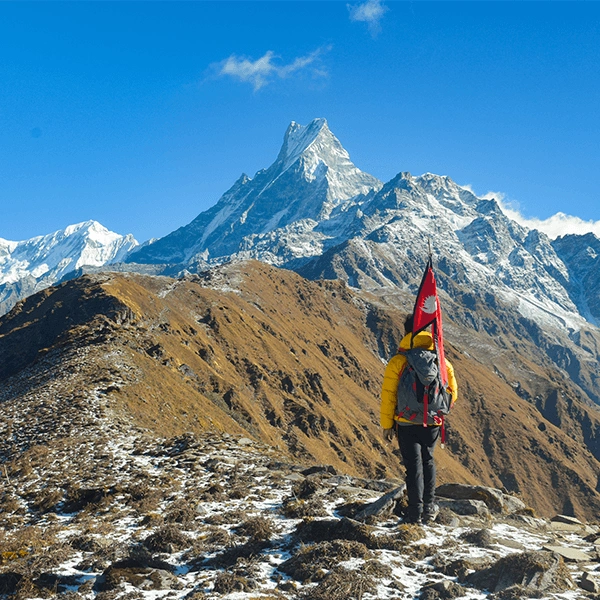
Machhapuchhre, the Fishtail peak that watches over the entire trail, has never been officially climbed. It's considered sacred to Lord Shiva, and the Nepali government has kept it off limits to summit attempts since a British expedition turned back just short of the top in 1957.
Walking underneath a mountain nobody's allowed to conquer changes how you look at it. You're not there to beat it. You're there to be small next to it for a while, and that's a feeling a lot of people come back for.
Beyond the Bucket List: Why ABC Is More Than Just a Hike?
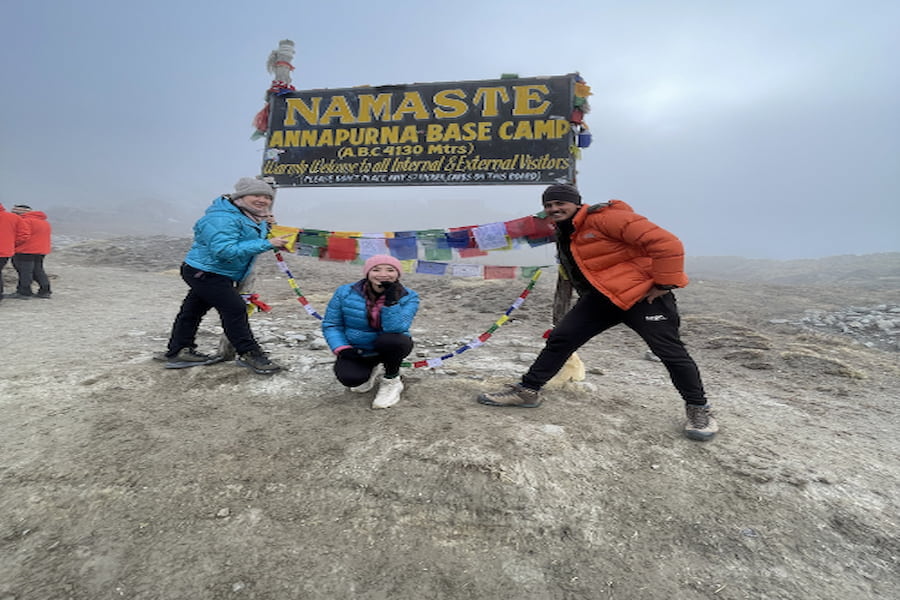
Treat this trek as a checklist item, and you'll miss most of what it offers. The real value shows up in the details you can't plan for: a Gurung grandmother teaching you to say "namaste" properly, a porter explaining which side of the trail belongs to yaks, a shared plate of dal bhat with trekkers from four different countries at 3,700 meters.
The villages along the way, Ghandruk, Chhomrong, and Sinuwa, aren't stops on a route. They're working communities where families have run teahouses for generations, and the trail itself was built and is still maintained by locals who depend on trekking income.
Spend a few days here, and you start noticing things: how quickly weather moves in these valleys, how little people need to be content, how a hot bowl of soup at altitude tastes better than anything you've eaten at sea level. That's the part of the trek people undersell when they're only talking about the summit photo.
The Silent Therapy: Why High Altitude Changes Your Perspective?
There's something about repetitive walking at altitude that quiets the noise in your head. No phone signal for stretches, no meetings, just your breath and your boots on stone steps. Trekkers consistently describe the second or third day as the point where their thinking slows down and actually gets clearer.
Part of this is physiological. Above 2,500 meters, your body works harder for the same oxygen, which forces a slower pace whether you want one or not. That slower pace is exactly what makes altitude change your headspace, but it's also a real medical factor you need to respect.
Altitude sickness is common on this route above Chhomrong, and it doesn't care how fit you are. Watch for headache, nausea, and unusual fatigue, and if symptoms show up, the only responsible move is to stop ascending or descending.
This is one area where trekking with an experienced guide matters. Holy Kailash Tours builds acclimatization days into every itinerary and trains guides to recognize early symptoms before they become dangerous.
Is the Annapurna Sanctuary Truly the Most Beautiful Place on Earth?
We won't claim it's the most beautiful place on the planet; that's a personal call every trekker makes for themselves. But the Annapurna Sanctuary is genuinely unlike anywhere else we've guided.
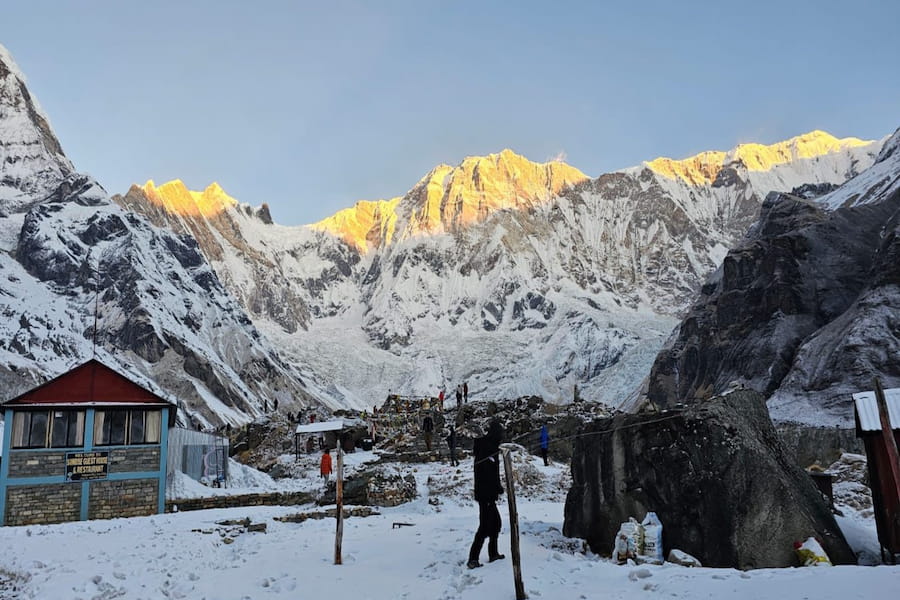
At 4,130 meters, Annapurna Base Camp stands inside a natural bowl carved by glaciers, with Annapurna I rising to 8,091 meters directly ahead, Annapurna South and Hiunchuli flanking one side, and Machhapuchhre's fishtail summit guarding the entrance.
Annapurna I holds a specific place in climbing history, too. It was the first peak above 8,000 meters ever summited by a French expedition in 1950, well before Everest fell in 1953. Standing at its base, surrounded by hanging glaciers and moraine fields, gives you a sense of scale that photographs genuinely fail to capture.
Why Are Early Mornings at Base Camp Worth Every Shivering Second?
Nobody sleeps well at base camp. Between the cold and the thin air, most trekkers are half awake before their alarm goes off anyway, which turns out to be a good thing.
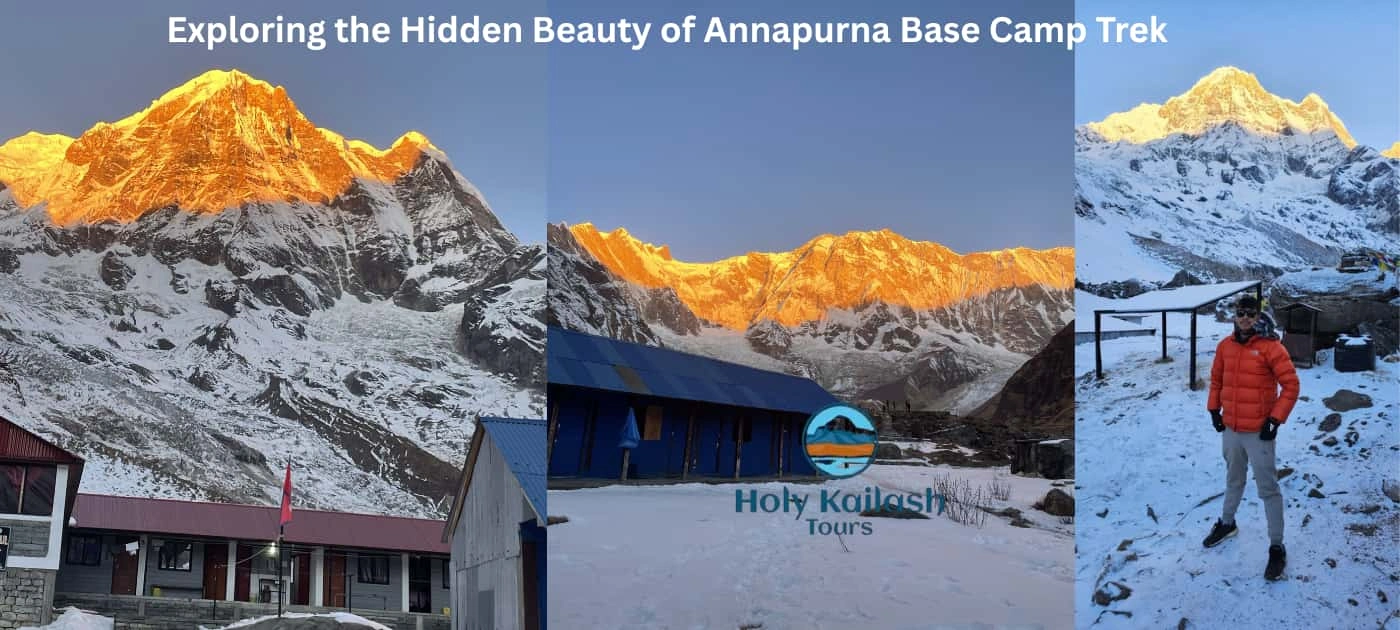
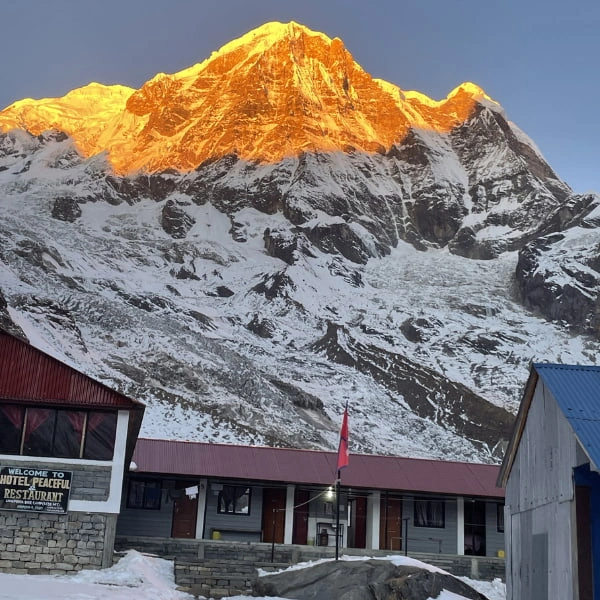
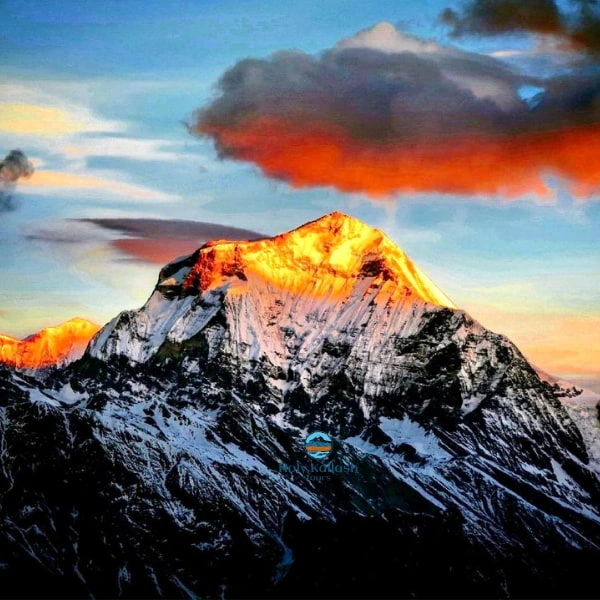
Step outside before dawn, and the sky over the sanctuary starts turning shades of purple and orange while the peaks are still holding their nighttime blue. Then the first light hits Annapurna South's summit ridge and works down the mountain like someone's slowly turning up a dimmer switch.
Your fingers will be numb, your coffee will go cold in minutes, and you won't care. This ten-minute window is the payoff for every stone step you climbed to get there, and it's the moment almost every trekker names when you ask what they remember most.
Finding Yourself in the Thin Air: The Spiritual Allure of the Himalayas
There's a specific kind of quiet at 4,000 meters that doesn't exist anywhere else. Wind moving through a glacial valley, the occasional crack of ice shifting somewhere above you, and not much else.
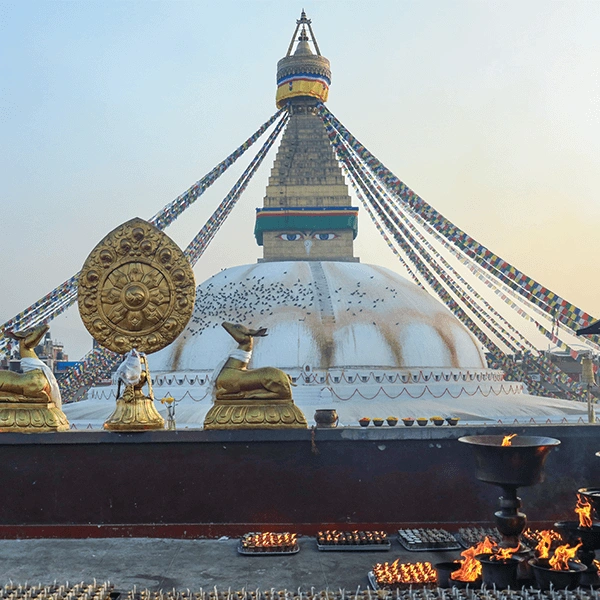
That quiet does something to people. Trekkers who came in stressed about work deadlines often describe losing track of what day it is by the fourth day on the trail. Buddhist prayer flags strung across the trail near Chhomrong and mani stones along the path aren't decoration; they're part of a living spiritual practice in these communities, and walking past them daily has a way of resetting your own sense of what matters. You don't need a religion to feel it. You just need to slow down enough to notice it.
What Actually Awaits You at 4,130 Meters?
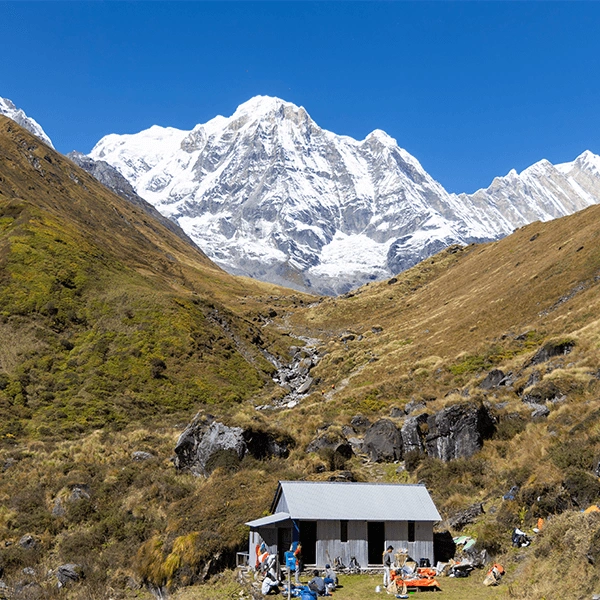
Annapurna Base Camp itself is a cluster of stone and tin-roofed lodges tucked against the glacial moraine, nothing fancy, and that's the point. You're there for the setting, not the amenities.
Here's what to actually expect on arrival:
- Temperatures that can swing from mild during midday sun to well below freezing after dark, even in peak season
- Basic teahouse rooms, usually twin beds with thick blankets, and shared bathrooms
- A 360-degree wall of peaks including Annapurna I, Annapurna South, Gangapurna, and Machhapuchhre
- Thinner air that makes even short walks between lodges feel more tiring than they should
- A strong emotional reaction that catches most first-timers off guard, somewhere between relief, disbelief, and quiet awe
Most groups spend one night at base camp before descending, giving just enough time for sunset, sunrise, and a few hours to actually absorb where you are.
Annapurna Region Nepal Trekking Packages
The following Annapurna region trekking packages available in Nepal will let you experience the most beautiful and varied Himalayan adventures you can imagine in Nepal. This region of the Annapurna is situated in the mid-northern part of the country.
The Annapurna region will make you fall in love with the mountain vistas, the villages that keep up their traditions, the unique culture, and the scenic countryside to the point of being breathtaking. The treks, from the easiest, short hikes to the most challenging at the highest altitudes, can be suitable for anyone who is going to trek, including beginners, families, and seasoned trekkers.
Holy Kailash Tours is ready with Annapurna trekking packages arranged meticulously; you will not just be accompanied by an experienced local guide but also be provided with accommodation at teahouses that are quite comfortable, with required permits, and with personal services. All the packages are developed to give a journey that is safe and unforgettable along the majestic mountain trails of Nepal.
On the Annapurna Base Camp Trek, a visit will take you to the heart of the Annapurna Sanctuary at 4,130 meters altitude. Close-up mountain views of Annapurna I and Machhapuchhre at hand and the Annapurna South with the other surrounding peaks, you will have an experience of a lifetime! The whole way there, you will go through beautiful forests, waterfalls, terraced fields, and traditional Gurung villages.
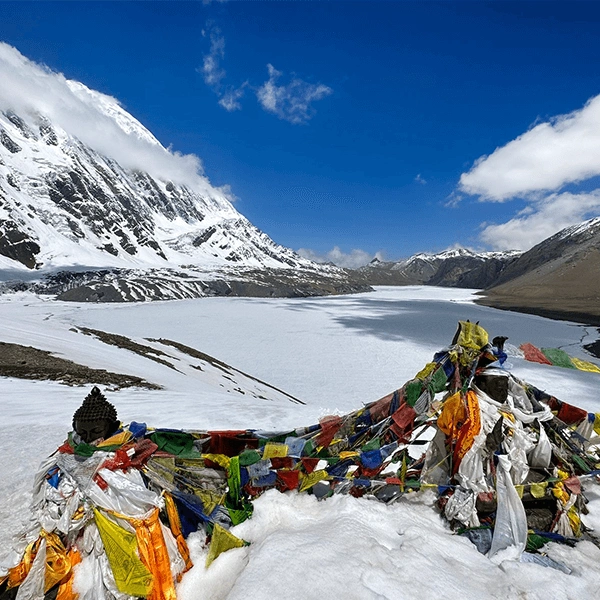
Annapurna Circuit Trek has been known to be the original Himalayan hiking experience that leads across Thorong La Pass, a world-famous mountain pass 5416 meters high. This particular trail reveals the diversity from green valleys and rivers to high-altitude desert land, Buddhist villages, and spectacular panoramic mountain vistas.
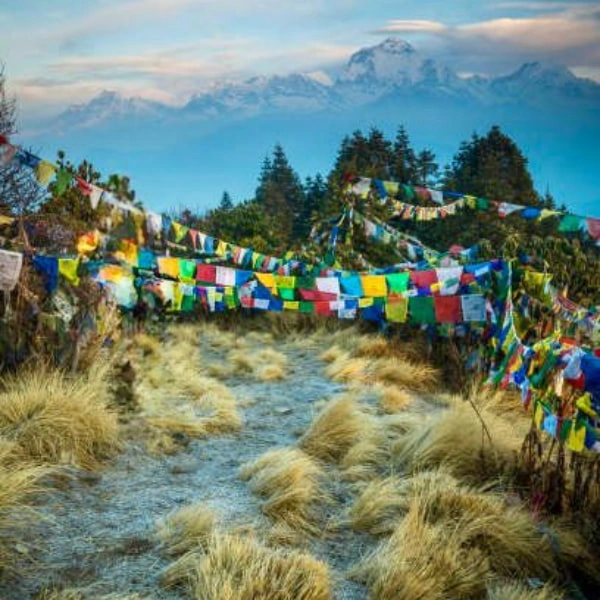
Ghorepani Poon Hill Trekis the kind of easy, short, but highly rewarding trip with a spectacular sunrise above the Annapurna and Dhaulagiri ranges. For those who are mainly interested in a comfortable way of doing the Himalayas, together with cultural exploration, this trek is perfect.
Mardi Himal Trek, on our part, is quite different. It is a tranquil journey of adventure, not very crowded, where you get splendid Machhapuchhre, Annapurna South, and Hiunchuli views at the same time. The trail goes through forest, alpine land, and quiet mountain villages only.
Another set is the package that you really love besides the ones mentioned above, namely: Annapurna Base Camp via poon Hill, Annapurna Panorama Trek, Mohare Danda Trek, Khopra Ridge Trek, Jomsom Muktinath, and Luxury Annapurna Lodge Trek. Every expedition brings together different aspects of nature, adventure, and the Himalayan culture in total.
The best time to go for an Annapurna trek is the period of spring or autumn, with the weather being most favorable at those times and the mountains being clearly visible with great visibility. By going ahead with your preparation and getting professional support, you can be assured of a safe, easy, and memorable time at Annapurna trekking with professional support from Holy Kailash Tours.
The Anatomy of a Trial: What Does the ABC Path Really Look Like?
The ABC trail changes character almost daily, which is part of what keeps it interesting. From Nayapul at around 1,070 meters, you walk through terraced farmland and past waterwheel mills before climbing stone staircases through Tikhedhunga and Ulleri, gaining serious elevation fast.
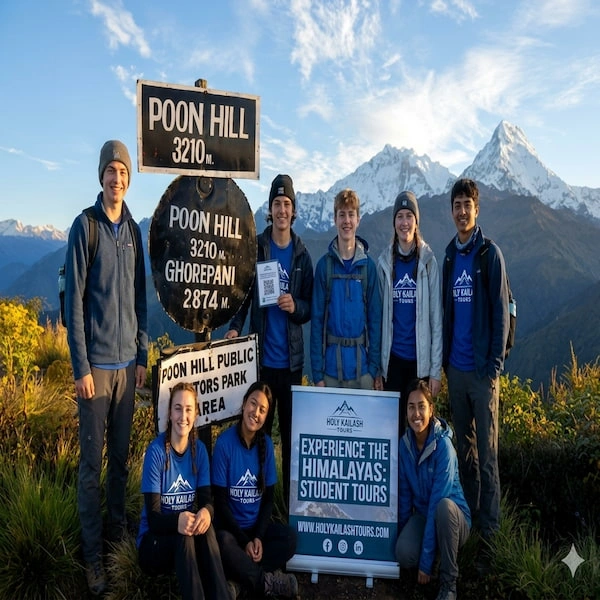
Above Ulleri, the trail enters cool, mossy rhododendron and oak forest heading toward Ghorepani at 2,860 meters, home to the famous Poon Hill viewpoint at 3,210 meters. From there, the route drops into the Modi Khola valley through Tadapani and into Chhomrong at 2,170 meters, the last big village before the sanctuary.
Past Chhomrong, the trail narrows into steep stone steps, bamboo forest, and river crossings on suspension bridges through Sinuwa, Bamboo, Dovan, and Himalaya. The final stretch from Deurali to Machhapuchhre Base Camp and then Annapurna Base Camp crosses open, rocky terrain prone to avalanche in certain seasons, which is why guides watch timing closely on this section. Total elevation gain from Nayapul to ABC runs over 3,000 meters, spread across several days rather than one brutal push.
What Should You Know Before You Lace Up Your Boots?
Preparation makes or breaks a first Himalayan trek, and most of it isn't complicated; it just gets skipped by people in a rush.
Before you fly to Nepal, sort out:
- A trekking permit setup that includes both the Annapurna Conservation Area Permit (ACAP) and a TIMS card, arranged in Kathmandu or Pokhara before you reach the trailhead
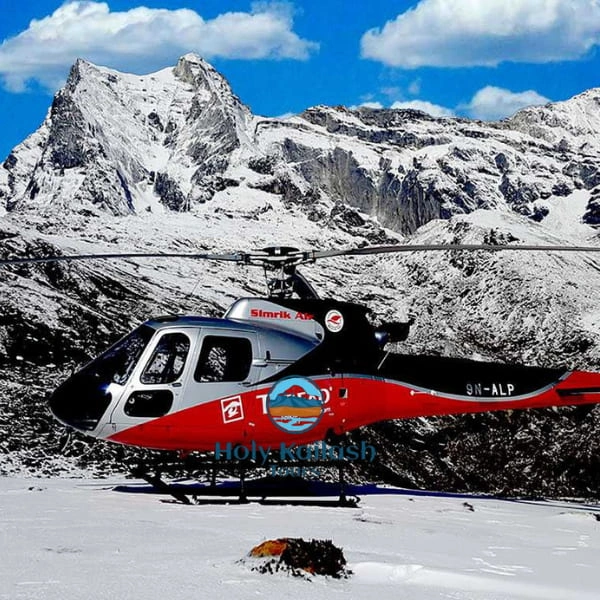
- Travel insurance that specifically covers trekking at altitude and includes helicopter evacuation, not just standard medical coverage
- Broken in hiking boots, ideally with at least 50 kilometers of wear before the trip, blisters ruin more treks than altitude does
- Layered clothing for temperature swings that can hit 25 degrees Celsius in one day
- A licensed guide, which has been a legal requirement for independent foreign trekkers in most of Nepal's conservation areas since 2023
Holy Kailash Tours handles the permit paperwork, guide licensing, and insurance guidance as part of every ABC package, so first-time trekkers aren't figuring out Nepali bureaucracy from another continent.
The Hidden Teahouses: What Makes Himalayan Hospitality Unique?
Teahouses are the backbone of the ABC trek, and they're run by families, not corporations. Rooms are simple, usually a bed, a blanket, and four walls, but the food and the welcome make up for it.
Dal bhat, a set meal of lentil soup, rice, vegetable curry, and pickle, is the staple for good reason. It's filling, it's usually unlimited on refills, and it gives you the calories you'll burn climbing thousands of steps a day.
Garlic soup is a local favorite believed to help with altitude, and whether that's folk wisdom or real physiology, it tastes good after a long day. What stands out most is the hospitality itself.
Lodge owners remember returning trekkers by name, offer extra blankets without being asked when the temperature drops, and treat questions about the weather or the trail ahead as they matter, because up here, they do.
What Is the ACAP Permit, and Why Does Your Trek Depend on It?
The Annapurna Conservation Area Permit, or ACAP, is the entry ticket to the entire region, and you cannot walk the trail legally without one. It's managed by the National Trust for Nature Conservation and covers a protected zone of over 7,600 square kilometers.
Here's what you need to know:
- ACAP costs NPR 3,000 (roughly USD 25) for foreign nationals, and NPR 1,000 for SAARC country citizens
- A TIMS card is also required, costing around NPR 2,000 for solo trekkers or NPR 1,000 per person in a guided group
- Both permits must be obtained in Kathmandu or Pokhara before you start walking; there's no permit office on the trail itself
- Checkpoints at Birethanti and Chhomrong verify your permits, and trekking without one risks fines or being turned back
- Permit fees fund trail maintenance, conservation work, and community projects across the region, so you're paying into the thing you came to see
Holy Kailash Tours arranges both permits as part of every booking, which removes one more thing first-time trekkers have to sort out on unfamiliar ground.
Beyond the Peak: What Else Will You See Along the Modi Khola?
The Modi Khola river runs alongside much of the trail, and it's worth paying attention to, not just walking past. It originates from the glaciers near the sanctuary and carves the valley the entire route follows.
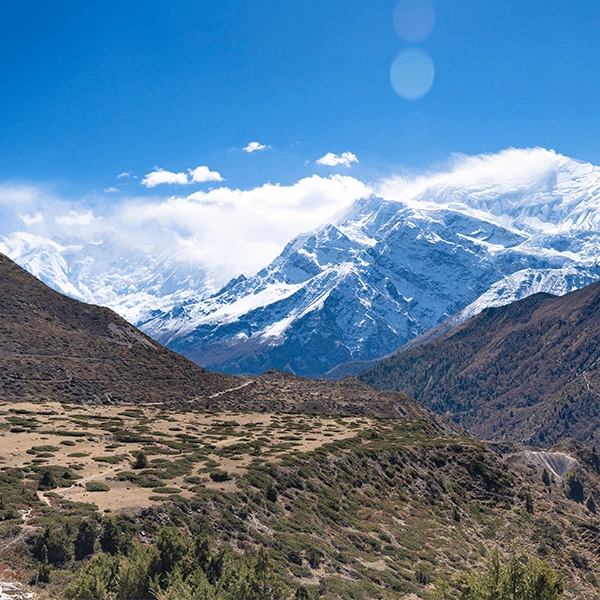
Along its banks, you'll pass waterfalls tumbling off cliff faces near Jhinu Danda, where a natural hot spring gives tired legs a genuine reason to detour for an hour. Forest sections shift from subtropical near the valley floor to rhododendron and oak higher up, then to alpine scrub as you approach base camp.
Keep an eye out for langur monkeys in the lower forest and, if you're lucky, the colorful danphe, Nepal's national bird, in the higher meadows. The villages themselves, particularly Ghandruk with its stone paths and traditional Gurung architecture, are worth a slower look rather than a quick photo stop.
What Does a Typical Day on the Trail Actually Feel Like?
Trekking days follow a rhythm that becomes familiar fast. Mornings start early, usually with tea brought to your room before sunrise, followed by a hot breakfast of eggs, porridge, or Tibetan bread.
Walking typically runs 5 to 7 hours, broken into a morning session, a lunch stop in a village or lodge, and an afternoon push to the next overnight stop. You'll pass other trekking groups, porters carrying loads that look impossible, and mule trains hauling supplies up to the higher lodges.
Afternoons arrive at the next teahouse with enough daylight left to wash up, journal, or just sit with a hot drink and watch the light change on the peaks. Evenings mean dinner shared at a communal table, conversations with trekkers from other countries, and an early night, because at altitude, sleep matters more than it does at home.
Is Your Fitness Level Enough to Conquer the Ascent?
You don't need to be an athlete for the Annapurna Base Camp Trek, but you do need a real base level of fitness. This is a moderate trek, not an easy one, and the daily elevation gain adds up.
To prepare properly:
- Start hiking training at least two months out, ideally with a loaded daypack on hilly terrain
- Build up to comfortably walking 5 to 6 hours at a stretch, since that's the daily average on the trail
- Add stair climbing or step machine work, since a huge portion of this route is stone steps, both up and down
- Don't ignore leg strength for descents, going down for hours is harder on your knees than the climb is on your lungs
- If you're a genuine beginner, start with shorter local hikes carrying trekking poles before you commit to Nepal
Fitness matters more than experience here. We've guided complete trekking beginners who trained properly and did fine, and fit athletes who skipped preparation and struggled on day three.
Are You Prepared for the Reality of Mountain Weather?
Himalayan weather doesn't follow a script, and treating it casually is one of the fastest ways to have a miserable trek. Conditions can shift from clear sun to cold cloud cover within an hour, especially above 3,000 meters.
Spring, running March through May, brings rhododendron blooms and generally stable weather, making it one of the two best windows for this trek. Autumn, September through November, offers the clearest mountain views of the year and tends to be the busiest season on the trail.
Monsoon months, June through August, bring leeches, slippery stone steps, and clouds that block mountain views for days at a time. Winter, December through February, is cold with snow possible above Deurali, but it also means quieter trails and sharp, clear morning views.
Whatever season you pick, pack real layers, a proper down jacket for the higher sections, and waterproof gear regardless of the forecast, because forecasts up here are more of a suggestion than a promise.
Private Trek vs. Group Tour: Which Fits Your Travel Style?
Neither option is objectively better; it depends on what you actually want out of the trip. Group treks run on a fixed schedule with other trekkers, usually at a lower per-person cost, and come with a built-in social element that solo travelers often enjoy.
Private treks cost more but give you control over pace, rest days, and itinerary changes if weather or altitude symptoms require a slower approach. Couples, families, and trekkers with specific fitness concerns tend to prefer private arrangements for that flexibility.
Holy Kailash Tours runs both formats, and honestly, the right call comes down to whether you want to trek on your own timeline or you're looking forward to the shared meals and stories that come with a group.
Can You Really Trust Your Camera to Capture This Magnitude?
Short answer: not entirely. The scale of an 8,000-meter peak rising directly above you doesn't translate cleanly into a rectangle on a phone screen, no matter how good the camera is.
That said, the photo opportunities here are genuinely excellent. Sunrise and sunset at base camp paint the surrounding peaks in shifting gold and pink light that photographs beautifully even if it still undersells the real thing.
Poon Hill at dawn is one of the most photographed viewpoints in Nepal for good reason, with an unbroken panorama of the Annapurna and Dhaulagiri ranges. Bring extra batteries, since cold drains them fast, and don't spend the whole sunrise looking through a viewfinder.
Half the trekkers we've guided admit their best memory of the trip isn't a photo at all; it's a moment they were too busy living to shoot.
Are the Hidden Gems of the Annapurna Region Worth the Extra Miles?
If you have a few extra days, several detours reward the effort without adding serious difficulty to the main route.
Jhinu Danda's natural hot spring, a short walk off the main trail near Chhomrong, is worth the detour after days of cold teahouse showers. Khopra Ridge, reached via a side trail from Ghorepani, offers a quieter alternative viewpoint with views rivaling Ghorepani Poon Hill but with a fraction of the crowd.
Mardi Himal, a separate trek entirely but sometimes combined with ABC by experienced trekkers with extra time, delivers close-up views of Machhapuchhre from a completely different angle. None of these are necessary to enjoy the main trek, but for trekkers who want to see less-traveled corners of the region, they're worth building into your itinerary if your schedule allows it.
What Are the Most Common Mistakes Trekkers Make (And How to Avoid Them)?
We see the same mistakes every season, and nearly all of them are avoidable with a bit of planning.
- Rushing the itinerary to save a day or two, which skips acclimatization and raises the risk of altitude sickness
- Ignoring early symptoms like headache or nausea instead of resting or descending
- Bringing brand new boots straight out of the box, which almost guarantees blisters by day two
- Underpacking warm layers because the lower valley felt warm on arrival day
- Skipping travel insurance with helicopter evacuation coverage, then facing a five-figure bill if something goes wrong
- Trekking without a licensed guide, which is both a legal requirement now and a real safety gap on remote sections
Every one of these is fixable before you leave home, and it's exactly the kind of oversight a good guide catches before it becomes a real problem on the trail.
Is the Journey Truly Better Than the Destination?
Base camp is the goal on paper, but ask anyone who's actually done this trek what they remember, and the summit photo is rarely the whole answer. It's the garlic soup shared with strangers in Bamboo. It's the porter who taught you a word of Nepali on a stone staircase. It's the sunrise that made your fingers go numb, and you didn't care.
Annapurna Base Camp Trek rewards people who show up prepared and stay open to what happens along the way, not just what's waiting at 4,130 meters. Whether you trek with us at Holy Kailash Tours or another outfit entirely, take the acclimatization days seriously, train before you fly, and let the trail teach you something you didn't expect to learn. That's the part that stays with you long after the mountain views fade from memory.
Email: [email protected]
Author: Ram Sharan Adhikari
WhatsApp: +977-9851254672 — Feel free to reach out anytime for fast, friendly, and personalized assistance.