Why Is the Kailash Mansarovar Yatra Considered a Journey Beyond Ordinary Travel?
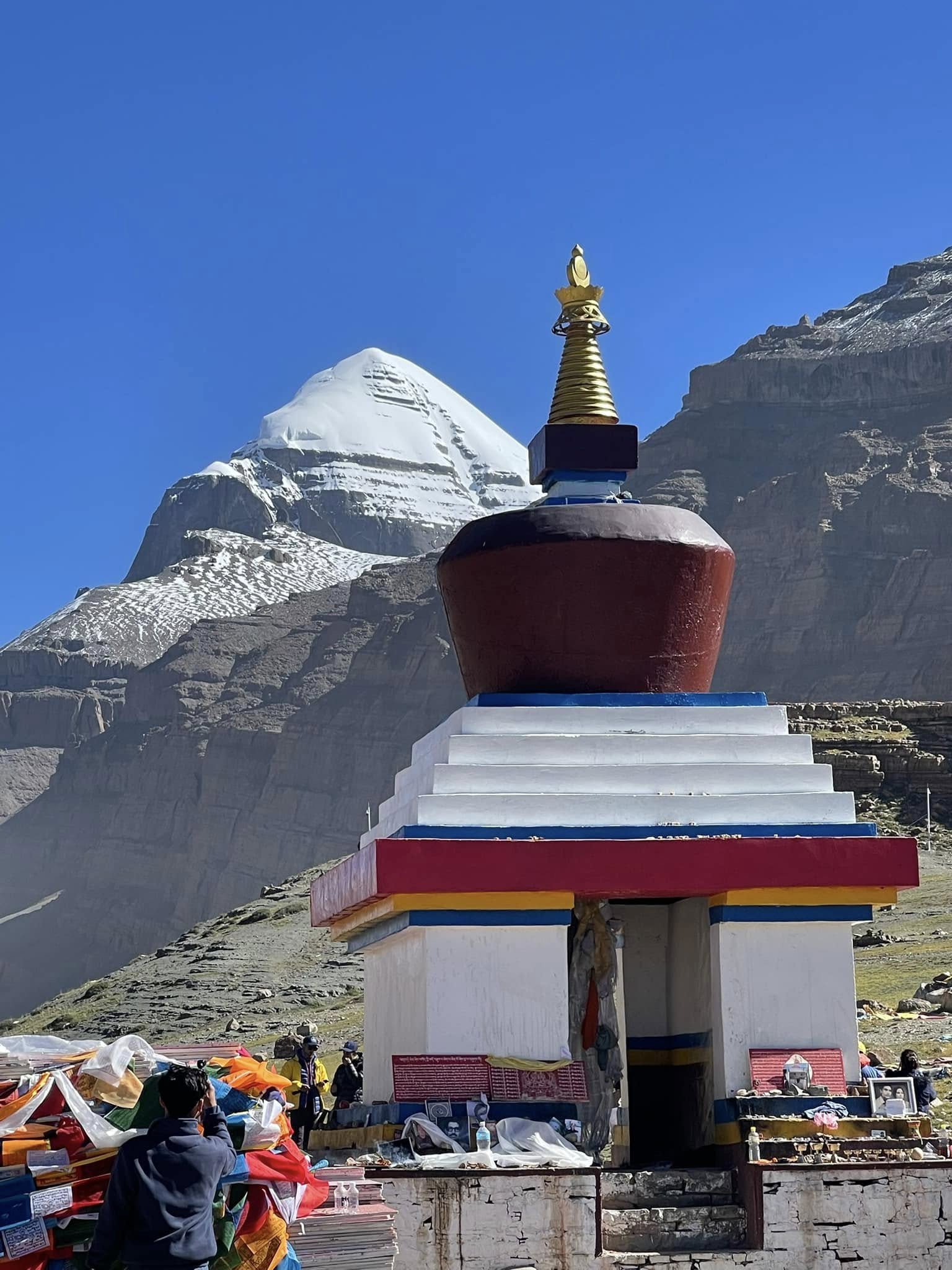
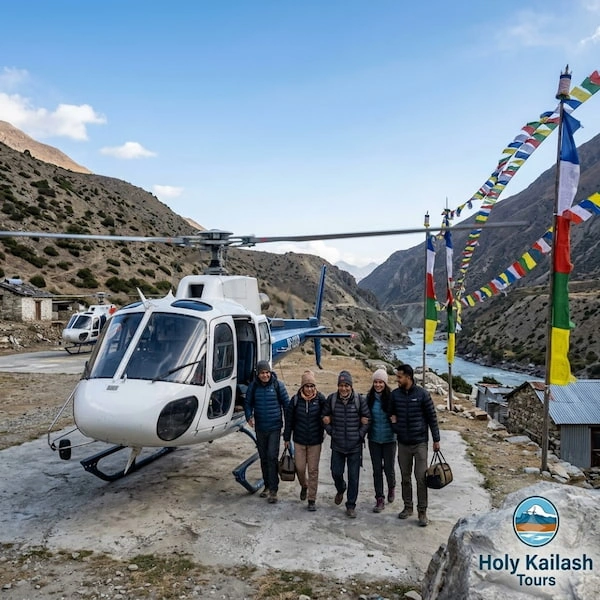
Most trips end with a photo and a souvenir. This one ends with a different person walking back down the mountain than the one who walked up. The Kailash Mansarovar Yatra takes you through the Ngari Prefecture of the Tibet Autonomous Region, at altitudes above 4,500 meters for days at a time, with no hospitals, no easy exits, and thin oxygen that makes every step cost more than it should.
You need a special travel permit, a registered operator, and enough physical prep to handle terrain that doesn't care how much you paid for the trip. What sets it apart from a normal holiday is the intent behind it. People don't come here to relax. They come to test themselves against something older and bigger than their daily life, and that's a completely different kind of travel.
What Makes Mount Kailash One of the Most Sacred Places on Earth?
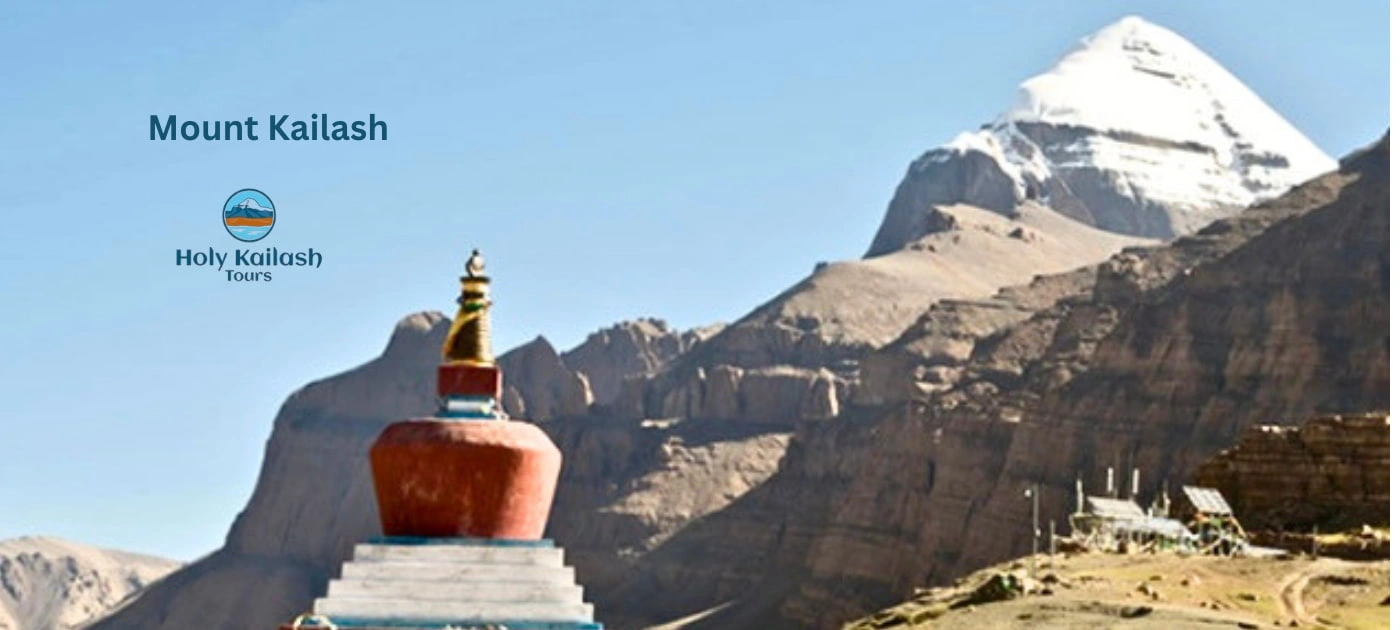
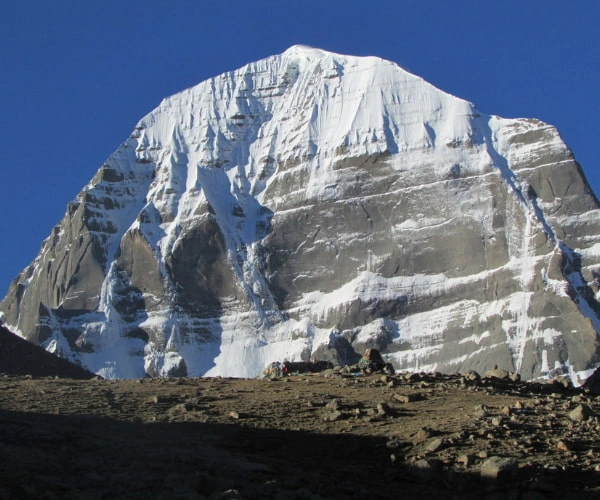
Mount Kailash is holy to Hinduism, Buddhism, Jainism, and Bon, which is rare for any single site on the planet. Hindus believe it's the home of Lord Shiva, who sits here in meditation with his wife Parvati.
Tibetan Buddhists call it Kang Rinpoche and see it as the seat of Demchok, a deity tied to supreme bliss. Jains know it as Ashtapada, the place where Rishabhanatha, their first Tirthankara, reached liberation.
Bon followers, practitioners of Tibet's native faith that predates Buddhism in the region, call it Tise and treat it as their most sacred peak. Four belief systems, one mountain, and none of them claim exclusive ownership of it. That alone tells you something about the pull this place has held for centuries.
How Does the Kailash Mansarovar Yatra Awaken Inner Peace and Self-Discovery?
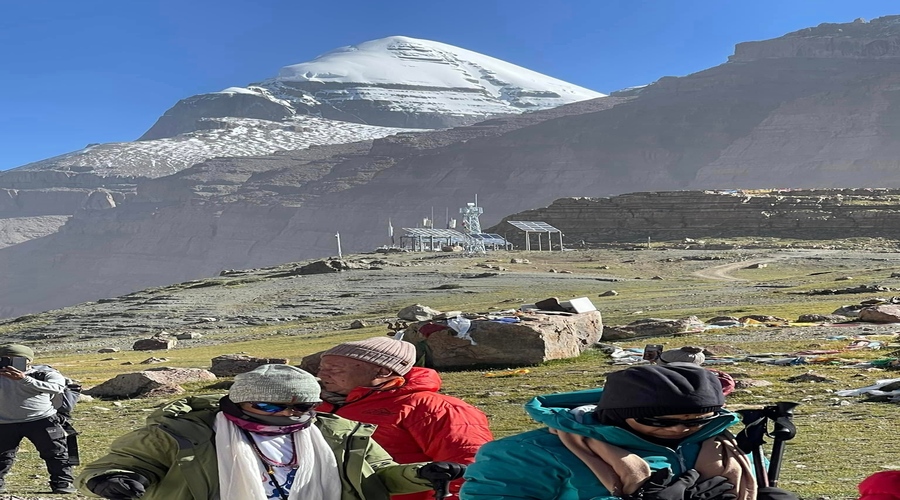
Take away wifi, comfortable beds, and the usual noise of daily life, and people start noticing things about themselves they'd been too busy to see. That's what happens on this yatra. You're walking for hours at a stretch, your body working hard just to breathe, and there's nothing to distract you from your own thoughts.
Pilgrims often tell us the shift doesn't happen at some dramatic moment on the trail. It happens quietly, somewhere between one step and the next, when the mind finally runs out of noise to hide behind. Stripped of routine and comfort, people tend to face whatever they've been avoiding, and that confrontation is usually where the real self-discovery starts.
Why Do Millions of Devotees Dream of Visiting Mount Kailash and Lake Mansarovar?
For a lot of Hindus, this yatra is the pilgrimage, the one that sits above all others on a lifetime wish list. The same goes for Buddhists, Jains, and Bon practitioners, each with their own reasons rooted in centuries of scripture and oral tradition.
But the dream stays a dream for most people. Access is tightly controlled, permits are limited, the route only opens for a few months a year, and the Indian government runs its own selective batch system for citizens making the crossing.
That scarcity adds weight to the pilgrimage. When something is this hard to reach and this meaningful once you get there, it stops being a bucket list item and becomes something closer to a life goal.
What Spiritual Energy Do Pilgrims Experience During the Kailash Parikrama?
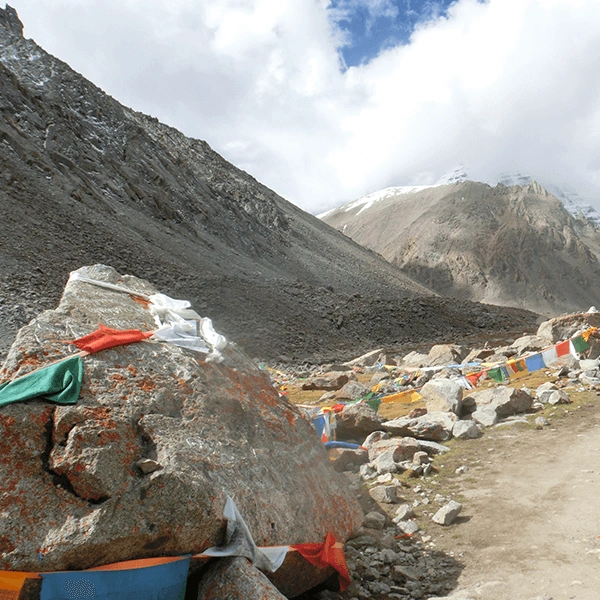
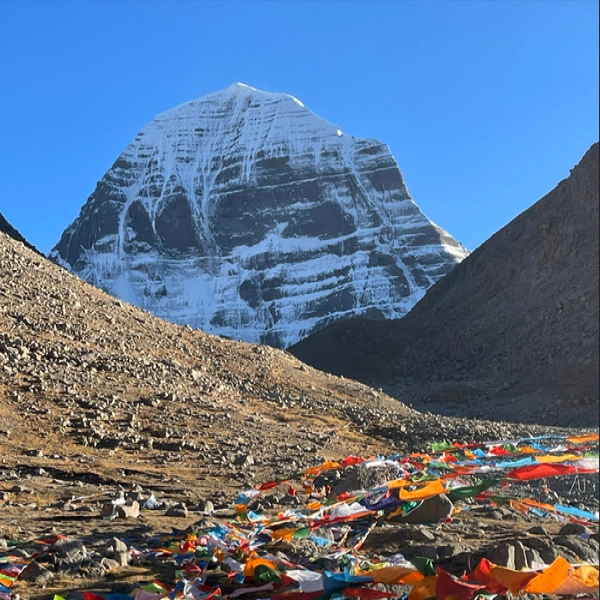
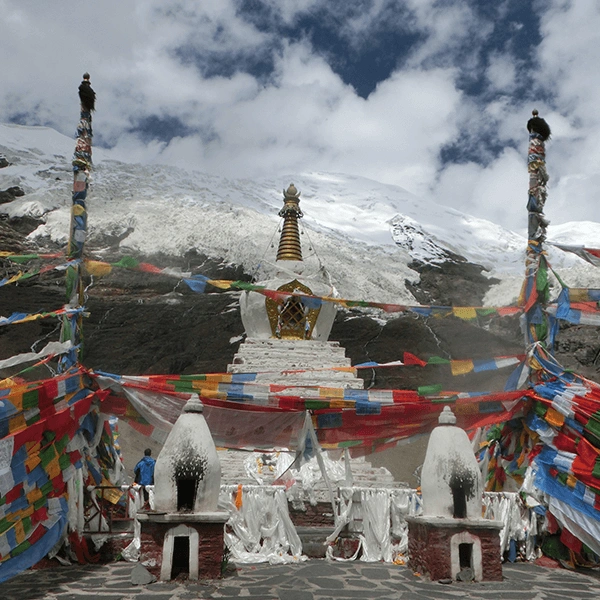
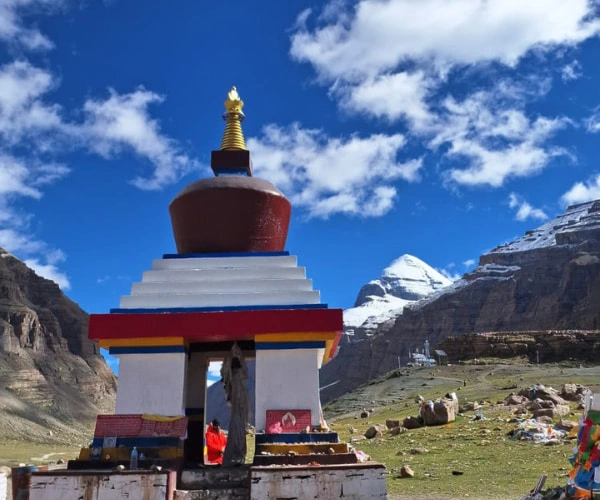
The Parikrama, or kora, is the 52-kilometer walk around the base of Mount Kailash, usually done over three days. Ask anyone who's completed it, and they'll describe something hard to put into words: a shift in mood as they near the mountain, a kind of hush that falls over the group even when nobody asks for silence. Prayer flags snap in the wind at every ridge.
Pilgrims murmur mantras under their breath without seeming to notice they're doing it. Whether you read this as literal spiritual energy or as the natural effect of altitude, fatigue, and shared devotion, the atmosphere on that trail is unlike anywhere else we've guided travelers through. People arrive as strangers and finish the walk bonded by something they went through together.
How Does the Sacred Landscape of Kailash Mansarovar Transform the Human Mind?
The scale of this place does something to your sense of time. You're standing on a plateau where the horizon stretches for what feels like forever, the air is so clear that distant peaks look close enough to touch, and the silence is thick enough to hear your own pulse. Modern life trains the mind to fill every gap with something, a screen, a conversation, a task. Here, there's nothing to fill the gap with except the landscape itself.
Most people notice a kind of mental slowing down, where thoughts stop racing and start settling. It's not mystical in a supernatural sense so much as physiological and psychological. Remove the usual stimulation, and the brain finds a different, quieter register to operate in.
Why Is Lake Mansarovar Believed to Be a Source of Purification and Blessings?
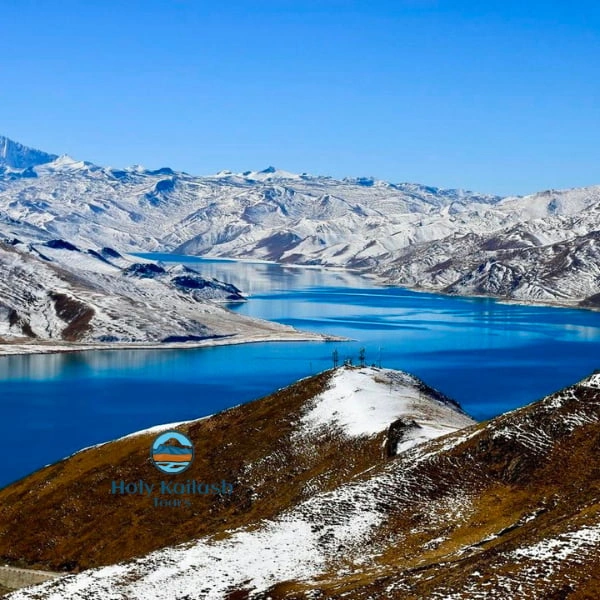
Lake Mansarovar stands about 30 kilometers from Mount Kailash at 4,590 meters, making it one of the highest freshwater lakes in the world. In Hindu tradition, Lord Brahma created the lake through pure thought, and bathing in its waters is said to wash away the accumulated weight of past sins.
Buddhists connect it to a clear, awakened mind, free of the confusion that clouds ordinary thinking. Chinese authorities have banned swimming in the lake in recent years to protect its fragile ecosystem, but pilgrims still collect water in bottles to carry home and use in prayer.
Nearby stands Rakshastal, a saltwater lake known as the Lake of the Demon, and pilgrims have long read the contrast between the two, one pure and blessed, one dark and unsettled, as a picture of good and evil sitting side by side.
What Ancient Stories Reveal the Divine Importance of Mount Kailash?
The oldest and best-known story is the Hindu belief that Shiva and Parvati live on Kailash, with Shiva practicing austerities here in a state of deep meditation. Tibetan Buddhism carries its own legend about the sage Milarepa, who is said to have won a magical contest for the mountain against a Bon practitioner named Naro Bonchung by reaching the summit riding a beam of sunlight.
Milarepa then gave the neighboring peak to the Bon tradition, which is why it's still called Bonri today. Jain tradition holds that Rishabhanatha, the first of the twenty-four Tirthankaras, achieved liberation at Ashtapada near this same mountain. These stories come from entirely different religious traditions, built centuries apart, yet they all point to the same patch of earth as the site of something divine.
How Can the Challenges of the Kailash Yatra Lead to Spiritual Growth?
Nobody finishes this yatra without being tested. Altitude sickness is a real risk above 5,000 meters; the terrain is steep and unpredictable, and the weather can turn from clear sun to biting wind within an hour.
That difficulty is the point, not an inconvenience around it. Every religion tied to this mountain treats hardship as part of the path, not an obstacle to it. Pushing your body past what feels comfortable, and doing it anyway because faith or purpose is pulling you forward, tends to strip away a lot of the excuses people use to avoid growth in ordinary life.
Holy Kailash Tours, we build in proper acclimatization stops for exactly this reason, because the spiritual reward only lands if your body can actually carry you through the physical demand.
Why Does Walking Around Mount Kailash Hold Deep Religious Meaning?
Circling a sacred object, rather than climbing or entering it, is a practice shared across Hinduism, Buddhism, Jainism, and Bon, and Kailash is where that practice reaches its fullest expression. Hindus and Jains call it parikrama, Buddhists call it kora, and most walk clockwise, keeping the mountain on their right shoulder the entire way. Bon practitioners walk in the opposite direction, counterclockwise, in line with their own tradition.
Completing the full loop is believed to cleanse sins, and some traditions hold that enough completed circuits can lead toward moksha, or liberation from the cycle of rebirth. A few devotees take this further and do the entire circuit through full body prostration, measuring the ground with their bodies, a practice that can stretch the three-day walk into two or three weeks.
What Inner Changes Can a Person Experience After Completing the Kailash Mansarovar Yatra?
The most common thing we hear from returning pilgrims isn't about the mountain itself. It's about how ordinary life looks different once they're back in it. People describe a new patience with things that used to irritate them, a lighter grip on possessions and status, and a clearer sense of what actually matters to them day to day. Some come back and make real changes in their careers, in relationships, in how they spend their time.
Others just carry a quieter kind of confidence, the sense that they faced something hard and came through it. The mountain doesn't hand out a script for what happens next. It just puts you through something intense enough that going back to autopilot afterward becomes harder to do.
How Does the Silence of the Himalayas Support Meditation and Reflection?
There's a specific kind of quiet at high altitude that's hard to find anywhere else. No traffic, no construction, no background hum of machines. Just wind, footsteps, and occasionally a prayer flag snapping against its pole.
That silence isn't empty. It's full in a way that makes meditation easier, almost automatic, because nothing is competing for your attention. Buddhist and Hindu traditions have long used the Himalayas for exactly this reason, sending monks and sadhus into these mountains for retreat and reflection.
On the Kailash trek, you get a taste of that same isolation without needing years of monastic training. Sometimes all it takes is a few hours of walking in silence to hear your own thoughts clearly for the first time in a long while.
Why Do Different Religions Share Deep Respect for Mount Kailash?
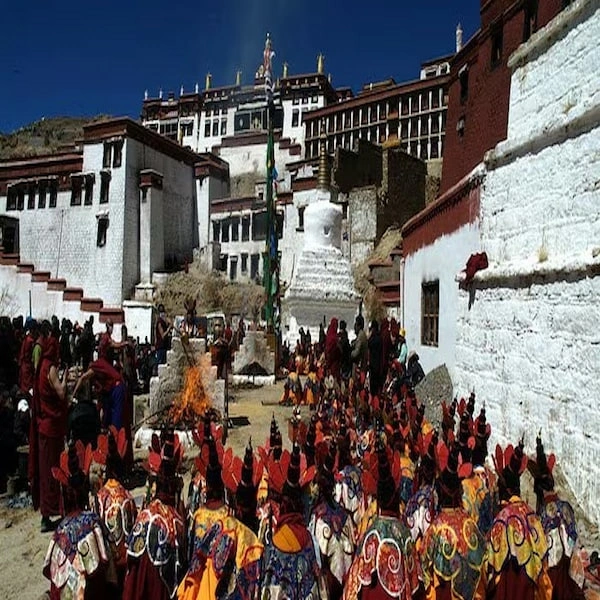
What's striking about Kailash isn't just that four religions consider it sacred. It's that none of them fight over it. Hindus, Buddhists, Jains, and Bon followers walk the same trail, often on the same day, each praying in their own language and tradition, and nobody treats it as a contest.
The mountain seems to sit above the usual lines that divide religious communities elsewhere. Maybe it's the remoteness, maybe it's the shared difficulty of getting there, or maybe some places just earn universal respect regardless of doctrine.
Whatever the reason, Kailash is one of the few spots on earth where deeply different faiths agree on something completely, and that shared reverence is part of what makes the pilgrimage feel bigger than any single religion.
What Role Does Faith Play in Completing the Sacred Kailash Pilgrimage?
Faith is what gets people up Dolma La Pass at 5,630 meters when their legs are shaking and their lungs are burning. We've guided elderly pilgrims in their seventies who managed the full circuit on sheer determination, moving slower than the rest of the group but never turning back.
We've also seen younger, fitter travelers struggle more than they expected, because physical fitness alone doesn't carry you through altitude sickness or three days of relentless walking. What separates the two isn't strength. It's the belief that the effort has a purpose beyond the physical discomfort of the moment. That belief is what keeps people moving when their body is telling them to stop, and it's the one ingredient no amount of training or gear can substitute for.
How Does the Kailash Mansarovar Yatra Help People Disconnect From Material Life?
There's no room for excess baggage here, literally or otherwise. Accommodation along the route is basic. Guesthouses and tents, simple meals, no phone signal for most of the journey. That forced simplicity does something useful.
Without the usual comforts and distractions, people start to notice how much of their daily stress comes from things that don't actually matter: the notifications, the clutter, the constant low-grade urge to check something.
More than one traveler has told us the yatra feels like an involuntary detox from material life, not because they set out looking for one, but because the landscape and the schedule leave no other option. When your day's biggest decision is whether you can make it to the next monastery before dark, everything else falls away pretty fast.
Why Is the Journey to Dolma La Pass Considered a Symbol of Transformation?
Dolma La Pass, at roughly 5,630 meters, is the highest and hardest point of the entire kora, crossed on day two of the trek between Dirapuk and Zutulpuk monasteries. It's named after the goddess Dolma, known as Tara in Buddhism and linked to Parvati in Hindu tradition.
Pilgrims traditionally leave something behind here, a lock of hair, a piece of clothing, sometimes a drop of blood, as a symbolic way of letting go of a past version of themselves before crossing over. Just below the pass sits Gauri Kund, a small lake tied to Parvati, where the descent begins after the crossing.
The whole sequence, climb, offering, descent, is treated less like a physical waypoint and more like a death and rebirth built directly into the landscape.
What Spiritual Lessons Can Travelers Learn From the Kailash Kora?
The kora teaches patience in a way that's hard to fake. You can't rush a 52-kilometer walk at 5,000 meters, and trying to only makes the altitude hit harder. It teaches humility too, because the mountain doesn't care about your job title, your usual routine, or how in control you normally feel.
And it teaches something about impermanence, watching prayer flags fray in the wind, watching your own energy rise and fall across three demanding days, watching other pilgrims move at their own pace without judgment.
None of these lessons comes through a lecture. They come through the walking itself, the kind of learning that sinks in because your body is tired and your guard is down, which is usually when people actually absorb something instead of just hearing about it.
How Does the Natural Beauty of Tibet Enhance the Spiritual Experience?
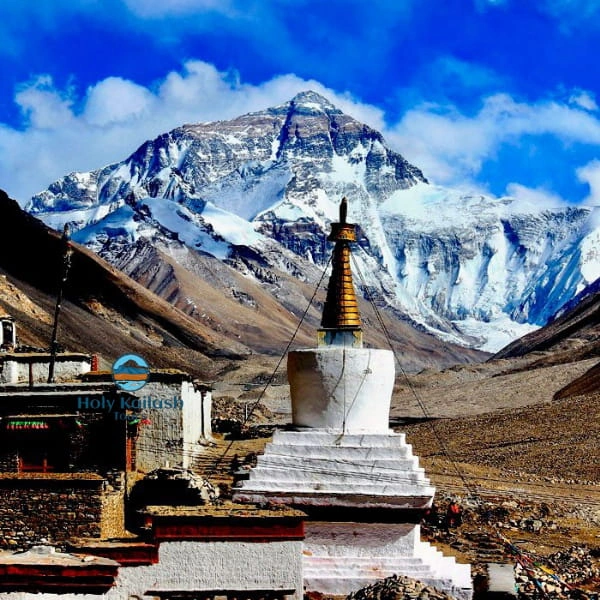
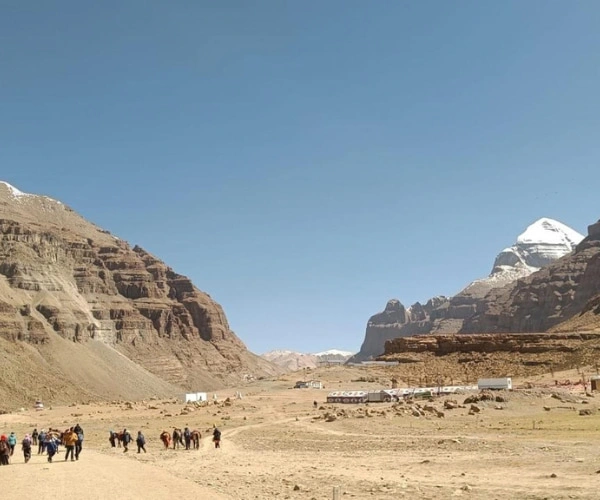
The Tibetan Plateau isn't gentle scenery. It's stark, wide open, and honestly a little intimidating, which is exactly what makes it work here. Snow-capped ridges, turquoise lakes, and endless stretches of high desert surround the route, with small monasteries like Choku, Dirapuk, and Zutulpuk marking the way and giving pilgrims somewhere to rest and pray.
The lack of trees, buildings, or any real sign of modern development means your eye keeps landing on the mountain itself, which is probably intentional given how many centuries pilgrims have been walking this same path. Beauty this raw doesn't distract from the spiritual side of the trip. It reinforces it, reminding you at every turn that you're somewhere far removed from ordinary life.
Why Do Pilgrims Describe Kailash Mansarovar as a Life-Changing Experience?
We hear this phrase constantly from travelers who've done the yatra with Holy Kailash Tours, and it's rarely said casually. People use it after they've had time to process what they went through, usually weeks or months after getting home.
It's not one single moment that earns that label. It's the accumulation, the physical struggle, the shared silence with fellow pilgrims, the sacred stories suddenly feeling real instead of abstract, and the sheer relief and pride of finishing something that genuinely tested them.
Life-changing is a big claim, and we don't throw it around lightly, but when travelers come back describing shifts in how they see their priorities, their relationships, or their own resilience, it's hard to call it anything less.
How Does the Kailash Mansarovar Yatra Bring Harmony Between Body, Mind, and Soul?
This pilgrimage works on all three levels at once, which is part of why it hits so hard. The body gets pushed through altitude, distance, and physical fatigue that force real discipline.
The mind gets stripped of its usual noise and distractions, leaving room for actual reflection instead of constant reaction. And the soul, whatever your framework for that word, gets engaged through ritual, prayer, and centuries of belief embedded in every step of the route. Most modern wellness trends try to address one of these at a time, a fitness retreat here, a meditation course there.
The Kailash Yatra doesn't separate them. It asks all three of you, body, mind, and soul, to show up together, and that's a rare and demanding kind of harmony to find in one single journey.
Why Should Every Spiritual Seeker Experience the Sacred Journey to Kailash Mansarovar?
If you're looking for a pilgrimage that asks something real of you and gives something real back, this is it. Mount Kailash and Lake Mansarovar have drawn seekers from four major religions for centuries, not because the journey is easy, but because it isn't.
The altitude, the silence, the ritual, the shared struggle with strangers who become companions, all of it adds up to an experience that's genuinely hard to replicate anywhere else on earth.
Holy Kailash Tours, we've built our Kailash Mansarovar Yatra packages around getting travelers there safely, with proper acclimatization and permits handled, so the only thing you need to bring is the willingness to be changed by it. For anyone serious about a spiritual journey rather than just another trip, Kailash deserves a place at the very top of the list.
Final Thought
The Kailash Mansarovar Yatra is an intensely spiritual pilgrimage that combines reverence for gods, adherence to ancient customs, and the overwhelming natural grandeur of the Himalayas.
As you circumambulate Mount Kailash, each step becomes an introspective moment where the beauty of nature and the spiritual significance of the place combine to bring about mental tranquility and personal transformation.
Holy Kailash Tours, having arranged many Himalayan pilgrimages, knows perfectly well the significance of ensuring the safety of the traveler, conducting respectful travel, and getting authentic cultural experiences as a traveler.
Under the lead of experts, with the backing of thorough and careful planning, and the implementation of responsible tourism, the whole journey to this holy place becomes much more than just an act of visiting a sacred site. Faith, adventure, and everlasting memories- it is a life-changing event.
Email: [email protected]
Author: Ram Sharan Adhikari
WhatsApp: +977-9851254672 — Feel free to reach out anytime for fast, friendly, and personalized assistance.