Why Day 2 Is the Most Challenging Part of the Kailash Kora Trek
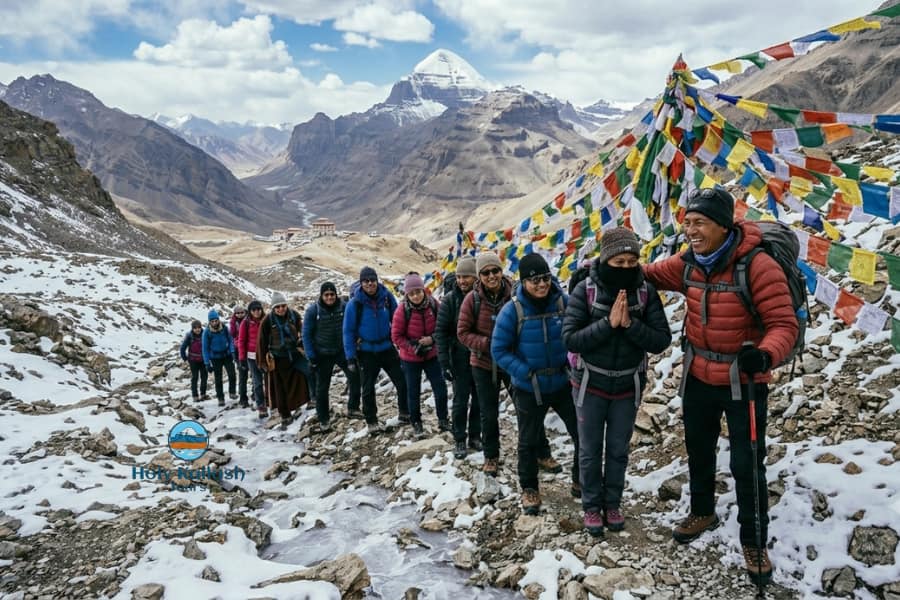
Three days make up the standard Kailash Kora. Day 1 takes you from Yam Dwar to Dirapuk, a moderate walk along the Lha Chu valley with the north face of Kailash in view most of the way. Day 3 is a short, easy walk from Zuthulpuk back to the starting point. Day 2, the Dirapuk to Zuthulpuk stretch, is a different story.
Here is why it stands apart:
- It covers the longest distance of the three days, often 18 to 22 kilometres depending on the exact route taken
- It includes a climb to the highest altitude of the whole trip
- The air at Dolma La has roughly half the oxygen found at sea level
- Weather can shift fast, with wind, snow, or sudden cold even in summer months
- There are long stretches with no shelter and limited rest points
Pilgrims usually start before dawn, sometimes as early as 3 or 4 a.m., to give themselves enough daylight hours to finish before dark. The combination of distance, thin air, and early starts is what makes this the day most people remember as the hardest, and also the most rewarding.
Overview of the Dirapuk to Zuthulpuk Trek
The Dirapuk to Zuthulpuk trek can be split into three rough sections. The first section is a steady, gradual climb out of the Dirapuk valley toward the base of Dolma La. The second section is the steep push up to the pass itself, the toughest physical part of the day. The third section is the long descent down the far side, passing Gauri Kund and eventually reaching the Zuthulpuk valley.
Most trekkers complete this section in 8 to 12 hours, though the time varies a lot depending on fitness, acclimatization, and weather. Some pilgrims choose to ride a yak or horse for part of the ascent to save energy for the descent, which is also demanding on tired legs and knees.
Starting the Trek from Dirapuk Monastery
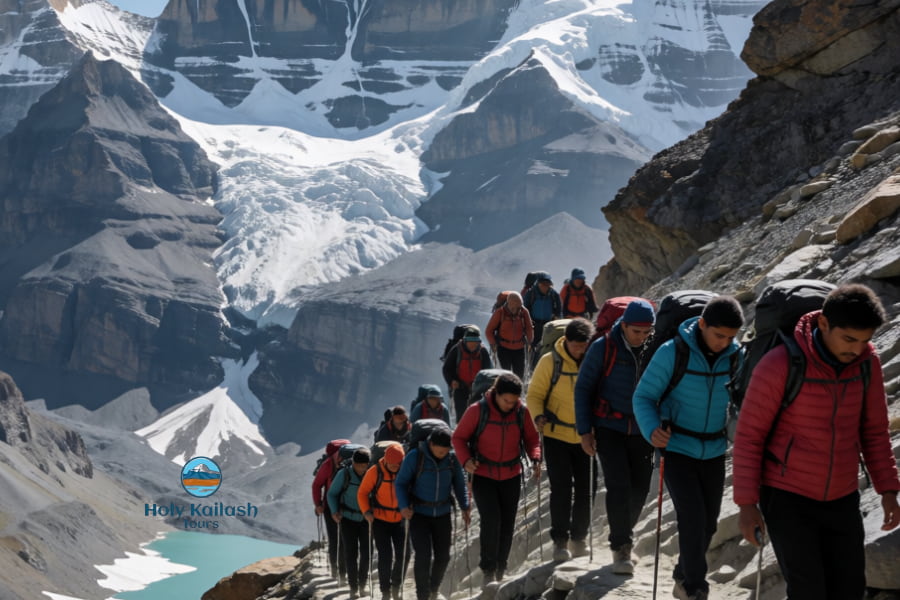
Dirapuk Monastery sits at around 4,890 meters, directly facing the north face of Mount Kailash. Most groups spend the night here after Day 1, resting in a guesthouse or tented camp before the early start.
The walk begins by following the valley away from the monastery, with the trail bending west and then south as it works toward the base of the pass. In the early morning light, before sunrise, this stretch is quiet and cold, often the coldest part of the entire day. Many pilgrims describe this opening hour as deeply meditative, since the dark sky, the silence, and the looming shape of Kailash combine to set a serious, reflective tone for what is to come.
Guides usually recommend dressing in layers right from the start, since temperatures rise once the sun appears but can stay below freezing for the first hour or two on the trail.
Distance, Duration, and Altitude of Day 2
Numbers vary slightly between guidebooks and tour operators, but the general range looks like this:
- Total distance: 18 to 22 kilometres
- Starting altitude (Dirapuk): around 4,890 meters
- Highest altitude (Dolma La Pass): around 5,630 meters
- Ending altitude (Zuthulpuk): around 4,790 meters
- Total elevation gain to the pass: roughly 740 meters
- Total descent after the pass: roughly 840 meters
- Typical duration: 8 to 12 hours of walking, including rest stops
This means Day 2 involves a serious elevation gain followed by an even larger elevation loss, all in a single push. The combination of climbing and descending at high altitude is what drains energy faster than the distance alone would suggest.
Crossing Dolma La Pass at 5,630 Meters
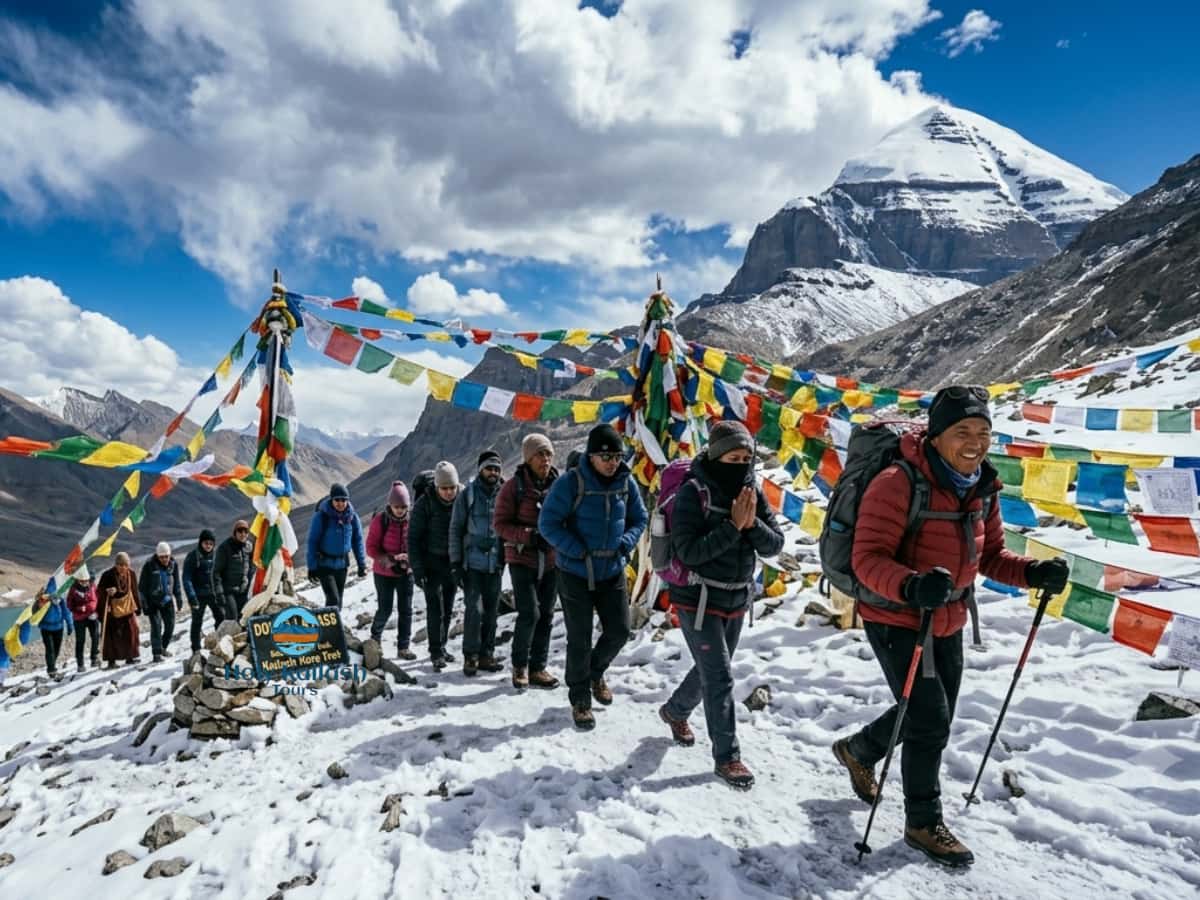
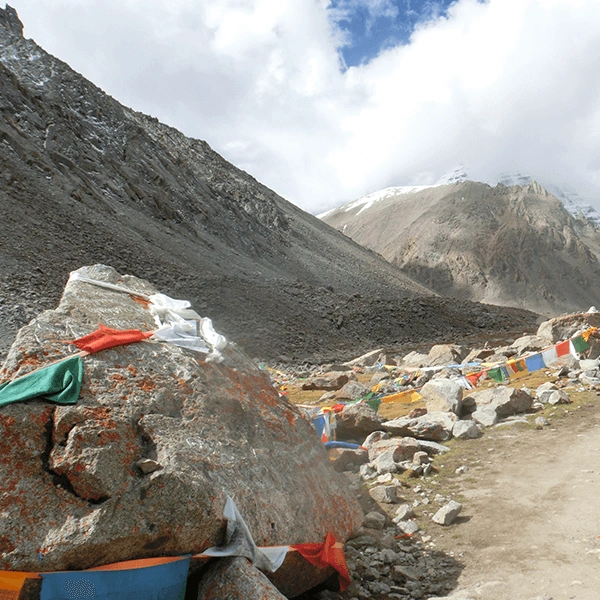
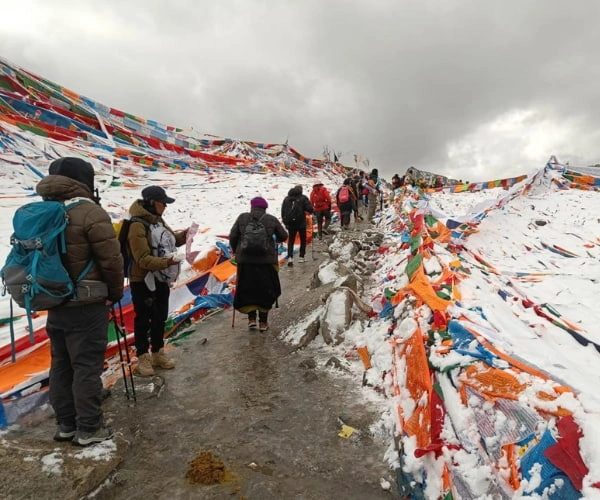
The final approach to Dolma La is steep and rocky. The air feels noticeably thinner here, and most trekkers slow to short, deliberate steps in the last few hundred meters. This is normal. Even experienced high altitude trekkers often need frequent short pauses near the top.
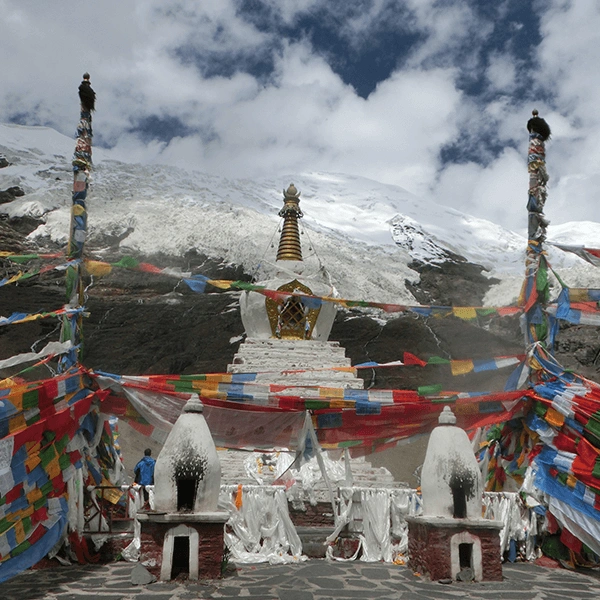
When you reach the pass, you will find it covered in prayer flags strung between rocks, along with piles of stones, clothing items left behind by pilgrims, and small personal offerings. Many people leave a piece of clothing or a photo of a loved one at the top, a tradition tied to letting go of the past.
Reaching Dolma La Pass is often an emotional moment. After hours of hard climbing in cold, thin air, standing at the highest point of the Kailash Kora tends to bring out strong feelings, sometimes tears, sometimes a quiet sense of relief and gratitude.
Spiritual Significance of Dolma La Pass
In both Hindu and Buddhist traditions, Dolma La Pass represents a turning point on the inner journey of the pilgrimage, not just the outer one. The deity Dolma (Tara) is associated with mercy and protection, and crossing her pass is seen as passing through a kind of spiritual gate.
Several beliefs are commonly shared among pilgrims:
- Crossing Dolma La is said to cleanse sins accumulated over many lifetimes
- The pass marks a symbolic death and rebirth within the pilgrimage
- Leaving an item behind at the top represents releasing attachment to the past
- The descent that follows represents starting a new chapter, lighter and clearer
Whether or not a traveler holds these beliefs personally, the physical and emotional intensity of the crossing tends to create a moment that feels meaningful regardless of religion or background.
Final Descent to Zutulpuk Monastery
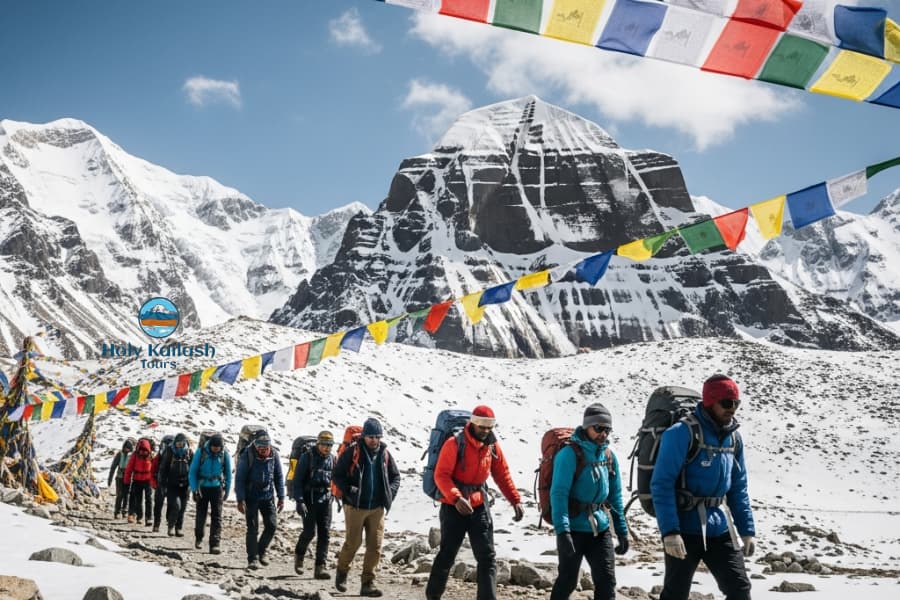
After the pass, the trail drops quickly. Loose rock and steep sections make the early part of the descent tricky on tired legs, so trekking poles and careful footing matter here more than almost anywhere else on the route.
As the trail levels out lower down, the landscape softens. Grass appears again, along with small streams and, eventually, the Zuthulpuk valley itself. Zuthulpuk Monastery comes into view as the trail nears its end, a welcome sight after a long day.
The Spectacular North Face of Mount Kailash
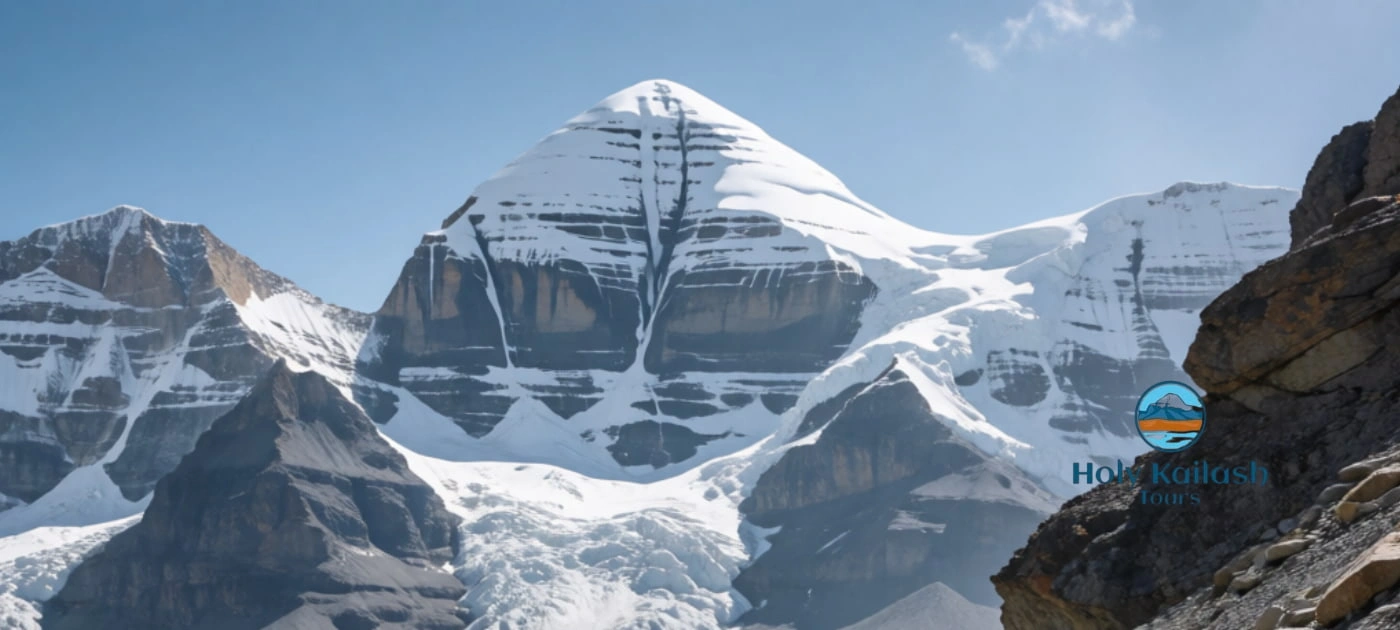
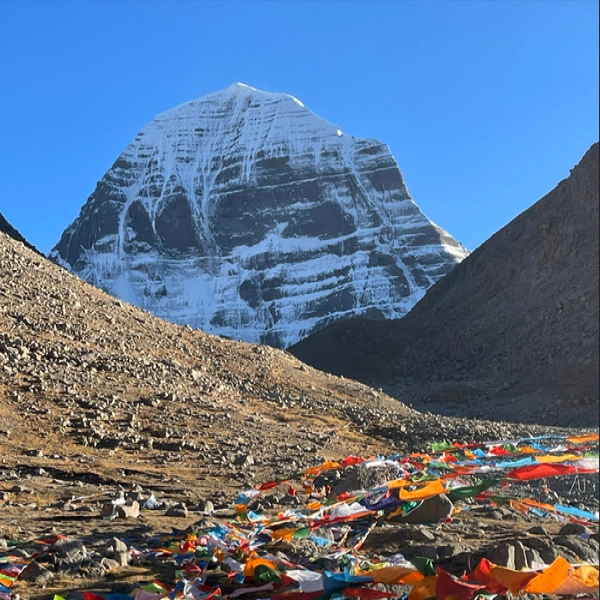
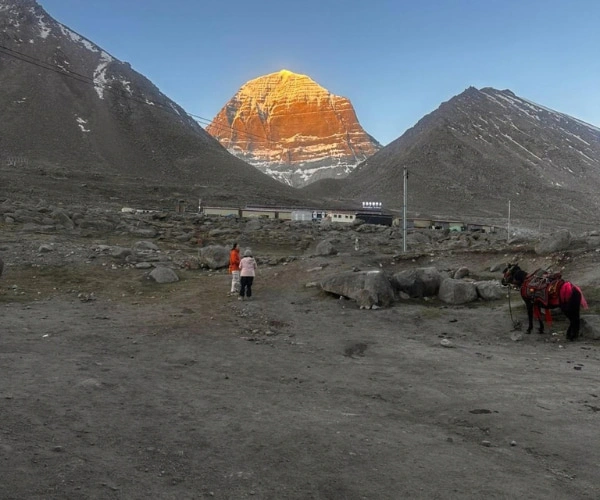
While the famous north face view belongs mostly to Day 1 near Dirapuk, early on Day 2, you still get a few final, striking looks back at the mountain before the trail turns away toward the pass. The north face is the most photographed angle of Kailash, with its smooth pyramid shape and the dark vertical line that some interpret as a swastika pattern, a sacred symbol in this region long before its meaning was distorted elsewhere in the 20th century.
These last glimpses of the north face often feel different from the views on Day 1. With the climb to Dolma La ahead, pilgrims tend to look back at the mountain with a mix of awe and quiet nerves, aware that the hardest part of the journey is just beginning.
Alternate Stay for Charan Sparsha on the Second Day
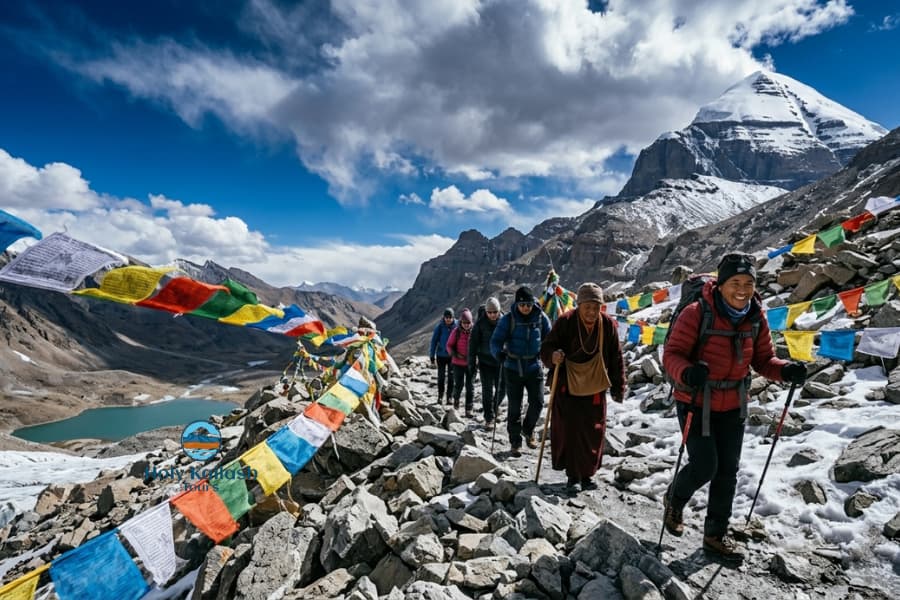
Some pilgrims choose a slightly different itinerary that allows for Charan Sparsha, a ritual act of touching or paying respects at the base of Kailash. This usually means an extra stop or a short detour near Dirapuk before continuing toward Dolma La.
This option adds time and should be discussed with your guide in advance, since it affects the overall schedule for Day 2. Holy Kailash Tours can build this option into a custom itinerary for groups who want to include this ritual stop, adjusting start times accordingly so the rest of the day still finishes safely before dark.
Gauri Kund: The Sacred Lake Below Dolma La Pass
Not far past the summit of Dolma La, on the descent side, lies Gauri Kund, a small frozen or partially frozen lake sitting at around 5,450 meters. In Hindu mythology, this lake is linked to the goddess Parvati, and it is considered one of the holiest spots along the entire kora.
A few points worth knowing about Gauri Kund:
- The lake sits below the trail, reached by a short, steep side path
- The water is extremely cold and often partly frozen even in summer
- Some pilgrims attempt a brief ritual dip or touch the water as an act of devotion
- The side trip down and back up adds extra effort at an already high altitude, so it should only be attempted by those feeling strong
Many guides advise skipping the descent to the lake itself if you are already struggling with the altitude, since admiring it from the main trail above still carries spiritual value without the added physical strain.
Physical Challenges of the Dirapuk to Zuthulpuk Trek
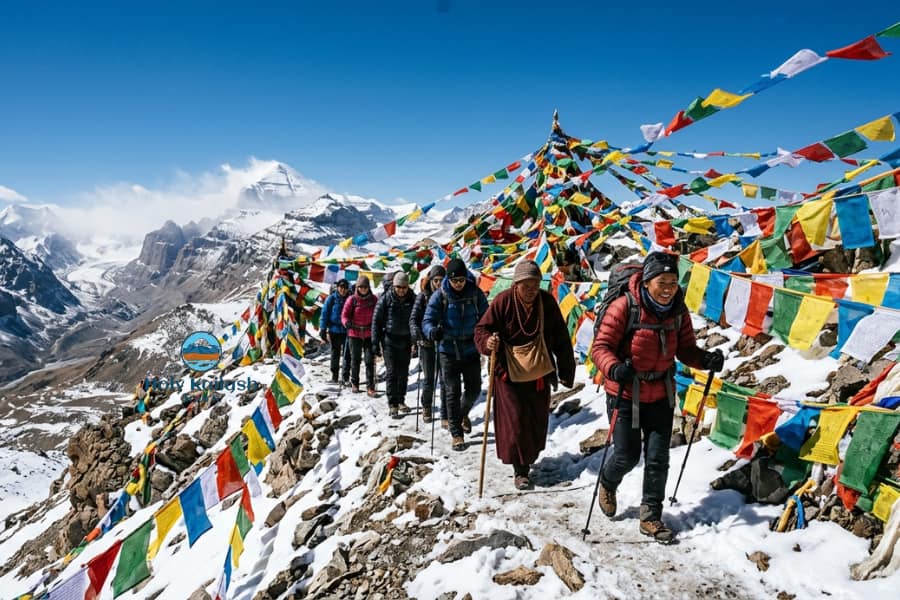
This is, without question, the most physically demanding day of the standard Mount Kailash kora. The challenges stack on top of each other rather than appearing one at a time.
Common difficulties include:
- Reduced oxygen at altitudes above 5,000 meters, which slows breathing and increases fatigue
- Cold temperatures, especially in the early morning and at the pass itself
- Loose, rocky terrain on both the ascent and descent
- Long hours on foot with limited flat resting ground
- Mental fatigue from the sheer length of the day, on top of physical strain
Even fit, experienced trekkers often find this day harder than expected, simply because altitude affects the body in ways that regular fitness training cannot fully prepare you for.
How to Prepare for Crossing the Dolma La Pass?
Good preparation makes a real difference on this day. The goal is not to rush the climb but to move steadily, conserve energy, and stay alert to how your body responds to the altitude.
Practical preparation tips:
- Spend at least 2 to 3 days acclimatizing in Lhasa or another high-altitude town before starting the kora
- Practice walking at a slow, steady pace rather than fast bursts followed by long rests
- Build general cardiovascular fitness in the weeks before your trip; even simple daily walks help
- Pack light for the day itself, carrying only essentials in a small daypack
- Carry water, simple snacks, and any personal medication you may need
- Discuss your fitness level honestly with your guide so the itinerary can be adjusted if needed
Holy Kailash Tours builds extra acclimatization days into its standard Kailash Mansarovar Yatra itineraries for exactly this reason, since rushing the body to altitude is one of the most common causes of serious problems on this route.
Tips to Prevent Altitude Sickness on Day 2
Altitude sickness is the single biggest risk factor on the Dirapuk to Zuthulpuk trek. Symptoms can range from mild headaches and nausea to more serious conditions if ignored.
Steps that help reduce risk:
- Walk slowly and steadily, especially in the final approach to the pass
- Drink water regularly throughout the day, even if you do not feel thirsty
- Avoid alcohol and heavy meals the night before and morning of the crossing
- Watch for early symptoms such as headache, dizziness, or shortness of breath beyond normal exertion
- Tell your guide immediately if you feel unusually unwell, rather than pushing through silently
- Consider carrying basic altitude sickness medication after consulting a doctor before your trip
If symptoms become severe, descending to a lower altitude is the most effective treatment. A good guide will always prioritize this over continuing the planned route.
Descending from Dolma La Pass to Zuthulpuk
The descent from the pass is long and can be harder on the knees and ankles than the climb up. Loose scree and rocky switchbacks make footing tricky, especially for tired legs after hours of walking.
Helpful approach for the descent:
- Use trekking poles to reduce strain on knees
- Take shorter steps rather than long strides on loose rock
- Rest briefly when needed rather than pushing straight through to the bottom
- Watch the trail markers carefully, since the path can be less obvious in poor light or weather
Lower down, the terrain becomes gentler, and the final stretch into Zuthulpuk feels like a genuine relief after the demands of the pass.
Zuthulpuk Monastery and Its Spiritual Importance
Zuthulpuk Monastery, sometimes spelt Zutulpuk, sits near the end of Day 2 and gives the day its name. The monastery is linked to the Tibetan saint Milarepa, who is said to have performed miracles here, which is reflected in the name itself, since Zuthulpuk roughly translates to "cave of miracles."
Inside the monastery grounds, pilgrims can visit a small cave associated with Milarepa's meditation practice. After a long, exhausting day crossing Dolma La, arriving at a site connected to one of Tibetan Buddhism's most respected figures adds a quiet, fitting close to the day's spiritual journey.
Accommodation at Dirapuk and Zuthulpuk
Accommodation along this part of the route is basic by most standards, which is expected given the remote, high-altitude setting.
What to expect:
- Simple guesthouses or dormitory-style rooms at both Dirapuk and Zuthulpuk
- Shared facilities, with limited hot water and basic toilets
- Thick blankets are provided, though many trekkers still bring their own sleeping bag liner
- Simple meals, often a mix of Tibetan and Nepali-style dishes
- Early bedtimes are common, given the early start required the next morning
Comfort here is minimal, but after a day like the Dirapuk to Zuthulpuk crossing, most pilgrims find that a warm meal and a place to lie down feel like more than enough.
Best Time to Cross Dolma La Pass
Timing matters a lot on this particular day, both in terms of season and time of day.
Seasonal considerations:
- The main trekking season for the Kailash Kora runs from May through September
- June to August tends to offer the most stable weather, though rain and occasional snow at the pass are still possible
- Early or late season crossings carry a higher risk of snow blocking parts of the trail
- Winter crossings are extremely difficult and generally not recommended for most travellers
Time of day matters just as much:
- Most groups start the Dirapuk to Zuthulpuk trek between 3 and 5 a.m.
- An early start avoids afternoon weather changes, which are common at this altitude
- Reaching Dolma La Pass by mid-morning, if possible, gives a buffer before any afternoon wind or cloud buildup
- Finishing the descent before dark is a key safety goal for the day
Safety Tips for the Kailash Kora Trek
Beyond altitude awareness, a few general safety habits make a real difference across the whole Day 2 route.
- Stay within sight of your group or guide at all times, since the trail can be confusing in poor visibility
- Dress in proper layers, since temperatures swing widely between early morning, midday, and the descent
- Carry a basic first aid kit, including blister care and pain relief
- Keep your phone or any tracking device charged, where a signal allows
- Travel with a reputable, experienced operator who knows the route and current conditions
Holy Kailash Tours places a strong emphasis on safety throughout the Kailash Mansarovar Yatra, with experienced guides who know this specific stretch of trail well and who carry the supplies needed to handle common issues along the way.
Photography Tips Along the Dirapuk to Zuthulpuk Route
This day offers some of the most striking images of the entire pilgrimage, but cold hands, thin air, and a long walk make it easy to miss good shots if you are not prepared.
A few practical tips:
- Keep your camera battery warm inside an inner jacket pocket, since cold drains batteries fast
- Capture the early morning light near Dirapuk before the sun fully rises, often the softest light of the day
- Take a few quick shots at Dolma La itself, but avoid lingering too long at the top given the thin air
- Photograph Gauri Kund from the main trail if you choose not to make the side trip down
- Save some energy and attention for Zuthulpuk Monastery at the end, since the soft afternoon light there often makes for memorable images
Why Choose Us for the Kailash Kora Trek
Plenty of operators offer trips to Mount Kailash, but the difference often shows up in the small details, the ones that matter most on a demanding day like the Dirapuk to Zuthulpuk crossing.
Holy Kailash Tours, based in Kathmandu, has organised Kailash Mansarovar Yatra trips for years, with guides who have personally walked this route many times and understand exactly where pilgrims tend to struggle. The team plans realistic acclimatization schedules, carries proper supplies for altitude-related issues, and adjusts pacing based on each group's actual fitness, rather than forcing everyone into the same rigid plan.
What sets the experience apart:
- Guides with direct, repeated experience on the Dirapuk to Zuthulpuk section specifically
- Itineraries built around safe acclimatization rather than the fastest possible schedule
- Support for permits, transport, and accommodation throughout western Tibet
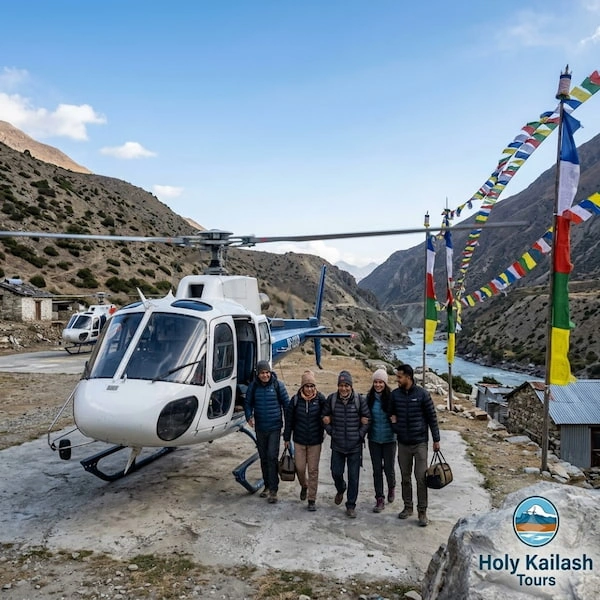
- Flexible options including overland routes through Kerung or Purang, helicopter access, and the classic 3-day kora
- A focus on both physical safety and the spiritual meaning behind each part of the journey
For travelers planning their own Mount Kailash trek, working with a team that genuinely understands this specific day of the journey can make the difference between a trip that feels overwhelming and one that feels deeply rewarding.
Final Thought
The walk from Dirapuk to Zuthulpuk asks a lot from anyone who attempts it. The altitude is real, the distance is long, and the cold can test even well-prepared trekkers. Yet this is also the day that most pilgrims point to when describing why they made this journey in the first place.
Standing at Dolma La Pass, surrounded by prayer flags and the quiet weight of thousands of pilgrims who crossed before you, has a way of putting the physical struggle into perspective. The descent to Zuthulpuk, past Gauri Kund and into the cave where Milarepa once meditated, closes the day with a sense of completion that few other treks in the world can offer.
With careful preparation, realistic pacing, and support from an experienced guide team like Holy Kailash Tours, this day becomes not just survivable but genuinely transformative.
FAQs About Dolma La Pass
How high is Dolma La Pass on the Kailash Kora?
Dolma La Pass sits at approximately 5,630 meters (18,471 feet), making it the highest point of the entire Mount Kailash circuit.
How long does the Dirapuk to Zuthulpuk trek take?
Most trekkers complete this section in 8 to 12 hours, covering a distance of roughly 18 to 22 kilometres depending on the exact route and pace.
Is Day 2 of the Kailash Kora trek dangerous?
It carries real risk due to altitude, cold, and long hours on foot, but with proper acclimatisation, a steady pace, and an experienced guide, most healthy travellers complete it safely.
What is the spiritual meaning of crossing the Dolma La Pass?
Many pilgrims believe crossing the pass cleanses sins from past lives and represents a symbolic death and rebirth on the path to spiritual renewal.
Can I ride a yak or horse over Dolma La Pass?
Yes, yaks and horses are commonly available for part of the ascent for those who need assistance, though the steepest sections near the very top usually still require walking.
What should I pack for the Dirapuk to Zuthulpuk crossing?
Warm layers, water, simple snacks, sun protection, trekking poles, and any personal medication should all be carried in a light daypack for the day.
Is Gauri Kund worth the detour from the main trail?
For those feeling strong and well acclimatised, the short side trip to this sacred lake adds meaning to the day, though it is not necessary for those already struggling with the altitude.
What is the best season to attempt the Kailash Kora?
The main season runs from May through September, with June to August generally offering the most stable weather for crossing Dolma La Pass.
What is special about Zuthulpuk Monastery?
The monastery is linked to the Tibetan saint Milarepa and contains a cave associated with his meditation practice, giving the site deep spiritual significance for pilgrims completing the kora.
Why travel with Holy Kailash Tours for the Kailash Mansarovar Yatra?
Holy Kailash Tours offers guides with direct, repeated experience on this exact route, realistic acclimatization planning, and full support for permits, transport, and accommodation throughout the journey.