Kailash Mansarovar Pilgrimage from Kathmandu
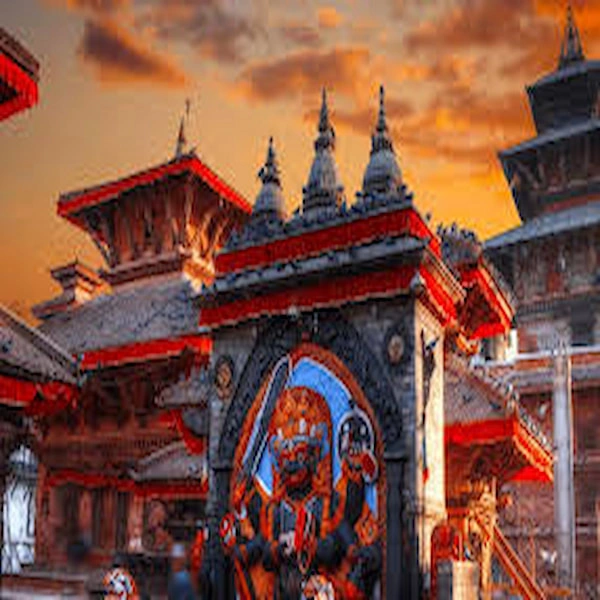
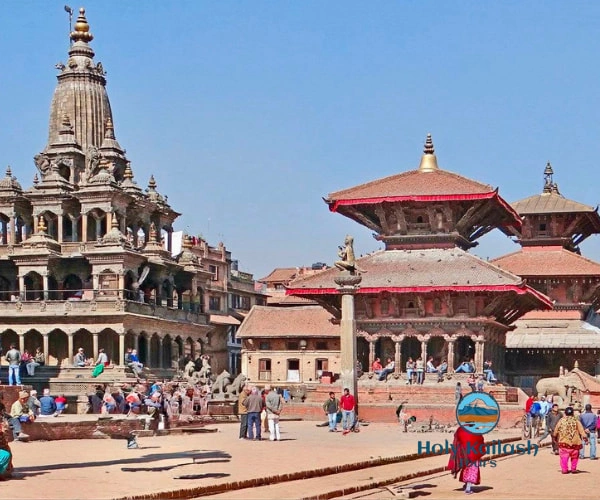
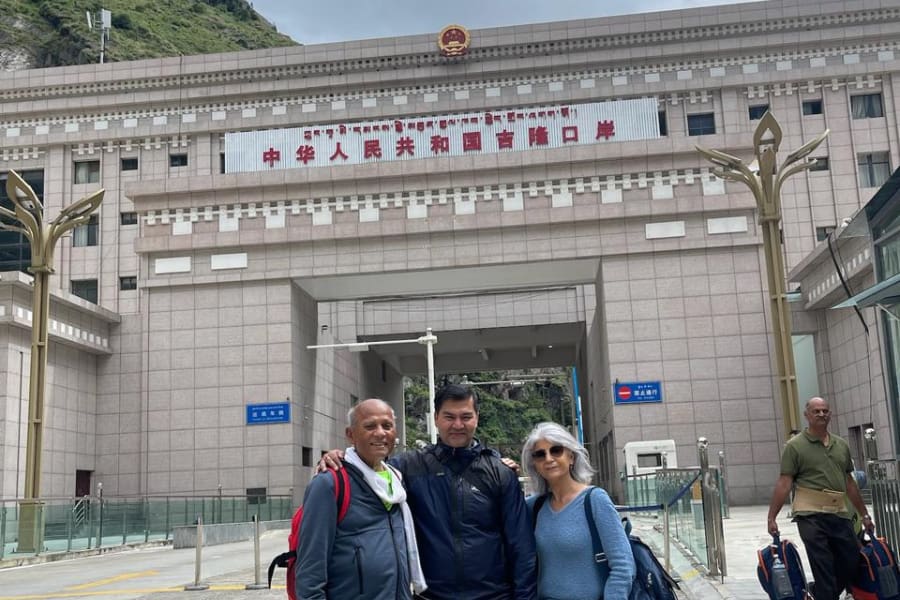
Kathmandu Valley is the gateway that almost every pilgrim from outside Tibet uses, and it earns that role. The Chinese Group Visa required for this yatra can only be processed once you're physically in Nepal, so your journey starts here regardless of where you fly in from.
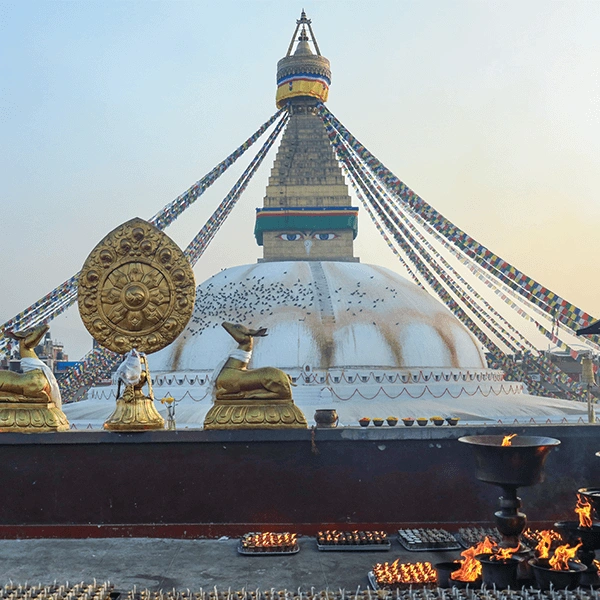
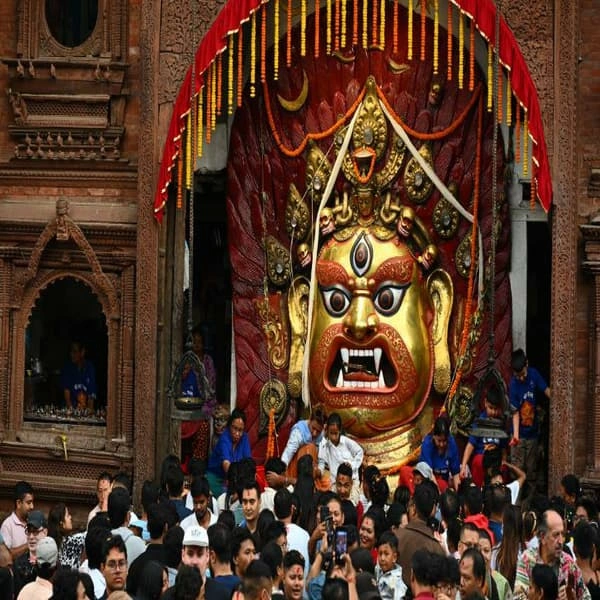
Most pilgrims spend two to three days in the city before departure: a visit to Pashupatinath for blessings, a pre-trip briefing with your guide, document checks, and a final gear review.
This is also where your group forms. You'll meet the people you'll share tents, meals, and high passes with for the next two weeks, and that matters more than most first-timers expect.
From Kathmandu, the route splits into two directions: overland through the Rasuwagadhi border toward Saga and the Ngari region, or by air through Nepalgunj, Simikot, and Hilsa. Both get you to the same holy ground. They just ask different things of your body and your patience.
Mount Kailash Kora (Inner & Outer Circuits)
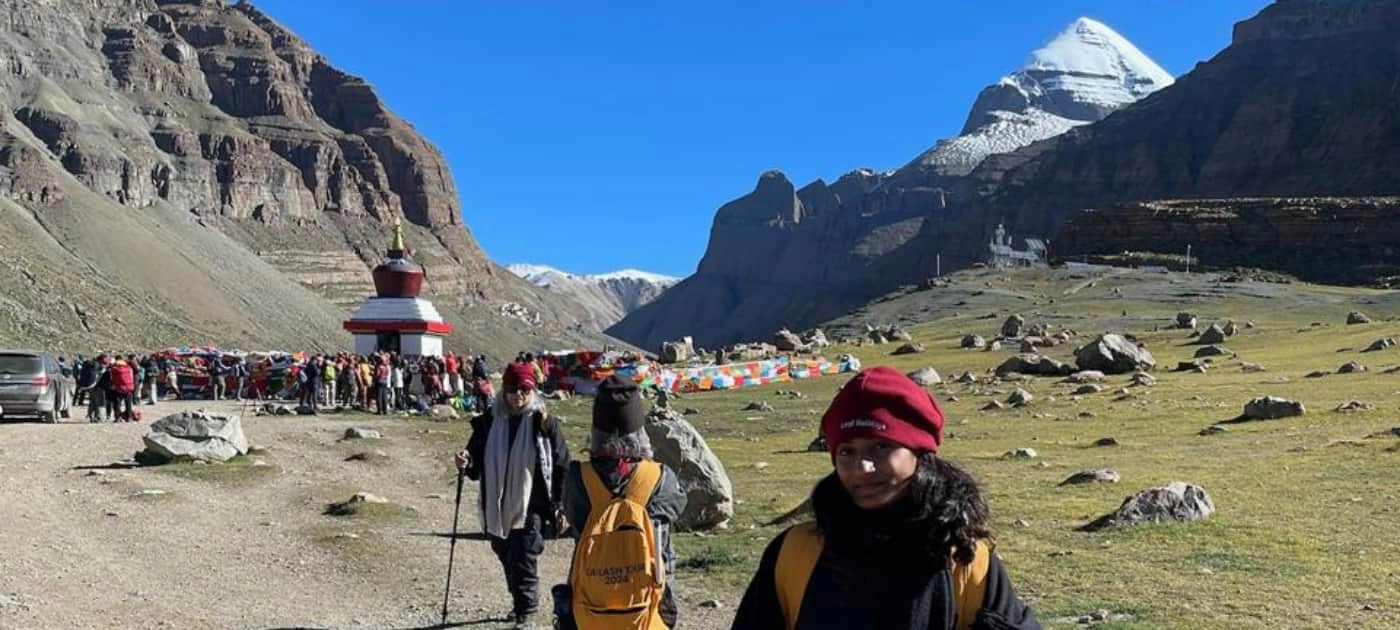
The Outer Kora is the walk almost every pilgrim completes: roughly 52 kilometers around the base of Mount Kailash, done on foot over three days, starting and ending at Darchen.
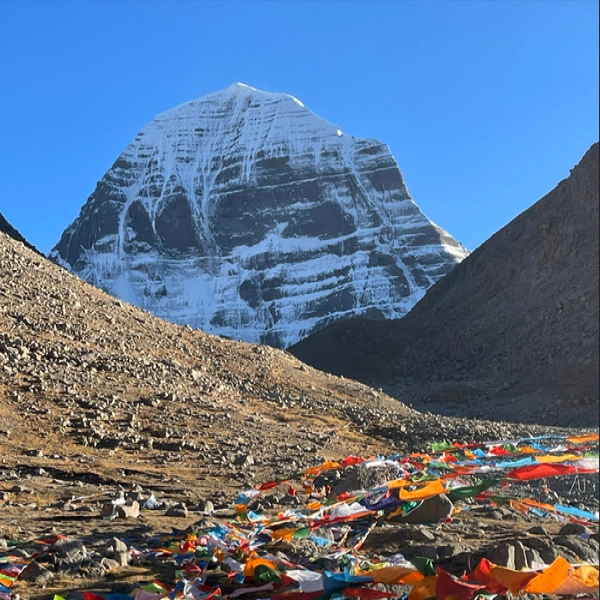
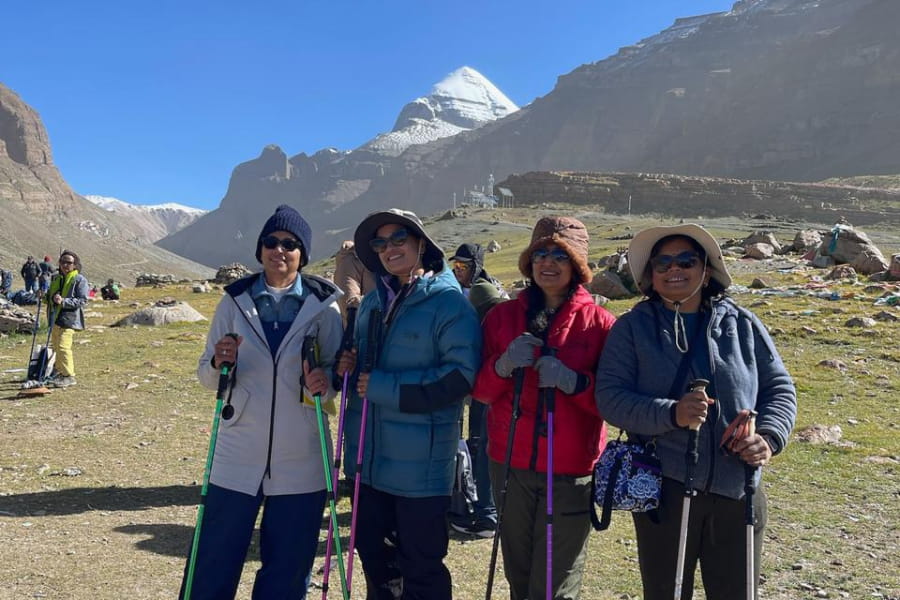
Day one takes you from Darchen to Dirapuk, a relatively gentle 20-kilometer stretch along the Lha Chu valley with the north face of Kailash in full view for most of the walk.
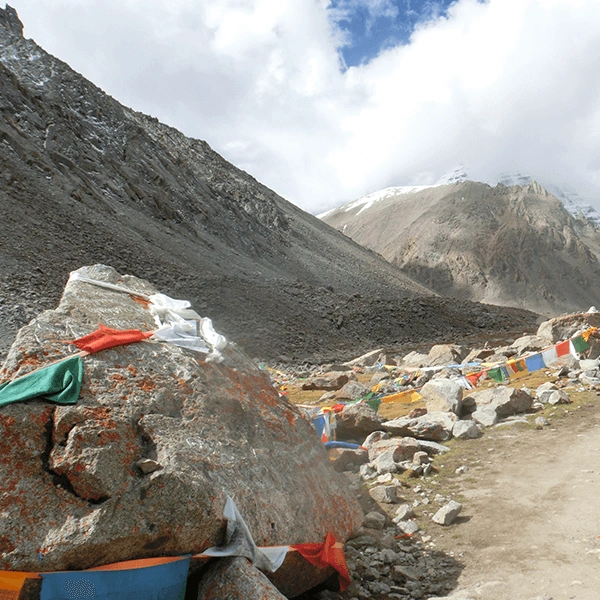
Day two is the hard one. You cross Dolma La Pass at roughly 5,630 meters, the highest point of the entire yatra, then descend a long, knee-testing stretch to Zutulpuk.
Day three is a short walk back to Darchen and the waiting vehicles. Hindus and Buddhists walk the circuit clockwise; Bon practitioners go counterclockwise, and you'll pass some of them going the opposite direction on the trail.
The Inner Kora, which is closer to the mountain's southern face near Nandi Parbat, is traditionally open only to those who've completed at least one Outer Kora, and even then, access depends on the season and current access rules. We tell pilgrims planning the Inner Kora to build in a buffer day because permissions and conditions can change with little notice.
Sacred Waters & Spiritual Significance: Lake Mansarovar
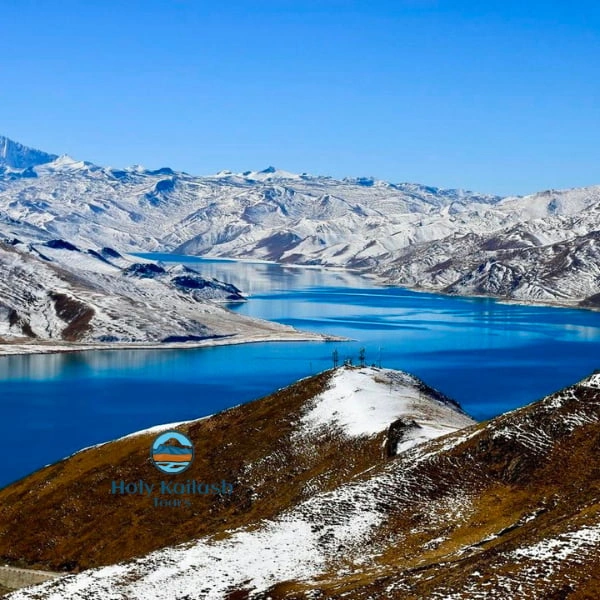
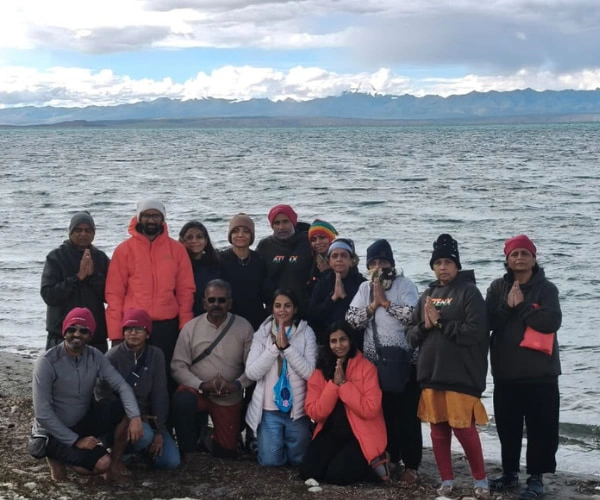
Lake Mansarovar is at about 4,590 meters, a freshwater lake ringed by snow peaks, with the smaller, saltwater Rakshas Tal visible nearby on the drive in. For Hindus, a dip in its water is believed to cleanse sin accumulated over lifetimes.
For Buddhists, it's one of the holiest lakes on the Tibetan plateau, tied to the legend of Queen Maya's dream before the birth of the Buddha. Most pilgrims stay a full day here before heading to Darchen, enough time for a ritual bath at dawn, puja on the shore, and a slower walk around the edge if the group has the energy for it.
The water is genuinely cold, even in July, so we don't push anyone into a full immersion. A splash on the head and hands satisfies the ritual for most travelers, and your guide will tell you exactly where locals consider it appropriate to enter.
Cultural Encounters on Your Kailash Tour
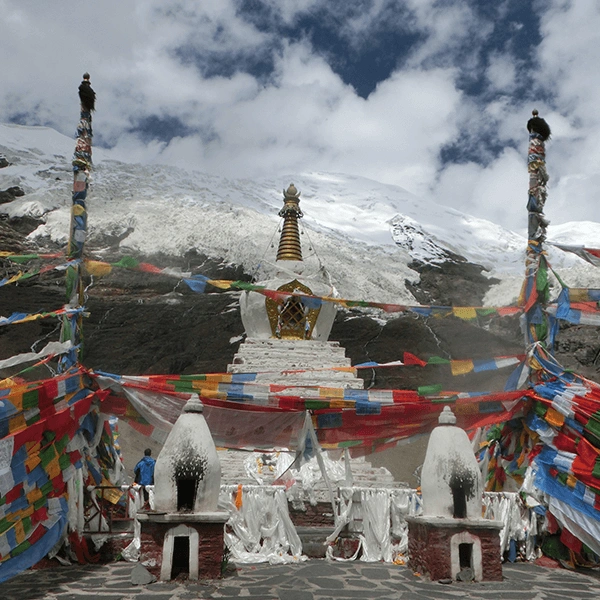
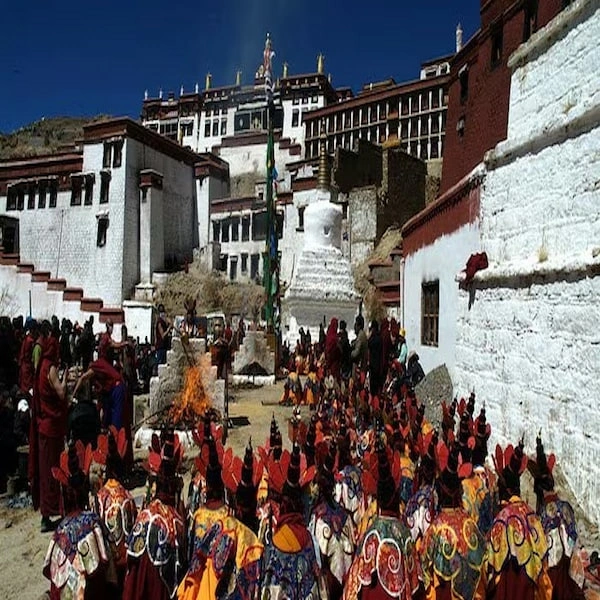
Once you cross into Tibet, the pilgrimage is no longer only about the mountain and the lake. You'll pass Tibetan nomad camps with yak herds grazing at 4,500 meters, stop at monasteries like Chiu Gompa perched above Mansarovar, and share the Kora trail with Tibetan pilgrims who walk it as a matter of routine faith rather than once-in-a-lifetime travel.
Some prostrate the entire circuit, lying flat and rising, step after step, for days. It's worth watching quietly rather than photographing up close. Yaks and their handlers carry luggage for pilgrims who choose not to trek with a full pack, and a short conversation with a yak man, even through a translator, tells you more about life on the plateau than any guidebook will.
Darchen itself is a small, dusty town that exists almost entirely to support the pilgrimage, with a handful of shops selling prayer flags, thermoses, and instant noodles to trekkers heading out on the Kora.
Ensuring a Safe Kailash Mansarovar Experience
Safety on this yatra comes down to three things: altitude, weather, and pace. Most of the route sits between 4,500 and 5,600 meters, well into the range where acute mountain sickness becomes a real risk regardless of how fit you are at sea level.
We build acclimatization days into every itinerary, usually at Saga or Purang, before the group pushes higher, and we carry emergency oxygen and a first aid kit that trained staff can actually use.
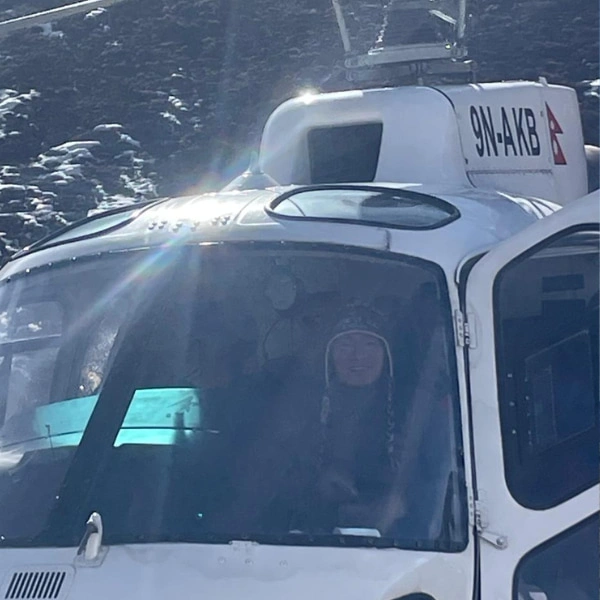
Weather on the Nepalgunj-Simikot-Hilsa air route is genuinely unpredictable, and flights get delayed or cancelled with little warning, so anyone choosing the helicopter route should build one or two spare days into their travel plans rather than booking a tight connection home.
On the ground, the biggest safety factor is honestly your own pace. A few seasons back, one of our pilgrims in her sixties developed a mild headache and some breathlessness about two hours below Dolma La.
She told her guide right away instead of staying quiet about it. He slowed the group's pace, added extra rest breaks, and made sure she kept drinking water. She crossed the pass about an hour behind the rest of the group, tired but on her own feet.
Compare that to pilgrims who stay quiet about symptoms until they're stumbling, and the difference in outcome isn't close. If you take one piece of advice from this section, let it be that: speak up early, not after you've already stopped feeling well.
Kailash Tour Logistics: Permits, Visas
No individual can walk into Tibet and start the Kailash Kora on their own. Every pilgrim travels through a licensed operator who applies for a Chinese Group Visa on your behalf, not the standard tourist L visa.
This group visa covers your entire party as a single unit, meaning everyone enters and exits together on fixed dates, and it typically cannot be extended once issued. Alongside it, your operator secures a Tibet Travel Permit, an Alien's Travel Permit for areas beyond Lhasa, and a border area permit, since the Ngari region lies close to both the Indian and Nepali frontiers and is considered a sensitive military zone.
Expect to hand over your passport, a medical fitness certificate from an MBBS doctor confirming you can handle altitudes above 4,500 meters, passport photos, and a completed application form well before departure, often 45 to 60 days out during peak season.
Passport validity matters here too: most operators require at least 6 months remaining on your passport from your travel date, and a passport that falls short will have applications rejected outright. None of this paperwork is something you file yourself, and any operator who suggests otherwise is one to avoid.
Every legitimate operator running this yatra, including us, must hold a current Nepal Tourism Board authorization and an active partnership with the Tibet Tourism Bureau or its designated reception center.
Ask to see that authorization before you book with anyone; it takes 30 seconds to check and tells you more than any brochure will. For the rules straight from the source rather than our summary, Nepal's Department of Immigration and the Chinese Embassy in Kathmandu publish their own updates, and we'd rather you cross-check specifics there than take our word for it.
Overland vs. Helicopter Kailash Mansarovar Options
The Kailash overland route runs through the Rasuwagadhi border crossing, then across the Tibetan Plateau toward Saga, toward Manasarovar and Darchen. It's the slower option, usually 13 to 15 days round trip from Kathmandu, and it puts you through long drive days on rough plateau roads, but it also gives you a gradual altitude gain, which some bodies handle better than a sudden jump.
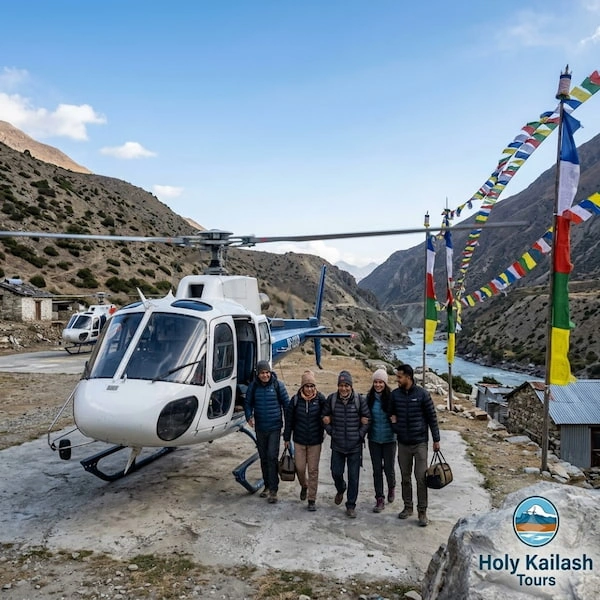
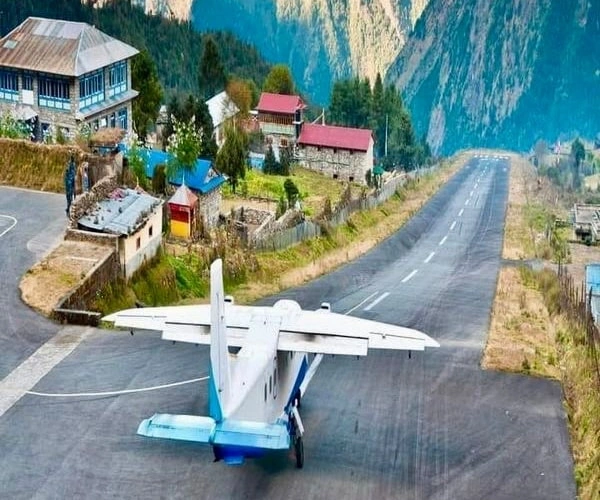
The helicopter route goes the opposite direction: a flight to Nepalgunj, a smaller plane to Simikot, then a short helicopter hop across the Karnali gorge to Hilsa on the Tibet border, followed by road travel to Purang and onward to Kailash.
This route compresses the trip to roughly 10 to 12 days and skips the toughest driving, which makes it a better fit for older pilgrims or anyone with limited time or a lower tolerance for long overland days.
The tradeoff is weather. The Nepalgunj-Simikot-Hilsa sector is notorious for delays, and a socked-in morning can push your whole schedule back by a day or more. We ask every pilgrim choosing this route to accept that flexibility, not certainty, is part of the deal.
Kailash Yatra Via Lhasa vs Overland
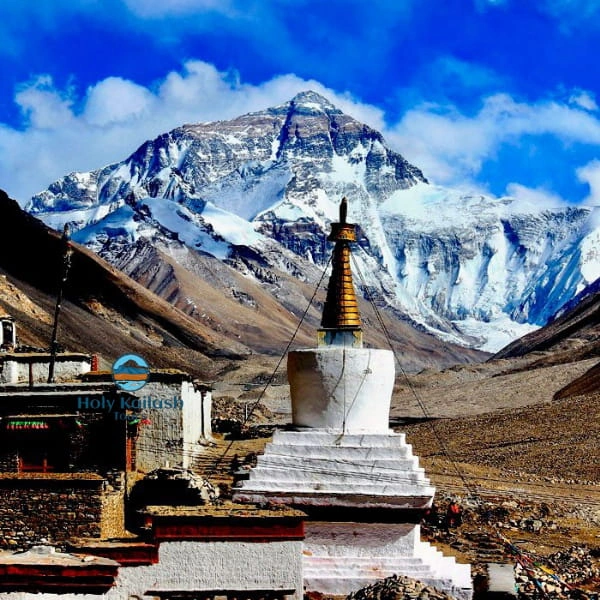
A smaller number of pilgrims choose to enter through Kailash via Lhasa by direct flight from Kathmandu, usually as part of a longer itinerary that also covers Gyantse, Shigatse, and the Everest Base Camp viewpoint on the Tibetan side before continuing west to Saga and Kailash.
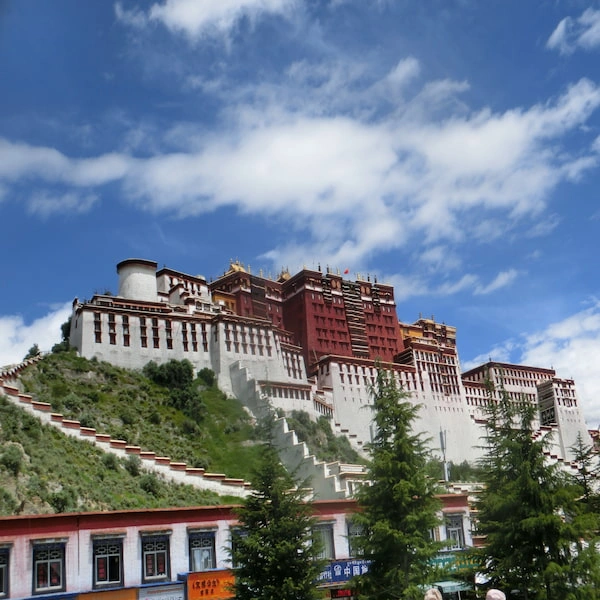
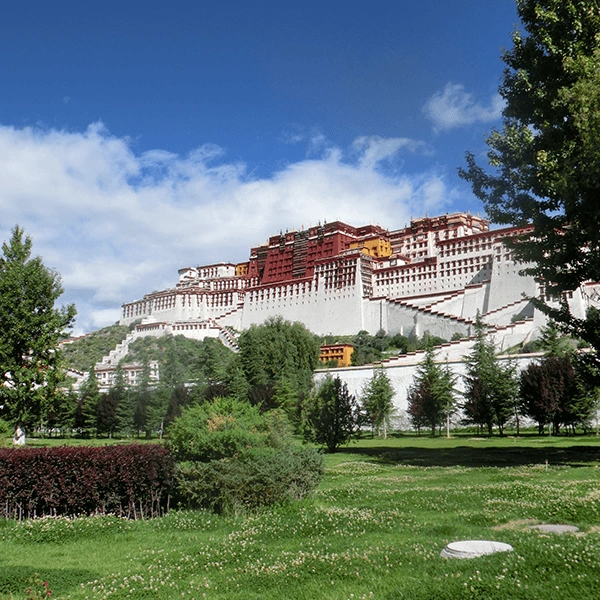
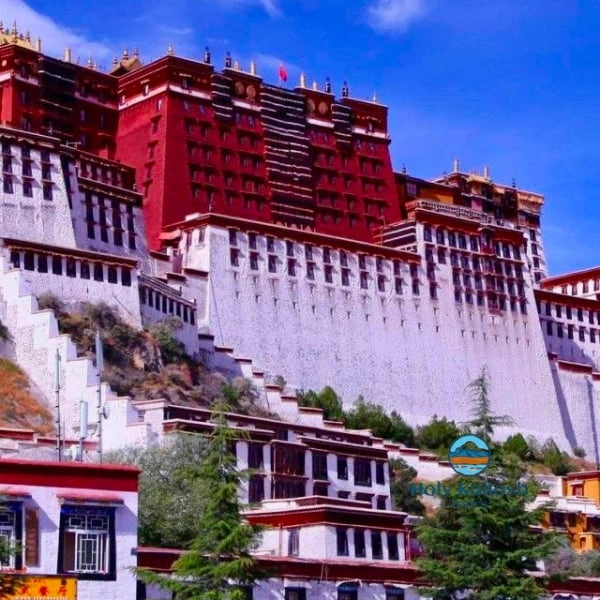
This version runs longer, often 16 to 20 days, and it suits travelers who want the wider Tibet experience alongside the pilgrimage: the Potala Palace, the monasteries of central Tibet, a genuine sense of the plateau before you reach its most remote corner.
The direct overland route from Nepal skips all of that and heads straight west, which keeps the trip shorter and the focus tighter on Kailash and Mansarovar themselves. Neither is more authentic than the other. It's really a question of how much time you have and whether the pilgrimage is the whole trip or the centerpiece of a longer one.
Accommodation on Your Kailash Journey
Set your expectations correctly here, because this isn't a comfort trek. Kathmandu and Nepalgunj offer standard hotels with hot showers and reliable power. Once you cross into Tibet, things get simpler fast.
Saga and Purang have basic guesthouses, usually twin- or triple-sharing, with common bathrooms and hot water that runs on a schedule rather than on demand. Darchen is similar, a functional base rather than a destination.
On the Kora itself, Dirapuk and Zutulpuk offer dormitory-style lodges with shared facilities and no heating beyond what you bring in your own layers. Bedding is often thin, so we recommend a lightweight sleeping bag liner even in summer.
None of this is a hardship if you go in prepared for it, but pilgrims expecting hotel-standard comfort on the mountain itself are usually the ones who struggle most with the trip overall.
Packing Essentials for Your Kailash Mansarovar Trek
Layering matters more than any single piece of gear you bring. Daytime temperatures on the plateau in summer can sit in the comfortable range, then drop sharply after sunset, so pack a proper down jacket alongside lighter thermal layers you can add or shed through the day.
Sturdy, broken-in trekking boots are non-negotiable, since the Dolma La descent is long and hard on unprepared ankles. Bring sunglasses rated for high-altitude UV, a wide-brimmed hat, and sunscreen you're willing to reapply constantly, because the plateau sun is stronger than it looks, even on a cloudy day.
A headlamp, a reusable water bottle, water purification tablets as backup, and a basic personal medical kit round out the essentials. Cash matters too. There are no ATMs once you leave Kathmandu, so carry enough Chinese yuan or the currency your operator specifies for the Tibet leg of the trip in small denominations.
Health & Medical: Staying Well on Your Kailash Yatra
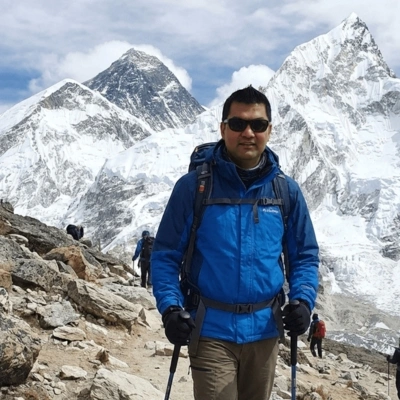
Altitude is the honest concern here, not the walking distance. The Kora itself isn't technically difficult, but doing it above 4,500 meters changes everything about how your body responds to exertion.
See a doctor before you book, not the week before you fly, and be direct with them about the altitudes involved so they can advise you properly on any preventive medication and flag any cardiac or respiratory condition that might make this trip unwise.
Drink more water than feels necessary, eat even when your appetite drops (which it often does above 4,000 meters), and treat headaches or breathlessness as information, not an inconvenience to push through.
Our guides run basic daily health checks during the Tibet leg, tracking pulse and oxygen levels, because catching altitude sickness early is far easier to manage than treating it after it's taken hold. If you have a known heart or lung condition, talk to a specialist who understands high altitude physiology before you commit to this yatra, not just your general practitioner.
Capturing the Beauty of Kailash & Manasarovar
Photography is generally allowed at both Kailash and Mansarovar, and the light here does something you won't see at lower elevations, especially early morning and just before sunset when the mountain's snow face turns a shade of gold that photos never quite capture accurately.
Some monasteries charge a small camera fee, and it's worth asking your guide before you start shooting inside one. Drones are a different matter. This is a sensitive border region with a military presence, and flying a drone without explicit clearance can create real problems, both for you and for the group traveling with you.
Leave it at home unless your operator has confirmed in writing that it's permitted for your specific route and dates. Beyond the technical side, we'd gently push back on the instinct to view the whole Kora through a lens.
The pilgrims prostrating past you, the wind on Dolma La, the first sight of the lake, these tend to stay with people more clearly when they've actually looked at them rather than framed them.
The Best Time to Visit Kailash Mansarovar
The season runs from May through September, with the route effectively closed the rest of the year due to snow and impassable passes. May and early June offer clear skies and thinner crowds, though patches of snow can still linger near Dolma La.
June through August is peak season, warmer and busier, coinciding with Saga Dawa, the Tibetan festival marking the Buddha's birth, enlightenment, and death, which falls on the full moon of the fourth lunar month and draws large numbers of Tibetan pilgrims to the Kora at the same time.
July and August bring a higher chance of rain, though the western plateau experiences far less monsoon impact than lower Nepal. September tends to be our favorite window to recommend: the crowds thin out, the air clears after the monsoon, and the visibility on both the mountain and the lake is often the best of the whole season.
Whatever month you choose, book early. Permit processing has fixed government timelines that don't bend for late applications, and good departure slots fill months in advance.
Spiritual Significance of Mount Kailash & Lake Manasarovar
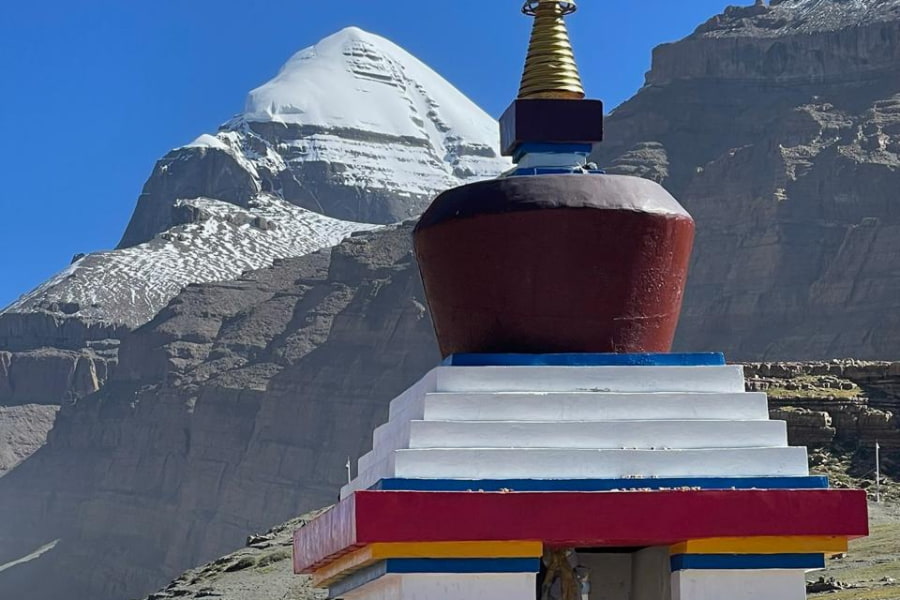
Mount Kailash is revered as the abode of Lord Shiva in Hinduism, as the seat of Demchok in Tibetan Buddhism, as the sacred site of Astapad where the first Jain Tirthankara is believed to have attained liberation, and as the spiritual center of the world in the Bon tradition.
Four major rivers, the Indus, the Sutlej, the Brahmaputra, and the Karnali, all trace their source to the region around the mountain, which only deepens its standing as a point where multiple faiths converge on the same physical ground.
No one has climbed to its summit, and that isn't an accident of difficulty alone. It's treated as sacred precisely because it remains untouched. Lake Mansarovar carries its own weight in this tradition, believed in Hindu texts to have been created in the mind of Brahma, and considered by Buddhists to be one of the purest bodies of water on earth.
Whatever your own belief system, walking this ground surrounded by pilgrims who've carried this faith for generations tends to shift something in how you experience the trip, even for travelers who came mostly for the adventure of it.
Food on Your Kailash Mansarovar tour
Most operators, including us, prepare vegetarian meals throughout the Tibet leg of the journey, largely because most pilgrims are practicing Hindus observing dietary restrictions during the yatra.
Expect Indian style breakfasts, lunches, and dinners cooked by a dedicated crew who travel with the group, alongside hot tea and soup at regular stops to keep everyone hydrated and warm.
Local Tibetan food is available too if you want to try it: momos, thukpa, and butter tea served in the small towns along the route. Drinking water is boiled or purified before it's served, and we strongly discourage drinking directly from streams or taps in Tibet, regardless of how clear the water looks.
Appetite tends to drop at altitude, which is normal, but keep eating in small amounts throughout the day rather than skipping meals entirely. Your body needs the fuel more than it wants it.
Responsible Tourism Sacred Environment of Kailash
This landscape is fragile, and it's also actively worshipped by the people who live near it, which raises the bar for how visitors should behave. Carry out everything you carry in, including wrappers and batteries, since there's no waste infrastructure once you're past Darchen.
Don't wash with soap or shampoo in Lake Mansarovar or any of the streams along the Kora, even where locals are performing ritual bathing themselves, because the same water supports communities and wildlife downstream.
Ask before photographing Tibetan pilgrims and nomads up close, and accept it gracefully if someone declines. Buy from local vendors in Darchen and along the route when you can, since tourism income genuinely matters to communities with few other sources of livelihood at this altitude. And tip your guides, drivers, and crew fairly.
They're doing physically demanding work in a harsh environment, often for weeks at a stretch, and that labor is easy to overlook when you're focused on your own pilgrimage.
Post-Kailash Reflection on Your Spiritual Journey
Pilgrims tend to come off the mountain differently than they went up it, and not always in ways that are easy to describe right away. Some feel lighter, almost unreasonably so. Others need a few quiet days before the experience settles into something they can put into words.
We build a slower final stretch back through Kathmandu into most itineraries for exactly this reason, a chance to decompress before flying home rather than stepping straight off the plateau and onto a plane.
If you keep a journal, this is the time to actually write in it, while the cold air and the sight of Dolma La are still sharp in memory rather than softened by distance. Talk to the people in your group too. The version of this trip you carry with you often gets shaped as much by those conversations on the walk down as by the Kora itself.
Group Departures & Private Tours Kailash Experience
Fixed group departures run throughout the peak season, typically May through September, and they're the more affordable option for this pilgrimage since costs are split among a full group.
They also mean less control over your exact dates and daily pace, which suits pilgrims who are comfortable moving with a shared itinerary. Private tours give you the opposite tradeoff: your own schedule, your own vehicle, more flexibility on rest days if someone in your party needs one, and a higher price tag to match.
Families organizing a trip around an older relative, or groups traveling for a specific auspicious date on the Tibetan calendar, tend to lean private for exactly that reason. Either way, group size matters for the visa process itself, since the Chinese Group Visa generally requires a minimum number of travelers, so solo pilgrims typically join an existing departure rather than traveling entirely alone.
Your Sacred Pilgrimage with Holy Kailash Tours
We've built our Kailash Mansarovar tour package from Nepal around the parts of this journey that are hardest to get right from a distance: permit timing, honest altitude pacing, and guides who've actually walked the Kora enough times to know when a pilgrim needs to slow down before they ask.
Holy Kailash Tours manages the visa and permit paperwork end-to-end, runs both the overland and helicopter routes, and keeps group sizes small enough that your guide actually knows your name by day three.
We won't oversell the comfort we can't provide at 5,000 meters, and we won't undersell how significant this trip tends to be for those who complete it. If you're ready to plan your dates, reach out, and we'll walk you through the route, the season, and the package that fits your fitness level and your timeline.
Final Thought
Kailash Mansarovar tour isn't a trip you do casually, and it shouldn't be sold as one. The altitude is real, the logistics are genuinely complex, and the physical demand catches some pilgrims off guard even when they've prepared well.
But pilgrims who go in with realistic expectations, a fair level of fitness, and a guide who tells them the truth about what's ahead tend to come back changed in ways that are hard to fake.
Whether you're drawn here by faith, by curiosity, or by something you can't quite name yet, the mountain has been receiving people like you for a very long time. Plan carefully, and it'll receive you too.
FAQs About Kailash Mansarovar Yatra from Nepal
How many days does the Kailash Mansarovar Yatra from Nepal take?
Most itineraries run 10 to 15 days round-trip from Kathmandu, depending on the route. The helicopter option via Simikot and Hilsa is the shortest, typically 10 to 12 days, while the overland route via Rasuwagadhi and Saga usually takes 13 to 15 days.
Do I need a visa for Nepal before continuing to Tibet?
Most nationalities can get a Nepal visa on arrival, and it's waived entirely for Indian citizens. What you do need, regardless of nationality, is the separate Chinese Group Visa for Tibet, which your operator arranges once you're in Kathmandu.
What's the real difference between the overland and helicopter route?
Overland gives you gradual altitude gain and lower cost but longer, rougher drive days. The helicopter route is faster and easier on the body but depends heavily on weather, and delays at Simikot or Hilsa are common enough that you should build in spare days.
How fit do I need to be for the Kailash Kora?
You don't need mountaineering experience, but you do need a solid baseline of cardiovascular fitness and, if possible, some hiking experience at altitude. The distance itself, about 52 kilometers over three days, is manageable for most healthy adults. The altitude is what makes it demanding.
Is there an age limit for the Kailash Mansarovar Yatra?
Most operators cap physical trekking permits at around 70 years, with conditional approval sometimes possible up to 75 years, subject to a medical deposit and an accompanying relative. A medical fitness certificate confirming you can handle altitudes above 4,500 meters is required regardless of age.
What's the best month to do the yatra from Nepal?
May through September is the full season. June through August is peak season with the warmest weather and Saga Dawa festival crowds. September tends to offer the clearest skies and thinner crowds, which makes it our top recommendation for pilgrims with flexible dates.
What does a Kailash Mansarovar tour from Nepal typically cost?
Pricing varies by route, operator, group size, and nationality, since fees for the Chinese Group Visa differ for Indian and non-Indian passport holders. Ask any operator for a detailed, itemized quote covering permits, transport, accommodation, and meals before booking, and be wary of quotes that seem far below the market range.
What happens if I get altitude sickness during the trek?
Mild symptoms like headache or breathlessness are common and usually manageable with rest, hydration, and a slower pace. Reputable operators carry emergency oxygen and run daily health checks. Tell your guide the moment something feels off. Descent is the most effective treatment if symptoms worsen.
Can solo travelers join the Kailash Mansarovar Yatra from Nepal?
Yes, but you'll join an existing group departure rather than traveling alone, since the Chinese Group Visa requires a minimum number of travelers per group. This is actually one of the better parts of the trip for many solo pilgrims, who end up sharing the Kora with people they met three days earlier in Kathmandu.
Choosing a Kailash Mansarovar package comes down to three questions: how much time you have, how your body handles altitude, and how much of Tibet beyond Kailash you want to see.
Once you've got honest answers to those, the right package usually picks itself. Holy Kailash Tours can walk you through current departure dates and put together a cost breakdown for whichever route suits you best.
Email: [email protected]
Author: Ram Sharan Adhikari
WhatsApp: +977-9851254672 — Feel free to reach out anytime for fast, friendly, and personalized assistance.