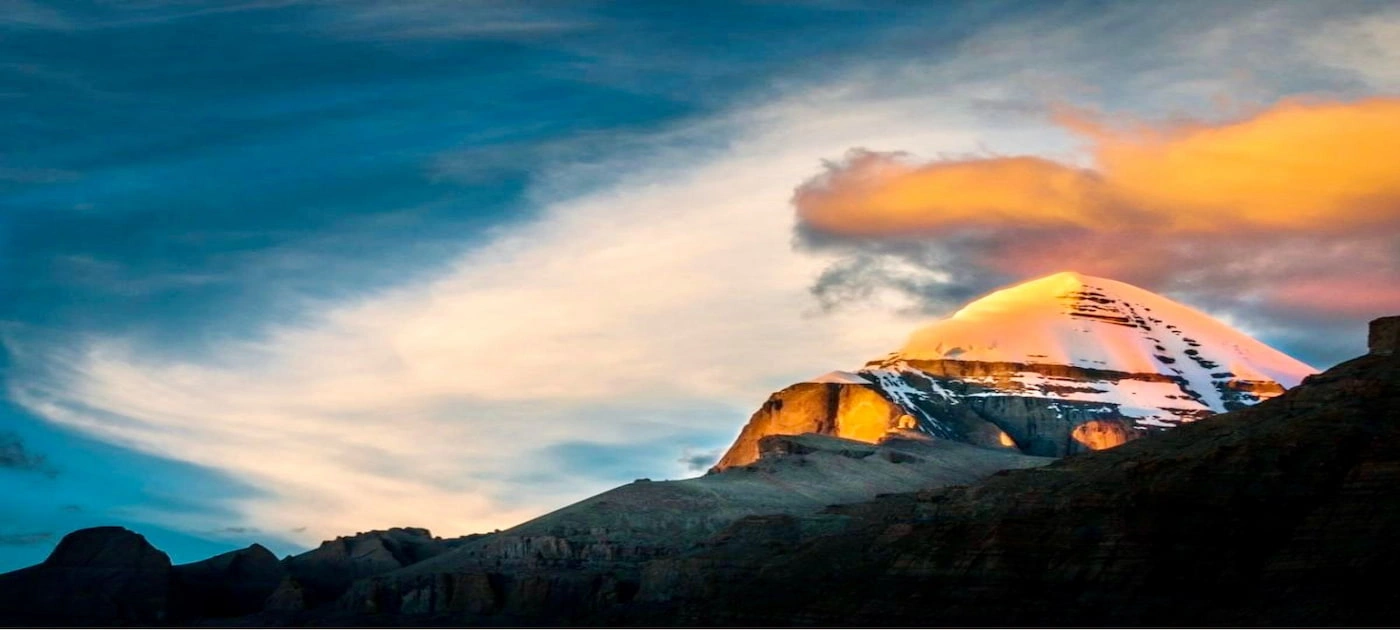
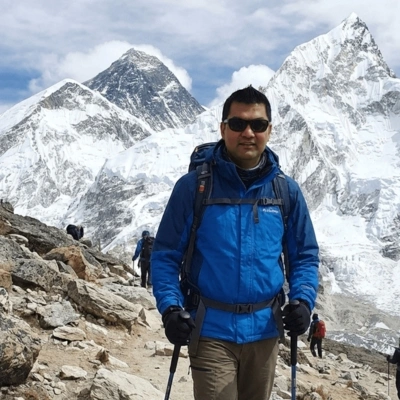
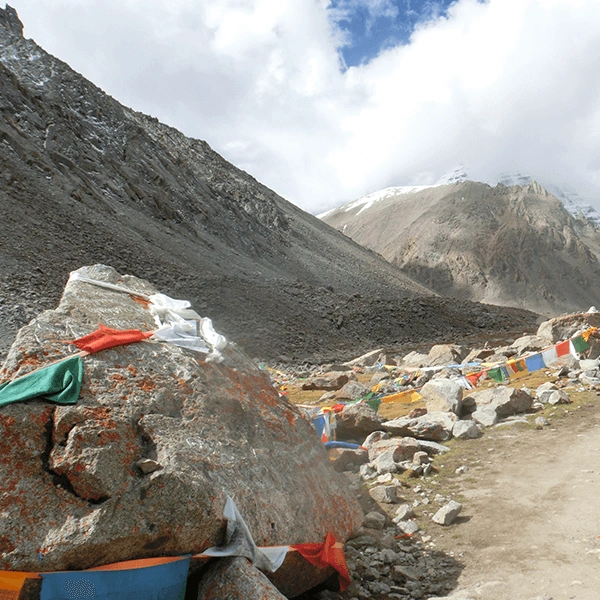
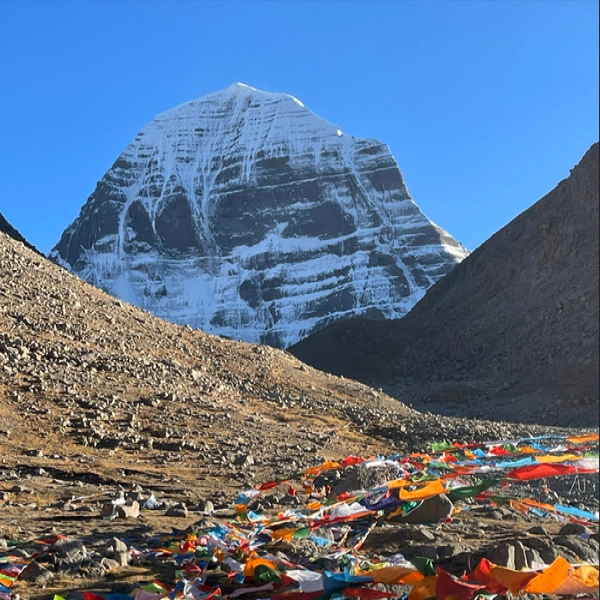
Overview of Kailash Mansarovar Yatra
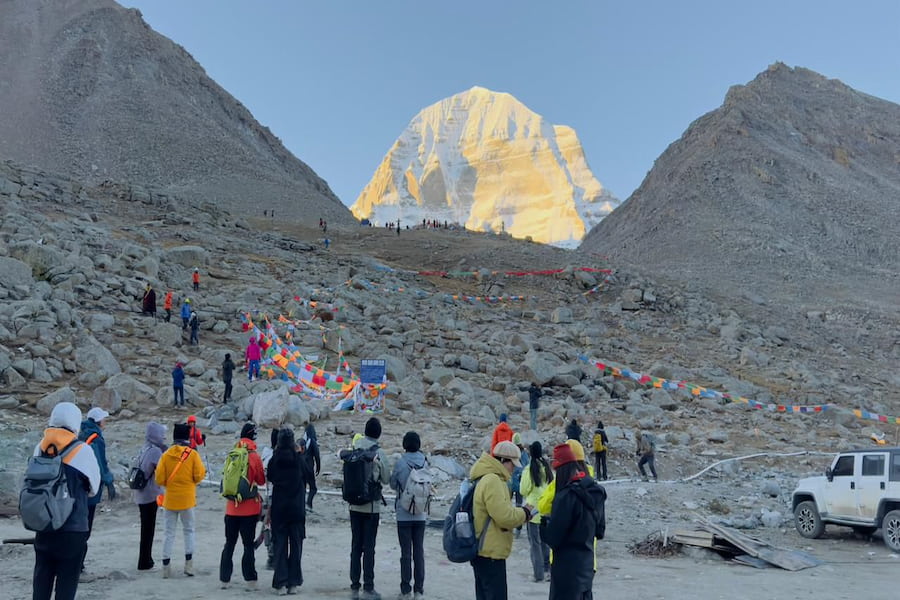
The Kailash Mansarovar Yatra is not a casual holiday. It's a multi-day pilgrimage through western Tibet, crossing some of the highest terrain on earth. The journey typically takes 14 to 18 days, depending on your route, your pace, and the number of acclimatization days built in.
What makes it hard isn't any single factor. It's the combination: high altitude, long walking distances, cold nights, basic facilities in remote areas, and the physical effort of the 52-km Kailash Kora itself. On top of that, you're sharing your body's resources between keeping warm and producing oxygen. At these altitudes, your body is already working harder just to breathe.
But here's the other side. Pilgrims in their 60s and 70s complete this Yatra every year. People who've never trekked before do it. The Kailash Mansarovar Yatra difficulty is real, but it's manageable with the right preparation, the right team, and genuine respect for the altitude.
The Yatra is physically demanding and spiritually unlike anything most people have experienced. That combination is the whole point.
How Difficult Is the Kailash Mansarovar Yatra?
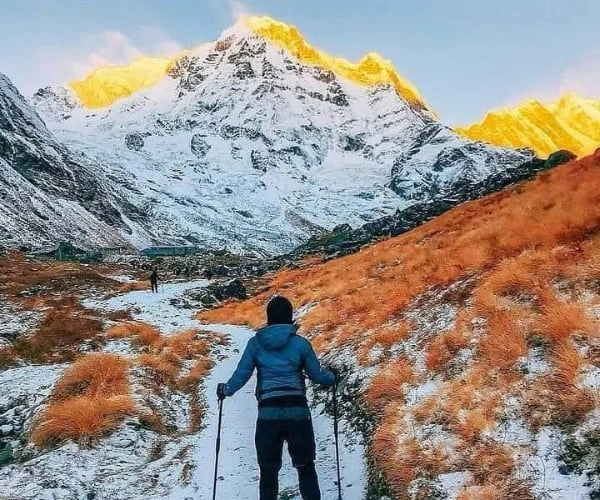
On a general trekking scale, the Kailash Mansarovar Yatra sits between moderate and strenuous. It's harder than Annapurna Base Camp, easier than technical mountaineering. But that comparison misses something important: the altitude here is higher, more sustained, and less forgiving than most Himalayan treks people have done before.
The Yatra challenges you in a few specific ways:
Altitude. You're spending days at elevations above 4,500m. Your body needs time to adjust, and that adjustment isn't always comfortable. Some people feel fine. Others get headaches, nausea, or broken sleep. This isn't about fitness level. Even experienced trekkers can struggle if they ascend too fast.
Long travel days. On the overland route from Nepal, some days involve 8 to 10 hours of driving on rough Tibetan plateau roads. You arrive tired even before you start walking. It's physically and mentally grinding.
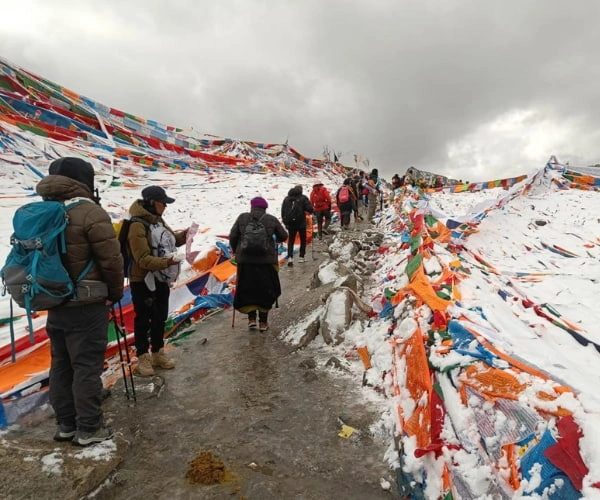
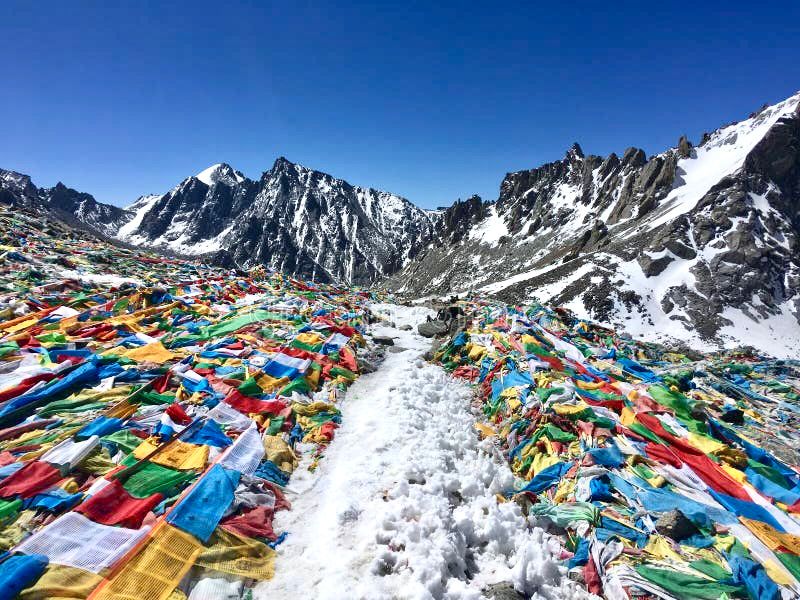
Cold and unpredictable weather. Even in summer, temperatures at Dolma La Pass can drop below freezing. Wind at altitude cuts through clothing faster than you expect.
Remote terrain. Once you're inside the Kora, there are no hospitals, no rescue helicopters on standby, and no quick exits. If something goes wrong, the group deals with it. That's why preparation is not optional.
Basic accommodations. Guesthouses on the route are simple. Think shared rooms, cold water, squat toilets, and limited electricity. If you need comfort to sleep well, start adjusting your expectations before the trip.
High Altitude of Mount Kailash Yatra
Understanding the elevation gain along the route is one of the most useful things you can do. Here are the key checkpoints and what they feel like:
Kerung (2.838 m / 9.311 ft). This is the Nepal-Tibet border crossing. At this elevation, most people feel normal. It's where the overland journey into Tibet begins. Kerung is a good place to sleep well, eat properly, and mentally prepare for what's ahead.
Saga (4,640m / 15,223 ft). Saga is typically a night stop on the overland route. By now, most trekkers notice the altitude. Breathing feels slightly labored during any physical effort. Some people sleep poorly. Headaches are common in the evening. Drinking water consistently and avoiding alcohol here makes a real difference.
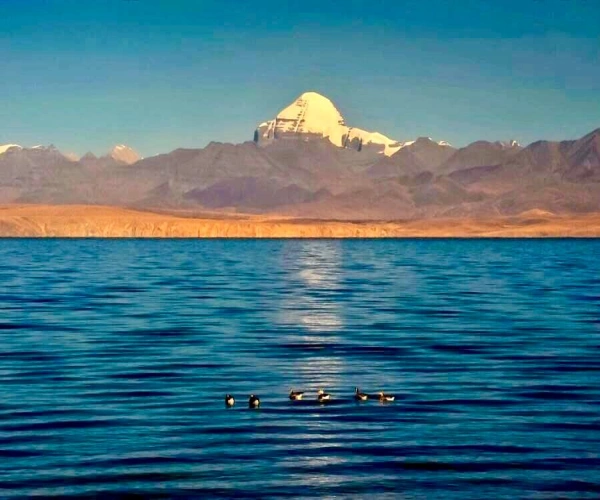
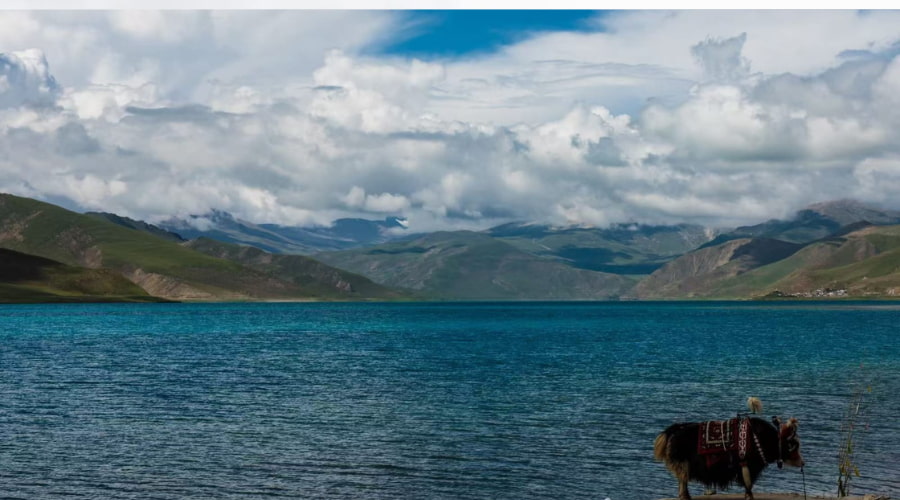
Lake Mansarovar (4,590m / 15,059 ft). The lake is holy in Hindu, Buddhist, Jain, and Bon traditions. Seeing it for the first time, many pilgrims feel an emotional reaction that's hard to explain. The air is thin here, the sky is enormous, and the silence is almost physical. At this elevation, your body is acclimatizing while you're also doing gentle walks and rituals. Don't push hard here. Rest, observe, absorb.
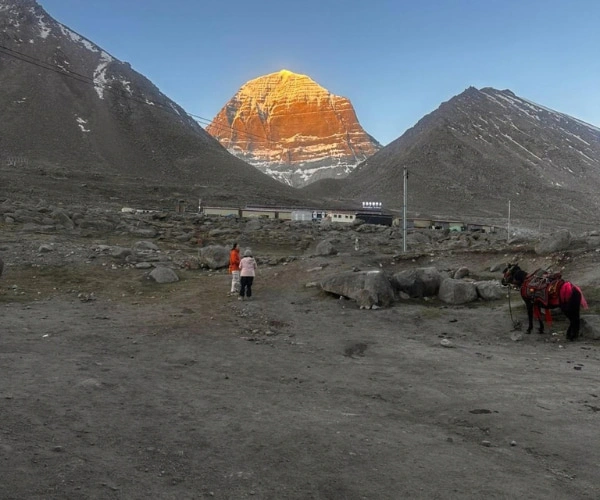
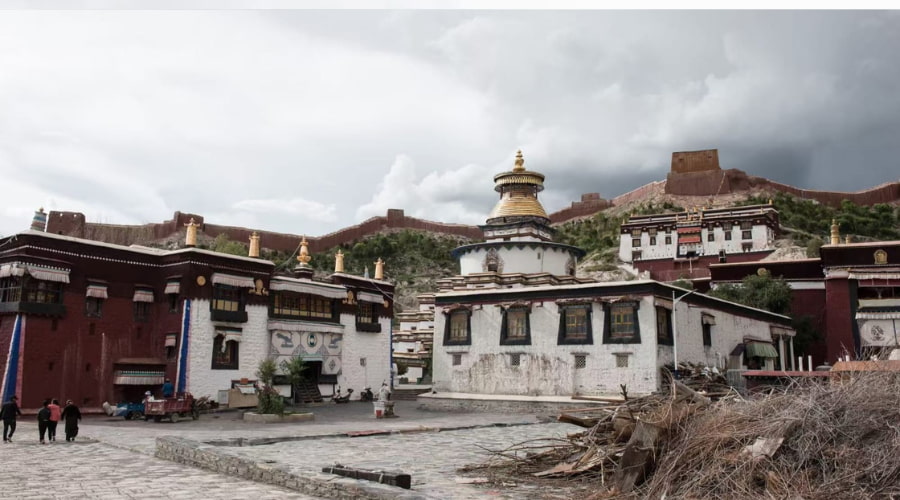
Darchen (4,560m / 14,961 ft) Darchen is the starting point of the Kailash Kora. It's a small town with basic guesthouses, a few shops, and a monastery. Trekkers typically spend a day here before beginning the Kora. Use this day well. Eat well, go to bed early, and take a short acclimatization walk.
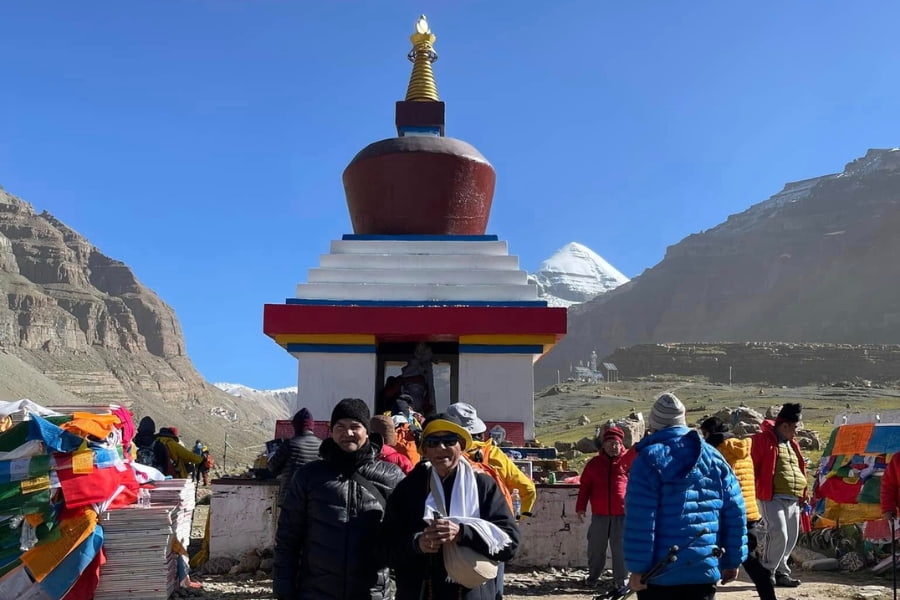
Dolma La Pass (5,636m / 18,491 ft). Dolma la is the highest point of the entire Yatra and the most physically demanding section. Dolma La is on Day 2 of the Kora. You climb around 800 meters in a short distance, often in cold wind, sometimes snow, sometimes hail. At this altitude, your breathing is labored even when walking slowly. The path is steep, rocky, and loose in places. Most trekkers need 4 to 6 hours to cross this section. It's the hardest day. It's also the most spiritually charged.
Why Physical Fitness Matters for Kailash Mansarovar Yatra?
Fitness doesn't mean you need to be an athlete. But it does mean your body needs to handle sustained low-intensity output over multiple days at altitude.
Here's what the Yatra actually demands:
- Walking 15 to 20 km per day for 3 consecutive days during the Kora
- Carrying a daypack (4 to 6 kg), even if horses carry your main luggage
- Climbing steep sections without stopping every few minutes
- Functioning with reduced oxygen and disrupted sleep
- Recovering quickly enough to keep moving the next morning
If you struggle to walk 5 km on flat ground at home, the Yatra will be very hard. If you can walk 10 km with some elevation without feeling wrecked, you're starting from a reasonable base.
Cardiovascular fitness is the most important factor. Strong lungs and a healthy heart handle altitude better—joint health matters too, especially knees, which take strain on downhill sections. Mental stamina counts just as much as physical stamina. Some days are slow and dull. Others are uncomfortable. The trekkers who do best aren't always the fittest. They're the ones who stay calm, pace themselves, and don't fight the mountain.
Who Can Join the Kailash Mansarovar Yatra?
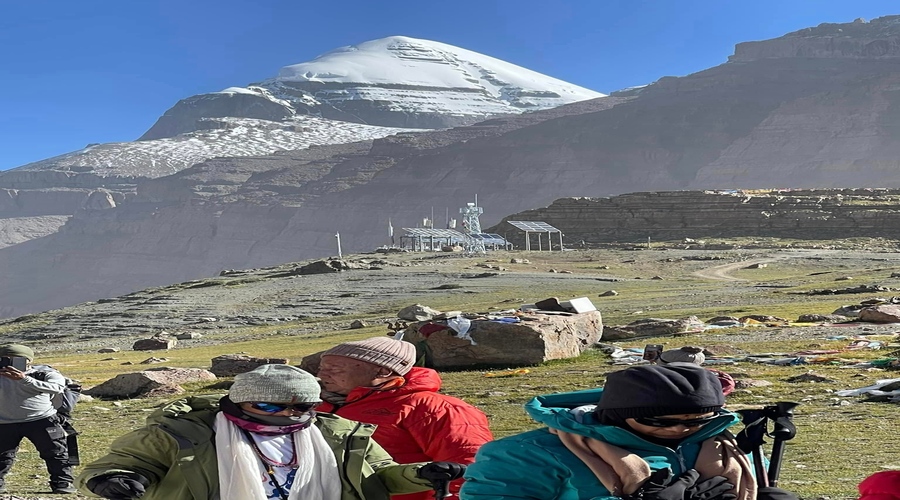
More people than you'd expect. The Yatra is open to a wide range of age groups and fitness levels, with some important caveats.
Beginners: Yes, beginners can do the Kailash Yatra. The Kailash Kora is not a technical trek. It doesn't require ropes, climbing gear, or previous mountain experience. What it requires is preparation. Beginners who spend 8 to 12 weeks training before departure consistently complete the Kora.
Ages 20 to 55: This group tends to have the least physical difficulty. With reasonable fitness and proper acclimatization, most people in this range complete the Yatra without major issues.
Ages 55 to 70: Fully manageable with preparation, horse support for the steep sections, and a slower pace. Holy Kailash Tours regularly supports pilgrims in their 60s on this route. The key is honest self-assessment and not trying to keep up with younger trekkers.
Above 70: An Indian passport holder is not possible because of Tibet travel permits and visa issues, but for foreigners, a medical evaluation is required before departure. Anyone with cardiovascular issues, chronic respiratory conditions, uncontrolled blood pressure, or recent surgery should get clearance from a doctor who understands high-altitude physiology.
Medical considerations: People with severe anemia, recent heart surgery, uncontrolled diabetes, or active respiratory infections should not attempt the Yatra without specific medical advice. Mild, controlled conditions like managed hypertension or well-controlled asthma are often fine with proper planning.
Mount Kailash Yatra Difficulty Explained: The 3-Day Kora.
The Kailash Kora is 52 km. It circles the entire mountain and is completed over 3 days. This is the physical heart of the Yatra.
Day 1: Darchen to Dirapuk (approximately 19 km). This is the warm-up day. The trail is mostly flat to gently rising. You walk alongside the Lha Chu river valley, with views of the north face of Mount Kailash opening up gradually. Most trekkers find Day 1 manageable, even enjoyable. Elevation gain is modest. The main challenge is pacing yourself and avoiding burnout.
Day 2: Dirapuk to Dolma La to Zutulpuk (approximately 20 km). Day 2 is the one that defines the Yatra. You climb from around 4,800m to Dolma La Pass at 5,636m. The ascent covers about 800 meters of elevation gain over a few kilometers. On most days, this section takes 3 to 5 hours. At the top, there's a moment of genuine silence and weight. Most pilgrims spend a few minutes at the pass in prayer or reflection. Then the trail descends steeply to Gauri Kund and continues down to Zutulpuk. Total walking time on Day 2 is often 8 to 10 hours.
Day 3: Zutulpuk to Darchen (approximately 13 km) A gradual descent back to the starting point. Legs are tired from the previous two days. Feet may be sore. But the terrain is easier, and the end is in sight. Most trekkers finish Day 3 in 4 to 6 hours.
The difficulty of the Kailash Mansarovar Yatra primarily comes from Day 2. Everything else is preparation for that day, and everything after is recovery.
Crossing Dolma La Pass: The Toughest Part of the Yatra
Dolma La Pass deserves its own section because it's where trekkers run into the most trouble.
The approach from Dirapuk starts gradually, then steepens significantly. The path is rocky and loose in sections. At this altitude, your legs feel heavier than usual. Your breathing is audible. Even a fit, young trekker will be moving slowly.
Common issues at Dolma La:
- Severe shortness of breath, even at rest
- Sudden-onset headaches from rapid pressure change
- Nausea and dizziness near the summit
- Extreme cold. Wind at the pass can make 0°C feel like -15°C
- Snow and ice in the early season (May) and late season (September to October)
What helps: a slow, steady pace with frequent short rests. Breathing exercises. Keeping warm layers accessible. Not pushing when your body says stop.
What makes it worse: rushing, skipping breakfast, inadequate clothing, and dehydration from the previous day.
The descent from Dolma La toward Gauri Kund is steep and requires careful footing. Trekking poles are not optional here. They protect your knees and your balance on loose rock.
Common Health Challenges During Kailash Mansarovar Yatra
Altitude Sickness (AMS) Acute Mountain Sickness is the most common issue. Symptoms include headache, nausea, dizziness, loss of appetite, and poor sleep. Mild AMS is common and manageable. Severe AMS (HACE or HAPE, which affects the brain or lungs) is serious and requires immediate descent. The standard rule: if symptoms worsen after rest, go down, not up.
Dehydration. The cold and dry air at altitude makes you lose water faster than you realize. You may not feel thirsty, but your body is constantly losing fluids. Aim for 3 to 4 liters of water per day on trekking days. Soups, herbal teas, and warm liquids also count.
Fatigue: Cumulative fatigue builds over the trip. Sleep at altitude is often disrupted. Days are long. The Kora follows weeks of travel. Factor this in. Don't expect to feel fresh every morning.
Breathing Difficulty Even without altitude sickness, breathing feels different above 4,500m. The air has less oxygen, and any sustained effort brings it on fast. Short, frequent rests help more than one long rest.
Cold-Related Issues Frostbite at the extremities is possible on Dolma La in poor weather. Hypothermia is a risk if you're caught out in the wind and rain, underdressed. This is why layering is not a suggestion.
How to Prevent Altitude Sickness During the Kailash Yatra?
Acclimatize properly. The itinerary Holy Kailash Tours uses includes rest days at key elevations to let your body adjust. Don't skip them or try to rush ahead.
Ascend gradually. The old rule still holds: go high, sleep low when possible. On the overland route, the stops at Kerung, Saga, and Mansarovar follow this principle.
Hydrate constantly. Start drinking more water the day before altitude gains. Don't wait until you feel thirsty.
Avoid alcohol, smoking, and sleeping pills. All of these suppress your breathing response, slowing altitude acclimatization and making it more dangerous.
Carry Diamox (Acetazolamide). This medication helps your body acclimate faster. Discuss it with your doctor before the trip. The common dose is 125mg twice daily, starting the day before significant altitude gain.
Know the warning signs. If a headache doesn't respond to rest and water, that's a signal. If someone in your group becomes confused, loses coordination, or develops a persistent cough with frothy sputum, this is an emergency.
Don't be a hero. Altitude doesn't care about your fitness, your age, or your previous trekking experience. It affects everyone differently.
Fitness Preparation Before Kailash Mansarovar Yatra
You have roughly 8 to 12 weeks to prepare. That's enough time to build a solid base if you start now and stay consistent.
Walking: Start with 45-minute walks and build to 2 to 3-hour walks on weekends. Walk uphill whenever possible. This is the single most specific training you can do.
Stair climbing: 20 to 30 minutes, 3 to 4 times per week, directly mimics the Dolma La ascent. If you have access to a stadium or a tall building, use it.
Cardio exercises: Cycling, swimming, running, or brisk walking all build cardiovascular fitness. Aim for 3 to 5 sessions per week, each lasting 30 to 60 minutes.
Breathing exercises, such as Pranayama (especially Anulom Vilom and Kapalabhati), improve lung capacity. Diaphragmatic breathing helps you use oxygen more efficiently at altitude. 10 to 15 minutes daily makes a difference.
Light trekking: Do at least 2 to 3 day hikes in your local hills before departure. Load your daypack with 4-5 kg. Wear your actual trekking boots, not new ones.
Strength training: Core and leg strength reduce fatigue and knee strain. Squats, lunges, planks, and calf raises 2 to 3 times per week are enough.
Training Plan Before Mount Kailash Yatra
Here's a realistic structure for your 10-week Kailash Yatra fitness plan:
Weeks 1 to 3 (Base building): Walk 45 to 60 minutes daily. Add one 2-hour walk per weekend. Begin stair climbing 3 times per week. Start breathing exercises.
Weeks 4 to 6 (Building endurance): Increase weekend walks to 3 to 4 hours with a 4 to 5 kg pack. Run or cycle 30 minutes, 3 times per week. Do a full day hike with elevation gain.
Weeks 7 to 9 (Peak training): Do a 2-day trekking trip or two consecutive day hikes. Increase pack weight to 6 kg. Continue stair work. Maintain cardio 4 times per week.
Week 10 (Taper and rest): Reduce intensity. Focus on flexibility and rest. Don't start anything new. Sleep well and eat nutritiously.
If you can comfortably complete a 4 to 5-hour hike with a loaded pack by week 9, you're in reasonable shape for the Yatra.
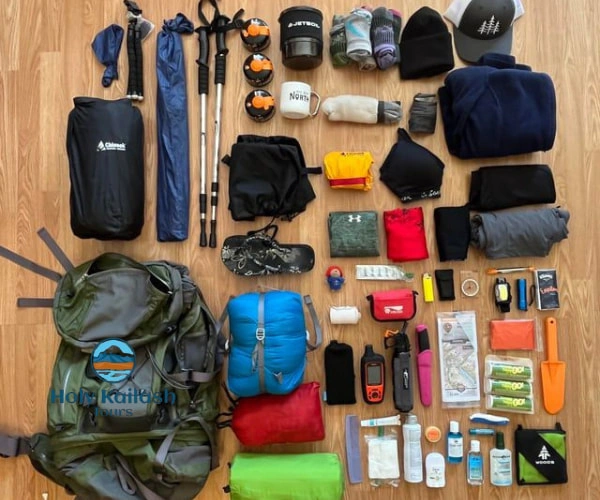
What to Pack for a Comfortable Kailash Trek?
Footwear: Waterproof trekking boots with ankle support, broken in before the trip. One pair of camp sandals or light shoes for evenings.
Clothing layers: Moisture-wicking base layers, a fleece mid-layer, a down jacket, and a waterproof outer shell. Don't underestimate the cold. Pack for -10°C at Dolma La, even in summer.
Head and hands: Warm hat, balaclava or buff, liner gloves, and waterproof outer gloves. Frostbite starts at the fingertips.
Trekking poles: Non-negotiable. Both poles. They reduce knee strain by up to 25% on downhill sections and help your balance on rocky terrain.
Medicines: Diamox (discuss with your doctor), ibuprofen for headaches, oral rehydration salts, antiseptic cream, blister plasters, anti-diarrheal medicine, and any personal prescriptions. Carry a copy of your prescriptions.
Hydration: A 2-liter water bottle or hydration bladder. Water purification tablets or a filter straw, because tap water on the route needs treatment.
Sun protection: At altitude, UV radiation is much stronger—wear SPF 50+ sunscreen, UV-blocking sunglasses, and a wide-brimmed hat.
Documents and essentials: Tibet Travel Permit, Chinese Visa (if required), passport, travel insurance, emergency contact list, and a small amount of Chinese Yuan for guesthouses and horse hire.
Can Senior Citizens Join the Kailash Mansarovar Yatra?
Yes, with the right preparation and honest self-assessment.
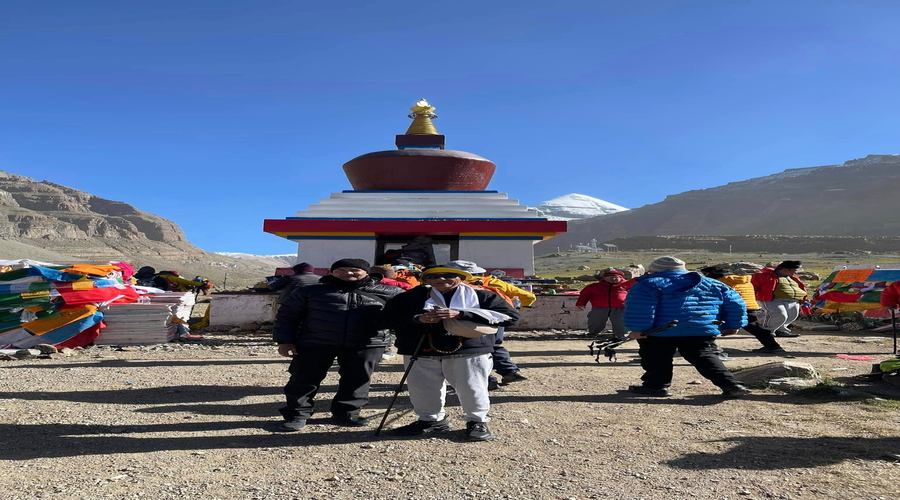
Holy Kailash Tours has supported many pilgrims aged 60 to 70 on the Kailash Kora. The journey is demanding at any age, but it's not age-specific in its difficulty. What changes with age are recovery time, the need for a slower pace, and the importance of medical clearance.
For senior pilgrims, the horse option on the Kora is worth serious consideration. Horses can carry pilgrims on the steeper sections of the route, particularly the ascent toward Dolma La. This is common, culturally accepted, and practically wise for anyone whose joints or cardiovascular health would be strained by the full climb.
The most important step for any senior trekker is a full medical check before booking. Get your blood pressure, heart function, and lung capacity assessed by a doctor who understands high-altitude physiology. Tell them exactly what the Yatra involves.
Seniors who do well on this trip share a few traits: they're patient, they don't compare themselves to younger trekkers, they listen to their guide, and they've trained consistently in the months before departure.
Horse and Porter Services During Mount Kailash Kora
Horse and porter support is available during the Kailash Kora, and using it doesn't make the Yatra less meaningful.
Horses are available at Darchen and carry pilgrims across much of the Kora route. The most commonly hired section is from Dirapuk toward the Dolma La approach. Note that horses cannot carry pilgrims across the final steep section to the pass itself. That part is on foot regardless.
Porter services carry your main luggage between camps. Trekkers carry only a daypack. This is a sensible option for most people and significantly reduces cumulative fatigue.
The cost of horse & potters hire varies by section and availability. Holy Kailash Tours can arrange this in advance or at Darchen, and the team will advise based on your condition on the day.
Using a horse is a practical choice. Many pilgrims in their 60s and 70s use horseback and complete the Kora.
Mental Preparation for the Kailash Mansarovar Journey
Physical fitness prepares your body. Mental preparation determines whether you actually enjoy the trip.
A few realities to accept before you go:
Things will go wrong. The road from Saga to Darchen is rough. A stop may be changed due to the weather. Your guesthouse may be colder than expected. The person you're sharing a room with may snore. Building mental flexibility before departure helps you handle these things without stress.
The pace is slow. High altitude forces it. If you're someone who hates moving slowly, practice patience at home. On the Kora, the right pace is the one that keeps you moving without gasping.
Altitude affects mood. Poor sleep and lower oxygen can make you irritable or fatigued. Recognizing this helps you not react badly to small frustrations.
The spiritual dimension is real, whether or not you're religious. Something about the landscape, the scale, the silence, and the effort combine into an experience that most trekkers describe as unlike anything else. You don't have to be Hindu or Buddhist to feel it. You just have to show up and pay attention.
Trekkers who approach the Kailash Mansarovar Yatra with patience, curiosity, and a willingness to be uncomfortable tend to come back saying it changed them. That's not a travel cliché. It's what the experience consistently produces.
Best Time to Visit Kailash Mansarovar for Easier Travel
May to June: The Yatra season opens in May. Snow is still possible on Dolma La early in May, and temperatures are likely to be cold. The landscape is stark and beautiful. Rivers may be higher from snowmelt. June is drier and warmer, making it one of the most popular windows.
July to August: The Tibetan plateau is warmer, but this is also the monsoon season in the surrounding regions. Rain is possible, and occasional road disruptions can affect the overland route. Temperatures are the most comfortable. Many pilgrims choose July and August.
September: Often considered the ideal month. The rains ease off, skies clear, and the views of Mount Kailash are sharp. Temperatures start to drop in late September—a genuinely good window.
October: The season closes. The weather can be unpredictable and cold. Snow returns to Dolma La by mid-October. Still doable in early October with proper gear, but the window narrows fast.
Avoid: November to April. The route through Tibet is either closed or extremely harsh in these months.
For a first-time pilgrim seeking the best combination of manageable weather, clear skies, and open roads, late May to June or September are the strongest choices.
Expert Travel Tips for a Safe Kailash Mansarovar Yatra
Book early. Tibet permits take time to process, and group sizes are limited. Booking 3 to 6 months in advance is standard.
Travel with an organized group. Solo travel to Tibet is not permitted. You need an authorized tour operator to enter the Tibet Autonomous Region.
Get travel insurance that covers high-altitude trekking and emergency evacuation. Not all travel insurance covers above 4,500m or helicopter rescue. Read the policy.
Don't push through severe symptoms. AMS is serious. If you're deteriorating at altitude, descent is always the right call.
Listen to your guide. Experienced guides on this route have seen everything when they say, "Rest, rest." When they say slow down, slow down.
Eat even when you're not hungry. Altitude suppresses appetite. Your body still needs fuel. Eat carbohydrates, soups, and warm food consistently.
Respect the mountain. Mount Kailash is sacred to millions of people. Behave accordingly at religious sites, carry out your waste, and don't cut ahead of other pilgrims on the Kora.
Why Choose Holy Kailash Tours for Kailash Mansarovar Yatra
Holy Kailash Tours is based in Kathmandu, Nepal, and has focused specifically on the Kailash Mansarovar Yatra since its inception. That focus matters. This isn't a side trip added to a general trekking portfolio. It's the main thing.
What that means in practice:
- Acclimatization built in. The itinerary includes rest days at Kerung, Saga, and Mansarovar. These are non-negotiable, and Holy Kailash Tours doesn't skip them to shorten the trip.
- Experienced guides. The guides are familiar with the route, the altitude, and the logistics. They've handled medical situations on the trail and know when to call for help.
- Fixed group departures. Scheduled dates make planning straightforward. Groups are kept small enough for individual attention.
- Complete permit handling. The team manages Tibet Travel Permits, Chinese Group Visa, and all required documentation.
- Honest briefings. Pilgrims are clearly informed of what the Yatra entails physically, logistically, and medically before they commit. There are no surprises.
- Support throughout. From Kathmandu to Darchen and back, the team is with the group. If a pilgrim needs to rest an extra day or requires horse support, adjustments are made.
- For a first-time pilgrim, choosing a company with specific Kailash experience is one of the most practical decisions you can make. The route is complex, the permits are specific, and the altitude leaves no margin for logistical errors.
Frequently Asked Questions
How difficult is the Kailash Mansarovar Yatra compared to other treks?
\It's harder than most standard Himalayan treks because of sustained altitude above 4,500m and the crossing of Dolma La at 5,636m. It's easier than technical mountaineering. The difficulty of the Kailash Mansarovar trek primarily concerns altitude management, not technical climbing skill.
How fit do you need to be for the Kailash Mansarovar Yatra?
You should be able to walk 10 km with moderate elevation gain comfortably before you depart. 8 to 12 weeks of consistent training is sufficient for most people starting from a reasonable baseline of health.
Is the Mount Kailash trek difficult for beginners?
Yes, but beginners complete it regularly. The key is preparation. Beginners who train properly, take acclimatization seriously, and don't rush the Kora tend to do well.
Can I do the Kailash Mansarovar Yatra if I have high blood pressure?
Controlled, medically managed hypertension is generally manageable. Uncontrolled high blood pressure is a risk factor for altitude-related complications. Get cleared by your doctor and discuss the itinerary with them specifically.
How do I avoid altitude sickness at Mount Kailash?
Ascend slowly, hydrate constantly, avoid alcohol and sleeping pills, take Diamox if your doctor recommends it, and don't ignore symptoms. Rest when your body tells you to.
What is the best fitness plan for the Kailash Mansarovar Yatra?
Walking, stair climbing, and cardio training over 8 to 12 weeks is the most effective preparation. Breathing exercises and light trekking with a loaded daypack are also directly useful.
Is the Kailash Kora possible for senior citizens?
Yes. Many pilgrims complete the Kora in their 60s and early 70s, often with horse support on the steeper sections. Medical clearance before departure is essential.
What is the hardest day of the Kailash Kora?
Day 2, which includes the crossing of Dolma La Pass. The elevation gain, cold, and physical effort make it the most demanding section of the entire Yatra.
What should I pack for the Kailash trek?
Trekking boots, layered warm clothing, trekking poles, personal medications, sun protection, hydration bottles, and your travel documents. See the detailed packing section above.
How many days does the Kailash Mansarovar Yatra take?
Total trip duration is typically 14 to 18 days, depending on the route and departure point. The Kailash Kora itself is 3 days.
last words
The Kailash Mansarovar Yatra is one of the most demanding journeys most people will ever attempt. It's also one of the most deeply meaningful. Understanding the real difficulty of the Kailash Yatra before you go doesn't diminish the experience. It prepares you actually to have it.
If you're serious about doing this, start training now, get your medical clearance, and reach out to Holy Kailash Tours to understand your options. The mountain has been there for a very long time. It's not going anywhere. But the best time to start preparing is today.
Email: [email protected]
WhatsApp: +977-9851254672 — Feel free to reach out anytime for fast, friendly, and personalized assistance