Join the 14-day Kailash Overland Tours via Kerung with Holy Kailash Tours. Explore Mount Kailash, Lake Mansarovar, and the sacred Kailash Kora with a complete itinerary, cost breakdown, permits, and travel guide.
Every year, thousands of pilgrims and adventurers travel from Nepal into western Tibet to circle the holiest mountain on earth, Mount Kailash. They do it for different reasons: faith, curiosity, a personal challenge, or something they can't quite put into words. Whatever brings them, most come back saying it was the most meaningful thing they've ever done.
We try everything you need to plan a trip to Kailash Mansarovar through the 14-day Kailash Overland Tours via the Kerung route. You'll find a full day-by-day itinerary, real cost breakdowns, permit requirements, trekking difficulty, the best time to visit, and practical advice that actually helps on the ground.
Holy Kailash Tours has been organizing this journey for years. This guide reflects that experience.
Kailash Overland Tours via Kerung Overview
This tour runs from Kathmandu to Mount Kailash and back, entirely overland through the Kerung border crossing. Total duration is 14 days. You'll cover roughly 1,800 km of road, crossing high Tibetan plateaus, passing glacial rivers, and eventually reaching Darchen, the base village for the Kailash Kora.
The altitude climbs fast. Kathmandu sits at 1,400 m. By the time you reach Lake Mansarovar, you're at 4,590 m. Darchen, where the Kora begins, is at 4,675 m. Dolma La Pass, the highest point of the trek, reaches 5,630 m.
Acclimatization is built into the itinerary at Kerung, Saga, and Mansarovar. These stops aren't just stopovers; they're necessary rest days that your body needs before the Kora.
This is an overland Kailash tour,not a helicopter trip. That means longer travel days and more driving. It also means you actually see Tibet as you cross it: the plateau opening up in every direction, the prayer flags at mountain passes, the monasteries carved into cliffsides. Most travelers who've done both routes say the overland experience is irreplaceable.
The Kerung route has become the most popular way to travel from Nepal to Mount Kailash, and for good reason.
The road is better. The Kerung (Gyirong) border was upgraded significantly after the 2015 earthquake reconstruction. Compared to older routes like Purang, the road surfaces are more consistent, especially in the first section between the border and Saga.
Acclimatization is more gradual. You gain altitude slowly over several days. That matters at 5,000+ meters. Travelers who fly directly into Lhasa and then drive west sometimes struggle more than those who come overland from Nepal.
The scenery is different. The drive through Gyirong valley is genuinely beautiful. You descend from Nepal's hills into a narrow gorge, cross the border, and then climb up onto the Tibetan plateau. The landscape shift is dramatic.
Cost. The overland Kailash travel package is more affordable than helicopter-access tours. You're not paying for charter flights, and group departures keep costs down.
Group experience. Many travelers join a Kailash group tour for this route. Sharing the journey with others, especially during the Kora, adds a layer of support and community that solo travel can't replicate.
Spiritual Importance of Mount Kailash and Lake Mansarovar
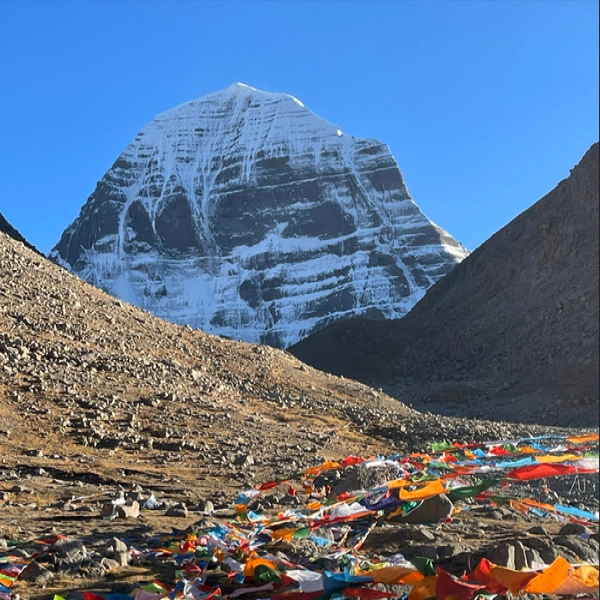
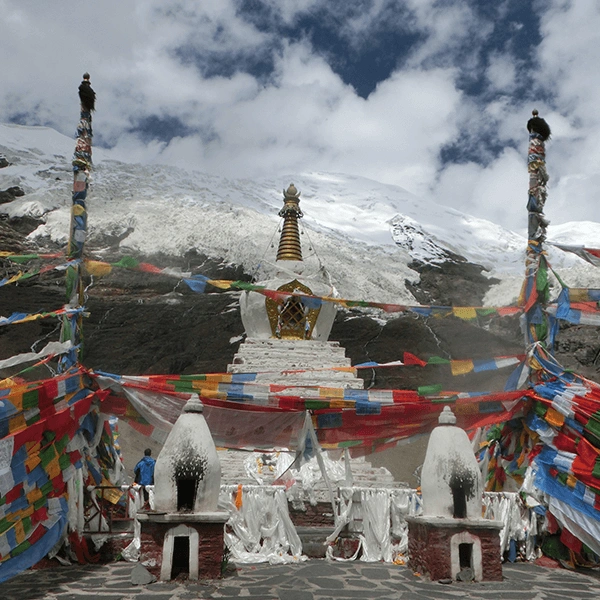
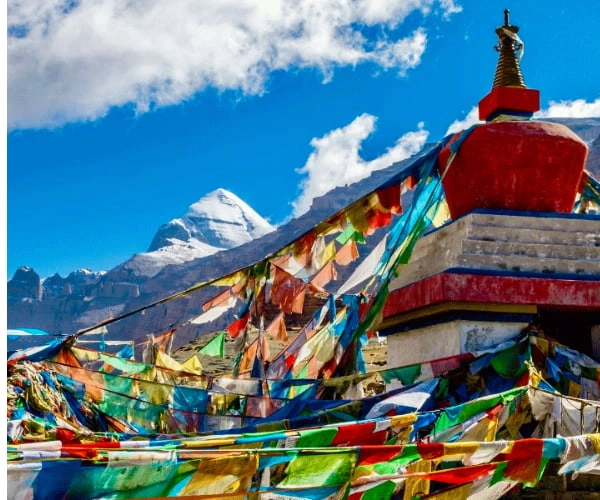
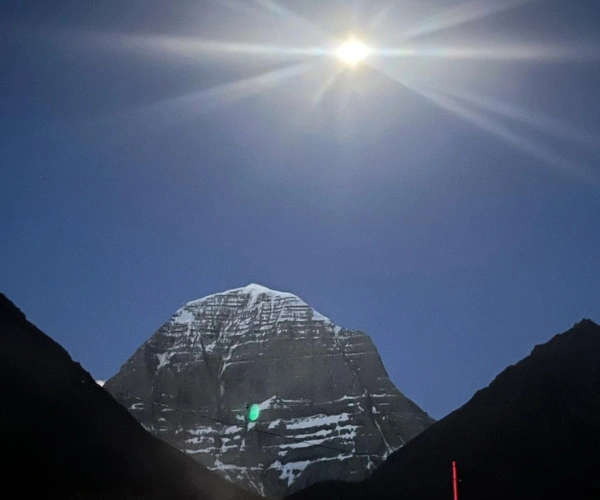
Mount Kailash is 6,638 m high, but it's never been climbed. Not because it's technically impossible, but because every major religion that holds it sacred considers the summit untouchable.
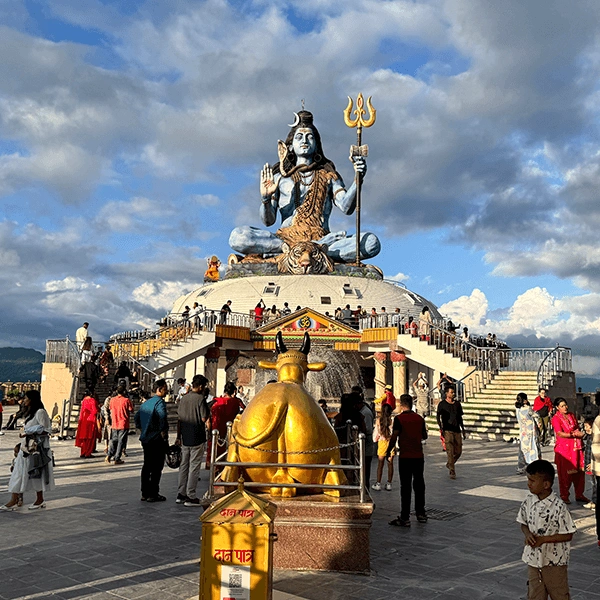
For Hindus, Kailash is the home of Lord Shiva. The mountain appears in the Puranas, the Mahabharata, and the Ramayana. Circumambulating it (the Kailash Kora) is considered one of the most powerful acts of devotion a Hindu can perform.
Tibetan Buddhists call it Kang Rinpoche, the "Precious Snow Mountain." It's the center of the universe in their cosmology. Completing the Kora is said to erase a lifetime's karma.
Jains believe their first Tirthankara, Rishabhadeva, attained liberation here.
The Bon religion, Tibet's pre-Buddhist tradition, considers Kailash the soul of the world and the seat of their sky goddess Sipaimen.
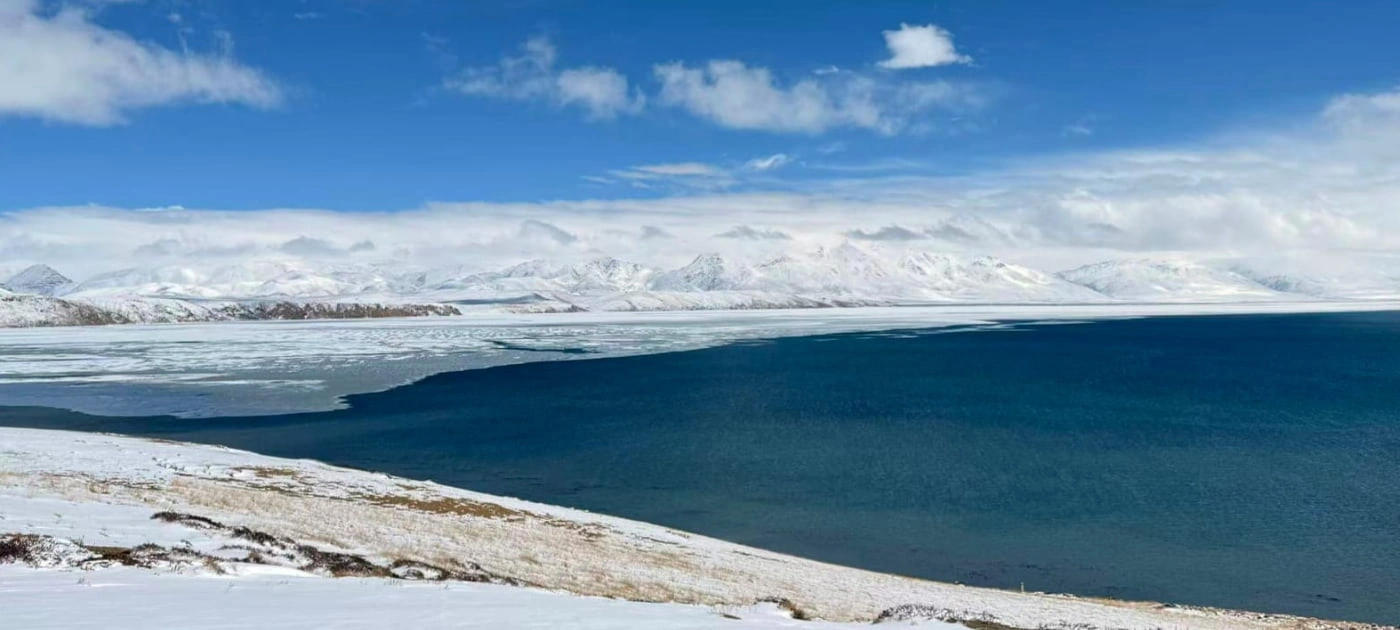
Lake Mansarovar sits about 30 km from Kailash at an altitude of 4,590 m. In Sanskrit, "Manas" means mind, and "Sarovar" means lake, so "lake born of the mind of Brahma." A ritual bath in its waters is considered spiritually purifying across all four traditions. Many pilgrims cup the water in their hands and drink it. Some weep.
The combination of Kailash and Mansarovar is what draws so many people to this journey. It's not one holy site; it's two, separated by a short drive and connected by centuries of pilgrimage.
The Kailash Mansarovar route on this tour follows this path:
Kathmandu → Kerung Border → Gyirong Town → Saga → Lake Mansarovar → Darchen → Kailash Kora (Dirapuk → Dolma La → Zuthulpuk) → Darchen → Saga → Kerung → Kathmandu
Key distances and altitudes:
Kathmandu to Kerung Border: 165 km, roughly 6-7 hours
Kerung to Gyirong Town: 30 km, 1 hour
Gyirong to Saga: 475 km, 8-9 hours
Saga to Mansarovar: 470 km, 8-9 hours
Mansarovar to Darchen: 30 km, 45 minutes
Kailash Kora: 52 km over 3 days
This is a long, overland route to Kailash. The drives across the Tibetan Plateau are neither short nor easy. But the road is paved for most of the route, and the views across the plateau at dusk are the kind you don't forget.
14 Days Kailash Overland Tour: Day-by-Day Itinerary
Kailash Yatra
Day 1: Arrival in Kathmandu (1,400 m)
Arrive at Tribhuvan International Airport. Transfer to your hotel in Thamel—evening briefing with your Holy Kailash Tours guide. Permits and documents are verified. Overnight in Kathmandu.
Day 2: Kathmandu – Sightseeing and Preparation
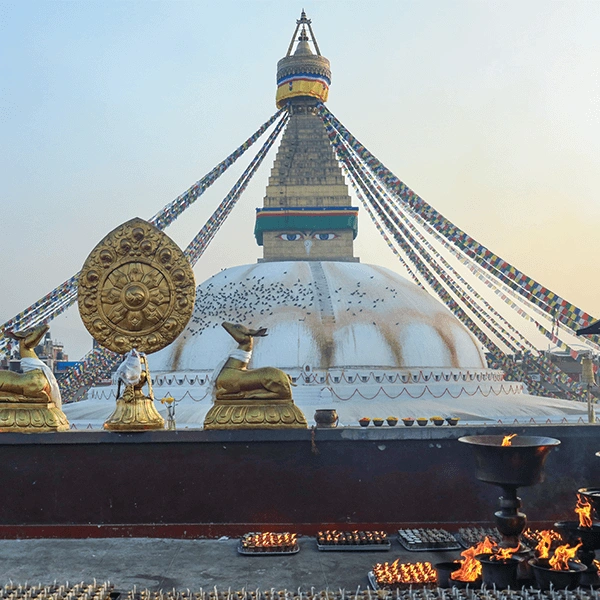
Half-day tour of Pashupatinath Temple, Boudhanath Stupa, and Swayambhunath. These aren't just tourist stops; they're spiritually significant sites that set the tone for the pilgrimage ahead. Afternoon free for shopping and rest. Overnight in Kathmandu.
Day 3: Kathmandu to Kerung Border (1,400 m → 1,768 m, 6-7 hrs driving)
Early morning departure by private vehicle. The drive follows the Trishuli River valley north through Dunche and up toward the border. Cross the Kerung border into Tibet. Transfer to Gyirong Town (2,700 m) for overnight. Chinese immigration and customs formalities here.
Day 4: Gyirong Town – Rest and Acclimatization (2,700 m)
Full rest day in Gyirong. Your body needs this, even if you feel fine. Short walk around town. Visit the local monastery. Overnight in Gyirong.
Day 5: Gyirong to Saga (4,500 m, 8-9 hrs driving)
Long driving day across the plateau. The road passes several high passes, and the landscape opens up dramatically. Saga is a small Tibetan town with basic guesthouses. Overnight at Saga.
Day 6: Saga to Lake Mansarovar (4,590 m, 8-9 hrs driving)
Another long day on the road. You'll pass through Paryang and continue west. The first glimpse of Mansarovar usually happens in the late afternoon light. The lake is enormous and extraordinarily blue. Most travelers go quiet when they see it. Overnight at the Mansarovar guesthouse.
Day 7: Lake Mansarovar – Puja, Rest, and Reflection (4,590 m)
Full day at the lake. Morning puja (prayer ritual) at the lakeside. Many pilgrims take a ritual bath or collect water. The day is free for walking the shore, meditation, or simply sitting. This is not a day to rush. Overnight at Mansarovar.
Day 8: Mansarovar to Darchen (4,675 m, 30 km)
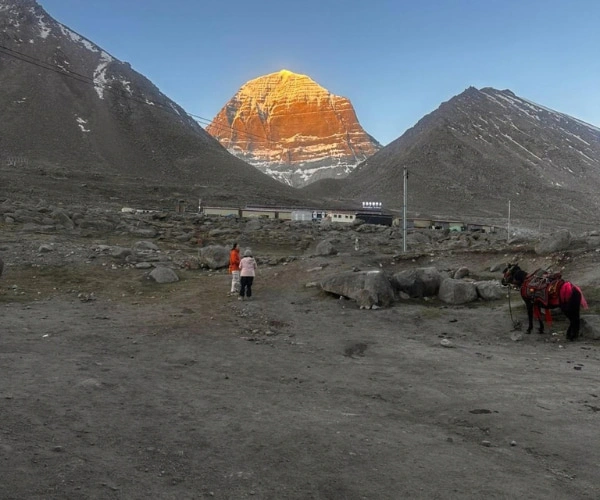
Short drive to Darchen, the base village for the Kailash Kora. Afternoon rest and preparation for the trek. Medical check, altitude assessment, and briefing from your guide. First views of Kailash's south face. Overnight in Darchen.
Day 9: Darchen to Dirapuk (4,900 m, 12 km trek, 5-6 hrs)
The Kailash Kora begins. The trail heads north along the Lha Chu river valley. The north face of Kailash comes into view after a few hours. This is one of the most photographed views in the Himalayas, but photographs don't do it justice. Overnight at Dirapuk guesthouse.
Day 10: Dirapuk to Zuthulpuk via Dolma La Pass (5,630 m → 4,790 m, 22 km trek, 8-9 hrs)
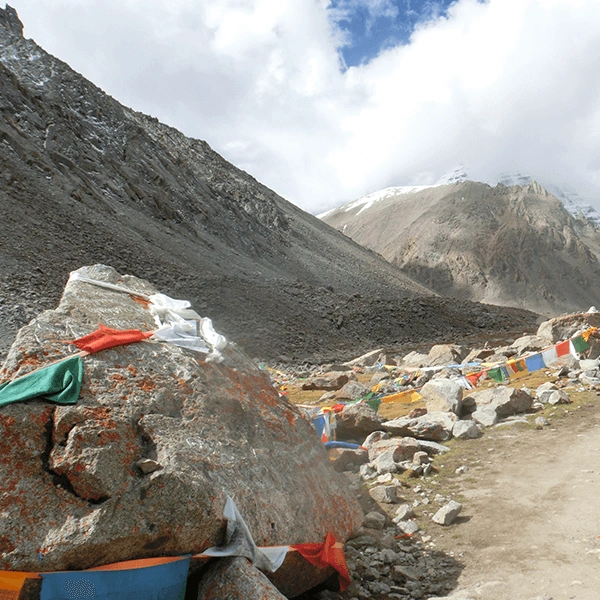
The hardest day. You start early, around 4-5 am, to cross Dolma La Pass before the afternoon weather arrives. The climb from camp to the pass is steep, and altitude hits hard here. At the summit, prayer flags cover every surface. Most pilgrims stop, breathe, and offer a prayer. The descent to Zuthulpuk is long but easier. Overnight at Zuthulpuk.
Day 11: Zuthulpuk to Darchen (4,675 m, 18 km trek, 5-6 hrs)
The final leg of the Kora. Mostly flat walking along the Zhong Chu River. Return to Darchen by midday. Rest, celebratory lunch, and reflection. Overnight in Darchen.
Day 12: Darchen to Saga (4,500 m, 8-9 hrs driving)
Return drive east across the plateau. Same road, different light. Overnight in Saga.
Day 13: Saga to Kerung (2,700 m, 8-9 hrs driving)
Drive back to Gyirong and the Kerung border. Cross into Nepal. Transfer to accommodation on the Nepal side or continue toward Kathmandu, depending on timing. Overnight near Kerung or continue.
Day 14: Kerung to Kathmandu (1,400 m, 6-7 hrs driving)
Final drive back to Kathmandu. Arrive by afternoon. Tour ends at your hotel. Debrief with your guide. The journey is complete.
The Kailash Kora (also called the Parikrama) is a 52 km circuit around Mount Kailash. Tibetan Buddhists believe that completing one Kora erases the sins of a lifetime. 108 Koras confers enlightenment. Most pilgrims complete one.
The trek takes three days:
Day 1: Darchen to Dirapuk (12 km). Gradual ascent, stunning north face views—difficulty: moderate.
Day 2: Dirapuk to Zuthulpuk via Dolma La Pass (22 km). Early start, steep climb to 5,630 m, long descent. Difficulty: hard. This is the physical and spiritual peak of the entire journey.
Day 3: Zuthulpuk to Darchen (18 km). Flat, straightforward. Difficulty: easy to moderate.
You can hire yaks in Darchen to carry your gear. Porters are also available. Many pilgrims choose to carry a light day pack and let yaks handle the main luggage.
Dolma La Pass (5,630 m) is where the risk of altitude sickness is highest. Go slowly. Breathe. Don't try to race anyone. Some pilgrims take 10-12 hours on Day 2. That's fine.
The Mount Kailash trek is not technical. You don't need ropes or mountaineering experience. But you do need to be physically fit and mentally prepared for altitude.
Kailash Trip Cost and Package Details
Kailash Yatra
The total cost of the Kailash trip varies depending on group size, accommodation type, and the specific services included. Below is a typical breakdown for the 14-day Kailash overland tour from Holy Kailash Tours.
What's typically included in the package:
Tibet Travel Permit (TTP) and Alien Travel Permit
Chinese Group Visa processing
All transportation (private 4WD vehicles across Tibet)
Accommodation (twin sharing throughout)
Meals (breakfast and dinner daily, some lunches)
English-speaking licensed Tibetan guide
Experienced Nepali guide from Kathmandu
Yak support for the Kailash Kora (one yak per two travelers)
Emergency oxygen cylinders (carried by the support team)
Kailash Kora entry fees
Estimated cost range (per person):
Group Size Estimated Cost (USD)
5 persons $8,400 – $8,800
11-20 persons. $6,300 – $6,700
8-12 persons. $2,600 – $2,800 Group join
These figures are estimates. The Mount Kailash tour cost varies seasonally due to fuel prices and permit fees. ContactHoly Kailash Tours for a current quote.
What's typically NOT included:
International flights to Kathmandu
Nepal visa
Personal travel insurance (required)
Personal porter on the Kora (beyond the yak allocation)
Tips for guides and drivers
Personal expenses, drinks, snacks
The Kailash yatra cost from Nepal is significantly lower than the Indian government's official Kailash Mansarovar Yatra program, which involves helicopter access and a different routing. Many Indian travelers now choose to organize independently through Nepal-based operators like Holy Kailash Tours to save on costs and gain greater flexibility.
The Kerung border and the Tibetan plateau are not accessible year-round. The window is generally May through September.
May: Early season. Roads are mostly clear. Temperatures are cold at night (below freezing at altitude), and there can be lingering snow on Dolma La Pass. Fewer pilgrims. A good time if you prefer a quieter Kailash Kora.
June: One of the best months. The weather is more stable. Days are longer. The plateau is green from spring melt. Kailash itself gets clear views most days. Recommended for first-time travelers on this Kailash Mansarovar tour.
July: Peak season. Tibetan religious festivals sometimes fall here, including Saga Dawa (the holiest month in the Tibetan Buddhist calendar), which brings thousands of pilgrims. Roads can be affected by monsoon rainfall on the Nepal side, but the Tibetan plateau stays relatively dry. The atmosphere at the Kora is intense and communal.
August: Still good weather. Slightly higher chance of rain. Accommodation at Mansarovar and Darchen books up fast during this month. Book early for an August Kailash group tour.
September: Excellent. The post-monsoon clarity means the clearest skies and the sharpest mountain views. Temperatures start dropping in late September. This is arguably the best time for photography.
Avoid October through April. The Kerung border is closed or extremely risky in winter. Snowstorms, road closures, and temperatures of -20°C or lower make travel dangerous and often impossible.
Mount Kailash Trek Difficulty and Fitness Requirements
Mansarovar Lake
The Kailash Mansarovar trek is not a casual walk. It's a high-altitude pilgrimage route at elevations most people have never experienced.
Key challenges:
Sustained altitude above 4,500 m for multiple days
Dolma La Pass at 5,630 m (one of the highest trekking passes in the world)
Total walking distance of 52 km over 3 days
Limited medical facilities along the route
Cold nights (temperatures can drop to -10°C even in summer)
Who can do this trek:
You don't need to be an experienced mountaineer or long-distance runner. But you should be able to walk 6-8 hours a day on uneven terrain. If you can hike 15-20 km in a day at sea level without serious difficulty, you can manage the Kailash Kora with proper acclimatization.
Fitness preparation (start 2-3 months before departure):
Regular cardio: walking, hiking, cycling, or swimming
Stair climbing with a loaded pack
At least 2-3 long hikes (12+ km) before the trip
Yoga or breathing exercises help with altitude adaptation
Altitude sickness: It's common. Headaches, nausea, and fatigue are normal as your body adjusts. Holy Kailash Tours carries emergency oxygen, and your guide monitors the group throughout. Acetazolamide (Diamox) is widely used as a preventive medication; consult your doctor before the trip.
The biggest mistake people make is going too fast on Day 2 of the Kora. Slow down. Breathe. The mountain doesn't care how quickly you reach the pass.
Tibet is a restricted area. Foreign nationals cannot travel there independently. All visits require organized tours through a registered tour operator.
Documents required:
Valid passport (at least 6 months' validity from entry date)
Chinese Group Visa (processed through your Nepal-based operator, not a Chinese embassy)
Tibet Travel Permit (TTP)
Alien Travel Permit (ATP) for restricted areas, including the Kailash region
Military Area Permit (sometimes required for the western Tibet region)
Important rules:
Individual travel is not permitted. You must travel with a registered guide at all times.
Photography restrictions apply near military installations and some border areas.
Indian nationals have faced tighter restrictions in recent years. Check the current status with Holy Kailash Tours before booking.
The Kerung border can close unexpectedly due to political events or natural disasters. This happened in 2015 and again during COVID. Travel insurance that covers trip cancellation is essential.
Holy Kailash Tours handles all permit applications as part of the package. You provide your passport details and photos; they do the paperwork. Processing takes 4-6 weeks, so apply early.
Accommodation and Food During the Kailash Tour
Kailash Yatra
Accommodation on this route ranges from decent to very basic, depending on where you are.
Kathmandu: Standard 3-star hotel. Private rooms with en-suite bathrooms.
Gyirong: Clean guesthouses. Hot water available (sometimes). Twin sharing rooms.
Saga: Basic guesthouses. Squat toilets are common, and hot water is limited. Bring a sleeping bag liner.
Mansarovar: Fixed guesthouses run by the Tibet Autonomous Region. Basic but functional. Twin sharing. The lakeside location makes up for the lack of facilities.
Darchen: Guesthouses with dormitory-style or twin rooms. Better than expected for such a remote location.
Dirapuk and Zuthulpuk (on the Kora): Guesthouses at the base camps. Dorm beds. Very basic. Blankets provided, but bring your sleeping bag.
Food:
We do Typical indian food, pure vegetarian. Our kitchen staff serves you the best indian and Nepali cuisine, which is simple. And staples include Tsampa (roasted barley flour), thukpa (noodle soup), momos (dumplings), and rice with vegetables. Most meals are vegetarian by default, which suits pilgrims of most faiths. Butter tea is everywhere. It's an acquired taste that many travelers come to love by the end of the trip.
Your Holy Kailash Tours package includes breakfast and dinner daily. Lunch during driving days is usually at a roadside restaurant in a small Tibetan town.
Bring your own snacks. Chocolate, nuts, energy bars, and dried fruit are good for long driving days and the Kora.
Holy Kailash Tours is based in Kathmandu and has been organizing Kailash overland tours for years. The team includes licensed Tibetan guides, experienced Nepali trek coordinators, and logistical staff who are well-versed in this route.
A few things that distinguish the service:
Local knowledge matters here. The Kailash region is remote. Roads wash out. Permits get delayed. Accommodation books up. A team that's handled these problems before handles them faster when they happen to you.
Fixed group departures. Holy Kailash Tours runs set departure dates throughout the season. This makes it easy to join an existing Kailash group tour without paying solo supplements.
Flexibility for private tours. If you want a custom itinerary, a private vehicle, or specific dates, that's available too.
Permit handling. All Chinese permits are processed in-house—no third-party delays or miscommunication.
Emergency support. Oxygen is carried on all tours. Your guide has first aid training. The team has contacts with facilities in Saga and Darchen for serious emergencies.
Transparent pricing. The Kailash trip cost is broken down clearly—no surprise charges on the road.
This is not the kind of trip where you want to discover your operator cut corners after you've already crossed the border into Tibet.
Essential Packing List for Kailash Overland Tours
Mount Kailash
Pack light, but don't leave anything critical out. Here's what actually matters:
Clothing:
Down jacket (rated to at least -10°C)
Thermal base layers (top and bottom), 2 sets
Fleece mid-layer
Waterproof outer shell jacket and pants
Trekking pants, 2 pairs
Warm hat, buff/neck gaiter, gloves
Sun hat for daytime driving and trekking
Footwear:
Broken-in waterproof trekking boots (your most important piece of gear)
Camp sandals or light shoes for guesthouse evenings
Thick wool or merino socks, 4-5 pairs
Gear:
Sleeping bag (rated to -10°C, even if accommodation provides blankets)
Trekking poles (highly recommended for the Kora, especially the Dolma La descent)
Headlamp with extra batteries
2-liter water bottle or hydration bladder
Water purification tablets or a filter
Health and safety:
Sunscreen (SPF 50+, the UV at altitude is intense)
Lip balm
Altitude sickness medication (Diamox, consult your doctor)
Ibuprofen, antihistamines, and antidiarrheal medication
Blister plasters
Personal prescription medications with extra supply
Documents:
Passport, original and 2 photocopies
Passport photos (4-6 extra)
Travel insurance documents
Emergency contact information
Other:
Cash in USD (exchange to Chinese Yuan at Gyirong). Card payments are unreliable or unavailable in western Tibet.
Acclimatization: Don't skip rest days. If you feel good at Saga, that doesn't mean you should push to Mansarovar faster. Your guide's schedule exists for a reason.
Hydration: Drink 3-4 liters of water daily. More than you think you need. Dehydration accelerates altitude sickness.
Currency: Bring USD in clean, recent bills and exchange them for Chinese Yuan (RMB) at Gyirong. There are no ATMs in the Kailash region. Budget for the full trip in cash.
Internet: Very limited in Tibet. Bring an offline copy of your documents and maps. SIM cards don't work across the border. WhatsApp is blocked in China.
Altitude medicine: Talk to your doctor before departure. Most doctors recommend starting Diamox 1-2 days before crossing into Tibet. Ginkgo biloba is a natural alternative some travelers use.
Respecting local culture: The Kailash Kora is walked clockwise by Hindus and Buddhists. Bon practitioners walk counterclockwise. Follow the clockwise direction. Don't touch religious objects without permission. Remove shoes before entering monasteries. Ask before photographing monks or pilgrims.
Tipping: Guides and drivers work hard. A tip of $10-$15 per person per day for guides and $5-$8 for drivers is standard and appreciated.
Leave nothing behind: The Kailash region is one of the most pristine landscapes on earth. Carry out all waste, including food scraps and packaging.
Frequently Asked Questions
Kailash Yatra
How difficult is the Mount Kailash trek?
The Kailash Kora is a moderately difficult trek at a very high altitude. The hardest part is Day 2, crossing Dolma La Pass at 5,630 m. The challenge isn't technical skill; it's altitude and endurance. Most reasonably fit adults can complete it with proper acclimatization.
What is the cost of the Kailash Mansarovar Yatra from Nepal?
The total cost of the Kailash yatra from Nepal on a 14-day overland tour typically ranges from $1,600 to $2,800 per person, depending on group size. This includes permits, accommodation, transportation, and guided services. Contact Holy Kailash Tours for a current quote.
What is the best time to visit Mount Kailash?
June and September are the best months. June offers stable weather and green plateau landscapes. September has the clearest skies and best mountain views. July and August are also good but busier.
How many days are needed for Kailash Overland Tours?
The standard Kailash overland tour from Nepal takes 14 days. This includes travel days, acclimatization stops, one full day at Mansarovar, and three days for the Kailash Kora. Shorter tours are possible with helicopter access, but overland is the recommended route for acclimatization.
Is Lake Mansarovar included in the Kailash tour package?
Yes. A full day at Lake Mansarovar is included in Holy Kailash Tours' 14-day package. The lake is a core part of the pilgrimage, not an optional add-on.
Can beginners join the Kailash Mansarovar trek?
Yes, if you're reasonably fit and have no serious heart or lung conditions. You don't need prior trekking experience. What matters more is your ability to walk 6-8 hours daily and your willingness to go slowly at altitude.
Do Indian travelers need permits for Tibet?
Yes. Indian nationals require the same permits as other foreign nationals: the Tibet Travel Permit, the Alien Travel Permit, and a Chinese Group Visa. Processing requirements and approvals can change. Verify the current situation with Holy Kailash Tours before booking, as the Tibet permit process for Indian nationals has shifted in recent years.
How high is Dolma La Pass during the Kailash Kora?
Dolma La Pass stands at 5,630 m (18,471 ft). It's the highest point of the Kailash Kora and one of the highest trekking passes in the world, accessible to non-mountaineers.
Is altitude sickness common during the Kailash trip?
Very common. Headaches and fatigue affect most travelers at some point during the trip. Serious altitude sickness (HACE or HAPE) is rarer but requires immediate descent. Holy Kailash Tours carries emergency oxygen, and your guide monitors the group throughout.
Why choose the Kerung route for Kailash Mansarovar Yatra?
The Kerung route offers a more gradual altitude gain than other options, which is better for acclimatization. The road is in good condition. It's more affordable than helicopter options. And the overland drive through the Gyirong valley and across the Tibetan plateau is a significant part of the journey in its own right.
The 14-day Kailash Overland Tours via Kerung is one of the most complete ways to experience this pilgrimage. You get the full overland adventure, proper acclimatization, a day at Lake Mansarovar, and three days on the Kailash Kora.
Holy Kailash Tours offers fixed-group departures from May through September each year, with private tour options available throughout the season.
Reach out with your planned travel dates, group size, and any specific requirements. The team will put together a full itinerary, current Mount Kailash tour cost, and permit timeline for you.
This trip doesn't have to be complicated to plan. It just has to be planned well.
Holy Kailash Tours, Kathmandu, Nepal. Specializing in Kailash Mansarovar Yatra, Kailashoverland tours, and Himalayan pilgrimage journeys.