Most people who plan a trip to Mount Kailash spend months researching, second-guessing, and wondering if they're physically or spiritually ready. And honestly, that's a fair reaction. This is not a regular holiday. It's a high-altitude pilgrimage into one of the most remote corners of Tibet, and it demands real preparation.
The Kailash Mansarovar yatra guide covers everything you need to know about the Kailash Mansarovar Yatra from Kathmandu. The route, the permits, the costs, the health risks, what to pack, and what actually happens on the ground. No filler.
Why Start Your Kailash Mansarovar Yatra from Kathmandu?
A Complete Journey to Kailash Mansarovar from Kathmandu
Kathmandu is the natural starting point for most international pilgrims doing the Kailash Mansarovar journey. Here's why it makes practical sense:
Nepal shares a direct land border with Tibet through the Kerung crossing
Flights into Tribhuvan International Airport connect to most major cities in Asia, India, and beyond
Kathmandu has reputable tour operators, gear shops, and medical facilities within easy reach
The overland route from Kathmandu through Kerung is shorter than the route via Lhasa
Pilgrims get a few days in Kathmandu to acclimatize before heading into higher altitude zones
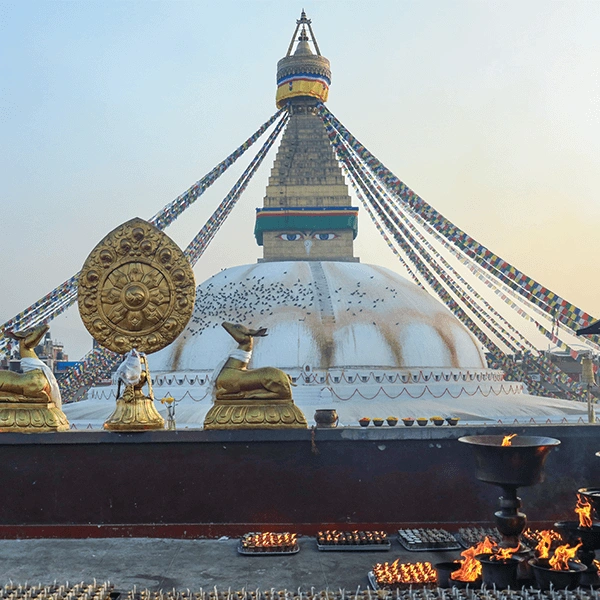
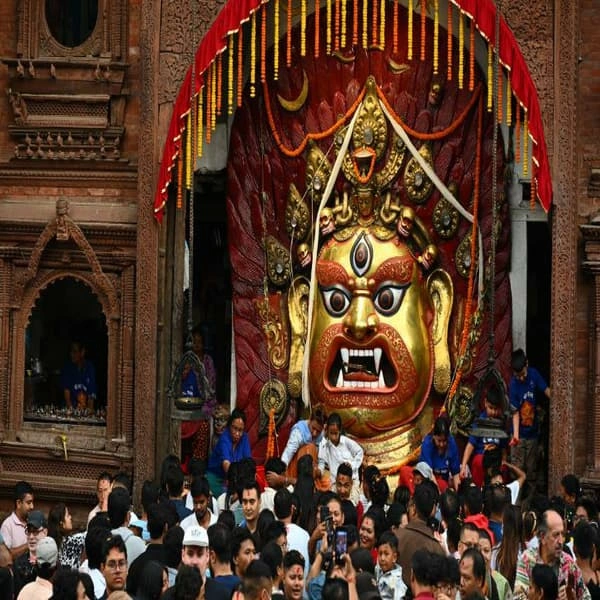
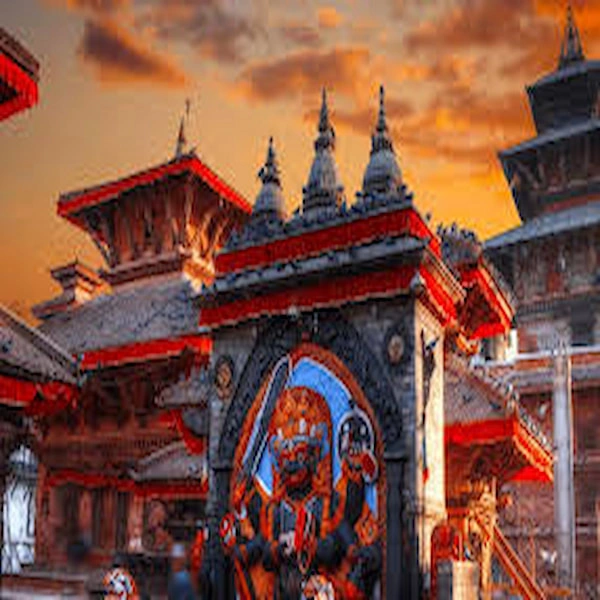
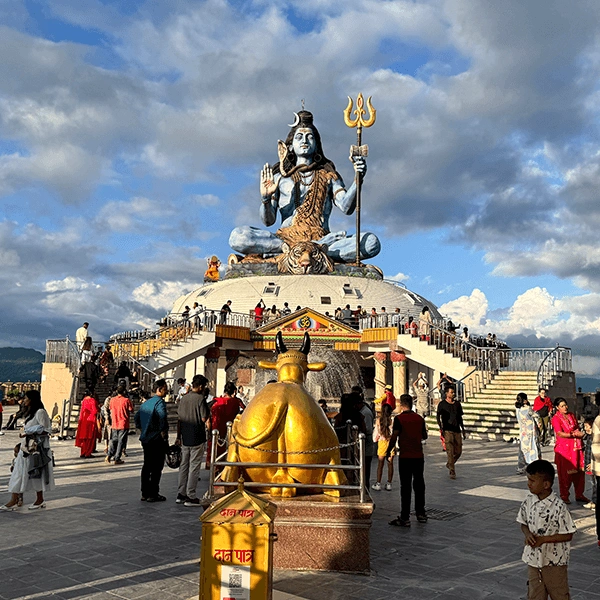
Beyond logistics, Kathmandu carries its own spiritual weight. The city is full of Hindu and Buddhist temples that many pilgrims visit before setting off. Pashupatinath, Boudhanath, and Swayambhunath are common stops before the Yatra begins.
Holy Kailash Tours, based right here in Kathmandu, has been organizing this journey for years. Their team knows the Kerung route, the permit process, and the terrain in a way that's hard to replicate with a generic travel agent.
Spiritual Significance of Mount Kailash and Lake Mansarovar
Mount Kailash is not just a mountain. To Hindus, it's the home of Lord Shiva. To Tibetan Buddhists, it's the center of the universe, known as Kangri Rinpoche. Jains call it Ashtapada, where their first tirthankara attained liberation. Bon followers, Tibet's pre-Buddhist tradition, also consider it the most sacred place on earth.
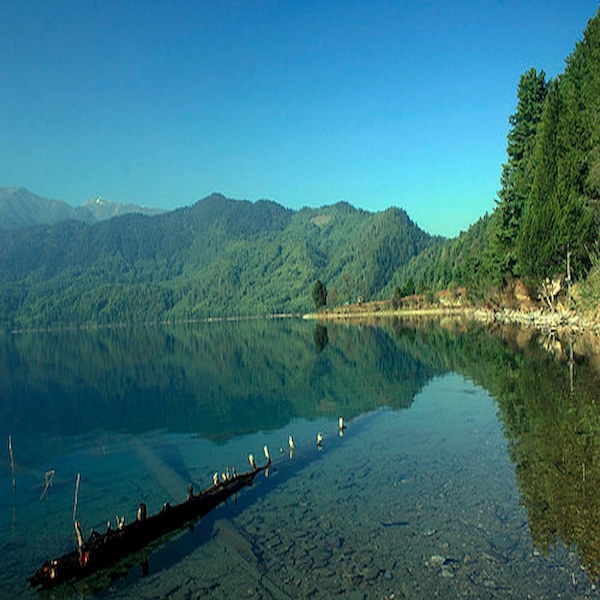
Lake Mansarovar sits nearby at 4,590 meters above sea level. It's one of the highest freshwater lakes in the world. Hindus believe that bathing in its waters cleanses sins accumulated over a hundred lifetimes. Even if you don't hold that belief, standing at the edge of that lake at dawn, watching the reflection of the snow-covered peaks, is something that stays with you.
These two sites together form the core of the Kailash Mansarovar Yatra. Millions of pilgrims have made this journey over centuries. Some walked for weeks. Today, the route from Kathmandu takes about 17 to 22 days, depending on your itinerary and pace.
Where Are Mount Kailash and Lake Mansarovar Located?
A Complete Journey to Kailash Mansarovar from Kathmandu
Both sites are in the Ngari Prefecture of western Tibet, now part of the Tibet Autonomous Region of China.
Mount Kailash: 6,638 meters above sea level, located near the source of four major Asian rivers: the Indus, Brahmaputra, Sutlej, and Karnali
Lake Mansarovar: About 30 kilometers from the base of Mount Kailash, at an elevation of 4,590 meters
Darchen: The small town at the foot of Kailash that serves as the base camp for pilgrims starting the Kora
From Kathmandu, the overland distance to Darchen is roughly 1,200 kilometers via the Kerung border crossing.
Overview of the Kailash Mansarovar Route from Kathmandu
The most popular route today is the overland Nepal-Tibet route via Kerung(also written as Gyirong). The Kerung border crossing reopened for tourism after the COVID shutdown, and it's now the standard gateway for Nepal-based pilgrims.
A typical itinerary looks like this:
Kathmandu (arrival and sightseeing, 2 days)
Kathmandu to Kerung border (1-day drive)
Cross into Tibet, acclimatize in Kerung (1-2 days)
Kerung to Saga (1-day drive)
Saga to Lake Mansarovar via Paryang (2 days)
Lake Mansarovar rituals and overnight stay (1-2 days)
Lake Mansarovar to Darchen (half-day drive)
Mount Kailash Kora: 3 days of trekking (Darchen to Dirapuk to Zutulpuk and back)
Return journey to Kathmandu via the same route (3-4 days)
Total: approximately 14-18 days, depending on group pace, acclimatization stops, and weather.
Travel Permits Required for Kailash Mansarovar Yatra
A Complete Journey to Kailash Mansarovar from Kathmandu
This is one area where many first-time pilgrims get confused. You need multiple permits to enter Tibet and reach Kailash. Your tour operator handles all of these, but it helps to know what's involved:
Tibet Travel Permit (TTP): The main permit issued by the Tibet Tourism Bureau. You cannot enter Tibet without it.
Alien Travel Permit (ATP): Required for travel to restricted areas beyond Lhasa, including the Kailash region.
Military Area Permit: Some border zones require this additional document.
Chinese Group Visa: Foreign nationals must enter Tibet as part of an organized tour group. Individual travel to Tibet is not permitted.
Nepal visa: If you're flying into Kathmandu, you can get this on arrival for most nationalities.
Processing permits takes time. Most operators need at least 5 to 6 weeks' notice, sometimes longer. Holy Kailash Tours handles the full permit process as part of their tour packages, saving a significant amount of back-and-forth with Chinese embassies and Tibetan authorities.
Indian nationals face a slightly different process. They currently enter Tibet via Kathmandu and must know. Check current regulations before booking.
Kathmandu is where you finalize everything. This is your last urban base before heading into remote, high-altitude terrain with limited infrastructure.
Before leaving Kathmandu, make sure you've done the following:
Collected all permits from your tour operator
Done a gear check (layering system, trekking poles, sleeping bag rated to -15°C or colder)
Visited a travel health clinic or doctor for altitude sickness medication (Diamox is commonly prescribed)
Exchanged currency (Chinese Yuan/RMB for Tibet, Nepali Rupee for the Nepal portions)
Charge all electronics and bring backup batteries or a solar charger
Confirmed your travel insurance covers high-altitude trekking and emergency evacuation
Your operator may also brief you on altitude protocols, daily itinerary details, and emergency contacts.
Kathmandu Sightseeing Before the Kailash Mansarovar Yatra
A Complete Journey to Kailash Mansarovar from Kathmandu
Most groups spend two days in the Kathmandu Valley before heading out. It's worth using this time for more than just logistics. A few sites are worth visiting:
Pashupatinath Temple: One of the most important Hindu temples in the world, dedicated to Lord Shiva. Pilgrims often begin their Yatra with a prayer here. The setting along the Bagmati River is both beautiful and sobering.
Boudhanath Stupa: A massive Buddhist stupa just outside Kathmandu, surrounded by Tibetan monasteries. Many Tibet-bound pilgrims visit here for blessings before crossing the border.
Swayambhunath (Monkey Temple): A hilltop stupa with panoramic views of the Kathmandu Valley. Both Hindu and Buddhist worshippers visit.
Patan Durbar Square: A UNESCO World Heritage Site with traditional Newari architecture and historical temples.
These are not just tourist stops. For many pilgrims, visiting these sites is part of the spiritual preparation for what's ahead.
Kathmandu to Kerung Border: Beginning the Adventure
The drive from Kathmandu to the Kerung border crossing is around 170 kilometers, but takes 6 to 8 hours. The road passes through the Trishuli Valley, climbs through subtropical forest and terraced hillsides, and eventually reaches the high-altitude terrain near the border.
You'll cross through towns like Bidur, Dhading, and Rasuwagadhi. The views along the way are genuinely impressive. By the time you approach the border area, you're already at around 1,800 meters and climbing.
The road quality has improved significantly in recent years. That said, landslides are common during the monsoon season (June to September), which is one reason the Yatra is best done in spring or autumn.
Crossing the Nepal-Tibet Border at Kerung
A Complete Journey to Kailash Mansarovar from Kathmandu
The Kerung (Gyirong) border crossing is an international checkpoint between Nepal and the Tibet Autonomous Region. It sits at around 1,800 meters on the Nepal side.
The crossing involves:
Immigration checks on the Nepal side
A short vehicle transfer across the Friendship Bridge
Immigration and permit inspection on the Chinese/Tibetan side
Customs check and vehicle change (you'll switch to a Tibetan-registered vehicle)
The Chinese side of Kerung town is modern and organized. There are small hotels, restaurants, and shops. Most groups spend at least one night here to begin acclimatizing before heading deeper into Tibet.
Your Chinese guide, arranged through your tour operator, meets you here and travels with you for the remainder of the Tibet portion of the trip.
Acclimatization in Kerung: Adjusting to High Altitude
Kerung on the Tibet side sits at about 2,700 meters. It might not sound extreme, but altitude affects people differently. Some feel fine at 3,000 meters. Others start getting headaches at 2,500.
Spending a day or two in Kerung before pushing higher is important. During this time:
Drink plenty of water (at least 3 to 4 liters per day)
Avoid alcohol and heavy meals
Walk slowly, rest often
If you have Diamox, start taking it as directed before this point
Watch for early altitude sickness symptoms: headache, nausea, dizziness, difficulty sleeping
Kerung also has a few monasteries worth visiting. The Gyirong area is historically significant in the Tibetan Buddhist tradition, and spending time here is genuinely interesting beyond mere acclimatization.
Journey from Kerung to Saga Across the Tibetan Plateau
A Complete Journey to Kailash Mansarovar from Kathmandu
The drive from Kerung to Saga takes around 6 to 8 hours and covers approximately 340 kilometers. Once you leave Kerung and climb out of the valley, you're on the Tibetan Plateau.
This is where the landscape changes completely. Gone are the green hills and forests of Nepal. What you see instead is a wide, open plateau stretching to distant mountains under a very blue sky. The road runs through high plains, past turquoise lakes, across wide rivers, and through occasional small Tibetan towns.
Saga sits at around 4,500 meters. It's a small town with basic guesthouses, a market, and mobile phone coverage (on Chinese networks). Most groups stay one night here.
By this point, your body is working harder than usual to circulate oxygen. Rest is important. Don't try to push on without acclimatizing.
Saga to Lake Mansarovar: First Glimpse of the Sacred Lake
The drive from Saga to Lake Mansarovar takes roughly 8 to 10 hours, passing through Paryang at around 4,600 meters. The road is paved for most of the route,
but becomes rougher in sections closer to the lake.
You'll pass through Tibetan nomad territory. If you're lucky, you'll spot Tibetan wild donkeys (kiang), Tibetan gazelles, and sometimes wolves in the distance. The scale of the landscape out here is unlike anything most people have experienced.
Your first view of Lake Mansarovar usually comes in the late afternoon. The lake is a deep, impossible blue at this altitude. The snow-capped peaks of the Gurla Mandhata range frame the far shore. Mount Kailash itself appears to the north.
Most pilgrims go quiet at this point. After weeks of planning and days of travel, actually seeing the lake is a moment that hits differently than expected.
Lake Mansarovar is roughly 88 kilometers in circumference and sits at an elevation of 4,590 meters. Circumambulating the entire lake takes about 4 to 5 days on foot, though most tour itineraries don't include the full lake Kora due to time constraints. Pilgrims typically spend one or two days here for rituals, prayer, and rest.
What happens at the lake varies by tradition:
Ritual bathing: Hindu pilgrims take a holy dip in the lake's waters, even in very cold temperatures
Drinking the water: Many pilgrims drink directly from the lake, believing it has purifying properties
Prayer and meditation: Both Buddhist and Hindu pilgrims perform ceremonies on the lakeshore
Collecting water: Many take lake water home in small containers for family members
Sunrises and sunsets at Mansarovar are extraordinary. The colors that reflect off the water and the surrounding peaks are worth waking up early for.
The accommodation near the lake is simple. Guesthouses with basic beds, attached bathrooms, some places shared toilets, and pure vegeterain indian and Nepali meals. Expect cold nights. Bring a good sleeping bag.
Lake Mansarovar to Darchen: Gateway to Mount Kailash
Darchen is about 30 kilometers from the southern shore of Lake Mansarovar. The drive takes under an hour. At 4,575 meters, it's a small town that exists almost entirely to serve Kailash pilgrims.
You'll find guesthouses, small restaurants, a medical post, and basic shops in Darchen. It's where you rest before beginning the Kora, buy any last-minute supplies, and meet other pilgrims from across Asia and the world.
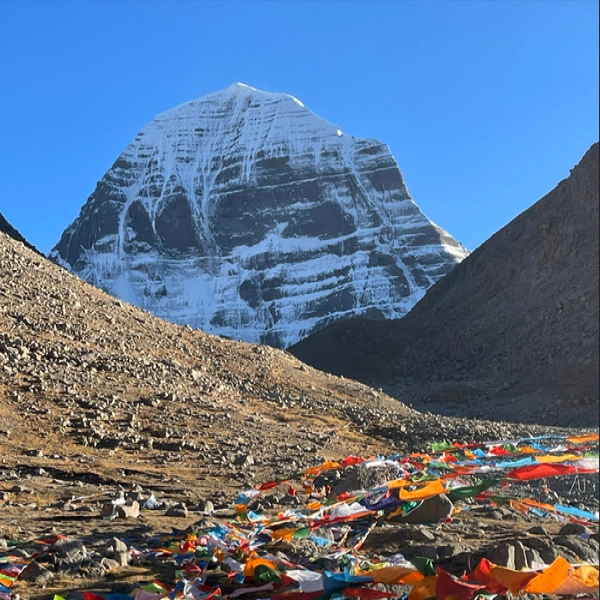
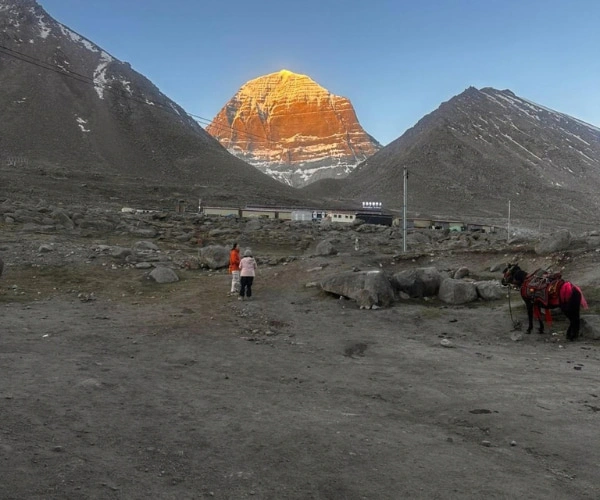
The north face of Mount Kailash is visible from Darchen. Seeing that distinctive pyramid shape in person, framed by an open plateau, is a moment most pilgrims describe as surreal. This is what the entire journey has been building toward.
The Kora is the circumambulation of Mount Kailash. In Hindu tradition, it's called the Parikrama. In Buddhist tradition, it's the Kora. The route is approximately 52 kilometers and crosses one major high-altitude pass: Dolma La at 5,636 meters.
Most pilgrims complete it in 3 days. Tibetan devotees sometimes do it in a single day, and some complete multiple circuits. Completing one full Kora is believed to cleanse the sins of one lifetime. One hundred and eight circuits are said to bring liberation.
The route goes clockwise (from a Hindu and Buddhist perspective) around the mountain. You never actually approach the mountain itself. The path circles the outer terrain, with Kailash's four faces visible at different points.
Yaks and horseback rides are available for rent to pilgrims who need help carrying gear or navigating difficult terrain.
Day 1 Kora: Darchen to Dirapuk
Distance: Around 20 km
Elevation gain: Approximately 800 meters
Duration: 6 to 8 hours
The first day starts from Darchen and heads northwest, following the Lha Chu valley. The north face of Kailash comes into view mid-way through the day. This is the most photographed angle of the mountain.
Dirapuk Monastery sits on a ridge above the valley at an elevation of around 5,100 meters. The guesthouse here has basic rooms and a dining area serving simple meals: noodles, rice, dal, and tea. The north face of Kailash is directly visible from the monastery, making it one of the most dramatic views of the entire journey.
Expect cold temperatures at night, even in summer. Temperatures regularly drop well below freezing after dark at this elevation.
Day 2 Kora: Crossing Dolma La Pass to Zutulpuk
Distance: Around 22 km
Elevation gain: 560 meters to Dolma La, then descent
Duration: 8 to 10 hours
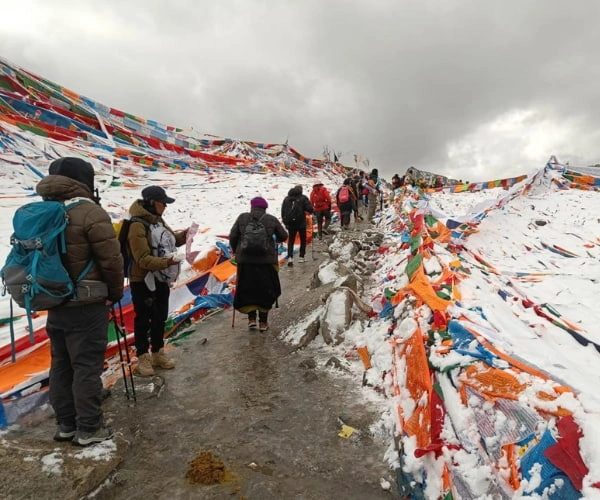
This is the hardest day. The trail climbs steeply from Dirapuk to Dolma La Pass at 5,636 meters. At this altitude, every step takes effort. Many pilgrims describe this section as the most physically and spiritually intense moment of the entire Yatra.
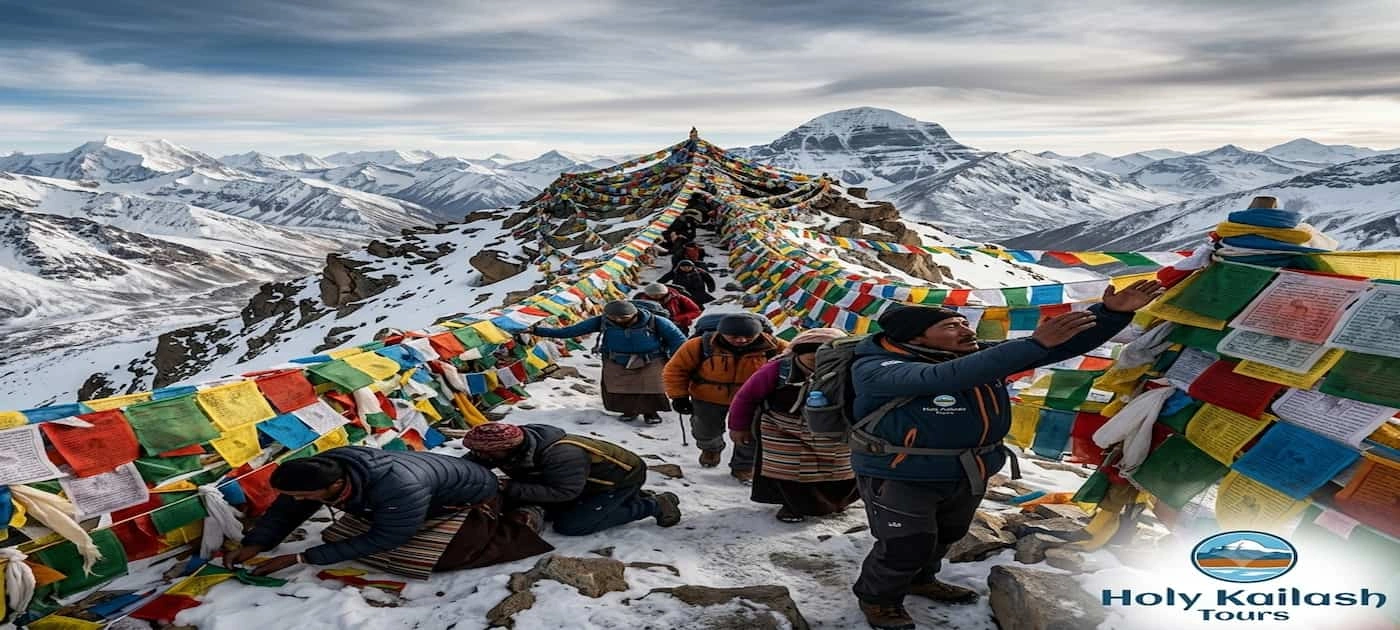
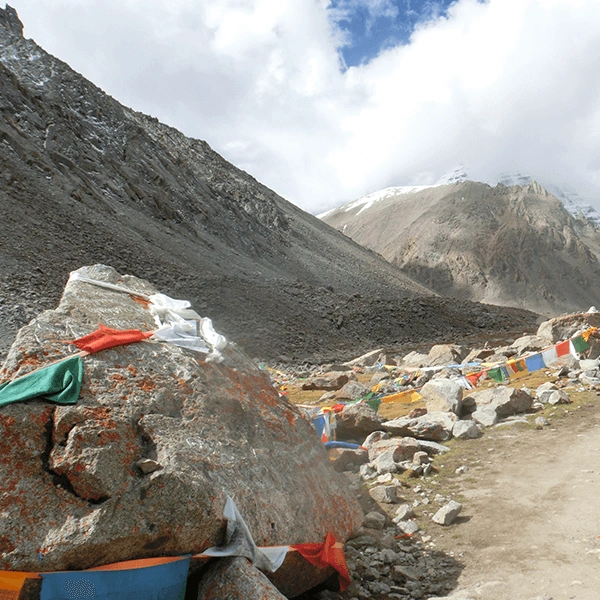
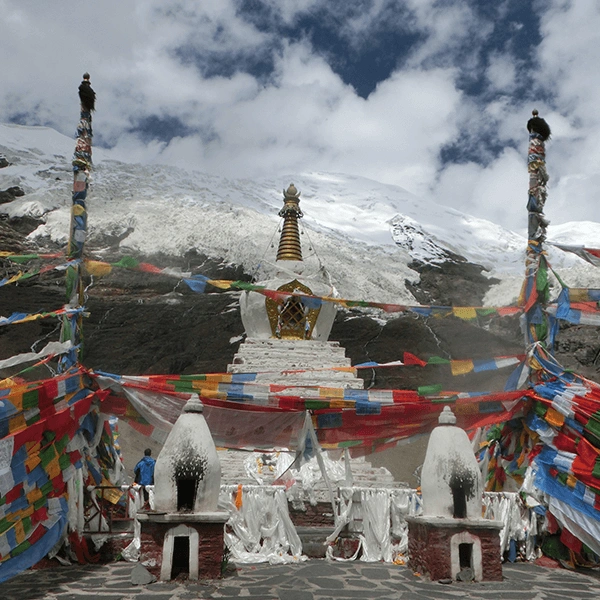
Dolma La is marked by a large rock and thousands of prayer flags left by pilgrims over the years. Buddhist pilgrims believe the goddess Dolma (Tara) guides travelers through this pass. Many pause here to pray, cry, leave offerings, or simply catch their breath.
The descent on the far side drops into a valley where Gauri Kund (a glacial lake considered sacred to Goddess Parvati) is located. The trail then continues down through the Lham Chu valley to Zutulpuk Monastery at around 4,760 meters.
Zutulpuk has guesthouses and is the overnight stop for night two.
Day 3 Kora: Completing the Sacred Parikrama
Distance: Around 10 km
Duration: 3 to 4 hours
The final day is comparatively easy. The trail descends through the valley and loops back to Darchen. Most groups finish by mid-morning.
The feeling at the end is hard to describe. Some pilgrims are emotional. Some are exhausted. Some are already talking about returning. The mood in the group is usually warm and reflective.
After completing the Kora, most itineraries spend one final night in Darchen before beginning the return journey to Kathmandu.
No point dressing this up. This journey has real difficulties:
The altitude is serious. Dolma La at 5,636 meters is higher than Everest Base Camp.
Road conditions in Tibet can be rough, especially after rains
Accommodation is very basic throughout. Clean sheets are not guaranteed.
The trip is long. Three weeks away from home is a lot.
The weather is unpredictable, especially in high mountain zones
Some sections of the Kora involve steep rocky terrain that requires physical fitness
Anyone who tells you this trip is easy is not being honest. That said, thousands of pilgrims in their 50s and 60s complete it each year. Preparation matters more than raw fitness.
Altitude sickness (AMS, or Acute Mountain Sickness) is the most common medical issue on this journey. The symptoms range from mild headache and fatigue to severe conditions like High Altitude Pulmonary Edema (HAPE) or High Altitude Cerebral Edema (HACE), which are medical emergencies.
To reduce risk:
Acclimatize properly at each stage. Don't rush the ascent.
Drink 3 to 4 liters of water per day
Avoid alcohol, especially in the first week at altitude
Talk to your doctor about Diamox (Acetazolamide) before the trip
Rest whenever you feel unwell. Don't push through serious symptoms.
Know the signs of serious AMS: severe headache that doesn't respond to ibuprofen, confusion, loss of coordination, persistent vomiting, inability to walk straight
The only treatment for serious AMS is descent. Immediately.
Holy Kailash Tours builds proper acclimatization stops into their itineraries. Don't book with an operator who rushes the schedule.
Accommodation along the Kailash route is basic. Most guesthouses offer small rooms with 2 to 4 beds, attached bathrooms, and minimal heating; some places have shared bathrooms. In Tibet, electricity can be intermittent. Hot & cold showers available.
Food options are limited but adequate. Expect:
Holy Kailash provides kitchen staff who cook Nepal And indian pure vegetarian food. Also, if you like, you will get Tibetan butter tea (an acquired taste, but useful at altitude)
Tsampa (roasted barley flour)
Noodle soups and fried rice
Simple dal and vegetable dishes in guesthouses
Instant noodles, biscuits, and energy bars (which you should bring yourself)
Vegetarians do reasonably well. Vegans may find it challenging in remote areas. Pack supplemental snacks.
Best Time to Visit Kailash Mansarovar from Kathmandu
The Kailash Mansarovar Yatra runs roughly from May to October. The route is not accessible in winter due to snow and extreme cold.
May and June: Good conditions, fewer crowds, cool temperatures. Some spring snowfall is possible at high passes.
July and August: Monsoon season in Nepal. The road from Kathmandu to Kerung can be affected by landslides. Tibet itself is drier, and the weather is generally stable. Many pilgrims travel during this period.
September and October: Often considered the best time. Skies are clear, the air is crisp, and the views are exceptional. Autumn light in Tibet is remarkable.
Avoid the route during heavy monsoon weeks if you're concerned about road conditions on the Nepal side.
Don't underestimate the permit timeline. Start the process at least 2 months before your planned departure. China's Tibet permit system can be slow.
Choose your travel companions carefully. You'll be in close quarters with your group for 3 weeks. A miserable group dynamic makes an already difficult journey harder.
Respect local customs. In Tibet, always walk clockwise around stupas, prayer wheels, and holy sites. Ask before photographing monks or religious ceremonies. Dress modestly at religious sites.
Bring more cash than you think you need. ATMs are nonexistent on most of this route. Carry enough Chinese Yuan for the Tibet portion.
Don't skip the acclimatization days. Operators who rush the itinerary to cut costs or time are a red flag.
Keep your expectations realistic. The Kora is not a scenic walk. Day 2 is genuinely hard. Go in knowing that, and you'll manage it better.
Travel insurance is non-negotiable. Make sure yours covers high-altitude trekking (above 5,000 meters) and helicopter evacuation.
Yes, Indian nationals are required to travel to the Kailash Mansarovar Yatra program, which uses the Nepal-Kerung route via Tibet, as things stand. Check the latest regulations with the Ministry of External Affairs
Do I need to be religious to do this pilgrimage?
No. Many people who make this journey are not deeply religious but are drawn by the spiritual atmosphere, the landscape, and the challenge. Respect for local traditions and other pilgrims is what matters.
Is the Kora possible for older pilgrims?
Yes. Yak and horse support are available for sections of the Kora. Some elderly or physically limited pilgrims skip the full Kora and only go partway. Your group and guide will adapt.
What if Tibet permits are denied or delayed?
This happens occasionally, usually due to political events or decisions by the Chinese government. Reputable operators refund the cost of the Tibet portion if permits are denied. Confirm this in your booking contract.
Is helicopter access available for Kailash?
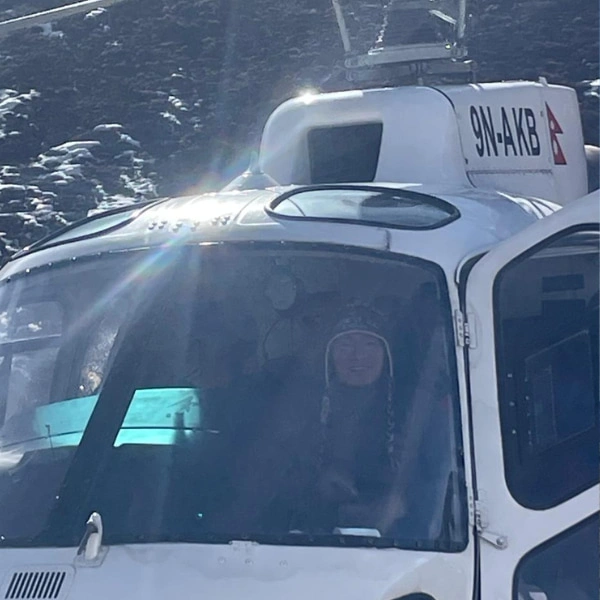
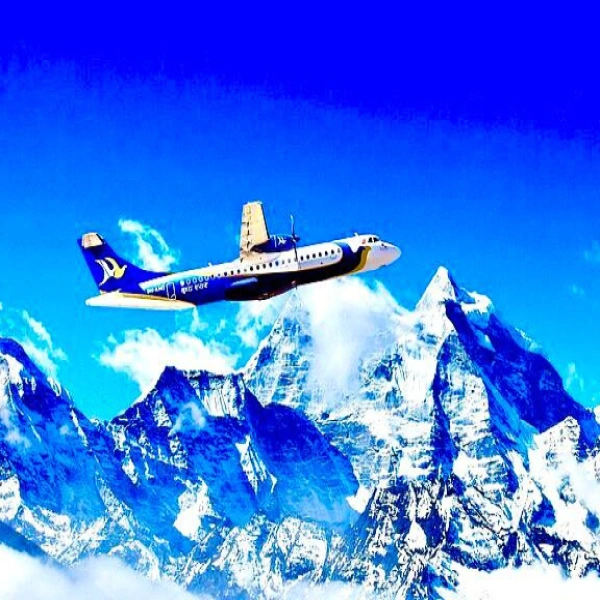
There's no helicopter access to the Kailash Kora itself. However, in genuine emergencies, helicopter evacuation is sometimes arranged. Some newer itineraries include helicopter access for the Nepal portion (from Kathmandu to border areas), but the road portion in Tibet is unavoidable.
Can I do the trip without a tour operator?
No. Independent travel to Tibet is not permitted for foreign nationals. You must travel as part of an organized group with a registered guide.
The Kailash Mansarovar Yatra from Kathmandu is, without question, one of the most demanding and meaningful journeys you can take. The altitude is real, the terrain is unforgiving, and the logistics are genuinely complex. But the people who complete it rarely regret it.
There's a reason millions of pilgrims have made this trip over centuries. The combination of landscape, altitude, silence, and spiritual tradition produces an experience that's difficult to find anywhere else on earth.
If you're seriously considering it, start the planning process early. Get fit. Talk to your doctor. And work with an operator who knows this route from the ground up.
Holy Kailash Tours has been organizing this journey from Kathmandu for years. Their team handles everything from Tibet permits to acclimatization planning, so you can focus on what actually matters when you're out there: the journey itself.
The mountain is waiting. Plan well, prepare honestly, and go. For current tour packages, permit assistance, and itinerary planning, contact Holy Kailash Tours directly through their Kathmandu office.