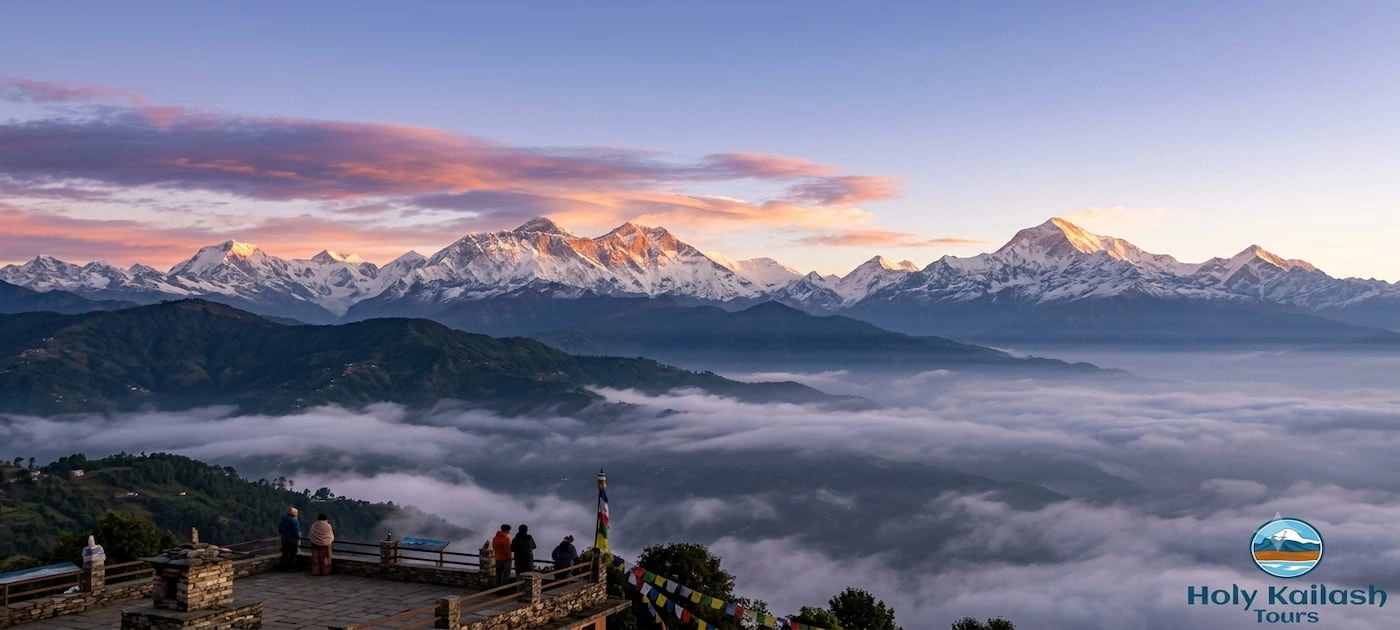
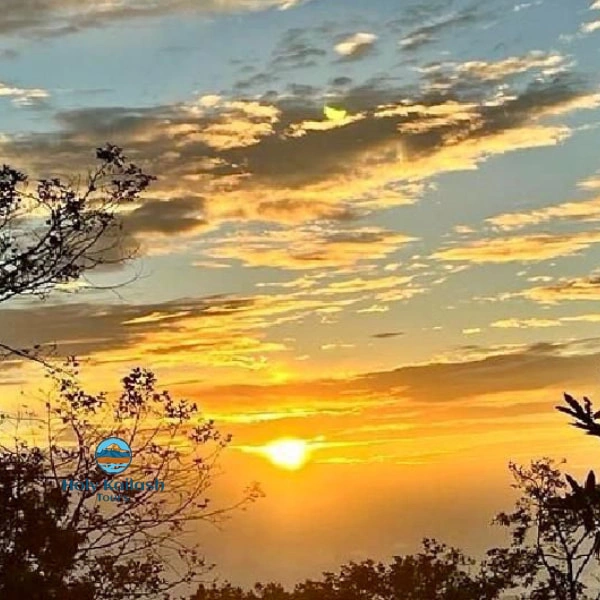
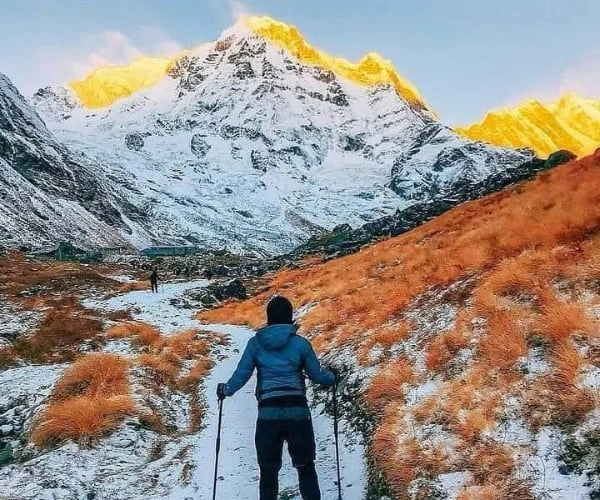
There's a moment, just before the sun clears the Himalayas, when the sky turns a shade of orange that doesn't look quite real. You're standing on a hilltop east of Kathmandu, wrapped in a jacket, breath visible in the cold air. Then it happens. The peaks catch fire, one by one, from Langtang to Everest, and you stop thinking about the early alarm, the winding road, the coffee you didn't have time to drink.
That's the Nagarkot sunrise, and it's worth every bit of effort to get there. Nagarkot Sunrise Tour: The Complete Guide covers everything about the Nagarkot Sunrise Tour: where it is, how to get there, what you'll actually see, the best time to go, and what Holy Kailash Tours offers for travelers who want this experience done right.
Where Is Nagarkot Located?
Nagarkot-Sunrise-Tour
Nagarkot is on a ridge in the Bhaktapur District of the Bagmati Province, about 32 kilometers east of Kathmandu. The elevation is roughly 2,195 meters (7,200 feet), which puts it well above the valley floor and above the haze that sometimes sits over the city.
It's part of the Changunarayan Municipality and sits close enough to Bhaktapur that some tours combine both into a single day. The ridge runs roughly north to south, and the east-facing slopes get a clear view of the Himalayan chain without major obstacles in between.
That geography is the whole reason Nagarkot became famous. The ridge acts like a natural viewing platform, open to the eastern sky and high enough to see over the lower hills.
Most places in Kathmandu Valley look up at the mountains. From Nagarkot, you look across at them. On a clear morning, the panorama stretches from Dhaulagiri in the far west to Kanchenjunga near the eastern border, a sweep of nearly 200 kilometers of Himalayan peaks. That's unusual. Most viewpoints in Nepal give you a partial view, blocked by ridges or lower hills. Nagarkot's position on the outer rim of the valley opens the whole eastern horizon.
The sunrise hits the snow peaks before it lights anything in the valley below. For about 20 to 30 minutes, you get this layered effect: a dark valley, the glowing white line of the Himalayas, and a sky through every shade between purple and yellow. Photographers have a name for this: alpenglow. At Nagarkot, there is some of the best alpenglow in Nepal.
The air is also cleaner at altitude, especially in the early morning before wind patterns shift—the clarity matters. A clear October morning in Nagarkot will reveal details of peaks 80 kilometers away.
Highlights of the Nagarkot Sunrise Tour
Nagarkot-Sunrise-Tour
The Nagarkot Sunrise Tour isn't just about one moment. There's a full experience around it.
Pre-dawn drive from Kathmandu through the winding hill roads, often quiet and cool
Arrival at the viewpoint before first light, while stars are still visible
The alpenglow phase, when high peaks catch color before sunrise
Full sunrise over the Himalayas, including Mount Everest on clear days
Panoramic views of the Langtang range, Ganesh Himal, Rolwaling, and more
Nagarkot View Tower, a higher vantage point for unobstructed sightlines
Optional breakfast with mountain views after sunrise
Changu Narayan Temple visit, one of the oldest Hindu temples in Nepal
Each of these adds something. The drive back in daylight shows you the terraced hillsides, small villages, and green valleys that were invisible on the way up.
The honest answer: October through April gives you the clearest skies, but each season has its own character.
October and November are the best months overall. The monsoon has finished, the air is clean, visibility is at its peak, and temperatures at the viewpoint are cool but manageable (around 5 to 15 degrees Celsius at dawn). Most serious mountain photographers plan trips to Nagarkot for this window.
December and January offer crystal-clear skies and stunning views, but it gets cold before sunrise. Temperatures can drop to near freezing or below. Bring proper layers.
February and March are good too. Temperatures climb a little, and rhododendrons start blooming on the hillsides during the drive up. Spring light is softer and warmer than winter light, which changes the mood of the sunrise.
April and May can still work, though haze builds toward late morning. The early hours are usually clear. This is also when pre-monsoon clouds start building in the afternoons.
June through September is monsoon season. Clouds often block the peaks, and rain is common. Some mornings do break clear, but it's unpredictable. Not recommended as a first choice, though the lush green landscape has its own appeal.
For a Nagarkot Sunrise Tour specifically, October, November, and December consistently deliver.
What to Expect During the Sunrise Experience?
Nagarkot-Sunrise-Tour
Here's a realistic picture of a sunrise in Nagarkot. You leave Kathmandu around 4:00 to 4:30 AM. The city is quiet. The drive takes roughly 1.5 to 2 hours, depending on traffic and road conditions. The road climbs steadily through Bhaktapur and then up into the hills. It's winding and narrow in sections. A good driver helps.
You arrive in Nagarkot between 5:30 and 6:00 AM, while it's still dark. The air at altitude is noticeably colder than the air in the valley. This is not the time to wish you'd brought a warmer jacket. You will.
For about 30 to 45 minutes before sunrise, the sky lightens gradually. The horizon turns from black to deep blue. The peaks become visible as dark silhouettes. Then color arrives, slowly at first, then faster. The white snow goes pink, then orange. Lower slopes stay blue-gray. The full sunrise lasts around 15 to 20 minutes before the peaks settle into their daytime appearance.
Total viewing time at the site is usually 1 to 2 hours. Many tours include breakfast afterward at a local hotel or restaurant with mountain views, which is a good way to warm up before heading back.
On a clear day, Nagarkot shows you an enormous stretch of the Himalayas. Here's what you can actually identify:
Mount Everest (8,849 m): visible on clear days to the east; it's not the most dramatic peak from this angle, but seeing it from 100+ kilometers is still something
Lhotse (8,516 m): sits near Everest and is often visible alongside it
Makalu (8,485 m): the fifth-highest peak in the world, visible to the east
Cho Oyu (8,188 m): part of the Everest massif, to the west of Everest
Langtang Lirung (7,227 m): one of the closest major peaks, north of Kathmandu
Dorje Lakpa (6,966 m): a distinctive peak north of the valley
Ganesh Himal (7,422 m): visible to the northwest
Manaslu (8,163 m): the eighth-highest mountain, visible to the west on clear days
Rolwaling Range: a line of impressive peaks to the northeast
Jugal Himal: a range close to Nagarkot, often the most prominent in the view
Over 20 Himalayan peaks can be seen from Nagarkot on an exceptionally clear day. Few spots in Nepal that you can reach in a day offer this kind of breadth.
Nagarkot Sunrise Tour Itinerary
Nagarkot-Sunrise-Tour
Here's a typical itinerary from Kathmandu. Times are approximate.
4:00 AM — Pickup from your hotel in Kathmandu or Thamel
4:00–5:30 AM — Drive to Nagarkot via Bhaktapur (roughly 32 km)
5:30–6:00 AM — Arrive at Nagarkot viewpoint; pre-sunrise begins
6:00–7:00 AM — Full sunrise experience; mountain views; photography
7:00–8:00 AM — Breakfast at a Nagarkot hotel or café
8:30–10:00 AM — Visit Nagarkot View Tower (optional extension)
12:30–2:00 PM — Drive to Bhaktapur Durbar Square; guided walk
2:00–3:00 PM — Lunch in Bhaktapur 3:00–4:30 PM — Return drive to Kathmandu
Some tours skip Bhaktapur to shorten the day. Others combine the sunrise with a full cultural tour of Bhaktapur. Holy Kailash Tours offers both options, as well as private itineraries that can be adjusted to your schedule.
The road distance from central Kathmandu (Thamel area) to Nagarkot is approximately 32 kilometers. It sounds short. The drive takes longer than you'd expect.
The road climbs about 1,000 meters over that distance. The final 10 to 12 kilometers after Bhaktapur are on a narrow, winding mountain road. In a private vehicle on an early morning with no traffic, the drive runs 1.5 hours. In heavier conditions, cit is lost in 2 hours.
This is one reason the 4:00 AM departure matters. You need to be at Nagarkot before 6:00 AM to see the pre-dawn buildup. Arriving just at sunrise means missing the best part.
Private vehicle (recommended for tours) — A car or jeep arranged through a tour operator, such as Holy Kailash Tours, is the most practical option for a sunrise trip. You leave early, arrive on time, and the vehicle waits for you. No guesswork.
Local bus — Public buses run from Bhaktapur Bus Park to Nagarkot. They're cheap and run regularly, but not at 4:00 AM. This option works better for afternoon arrivals and overnight stays.
Taxi — A taxi from Kathmandu is possible but expensive for a solo traveler. For groups of two or three, it can be reasonable. Make sure to agree on a price before you go.
Motorcycle or cycling — The road is bikeable but serious. A round trip from Kathmandu is a full-day commitment. Cycling Nagarkot is a different kind of experience, not really a sunrise tour.
For a proper Nagarkot Sunrise Tour, a private vehicle pickup arranged by your tour operator is the sensible choice.
If you're bringing a camera (even just a phone), a few things will make a real difference.
Get there early. The 20 minutes before the sun appears are often the best for color. Once the sun is fully up, the intense light flattens the scene.
Use a tripod if you have one. Low-light conditions before sunrise require longer exposures. Even a small travel tripod helps with sharpness.
Expose for the peaks, not the sky. The snow is bright; the sky changes fast. If you let the camera expose for the dark valley, the mountains will blow out. Bracket your shots if you're shooting raw.
Bring extra batteries. Cold temperatures drain batteries faster than normal. A warm spare in your jacket pocket is good insurance.
Shoot in multiple directions. Most people face east. But the western sky behind you at sunrise can reflect beautiful light onto the Kathmandu Valley.
Don't put the camera down. The best moments are short and don't repeat. Keep shooting through the full sequence.
For phones: Use portrait mode sparingly; wide-angle works better for landscapes. Use HDR if your phone supports it. The best phone photos from Nagarkot come from staying still, finding a clean foreground, and being patient.
Nagarkot's elevation means it's meaningfully colder than Kathmandu, even in the same season. Expect a difference of 5 to 8 degrees Celsius.
October–November: Clear skies, cool mornings (5–12°C at dawn), excellent visibility
December–February: Cold (0–5°C at dawn), possible frost, best clarity of the year
March–May: Warming up (8–15°C), haze builds through the morning, rhododendrons in bloom. June–September: Monsoon season, frequent cloud cover and rain, views unreliable
Morning fog sometimes sits in the valley below Nagarkot while the peaks stay clear above. This creates one of the more dramatic visual effects you can see from the viewpoint, where you're literally above the clouds.
Wind can be strong on the ridge, especially in winter and early spring. The cold feels sharper in the wind. Layering is not optional.
A Nagarkot Sunrise Tour pairs naturally with several nearby sites. Most tours include at least one.
Changu Narayan Temple — A 5th-century Hindu temple, one of the oldest in Nepal and a UNESCO World Heritage Site. It's on the road back toward Bhaktapur and worth stopping for. The stone carvings here are exceptional.
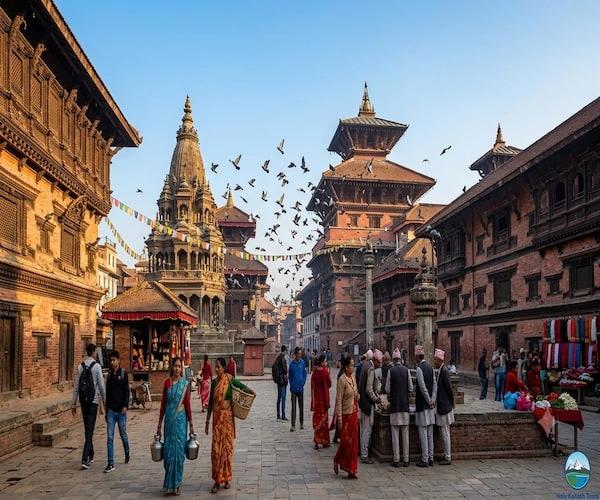
Bhaktapur Durbar Square — An ancient city center with temples, palaces, and courtyards that have survived for centuries. It's UNESCO-listed and genuinely impressive. The morning light in the square is particularly good if you visit early.
Dhulikhel — Another hill town east of Kathmandu with Himalayan views, sometimes combined with Nagarkot on a longer day trip.
Thimi — A small town known for pottery and mask-making, passed on the way to Bhaktapur. Worth a brief stop.
Telkot — A quiet village below Nagarkot with local teahouses and less tourist traffic. Some travelers prefer it for a slower experience.
The Nagarkot View Tower is a concrete observation structure near the main viewpoint. It adds some height above the surrounding trees and rooftops, which matters when ground-level views are partially blocked.
The tower is especially useful during the dry season when the trees are fuller. From the upper platform, you get a 360-degree view, including the Kathmandu Valley to the west. At sunrise, the eastern view is the main attraction, but turning around and watching the light hit the valley below is a moment in itself.
The climb takes only a few minutes, but the tower can get crowded during peak season mornings. Getting there 5 to 10 minutes before other groups helps.
Some tour groups go directly to the View Tower rather than the main road viewpoint. Both are valid. The Tower gives you height; the road viewpoint sometimes offers a cleaner, less crowded foreground.
Tour costs vary based on group size, inclusions, and whether additional sites, such as Bhaktapur, are included.
Typical range for a basic Nagarkot Sunrise Tour:
Solo traveler: USD 80–110
Couple (per person): USD 55–75
Group (3–6 people, per person): USD 35–55
What's usually included:
Round-trip private vehicle from Kathmandu
English-speaking guide
Entry fees for the Nagarkot viewpoint
Breakfast at Nagarkot (in many packages)
What may be extra:
Bhaktapur entry fee (payable at the gate)
Changu Narayan entry fee
Lunch in Bhaktapur
Personal expenses and tips
Holy Kailash Tours offers transparent pricing with no hidden charges. Custom packages that add Bhaktapur and Changu Narayan to the sunrise tour are available, and the price per person decreases with larger groups.
The Nagarkot Sunrise Tour works for most ages and fitness levels. The sunrise viewpoint requires minimal walking. The View Tower involves a short climb. Bhaktapur's Durbar Square involves some walking on uneven stone paths.
For families with young children, the main adjustment is the early start. A 4:00 AM pickup is manageable but tiring for kids. Some families prefer to stay overnight in Nagarkot and walk to the viewpoint from their hotel, which avoids the early drive entirely.
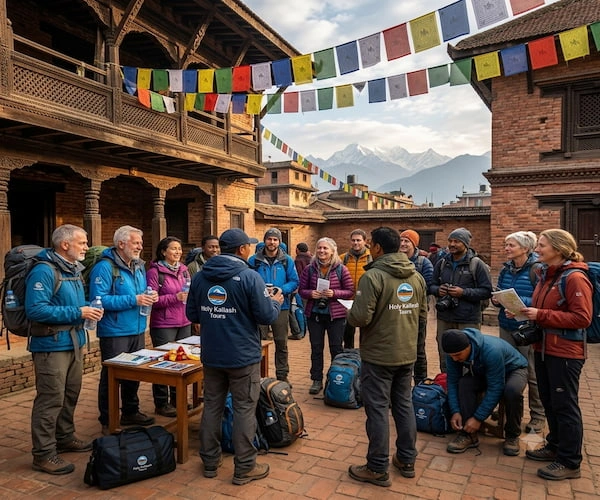
Holy Kailash Tours arranges private Nagarkot tours that can be fully customized: adjusted departure times, specific stops, pace, and dietary preferences for breakfast. Private tours also mean the vehicle and guide are dedicated to your group only, which works well for families or travelers with specific needs.
Why Choose Holy Kailash Tours for the Nagarkot Sunrise Tour
Holy Kailash Tours is based in Kathmandu with years of experience organizing Nepal travel, from the Kailash Mansarovar Yatra to Everest Base Camp treks to day tours around the valley. The Nagarkot Sunrise Tour is one of the most requested day experiences we arrange for visitors who want to see the Himalayas without a long trek.
A few things that separate a well-run tour from a basic one:
Early pickup reliability — The timing is non-negotiable for sunrise. Our drivers know the road and leave when they should.
Knowledgeable guides — A guide who can name the peaks and explain what you're seeing adds real value to the experience.
Flexible itineraries — We don't run identical tours for every group. If you want to spend more time in Bhaktapur or skip it entirely, we adjust.
Transparent pricing — What's included is listed clearly. Extra entry fees are listed as extra.
Small groups — We keep groups small to avoid the crowded, rushed feel of larger operators.
Whether you're visiting Kathmandu for a week or passing through on the way to a longer trek, the Nagarkot Sunrise Tour is one of the best single-day experiences in the country. Holy Kailash Tours makes sure it's organized so you can focus on what matters: watching the Himalayas light up.
Book your tour at least the day before. Sunrise tours require early logistics. Don't try to arrange this the morning of.
Confirm the weather outlook. Your guide or operator should check the forecast. If heavy cloud cover is predicted, some travelers choose to reschedule by a day.
Don't skip breakfast after sunrise. You've been up since 3:30 AM. Eating something warm before driving back makes the rest of the day much better.
If you're staying overnight in Nagarkot, several small lodges and hotels on the ridge offer rooms with mountain views. Waking up and walking 5 minutes to the viewpoint is a very different experience from the pre-dawn drive from Kathmandu.
Respect the environment. The ridge gets significant foot traffic. Don't leave waste, and stick to marked paths.
The road back through Bhaktapur is worth slowing down for. Terrace farms, small monasteries, and traditional Newari villages line the route. If your guide stops, it's worth getting out and taking a look.
Altitude note: Nagarkot's 2,195 meters is not high enough to cause altitude sickness in healthy adults, but some people feel slightly lightheaded on arrival, especially if they haven't acclimatized at all. Drinking water helps. This is not something to worry about for the vast majority of visitors.
The Nagarkot Sunrise Tour is one of those experiences that's hard to oversell. A cold, dark drive, a viewpoint filling with light, and then the Himalayas appearing from nothing, peak by peak, in the clearest colors you've ever seen them.
It works for photographers chasing alpenglow. It works for pilgrims looking for a quiet moment above the valley. It works for families on their first trip to Nepal. It works for people who have only one day in Kathmandu and want to make the most of it.
The logistics are straightforward. The early hour is worth it. The main decision is finding a tour operator who handles the details properly so the experience itself is free of friction.
Holy Kailash Tours has been organizing meaningful travel in Nepal for years, from high-altitude pilgrimages to Kailash Mansarovar to day tours like this one. If you want the Nagarkot sunrise done right, with reliable transport, an experienced guide, and the flexibility to shape the day around your interests, we're ready to help you plan it.
The mountains will be there at dawn. The question is whether you will be, too.
Ready to book your Nagarkot Sunrise Tour? Contact Holy Kailash Tours for current availability, package pricing, and private group options.