UNESCO World Heritage Sites in Nepal
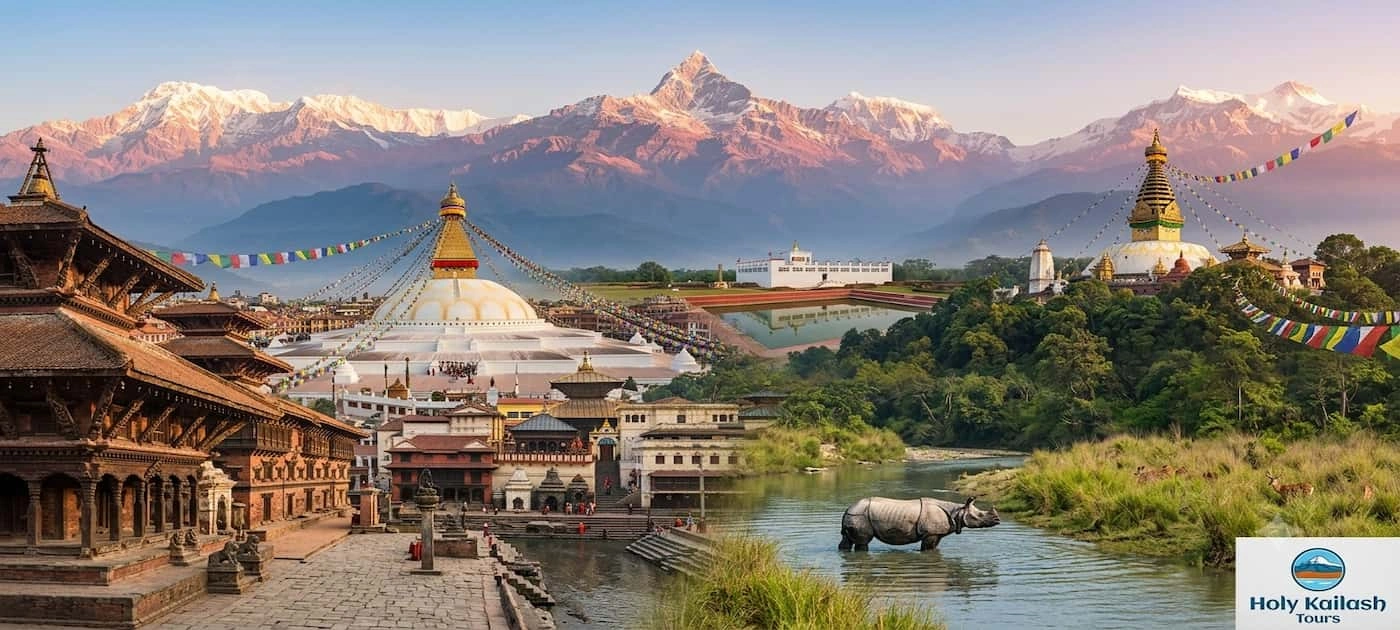
Nepal's 10 UNESCO sites fall into two categories: cultural and natural.
Cultural sites (7):
- Kathmandu Durbar Square
- Patan Durbar Square
- Bhaktapur Durbar Square
- Swayambhunath Stupa
- Boudhanath Stupa
- Pashupatinath Temple
- Changu Narayan Temple
Natural sites (3):
- Lumbini (listed under cultural heritage, but unique in its spiritual geography)
- Chitwan National Park
- Sagarmatha National Park
Wait, you may notice I listed Lumbini under cultural. UNESCO classifies it as a cultural site because the significance is tied to human history (the birthplace of Siddhartha Gautama), though the landscape itself is flat, green, and peaceful. It doesn't look like most "heritage sites." There's no dramatic architecture. That's part of what makes it special.
All 10 sites were inscribed between 1979 and 1997. Nepal was remarkably early in getting its sites recognized.
Why Nepal's Heritage Sites Are Globally Important
Here's a straightforward answer: Nepal preserved what most of the world destroyed.
The Kathmandu Valley sat at a crossroads of Silk Road trade routes for over a thousand years. Traders, pilgrims, artists, and scholars passed through. The Newar craftsmen who built these temples and palaces developed architectural and artistic techniques that were genuinely distinct. They didn't just copy Indian or Chinese styles. They created something of their own.
Politically, Nepal was never colonized. That fact alone explains a lot. The temples weren't demolished for building materials. The art wasn't shipped to foreign museums. The urban fabric of Bhaktapur still looks, in certain corners, like it did in the 15th century.
The natural sites tell a different story. Sagarmatha (Everest) sits in one of the most geologically young and ecologically fragile mountain systems on earth. Chitwan protects a floodplain ecosystem that once covered much of South Asia, now reduced to scattered patches.
These sites give researchers, travelers, and future generations a glimpse of what existed before modern development arrived.
Kathmandu Durbar Square
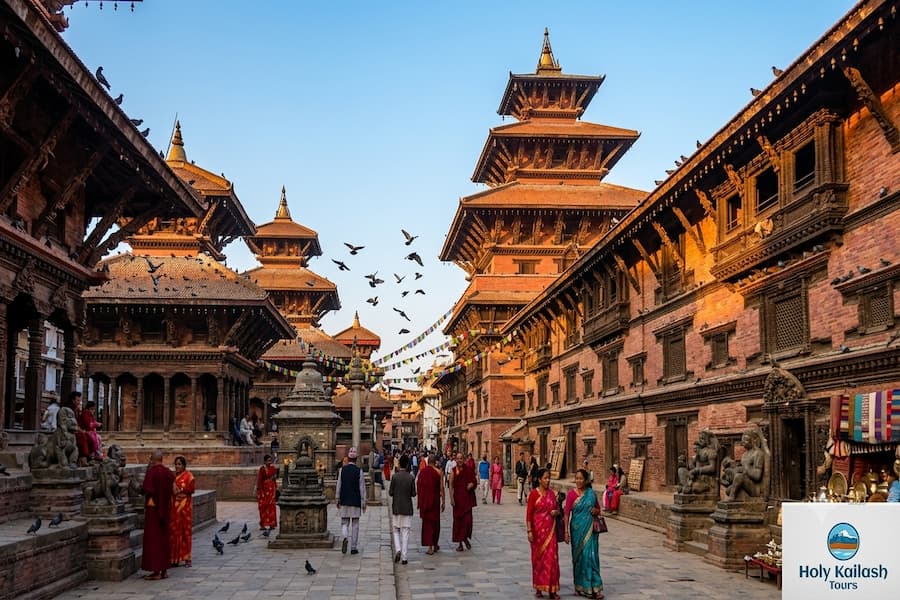
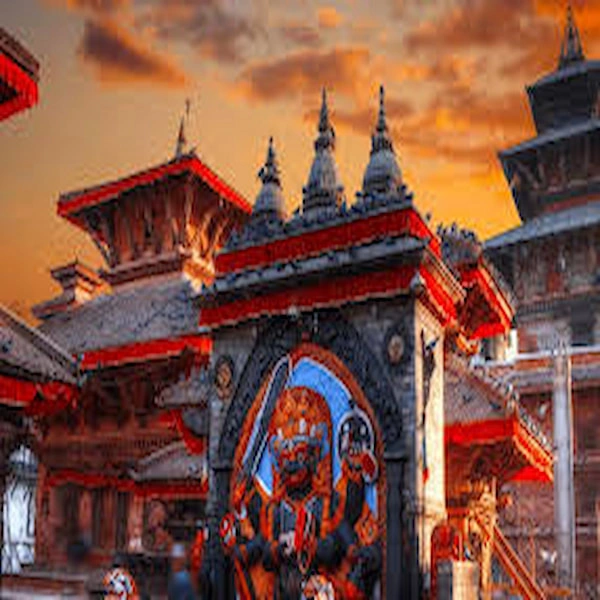
Kathmandu Durbar Square was the seat of the old Malla and then the Shah kings. It's not one building. It's a dense cluster of temples, palaces, courtyards, and statues built and rebuilt over several centuries.
The square sits in the middle of the old city of Kathmandu, surrounded by narrow streets, fruit sellers, and motorcycle traffic. Walk 20 minutes from most hotels in Thamel and you're there.
Some things worth knowing before you go:
- The 2015 earthquake caused significant damage here, including the collapse of the nine-story Kasthamandap temple, which is believed to have given Kathmandu its name. Reconstruction is ongoing.
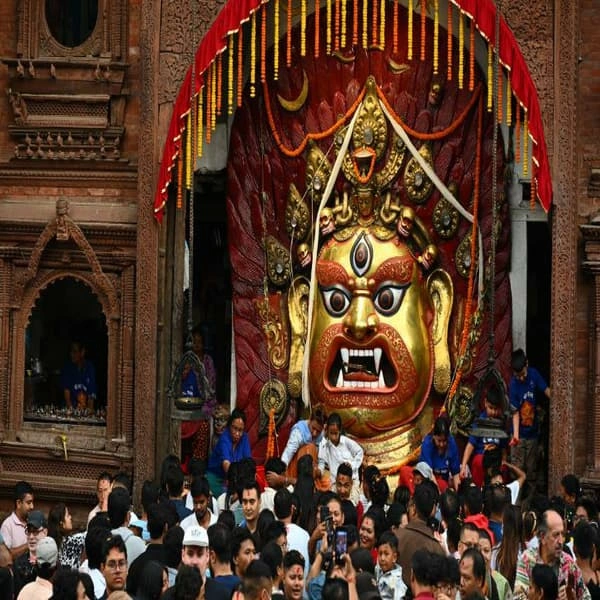
- The Kumari Ghar, the residence of the living goddess Kumari, stands on the south side of the square. If you're lucky (and patient), you may see her appear briefly at an upper window.
- Entry fees apply to foreigners. The ticket also covers Swayambhunath.
- Morning visits are calmer. By mid-morning, tour groups arrive.
The Taleju Temple, visible above the rooftops, was built in 1564. It's normally closed to non-Hindus, except on one day during the Indra Jatra festival.
Don't try to rush this place. Sit on a temple step for an hour and watch what happens around you.
Patan Durbar Square
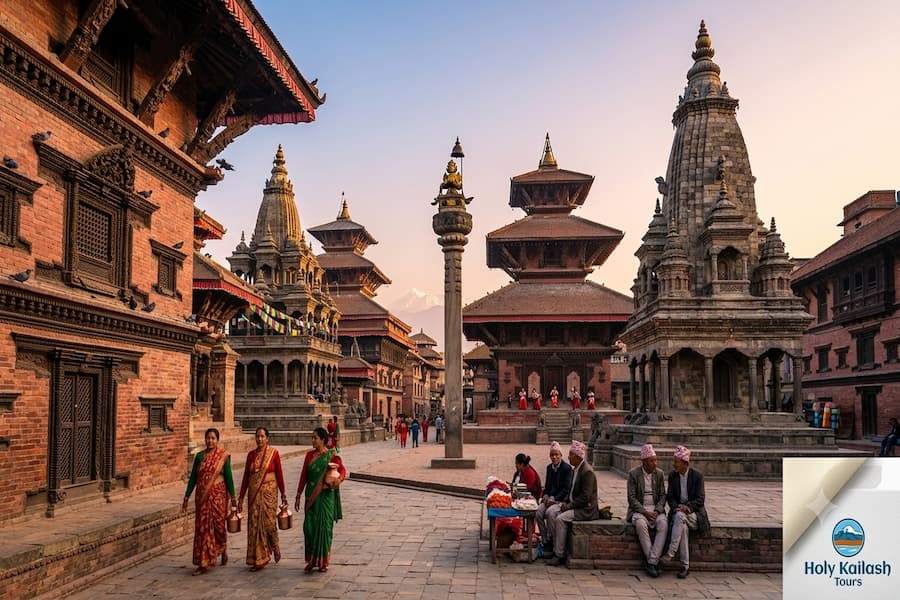
Patan (also called Lalitpur) sits directly south of Kathmandu, and its Durbar Square is arguably the most refined of the three in the valley.
The Krishna Mandir, built entirely of stone in the 17th century, is the centerpiece. Its friezes depict scenes from the Mahabharata and the Ramayana in carefully executed, continuous bands around the exterior. The craftsmanship is precise in a way that still surprises people who know something about stonework.
Patan has historically been a center of metalwork, particularly bronze casting. The tradition continues. Walk through the streets around the square, and you'll hear casting and grinding from workshops. Some families have been doing this for generations.
What separates Patan from the other two Durbar Squares:
- Less tourist density overall
- More intact surrounding urban fabric
- The Patan Museum, housed in a restored royal palace, is one of the best museums in Nepal for understanding Nepali art and religion
- Good cafes and restaurants around the square make it a comfortable place to spend a full day
The 2015 earthquake affected Patan too, though the damage was somewhat less catastrophic than in Kathmandu's square. Restoration work has been careful and, in some areas, genuinely impressive.
Bhaktapur Durbar Square
Bhaktapur is the most intact of the three medieval cities. It sits 13 kilometers east of Kathmandu. No airport, less traffic, and a city center that's largely closed to private vehicles.
The 55-Window Palace is the landmark image of Bhaktapur. The carved wooden windows, built for King Yaksha Malla in the 15th century, are extraordinary even in photographs. In person, standing in front of them in low morning light, they're extraordinary in a different way.
Bhaktapur has its own entry fee, separate from the Kathmandu ticket. It's higher than you might expect, but it goes toward maintenance and cultural preservation programs. The city uses the revenue well, and it shows.
A few things that make Bhaktapur distinct:
- Pottery Square, about a five-minute walk from the Durbar Square, is an active production area where potters still work on wheels and dry their pots in the open air
- The local yogurt (juju dhau, "king curd") is famous throughout Nepal and sold in small clay pots
- Taumadhi Square, a short walk from the Durbar Square, contains the Nyatapola Temple, a five-tiered pagoda built in 1702 and one of the tallest in Nepal
- Bhaktapur survived the 2015 earthquake better than Kathmandu or Patan, though it still experienced serious losses
Budget a full day here. Half a day is not enough.
Swayambhunath Stupa (Monkey Temple)
Swayambhunath sits on a hill west of Kathmandu city center. The stupa at the top is one of the oldest in the world, with origins traced by some scholars to 2,500 years ago, though the current structure is more recent.
The climb up the main staircase involves 365 steps. Monkeys live all over the complex. They're bold and not particularly worried about tourists. Watch your sunglasses, snacks, and phone.
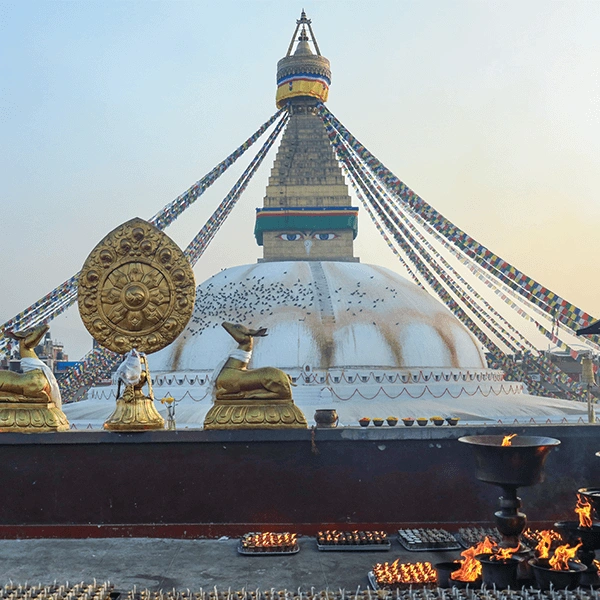
The stupa itself is plastered white and topped with a gilded tower. The painted eyes (Buddha's eyes) on the four sides of the tower are the most photographed image in Nepal. They're printed on thousands of keychains and t-shirts. In person, they're more affecting than any keychain suggests.
Around the main stupa:
- Smaller shrines and temples in various Buddhist and Hindu traditions sit across the hilltop
- The Harati Devi Temple on the complex honors a goddess important in smallpox prevention, historically significant in the valley
- Views of the Kathmandu Valley are good on clear mornings, before the haze builds up
The site is sacred to both Buddhists and Hindus. This overlap is common in Nepal and warrants attention. The boundary between the two traditions here is genuinely blurred, not just in a tourist-guide way.
Boudhanath Stupa
Boudhanath Stupa is one of the largest stupas in Asia. The numbers: roughly 36 meters tall, with a base circumference of over 100 meters. But the numbers don't capture how it feels to walk around it in the early morning with pilgrims spinning prayer wheels and monks walking in the opposite direction.
The stupa sits in the middle of a circular road, surrounded by monasteries, shops, cafes, and residences. The Tibetan exile community in Nepal is concentrated around Boudhanath. Many of the monasteries here are Tibetan Buddhist, and the area has a distinctly different atmosphere from the Hindu-influenced sites in the old city centers.
For Holy Kailash Tours, Boudhanath is often a meaningful stop before or after a Kailash Mansarovar pilgrimage. Travelers preparing for Tibet find a spiritual grounding here, and those returning often come back with a different kind of attention to the place.
Practical notes:
- Entry fees apply
- The best time to visit is early morning (sunrise to 8 am) or evening (5 pm to 7 pm) when circumambulation is most active
- The rooftop cafes around the stupa offer views directly onto the structure and are worth the short climb
- Losar (Tibetan New Year) celebrations here are extensive and worth planning around if your dates allow
The 2015 earthquake damaged the spire. Restoration was completed in 2016 with support from Nepal's government and international donors.
Pashupatinath Temple
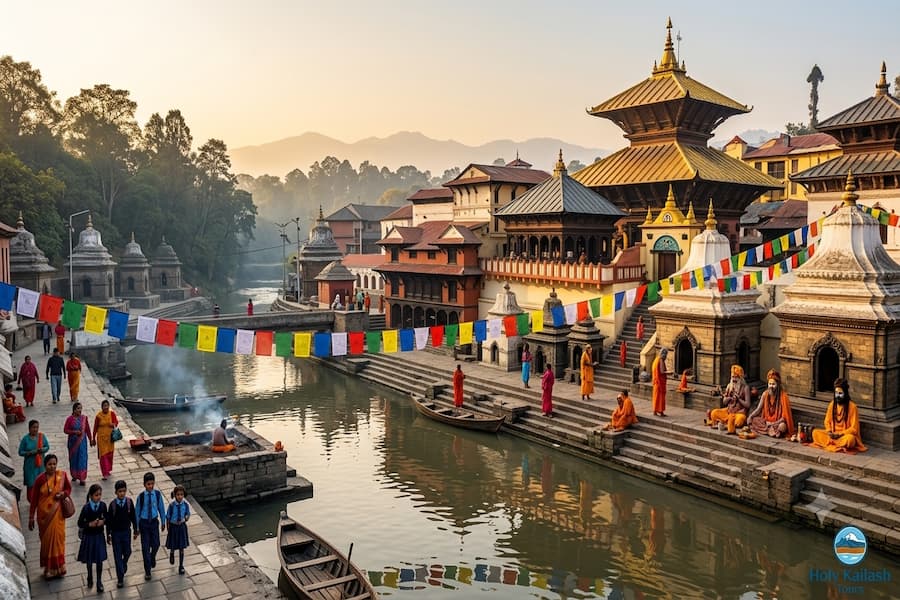
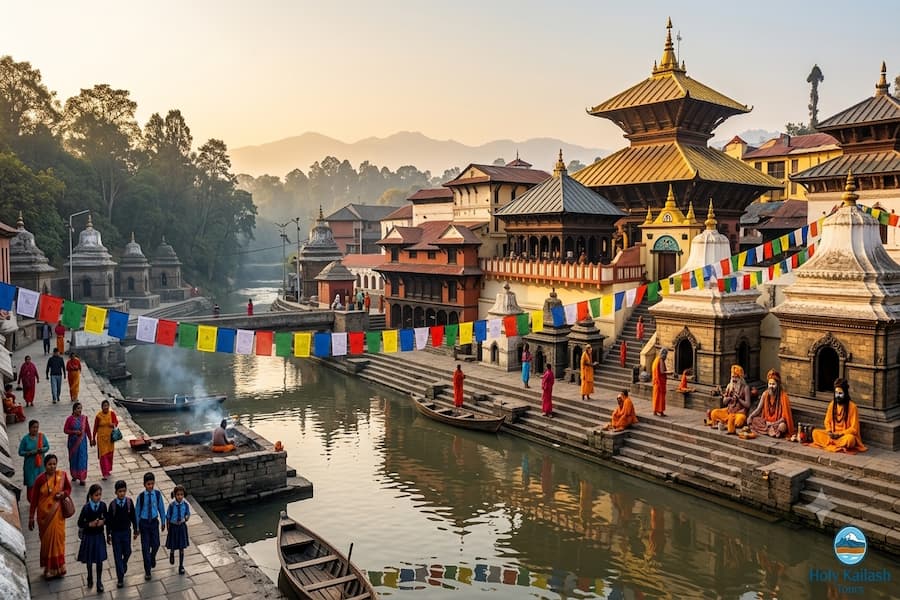
Pashupatinath is the most sacred Hindu temple in Nepal, dedicated to Shiva. It sits on the banks of the Bagmati River, east of central Kathmandu near the airport.
Non-Hindus cannot enter the main temple. This is a clear policy, enforced, and not worth trying to circumvent. But the surrounding area is open, and what you can observe from the eastern bank of the river is more affecting than most people expect.
The open-air cremation ghats sit along the river. Bodies are cremated here daily. If this sounds like a grim tourist attraction, it isn't. Or it doesn't have to be. If you approach it with respect for what's happening (families grieving, priests working, a tradition that sees cremation as release rather than ending), it's one of the more honest and humanizing things you can witness as a traveler.
The temple complex also includes:
- Numerous smaller temples and shrines across the hillside
- Sadhus (Hindu holy men) who live in the area, some of whom will pose for photographs in exchange for a donation
- A deer park and wildlife zone near the upper sections
- The Mrigasthali forest, a quiet area good for early morning walks
During Maha Shivaratri (usually February or March), hundreds of thousands of pilgrims come here. The crowd is immense. If you want a more contemplative visit, avoid that week or go very early in the morning.
Changu Narayan Temple
Changu Narayan is the oldest temple in the Kathmandu Valley, dedicated to Vishnu. It sits on a hilltop above the town of Bhaktapur, about 6 kilometers from the city center.
Most travelers skip it. That's partly why it's worth visiting.
The temple complex contains stone sculptures dating back to the Licchavi period (roughly 4th to 9th centuries AD). One inscription, dated to 464 AD, is one of the oldest surviving records in Nepal. The carved reliefs on the temple walls are exceptional, and because the site gets fewer visitors than the Durbar Squares, you can actually stand in front of them without being jostled.
Getting there: you can drive from Bhaktapur or take a longer walk (about 1.5 hours from the city) through a forested trail that's pleasant on a clear morning.
The village around the temple is small and quiet. A few guesthouses and tea shops operate for visitors. It feels, more than almost anywhere else in the valley, like a place that hasn't been organized specifically for tourism.
Lumbini: The Birthplace of Lord Buddha
Lumbini is in the southern Terai plains, near the Indian border. It's where Siddhartha Gautama was born around 563 BCE (dates vary by tradition, but the general period is consistent across most scholarship).
The sacred garden at the center contains the Maya Devi Temple, built over the exact spot identified as the birthplace. An Ashoka pillar, erected by the Indian emperor Ashoka in 249 BCE, stands beside it with an inscription confirming his visit. This is one of the most important pieces of physical evidence connecting the historical Buddha to a real place.
The Lumbini Development Zone surrounds the sacred garden. It was designed by the Japanese architect Kenzo Tange in the 1970s. Monasteries built by Buddhist communities from around the world line two long canals. The variety is striking: Burmese, Sri Lankan, Vietnamese, Korean, Chinese, Tibetan, Japanese, and Theravada monasteries all within walking distance of each other.
For anyone interested in Buddhism (or interested in what a genuinely multicultural pilgrimage site looks like), Lumbini rewards slow, thoughtful exploration more than a rushed half-day visit.
Getting there: Lumbini is about 300 kilometers southwest of Kathmandu. Flights to Bhairahawa (Gautam Buddha Airport) make it accessible. A bus ride from Kathmandu takes roughly 7 to 8 hours on good days.
Chitwan National Park
Chitwan was Nepal's first national park, established in 1973. UNESCO listed it in 1984. It sits in the lowland Terai in southern Nepal, where the foothills of the Himalayas give way to a flat, subtropical floodplain.
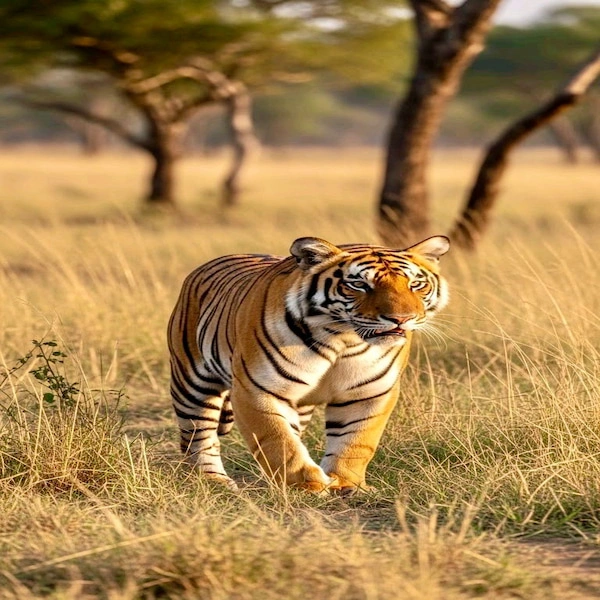
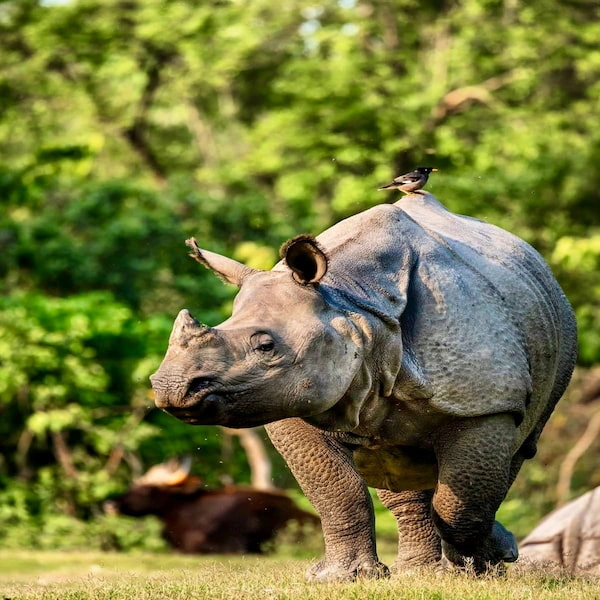
The park protects one of the last significant populations of one-horned rhinoceros in Asia, along with tigers, gharial crocodiles, Gangetic dolphins, sloth bears, leopards, and over 540 species of birds.
What makes the Chitwan jungle safari different from many national parks is that the wildlife is genuinely accessible. Rhino sightings on canoe trips along the Rapti River are common. Elephant grass and sal forest cover much of the terrain, and guided walks into the buffer zone regularly produce encounters that would be remarkable in most other parks.
Practical notes:
- Sauraha is the main gateway town. Accommodation ranges from basic to a comfortable lodge.
- Jeep safaris, canoe trips, and guided walks are the main activity types
- Entry fees vary based on nationality. The park entry for foreign nationals is significant. Factor it into your budget.
- Best wildlife viewing: October to March (dry season, animals concentrate near water sources and open grasslands)
- Monsoon months (June to August) are wetter, some roads flood, but bird watching is excellent
The rhino conservation story at Chitwan is genuinely good news. Poaching was a serious problem through the 1990s and 2000s. It's not zero now, but sustained conservation efforts have allowed the population to grow from near collapse to over 700 animals.
Sagarmatha National Park
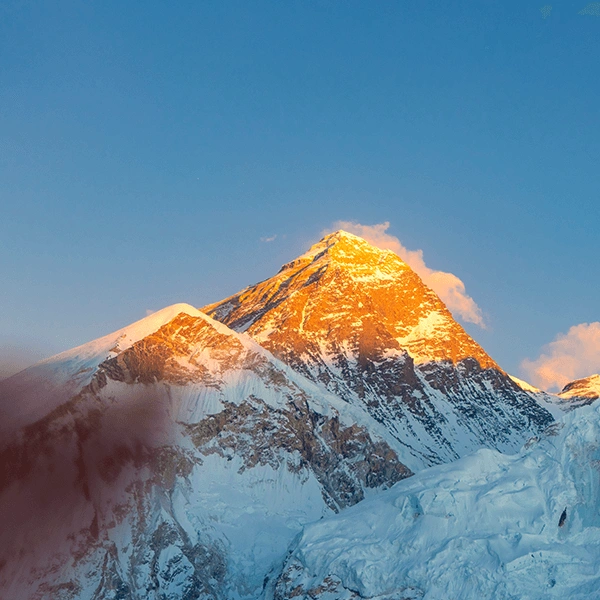
Sagarmatha National Park covers 1,148 square kilometers of the Khumbu region in northeast Nepal, including Mount Everest (Sagarmatha in Nepali, Chomolungma in Tibetan). UNESCO listed it in 1979.
The park is home to the Sherpa people, whose cultural relationship with the mountains here goes back centuries. It also protects snow leopards, red pandas, Himalayan tahr, musk deer, and dozens of bird species adapted to high altitude.
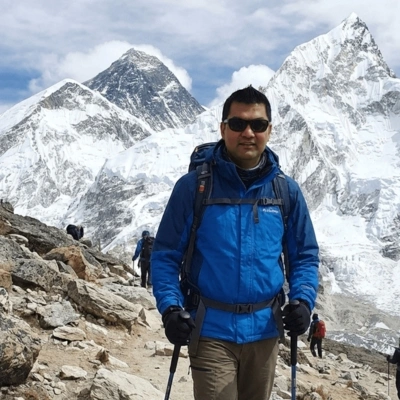
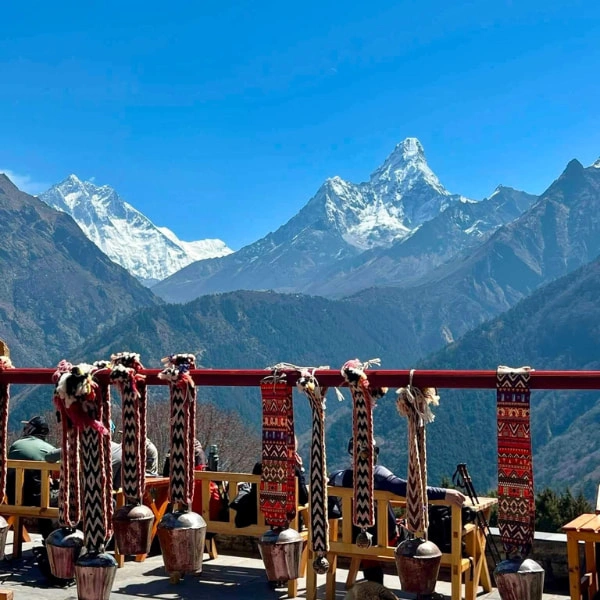
For most people, Sagarmatha National Park means the Everest Base Camp trek or another route in the Khumbu. The trek passes through forests of rhododendron and juniper at lower elevations, then through increasingly barren high-altitude terrain above the treeline. Namche Bazaar (3,440 meters), the main hub in the Khumbu, is a required stop for acclimatization.
Key figures for the EBC trek:
- Distance: roughly 130 kilometers round trip from Lukla
- Duration: typically 12 to 14 days
- Maximum elevation (Kala Patthar viewpoint): 5,545 meters
- Lukla is reached by flight from Kathmandu (approximately 35 minutes)
The Tengboche Monastery, at 3,860 meters, is one of Nepal's most visited monasteries. The setting, below Ama Dablam and above the Dudh Koshi valley, doesn't photograph badly. That's an understatement.
Sagarmatha faces real environmental pressures. Waste from decades of climbing and trekking, changing precipitation patterns, and glacial retreat are documented and ongoing concerns. The park authority and local organizations have made progress in waste management, but the problems remain.
Best Time to Visit Nepal's UNESCO Sites
Nepal has two main trekking and travel seasons:
October to early December (autumn) Clear skies, comfortable temperatures in the Kathmandu Valley (15 to 25°C during the day), good visibility in the mountains, and post-monsoon greenery. This is peak season. Crowds at major sites are highest in October and November.
March to May (spring), Rhododendrons bloom throughout the hills. Temperature in Kathmandu climbs (up to 30°C in May). Mountain views can be slightly hazier than in autumn due to dust and pre-monsoon cloud building. Still excellent for most sites.
December to February (winter) is cold in Kathmandu (nights near freezing) and cold at altitude. High mountain treks are difficult. But the Terai (Lumbini, Chitwan) is pleasant. Heritage sites in the valley are quieter and often more enjoyable to visit.
June to September (monsoon) The heritage sites in the valley are accessible but wet. Chitwan's jungle is lush, and birdwatching is good, though some roads flood. High altitude trekking is difficult. Not recommended for most first-time visitors to Nepal.
Travel Tips for Exploring UNESCO Sites in Nepal
A few practical things that make a real difference: Permits and entry fees. The Kathmandu Valley heritage sites charge separate entry fees for most locations. Foreigners pay more than Nepali citizens. Budget at least $30 to $40 for the combination of Kathmandu Durbar Square, Swayambhunath, and Patan. Bhaktapur has its own separate ticket. Keep your receipts, as some sites do spot checks.
Photography. Most sites allow photography in exterior areas. Some temples and inner sanctuaries prohibit it. Look for signs, and when in doubt, ask a guide or site official. Flash photography near old paintings and sculptures can cause significant damage over time.
Dress code. Shoulders and knees should be covered at religious sites. This applies to all genders. Some sites offer sarong wraps at the entrance if you didn't plan ahead.
Guides. A good local guide at the Durbar Squares will tell you things that a sign never could: which family built which temple, why certain deity combinations appear together, and what happened to specific monuments in the 2015 earthquake. The fee is worth it.
Timing your visits. The Kathmandu Valley sites are busiest between 10 am and 3 pm when tour groups are active. Early morning is better for photography and atmosphere. Evening visits to Boudhanath, when the butter lamps are lit, and circumambulation is in full swing, are among the more memorable things you can do in Nepal.
Altitude for Sagarmatha. If you're trekking in the Khumbu, take acclimatization seriously. Altitude sickness is not a minor inconvenience. Ascend slowly, rest when you need to, and don't push through symptoms.
How Does UNESCO Status Help Preserve Nepal's Heritage?
The designation matters for several concrete reasons.
It brings international attention and, with it, funding. After the 2015 earthquake, UNESCO and its network of partner organizations provided technical expertise and financial support for restoration efforts at Bhaktapur, Patan, and Kathmandu's squares.
It sets standards. UNESCO's World Heritage Committee reviews the state of conservation at each site and can issue formal warnings (called "In Danger" listings) when conditions deteriorate. This creates accountability.
It shapes tourism policy. Nepal's government has a stronger incentive to regulate development near UNESCO-designated heritage sites. Buffer zones, building height restrictions, and visitor management plans are all influenced by the status.
That said, UNESCO listing is not a guarantee of protection. Looting, neglect, development pressure, and seismic damage are ongoing realities. The 2015 earthquake damaged or destroyed over 700 heritage structures in the Kathmandu Valley alone, many of which are still under reconstruction. UNESCO helped, but the work is enormous.
UNESCO Heritage Sites and Nepal Tourism
Tourism is Nepal's second-largest source of foreign exchange after remittances. The UNESCO sites are a core part of what draws people here.
Holy Kailash Tours, based in Kathmandu, works with travelers who come to Nepal for reasons that go beyond standard sightseeing. Pilgrims heading to Mount Kailash and Lake Mansarovar often spend days in Kathmandu before and after their Tibet journey, and the UNESCO sites are a natural part of that experience. Boudhanath carries particular meaning for those preparing for or returning from a Tibetan pilgrimage.
Nepal tourism has diversified significantly over the past two decades. The Everest Base Camp trek draws over 50,000 trekkers in good years. Cultural tourism in the Kathmandu Valley has grown. Lumbini receives a growing number of Buddhist pilgrims from East and Southeast Asia. Chitwan attracts wildlife enthusiasts from Europe and North America.
The challenge is managing this growth without damaging what drew people here in the first place. The Khumbu's waste problem is real. Overtourism at popular Durbar Square sites is visible. How Nepal balances accessibility with preservation over the next 20 years will determine how these places look for future generations.
Final Thought
Nepal's UNESCO World Heritage Sites aren't just photogenic stops on an itinerary. They're the accumulated work of centuries: architects who built without steel or reinforced concrete, craftsmen who spent lifetimes refining a single tradition, communities who maintained living religious practices across political upheavals, and natural systems that survived colonization and industrial pressure only because the terrain was too difficult to exploit.
Stand in Bhaktapur's Taumadhi Square at 7 am. Watch the morning aarti at Pashupatinath. Look up at Everest from Kala Patthar. You're not just experiencing something beautiful. You're in a place that took an enormous amount of time, effort, and luck to survive into the present.
That's worth taking seriously. Whether you're traveling independently or with an experienced operator like Holy Kailash Tours, give these places a fair chance. Don't try to check all 10 off a list in a week. Pick a few. Go slowly. Ask questions. Nepal tends to reward travelers who aren't in a hurry.
Email: [email protected]
WhatsApp: +977-9851254672 — Feel free to reach out anytime for fast, friendly, and personalized assistance