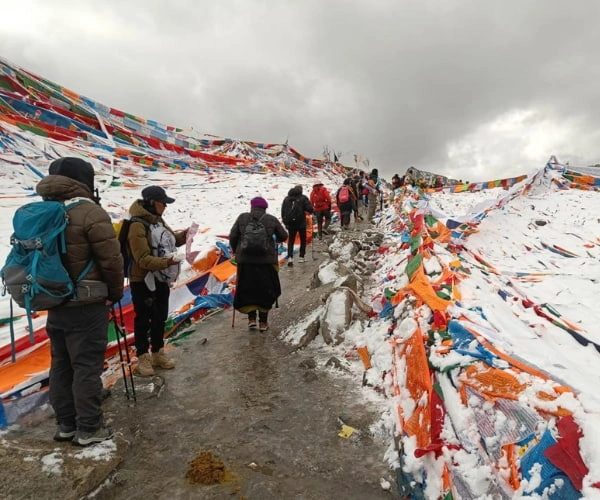
Where is the Mardi Himal Trek Located?
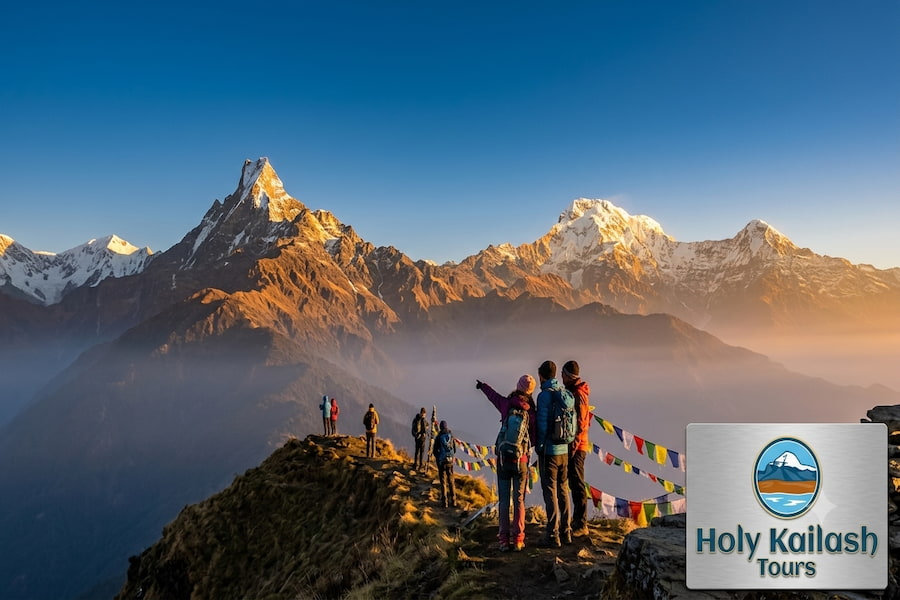
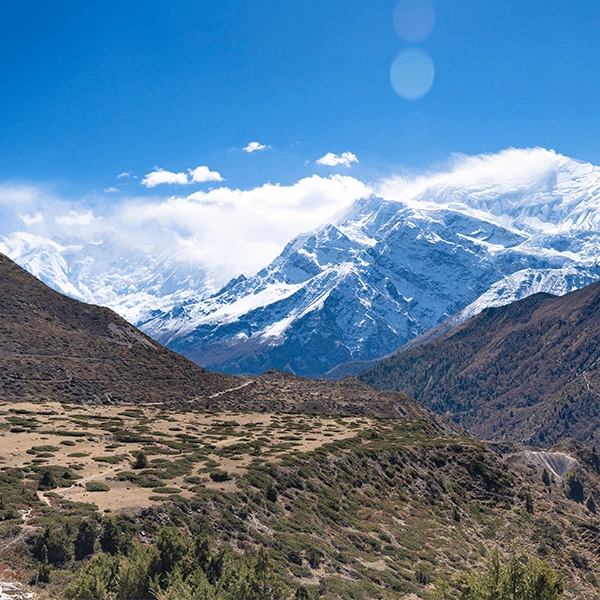
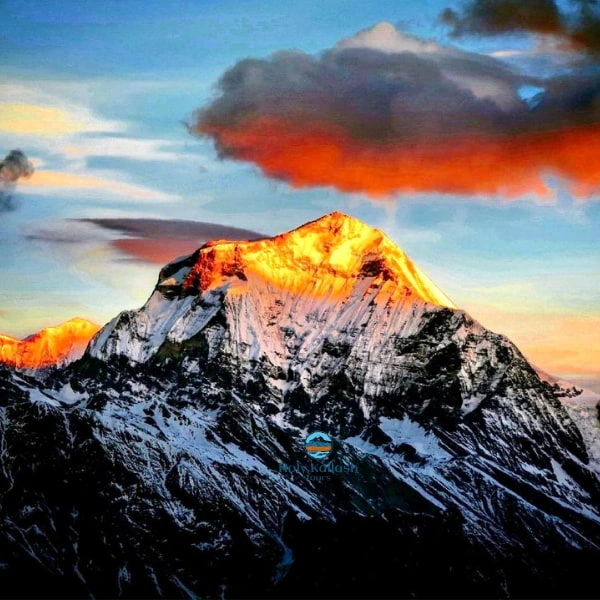
Mardi Himal Trek is in the Annapurna region of Nepal, in the Kaski district of Gandaki Province. The peak, called Mardi Himal, stands at 5,587 meters. It's the smaller, quieter neighbor of Machhapuchhre (Fishtail Mountain) and sits at the eastern edge of the Annapurna Sanctuary.
The trek starts from Kande or Phedi, small settlements just outside Pokhara. Pokhara Valley itself is about 200 kilometers west of Kathmandu and is the main hub for Annapurna region treks. You can reach Pokhara by bus (roughly seven hours from Kathmandu) or by a short 25-minute domestic flight.
The trail runs through forests, ridgelines, and high alpine terrain before reaching Mardi Himal Base Camp at around 4,500 meters. The whole route stays within the Annapurna Conservation Area, so the landscape shifts dramatically from subtropical forest at the lower elevations to bare, windswept ridges near the top.
Why Choose the Mardi Himal Trek in Nepal?
There are good reasons this trail keeps showing up in conversations among trekkers who've already done the classics.
For one, it's shorter. If you have eight to ten days total in Nepal, this is one of the few routes that actually fits your schedule without cutting corners. The Annapurna Circuit takes two to three weeks. The Mardi Himal Trek can be completed in 6 to 8 days.
It's also less trafficked. Not empty, but noticeably quieter than the Poon Hill Trek or the EBC Trek. The teahouse owners along the ridge are more relaxed. The trail itself doesn't feel like a conveyor belt. That changes the experience in ways that are hard to quantify but easy to feel.
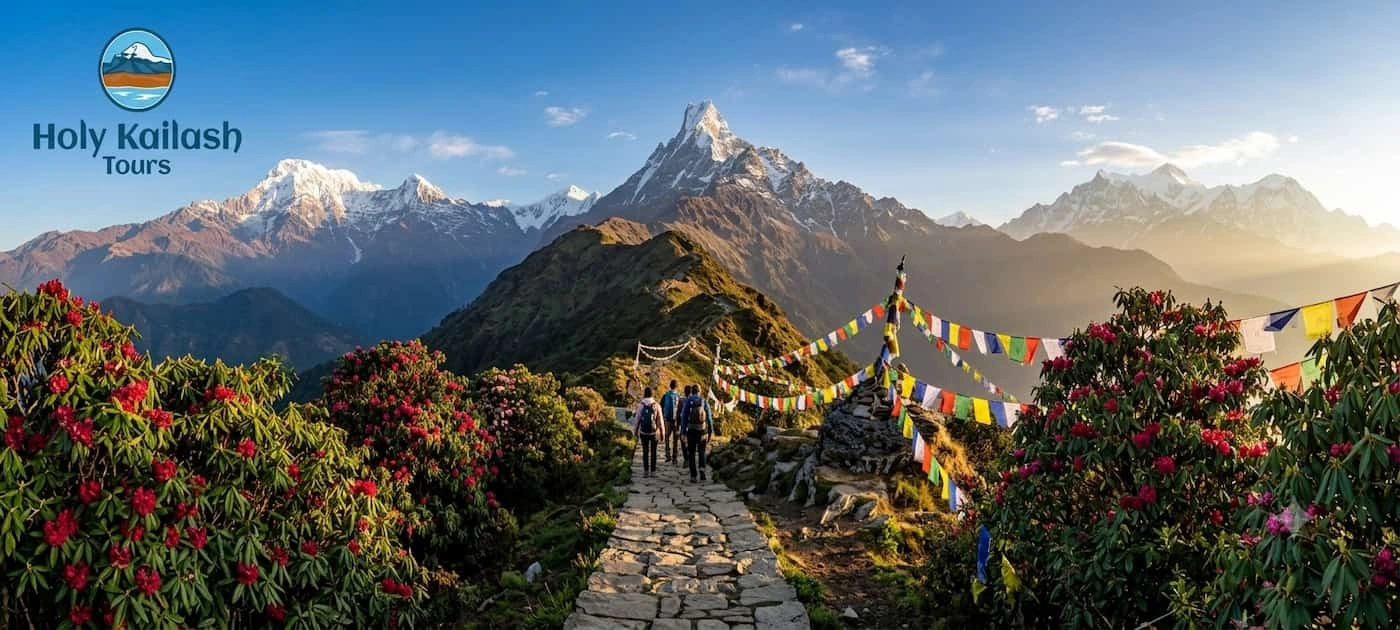
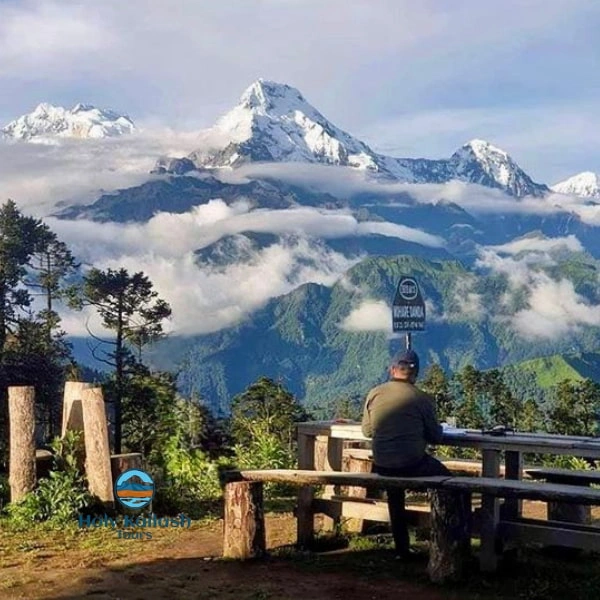
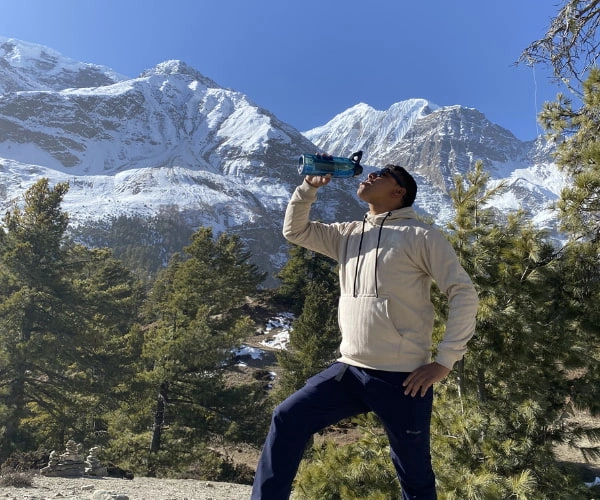
The views are genuinely exceptional. Annapurna South, Hiunchuli, Machhapuchhre, and Mardi Himal itself fill the skyline from High Camp. On a clear day in autumn or spring, those panoramas are hard to beat on any trail in the Annapurna region.
And the trail is accessible. You don't need prior high-altitude experience to complete it, though basic physical fitness matters. Trekkers who would be nervous about the more demanding sections of the Thorong La Pass or the Kanchenjunga Circuit can do well here with proper preparation.
Highlights of the Mardi Himal Trek
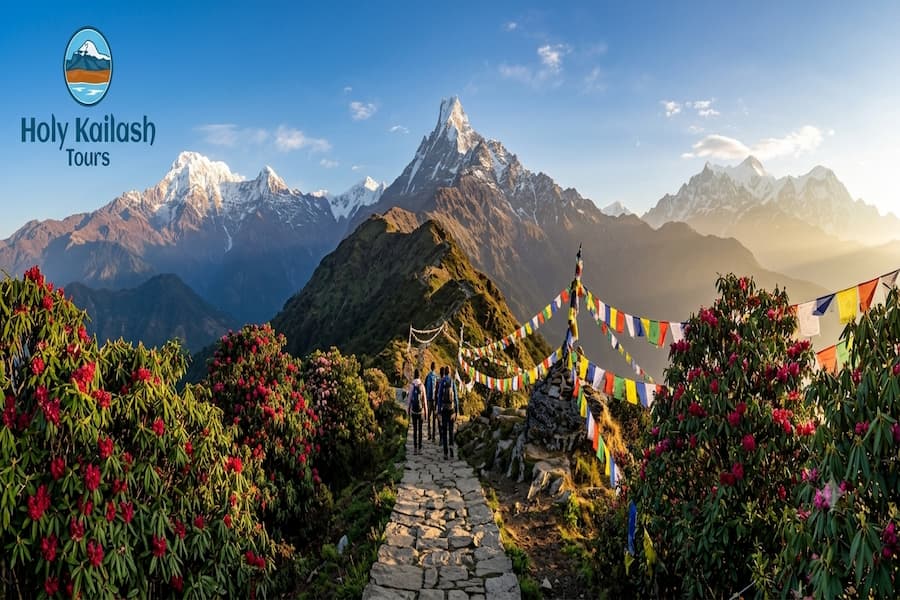
The trail doesn't have one single dramatic moment. It builds gradually, which is part of what makes it satisfying.
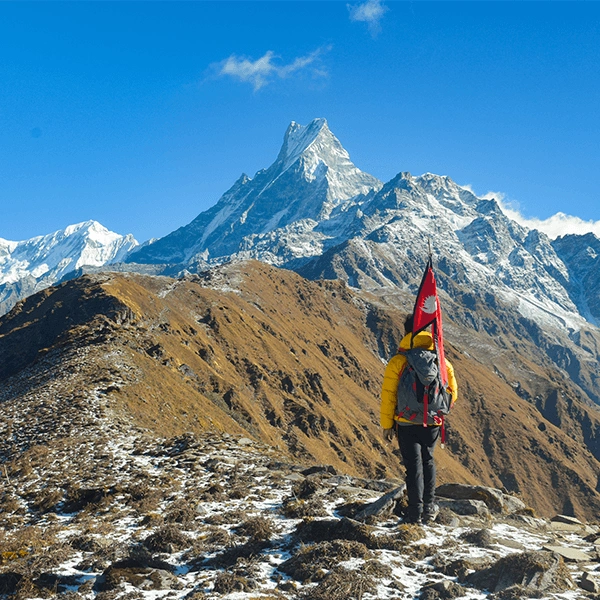
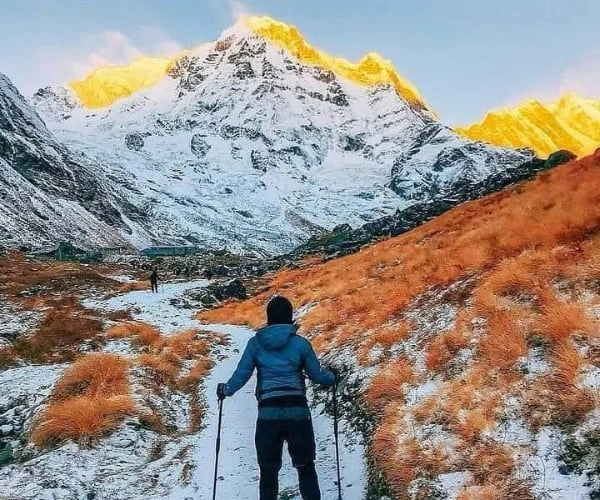
The ridge walk between Low Camp and High Camp is one of the best days on the trail. You're walking along a narrow spine with forest below on both sides and the Annapurna massif growing in front of you. It's exposed in places, quiet, and genuinely beautiful.
Mardi Himal Base Camp, at around 4,500 meters, is the emotional high point. You're close enough to feel the scale of the mountains around you. The glacier debris, the silence, and the unobstructed view of Machhapuchhre from that altitude feel earned in a way that a helicopter trip never would.
The descent into Sidhing village offers something different. You drop back through forests and reach a small Gurung community that sees far fewer trekkers than the villages on the Annapurna Circuit. It's a good place to have tea and understand a little more about how people actually live in this part of the hills.
For trekkers interested in the Nepal Himalayan trekking experience at its most authentic, the Mardi Himal route offers forests, ridge lines, high-altitude terrain, and cultural moments without packing in so many tourists that the trail feels diluted.
- Enjoy the magnificent perspectives of Machhapuchhre, Annapurna South, and Hiunchuli.
- Hike the tranquil rhododendron woods and high mountain scenery.
- Mardi Himal Base Camp offers an amazing panoramic view of the Himalayas.
- You will experience less-frequented, peaceful trekking routes in Nepal.
- Traditional Gurung villages and their mountain cultures will be the focus of the discovery.
- You will see Himalayan mammals and attractive birds during the route.
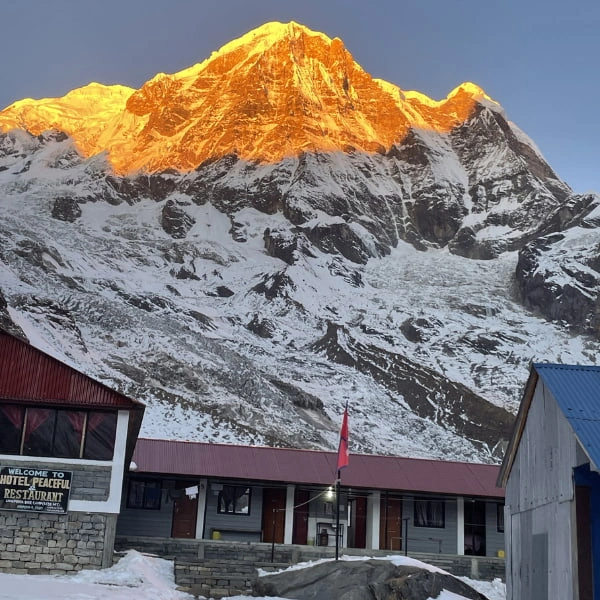
- Catch the unforgettable arrival and departure of the sun over the Annapurna range.
Mardi Himal Trek Route and Itinerary
The most common itinerary is 7 to 8 days. Here's a practical breakdown.
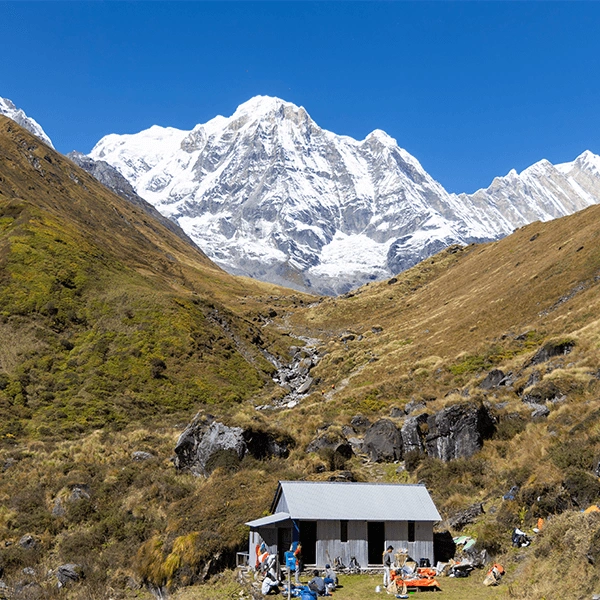
Day 1: Pokhara Valley to Kande, then trek to Australian Camp (2,060m). You drive from Pokhara to Kande, a 45-minute drive. From there, the trail climbs steadily through forests and small settlements. Australian Camp is a popular overnight stop with good views of the Annapurna range on clear evenings.
Day 2: Australian Camp to Low Camp (2,990m). This section moves through rhododendron and oak forests. The trail gains elevation steadily. Low Camp is a small cluster of teahouses on the ridge with the first real views of Machhapuchhre.
Day 3: Low Camp to High Camp (3,580m). One of the best days on the route. The ridge narrows and the terrain opens up. You're walking above the treeline with unobstructed views across the Annapurna Sanctuary. High Camp sits at the edge of the alpine zone and can get cold at night.
Day 4: High Camp to Mardi Himal Base Camp (4,500m) and back to High Camp. An early start is worth it. The trail from High Camp to Base Camp takes three to four hours round-trip. From Base Camp, the views of Machhapuchhre, Annapurna I, Annapurna South, and Hiunchuli are exceptional. You return to High Camp for the night.
Day 5: High Camp to Badal Danda (Forest Camp, 2,520m) A long descent through forest terrain. The change in altitude and landscape happens quickly. Badal Danda is a small stop in the trees.
Day 6: Badal Danda to Sidhing (1,700m) You continue down through the forest and eventually reach the village of Sidhing, a Gurung community with basic teahouse accommodation.
Day 7: Sidhing to Lumre, then drive to Pokhara. The trail drops further to Lumre on the main road. From there, you return to Pokhara by vehicle.
Some trekkers add a day at High Camp for acclimatization or weather, which is a sensible choice if your schedule allows.
Stunning Mountain Views on the Mardi Himal Trail
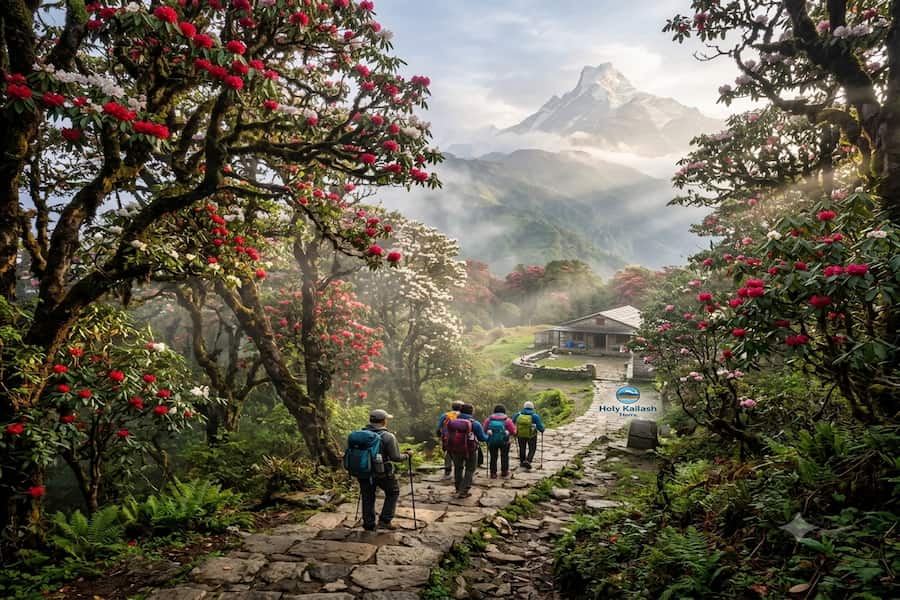
The views on the Mardi Himal Trek change depending on where you are on the route, and that's part of what keeps the trail interesting.
From Australian Camp, you get your first wide view of the Annapurna range to the north. It's a teaser. The mountains are visible but still distant. From Low Camp, the perspective shifts as you gain more elevation and the ridge opens up. Machhapuchhre starts to look genuinely imposing from here, its twin-peaked summit doing exactly what its name promises.
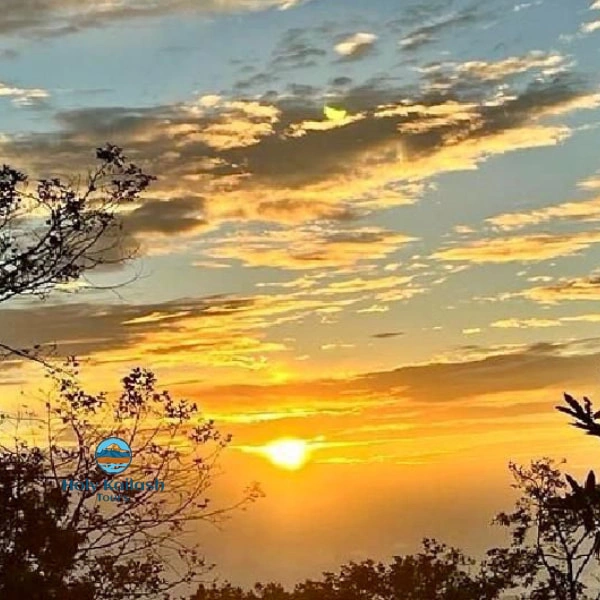
High Camp is where the views become something you remember. You're sitting at 3,580 meters with Annapurna South directly ahead, Hiunchuli to the left, and Mardi Himal's rocky lower flanks rising above you to the right. Sunrise from High Camp, if the sky is clear, is one of those mornings when the cold and the thin air are completely irrelevant.
Base Camp adds depth to what you've already seen. You're closer to the glaciers, and the scale of the peaks around you becomes harder to rationalize. The feeling up there isn't awe in a dramatic cinematic sense. It's more like a slow recognition that the mountains are just very, very large and you are very, very small, and somehow that's fine.
Forests, Wildlife, and Natural Beauty Mardi Himal Trek
The lower sections of the Mardi Himal Trek route run through some of the best forest terrain in the Annapurna Conservation Area. Below Low Camp, you're walking through rhododendron, oak, and bamboo forest. In spring, these forests are full of color, particularly in March and April when rhododendrons bloom in red and pink across the hillsides.
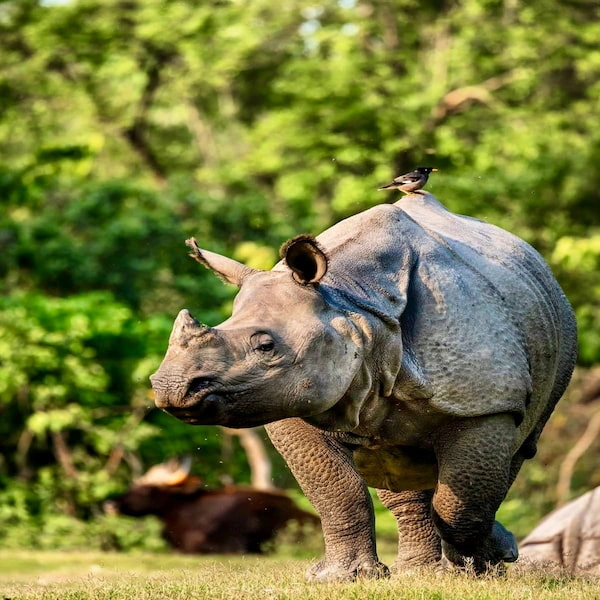
Wildlife sightings depend heavily on the season and the time of day. Himalayan tahr are spotted occasionally on the upper ridges. Langur monkeys are common in the mid-altitude forests. Bird life is rich throughout, with species like the Impeyan pheasant (Nepal's national bird) visible in the forest sections if you're moving quietly in the early morning.
The transition from forest to alpine terrain happens quickly between Low Camp and High Camp. Below the treeline, it feels sheltered and green. Above it the landscape is bare, rocky, and open. That contrast within a single day's walking is one of the more memorable physical experiences on this route.
Water sources along the trail are generally reliable, though trekkers should use water purification tablets or a filter rather than drinking untreated water from streams.
Traditional Villages and Local Culture
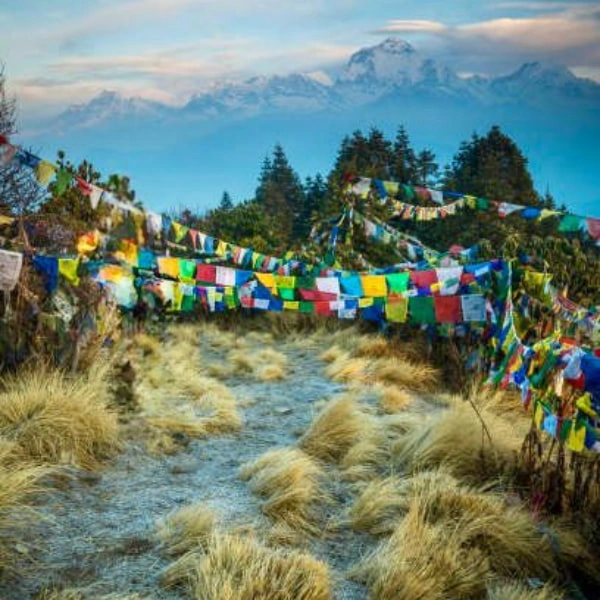
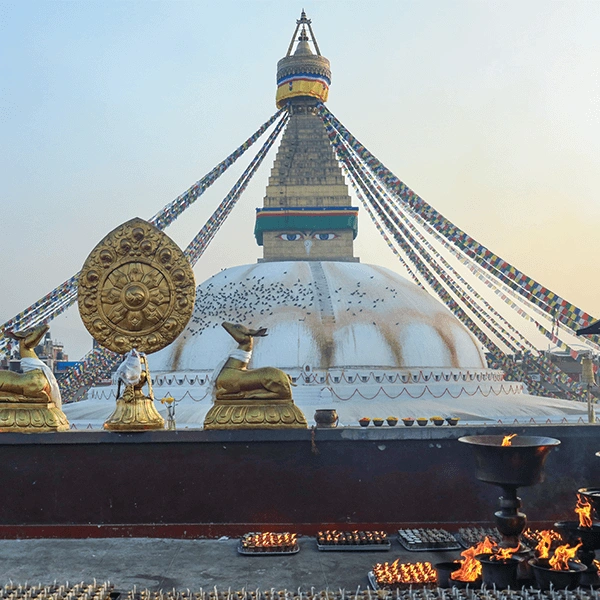
The Mardi Himal Trek passes through several Gurung villages, particularly in its lower sections. The Gurung people are one of Nepal's major hill communities and have historically provided Gurkha soldiers to the British and Indian armies. Their culture blends Tibetan Buddhist influence with older animist traditions, as shown in the architecture of villages, the prayer flags on ridges, and the small stupas and chortens you pass along the trail.
Landruk and Sidhing are the two villages where you get the most genuine sense of local life. These aren't tourist villages like Namche Bazaar or Ghorepani. People are farming, raising livestock, and going about their days. The teahouses here are often family-run, the food is simple, and conversation over tea with a local family is easy to find if you're not in a rush.
For trekkers who want to understand Nepal beyond its mountains, these cultural moments on the Mardi Himal Trek are worth noting. The trail isn't just a summit chase. It runs through living communities, and that texture matters.
Mardi Himal Base Camp Experience
Reaching Mardi Himal Base Camp at around 4,500 meters is the physical and emotional goal of the trek. Getting there requires an early morning start from High Camp, usually before dawn, so that you reach the Base Camp in good light and return before afternoon clouds build.
The terrain above High Camp is rocky and somewhat exposed. The trail is marked but not always obvious, particularly in poor visibility. Crampons are not typically required unless there's fresh snow, but trekking poles are useful on the steeper sections.
When you arrive at Base Camp, the reward is immediate. Machhapuchhre fills the sky directly ahead, impossibly close. Annapurna I, at 8,091 meters, is visible to the west. Mardi Himal's rocky summit pyramid rises above you to the northeast. There's no hut, no vendor, no distraction. Just wind, rock, and mountain.
Most trekkers spend thirty minutes to an hour here before turning back. A few push slightly higher to the "Upper Viewpoint" at around 4,700 meters for an even wider panorama, though this section requires more caution in icy conditions.
The descent back to High Camp takes roughly two hours. Many trekkers describe the Base Camp day as the one they remember most vividly from the entire Mardi Himal trekking experience.
Trek Difficulty and Fitness Level Required
The Mardi Himal Trek is rated moderate. It's not a beginner walk, but it's well within reach for trekkers who exercise regularly and have some hill walking experience.
The longest days cover ten to fourteen kilometers, often with 700 to 900 meters of elevation gain. The trail is well-defined but involves steep climbs, root-covered forest paths, and exposed ridge walking. The highest point, Mardi Himal Base Camp, sits at approximately 4,500 meters. Altitude sickness is a real concern for some trekkers above 3,500 meters.
The standard precautions apply. Acclimatize properly by not gaining too much elevation too quickly. Drink two to three liters of water daily. Avoid alcohol at altitude. Know the symptoms of altitude mountain sickness (AMS), which include persistent headache, nausea, dizziness, and loss of appetite. If symptoms appear and don't improve with rest, descend immediately.
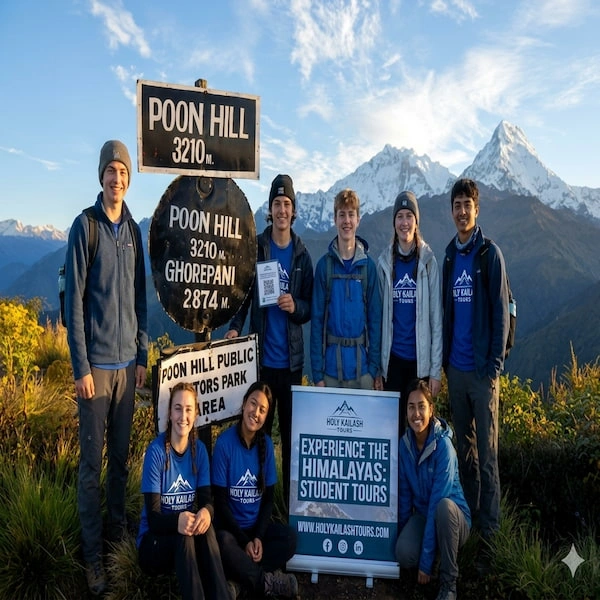
For comparison, this trek is harder than Poon Hill (three to four days, maximum 3,210m) but easier than the Annapurna Circuit with Thorong La (5,416m). Most fit adults in their 30s, 40s, and 50s complete it without serious difficulty, provided they pace themselves and don't rush the ascent to High Camp.
Best Time to Do the Mardi Himal Trek
Two seasons suit this trek best.
October to November is the most popular window. The monsoon has cleared, and the skies are stable. Visibility is excellent, temperatures are cool but not extreme, and the trail conditions are good. This is also the busiest period on the trail, so teahouse bookings a few days in advance are worth doing during peak weeks.
March to May is the spring season, and also excellent. Rhododendrons bloom from late February through April, transforming the forest sections of the trail into something genuinely beautiful. The air is warmer than in autumn and the days are longer.
December to February is cold. High Camp and above can see snow and freezing nights. The trail is passable for experienced winter trekkers with appropriate gear, but it's not recommended for first-timers.
June to September is the monsoon season. Rain is heavy, trails get muddy and slippery, and visibility is poor. Leeches are abundant in the lower forest sections. Most trekkers avoid this window.
If you're choosing between October and April, both work well. October gives you the clearest skies. April gives you the rhododendrons. Neither is a wrong answer.
Accommodation and Food During the Trek
Teahouses (locally called lodges or guesthouses) are available at every main stop along the Mardi Himal Trek route. The standard is basic but functional. You'll get a small room with two single beds, a pillow, and a blanket. Shared bathrooms are the norm at most stops. Hot showers are available at the lower elevations but become less reliable higher up.
High Camp and Base Camp sections have fewer options, so arriving early ensures you get a bed. In peak season (October, November, April) High Camp can fill up, particularly on weekends.
Food along the trail covers the standard teahouse menu. Dal bhat (rice, lentil soup, vegetables, and pickles) is the staple and the best value. It's also the most calorie-efficient option for a full day of trekking. Noodle soup, fried rice, chapati with vegetables, and pasta are common alternatives. Breakfast options include porridge, eggs, and toast.
Tea, instant coffee, and hot chocolate are available everywhere. Bottled water is available but expensive and generates plastic waste. A water filter or purification tablets are the practical alternative.
Prices increase with altitude. Expect to pay more at High Camp than at Australian Camp for the same meal. Budget roughly $20 to $35 per day for accommodation and three meals at mid-range teahouses.
Mardi Himal Trek Permits and Costs
Two permits are required for this trek.
The Annapurna Conservation Area Permit (ACAP) costs NPR 3,000 per person (approximately $22 USD). This covers entry into the Annapurna Conservation Area.
The Trekker's Information Management System (TIMS) card costs NPR 2,000 per person (approximately $15 USD) for independent trekkers, or NPR 1,000 if trekking through a registered agency.
Both permits are available at the Nepal Tourism Board office in Kathmandu (Bhrikuti Mandap) or at the TIMS counter in Pokhara, near Lakeside. You'll need a passport photo and a copy of your passport.
Beyond permits, the main costs are:
Transportation from Kathmandu to Pokhara (bus: $7 to $15, flight: $80 to $120), accommodation and food along the trail ($20 to $35 per day), a guide ($25 to $35 per day), a porter if needed ($18 to $25 per day), and any gear rental in Pokhara.
A rough total for the trek itself, excluding international flights and Kathmandu costs, ranges from $400 to $700 for a week-long trip, depending on whether you hire a guide and which teahouse level you choose.
Packing List for Mardi Himal Trek
Gear choices matter more on a high-altitude trek than most people expect. You're carrying everything on your back, and conditions change quickly above 3,000 meters.
For clothing, you need a moisture-wicking base layer, a fleece or down mid-layer, a waterproof outer shell, trekking trousers, warm gloves, a hat, and a buff or neck gaiter. Temperatures at High Camp at night can drop to minus five or lower in October.
Footwear should be broken-in trekking boots with ankle support. Trail runners work on the lower sections but become uncomfortable on the rocky terrain above Low Camp. Wool socks are worth the investment.
Essential gear includes a trekking backpack (30 to 40 liters), trekking poles, a headlamp with spare batteries, a sleeping bag rated to minus ten (teahouses have blankets but they're not always warm enough at altitude), a water bottle or hydration system, a water filter or purification tablets, sunscreen, and lip balm.
Medical items to carry: ibuprofen or paracetamol for headaches, blister care, rehydration salts, altitude sickness medication (Diamox, consult a doctor before use), and any personal prescription medication.
A small day pack for the Base Camp summit push is useful if you're leaving heavier items at High Camp. A good camera on a phone is obvious but worth mentioning. The views at Base Camp justify the weight.
Base Layers
- Pack lightweight and moisture-wicking clothes to keep sweat away from your skin.
- Thermal tops (2)
- Thermal pants (1 to 2)
- Quick dry trekking t-shirts (2 to 3)
- Lightweight trekking pants (2)
Mid Layers
- Midlayers help keep your body warm on chilly mornings and evenings.
- Fleece jacket or warm pullover (1)
- Lightweight insulated jacket (1)
Outer Layers
- A waterproof and windproof outer layer is important because mountain weather can change suddenly.
- Waterproof jacket with hood (1)
- Waterproof trekking pants (1)
Warm Clothing
- Temperatures near Mardi Himal High Camp and Base Camp can become cold.
- Down jacket (1)
- Warm gloves (1 pair)
- Wool hat or beanie (1)
- Neck buff or scarf (1)
- Warm socks (3 to 4 pairs)
Innerwear and Sleepwear
- Underwear (4 to 5 pairs)
- Comfortable sleeping clothes (1 set)
Solo Trekking vs Guided Trek Experience
Both are possible on the Mardi Himal Trek. The trail is relatively well-marked compared to more remote Himalayan routes, and English signage is present at most junctions. Independent trekkers have completed it without any issues.
That said, a guide changes the experience in meaningful ways. A good guide knows the trail in poor visibility, can identify early altitude sickness symptoms, handles teahouse bookings, translates at smaller villages, and provides context for what you're seeing. On a cultural and practical level, that knowledge is genuinely useful.
A porter takes the physical load off your knees on descents, letting you walk more freely. If you're not used to carrying a heavy pack at altitude, hiring a porter is worth the cost.
The risk of going solo isn't high on the main Mardi Himal Trek route, but the consequences of getting lost above High Camp in bad weather or misjudging the symptoms of altitude sickness without anyone to help are worth considering. Most experienced Nepal trekking operators recommend a guide at a minimum, particularly for first-time trekkers to the region.
Travel Tips for a Safe Mardi Himal Trek
Start your trek days early. Clouds build in the Annapurna region from midday onward, especially in spring. Starting by 6 or 7 am gives you the best visibility and the cooler temperatures that make walking at altitude easier.
Pace yourself on the ascent to High Camp. The elevation gain between Low Camp and High Camp is significant, and pushing too hard on that section sets you up for a miserable night and a poor Base Camp day.
Carry cash. There are no ATMs on the Mardi Himal Trek route. Bring enough Nepali rupees in Pokhara to cover your full trail expenses, including a buffer for emergencies.
Charge devices in Pokhara before you leave. Charging is available at some teahouses along the route, but it becomes expensive and unreliable above Forest Camp. A portable power bank covers the gap.
Respect local customs. Ask before photographing people in villages. Remove footwear before entering teahouse dining areas and monasteries. These are small gestures that go a long way.
Check the weather forecast before your Base Camp day. Apps like Weather Underground and Mountain Forecast give reasonably accurate forecasts for the Annapurna region. A clear morning forecast is worth waiting an extra day for if the weather looks uncertain.
Travel insurance that covers high-altitude trekking and helicopter evacuation is mandatory. Emergency helicopter evacuations from the High Camp area can cost $3,000 to $5,000. Insurance covers this. Self-paying does not feel good at altitude.
Why Holy Kailash Tours for Mardi Himal Trek
Holy Kailash Tours is based in Kathmandu and has spent years working across the Himalayan region, from the sacred pilgrimage routes to Mount Kailash and Lake Mansarovar in Tibet to the trekking trails of the Annapurna and Everest regions in Nepal. That range of experience matters when you're planning a trek.
The team at Holy Kailash Tours understands the logistics that matter. Permit handling, teahouse booking during peak season, acclimatization planning, and guide selection. These aren't small details. A poorly planned acclimatization schedule or a guide who doesn't know the trail above Low Camp in the clouds can turn a good trek into a stressful one.
What separates a reliable operator from a generic booking platform is local knowledge and accountability. The people at Holy Kailash Tours have walked these trails, dealt with bad weather, managed altitude sick clients, and know what it takes to bring a trekking group back safely and satisfied. For a route like Mardi Himal, where conditions above High Camp can change quickly, that experience is worth the price.
For trekkers who want the Mardi Himal trekking experience done properly, with a knowledgeable guide, well-timed itinerary, and a team you can actually reach if something goes wrong, Holy Kailash Tours handles the planning so you can focus on the trail.
Final Thought
The Mardi Himal Trek doesn't try to be the biggest or the hardest. It's a trail that rewards people who pay attention. The forests, the villages, the ridge line views, the silence at Base Camp. None of it hits you all at once. It builds over days.
For trekkers who've wondered whether Nepal offers something beyond the famous routes, this is one clear answer. It's shorter than the Annapurna Circuit, quieter than Everest Base Camp, and honest in a way that trails crowded with day-trippers can't be.
If you have a week in Nepal and want to spend it walking somewhere that still feels genuinely off the beaten track, the Mardi Himal Base Camp Trek is worth your time.
FAQs
How long is the Mardi Himal Trek?
Most people complete it in six to eight days. A seven-day itinerary starting from Pokhara and returning to Pokhara is the most common.
What is the maximum elevation on the Mardi Himal Trek?
Mardi Himal Base Camp sits at approximately 4,500 meters (14,763 feet). The upper viewpoint is around 4,700 meters.
Do I need prior trekking experience for the Mardi Himal Trek?
No prior trekking experience is required, but regular physical fitness is important. Walking six to eight hours a day on uneven terrain is a realistic baseline.
Is the Mardi Himal Trek suitable for solo female trekkers?
Yes. Nepal is generally safe for solo female trekkers, and the Mardi Himal route is no exception. Hiring a guide adds an additional layer of security and practical support.
What permits do I need for the Mardi Himal Trek?
You need an Annapurna Conservation Area Permit (ACAP) and a TIMS card. Both are available in Kathmandu or Pokhara before the trek.
How much does the Mardi Himal Trek cost in total?
A rough estimate for the full trek, including permits, accommodation, food, guide, and transportation, runs between $400 and $700 for seven days. This excludes international flights and pre-trek expenses in Kathmandu.
Is there mobile network coverage on the Mardi Himal Trek?
Ncell and NTC networks have patchy coverage along the route. Signal is generally available at Australian Camp and some sections of the ridge, but unreliable above High Camp.
Can I do the Mardi Himal Trek without a guide?
Yes, independent trekking is allowed. The trail is reasonably well-marked. However, a guide is recommended above Low Camp, particularly for first-time high-altitude trekkers.
What is the best month to do the Mardi Himal Trek?
October, November, March, and April are the best months. October and November offer the clearest skies. March and April offer rhododendron blooms and warmer temperatures.
Does Holy Kailash Tours offer Mardi Himal Trek packages?
Yes. Holy Kailash Tours offers guided Mardi Himal Trek packages from Kathmandu and Pokhara with experienced guides, permit handling, teahouse accommodation, and full itinerary planning.
Email: [email protected]
WhatsApp: +977-9851254672 — Feel free to reach out anytime for fast, friendly, and personalized assistance