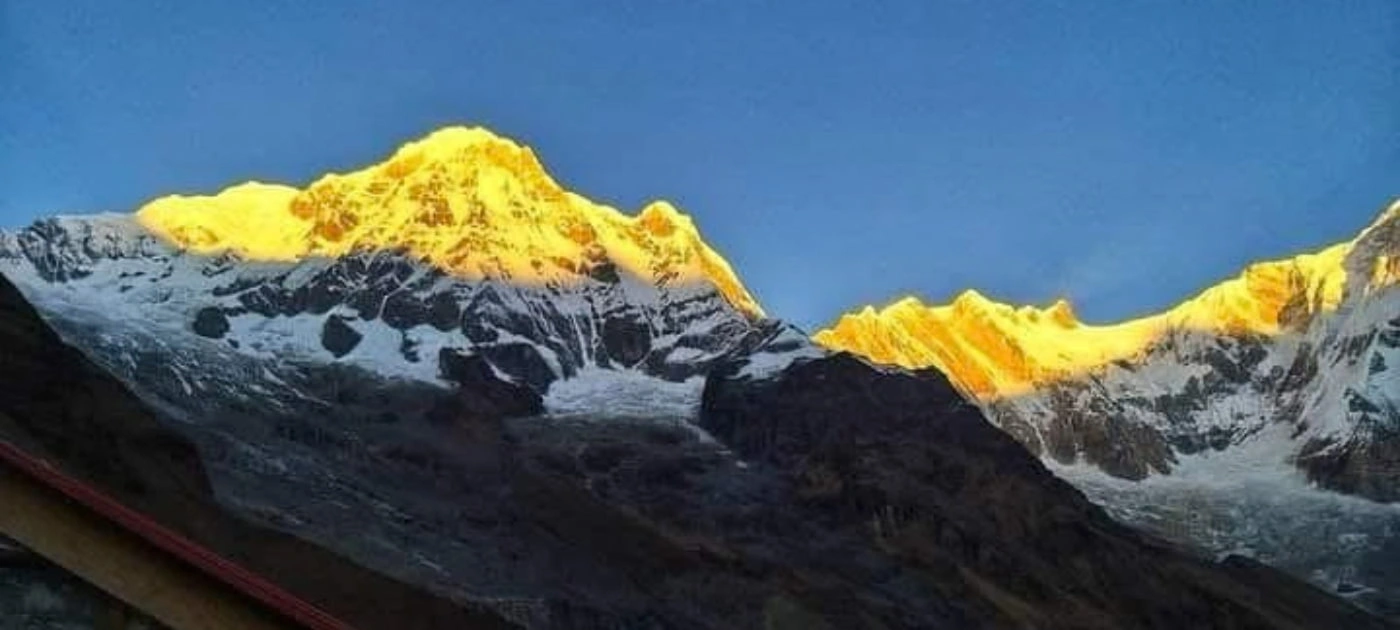
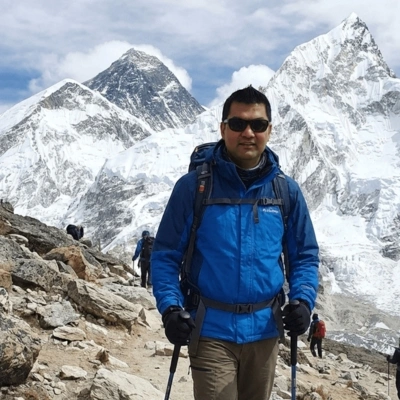
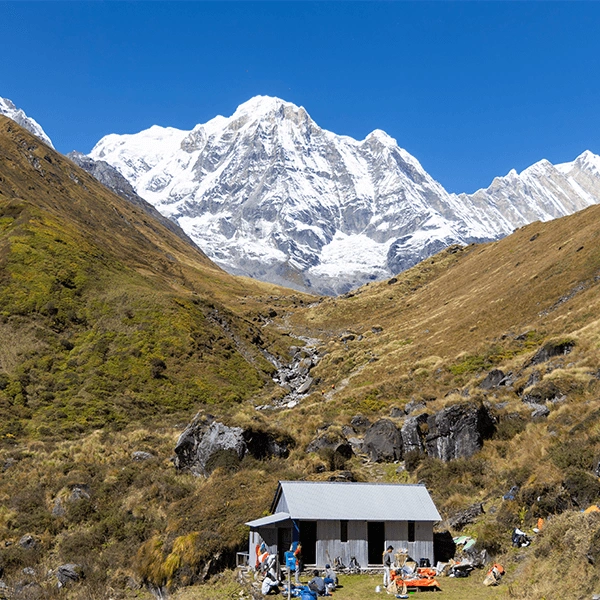
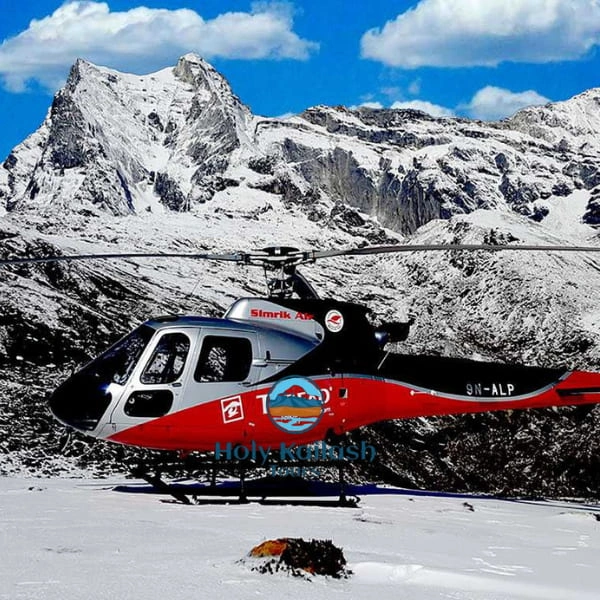
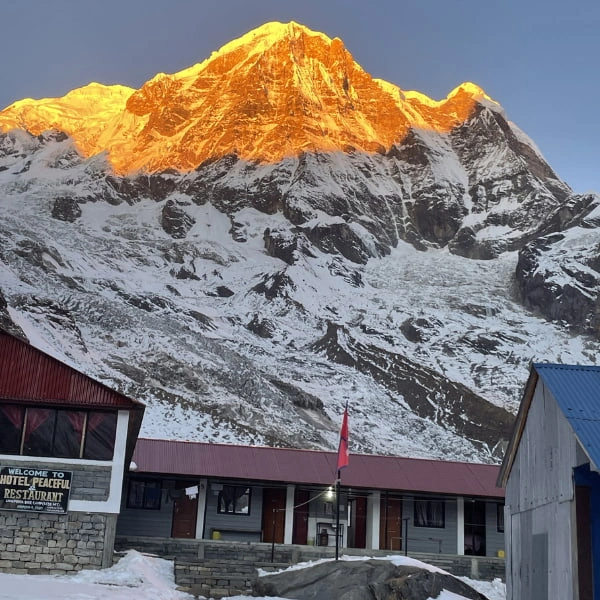
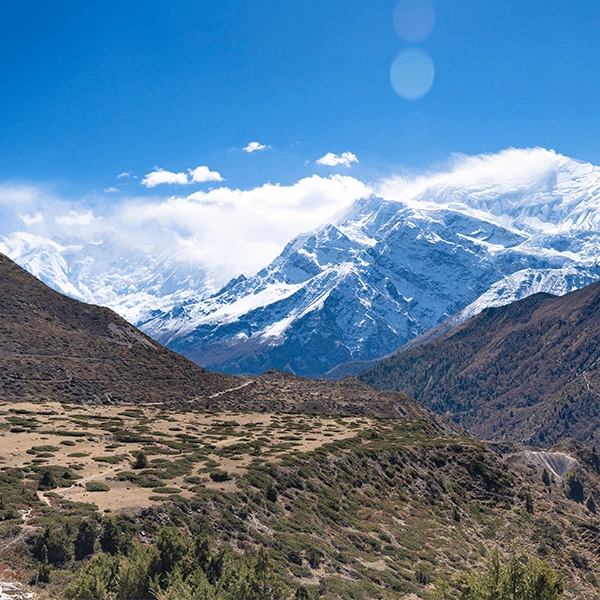
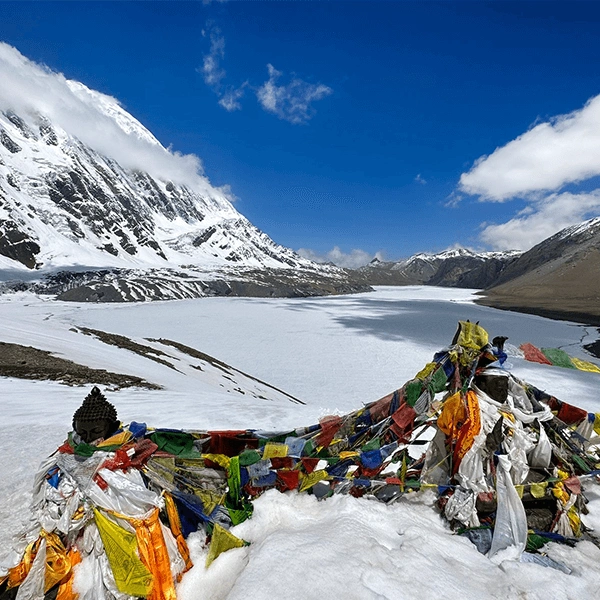
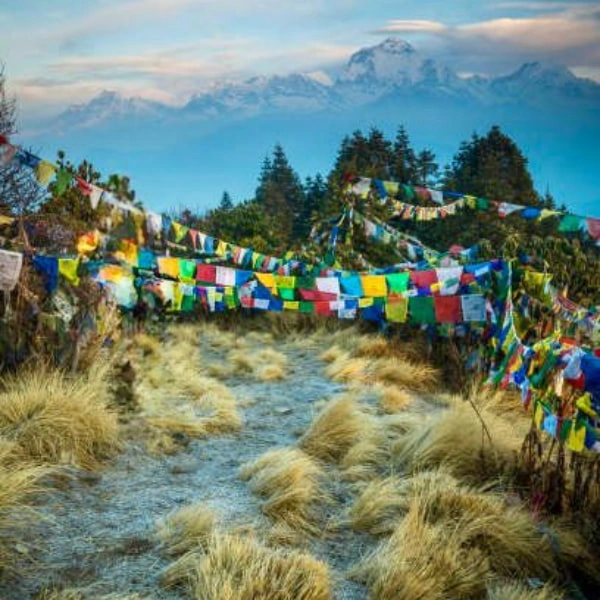
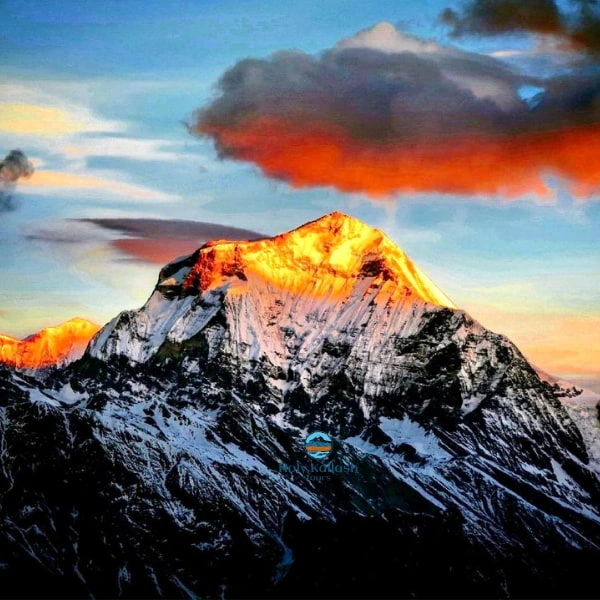
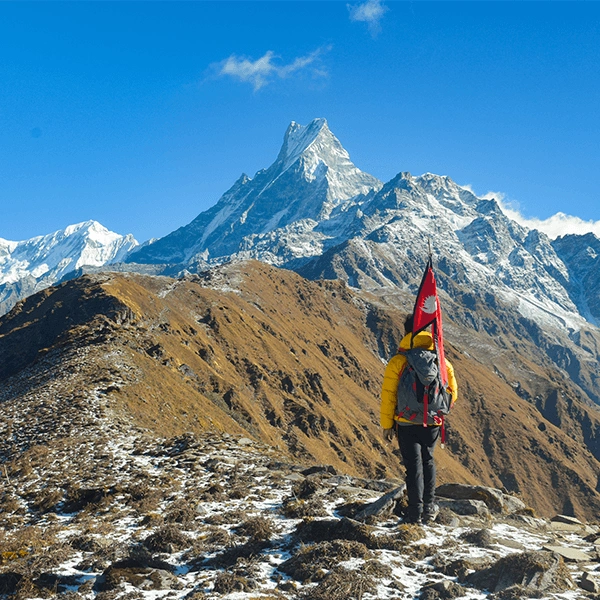
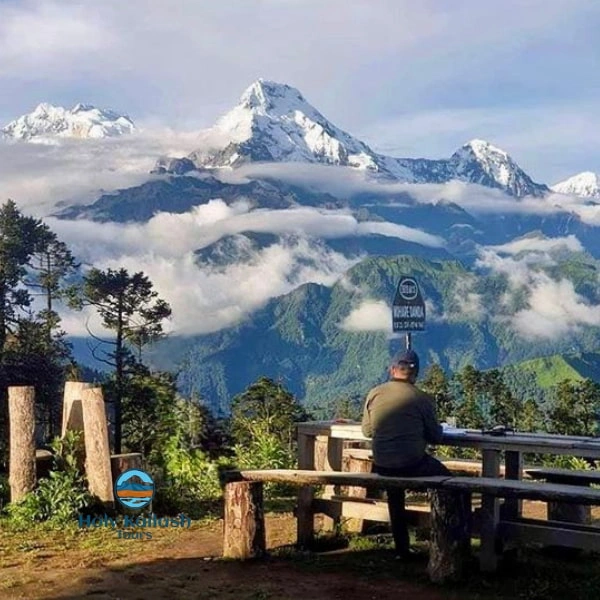
Autumn season (September – November) and spring season (March – May) are the best seasons for the Annapurna Base Camp Trek. These two windows rip the curtain off the mountains. At Holy Kailash Tours, we’ve dragged enough boots up these rocky paths to know the brutal truth. Bad weather ruins trips. Good weather? It makes you forget your aching knees entirely. The right time really depends on whether you hate freezing nights more than you hate sharing a dining hall with fifty other heavily breathing hikers. Pick the right time to do this amazing journey to the foothill of the world’s 10th tallest mountain, Mount Annapurna (8091 m).
Considering recent developments due to climate change, this blogger from the Holy Kailash Tours feels that October to Mid-December and March to May are the best seasons for the Annapurna Base Camp Trek or any type of traveling to Nepal.
When Is the Best Season for Annapurna Base Camp Trek?
Annapurna Base Camp Trek
Honestly, March to May and late September to November take the crown. Why? The skies just behave better. You avoid the relentless summer downpours that wash out bridges. You also dodge the bone-chilling winter winds that freeze water bottles solid inside your pack. We’ve seen trekkers try to game the system by showing up in mid-July. Big mistake. You want clear mornings. You want dry trails. Autumn gives you razor-sharp mountain views, while spring throws a wild riot of blooming flowers across the lower forests. Either way, you won't regret playing it smart with the calendar.
Spring vs. Autumn: Which Season Feels Better on the ABC Trail?
Spring is loud. Autumn is crisp. Think of spring as a massive greenhouse bursting with color, where the air feels a bit thicker and hazier by afternoon. Autumn? It’s completely different. The air bites your cheeks early in the morning, but the sky turns this impossible, blinding shade of blue. Honestly, autumn feels slightly more stable for raw, unfiltered mountain viewing. But spring brings warmth that creeps up the valley faster. At Holy Kailash Tours, we always ask people one question. Do you want to photograph flowers, or do you want the sharpest, coldest mountain edges imaginable?
Annapurna Base Camp in March: Early Spring Trail Conditions
Annapurna Base Camp Trek
March is sneaky. You start down low in shorts, sweating buckets. Then you hit 3,000 meters, and suddenly you’re shivering in a down jacket, wondering where the heat went. The trail shakes off its winter hangover. Snow still clings stubbornly to the upper gorges near Deurali. Sometimes, icy patches force us to detour or wait. But the payoff? It’s incredibly quiet. The massive hordes haven't arrived yet. You get those crisp, lingering winter views without the absolute deep-freeze of January. Just don't forget your micro-spikes. You’ll probably hit a few slick, icy patches before reaching the sanctuary.
April at ABC: Rhododendrons, Clear Skies, and Longer Days
This is the postcard month. Period. Whole hillsides explode in ridiculous shades of red and pink. Walking through those rhododendron forests feels almost aggressively magical. The days stretch out, letting us dawdle at tea houses instead of racing the sunset. Temperatures finally mellow out up high. But here’s the catch. Everyone knows April is fantastic. So, the trails get busy. You’ll be swapping stories with folks from twenty different countries around the dining room stove. Clear morning skies are virtually guaranteed, though clouds often crash the party by mid-afternoon. Get up early. Trust us on that one.
May Trekking: What Changes Before the Monsoon Arrives?
Annapurna Base Camp Trek
May gets sweaty. Really sweaty. The lower valleys turn into a sauna as the incoming monsoon builds up muscle. You’ll notice the air thickening. Haze starts blurring the distant ridges by midday. The heat pushes you higher, making the cool air at base camp feel like absolute salvation. We run plenty of trips at Holy Kailash Tours in May because it’s surprisingly lush. Wild strawberries pop up along the stone steps. Thunderstorms might rumble in the late afternoon, tossing rain onto the tin roofs while you sip ginger tea. It’s moody. It’s dramatic. It’s the last hurrah before the deluge hits.
Annapurna Base Camp in September: The Transition Back to Trekking Season
Early September is a gamble. Late September is gold. The monsoon doesn't just switch off like a faucet on the first of the month. The earth is still soaked. Waterfalls roar off every cliff, spraying the suspension bridges. Leeches? Yeah, they might still be lurking in the damp grass down near Tikhedhunga. But when those clouds finally tear open? Man, the air is scrubbed flawlessly clean. There isn’t a speck of dust. Everything glows an impossible, neon green. By the last week of September, the skies lock into that classic autumn clarity, and the real trekking rush begins.
October at ABC: Why Trail Conditions Can Vary Within the Month
Annapurna Base Camp Trek
October is the undisputed king. Everybody wants October. But the month has a split personality. Early October still carries a faint whisper of rain. The trails might be muddy in the shaded ravines. By late October? Bone dry. The dirt paths turn to fine dust under thousands of boots. The weather stabilizes completely, offering blue skies from dawn till dusk. Nighttime temperatures start dropping sharply after the 15th. Honestly, you can’t beat the reliability. Just prepare yourself for packed tea houses. You definitely want a solid team securing your beds, because finding a last-minute room gets rough.
November Trekking: Crisp Mornings and Changing Mountain Weather
Grab your heaviest fleece. November doesn't mess around once the sun dips behind the peaks. The cold bites hard. But look at the bright side. The crowds finally thin out, leaving us with epic, uninterrupted silence up at the sanctuary. The skies stay predictably dry. The views? Absolute perfection. Every jagged ridge of Machapuchare stands out like cut glass against the sky. Toward the end of the month, you might catch the first dusting of winter snow. It’s a spectacular time to walk. Just make sure your sleeping bag is rated for serious freezing temperatures, because tea house walls are paper-thin.
Can You Trek to Annapurna Base Camp During Winter?
Annapurna Base Camp Trek
Sure. If you're slightly crazy. December through February turns the sanctuary into a giant freezer. The sun vanishes behind the walls of the gorge by early afternoon, plunging the valley into deep shadow. Snow frequently blocks the route past Bamboo or Deurali. Avalanche danger is a real, undeniable threat. At Holy Kailash Tours, we monitor the snowpack constantly before sending anyone up. But if the trail is open? It’s absurdly beautiful. You get the whole base camp practically to yourself. Just walking on the crunchy, frozen ground beneath those towering ice walls feels like a massive, private privilege.
Monsoon on the ABC Trail: What Rain Really Means for Trekkers
Mud. So much mud. June to August brings the absolute fury of the monsoon. Rivers swell into violent, brown torrents. The stone steps turn into literal slip-and-slides. We generally tell people to avoid ABC right now. Why? Because the clouds swallow the mountains entirely. You could be standing right in front of Annapurna South and see nothing but gray soup. Add blood-thirsty leeches and grounded flights, and it’s a tough sell. That said, the hardcore botanists love it. The jungle goes wild. But for mountain views? Save your cash. Come back when the rain finally stops.
Choosing Your ABC Season by Scenery, Crowds, and Trail Experience
Annapurna Base Camp Trek
It boils down to a simple trade-off. Do you want solitude, or do you want guaranteed sunshine? You can rarely have both. Pick winter if you crave silence and don't mind numb toes. Pick spring for flowers and decent warmth. Autumn gives you the best visibility, but you’ll be walking in a parade of other trekkers. Ask yourself what annoys you more. Cold? Rain? Other people? Let that answer guide your booking. We help clients figure this out every day. There is no perfect month. There’s only the perfect month for your specific tolerance level. Choose wisely.
Is there a month when Annapurna Base Camp is less crowded but still has good weather?
Late November to early December is the golden loophole. Most of the massive autumn crowds have already packed up and gone home. The tea house dining rooms feel relaxed again. But the sky? It usually stays remarkably clear and dry. Yes, the nighttime temperatures take a heavy nose-dive. You’ll definitely feel the chill the moment the sun drops. But if you own a decent down jacket and a thick sleeping bag, you score prime mountain views without the elbow-to-elbow chaos of October. It’s a trade-off we highly recommend to anyone wanting a bit more peace on the trail.
Which season offers the best chance of seeing blooming rhododendrons at ABC?
April is when the entire forest explodes into majestic colors of the rhododendron. There are more than 19 species of rhododendron in the forests between Ghorepani and Tadapani. It literally feels like walking through a fairyland place full of colorful wonders of Mother Nature. By early May, the petals start carpeting the muddy trail, which is beautiful in its own way. But for peak, eye-popping color? Aim straight for the middle of April. It completely transforms the lower half of the trek into something out of a fairytale. You have to see it.
Is late November still a practical time to reach Annapurna Base Camp?
Yes, but you need to temper your expectations about comfort. The skies are usually brutally clear, offering some of the sharpest photography conditions of the entire year. The problem? The cold is vicious. The higher tea houses aren't insulated. The water pipes frequently freeze solid overnight, meaning no morning showers.
Generally, ABC is as demanding as, or less demanding than, Everest Base Camp because the altitude obtained at ABC (approximately 4, 130 m) is lower than at EBC (about 5, 364 m). Altitude exposure is greater at EBC because of this.
Is ABC Trek risky?
ABC is a very well-known trekking route, and potential hazards will be altitude sickness, slippery trails, weather conditions, exhaustion, and cold. These hazards will be minimised through appropriate preparation and by having a trained guide.
Can a beginner do Annapurna Base Camp Trek?
Yes. A reasonably fit novice can see ABC, with suitable planning and a sensible walking pace.
How much time does ABC Trek take?
A standard ABC trek can take anywhere between 7 and 12 days, varying by route, departure point, transportation used and the schedule.
Is Annapurna harder than Everest Base Camp?
In general, EBC is more high, altitude than trekking. Still, though Annapurna I (8, 091 m) is higher, EBC is very different from trekking to ABC.
What are the top 5 hardest treks in Nepal?
Generally considered difficult are: Dhaulagiri Circuit, Upper Dolpo, Kanchenjunga Base Camp, Makalu Base Camp, andManaslu Circuit. The level of difficulty depends on the route and season.
How difficult is Annapurna Base Camp Trek?
ABC is a fairly moderate Himalayan trek. Main difficulties are walking long days, steep steps, altitude, and variable weather.
How much money do you need for ABC?
Cost depends on the itinerary, number of people, search guard, tools, and services. A typical guided walk costs a few hundred USD, with international trip expenses and personal costs excluded.
How many climbers have died on Annapurna?
Annapurna I: The Himalayan Database notes deaths on the Annapurna I expedition. During the year of record, this refers exclusively to mountaineering expeditions, not ABC trekkers.
Which mountain has killed the most climbers?
Mount Everest has the highest number of total recorded deaths, according to the Himalayan Database. Total deaths don't necessarily mean the most dangerous risk to each climber.
What makes Annapurna I so difficult to climb?
Annapurna I (8, 091 m) is arguably the most technically challenging and dangerous mountain in the world. The technical challenge is dominated by steep, intricate ice columns, mountain weather and very high altitude. What really makes this mountain so dangerous is its extreme susceptibility to huge, unpredictable avalanches on its normal routes.
Note: ABC is the abbreviation for Annapurna Base Camp Trek; Annapurna I refers to 8091 m mountain peak. They shouldn't be the same.