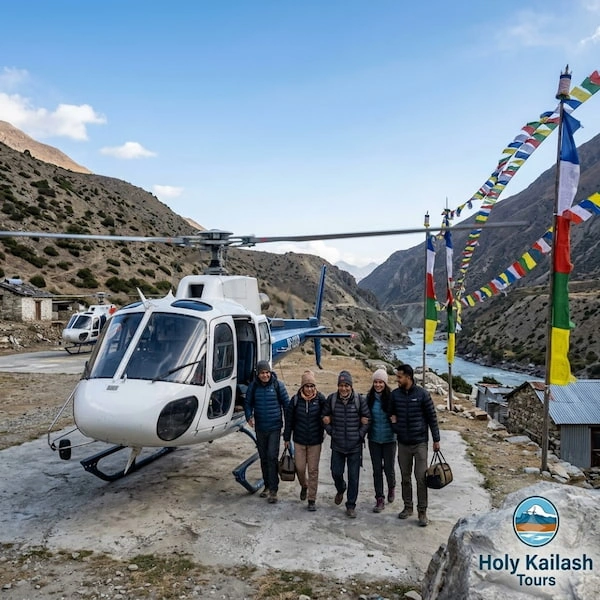
After the Rasuwa Kerung Port Flash Flood in the Lhende and Bhotekoshi Rivers, the Kailash Mansarovar Yatra is facing a major hurdle in choosing the right route. Nowadays, the Simikot Hilsa Helicopter Route is also being used, and it is safe for travel. There is another route, which is the Kailash Mansarovar Yatra from Lhasa. Yes, we are writing a blog about the complete guide to this route, with the topic of the Kailash Mansarovar Yatra from Lhasa Guide. Honestly, we’ve watched hundreds of pilgrims burn out by ignoring this gradual path. You get to breathe in the heavy incense of ancient monasteries, slowly adjusting to the thin air, while the massive, sweeping emptiness of the high desert prepares your headspace for the ultimate spiritual heavy lifting ahead.
Our team At Holy Kailash Tours, we always provide options and authentic information to our valued clients! Make sure that you read our blogs to get regular updates about different trips in Tibet, Nepal, Bhutan, and India. Our blogs are genuine and based on real-time field reports. Therefore, you can surely create a beautiful holiday plan. Read the Kailash Mansarovar Yatra from Lhasa Guide and talk with our travel planners for more information.
Benefits of the Lhasa to Kailash Mansarovar Route
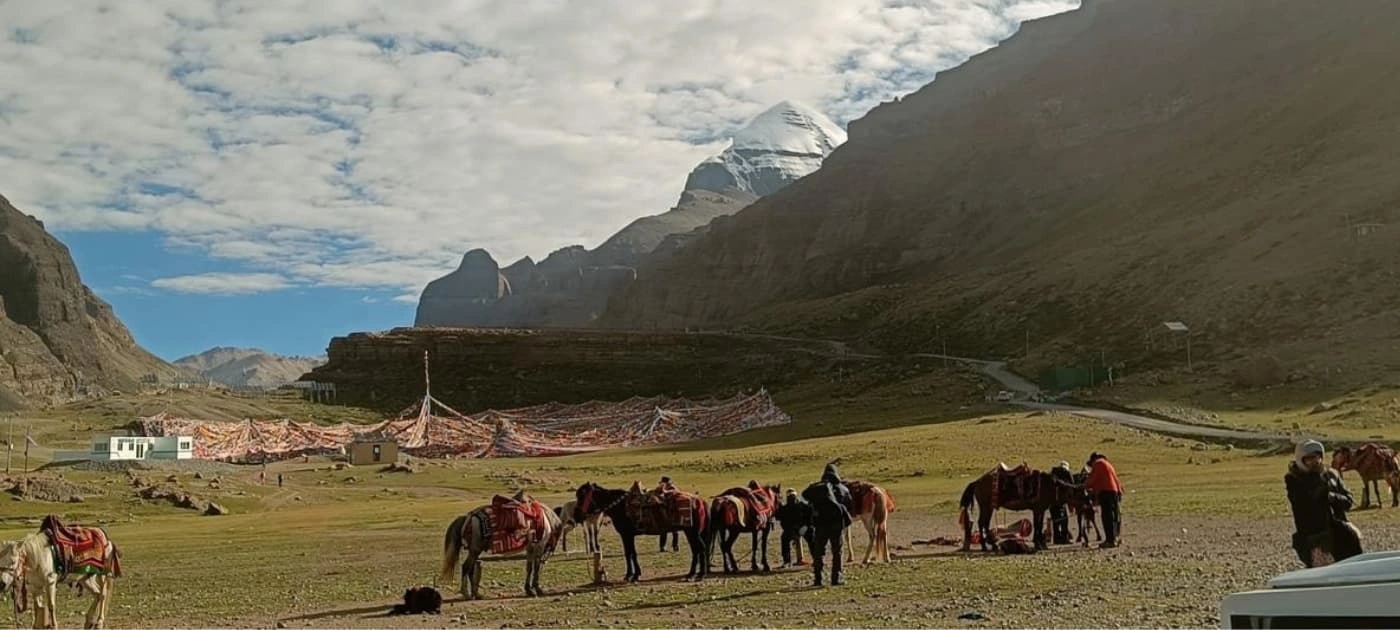
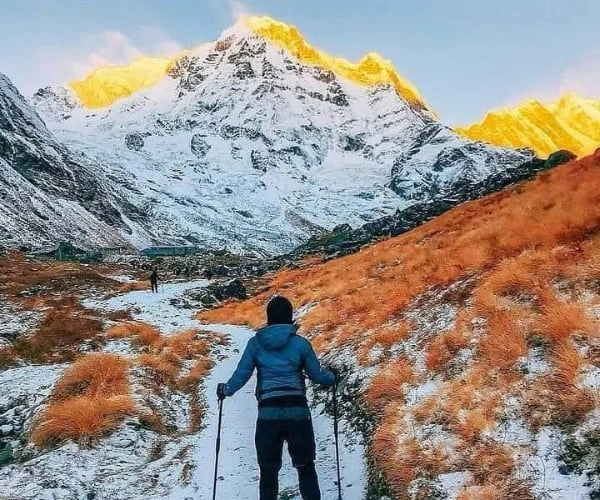
"Pilgrims trekking near the North Face of Mount Kailash during the Lhasa Kora".
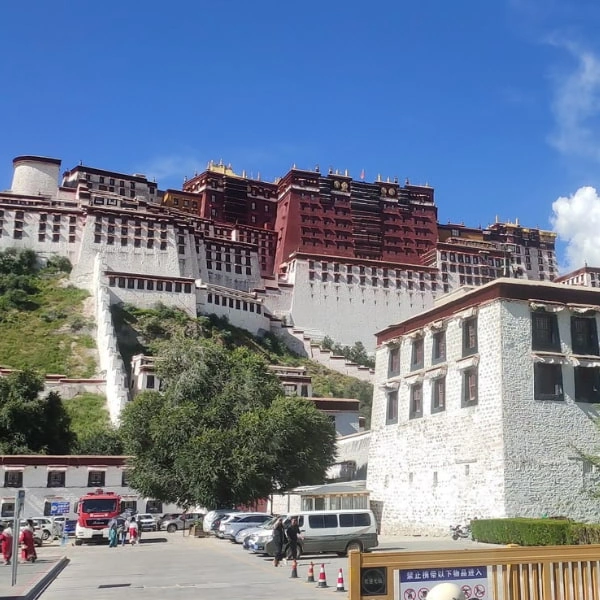
We get asked this constantly. Why not just dash across the border and save time? Simple. Your lungs will aggressively thank you for taking the long way around. Starting in Lhasa gives us a massive safety buffer, letting your blood oxygen slowly catch up to the brutal reality of a 4,500-meter baseline. Besides the obvious acclimatization and accessibility ease, Lhasa gives cultural highlights. From Potala Palace to different cultural sites of the region, you can reach the Kailash area after exploring many places.
Lhasa Acclimatization Strategy for Pilgrims
The first day in Lhasa usually involves a dull headache and a desperate urge to nap, which is exactly why we enforce a strict resting protocol for everyone. We’ll gently drag you out to see the Jokhang Temple, keeping the walking ridiculously slow. Your only real job here is drinking an absurd amount of water and breathing deliberately. Well, you can surely get proper acclimatization as you slowly head to the Kora starting place.
Lake Manasarovar: What to Expect at the Sacred Lake?
The sacred place, which is known as the home of Lord Shiva, is here. We always love watching people’s faces when Manasarovar finally reveals itself. It’s fiercely cold, but it is serene and pristine. The sight of the mountain with the distant scenery of Mount Kailash really makes you believe that the place is definitely the home of gods and goddesses. Look, the facilities around the lake are brutally basic, so don't expect luxury. Just pure, unadulterated spiritual quiet.
Mount Kailash Kora: Route, Distance, and Major Stages
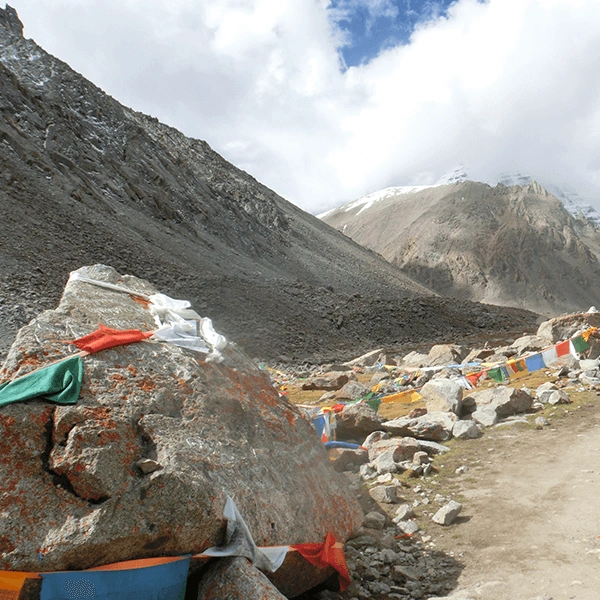
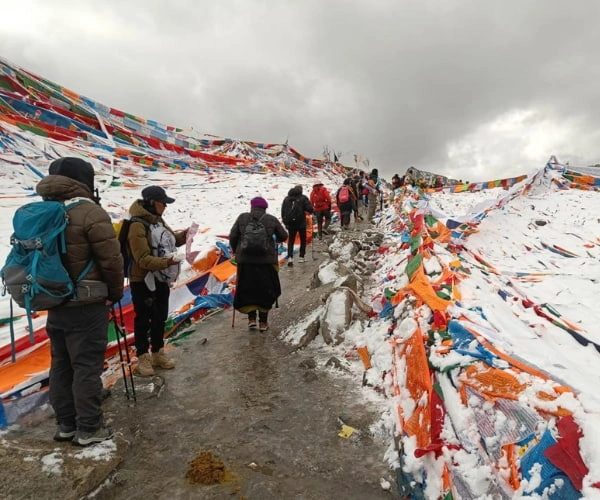
Pilgrims at Dolma La Pass 5630 m
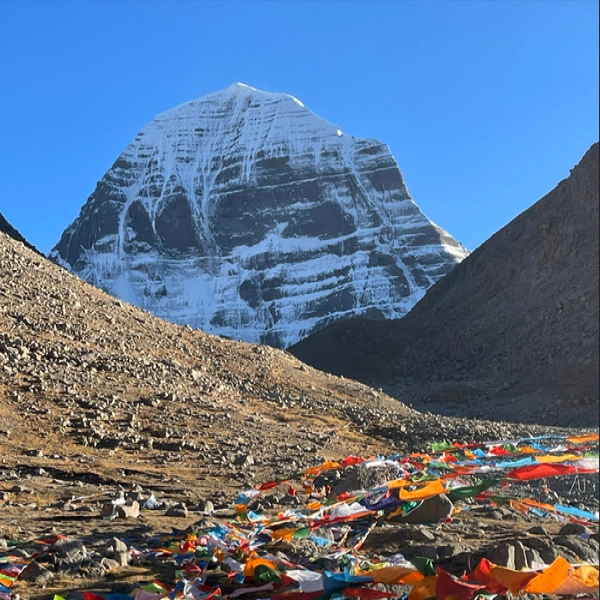
Now for the main event. The Kora is a 52-kilometre walk, which is the most important section of this yatra. We tackle over three gruelling days. Day one pushes you out of Darchen and up a gently sloping valley to Dirapuk, where the north face of the mountain practically hangs over your head. Day two is the monster. We haul you over the Dolma La Pass, which is an agonizing, lung-busting climb, before tumbling down to Zuthulpuk. Day three is a mercifully short, easy walk back to the start. We take it slow. Your legs will scream, but the rhythm of the walk takes over entirely.
Dirapuk to Zuthulpuk: Crossing Dolma La Pass
This is the day that breaks people. We wake you up in the freezing, pitch-black dark at Dirapuk, force-feeding you porridge before pointing you straight up a literal wall of loose rock. Hitting 5,630 meters at the Dolma La Pass feels like breathing through a wet sponge. You’ll be gasping. We trek slowly and carefully through these places. When you finally reach that ridge, draped in thousands of fluttering prayer flags, the relief is huge. Then comes the descent. It’s a knee-destroying, near-vertical drop into the next valley, where warm tea finally waits.
We start you at roughly 3,650 meters in Lhasa, which is already high enough to cause trouble. From there, it’s a weird, bumpy rollercoaster ride. We climb over mountain passes tipping 5,000 meters during the drive, only to dip back down to sleep at 4,000. It’s intentional. We use that "climb high, sleep low" trick to force your red blood cells into overdrive.
Kailash Mansarovar Yatra from Lhasa, 15 Day Itinerary
"Pilgrims trekking near the North Face of Mount Kailash during the Lhasa Kora".
Day 1: Arrival in Kathmandu, Welcome & Spiritual Orientation. Altitude: 1, 350 m Activity Area: Thamel
Arrive in Kathmandu and meet the Holy Kailash Tours team at the Tribhuvan International Airport. You'll then be transferred to your hotel, where you'll have free time to relax after the long journey. In the evening, your escort will conduct an informative briefing on the Kailash Mansarovar Yatra, covering the route, altitude considerations, packing list, required permits, and safety considerations to help you get ready for the pilgrimage.
Day 2: Kathmandu, Pashupatinath Darshan & Preparation Altitude: 1,350 m | Walking: 2 to 3 hours
Start the day on arrival at this is the temple, which is one of the most important religious sites of pilgrimages where the pilgrims go for Darshan and to seek the blessing before heading to Mount Kailash. After Darshan, return to the hotel for final packing and preparations. Your team will also help in checking documents, permits, luggage, and gear. The remaining of the day remains leisurely, with light packing and a packing checkup before departure to Tibet.
Day 3: Flight from Kathmandu to Lhasa, Gateway to Tibet. Altitude: 3, 656 m | Flight Duration: about 1. 5, hour flight.
Fly from Kathmandu to enter Tibet: the land of Tibet; we arrive in Kathmandu and fly to Lhasa at an altitude of 3, 656 meters. The elevation changes are sudden, so we need to acclimatize well to the altitude. Upon arrival, transfer to the hotel for rest; don't indulge in any physical activity, and keep yourself hydrated.
Day 4: Lhasa Sightseeing, Potala Palace & Jokhang Temple. Altitude: 3,656 m | moderate walking: 3 to 4 hours.
Today it will be a day revealing the soul of Tibet. Tour the massively impressive Potala Palace, which was once the home of the Dalai Lamas, then proceed to Jokhang Temple, the most popular of Tibetan Buddhist temples. Tour the temple complex and also have some time to watch pilgrims engage in a variery of customary devotional acts the local area around the temple. Sightseeing is kept at a relatively moderate pace to aid gradual acclimatization to the high altitude in Lhasa.
Day 5: Lhasa to Shigatse (Stopped in Gyantse) Elevation: 3, 900 m | travel time: 6 to 7 hours.
Depart Lhasa and head to Shigatse by road, travel over the Tibetan plateau and stop at scenic areas while driving into Tibet. There are spacious valleys, mountain ranges, villages, and traditional townships passing by in this approach. You can stop at some interesting spots and some cultural attractions(if time and road conditions allow) on the way, as per the itinerary and road conditions. When reaching Shigatse, check into the hotel and relax.
Day 6: Shigatse to Saga Altitude: 4, 450 m | Drive time: 6 to 7 hours.
Proceed west towards Saga from Shigatse. As you ascend further in altitude, the scenery will start to look harsh and desolate. You'll be crossing the Tibetan Plateau, passing a stony flat land and the distant peaks of the Himalayas. Saga is a key overnight camp on the way, from where you can go toward Lake Mansarovar. Rest well and rehydrate per your tour guide's instructions.
Day 7: Saga to Lake Mansarovar Altitude: 4,590 m, Drive Time: 6 to 7 hours, Highlights: First view of Mount Kailash, holy dip, and scenic drive across the Tibetan Plateau.
Today is one of the most spiritually significant days of your journey as you travel from Saga to Lake Mansarovar. The drive takes you deep into the vast Tibetan Plateau, crossing high mountain passes and passing through traditional nomadic landscapes.
As we near the sacred lake, weather permitting, you will catch your very first distant glimpse of Mount Kailash rising majestically in the distance. Upon arriving at the shores of Lake Mansarovar, you will have time to relax, absorb the serene spiritual environment, and prepare for the upcoming Kora. Due to the high altitude, we highly recommend keeping physical exertion to a minimum this evening and drinking plenty of water.
Day 8: Mansarovar Parikrama & Drive to Darchen Altitude 4, 670 m | Walking 2 to 3 hours
Start the day early with Mansarovar Parikrama. When this is completed, proceed back to Darchen for your embarkation point for the Kailash Kora. The walking journey begins at around 4,670 m, so relax and hydrate well to prepare for the walk. Use the time before setting out to pray or reflect at Lake Mansarovar.
Day 9: Darchen to Dirapuk, Kailash Parikrama Day 1 Altitude: 4, 900 m | Walking 5- 6 hours
Today marks the beginning of the sacred Kailash Parikrama. Head out of Darchen in the direction of the trekking trailhead, and then trek towards Dirapuk. The series of trails slowly ascends through the bare, rugged land of Tibet, revealing magnificent vistas of Mount Kailash. Dirapuk offers some of the awe-inspiring scenery of the sacred mountain, in particular its dramatic northern face. Overnight at Dirapuk and gear up for the most difficult day of the Kora.
Day 10: Dirapuk to Zuthulpukvia Dolma La Pass Parikrama Day 2 Maximum elevation: 5, 630 m | Walking Time: 8 to 9 hours.
Today is the most strenuous day of the Kailash Parikrama. Leave early from Dirapuk and try to move toward Dolma La Pass at around 5630m. The elevation gain is quite steep, with high altitude, chilly weather conditions and rocky pathway, making it tireless. Right after crossing the pass, begin to descend heading toward the sacred Gauri Kund stretch and then pass through the valley toward the end, Zuthulpuk. The duration of the walk can be 8 to 9 hours, though it may vary. Overnight stay at the camp in Zuthulpuk.
Day 11: Zuthulpuk to Darchen, Then Drive to Saga. Altitude: 4,670 m | Walking: 3 to 4 hours
Finish the last part of the Kailash Kora from Zuthulpuk heading toward Darchen. The track increases in accessibility, as you're leaving the higher parts. Once in Darchen, go back to the vehicle and go back toward Saga. This step marks a significant change from the physically taxing process of Kora to travelling along a road. Spend the night over in Saga to recover from the Kora.
Day 12: Saga to Shigatse Altitude: 3, 900 m | Drive: 6 to 7 hours.
Start heading back to Shigatse. The lower altitude from Saga is more comfortable for most travellers. The scenery of the Tibetan plateau is also changing on the way. Once at Shigatse, check in to a hotel and eat something fresh to recharge the body after the long drive.
Day 13: Shigatse to Lhasa Altitude: 3,656 m | Drive: 5 to 6 hours
The car will carry us back to the capital, passing through the rain shadow area of Tibet, which is known as the roof of the world. When we arrive in Lhasa. After registration to the hotel, you can relax for a while. Since the flight schedule of the next day, you can do some shopping or have a walk.
Day 14: Flight from Lhasa to Kathmandu Altitude: 1,350 m | Flight: Approximately 1.5 hours
Drive to Lhasa Airport after breakfast for onward return to Kathmandu. Your flight will take you over the high Tibetan plateau down to the lower-altitude country of Nepal. Upon your arrival in Kathmandu, you'll be picked up and transferred to your hotel. The rest of the day is free at your leisure.
Day 15: Final Departure from Kathmandu
Your divine pilgrimage of Mount Kailash is reaching the end today. Based on your departure flight, Holy Kailash Tours will organizes your departure transfer to flights from Tribhuvan International Airport. Hold the memories of Lake Mansarovar, Mount Kailash, Tibet's ancient history, and the Spirituality of the Kailash Parikaram in mind.
Altitude Progression Table
Milestone Stage
Key Location
Target Elevation
Strategic Purpose
Day 1–2
Kathmandu, Nepal
1,350 meters
Journey briefing & equipment checklist
Day 3–4
Lhasa, Tibet
3,656 meters
Critical baseline blood-oxygen acclimatization
Day 5
Shigatse, Tibet
3,900 meters
Progressive "climb high, sleep low" stepping stone
Day 6
Saga, Tibet
4,450 meters
Final high-altitude staging outpost
Day 7–8
Lake Mansarovar / Darchen
4,590 – 4,670m
Spiritual prep & base of the circuit trailhead
Day 10
Dolma La Pass
5,630 meters
Highest elevation ceiling of the Kora
Accommodation and Meals During the Kailash Yatra
Kailash Mansarovar Yatra Gauri Kunda
Forget about room service. Once we leave the comfortable hotels of Lhasa and Shigatse behind, things get aggressively rustic. We’re talking basic guesthouses in Saga and communal, freezing dorm rooms during the actual Kora. The beds are hard. Toilets are outhouses, and as for food, the crew works with basic ingredients to prepare food for all Yatris.
Permits and Travel Requirements for the Lhasa–Kailash Route
The paperwork is an absolute nightmare. That’s why we handle every single piece of it for you. You can’t just buy a bus ticket and show up in Tibet. We secure your Chinese Visa, the Tibet Travel Permit, the Alien’s Travel Permit, and the highly restricted Military Permit required just to breathe near the Kailash region. The rules change constantly, often without any logical warning from the authorities.
How many days are needed for the Kailash Manasarovar Yatra from Lhasa?
We typically run this exact itinerary over 14 to 15 days. Anything faster is just incredibly reckless. You need those first three days in Lhasa strictly for survival, letting your body figure out how to function on half its usual oxygen supply. Then we spend about four days driving that massive, dusty stretch across the plateau to reach the mountain. The actual walking part of the Kora only takes three days. Honestly, rushing the timeline practically guarantees severe altitude sickness, so we refuse to cut corners. We take our time, ensuring you actually make it to the finish line.
What is the highest point reached during the Kailash Manasarovar Yatra?
"Pilgrims trekking near the North Face of Mount Kailash during the Lhasa Kora".
You hit the absolute ceiling at Dolma La Pass. We drag you up to a staggering 5,630 meters, which is roughly the cruising altitude of a small airplane. It’s intensely high. The air up there holds about half the oxygen you’d get at sea level, making every single step feel like a monumental physical achievement. You don’t linger at the top. We let you take a few breathless photos with the prayer flags, catch a frozen gasp of air, and then we push you immediately downward to safer, thicker air.
Where is the main acclimatization stop on the Lhasa to Kailash route?
Lhasa does the heavy lifting first. We park you there for a couple of days right off the bat. But the sneaky, unsung hero of our acclimatization strategy is Shigatse, sitting pretty at 3,900 meters. We use it as the perfect stepping stone. It’s high enough to force your body to adapt further, but low enough that you can still sleep without waking up gasping. By the time we push past Shigatse and roll into the higher, bleaker outposts like Saga, your internal chemistry has quietly adjusted. We rely heavily on that specific town to bridge the gap.
Can the Kailash Manasarovar Yatra from Lhasa be completed without doing the full Kora?
Absolutely. We have plenty of folks who skip the brutal three-day hike. Here’s how it works. You can do a much shorter, flatter walk up to the Yama Dwar gate, offer your prayers, and then retreat to a warm bed. It’s entirely respectable. We never force anyone onto the high pass if their lungs or knees aren't up for the fight.
How physically demanding is the Dolma La Pass crossing?
"Pilgrims trekking near the North Face of Mount Kailash during the Lhasa Kora".
It’s brutal. We won’t lie to you. The second day of the Kora tests every ounce of your willpower, demanding a steep, relentless trudge up jagged rocks while your lungs desperately search for oxygen. You aren't doing technical rock climbing, but the sheer lack of air makes a gentle slope feel like a vertical wall. Your legs turn to lead. You’ll want to sit down and quit every fifty feet. But here's the catch. If you follow our pacing, step in our footprints, and just keep breathing, your body somehow finds the rhythm to drag you over the top.
What happens if bad weather delays the journey between Lhasa and Kailash?
We sit tight. The Tibetan plateau creates its own violent, unpredictable weather systems, and snowstorms can randomly choke the high passes even in summer. If the police close a road or a blizzard hits Darchen, our guides immediately pivot. We might spend an extra day drinking butter tea in a Saga guesthouse while waiting for the plows. It’s exactly why we build extra buffer time into the schedule. You cannot fight the mountain. We prioritize your survival over a rigid itinerary, so if the weather turns ugly, we hunker down and wait for the sky to clear.
FAQs About Kailash Mansarovar Yatra from Lhasa
"Pilgrims trekking near the North Face of Mount Kailash during the Lhasa Kora".
How long does the Kailash Mansarovar Yatra from Lhasa take?
The comprehensive Kailash Mansarovar Yatra from Lhasa typically takes 14 to 17 days. This timeline provides a safe buffer for proper altitude acclimatization before starting the gruelling 3-day Kora hike.
Where in Tibet does the Kailash Yatra from Lhasa start?
The journey kicks off in Lhasa, at a pretty daunting altitude of 3,650 metres, & travellers usually take some time to get used to the height by doing some sightseeing and acclimatising before setting off for Mount Kailash & Lake Mansarovar.
What is the highest point reached during the Kailash Mansarovar Yatra?
The highest point of the entire journey is the Dolma La Pass, reaching an extreme altitude of 5,630 meters (18,471 feet) above sea level during the second day of the circuit.
Do I need a special permit to do the Kailash Yatra from Lhasa?
Yes, you will; people need the right Tibet travel permits & entry permissions. These are usually sorted out for you by a local agency when you book the tour with Holy Kailash Tours.
Is the Kailash Mansarovar Yatra from Lhasa going to be a challenge?
It's certainly not a walk in the park; the altitude, the cold, the long drives & the 3-day Kailash Kora all offer some pretty serious challenges. If you prepare properly, acclimatise slowly & keep an eye on what your guide is telling you to do, then you'll be fine.
Can older travellers join the Kailash Yatra from Lhasa?
If they're in decent health & have been given the all-clear from their doctor to travel at altitude, then senior travellers are more than welcome. However, it's always a good idea to get some advice from a doc before booking the trip, especially if you have any pre-existing health issues.
How long does the Kailash Kora take?
The full circuit is about 52 km, and it usually takes 3 days to complete. The route takes you over the summit of the mountain, past Dirapuk, Dolma La Pass and down to Zuthulpuk before heading back to Darchen.
Can I do the Kailash Kora on horseback?
Some parts of the route are open to horseback riding, subject to local rules & availability, but sadly you'll have to get off & walk for the bit at the Dolma La Pass as the horses won't be able to make it up to the summit.
What kind of accommodation is available on the journey?
The accommodation can vary depending on where you are on the route, but for the most part you'll be staying in hotels in the towns & cities. As you get closer to the lake & on the mountain, things get a bit more basic.
What kind of food can I expect on the Kailash Yatra?
As part of an organised tour, you'll get all of your meals- breakfast, lunch & dinner- taken care of. Things can get a bit simpler as you get further & further away from the towns, but you can also bring your own snacks to keep you going, especially when you are at altitude.
When is the best time to do the Kailash Mansarovar Yatra from Lhasa?
We reckon May to September is the best time as the conditions are generally better & you can get to the regions more easily. Of course, the specific dates will depend on the permits, the weather & the various other things that are outside of our control.
What does a Kailash Mansarovar Yatra from Lhasa package usually include?
Typically, a package will cover all of the main costs such as accommodation, transport, meals, your permit, etc., but it really does depend on the specific tour operator & the package that you choose with Holy Kailash Tours, so make sure you read the small print before you book.