Everest Base Camp Trek Overview
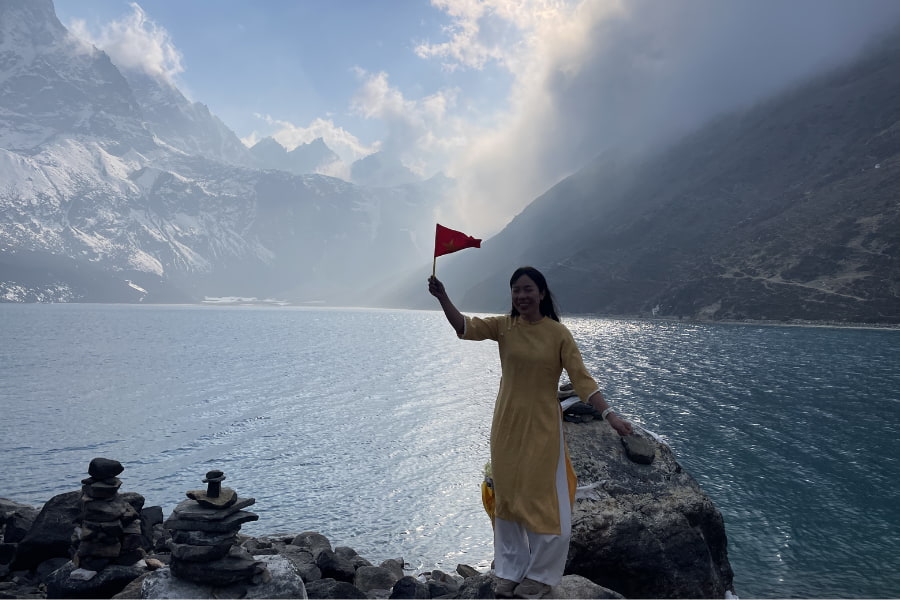
The Everest Base Camp Trek starts and ends in Lukla, a small mountain town with one of the world's most talked-about airport runways. From Lukla, you walk northeast through Sagarmatha National Park, passing through Namche Bazaar, Tengboche, Dingboche, Lobuche, and Gorak Shep before finally reaching Base Camp at 5,364 meters.
The full round trip covers roughly 130 kilometers. Most standard itineraries are 12 to 14 days. You gain about 3,500 meters in net elevation from Lukla (2,860 meters) to Base Camp. And you do it all on foot, on stone-paved trails, suspension bridges, and steep switchbacks that cut through valleys and ridgelines above the treeline.
This is not a technical climb. You don't need ropes, crampons, or mountaineering experience. But calling it "just a trek" is the kind of thing people say before they've actually done it.
Why the Everest Base Camp Trek Is So Popular?
Part of it is the name. Everest is probably the most recognized mountain on earth, and reaching its base feels like touching something mythic. That pulls a lot of people in.
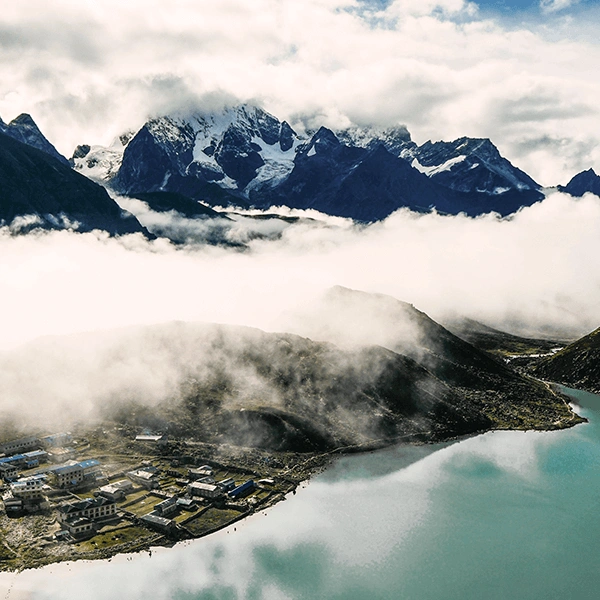
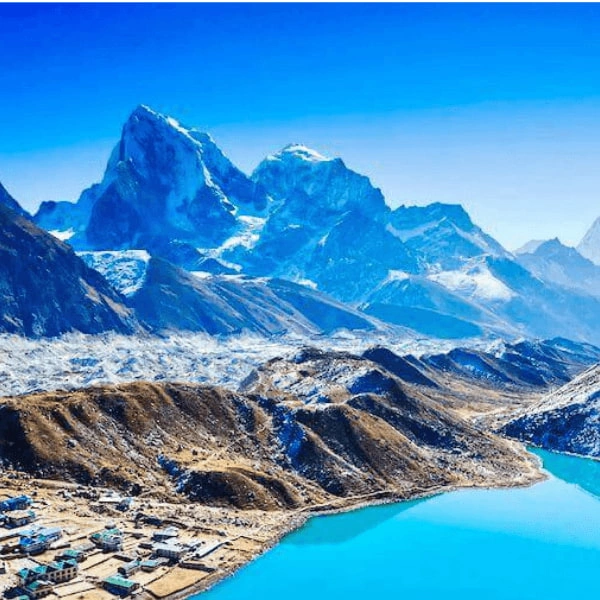
But trekkers who've done it will tell you the mountain itself is almost secondary. What stays with you is the trail. The villages smell of pine smoke. Yaks block the path without apology. Prayer wheels line the edges of the trail at every monastery. The Khumbu region is genuinely beautiful, and it's been protected well enough that it still feels remote even with the foot traffic.
The other reason: it's achievable. With the right preparation and pacing, most people with moderate fitness can complete this trek. That's not true of many high-altitude experiences. It draws people who want something genuinely hard without requiring them to be elite athletes.
Best Time to Visit Everest Base Camp
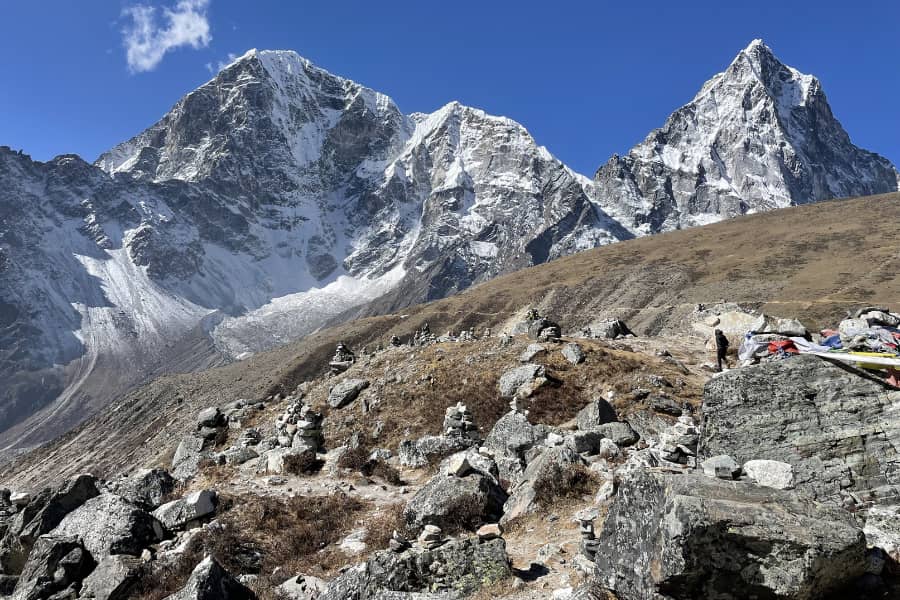
Two windows work well. Pre-monsoon (March to May) and post-monsoon (late September to November).
October and November are the most popular months. Skies are clear, the air is dry, and visibility is often excellent. Daytime temperatures at lower elevations sit around 10 to 15 degrees Celsius. At Gorak Shep, nights regularly drop to minus 10 to minus 15. Sometimes colder.
March, April, and May are slightly warmer but can be windier at high altitude. Rhododendrons bloom across the lower slopes in April, which makes the trail noticeably more colorful.
Monsoon season (June to August) brings heavy rain, leeches at lower elevations, and persistent cloud cover. December to February is possible but bitterly cold, with some teahouses closing and trail conditions becoming icy above 4,000 meters.
If you have flexibility, aim for mid-October to early November. It's busy, but the conditions are about as good as they get.
Everest Base Camp Trek Route and Itinerary
Here's a practical day-by-day breakdown of the standard 14-day itinerary.
Day 1: Fly from Kathmandu to Lukla (2,860 m), trek to Phakding (2,610 m). About 3 hours walking.
Day 2: Phakding to Namche Bazaar (3,440 m). This is the first serious climb. Roughly 5 to 6 hours. The last push up to Namche is steep and long. You'll cross several suspension bridges, including the famous Hillary Bridge.
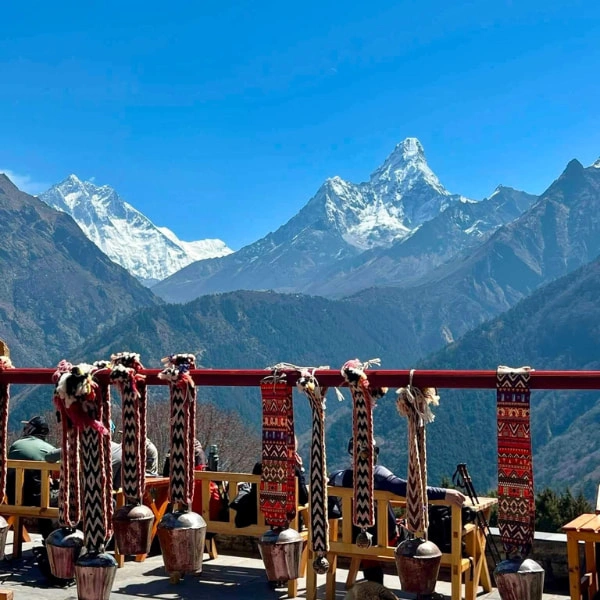
Day 3: Acclimatization day in Namche. You hike to the Everest View Hotel (3,880 m) and return. This is not optional. Skipping it significantly increases your risk of altitude sickness.
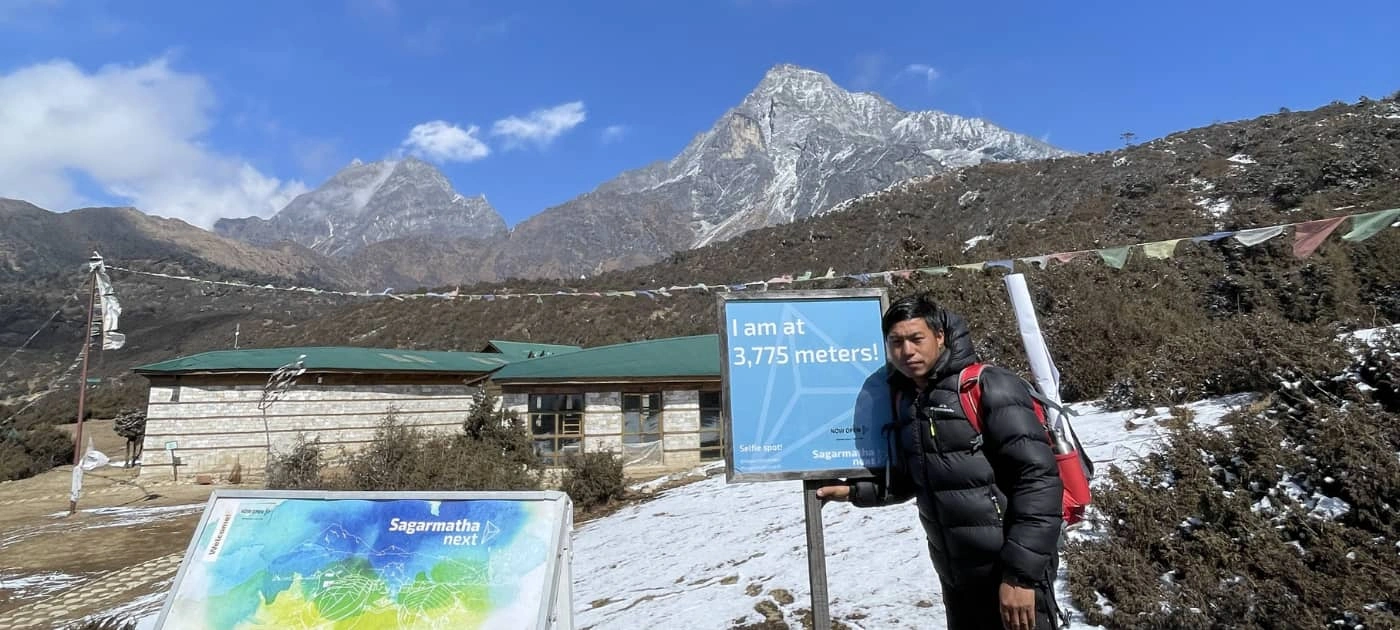
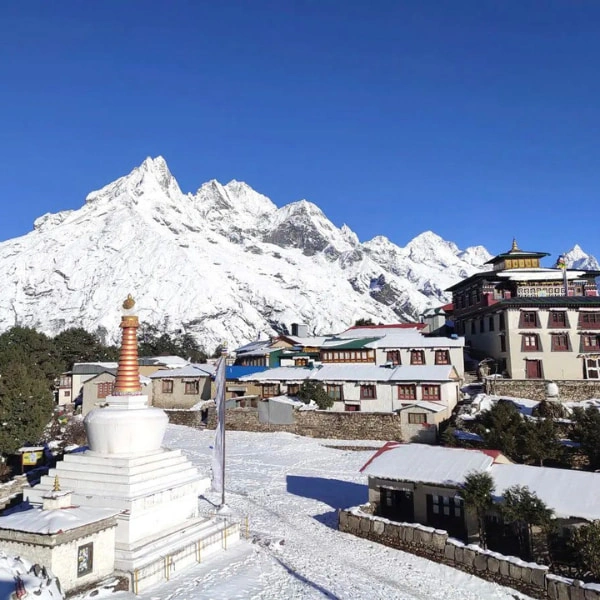
Day 4: Namche to Tengboche (3,860 m). Around 5 hours. The Tengboche Monastery is one of the most photographed spots on the entire route, and rightfully so.
Day 5: Tengboche to Dingboche (4,410 m). About 5 hours. The terrain opens up past the treeline here. Feels more exposed.
Day 6: Acclimatization hike above Dingboche. Usually to Nagarjun Hill (5,083 m) or Chhukung Ridge (5,550 m). Return to Dingboche to sleep.
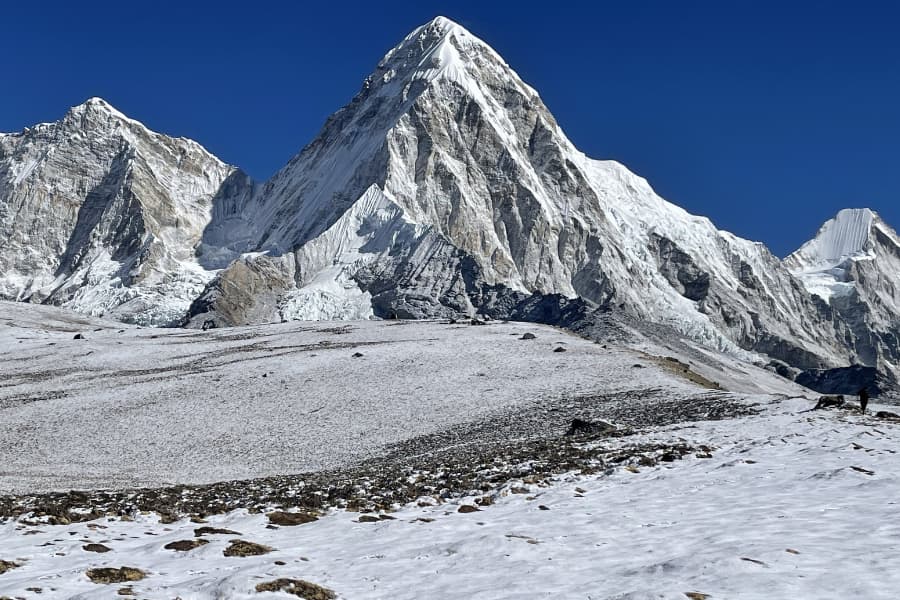
Day 7: Dingboche to Lobuche (4,940 m). Around 5 hours. The Khumbu Glacier moraines come into view. The terrain is rockier and more barren.
Day 8: Lobuche to Gorak Shep (5,164 m), then hike to Everest Base Camp (5,364 m) and return to Gorak Shep. This is the longest and hardest day, typically 7 to 9 hours total. Many people feel the altitude here in a way they haven't before.
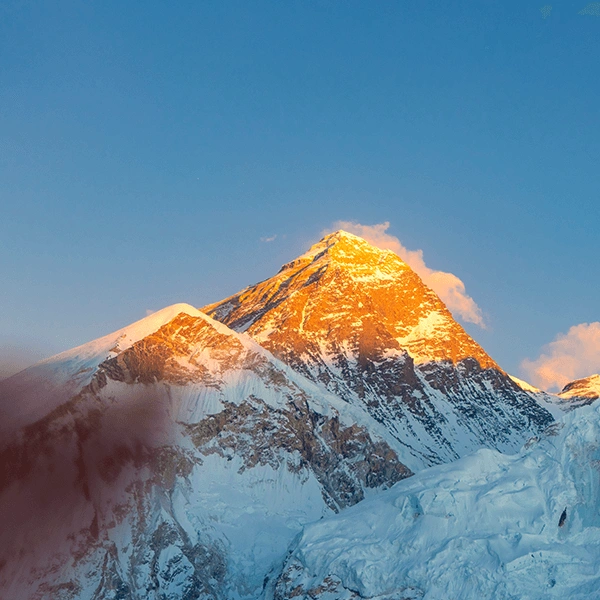
Day 9: Gorak Shep to Kala Patthar (5,645 m) for sunrise, then descend to Pheriche (4,280 m). Kala Patthar gives you the clearest elevated view of Everest itself.
Days 10 to 12: Descent back via Namche to Lukla, with an extra buffer day built in for flight delays.
Day 13: Fly Lukla to Kathmandu.
Day 14: Buffer day in Kathmandu for late or cancelled Lukla flights.
Trek Distance, Duration, and Maximum Altitude
- Total distance: approximately 130 kilometers round trip
- Daily distance: between 10 and 20 kilometers, depending on the day
- Maximum altitude: 5,645 meters (Kala Patthar), or 5,364 meters if you skip Kala Patthar
- Elevation gain from Lukla to Base Camp: around 2,500 meters
- Recommended duration: 12 to 14 days
- Shortest realistic itinerary: 10 days (high risk, not recommended)
The elevation gain matters more than the total distance. On day 8, you walk to Base Camp at 5,364 meters and back to Gorak Shep at 5,164 meters. That's not a long day by distance (around 13 km), but the altitude makes everything harder. Simple tasks feel like effort. Sleep is fitful. Food tastes like nothing.
Difficulty Level of the Everest Base Camp Trek
This is where honesty matters most. Most guides rate EBC as "moderate to strenuous." That's true, but it doesn't tell the whole story.
The trail itself is not technically difficult. There's no climbing. Trails are well-maintained and well-marked. The stone stairs, while endless in places, are walkable.
What makes it hard is the altitude. Above 4,000 meters, your body does less with every breath. You walk more slowly. You tire faster. Recovery takes longer. Some people get mild headaches and nausea and push through. Others get acute mountain sickness and need to descend immediately.
Honestly, fitness is only part of the equation. Acclimatization matters more. Some very fit people struggle badly at altitude. Some people who look underprepared walk to Base Camp without a headache. There's a genetic component no one can predict in advance.
What you can control:
- Go slowly, especially on uphill sections
- Drink 3 to 4 liters of water daily
- Never ascend more than 500 meters per day above 3,000 meters
- Take your acclimatization days seriously; they're not rest days, they're protection
- Listen to your body. Descend if you feel any confusion, loss of coordination, or chest tightness
Most trekkers who turn back do so between Lobuche and Gorak Shep. That's where the altitude hits hardest, and the trail offers the least shelter.
Required Permits for the EBC Trek
You need two permits to trek to Everest Base Camp legally.
Sagarmatha National Park Entry Permit: NPR 3,000 (approximately USD 23). Obtained at the Monjo checkpoint or in Kathmandu.
Khumbu Pasang Lhamu Rural Municipality Permit: NPR 2,000 (approximately USD 15). Required since 2018. Checked at the Lukla trailhead.
Neither permit is difficult to get. If you're booking through Holy Kailash Tours, we handle both before your trek begins, so you walk through checkpoints without delays.
Keep both permits on you at all times. Checkpoints are real, and trekkers without permits are turned back.
Lukla Flight Information and Transportation
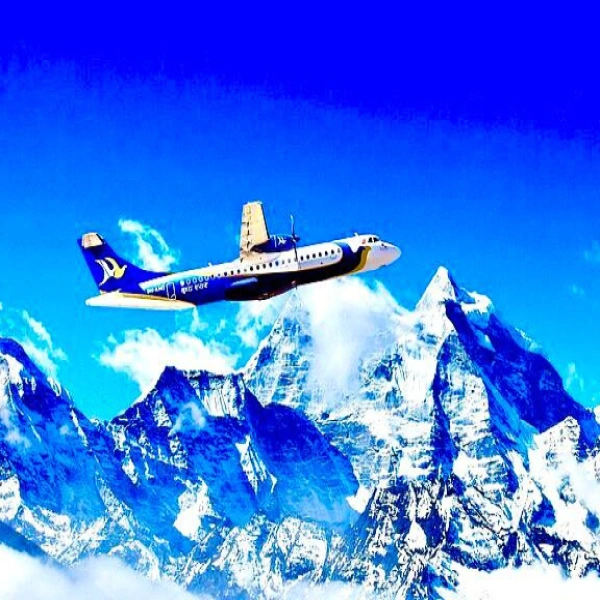
Lukla is the standard entry point for the EBC Trek. The Tenzing-Hillary Airport runway is 527 meters long, sits at 2,860 meters, and ends at a cliff. Flights to Lukla operate almost exclusively in the morning, when visibility tends to be better.
Cancellations happen regularly, especially in spring and during weather transitions. Delays of one to three days are not unusual. This is why a buffer day in your itinerary matters.
The flight from Kathmandu to Lukla takes around 30 minutes. Standard costs range from USD 160 to 200 per person one way. Book early during peak season (October and April) because seats fill quickly.
Alternative options exist for those who want to avoid the Lukla flight:
- Drive to Salleri or Phaplu, then add 2 to 3 extra walking days through less-trafficked trails
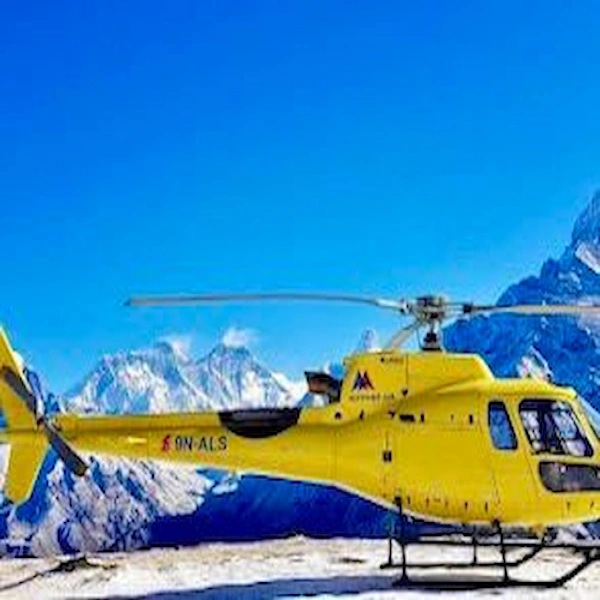
- Helicopter from Kathmandu directly to Lukla or Namche, which costs significantly more but bypasses the flight risk
For most trekkers, the Lukla flight is part of the experience. Arrive the night before your flight, stay near the airport, and accept that the schedule is largely weather-dependent.
Accommodation and Food During the Trek
Accommodation along the EBC route is in teahouses, which are small, family-run guesthouses. Rooms are basic: two single beds, a thin mattress, sometimes a blanket. Shared bathrooms are standard at lower elevations. Attached bathrooms are available at extra cost from Namche upward.
Electricity is available but limited. Charging devices costs around NPR 200 to 500 per hour in most teahouses. Bring a power bank.
Wi-Fi exists in some teahouses, particularly in Namche and Dingboche. It's slow and unreliable. Don't count on it for anything time-sensitive.
Food quality is good in the lower sections and drops off above 4,500 meters, mostly because supply logistics are harder. Common menu items:
- Dal bhat (the best choice; filling, hot, and usually comes with free seconds)
- Noodle soups and pasta
- Pancakes and porridge at breakfast
- Eggs in various forms
- Momos (dumplings) at lower elevations
Avoid raw vegetables and meat above Namche. The supply chain gets less reliable, and foodborne illness at altitude is a serious problem.
Budget roughly USD 20 to 35 per day for food if you're eating simply. More if you want extras like chocolate bars, instant coffee, and packaged snacks.
What to Pack for the Everest Base Camp Trek
You don't need expensive gear for everything, but cold-weather layers and good boots are non-negotiable.
Footwear:
- Waterproof trekking boots with ankle support (broken in before the trip)
- Trekking sandals or light shoes for teahouses
Layers (temperatures vary widely):
- Moisture-wicking base layers (top and bottom)
- Fleece mid-layer
- Down jacket (rated to minus 10 or colder)
- Waterproof shell jacket and pants
- Warm hat, balaclava, and gloves (including liner gloves)
Trekking gear:
- Trekking poles (essential above Lobuche)
- Headlamp with spare batteries
- Sunglasses (UV protection matters at altitude)
- Sunscreen SPF 50 or higher
- Personal first-aid kit
Health essentials:
- Diamox (acetazolamide), if prescribed by your doctor (discuss before the trip)
- Ibuprofen or paracetamol
- Oral rehydration salts
- Blister treatment
Other:
- Sleeping bag rated to at least minus 10 (liners work as supplements in teahouses)
- Daypack (30 to 35 liters) for the trail; larger bag stays with a porter
- Water purification tablets or a filter bottle
- Cash in Nepali rupees (ATMs exist only in Namche; bring enough for the full trip)
- Total pack weight with a porter: aim for under 15 kg for your main bag, and a daypack under 8 kg.
Altitude Sickness and Safety Tips
Altitude sickness is the main risk on this trek. It can affect anyone, regardless of age, fitness, or prior trekking experience.
There are three levels of severity:
Acute Mountain Sickness (AMS): Headache, nausea, fatigue, poor sleep. Common above 3,500 meters. Usually manageable with rest and hydration.
High Altitude Pulmonary Edema (HAPE): Fluid in the lungs. Symptoms include breathlessness at rest, persistent cough, and reduced exercise capacity. This is a medical emergency.
High Altitude Cerebral Edema (HACE): Fluid around the brain. Symptoms include confusion, loss of coordination, and altered mental state. Also, a medical emergency.
Rules to remember:
- Never ascend if you have symptoms
- Descend immediately if symptoms worsen or if you show HAPE or HACE signs
- No alcohol above 3,000 meters
- Drink consistently throughout the day, not just when thirsty
- The "climb high, sleep low" principle works: hike to a higher elevation, return to a lower one for sleep
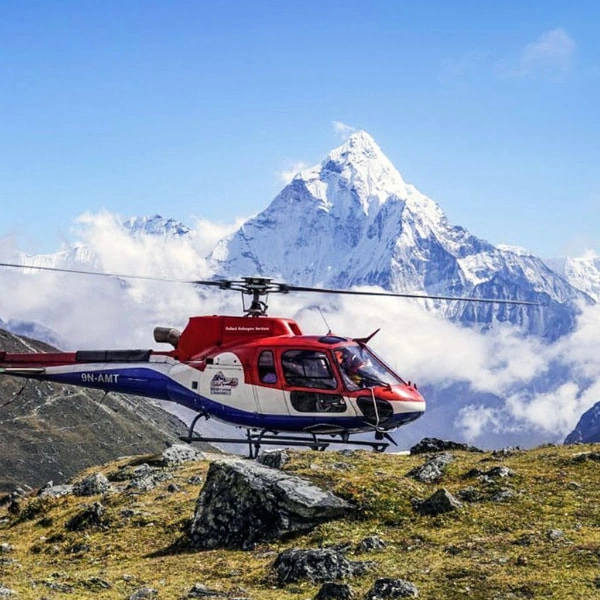
Helicopter rescue is available on the EBC route, but it's expensive (USD 5,500 to 7,500 or more) and weather-dependent. Get comprehensive travel insurance that covers high-altitude trekking and helicopter evacuation before you leave home. This is not optional.
Major Highlights of the Everest Base Camp Trek
Several moments stand out on this route:
Namche Bazaar: The main hub of the Khumbu. Has a weekend market, bakeries, gear shops, and an excellent mountain museum. First proper rest stop, and the first place many trekkers feel the altitude.
Tengboche Monastery: Sits at 3,860 meters surrounded by rhododendron forest. On a clear day, Ama Dablam rises dramatically behind it. One of the more spiritually resonant places on the trail.
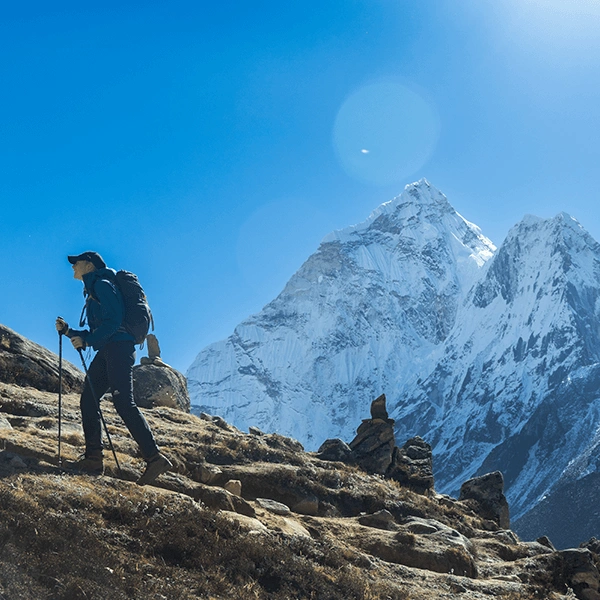
Ama Dablam views: The mountain appears from Namche onward and dominates the skyline for days. Many trekkers say it's the most beautiful peak visible from the trail, even more striking than Everest itself.
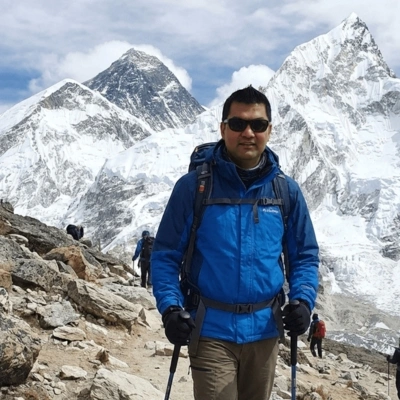
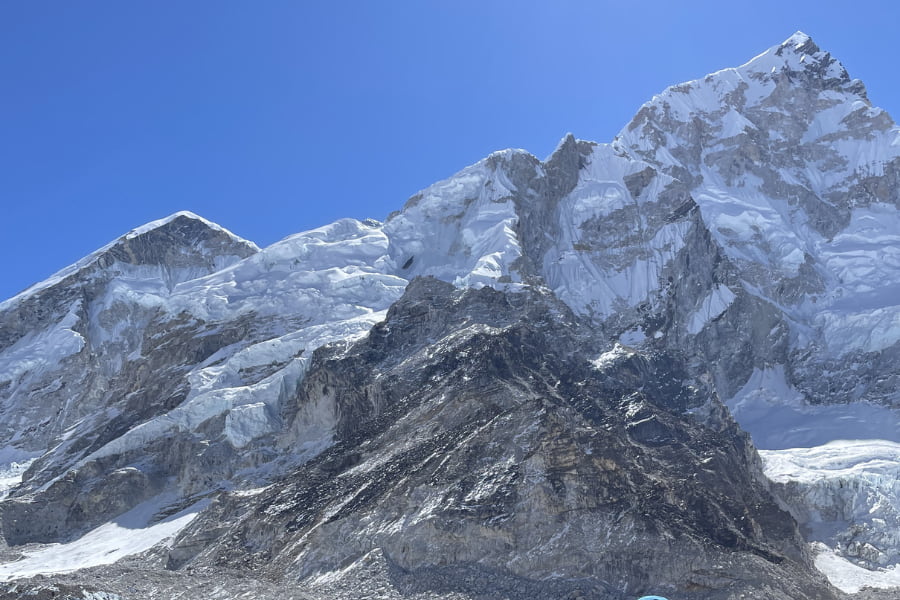
Kala Patthar (5,645 m): The best direct view of Everest on the entire route. Base Camp itself sits in a valley, and Everest is largely blocked by Nuptse. Kala Patthar fixes that. Sunrise from the summit is worth the predawn alarm.
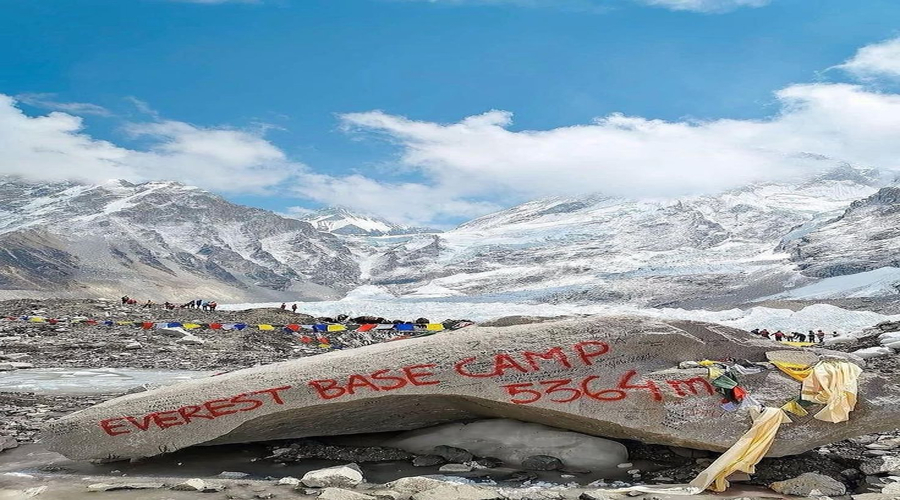
Everest Base Camp: At 5,364 meters, it's a field of rock and glacier with prayer flags and the rumble of the Khumbu Icefall behind it. Climbing season brings tents and the full base camp setup. In the off-season, it's quieter and more raw.
Sherpa Culture and Local Villages
The Khumbu Valley is home to the Sherpa people, an ethnic group originally from eastern Tibet who migrated south centuries ago. Their culture is deeply rooted in Tibetan Buddhism.
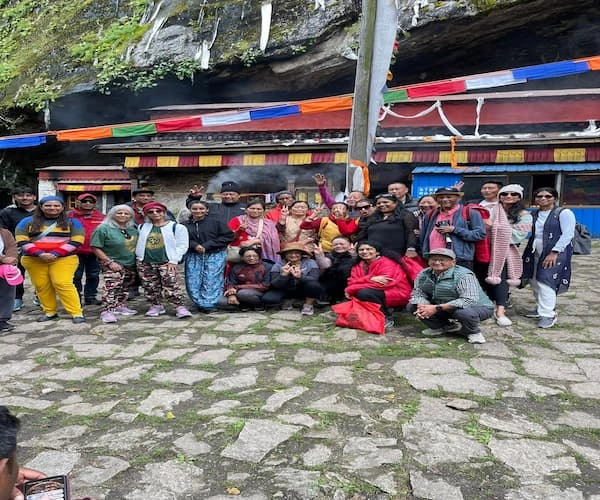
Every village along the trail has at least one monastery or chorten. Prayer flags stretch across ridgelines and suspension bridges. Mani stones (carved with Buddhist mantras) line the trail edges for miles. Trekking culture here asks you to pass these on the left, keeping the sacred stones on your right.
Villages worth pausing in:
Phakding and Monjo: Small, less touristy than Namche. Friendly teahouses and a more relaxed pace.
Khumjung: A short detour from the main trail near Namche. Has a school built by Sir Edmund Hillary and a monastery that keeps what locals call a yeti scalp. Whether it's genuine is debated, but the monastery is beautiful.
Dingboche: More exposed and windswept than the lower villages. Surrounded by dry-stone walls that protect potato fields. Cold at night but a good rest point.
Sherpa guides are more than logistics help. Many come from families who've worked the mountain for generations. Their route knowledge, altitude experience, and judgment about when to push and when to stop are worth more than any gear you can buy.
Everest Base Camp Trek Cost and Budget Tips
Costs vary significantly depending on how you travel, what's included, and how much comfort you want.
Rough cost breakdown for a standard 14-day guided trek:
- Guided package with Holy Kailash Tours (including permits, guide, porter, accommodation, most meals): USD 1,400 to 1,800 per person
- Budget independent trek (permits, teahouses, food, local guide): USD 900 to 1,200
- Lukla flights (round trip): USD 470 to 550
- Travel insurance with evacuation coverage: USD 80 to 150
- Gear (if you don't own any): USD 300 to 700
Actual on-trial daily spending:
- Budget: USD 25 to 35 per day
- Moderate: USD 40 to 55 per day
Tips to manage costs:
- Book flights early; last-minute Lukla tickets cost more and may not be available
- Don't skimp on insurance; a helicopter evacuation can cost more than your entire trip
- Gear can be rented cheaply in Kathmandu's Thamel district if you don't want to buy
- Dal bhat is the best value meal on the menu and usually comes with unlimited refills
Why Choose Holy Kailash Tours for the Everest Base Camp Trek
Holy Kailash Tours has organized Everest Base Camp treks for trekkers coming from India, Europe, the US, Australia, and across Asia. The team is based in Kathmandu and includes licensed guides who know the Khumbu route deeply, not just in good conditions, but in bad weather, unexpected delays, and altitude emergencies.
What we offer specifically:
- Licensed and certified Nepali mountain guides, not freelancers hired for the season
- Porter services with fair wages and proper equipment, consistent with ethical trekking standards
- Pre-trip acclimatization briefings and honest itinerary reviews
- Both required permits must be handled before your departure
- 24-hour on-call support for logistics and real emergencies
- Itinerary adjustments when the weather or health makes the original plan wrong
- We don't promise smooth trips. The Khumbu weather doesn't care about schedules, and altitude doesn't respond to optimism. What we do promise: clear communication when something needs to change, and a guide who will recommend descending if descending is the right call. We've turned groups around before. It cost us positive reviews. We'd do it again.
If you've been thinking about this trek and wondering whether to go independently or with a team, the honest answer is this: above 4,000 meters, having someone with route experience and altitude judgment beside you is not a luxury. It's practical.
Final Travel Tips for Everest Base Camp Trekkers
A few things that matter and often go unmentioned:
Your Lukla flight will probably be delayed. Build two buffer days into your schedule. Don't book a non-refundable flight home from Kathmandu the day after your Lukla return.
Cash runs out. The only ATM on the trail is in Namche. It sometimes runs out of money during peak season. Bring enough rupees from Kathmandu for the full trek.
Your phone camera is fine. You don't need a DSLR. What you need is enough storage and a power bank, because charging costs money and there are few opportunities at the teahouses.
Start slower than you think you need to. The first three days set your acclimatization. Pushing hard early doesn't help. It causes problems.
The trail is shared with yak trains. Move to the uphill side of the trail when a yak train passes. They don't steer around you.
Porters carry incredible loads. Tip them properly at the end of the trek. The standard is USD 5 to 10 per day on top of their wages.
Mental preparation is real. The last two days before Base Camp can be psychologically hard. Gorak Shep is cold, uncomfortable, and unattractive. Most people don't sleep well there. Knowing this in advance makes it easier to push through.
The Everest Base Camp Trek is hard in specific ways worth knowing before you go. The altitude is unforgiving. The flights are unpredictable. The last two days have been genuinely uncomfortable. None of that is a reason to skip it. It's a reason to prepare.
Most people who walk this route finish it. Most of those people say it was the best trip they've ever taken. That's not marketing. It's what trekkers say, unprompted, when they get back.
To plan your trip with Holy Kailash Tours, reach out with your travel dates, and we'll build an itinerary that fits your timeline and fitness level.
Email: [email protected]
WhatsApp: +977-9851254672 — Feel free to reach out anytime for fast, friendly, and personalized assistance