Why Choosing the Right Season Matters for the Manaslu Circuit Trek
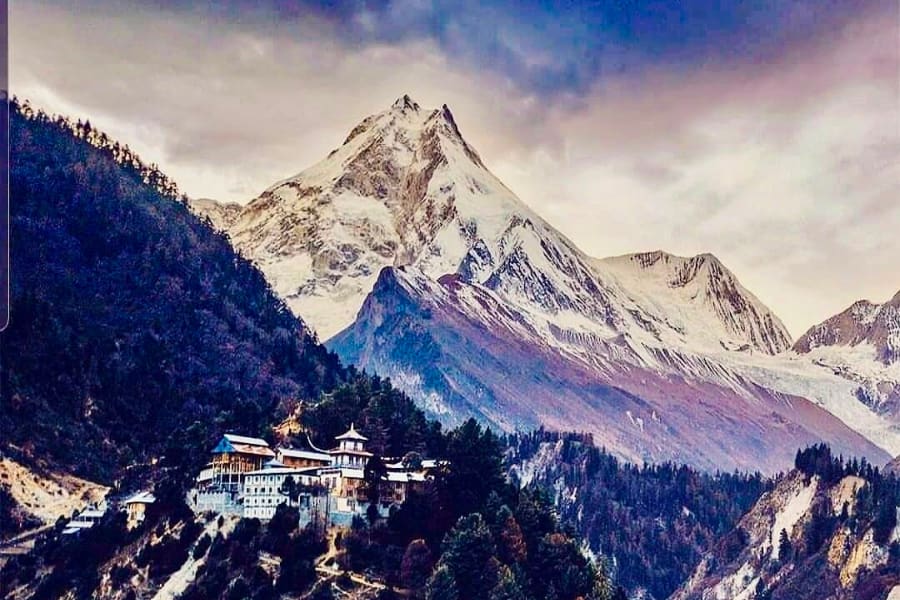
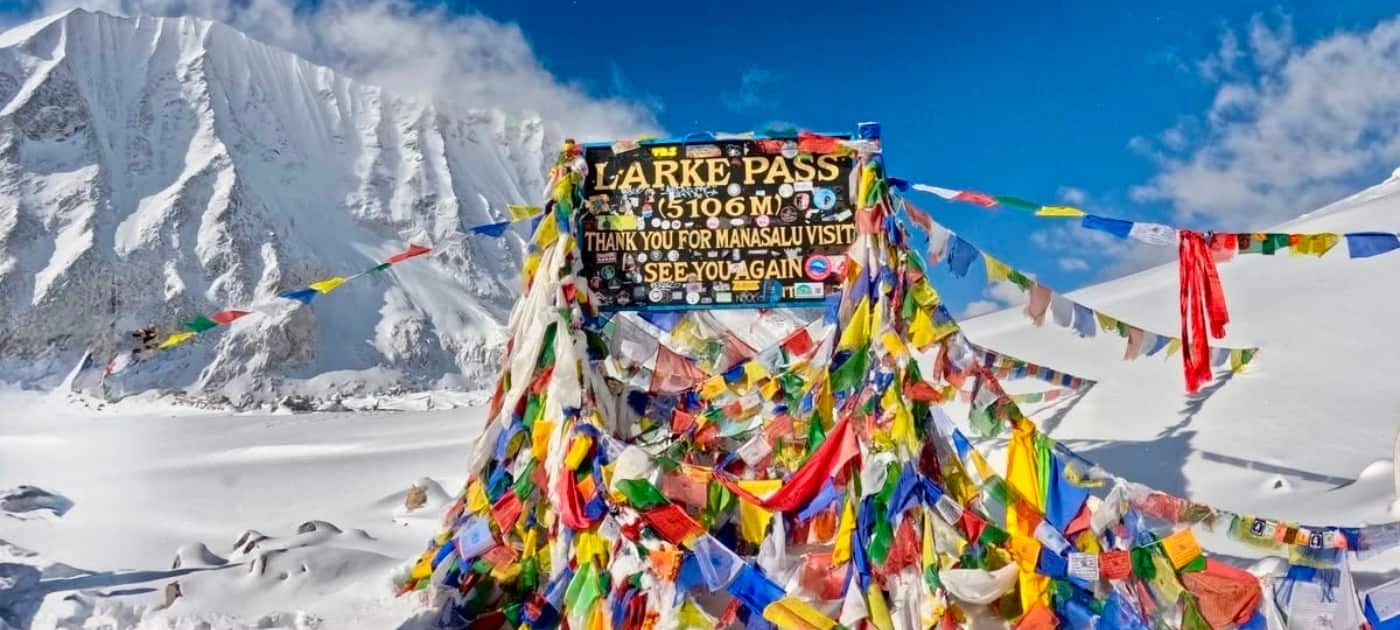
The Manaslu Circuit trek isn't a stroll through a national park with a paved exit. It runs through a restricted border region between Jagat and Dharapani, climbs from around 700 meters at Soti Khola, Deng, Namrung, and Samaghun to 5,106 meters at Larke la Pass, and passes through six distinct climate zones along the way. That kind of elevation swing means the weather at your teahouse in the morning tells you almost nothing about what you'll face two days later near the pass.
The season also decides your permit cost. The Manaslu Restricted Area Permit is higher during the September to November peak season than in the quieter months, and every trekker still needs a licensed guide from a registered agency, regardless of season. So the "right" time isn't just about clear photos. It affects your budget, your safety margin, and whether the pass is even open when you get there.
Overview of the Four Trekking Seasons in the Manaslu Region
Nepal's Himalaya runs on four seasons, and Manaslu follows the same rhythm as the rest of the country's high mountain trails. Spring runs from March through May. Summer and monsoon cover June through August. Autumn takes September through November. Winter closes the year from December through February.
Spring and autumn are the two seasons built for trekking. Both offer stable weather patterns, drier trails, and a real shot at crossing Larke la Pass without a fight.
Summer brings monsoon rain to the lower valleys and leeches to the forest sections, though the upper Nubri valley stays surprisingly dry thanks to a rain shadow effect. Winter turns the high pass into a genuine mountaineering problem, with heavy snow and temperatures that drop well below freezing even in daylight.
None of these seasons is objectively "bad." They're just different trips wearing the same trail.
Manaslu Circuit Trek in Spring (March to May)
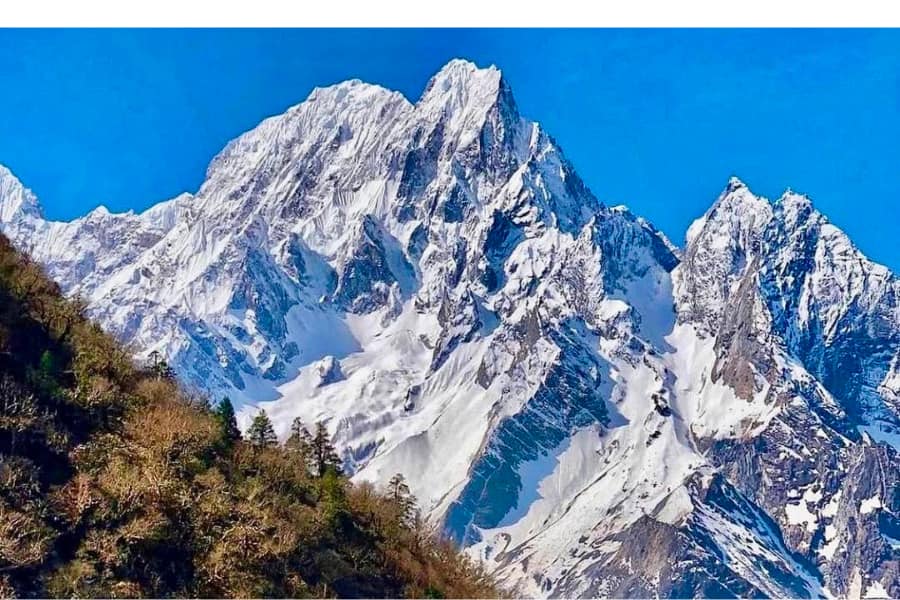
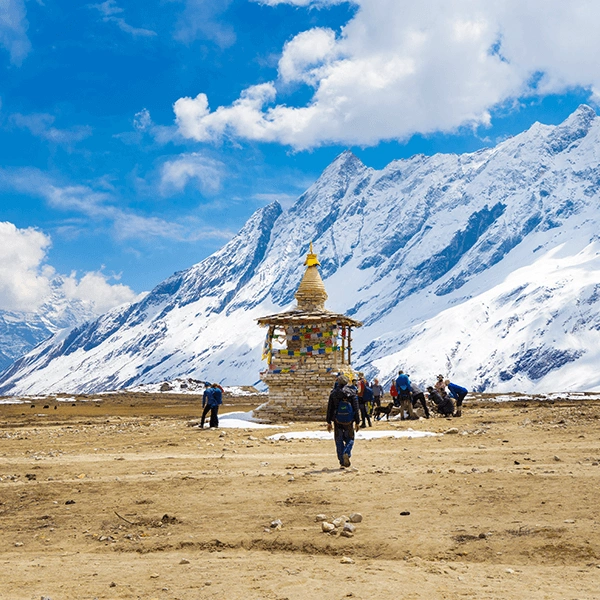
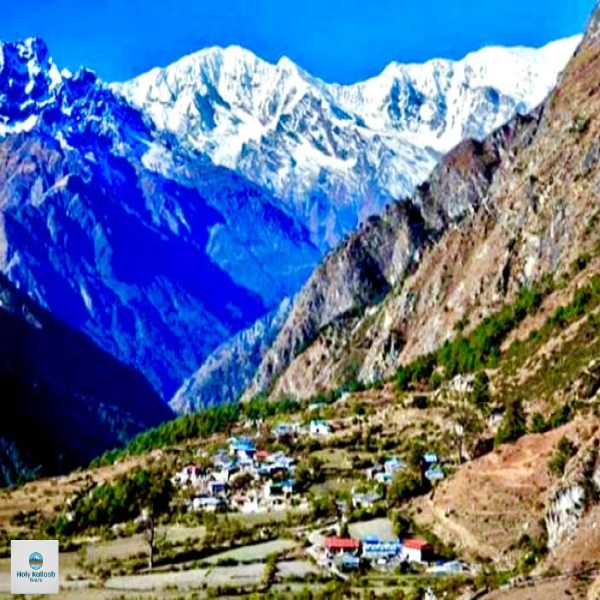
Spring is when the Manaslu region wakes up. Rhododendron forests between 2,000 and 4,000 meters explode into red, pink, and white blooms, and the lower villages around Jagat and Deng turn genuinely lush. Daytime temperatures in the lower valleys sit in the comfortable teens to low twenties Celsius, and even Samagaon at 3,530 meters sees mild afternoons before the cold sets back in after sunset.
March can still bring lingering winter snow near Larke la Pass, so early-spring trekkers should build in extra flexibility around the crossing. By April and May, the trail firms up and the pass becomes far more reliable. This is also side-trip season. Manaslu Base Camp opens up nicely once the snow retreats, and the energy around Samagaon picks up as expedition teams gather for their own climbing attempts.
The tradeoff is visibility. Spring haze and afternoon cloud build-up can soften mountain views, especially by May, so morning starts matter more here than in any other season if you want clean photos of the massif.
Manaslu Circuit Trek in Summer and Monsoon (June to August)
This is the season most agencies quietly steer clients away from, and for good reason. Monsoon rain soaks the lower trail from Soti Khola through Jagat, turning footpaths to mud and pulling leeches out of the forest floor. Landslide risk along the Budhi Gandaki river gorge goes up noticeably, and several sections of the lower route can wash out or close for repair.
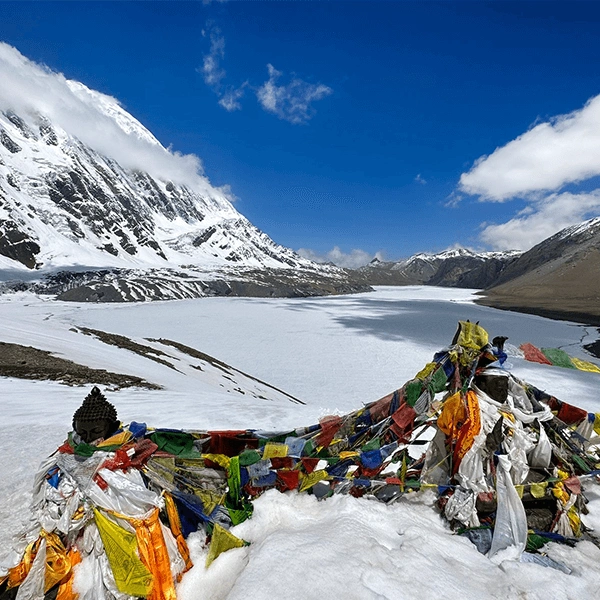
Here's the part most people don't expect: once you climb above Namrung and into the upper Nubri valley, the mountains block a lot of that moisture, and the trail dries out considerably. Samagaon and the approach to Larke la Pass elevation see far less rain than the lower forest sections. That doesn't make the pass itself a good bet in summer. Cloud cover kills the views, and an unexpected storm at 5,000 meters is a different kind of dangerous than rain at 1,000 meters.
We generally only recommend summer trekking to people who've done Manaslu before, who specifically want to see the region green and empty, and who are comfortable adjusting their itinerary on short notice.
Manaslu Circuit Trek in Autumn (September to November)
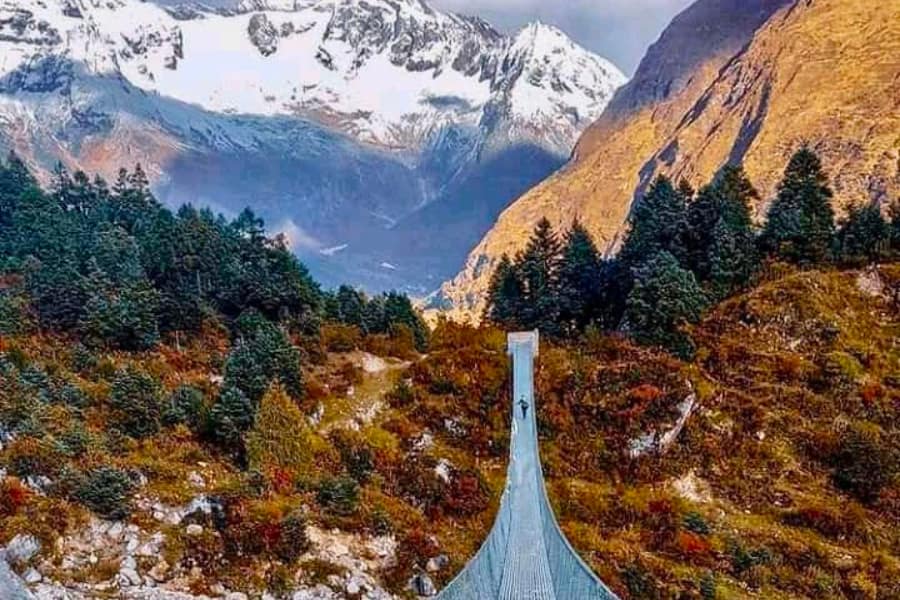
If you ask most guides at Holy Kailash Tours which season they'd pick for themselves, most say autumn. Early September can still carry the tail end of monsoon rain, so the first two weeks are a gray zone. From late September onward, the skies clear fast and stay that way.
October is the busiest month on the trail, and it earns that popularity honestly. Daytime temperatures around Samagaon are around 15 to 20°C, mountain visibility is nearly guaranteed, and the terraced fields lower down turn gold with the harvest. This is also the month most likely to line up with Dashain and Tihar, Nepal's two biggest Hindu festivals, which adds a layer of celebration to the villages you pass through.
By November, the crowds thin out and the cold starts creeping in, particularly at night. Temperatures near the pass regularly drop below freezing after dark, but daytime crossing conditions usually stay workable through the month. Trail conditions are firm and dry across the entire route, from the river gorge to the high pass itself.
Manaslu Circuit Trek in Winter (December to February)
Winter on the Manaslu circuit trek is genuinely different, and we say that as a caution, not a selling point. December's first two weeks can still work for lower-altitude walking, but conditions deteriorate fast after that. By January, daytime temperatures at Samagaon hover around minus five Celsius, with nights dropping to minus fifteen or lower. Larke Pass can see temperatures fall below minus twenty, and heavy snow frequently makes the crossing impossible without technical gear and real winter experience.
Most teahouses above Samagaon close for the season, since there's little demand and no reliable heating to keep them running. The trekkers who do go tend to stay below Samagaon, trading the high pass for solitude, empty trails, and off-season permit pricing.
We won't send an unprepared client up to Larke Pass in January, and we'd tell you the same thing if you asked us directly. If you love snow and solitude and you're not attached to finishing the full circuit, winter has its own quiet appeal. If your goal is to cross the pass, wait for spring or autumn.
Short Day-to-day Itinerary
Manaslu Circuit Trek, which lasts 13 days, can be an inspiring trip taking one through isolated Himalayan settlements, green wooded areas, and high mountain scenery with a beautiful Larke Pass (5,106m) crossing at the end.
An ideal itinerary that brings sufficient acclimatization with rich cultural interactions & fabulous sights of Mt Manaslu. Your Himalayan trek with Holy Kailash Tours will not only be secure and comfortable but also memorable on the glorious Manaslu Circuit trek in Nepal.
Day 1: Drive from Kathmandu to Machha Khola (930 m | 9 hours)
Day 2: Trek from Machha Khola to Jagat (1,340 m | 6 hours)
Day 3: Trek from Jagat to Deng (1,804 m | 6 hours)
Day 4: Trek from Deng to Namrung (2,630 m | 6 hours)
Day 5: Trek from Namrung to Shyala (3,575 m | 6 hours)
Day 6: Trek from Shyala to Sama Gaun (3,530 m | 4 hours)
Day 7: Acclimatization Day in Sama Gaun (4,400 m | 7 hours)
Day 8: Trek from Sama Gaun to Samdo (3,865 m | 3 hours)
Day 9: Acclimatization Day in Samdo (5,000 m | 8 hours)
Day 10: Trek from Samdo to Dharamsala (4,460 m | 4 hours)
Day 11: Trek from Dharmasala to Bimthang via Larkya Pass (3,590 m | 10 hours)
Day 12: Trek from Bimthang to Dharapani (1,860 m | 7 hours)
Day 13: Drive from Dharapani to Kathmandu or Pokhara (7 hours)
Monthly Weather and Temperature on the Manaslu Circuit
Temperature on this trek drops roughly 6 to 7°C for every 1,000 meters you climb, which is why a warm morning in Machha Khola tells you nothing about conditions at Dharamsala that same afternoon. Here's a general picture of what to expect at two reference points: Samagaon (3,530m) and Larke Pass (5,106m).
|
Month
|
Samagaon Day / Night
|
Larke Pass Day / Night
|
Conditions
|
|
March
|
2 to 3°C / minus 8°C
|
minus 2 to 5°C / minus 10 to minus 5°C
|
Cold, snow lingering near the pass
|
|
April to May
|
8 to 15°C / minus 2°C
|
0 to 5°C / minus 8°C
|
Mild, stable, some afternoon cloud
|
|
June to August
|
15 to 18°C / 5°C
|
Variable, wet
|
Rain, cloud, occasional clear windows
|
|
September
|
12 to 15°C / 0°C
|
Cold, improving
|
Skies are clearing after the monsoon
|
|
October
|
15 to 20°C / 5 to 10°C
|
Cold, stable
|
Best combination of clarity and safety
|
|
November
|
8 to 12°C / minus 5°C
|
Below freezing
|
Dry, cold, still crossable
|
|
December
|
0 to 5°C / minus 10°C
|
Often closed
|
Snow risk increasing
|
|
January to February
|
minus 5°C / minus 15 to minus 25°C
|
Frequently closed
|
Extreme cold, most teahouses shut
|
These numbers shift year to year, so treat them as a planning baseline rather than a forecast. Whatever month you choose, pack for a temperature swing of 20 to 30 degrees between your warmest afternoon and your coldest night.
Best Season for Crossing the Larke Pass Safely
Larke Pass is the single hardest day of the entire trek, and it deserves its own conversation separate from general trail weather. Most groups leave Dharamsala around three or four in the morning to reach the top before the afternoon wind and cloud roll in, then descend into Bimthang on the far side.
Spring and autumn give you the best odds of a clean, safe crossing. The snowpack is manageable, morning visibility is generally good, and the trail underfoot is firm rather than icy or thigh-deep in fresh powder. October and early November are the single most reliable stretch, since the monsoon snow has usually melted off and winter storms haven't arrived yet.
Winter crossings happen, but they're a different category of trek entirely, requiring crampons, real cold-weather experience, and a guide who's crossed the pass in those conditions before. Monsoon crossings carry a different risk profile, since low cloud can hide the trail markers and sudden storms build fast at that altitude. If crossing the pass is the whole point of your trip, spring or autumn takes most of the guesswork out.
Seasonal Trail Conditions and Trekking Challenges
Every season on the Manaslu circuit trek comes with its own version of "watch your step." In spring, the main hazard is leftover snow and ice on the upper sections in March, which softens into slush by afternoon and refreezes overnight. Rivers also run higher as snowmelt picks up, so some of the smaller bridge crossings need extra care.
Monsoon trekking means mud, leeches below 2,000 meters, and landslide risk along the steep river gorge between Soti Khola and Deng. Trail sections can wash out with little warning, which is part of why so few agencies run monsoon departures.
Autumn is the forgiving season. Trails are dry, bridges are stable, and the main challenge shifts from terrain to altitude, since the crisp weather makes it easy to move fast and outpace your own acclimatization. Winter's challenge is simpler to describe and harder to manage: snow depth. A metre of fresh snow at Dharamsala can shut the pass down for days, and route-finding above the treeline gets genuinely difficult once trail markers disappear under drifts.
Mountain Views Throughout the Year
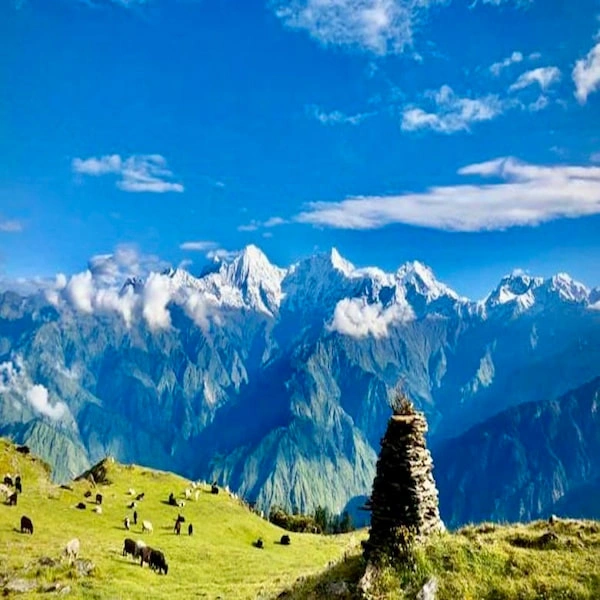
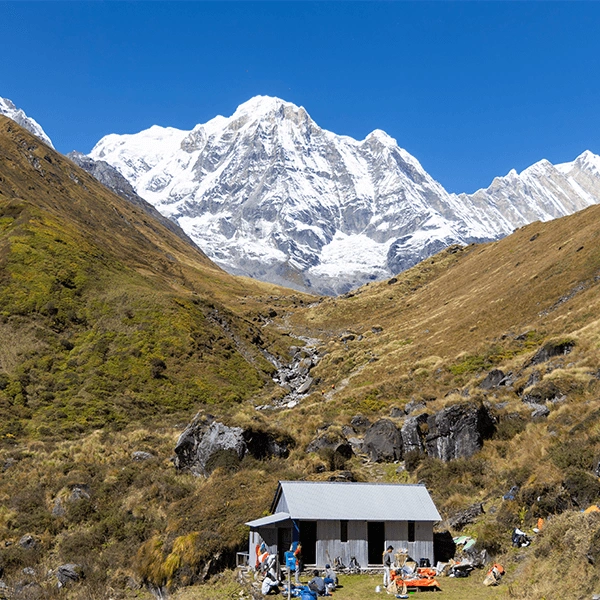
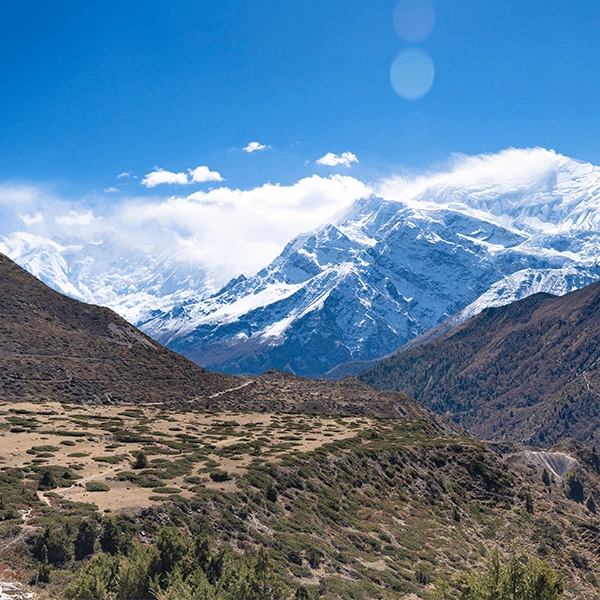
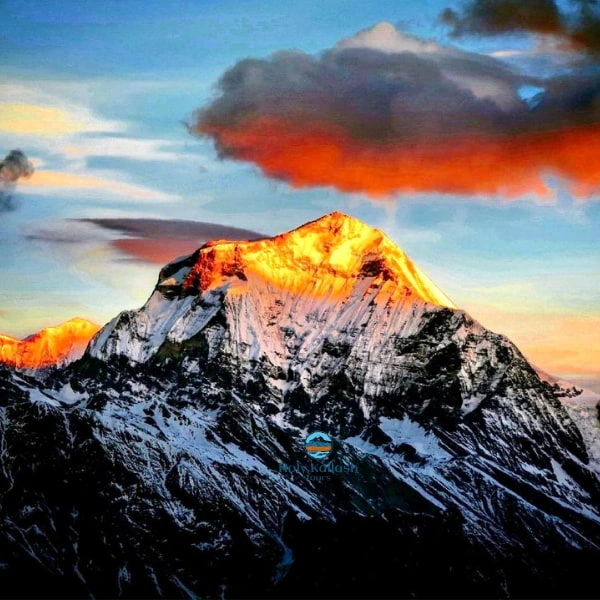
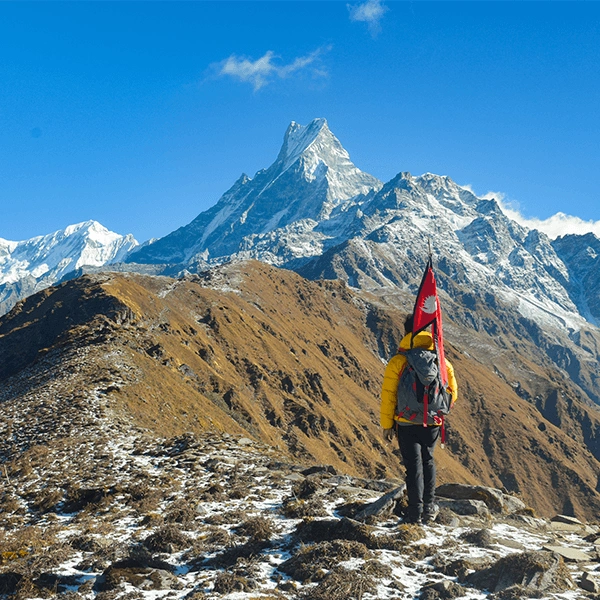
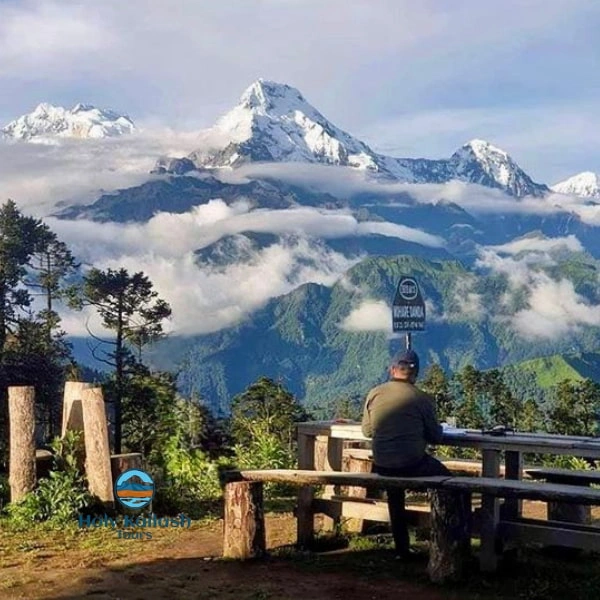
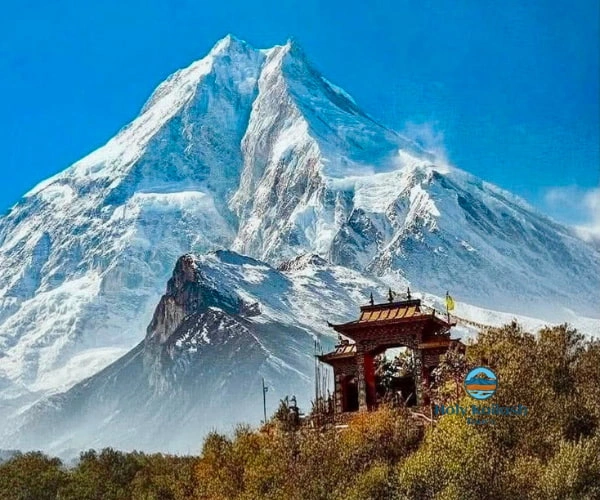
Manaslu, Himlung Himal, Cheo Himal, and the surrounding peaks look different depending on when you catch them, and clarity matters as much as the season itself. Autumn, particularly October, delivers the sharpest, most reliable views of the trip. Post-monsoon air is clean, humidity is low, and the mountains tend to stand out against a deep blue sky for most of the day.
Spring views are strong too, especially in the early morning before cloud builds up, but afternoon haze is common by April and May. Winter can actually produce spectacular clarity on clear days, since cold air holds less moisture, though you're trading that clarity for extreme cold and a real chance the pass stays closed.
Monsoon is the one season where you should lower your expectations entirely. Cloud cover can sit over the range for days at a time, and while the valleys look genuinely beautiful under low mist, don't plan a monsoon trek around mountain photography.
Flora, Wildlife, and Scenic Beauty by Season
The Manaslu Conservation Area protects around 2,000 plant species and roughly 33 mammal species across its forests and alpine zones, and the season you choose changes what you're likely to see. Spring is the flora headline act, with rhododendron forests between 2,000 and 4,000 meters turning entire hillsides red and pink through April and into May.
Wildlife sightings tend to occur during the shoulder seasons and early mornings. Himalayan tahr show up regularly on the rocky slopes near Larke la Pass, blue sheep graze the high pastures, and red pandas occasionally turn up in the bamboo understory around Namrung, Lho, and Samdo, though sightings are rare given how elusive they are. Snow leopards live in this landscape too, with researchers estimating a modest population above 3,500 meters, but seeing one is closer to luck than planning.
Monsoon greens up the lower forest belt dramatically, and birdwatchers find it a rewarding season despite the rain, since over 110 recorded bird species are active in the thicker summer foliage. Winter strips the landscape back to bare rock and snow, stark in its own way, with wildlife pushed to lower elevations where forage is easier to find.
Festival Experiences During the Manaslu Circuit Trek
Timing your Manaslu Circuit trek around a local festival adds something no mountain view can. The Nubri valley's villages, including Sama Gaon and Samdo, carry strong Tibetan Buddhist roots, and Losar, the Tibetan New Year, is the festival most trekkers hope to catch.
It typically falls in February, which unfortunately overlaps with the hardest winter trekking conditions, so witnessing it usually means a shorter trip into the lower valley rather than a full circuit.
Autumn lines up with Nepal's biggest Hindu festivals, Dashain and Tihar, and while the Manaslu region is predominantly Buddhist, you'll still see the festive mood ripple through in decorated homes and warm hospitality along the lower trail.
Villages around Lho and Samagaon also host masked monastery dances and seasonal Buddhist ceremonies tied to the lunar calendar, so exact dates shift year to year. If a specific festival matters to your trip, we'd rather check the current lunar calendar with you directly than give you a date that might be wrong by the time you land in Kathmandu Valley.
Choosing the Best Season Based on Your Trekking Style
Not every trekker wants the same trip, so the "best" season really depends on what you're optimizing for. If your priority is guaranteed mountain views and the highest odds of a clean pass crossing, October is close to unbeatable. If you want those same conditions with noticeably fewer people on the trail, consider late April through early May, or November, after the autumn crowds thin out.
If solitude matters more to you than comfort, and you're an experienced high-altitude trekker, winter's empty trails and rock-bottom permit pricing might appeal, as long as you accept the pass may simply be closed when you arrive.
If you're chasing lush scenery, don't mind rain gear, and you've trekked in Nepal before, a careful monsoon itinerary through the lower valley can work, though we'd steer most first-timers away from attempting the full pass crossing in that window.
There's no wrong season here, only a mismatch between what a season offers and what you're hoping to get out of the trip.
Packing Tips for Every Season
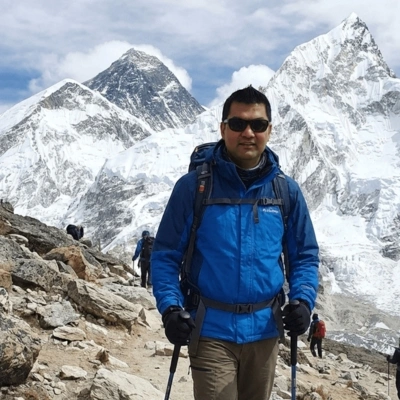
Your packing list should be built around temperature swings, not just the calendar month. For spring, bring a solid mid-weight down jacket, a fleece layer, a waterproof shell for occasional showers, and sun protection, since UV exposure at altitude is stronger than most people expect, even on cool days. Trekking poles help on the softer, sometimes muddy sections lower down.
For autumn, pack a heavier down jacket for the cold nights near Larke Pass, gloves and a warm hat you actually trust, and a good sleeping bag rated to at least minus fifteen Celsius, since teahouse heating is minimal at altitude. Layering matters more than any single piece of gear.
Monsoon packing centers on staying dry and leech-free. A proper rain jacket and pack cover matter more than a heavy insulated layer, and gaiters plus a bit of salt or DEET spray keep leeches off your boots and ankles in the lower forest.
Winter demands real cold-weather gear: a four-season sleeping bag, insulated boots, crampons or microspikes for the pass, and a guide experienced with winter crossings. This isn't the season to improvise with rented gear from a Kathmandu shop the night before you leave.
Expert Advice from Holy Kailash Tours
We've been running treks through Nepal's restricted regions long enough to know that the "best" season on paper isn't always the best season for a specific traveler. A first-time trekker asking us for a can't-miss experience gets pointed toward October, plain and simple. Someone who's already done Everest Base Camp and wants something quieter often ends up in late spring or November instead, and they usually thank us for it afterward.
Our guides at Holy Kailash Tours build every Manaslu itinerary with real rest days before the pass, not just token acclimatization stops, because altitude sickness doesn't care what season it is. We also keep a close eye on the Larke Pass snow report in the weeks before departure, since even within a "good" season, conditions can shift fast at 5,100 meters.
If you're weighing dates against flights, work, or festival timing, talk to us before you book. A two-week shift in your departure date can be the difference between a smooth crossing and a frustrating one, and that's the kind of detail worth getting right before you commit to flights.
Summary: When Should You Trek the Manaslu Circuit?
If we had to give one answer, it would be this: late September through November, or April through early May. Those windows give you the clearest skies, the driest trail, and the best real chance of standing on Larke Pass with the wind at your back instead of fighting it.
But the right season is ultimately the one that fits your fitness, your risk tolerance, and what you actually want to see. A well-planned trek in a "shoulder" month with a guide who knows the current conditions will beat a poorly planned trip in peak season every time.
That's the whole reason timing gets its own conversation before gear lists and itineraries. Get the season right, and everything else about the Manaslu Circuit gets a lot easier.
Frequently Asked Questions
What is the single best month to trek the Manaslu Circuit?
October is the most consistently recommended month. Skies are clear, trails are dry, and Larke Pass is at its most reliable, though it's also the busiest month on the route.
Can you trek the Manaslu Circuit during the monsoon?
Yes, but it's not for everyone. Expect mud, leeches, and reduced mountain views on the lower trail, with a real chance of landslide-related delays. The upper Nubri valley stays drier thanks to a rain shadow effect, but crossing Larke Pass in cloud and rain carries added risk.
Is winter trekking on Manaslu dangerous?
It can be. Temperatures at Larke Pass regularly fall below minus twenty Celsius in January and February, heavy snow often closes the pass entirely, and most teahouses above Samagaon shut down. Winter treks work for experienced, well-equipped trekkers who accept that the pass may not be crossable.
How cold does it get at Larke Pass?
Even in the best trekking seasons, expect below-freezing temperatures at dawn, often down to -8 to -12 °C in spring and autumn. In winter, nighttime lows near the pass can drop past minus twenty.
Do I need a guide to trek the Manaslu Circuit in any season?
Yes. Manaslu is a restricted area, and every trekker needs a licensed guide from a registered agency regardless of the time of year. As of March 2026, solo travelers can apply for their own restricted area permit, but independent, guideless trekking is still not permitted.
Does the trekking season affect permit cost?
It does. The Manaslu Restricted Area Permit costs more during the September to November peak season than it does the rest of the year, so trekking in a shoulder month can save you money as well as crowds.
About the Author
Best Time for the Manaslu Circuit Trek guide was put together by the trekking team at Holy Kailash Tours, drawing on route experience across multiple Manaslu seasons and departures.
Editor's note: swap this generic credit for a real byline before publishing. Something like "Written by Ram Sharan Adhikari, Best Time for the Manaslu Circuit Trek: A Season-by-Season Guide at Holy Kailash Tours, 15 years Manaslu Circuit departures led since 2010," linked to an author page with certifications and TAAN or NTB registration details.
Sources
Best Time for the Manaslu Circuit Trek draws on Nepal's official trekking and conservation authorities, as well as route conditions reported by licensed operators active in the region. For the most current rules before you book, check these directly.
Nepal Department of Immigration covers current restricted area permit rules, including the March 2026 solo trekker policy update: https://immigration.gov.np/en/post/trekking-permit
Nepal Tourism Board publishes trekking permit guidance and fee schedules: https://ntb.gov.np/ plan-your-trip/before-you-come/trekking-permit
National Trust for Nature Conservation (NTNC), which manages the Manaslu Conservation Area Project, covers the conservation area's boundaries, history, and wildlife programs: https://ntnc.org.np/project /manaslu-conservation-area-project-mcap
Seasonal temperature ranges and Larke Pass crossing conditions in this blog reflect patterns reported across multiple licensed trekking operators as of mid-2026, checked against the sources above. Mountain weather shifts year to year, so confirm current trail and pass status with your guide before departure.
Email: [email protected]
Author: Ram Sharan Adhikari
WhatsApp: +977-9851254672 — Feel free to reach out anytime for fast, friendly, and personalized assistance.