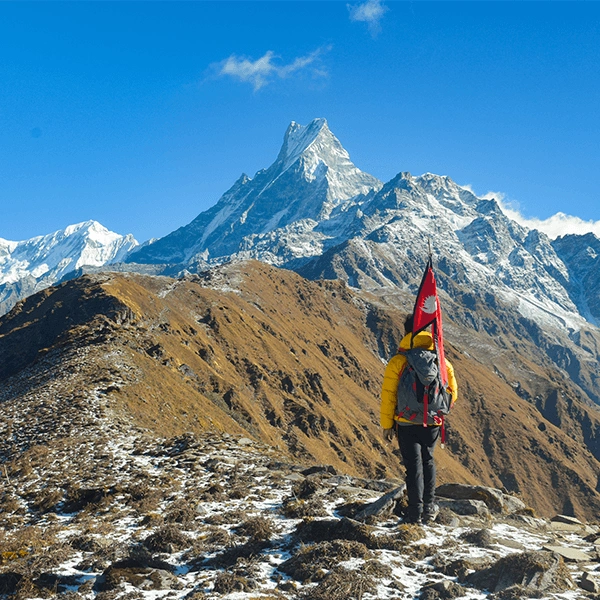
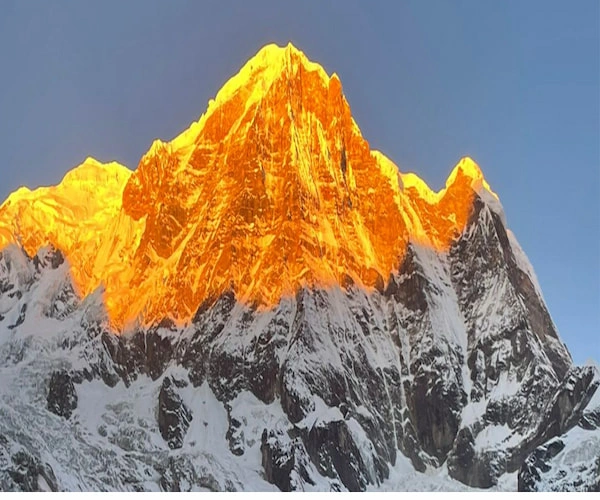
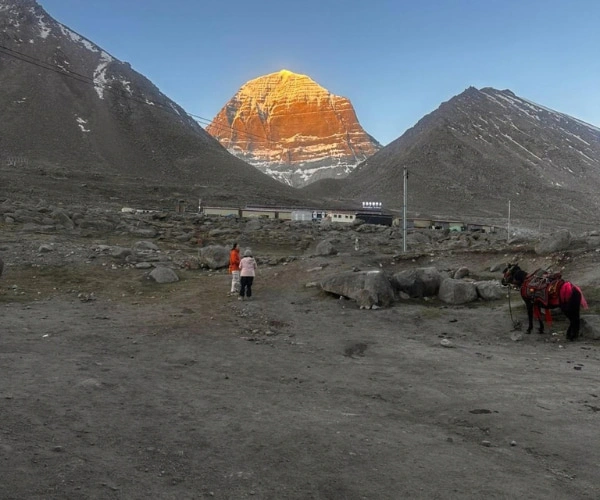
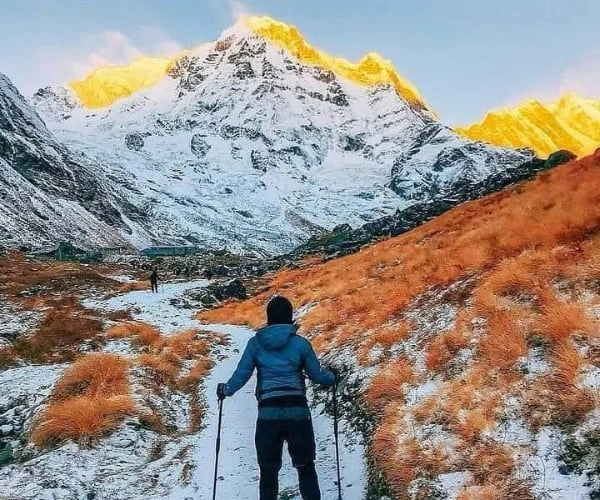
The Annapurna Base Camp trek is one of the most popular walks in Nepal, and for good reason. It takes you deep into the Annapurna Sanctuary, a high glacial basin ringed by some of the tallest mountains on earth. Annapurna I (8,091m), Machapuchare (6,993m), Hiunchuli, and Gangapurna all crowd the horizon as you walk. There is nothing quite like standing at base camp and looking up at all of them at once.
The trek sits in the Annapurna Conservation Area, roughly 200km northwest of Kathmandu. Most trekkers fly into Pokhara first, then drive or take a taxi to the trailhead. The classic starting points are Nayapul or Phedi, though many itineraries now begin from Ghandruk or Jhinu Danda, depending on the route and time available.
Annapurna Base Camp Trip Overview
Abc trek
The Annapurna Base Camp Trek itself sits at 4,130m above sea level. The trek typically covers around 110km round trip and takes anywhere from 5 to 14 days, depending on your pace, fitness level, and how many side trips you add. Most trekkers average 5 to 6 hours of walking per day, though some shorter days dip to 3 hours and longer ones push past 7.
Who is this trek for? Honestly, a wide range of people do it well. Fit beginners complete it every season. Families with teenagers tackle it. Older trekkers in their 60s and 70s finish it without drama, especially with a porter and a slower pace. The Nepal Annapurna Base Camp trek draws over 70,000 visitors per year, making it one of the busiest trails in the entire Himalayan region.
The route passes through rhododendron forests, Gurung villages, terraced farmland, and eventually into a dramatic valley of glaciers and exposed rock. It is physical. It is high. But it is not technical climbing. No ropes, no crampons (usually). Just your legs, your boots, and your lungs.
Annapurna Base Camp Trek Highlights
People who have done this trek tend to talk about the same moments. Here are the ones that actually stay with you:
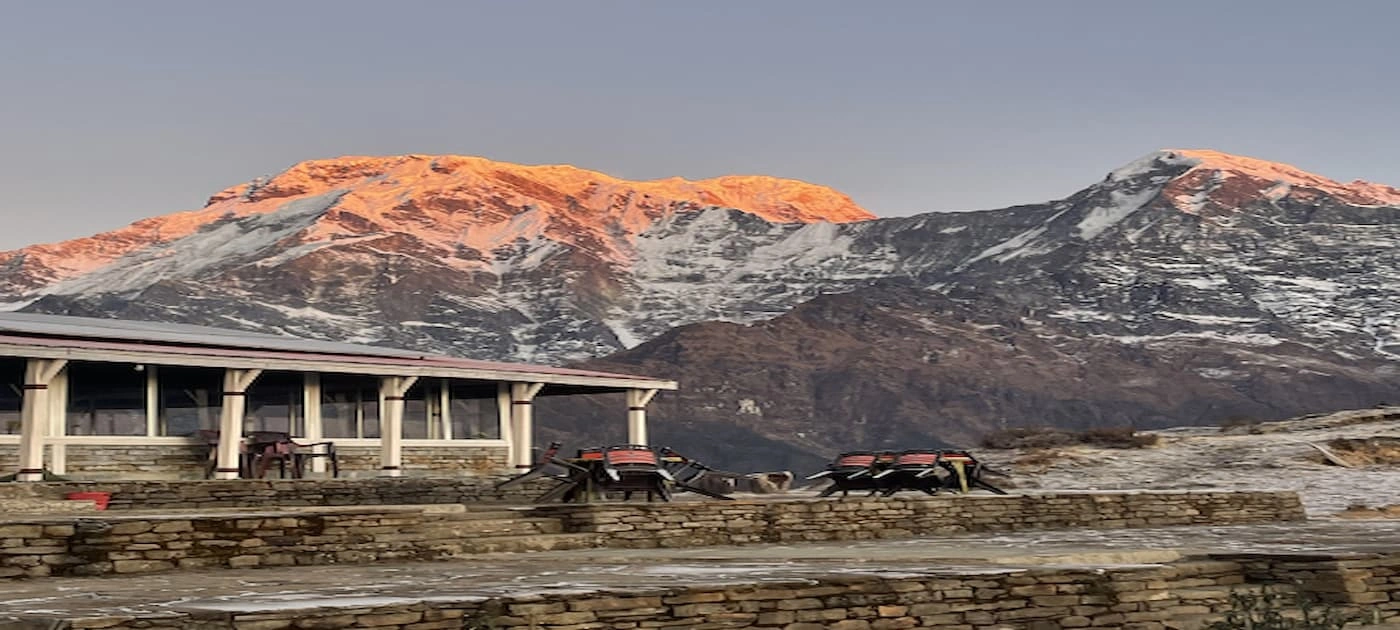
Sunrise from Poon Hill or Annapurna Base Camp: The alpenglow that hits Machapuchare in the early morning is the kind of thing you end up trying to explain to people who weren't there. Photos never really get it.
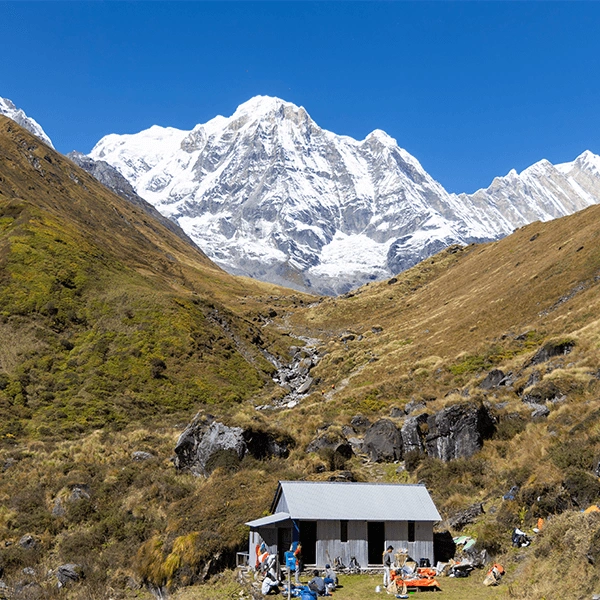
The Annapurna Sanctuary: Walking into the glacial amphitheater on the final approach to base camp feels genuinely surreal. The mountains come at you from every angle.
Gurung villages: Ghandruk, Chomrong, and the smaller settlements along the way are well-preserved and welcoming. The local culture here is distinct and worth spending time in.
Jhinu Hot Spring: After days of walking, soaking in a natural hot spring by the Modi Khola river is one of the more satisfying moments of the entire trip.
Teahouse culture: You eat dal bhat, drink warm lemon tea, and swap trail stories with strangers. It becomes the rhythm of the trip pretty quickly.
The stone staircase sections: They are hard on the knees. But they are also part of what makes the ABC trail feel like a real journey rather than a walk in the park.
The annapurna base camp abc trek is not just about the destination. The trail itself is why most people remember it so fondly.
How Long Does It Take to Trek to Annapurna Base Camp?
There is no single answer to this because it genuinely depends on where you start, how fit you are, and whether you are adding side trips. Here is a realistic breakdown:
5 Day Annapurna Base Camp Trek
This is the shortest option, and it exists, but it is compressed. You start from Jhinu Danda (after a drive from Pokhara) and move fast. It is fine for experienced trekkers who have recently been at altitude. Not recommended for first-timers or anyone prone to altitude sickness. The short Annapurna base camp trek suits people with very limited holidays who still want to reach base camp.
6 Days Annapurna Base Camp Trek
Six days gives you a bit more breathing room. You can still feel rushed on the climb to base camp, but most healthy trekkers manage without major problems. This works well if you are starting from Nayapul or Ghandruk and keep a steady pace.
7 Days Annapurna Base Camp Trek
Seven days is probably the sweet spot for a comfortable Annapurna Base Camp short trek. You get time to acclimatize properly, absorb the villages along the way, and still have a buffer day if the weather closes in near the top.
10 Days Annapurna Base Camp Trek
The 10-day Annapurna Base Camp trek is the most popular among international travelers. It allows for a full loop through Poon Hill, Ghandruk, Chomrong, and up to base camp, with time to relax at Jhinu hot spring on the way back. Walking days average 5 to 6 hours. This itinerary suits most fitness levels.
Annapurna Base Camp Trek 14 Days
Fourteen days opens up side trips toGhorepani poon hill,Mardi Himal, Khopra Danda, or even Tilicho Lake if combined with the circuit. It is a fuller experience, and the extra days make a real difference to how you feel physically.
Daily walking hours across most itineraries range from 4 to 7 hours on the trail. Some days involve significant elevation gain. Others are gentle forest walks. The variety is part of what keeps the trek interesting.
How Hard Is the Annapurna Base Camp Trek?
Abc Trek
This is the real question most people have, and the honest answer is: moderately hard. Not extreme, not easy. Somewhere in the middle, which is actually useful to know before you go.
Annapurna Base Camp Trek Difficulty Level
The trek is rated moderate by most trekking agencies. That rating means different things to different people. For someone who runs regularly and spends weekends hiking, it is genuinely manageable. For someone who works a desk job and has never done multi-day walking, it will feel challenging, especially the altitude section above Deurali (3,230m).
The trail is mostly well-maintained and well-marked. You are not scrambling or navigating off-trail. But the cumulative effect of several days of climbing, carrying a pack, and sleeping above 3,000m adds up.
Daily Walking Hours and Stone Stairs
Expect 5 to 6 hours of walking per day on average. Some of that is on good dirt paths through forests. A lot of it is on stone staircases, and this is the thing that surprises most first-time trekkers.
The section from Chhomrong down to the suspension bridge and back up toward Sinuwa involves thousands of stone steps. They are steep and uneven. Going down is hard on the knees. Going up is hard on the lungs and legs. Trekking poles help enormously here, especially on the descent.
High Altitude Challenges
The Annapurna Base Camp trek altitude reaches 4,130m at the camp itself. That is high enough to cause altitude sickness in people who ascend too fast.
Symptoms of AMS (Acute Mountain Sickness) include headache, nausea, dizziness, and loss of appetite. The rule is simple: if symptoms develop, stop ascending. If they worsen, descend.
Most well-planned itineraries include at least one acclimatization stop, often at Deurali or Machhapuchhre Base Camp (3,700m), before the final push to ABC. This matters. Do not skip it.
Physical Fitness Required
You do not need to be an athlete. But you do need a baseline of cardiovascular fitness and healthy knees. Training in the months before the trek makes a genuine difference.
Good preparation includes:
Regular hiking with a loaded daypack (10 to 12kg)
Stair climbing or step exercises for knee strength
Cardio at least 3 to 4 days per week
A few weekend hikes of 4 to 6 hours before you go
Weather Conditions
The weather on the trek can change fast. The section inside the Annapurna Sanctuary is known for sudden cloud cover, snowfall in higher months, and strong winds. These conditions can close trails and delay departures from base camp.
Always carry rain gear and a warm mid-layer, even in spring and autumn.
Trek Difficulty by Age Group
Under 40: Generally manageable with moderate fitness
40 to 60: Very doable with good preparation and a slower pace
Over 60: Many people complete this trek in their 60s and 70s. Hire a porter, take an extra day, and listen to your body.
Children: Teenagers do fine. Younger children need careful consideration, given the altitude and distance.
Is the Trek beginner-friendly?
Mostly yes, with realistic expectations. If you pick a 10-day itinerary, hire a guide, use a porter, and do not rush the altitude section, beginners can finish this trek every season. The trail is not technical. The teahouse system means you do not carry camping gear. You sleep in a warm bed each night.
What catches beginners off guard is the stone stairs and the altitude above 3,500m. If you expect those two things and prepare for them, the rest is manageable.
How to Make the Trek Easier
Hire a porter. Carrying 7 to 10kg less makes an enormous difference.
Both are popular. Both are of moderate difficulty. But they are different experiences.
The Everest Base Camp (EBC) trekgoes higher (5,364m vs 4,130m at ABC), which increases altitude risk. EBC also tends to feel more remote and rugged in the upper sections. ABC is more scenic for mountain variety and has a warmer cultural atmosphere in the teahouses.
EBC typically costs more. The flights to Lukla add cost and risk (Lukla is one of the busiest mountain airports in the world). The ABC trek is easier to access from Pokhara.
For true beginners, most guides and local operators, including the team at Holy Kailash Tours, suggest ABC as the first major Himalayan trek before progressing to higher routes. The combination of manageable altitude, rich culture, and stunning scenery makes it a better starting point for most people.
Is the Annapurna Base Camp Trek Safe?
Generally, yes. It is one of the safest long treks in Nepal because the trail is well-used, well-marked, and fully supported by a teahouse network.
Altitude Sickness Risk
This is the main safety concern. AMS can affect anyone regardless of fitness. It is not predictable. The best protection is a slow ascent, proper hydration, and a willingness to descend if you feel unwell.
Helicopters can evacuate trekkers from base camp if needed. Rescue insurance is not optional; it is essential.
Guides and Porters
A licensed guide knows the trail, speaks the local language, and can identify altitude sickness symptoms. They also help with logistics, permits, and teahouse bookings. Hiring a guide through a reputable operator is worth every rupee.
Holy Kailash Tours provides experienced, certified guides for the Annapurna Base Camp trek, along with full logistical support including permit handling, accommodation planning, and emergency contact protocols. Their guides are trained in wilderness first aid and altitude management.
Solo Trekking vs Guided Trek
Solo trekking in theAnnapurna regionwas officially restricted for foreign nationals in 2023. All foreign trekkers now need a licensed guide. This change improved safety outcomes significantly on the trail.
Trail Safety
The trail is busy in peak season, which means help is never far away. Landslides are a risk during the monsoon, and snowfall can block the path above 3,000m in December and January. Check conditions before you go.
Mardi Himal Base Camp sits at 4,500m and offers a less-crowded alternative (or addition) to the ABC trail. The two routes can be combined into a 12 to 14-day trek, starting on the ABC trail and looping back via Mardi Himal.
The combined route is harder than ABC alone but rewarding. The Mardi High Camp (4,500m) has exceptional close-up views of the Annapurna South face and Machapuchare. Fewer trekkers means quieter teahouses and a more peaceful trail.
This combination is best for people who want to experience both the popular Annapurna Sanctuary and the quieter east ridge of the Annapurna range in one trip.
Annapurna Base Camp or Circuit Trek?
These are two very different treks that share part of the Annapurna region.
Feature
Annapurna Base Camp
Annapurna Circuit
Duration
7 to 14 days
14 to 21 days
Max altitude
4,130m
5,416m (Thorong La Pass)
Difficulty
Moderate
Moderate to hard
Scenery
Mountain amphitheater
Wider Himalayan landscapes
Cost
Lower
Higher
Best for
First-timers
Experienced trekkers
The Annapurna Circuit covers more ground, crosses the Thorong La Pass (5,416m), and includes the Mustang rain shadow area. It is a bigger undertaking, both physically and financially.
The Annapurna Base Camp Circuit Trek map shows how portions of both routes overlap, particularly around the Pokhara valley entry points and the lower Modi Khola valley. Some itineraries combine elements of both into a "Grand Annapurna" loop.
For most first-time trekkers in Nepal, ABC is the better choice. For people who have already done ABC and want more, the circuit is the natural next step.
Annapurna Base Camp and Tilicho Lake Trek
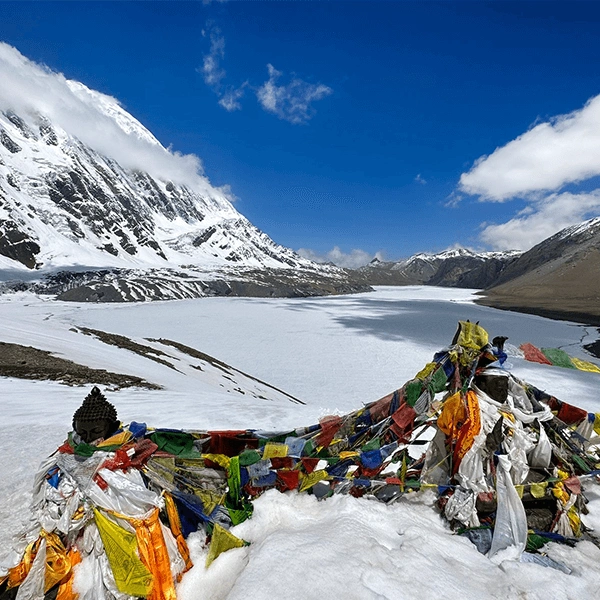
Tilicho Lake (4,919m) is one of the highest lakes in the world and sits in the Manang valley on the northern side of the Annapurna range. Combining it with ABC requires either a very long continuous trek or a split trip from Pokhara.
A combined Tilicho Lake and ABC trek typically runs 18 to 21 days. It passes through the Manang valley, crosses or traverses near Thorong La, and loops back around to the Modi Khola for the ABC approach.
This is an ambitious itinerary. It is best for experienced trekkers who have already been at altitude and are comfortable with remote conditions. The reward is that you get two of Nepal's most spectacular high-altitude destinations in one journey.
Khopra Danda (3,660m) is a ridge viewpoint south of the main Annapurna range, accessed via community-managed lodges run by local villages. It sits above Ghandruk and Tadapani, offering views of Dhaulagiri, Annapurna South, and Hiunchuli.
A combined Khopra Danda Trek and ABC trek typically runs 12 to 16 days. The Khopra section adds a quieter, more off-the-beaten-path experience to the popular ABC trail. Community lodges here are basic but clean, and the trail sees far fewer trekkers than the main ABC route.
This combination suits trekkers who want solitude alongside the main Annapurna experience. The community tourism model in the Khopra area also means your trekking fees go directly to local villages, which many travelers appreciate.
Annapurna Base Camp Heli Trek
A helicopter trek to Annapurna Base Camp is exactly what it sounds like. You fly from Pokhara into the sanctuary (or to a high camp), walk to base camp, and either fly back or trek down.
This option is popular with:
People with limited time (3 to 5 days available)
Older travelers who want the base camp experience without 10 days of walking
Those doing an Annapurna Base Camp luxury trek with private teahouse bookings and helicopter support
The cost is significantly higher. A helicopter from Pokhara to ABC and back runs roughly $1500 to $2,500 USD per person, depending on season and group size. But for the right traveler, it is worth it.
Trek and helicopter return combinations are the most common choice. You walk for over 6 to 7 days and fly back, saving 3 to 4 days on the descent.
The 10-day itinerary is the most widely used. Here is a realistic day-by-day overview:
Day 1: Fly or drive to Pokhara. Rest, briefing, gear check.
Day 2: Drive to Nayapul, trek to Tikhedhunga or Ulleri (1,960m). About 4 hours walking.
Day 3: Ulleri to Ghorepani (2,860m). Steep climb through rhododendron forest. 5 to 6 hours.
Day 4: Early morning hike to Poon Hill (3,210m) for sunrise. Then trek to Tadapani (2,630m). Full day.
Day 5: Tadapani to Chhomrong (2,170m). Mixed descent and ascent through Gurung villages.
Day 6: Chhomrong to Dovan (2,600m). Includes the famous stone staircase descent from Chhomrong. 5 hours.
Day 7: Dovan to Machhapuchhre Base Camp (3,700m). Forests thin out, valley opens up.
Day 8: MBC to Annapurna Base Camp (4,130m). 2 to 3 hours. Sunset and overnight at ABC.
Day 9: Sunrise at ABC, then descend to Jhinu Danda (1,760m). Long day. Hot spring in the evening.
Day 10: Trek to road head, drive back to Pokhara.
This Annapurna Base Camp trek itinerarybalances pace and acclimatization well. Most healthy trekkers complete it without major difficulty.
Annapurna Base Camp Trek Best Season
Season choice matters more on this trek than most people expect.
Spring (March to May)
The best time to trek to Annapurna Base Camp for most people. Rhododendrons bloom red and pink up the lower slopes. Skies are mostly clear in the morning, with clouds building in the afternoon. Temperatures are comfortable. The trail is busy but not overwhelmingly so.
Autumn (September to November)
This is arguably the single best season. Post-monsoon, the air is clear, views are sharp, and the trail conditions are excellent. October is the peak month. Expect busy teahouses in October and November, so book ahead.
Winter (December to February)
Cold above 3,000m, with possible snow closures on the trail above Deurali. Day temperatures at base camp can drop well below zero. It is doable for experienced cold-weather trekkers, and the empty trails are genuinely appealing. But beginners should avoid January, especially.
Monsoon (June to August)
Possible but not recommended. Rain is heavy, trails are slippery, leeches are abundant in the lower forest sections, and views are mostly obscured. A small number of trekkers do this season for the green landscapes and solitude, but it is the hardest time to be on the trail.
Cost varies based on duration, season, group size, guide/porter costs, and what is included in any package.
Permit Costs
Every trekker needs two main permits:
ACAP (Annapurna Conservation Area Permit): NPR 3,000 for foreigners (around $23 USD). Nepali nationals pay NPR 100.
TIMS Card (Trekkers' Information Management System): Around NPR 2,000 for independent trekkers, NPR 1,000 for those with a registered agency.
The Annapurna Base Camp trek permit cost has increased in recent years, so confirm current rates with your trekking agency before travel.
Accommodation
Teahouses along the trail range from basic (shared room, shared bathroom) to relatively comfortable rooms with attached bathrooms at lower elevations. Cost per night runs from $5 to $20 USD, depending on altitude and facilities. Basic teahouse rooms above 3,000m are sparse but adequate.
The Annapurna Base Camp trek accommodation is entirely teahouse-based on the standard route. There are no lodges at the very top (ABC itself), but there are functional teahouses there that have been running for decades.
Guide and Porter Costs
Licensed guide: $25 to $35 USD per day
Porter: $15 to $25 USD per day
Tips (expected): budget an extra $5 to $10 per day per person for the guide and porter
Overall Budget Estimates
Budget Level
Approximate Cost (10 Days)
Budget (teahouses, shared meals)
$600 to $900 USD
Mid-range (private rooms, porter)
$1,000 to $1,400 USD
Guided package (full service)
$1,200 to $2,000 USD
For Indian nationals, costs are similar since entry does not require a visa for Indian passport holders. The Annapurna Base Camp trek cost for Indian travellers is mostly the same as for other foreign nationals in terms of permits, food, and accommodation, though flights from Indian cities to Pokhara vary considerably.
Nepalese nationals pay much less. The Annapurna Base Camp trek cost for Nepalese citizens is significantly reduced through lower permit fees and the ability to use lower-cost local services. The Annapurna Base Camp trek cost for Nepali trekkers is typically under $300 for a 10-day trip, including guide and porter.
Trekking Packages
Holy Kailash Tours offers Annapurna Base Camp trek packages that include airport pickup, guided trek, licensed English-speaking guide, porter, all permits, teahouse accommodation, and return transport to Pokhara. Package prices vary by group size and duration, starting from around $650 USD per person for a 10-day guided trek in a small group. Custom itineraries, Annapurna Base Camp luxury trek options, and helicopter combos are also available on request.
What to Pack for the Annapurna Base Camp Trek
Packing right makes a real difference to comfort. Here is a practical list:
Footwear and Clothing:
Waterproof hiking boots (broken in before the trek)
Wool or synthetic hiking socks (3 to 4 pairs)
Moisture-wicking base layers
Mid-layer fleece or down jacket
Waterproof outer shell jacket and pants
Hiking trousers (quick-dry)
Warm hat and gloves
Gaiters for the snow season
Gear:
Trekking poles (adjustable)
Sleeping bag rated to -10C (teahouses provide blankets, but it can get cold)
Daypack (25 to 30 litres)
Headlamp with spare batteries
Sunglasses (UV400 or higher)
Sun hat
Health and Safety:
Altitude sickness medication (consult your doctor about Diamox before travel)
So, is the Annapurna Base Camp trek difficult? The honest answer: it is harder than a day hike, easier than most people fear.
The stone stairs will test your knees. The altitude above 3,500m will slow you down. Some days are long. But none of it is beyond what a reasonably fit person can handle with the right preparation, the right pace, and a good guide at their side.
The trek is not a tick-box exercise. It is a real immersion in one of the most extraordinary mountain environments on earth. The villages, the forests, the cold mornings, the final view from the base camp amphitheater at sunrise. People cry up there. Not because it was so hard, but because it is so beautiful.
The team at Holy Kailash Tours has guided hundreds of trekkers through the Annapurna Sanctuary, from first-time Himalayan visitors to experienced high-altitude trekkers. The advice they give consistently comes down to this: start slowly, drink water, listen to your body, and do not rush the altitude. Do those four things, and the trek to Annapurna Base Camp will be one of the best things you have ever done.
ABC Trek FAQs
What permits do I need for the Annapurna Base Camp trek?
You need two permits: the Annapurna Conservation Area Permit (ACAP) and a TIMS card. Both are available in Pokhara at the Nepal Tourism Board office or through your trekking agency. Foreign nationals pay around NPR 3,000 for ACAP and NPR 2,000 for TIMS. Always carry originals on the trail, as checkpoints verify them.
What is the accommodation like on the trail?
Teahouses are the standard. Most villages on the main ABC route have multiple teahouse options. Rooms are basic but clean, with beds, blankets, and shared or attached bathrooms depending on elevation and price. Wi-Fi is available at many teahouses, but it is slow and unreliable above Chhomrong.
Where can I find a reliable Annapurna Base Camp trek map?
The Annapurna Base Camp trek route map is available offline on apps like Maps.me, Gaia GPS, and AllTrails. The Nepal Tourism Board also provides printed maps at their Pokhara office. Your guide will have detailed knowledge of the trail, but downloading an offline map before leaving is always a good backup.
Is there a short version of the Annapurna Base Camp trek?
Yes. A 5-day Annapurna Base Camp trek is possible if you start from Jhinu Danda (reached by vehicle from Pokhara). It is best suited to experienced trekkers who have recently acclimatized to altitude. A 6 or 7-day version is more comfortable and accessible to a wider range of fitness levels.
How hard is the trek, really?
Moderate. The Annapurna Base Camp trek difficulty level is often described as suitable for fit beginners. The main challenges are the stone staircase sections (especially around Chhomrong), the altitude above 3,500m, and the cumulative fatigue of several consecutive days of trekking. With proper preparation and a sensible pace, most healthy adults complete it without major problems.
Is the Annapurna Base Camp trek safe?
Yes, with the right precautions. The trail is well-travelled and teahouse-supported. The primary risks are altitude sickness and weather-related trail closures. Always carry rescue insurance that covers helicopter evacuation, hire a licensed guide, and do not ascend if you have AMS symptoms.
How much does the trek cost?
The Annapurna Base Camp trek price varies significantly. Budget trekkers managing their own food, teahouses, and sharing a porter can complete a 10-day trek for $600 to $900 USD all-in. A fully guided Annapurna base camp trek package through an agency like Holy Kailash Tours starts from around $650 USD per person (group rates) and includes all permits, accommodation, guide, porter, and transport.
When is the best time to trek to Annapurna Base Camp?
Spring (March to May) and autumn (September to November) are the two best windows. Autumn is slightly better for views and trail conditions. October is the peak month. Avoid the monsoon unless you specifically want the off-season challenge. Winter is doable for experienced trekkers, but cold and potentially snowy above 3,000m.
What about altitude sickness?
Altitude sickness is a real risk above 3,000m. Symptoms include headache, nausea, dizziness, and fatigue. The best prevention is slow ascent, hydration, and rest. Diamox (acetazolamide) can help, but consult a doctor before use. If symptoms worsen at any altitude, descend immediately. Do not wait to see if it improves.
How does the Annapurna Base Camp trek compare to the Everest Base Camp?
EBC trek goes higher (5,364m vs 4,130m), carries more altitude risk, and typically costs more due to the Lukla flight. ABC has more mountain variety in the views, a warmer teahouse atmosphere, and is easier to reach from Pokhara. For first-time Himalayan trekkers, ABC is usually the better starting point. Experienced trekkers who have done ABC often do EBC next.
Planning your trek to Annapurna Base Camp? Holy Kailash Tours offers expert guided trekking packages from Kathmandu and Pokhara, including all permits, accommodation, licensed guides, porters, and full trip support. Contact the team for a custom itinerary that fits your schedule, fitness level, and budget.