Annapurna Base Camp sits at the foot of Annapurna I, the world's tenth-highest mountain at 8,091 meters (26,545 feet). The elevation challenges don't stop hundreds of trekkers from making this journey every year. If you're planning to trek to ABC, Holy Kailash Tours offers an 11-day Annapurna Base Camp itinerary that includes proper acclimatisation and time to enjoy the mountain views. The elevation gain on the Annapurna Base Camp trek is something you need to understand before you start. I'm not talking about just memorizing numbers. I mean, actually understanding how your body reacts when you climb from 800 meters in Pokhara to over 4,000 meters at the base camp.
The Annapurna Base Camp trek takes you through one of Nepal's most beautiful mountain routes. You'll walk through terraced farmland, thick rhododendron forests, and eventually into high alpine terrain where the air gets thin and every breath counts. The Annapurna Himalaya surrounds you as you climb higher each day.
Most trekkers underestimate what altitude does to their bodies. They think fitness alone will carry them through. It doesn't work that way. A marathon runner from sea level might struggle more than a moderately fit person who takes time to adjust. The elevation changes everything, from how fast you walk to how well you sleep.
This guide breaks down the actual elevation numbers for each section of the trek. You'll learn which days involve the biggest climbs, where you need to slow down, and how to pace yourself so you actually make it to Annapurna Base Camp instead of turning back with a splitting headache. The Annapurna Mountain trek is beautiful, but it demands respect for the altitude.
Holy Kailash Tours has been organising treks in Nepal's Annapurna region for years. They've seen hundreds of trekkers make mistakes with altitude, and they've learned what actually works. This information comes from real trekking experience, not just guidebook descriptions.
Understanding the height of Annapurna and the daily elevation gains will help you prepare properly. The Annapurna trek isn't technically difficult. There's no climbing equipment involved. But the altitude makes it challenging in ways that are hard to predict until you're there, breathing hard and wondering why your legs feel so heavy.
Nepal's Annapurna trekking routes attract thousands of people every year. Some breeze through. Others struggle. The difference usually comes down to preparation and understanding how altitude will affect your body. Let's look at the actual numbers and what they mean for your trek.
Annapurna Base Camp Elevation from Kathmandu
ABC Trek
Your journey to Annapurna Base Camp starts in Kathmandu, which sits at 1,400 meters above sea level. Most international flights land here. You'll spend a day or two preparing your permits and gear before heading to Pokhara.
Kathmandu's elevation is already higher than many cities worldwide, but you probably won't notice any altitude effects here. Your body handles 1,400 meters without much trouble if you're reasonably healthy. The real changes start when you leave for Pokhara and begin the actual trek.
Pokhara sits at an elevation of 800 meters, lower than Kathmandu. This seems backward, but Nepal's geography works like this. You fly or drive from the higher Kathmandu valley down to the lower lakeside city of Pokhara. From there, the Pokhara Annapurna route begins, and you start climbing into the mountains.
The Pokhara to Annapurna Base Camp distance isn't measured in straight lines. You're walking through valleys, crossing rivers, climbing ridges, and descending again before climbing higher. The horizontal distance doesn't matter as much as the total elevation you'll gain over the course of 7 to 12 days, depending on your route.
Most treks start from Nayapul or Phedi, both around 1,000 to 1,100 meters. You've already gained 200 to 300 meters from Pokhara. The first day usually takes you to villages like Tikhedhunga (1,540 meters) or Ghandruk (1,940 meters). Your legs feel it, but your lungs still work fine.
By the time you reach Chhomrong at 2,170 meters, you're getting into interesting territory. Some people start feeling the altitude here, especially if they climbed too fast. Your sleep might get worse. You might wake up with a slight headache. This is normal.
The elevation of Annapurna Base Camp itself is 4,130 meters. That's the number everyone remembers. But getting there means you'll sleep at various altitudes along the way. Machhapuchhre Base Camp (3,700 meters) is where many people first notice serious altitude effects. You're now at an elevation where there's about 60% of the oxygen available at sea level.
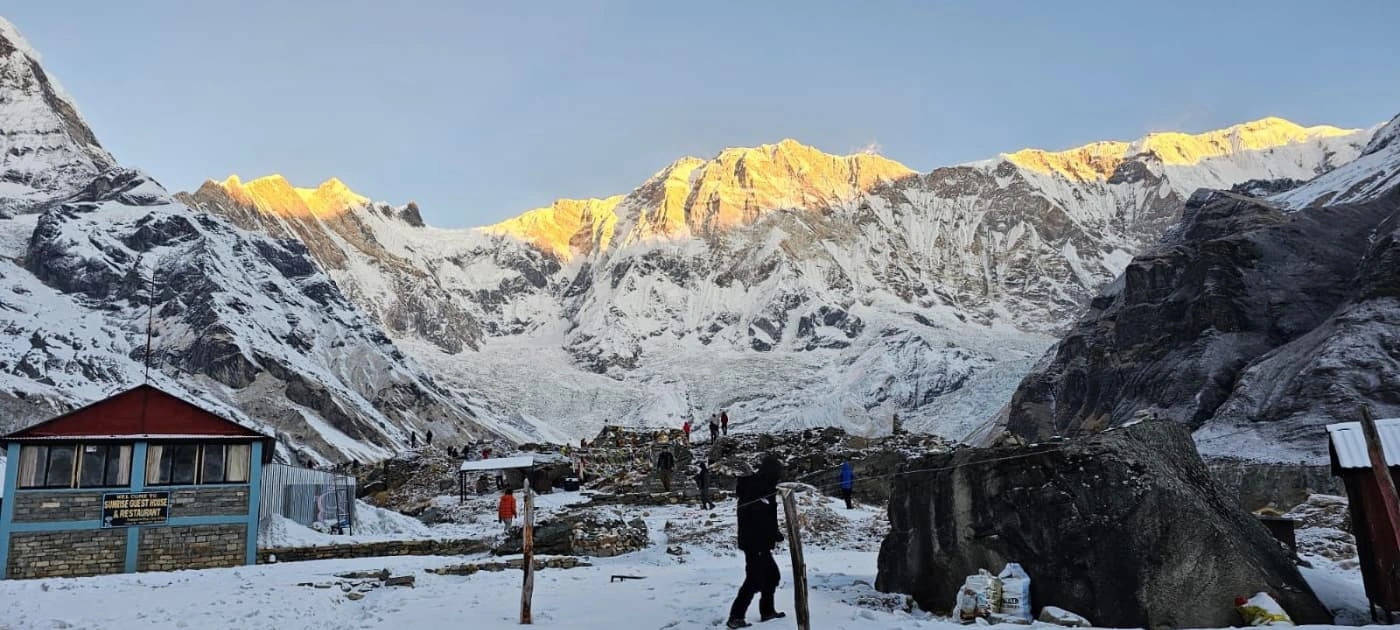
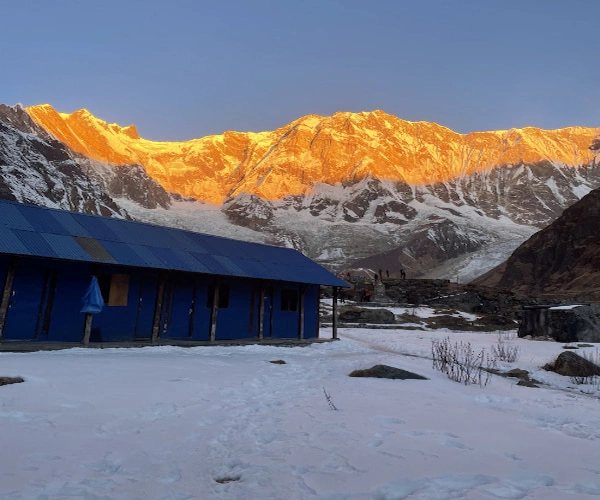
The Annapurna Base Camp location sits in a natural amphitheatre, surrounded by peaks from the Annapurna massif. You're literally inside the mountain sanctuary. The Annapurna Himal rises on all sides. It's stunning, but your body is working hard just to keep functioning normally.
Total altitude gain from Pokhara to ABC is roughly 3,300 meters if you measure from the lowest starting point. But you don't climb 3,300 meters in one go. You climb up, down, up again, down into valleys, then up higher. The cumulative elevation gain over multiple days is actually much more than 3,300 meters when you add all the ups and downs.
Nepal's elevation varies dramatically over short distances. You can walk for six hours and still end up at nearly the same altitude because you climbed a ridge and descended into a valley. This constant up and down is part of what makes trekking in the Annapurnas exhausting. Your legs do more work than the net elevation gain suggests.
The annapurna range nepal includes some of the world's tallest peaks. Annapurna I (8,091 meters) is the tenth-highest mountain on Earth. You won't climb that high, but seeing it from 4,130 meters gives you perspective on just how massive these mountains are. The mt annapurna massif dominates the view from base camp.
Understanding these elevation numbers matters because they directly affect your daily climbing schedule, rest days, and overall trek difficulty. The Annapurnas aren't just one mountain. The Annapurna Himal is an entire range, and the trek through it involves constant elevation changes that challenge even experienced trekkers.
Looking at the daily elevation gains helps you understand where the trek gets hard and where you can relax a bit. Every day is different. Some days you climb 800 meters. On other days, you actually descend or only climb 200 meters. Knowing this beforehand helps you pace yourself properly.
Here's a typical day-by-day elevation breakdown for the ABC trekking route:
Trek Day
Place
Elevation
Elevation Gain
Day 1
Nayapul to Tikhedhunga
1,540m
+440m
Day 2
Tikhedhunga to Ghorepani
2,860m
+1,320m
Day 3
Ghorepani to Tadapani
2,630m
-230m (descent)
Day 4
Tadapani to Chhomrong
2,170m
-460m (descent)
Day 5
Chhomrong to Bamboo
2,310m
+140m
Day 6
Bamboo to Deurali
3,230m
+920m
Day 7
Deurali to Annapurna Base Camp (via MBC)
4,130m
+900m
This table shows the standard ABC trek route with Poon Hill included. Your actual daily gains might differ slightly depending on which variation you choose. Some people skip Poon Hill and go directly from Nayapul to Ghandruk, which changes the elevation profile completely.
Day 2 stands out immediately. Climbing 1,320 meters in one day is tough. You're walking up stone staircases for hours. Your thighs burn. You stop frequently to catch your breath, and you're not even at serious altitude yet. This day tests your physical fitness more than your altitude adaptation.
The descent days (Day 3 and 4 in this example) give your body time to adjust. You're walking downhill, which sounds easy but actually beats up your knees. The benefit is that you sleep at lower elevations, which helps your body recover from the previous climbs. This is why good Annapurna trekking itineraries include these descents strategically.
Days 6 and 7 are where altitude becomes the main challenge. You're climbing 900+ meters each day, but you're doing it at elevations where oxygen is limited. What felt manageable at 2,000 meters now feels exhausting at 3,500 meters. Your pace slows to maybe half your normal walking speed. You breathe heavily even on gentle slopes.
The Machhapuchhre base camp at 3,700 meters is where you sleep before the final push to ABC. Some people wake up with headaches here. Others feel fine. There's no way to predict how your body will react until you're there. This is why you can't rush the Annapurna hiking schedule.
Trekking in Annapurna safely means respecting these elevation gains. If you try to climb too fast, you risk altitude sickness. The symptoms include headache, nausea, dizziness, and trouble sleeping. In severe cases, people develop fluid in their lungs or brain. This is life-threatening.
Walking pace matters more than you think. At high altitude, you should walk slowly enough that you can hold a conversation without gasping. If you're breathing too hard to talk, you're going too fast. Your body needs time to adjust to each new elevation before you climb higher.
The ABC trek demands patience. You can't power through altitude the way you might power through a long run at sea level. Your body has physiological limits that don't care about your fitness level or determination. The Annapurna Trail forces you to slow down.
Some trekkers add an extra acclimatization day at Deurali or spend two nights at Machhapuchhre Base Camp before going to ABC. This reduces the risk of altitude problems. Holy Kailash Tours builds these extra days into their itineraries for older trekkers or anyone concerned about altitude adjustment.
The descent from Annapurna Base Camp back to lower elevations is faster. You'll probably cover in 3 to 4 days what took you 7 days to climb. Your body feels better with more oxygen. The Annapurna hiking becomes easier, though your knees might complain about all the downhill pounding.
Annapurna Base Camp Trek Map: Route Explanation
Understanding the ABC trekking nepal map helps you visualise the route and plan your daily walking. The trail isn't a straight line. You follow rivers, cross suspension bridges, climb ridge lines, and traverse valleys. Each section has different characteristics.
The trek typically starts from Nayapul, about 1.5 hours by vehicle from Pokhara. You'll cross a river on a suspension bridge and begin walking along the Modi Khola river valley. The annapurna trail nepal follows this river system all the way up to the base camp.
The first few days take you through terraced farmland where local people grow rice, millet, and vegetables. You'll walk through Gurung and Magar villages. The houses are stone and wood construction with slate roofs. This is cultural Nepal, where mountain farming has been a way of life for centuries.
Ghorepani sits on a ridge at 2,860 meters. From here, you can climb to Poon Hill (3,210 meters) early in the morning for sunrise views. Most people include this in their itinerary. The view from Poon Hill shows the entire Annapurna and Dhaulagiri ranges. It's worth the 4 am wake-up call.
After Ghorepani, the trail descends into deep rhododendron forests. In March, April, and early May, these forests explode with red, pink, and white rhododendron blooms. The trail can be muddy. Tree roots cross the path. You'll cross streams on log bridges or stepping stones.
Chhomrong is the last permanent settlement with real amenities. After this, you're entering the Annapurna Sanctuary. The villages get smaller and more basic. The lodges become simpler. You're leaving the agricultural zone and entering the alpine zone.
From Chhomrong, you descend steeply on stone staircases to cross the Chhomrong Khola river. Then you climb back up the other side. This down-and-up section is infamous. Your legs remember it. But you're committed now. There's no easy way out except to keep walking.
Bamboo (2,310 meters) and Dovan (2,600 meters) are small clusters of lodges in thick forest. The trees start changing here. Bamboo becomes more common, mixed with oak and rhododendron. The temperature drops noticeably at night. You'll want your warm layers.
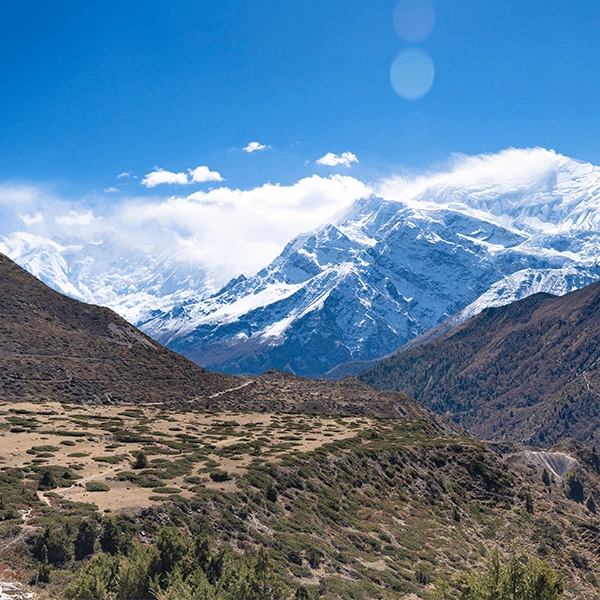
The Annapurna Valley narrows as you climb higher. The trail follows the Modi Khola closely. You can hear the river constantly. In the monsoon season (June to August), this section can be dangerous due to landslides and flooding. Most people trek here in October, November, March, April, or May.
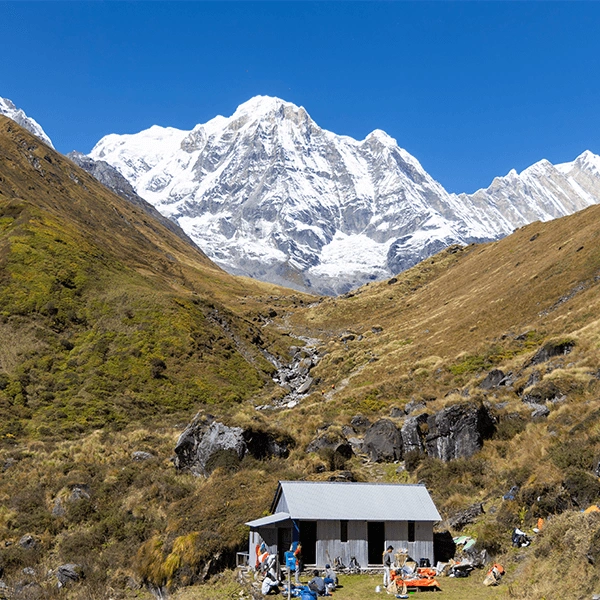
Himalaya Hotel (2,920 meters) and Deurali (3,230 meters) are the last stops before reaching Machhapuchhre Base Camp. The tree line ends around Deurali. Above this, you're in alpine terrain with low shrubs and grass. The landscape opens up. You start seeing more of the mountains.
The ABC trekking nepal route from Deurali to MBC (3,700 meters) takes about 3 hours. The path is rocky and exposed. On windy days, it's cold. You're walking through avalanche zones here. Early morning departures are safest because the snow is still frozen and stable.
Machhapuchhre Base Camp sits in a flat area with a few simple lodges. You can see Machhapuchhre (6,993 meters), also called Fishtail Mountain because of its distinctive double summit. This mountain is sacred and has never been climbed to the summit. The Nepali government banned climbing it decades ago.
The final section from MBC to Annapurna Base Camp (4,130 meters) takes 1.5 to 2 hours. You're walking through moraines and rocky terrain. The Annapurna Sanctuary opens up completely. Mountains surround you on all sides. This is what you came for.
The Annapurna Base Camp map shows this natural amphitheatre clearly. You're standing in a bowl of mountains. Annapurna I (8,091 meters), Annapurna South (7,219 meters), Hiunchuli (6,441 meters),
Gangapurna (7,455 meters), and Annapurna III (7,555 meters) form the walls around you. The scale is overwhelming.
The Annapurna road doesn't exist in this region. There's no vehicle access. Everything comes in on porter backs or yak trains. This keeps the area relatively pristine. The ABC Nepal trekking experience is about walking through wild mountain terrain, the way people have done for centuries.
Lodge locations along the trail are fixed. You can't camp wherever you want. The Annapurna Trail follows established paths through the conservation area. This protects the environment and ensures trekkers have safe places to sleep each night.
The Annapurna Base Camp trek distance isn't as simple as measuring point to point. You're walking maybe 60 to 70 kilometres total from the starting point to base camp. But the trail winds around, crosses valleys, and backtracks occasionally. The actual distance you walk is longer than it looks on a map.
More important than total distance is daily walking time. Most days involve 5 to 7 hours of walking. That doesn't sound like much, but remember you're climbing stairs, navigating rocky paths, and dealing with altitude. Seven hours of mountain trekking is very different from seven hours of flat walking.
The Pokhara to Annapurna Base Camp distance by road doesn't exist. You can't drive there. Vehicles take you to Nayapul or another trailhead. From there, your feet do the work. This is what makes the Annapurna Trail authentic. No shortcuts.
Day by day, walking hours usually break down like this:
Day 1 (Nayapul to Tikhedhunga): 4 to 5 hours. Mostly gradual uphill with some flat sections along the river. Good warm-up day.
Day 2 (Tikhedhunga to Ghorepani): 6 to 8 hours. This is brutal. Thousands of stone steps straight up. You climb 1,320 meters. Your legs will remember this day for the rest of the trek.
Day 3 (Ghorepani to Tadapani): 4 to 5 hours. Downhill and relatively flat through rhododendron forests. Your legs recover a bit.
Day 4 (Tadapani to Chhomrong): 5 to 6 hours. A mix of downhill and uphill. You descend to a river, then climb back up to Chhomrong village.
Day 5 (Chhomrong to Bamboo): 5 to 6 hours. Steep descent to the river, then gradual climb through the forest. The down-and-up out of Chhomrong is exhausting.
Day 6 (Bamboo to Deurali): 5 to 6 hours. Steady uphill through changing forest zones. You're gaining almost 1,000 meters, but it's gradual enough that you can maintain a rhythm.
Day 7 (Deurali to Annapurna Base Camp via MBC): 6 to 7 hours. Two separate climbs. First to MBC, rest, then to ABC. The altitude makes everything slower.
Day 8 (ABC to Bamboo): 6 to 7 hours. Long downhill. Feels easier because of more oxygen, but your knees work hard on the descents.
Day 9 (Bamboo to Chhomrong): 4 to 5 hours. More downhill, with one steep climb back up to Chhomrong village.
Day 10 (Chhomrong to Nayapul): Can be done in one very long day (9 to 10 hours), but most people split it into two days for a more comfortable pace.
These times assume average fitness and normal weather. In rain or snow, everything takes longer. If you're very fit and acclimatized well, you might walk faster. If you're struggling with altitude or pace, you'll take longer. Don't feel pressured to match someone else's speed.
The Annapurna region trek involves both uphill and downhill walking. The uphills are obvious work. The downhills are deceptive. They feel easier initially, but after hours of descending, your knees and quadriceps are screaming. Trekking poles help enormously with the downhill sections.
Some people complete the trek to the Nepal Annapurna route in 7 days, basically running it. These are usually trekkers who've done it before and know they acclimatize quickly. For first-timers, 10 to 12 days is better. The Annapurna trekking nepal experience improves when you're not rushing.
Holy Kailash Tours recommends 12-day itineraries for most clients. This includes buffer days in case of weather delays or if someone needs extra acclimatization time. Mountains don't follow schedules. Having extra days built in reduces stress.
The Annapurna hike distance seems manageable on paper. When you're actually there, breathing hard at 3,800 meters and wondering why your pack feels so heavy, the distance feels longer than the numbers suggest. This is normal. Everyone goes through it.
Altitude Gain Data During ABC Trek
Annapurna
Looking at the altitude data more carefully shows patterns that affect how your body adjusts. You don't climb steadily upward. The Annapurna high camp approach involves strategic elevation gains and planned rest points.
Your highest sleeping elevation before base camp is at Machhapuchhre Base Camp (3,700 meters). This is where your body does the critical adjustment. You sleep here, wake up, and see how you feel before attempting the final 430-meter climb to ABC.
The oxygen level at 4,130 meters is about 58% of what you'd have at sea level. Your body compensates by breathing faster and producing more red blood cells, but this takes time. Rushing the nepal hike Annapurna altitude progression is what gets people in trouble.
The daily altitude increase should follow the golden rule of altitude trekking: don't sleep more than 300 to 500 meters higher than the previous night once you're above 3,000 meters. The Annapurna Skyline Trek generally follows this, but some days push the limits.
From Bamboo (2,310 meters) to Deurali (3,230 meters) is a 920-meter gain in one day. This is acceptable because you're still below the critical 3,000-meter threshold where altitude sickness becomes more common. From Deurali to MBC (3,700 meters) is a 470-meter gain, right at the recommended limit.
The final push from MBC to ABC adds another 430 meters, but most people don't sleep at ABC. You climb up, spend 30 minutes to 2 hours enjoying the views and taking photos, then descend back to MBC or even Deurali to sleep. This "climb high, sleep low" strategy is standard in altitude mountaineering.
Some commercial ABC trek nepal itineraries have you sleep at ABC itself. This increases altitude sickness risk. If you do sleep there, be prepared for a rough night. The lodges at 4,130 meters are cold, basic, and the thin air makes sleep difficult. Many people wake up repeatedly or don't sleep at all.
AMS prevention on the ABC trek comes down to three things: slow ascent, stay hydrated, and listen to your body. Diamox (acetazolamide) helps some people. It's a medication that speeds up acclimatization. Discuss it with your doctor before the trek. Some trekkers swear by it. Others prefer to let their body adjust naturally.
Safe altitude progression means you might need to take rest days. If you wake up at Deurali with a headache that doesn't improve after breakfast and hydration, don't go higher than that day. Either rest at Deurali or descend to Bamboo. The mountain will still be there tomorrow.
The highest sleeping point on most ABC trekking routes is either MBC (3,700 meters) or ABC (4,130 meters), depending on your itinerary. After reaching base camp, you descend quickly. By the second day of descent, you're back below 3,000 meters, and your body feels dramatically better.
Altitude affects everyone differently. Age, fitness, genetics, and recent altitude exposure all play roles. A 60-year-old who lives in Denver might handle it better than a 25-year-old marathon runner from Amsterdam. You can't predict based on fitness alone.
Symptoms to watch for include headache, nausea, dizziness, extreme fatigue, and trouble sleeping. Mild symptoms are normal. Severe symptoms that don't improve with rest and hydration mean you need to descend. The Nepali guides and lodge owners see altitude problems constantly. They know when someone needs to go down.
The ABC trek altitude profile looks gentle on paper, but feels challenging in reality. Your lungs work harder. Your heart rate increases for any activity. Walking to the bathroom at night leaves you breathless. This is what 4,000+ meters does. It's not pleasant, but it's temporary.
Which Mountains Can You See from Annapurna Base Camp?
The Annapurna Base Camp view is what draws people here. You're standing in a natural amphitheatre surrounded by some of Earth's highest peaks. The sunrise and sunset lighting transform these mountains into something almost unreal.
Annapurna I (8,091 meters) dominates the northern skyline. This is the tenth-highest mountain in the world and one of the most dangerous to climb. The summit has one of the highest fatality rates of any 8,000-meter peak. You're looking at 4,000 vertical meters of ice and rock from your position at base camp.
Annapurna South (7,219 meters) rises to the right of Annapurna I. The massive south face catches morning light first. Photographers wake up at 5 am to catch this moment. The mountain glows orange and pink before the sun reaches base camp itself.
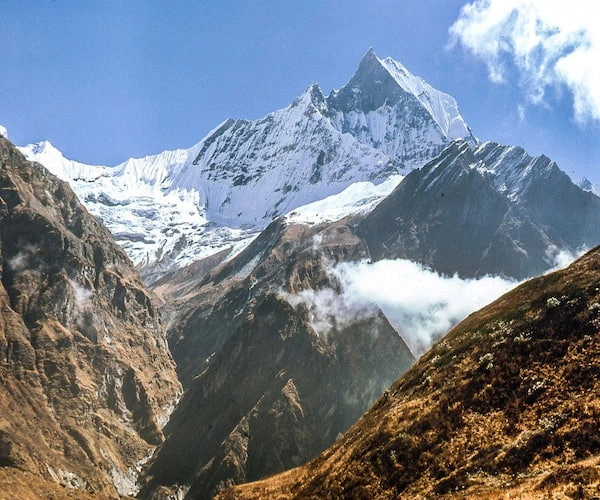
Machhapuchhre (6,993 meters), or Fishtail Mountain, stands to the east. Its distinctive double summit really does look like a fish tail. This is probably the most photographed mountain in the Annapurna Himalaya. The mountain is sacred to local people. No one has ever climbed to its summit.
Hiunchuli (6,441 meters) forms part of the western wall. It's overshadowed by its bigger neighbours, but still impressive when you see it towering 2,300 meters above you. The Annapurna massif includes dozens of peaks, and base camp gives you views of most of them.
Gangapurna (7,455 meters) sits to the northwest. A large glacier flows down from its summit. This is the glacier that feeds into the Modi Khola river, which you followed on your way up. Watching chunks of ice calve off the glacier and tumble down is mesmerizing and slightly terrifying.
Annapurna III (7,555 meters) rises to the north. It's technically higher than Machhapuchhre but appears smaller from base camp due to perspective. The annapurna one massif is actually multiple peaks all connected by high ridges.
The annapurna range nepal is part of the greater Himalayan range that stretches across Nepal, Bhutan, India, and Tibet. From base camp, you're seeing just one section of this range, but it's enough to understand why people spend their lives climbing in these mountains.
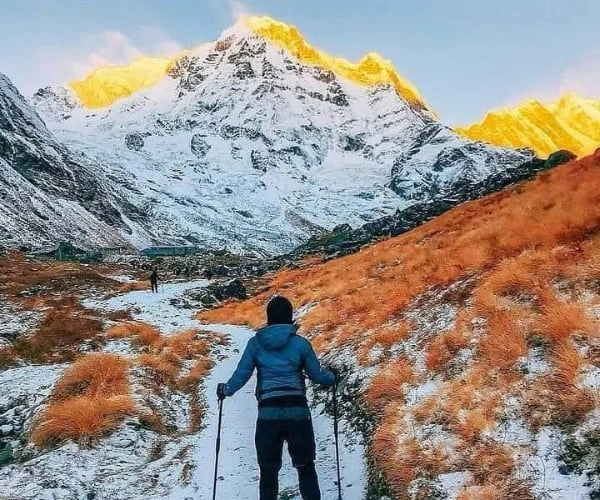
Sunrise at Annapurna Base Camp happens when the sun crests the eastern ridges around 6 am (timing varies by season). The first light hits Annapurna South, turning it gold. Then the light spreads to the other peaks. The entire amphitheater seems to glow. This lasts maybe 20 minutes before becoming regular daylight.
Sunset happens in reverse. The last light catches the highest summits while base camp drops into shadow. The temperature plunges as soon as the sun disappears. You'll want your down jacket immediately.
Clear weather is essential for good views. Clouds, fog, and snow can hide the mountains completely. This is why October, November, March, and April are preferred months. The post-monsoon and pre-monsoon periods offer the most reliable clear weather.
Photography at base camp requires patience. The mt annapurna peaks create their own weather. Clouds form and dissipate constantly. You might have perfect views at sunrise, clouds by midmorning, then clearing again by afternoon. Bring extra batteries because cold weather drains them fast.
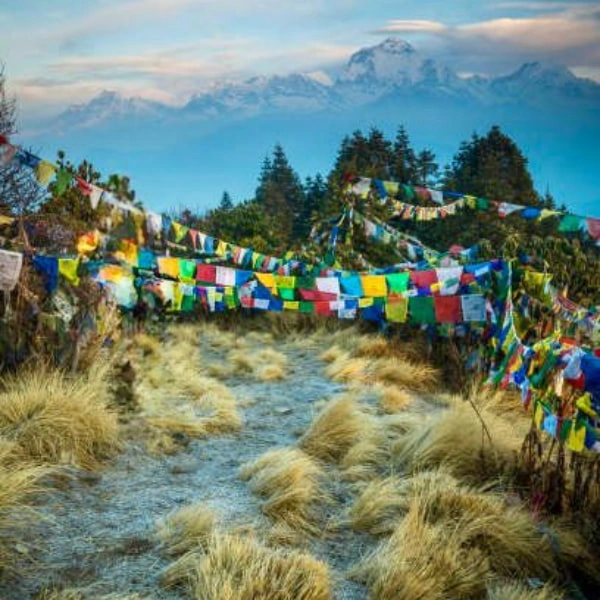
The 360-degree panorama from Annapurna Base Camp includes more than just the main peaks. You see prayer flags strung across base camp, the simple lodges where trekkers gather, and the rocky moraines that mark the edge of ancient glaciers. The landscape is harsh and beautiful.
Some people cry when they see this view. Others just stare silently. After days of walking through forests where you only saw glimpses of peaks through trees, suddenly standing in this mountain cathedral overwhelms you. The scale is beyond what photographs can capture.
The Annapurna Base Camp height creates the primary challenge. Everything else, the distance, the terrain, the stairs, becomes harder because of reduced oxygen. If this trek were at sea level with the same distance and elevation gain, most reasonably fit people would find it moderate. At altitude, it becomes challenging.
Steep stone staircases are the second major difficulty. The section from Tikhedhunga to Ghorepani includes thousands of stairs carved into the hillside. Your quadriceps burn. Your knees complain. By the time you reach the top, you understand why people call this the hardest day of the trek.
The Annapurna trekking trail is well-maintained, but that doesn't mean it's easy. "Well-maintained" in the Himalayas means the worst landslides are cleared and bridges are rebuilt when they wash out. The trail is still rocky, rooty, and muddy in places, and requires constant attention to foot placement.
Long walking hours add up over multiple days. Six hours might feel manageable on day one. By day six, when you've already walked six hours every day, your body is tired. Cumulative fatigue is real. This is why rest days help, even if you feel fine on any given day.
The weather changes rapidly in the mountains. Morning might be clear and calm. By afternoon, clouds roll in, the temperature drops, and rain or snow starts falling. You need to be prepared for everything from hot sunny valleys to freezing snow at higher elevations. The Annapurna hiking conditions vary by altitude and time of day.
Physical endurance matters more than peak fitness. The trek doesn't require explosive power or speed. It requires the ability to keep walking, day after day, while your body adjusts to altitude and recovers each night in basic lodges.
For beginners, the Annapurna Mountain trek is achievable with proper preparation. You don't need technical climbing skills. You don't need to be a super athlete. You need reasonable fitness, patience with altitude adjustment, and mental toughness to handle discomfort.
Families can complete this trek if children are old enough (usually 12+) and everyone takes their time. The Annapurna trekking Nepal route has good lodge infrastructure, which makes it more accessible than wilder treks. But don't underestimate the challenge. This isn't a casual hike.
Solo trekkers do this trek regularly. You'll meet other trekkers along the way. The lodges are social places where people gather in dining rooms each evening. You're never truly alone unless you want to be. That said, having a guide provides security and local knowledge.
Senior travelers complete this trek successfully if they're in good health and allow enough time for acclimatization. Holy Kailash Tours has guided people in their 60s and even 70s to Annapurna Base Camp. The key is realistic pacing and willingness to take extra rest days when needed.
High altitude concerns include headaches, nausea, insomnia, and in severe cases, HAPE (high altitude pulmonary edema) or HACE (high altitude cerebral edema). These life-threatening conditions require immediate descent. Guides and lodge owners watch for symptoms, but you need to communicate honestly about how you feel.
The trekking in the Annapurna region tests you mentally as much as physically. When you're tired, cold, your head hurts a bit, and you still have two more hours of uphill walking ahead, you need mental strength to keep going. This is where the trek becomes personal. You're not competing against other trekkers. You're dealing with your own limits.
How to Prepare for the Annapurna Base Camp Trek?
EBC Trek
Preparation separates successful treks from difficult ones. You can't fake fitness at altitude. Starting a serious training program three to four months before departure gives your body time to adapt.
Cardio Training
Your cardiovascular system needs to be efficient. Running, cycling, swimming, or stair climbing builds the endurance you'll need. Aim for 45 to 60 minutes of cardio exercise, four to five times per week. Include some long sessions (2+ hours) to simulate trek days.
Stair training specifically helps. Find a tall building or outdoor stairs. Climb for 30 to 45 minutes carrying a weighted pack. This mimics the endless stone staircases you'll face on the Nepal Annapurna trek. Your legs will thank you later.
Hiking with a pack on weekends builds both fitness and confidence. Start with a light pack and short hikes. Gradually increase weight and distance. By departure, you should be comfortable carrying 8 to 10 kg for 4 to 6 hours.
Trekking Gear
Good boots are non-negotiable. Break them in thoroughly before the trek. Blisters at 3,500 meters are miserable. Your boots should be waterproof, ankle-high, and comfortable with thick socks.
The layering system includes base layers (moisture-wicking), insulating layers (fleece or down), and a waterproof outer shell. Temperatures range from 25°C in lower valleys to -10°C at base camp. You need to adjust layers constantly.
Trekking poles reduce stress on knees during descents. They also help with balance on rocky terrain and river crossings. Get adjustable poles and learn to use them properly before departure.
A sleeping bag rated for -10°C to -15°C is necessary if you sleep at Annapurna Base Camp. Lodges provide blankets, but they're often inadequate at high altitude. Rental sleeping bags are available in Pokhara if you don't want to buy one.
Altitude Preparation
You can't train for altitude at sea level, but you can improve your general fitness, which helps your body cope better. Some trekkers use altitude simulation masks or training facilities, but evidence for their effectiveness is mixed.
The best altitude preparation is gradual ascent on the trek itself. This is why good itineraries include rest days and avoid climbing more than 500 meters per day above 3,000 meters.
Trekking Insurance
Get insurance that covers high altitude trekking up to 6,000 meters and includes helicopter evacuation. Read the fine print. Some policies exclude trekking above certain altitudes or require guides. Emergency evacuation from Annapurna Base Camp by helicopter costs $3,000 to $5,000 USD. Insurance is not optional.
Packing List Essentials
Pack light but don't skip essentials. Your daypack should weigh 8 to 10 kg maximum. Porters typically carry your main duffle bag, but you carry your own daypack with water, snacks, rain gear, warm layer, camera, and documents.
Clothing: 3 to 4 base layer sets, 2 trekking pants (one convertible), thermal underwear, fleece jacket, down jacket, rain jacket and pants, 4 to 5 pairs of socks, warm hat, sun hat, gloves.
Toiletries: sunscreen (high SPF), lip balm, hand sanitiser, toilet paper, personal medications, basic first aid kit, water purification tablets.
Electronics: camera, extra batteries, power bank, headlamp, phone. Electricity is available at most lodges but it can be unreliable.
Documents: passport, permits (ACAP and TIMS), travel insurance details, cash (lodges prefer Nepali rupees).
Mental Preparation
Research what to expect. Read blogs, watch videos, talk to people who've done the Annapurna trek nepal. Understanding the reality helps you prepare mentally for challenges.
Accept that discomfort is part of the experience. The Annapurna trekking Nepal route doesn't offer luxury. Lodges are basic. Showers might be cold or unavailable. Toilets are often squat-style. Food becomes repetitive. This is authentic mountain trekking.
Set realistic expectations about your daily condition. You probably won't feel great every day. Some mornings you'll wake up tired. Some afternoons, you'll wonder why you thought this was a good idea. Then you'll reach a viewpoint, see the mountains, and remember exactly why you came.
Holy Kailash Tours helps trekkers prepare before departure with detailed packing lists, fitness recommendations, and answers to questions about altitude, food, lodges, and what to expect each day. Their guides have done the Nepal trek to Annapurna dozens or hundreds of times. They know what preparation actually matters versus what's just anxiety.
Training, proper gear, insurance, and mental preparation combine to give you the best chance of reaching Annapurna Base Camp and enjoying the experience instead of just surviving it.
Route Variations Shown on Annapurna Base Camp Trek Map
The Annapurna Base Camp trek guide options give you flexibility based on time available and what you want to see. The standard route is popular for good reasons, but variations offer different experiences.
Annapurna Base Camp Trek Map via Poon Hill
The Poon Hill extension adds 2 to 3 days to your trek but includes some of the best sunrise views in Nepal. You start from Nayapul, climb to Tikhedhunga, then up to Ghorepani (2,860 meters).
Early morning, you climb to Poon Hill (3,210 meters) for sunrise. The viewpoint offers panoramic views of Dhaulagiri, Annapurna, and Machhapuchhre before most of these peaks are visible from the main ABC trail. Photography here is spectacular on clear mornings.
From Poon Hill, you descend to Ghorepani for breakfast, then continue toward Tadapani and eventually join the main Annapurna Circuit route to ABC. This variation is popular because Poon Hill's views are almost guaranteed, while ABC weather can be unpredictable.
The Annapurna Circuit trekking connection is mostly historical. The full Annapurna Circuit is a different trek that circumnavigates the entire massif. The ABC trek is a shorter side trip into the sanctuary. Some trekkers combine both circuits, but that requires 18 to 21 days.
Direct Annapurna Base Camp Trek Route Map
The fastest route skips Ghorepani Poon Hill completely. From Nayapul, you head directly to Ghandruk (1,940 meters), a large Gurung village with excellent mountain views. This saves 2 days compared to the Poon Hill route.
From Ghandruk, you continue to Chhomrong, then follow the standard ABC trekking route through Bamboo, Deurali, MBC, and ABC. This is the most direct path to base camp. The Annapurna Trail is well-marked and heavily trafficked.
Most commercial treks use this route. It's efficient, reliable, and includes all the key sections of the Annapurna Sanctuary without extra days. For people with limited vacation time, this is the best option.
Short Annapurna Base Camp Trek Route Map
The Annapurna Base Camp trek 6 days, is the absolute minimum. This is only realistic if you're very fit, acclimatize quickly, and accept some altitude risk. The itinerary usually looks like:
Day 1: Nayapul to Chhomrong (2,170m)
Day 2: Chhomrong to Deurali (3,230m)
Day 3: Deurali to ABC (4,130m), return to MBC
Day 4: MBC to Bamboo
Day 5: Bamboo to Ghorepani
Day 6: Ghorepani to Nayapul
This schedule rushes altitude gain. Day 2 gains over 1,000 meters. Day 3 pushes to 4,130 meters after only two days of trekking. This increases the risk of altitude sickness significantly. Most trekking companies won't run this itinerary because of safety concerns.
If you have 7 to 8 days, a more reasonable short trek is possible with one extra acclimatization day built in. The ABC hiking experience improves dramatically when you're not racing against the clock.
Return Route Options from Annapurna Base Camp
Most people return the same way they came. This is practical because you know the trail, you know which lodges are good, and you can walk faster downhill than you climbed up.
An alternative descent route goes through Jhinu Danda, where natural hot springs offer a welcome bath after days of trekking. From Annapurna Base Camp, you descend to Bamboo or Chhomrong, then branch off to Jhinu. The hot springs are a 20-minute walk downhill from Jhinu village.
Some trekkers continue from Jhinu to different villages (Landruk, Dhampus) before finishing in Pokhara. This gives you new scenery on the way down instead of retracing your steps completely.
The Annapurna Circle concept isn't really applicable to the ABC trek. The full Annapurna Circuit trekis the route that crosses the Thorong La Pass at 5,416 meters. That's a completely different trek requiring 14 to 18 days. Don't confuse the two.
The Annapurna Circuit Pass(Thorong La) is one of Nepal's classic trekking passes, but it's not part of the ABC trek. Some people connect the two treks for an epic 20+ day adventure, but that's specialized planning beyond what most trekkers attempt.
The weather in the annapurna circuit october is generally excellent, with clear skies and stable conditions. The same applies to ABC trekking in October. This is peak season for good reason. Post-monsoon weather offers the best combination of clear views, moderate temperatures, and stable trails.
Final Thought
ABC Trek
Understanding elevation gain transforms the Annapurna Base Camp trekfrom a mystery into something manageable. When you know you'll climb from 800 meters in Pokhara to 4,130 meters at base camp over 7 to 10 days, you can prepare properly. The numbers stop being abstract and become real daily targets.
The Annapurna Base Camp elevation challenges everyone, but it's not impossible. Thousands of regular people complete this trek every year. They're not mountaineers or super athletes. They're just people who prepared adequately, paced themselves properly, and respected the altitude.
Proper planning matters more than fitness alone. A well-designed itinerary with gradual elevation gains, rest days when needed, and flexibility for weather or personal conditions makes the difference between reaching base camp and turning back disappointed.
The Annapurna trek rewards you with some of Nepal's most spectacular mountain scenery. Standing at 4,130 meters surrounded by 7,000 and 8,000-meter peaks creates memories that last forever. The physical challenge makes those views feel earned in a way that photos from a helicopter never could.
Pacing yourself through the Annapurna Nepal Sanctuary means listening to your body. Some days you'll feel strong and want to push harder. Other days, you'll feel tired and need to slow down. Both are normal. The mountain doesn't care about your schedule.
Holy Kailash Tours designs itineraries that balance efficiency with safety. They've guided hundreds of trekkers through the Annapurna Sanctuary, learning what actually works versus what looks good on paper. Their experience helps you avoid common mistakes and make the most of your time in the mountains.
The Annapurna massif has drawn people into these mountains for decades. Modern trekking infrastructure makes it accessible, but the fundamental challenge remains the same. You still have to walk every step. You still have to adapt to altitude. You still have to push through discomfort to reach base camp.
Preparation, patience, and persistence get you there. Start training months before departure. Get the right gear. Build in extra days for weather and acclimatization. Listen to your guide and your body. Take photos, but also put the camera down sometimes and just experience being in one of Earth's most dramatic mountain amphitheaters.
The elevation gain of the Annapurna Base Camp trek is significant, but completely achievable with the right approach. Your legs will be tired. Your lungs will work harder than usual. You might wake up with an altitude headache. But when you stand at base camp watching sunrise light up Annapurna I, all the effort makes sense.
What is the elevation gain of the Annapurna Base Camp Trek?
The total elevation gain from your starting point to Annapurna Base Camp depends on where you begin. Most treks start from areas around 1,000 to 1,100 meters and climb to 4,130 meters at base camp. This represents about 3,000 to 3,200 meters of elevation gain. However, the trail doesn't climb straight up. You descend into valleys and climb back up multiple times, so your cumulative elevation gain over the entire trek is actually closer to 4,500 to 5,000 meters when you add all the ups and downs together. The key number to remember is 4,130 meters for the ABC elevation itself. This is where reduced oxygen starts affecting everyone, regardless of fitness level.
What is the Annapurna Base Camp height?
Annapurna Base Camp sits at 4,130 meters (13,550 feet) above sea level. This elevation places you well into the high altitude category, where oxygen levels are about 58% of what you'd have at sea level. The Annapurna Base Camp height is significant but still below the threshold where supplemental oxygen becomes necessary. Your body can adapt to this elevation if you ascend gradually over multiple days. The height of Annapurna I summit above you is 8,091 meters, meaning you're viewing almost 4,000 vertical meters of mountain from base camp. This creates the spectacular scenery that draws people to this trek.
How difficult is the Annapurna Base Camp Trek?
The Annapurna Base Camp trek rates as moderate to challenging difficulty. The trail itself isn't technically difficult. You're not climbing rocks or crossing glaciers. The difficulty comes from three factors: daily walking time (5 to 7 hours), steep stone staircases (particularly the Tikhedhunga to Ghorepani section), and altitude. If this trek existed at sea level, it would be moderate. The elevation is what makes it challenging. Most people with reasonable fitness can complete it if they allow enough days for acclimatization. The ABC trek is more accessible than Everest Base Camp in terms of shorter duration and generally better weather, but the altitude still demands respect. Beginners can do this trek, but you need proper preparation and realistic expectations about the physical demands.
What mountains can be seen from ABC?
From Annapurna Base Camp, you see an incredible panorama of major Himalayan peaks. Annapurna I (8,091 meters), the tenth-highest mountain in the world, dominates the northern view. Annapurna South (7,219 meters) catches the first morning light. Machhapuchhre or Fishtail Mountain (6,993 meters) rises to the east with its distinctive double summit. Other visible peaks include Hiunchuli (6,441 meters), Gangapurna (7,455 meters), and Annapurna III (7,555 meters). You're standing in a natural amphitheater with mountains forming a semicircle around you. The scale is overwhelming when you realize these peaks rise 3,000 to 4,000 meters above where you're standing. Sunrise and sunset create spectacular lighting on these mountains. Clear weather is essential for good views, which is why October, November, March, and April are the preferred months.
What is the distance from Pokhara to Annapurna Base Camp?
The straight-line distance from Pokhara to Annapurna Base Camp is about 40 kilometres. However, the actual trekking distance is much longer because the trail winds through valleys, follows rivers, crosses ridges, and climbs around obstacles. You'll walk approximately 60 to 70 kilometres from your trailhead (usually Nayapul, about 1.5 hours from Pokhara) to base camp. The return journey covers a similar distance. Total trekking distance for the round trip is roughly 120 to 140 kilometers depending on your specific route. Distance alone doesn't capture the challenge. The constant elevation changes, rock stairs, and altitude make this trek harder than the distance suggests. Walking 10 kilometers at sea level takes maybe 2 hours. Walking 10 kilometers in the Himalayas with elevation gain can take 5 to 6 hours.
Is Annapurna Base Camp harder than Everest Base Camp?
Annapurna Base Camp and Everest Base Camp are comparable in difficulty but with different challenges. ABC reaches 4,130 meters versus EBC Trek at 5,364 meters, so the EBC trek goes significantly higher. This makes altitude a bigger factor on the Everest trek. However, ABC has steeper sections with thousands of stone stairs, particularly the climb to Ghorepani poon hill. The stone staircases on ABC can be more physically demanding on your legs than the gradual approach to EBC. ABC takes 7 to 12 days, while the EBC trek requires 12 to 14 days. The shorter duration means ABC has faster altitude gain per day, which can be harder for acclimatization. Both treks are accessible to fit people without mountaineering experience. ABC is often considered a better introduction to Himalayan trekking because it's shorter, less expensive, and can be done in more seasons with better weather windows.
How many days does ABC Trek take?
The Annapurna Base Camp trek typically takes 7 to 12 days. The most common itinerary is 9 to 10 days, which allows proper acclimatization and includes some buffer time for weather. A rushed 6 to 7-day trek is possible for very fit trekkers but increases altitude sickness risk. A leisurely 11 to 12 day itinerary includes rest days, the Poon Hill sunrise extension, and more comfortable daily walking hours. Your available time, fitness level, and previous altitude experience all factor into choosing the right duration. Holy Kailash Tours recommends 10 to 12 days for first-time trekkers to the region. This provides adequate acclimatization time, doesn't require impossibly long daily walks, and includes contingency for weather delays or personal rest days. You can always walk faster if you feel great, but you can't make up for rushing if you develop altitude problems.
What is the best season for the Annapurna trek?
The best seasons for the Annapurna Base Camp trekking are October to November (autumn) and March to May (spring). October and November offer the clearest skies, stable weather, and comfortable temperatures. The post-monsoon air is crisp, and mountain views are spectacular. Spring brings rhododendron blooms (especially April) and warmer temperatures, though afternoon clouds are more common than in autumn. December to February is winter. It's possible to trek, but the snow at higher elevations and cold temperatures (particularly at night) make it more challenging. June to September is monsoon season. Heavy rain, leeches in lower forests, clouds obscuring views, and landslide risk make this the worst time for the ABC trek. That said, monsoon trekking is possible, and you'll see far fewer tourists. July and August have brief, clear periods where determined trekkers get lucky with views.
Is altitude sickness common in the ABC Trek?
Altitude sickness affects about 25% to 30% of trekkers on the Annapurna Base Camp route, usually with mild symptoms like headache, slight nausea, or insomnia. Serious altitude sickness (HAPE or HACE) is rare if you follow proper acclimatization schedules. The risk increases if you climb too fast, ignore symptoms, or have previous history of altitude problems. Most altitude issues on the ABC trek happen between 3,500 and 4,130 meters. Sleeping at Machhapuchhre Base Camp (3,700 meters) before pushing to ABC helps prevent problems. Symptoms usually improve quickly with descent. Diamox (acetazolamide) can help with acclimatization if prescribed by your doctor. The best prevention is gradual ascent, staying hydrated (3 to 4 litres of water daily), and being honest about symptoms. Your guide or lodge staff have seen hundreds of altitude cases. They know when symptoms are a normal adjustment versus when you need to descend.
Can beginners do the Annapurna Base Camp Trek?
Yes, beginners can complete the Annapurna Base Camp trek with proper preparation. You don't need previous trekking experience or technical climbing skills. The trail is well-established, lodges provide accommodation and food, and guides offer support and local knowledge. However, "beginner" doesn't mean "easy." You need reasonable fitness, the ability to walk 5 to 7 hours daily for consecutive days, and mental toughness to handle discomfort. Start a fitness program 3 to 4 months before departure. Include cardio exercise, stair climbing, and weekend hikes with a weighted pack. Consider hiring a guide, especially for your first Himalayan trek. Guides handle logistics, choose appropriate daily stopping points, recognize altitude problems early, and provide cultural insights. Holy Kailash Tours guides are experienced with first-time trekkers and know how to pace groups for successful completion. Many beginners discover they love mountain trekking and return for more challenging routes. ABC is an excellent introduction to Himalayan trekking because it offers spectacular mountain scenery without extreme technical difficulty or excessive duration. Just don't underestimate the challenge. It will test you, but that's part of what makes reaching base camp feel like a real achievement.
How cold is it at Annapurna Base Camp?
The temperature at Annapurna Base Camp varies dramatically by season and time of day. In peak trekking seasons (October, November, March, April), daytime temperatures at ABC range from 0°C to 10°C when sunny. Nighttime temperatures drop to -5°C to -15°C. In winter (December to February), expect -10°C to -20°C at night and barely above freezing during the day. Spring (March to May) warms slightly with daytime temperatures reaching 5°C to 15°C, but nights still drop below freezing. The temperature feels colder than the actual reading because of the wind and altitude. At 4,130 meters, there's less atmosphere to retain heat. When the sun disappears behind the mountains (around 4 pm), the temperature plunges within 30 minutes. You'll need your down jacket immediately. Lodges at ABC have no heating in most rooms. Common dining areas might have a small stove, but don't expect warmth. Your sleeping bag needs to be rated for -10°C to -15°C minimum. Many trekkers sleep in all their clothes plus a sleeping bag because nights are genuinely cold.
Do you need a guide for the ABC Trek?
You don't legally need a guide for the Annapurna Base Camp trek. The trail is well-marked, lodges are frequent, and you'll meet other trekkers daily. Many people trek independently without guides. However, hiring a guide offers significant benefits, especially for first-timers. Guides know the trail intimately, can adjust daily plans based on your condition and weather, recognize altitude sickness symptoms early, handle emergencies effectively, and provide cultural insights about villages and people you meet. They also support the local economy. The cost is reasonable compared to international standards. If you trek independently, you still need permits (ACAP and TIMS), which you can obtain in Kathmandu or Pokhara. You need to be comfortable navigating the trail, choosing appropriate lodges, managing your own pace for altitude acclimatization, and handling any problems that arise. Holy Kailash Tours offers guided treks with experienced staff who handle all logistics, leaving you free to enjoy the trek rather than worrying about details.
What should I pack for the Annapurna Base Camp Trek?
Essential packing for ABC trek includes: quality trekking boots (broken in), 3 to 4 sets of moisture-wicking base layers, 2 pairs of trekking pants, thermal underwear for high altitude, fleece jacket, down jacket (essential at ABC), waterproof rain jacket and pants, 4 to 5 pairs of trekking socks, warm hat, sun hat, gloves, sleeping bag rated for -10°C to -15°C (can rent in Pokhara), trekking poles (highly recommended for knee protection), daypack (comfortable for 8 to 10 kg), water bottles or hydration system (2 liter capacity minimum), water purification tablets, headlamp with extra batteries, sunscreen (high SPF), sunglasses, basic first aid kit including blister treatment and pain medication, personal medications, toilet paper, hand sanitizer, power bank for electronics (charging at lodges is possible but sometimes unreliable), passport and permits, and cash in Nepali rupees. Don't overpack. Porters will carry your main duffel bag, but keep it under 12 to 15 kg. Your daypack holds items you need during the day: water, snacks, camera, warm layer, rain gear, and sunscreen. Lodges provide meals and blankets, so you don't need cooking equipment or a tent. Pack layers for temperature management from hot valleys (25°C) to freezing base camp (-10°C).
Is there mobile network coverage on ABC Trek?
Mobile network coverage on the Annapurna Base Camp trek is decent up to about 3,000 meters, then becomes spotty higher up. Ncell and Nepal Telecom (NTC) both have coverage in major villages like Ghandruk, Chhomrong, and Bamboo. You can make calls, send messages, and sometimes use data (though it's slow). Above Bamboo, coverage becomes unreliable. Some spots have a signal, others don't. At Annapurna Base Camp itself, coverage is minimal to non-existent. Some lodges offer WiFi (for a fee, usually 300 to 500 rupees per hour or per day), but the connection is often slow and cuts out frequently. Don't expect to video call home from 4,000 meters. The infrastructure exists, but reliability decreases with altitude. If staying connected is important, buy a local SIM card in Kathmandu or Pokhara before the trek. Ncell generally has better coverage in the Annapurna region. Bring a power bank because charging opportunities become less reliable at higher elevations, and cold temperatures drain batteries faster.
How much does the Annapurna Base Camp Trek cost?
The cost of the Annapurna Base Camp trek varies significantly based on whether you go independently or with a guide/agency. Independent trekking costs roughly $25 to $35 USD per day for accommodation and food. Teahouse lodges charge minimal fees (sometimes free) with the expectation you'll buy meals there. Meals cost 500 to 1,000 rupees ($4 to $8 USD) each, and prices increase with altitude. Add permits (ACAP 3,000 rupees and TIMS 2,000 rupees for independent trekkers), transportation from Kathmandu to Pokhara and Pokhara to the trailhead (about $30 total), and contingency for extras like hot showers, WiFi, and snacks. The total independent trekking cost for 10 days runs approximately $500 to $700 USD. Guided treks through agencies like Holy Kailash Tours cost $800 to $1,200 USD, depending on group size, accommodation standard, and services included. This covers guide and porter wages, permits, accommodation, meals, and transportation. You still need to budget for personal expenses, tips, and travel insurance. Higher-end packages with better lodges and smaller groups cost more. The investment in a guide is worthwhile for many trekkers because it removes logistical stress and provides local expertise and safety oversight