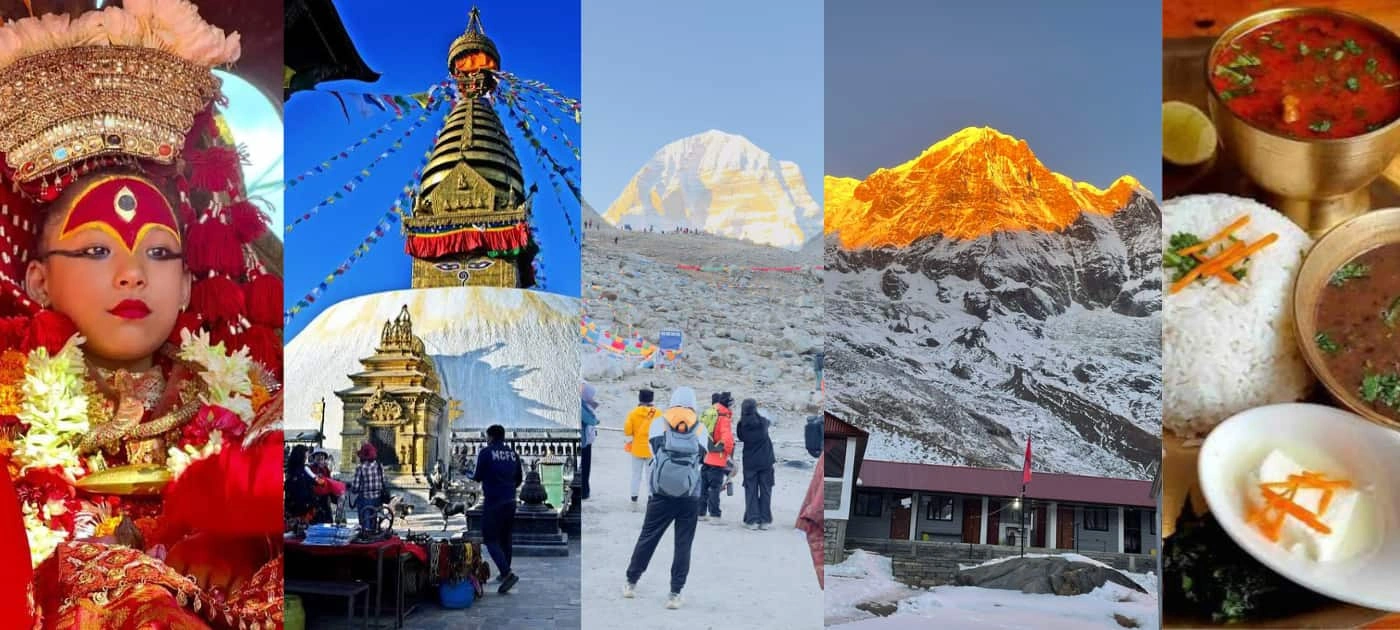
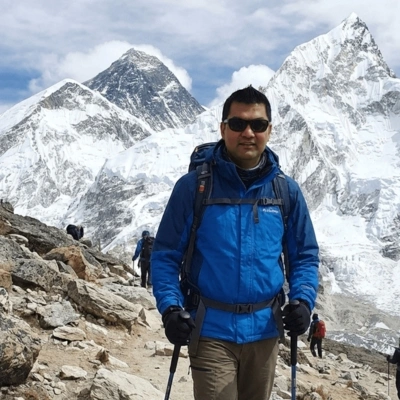
Why Visit Nepal?
The honest answer: there's nowhere else like it.
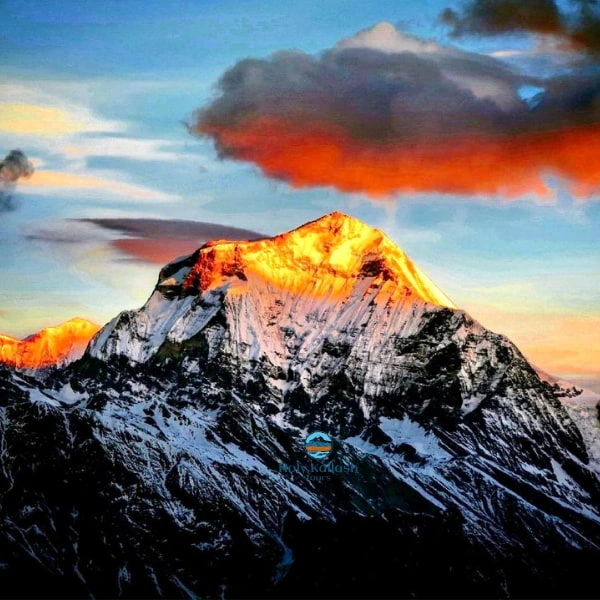
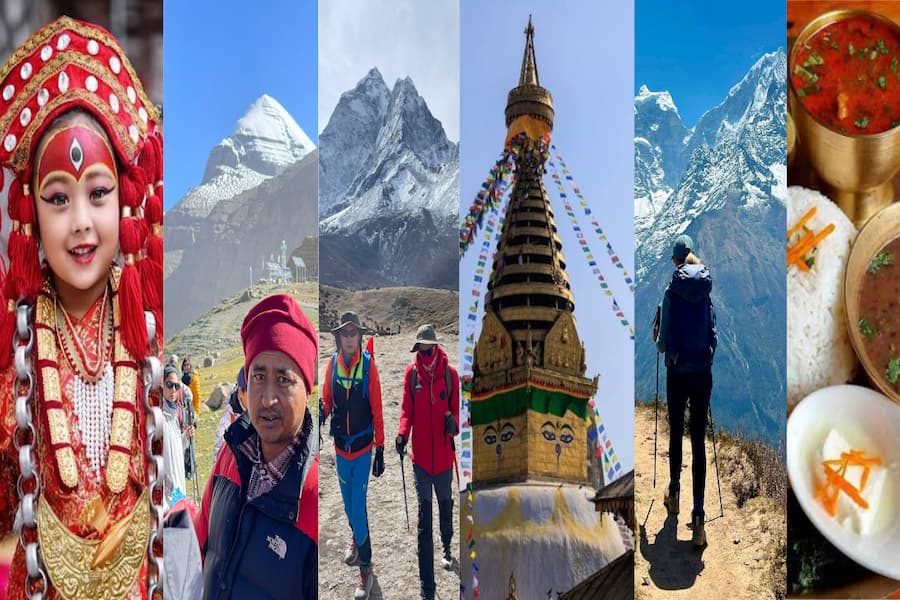
Eight of the world's fourteen highest mountains are here. The birthplace of the Buddha is here. You can walk from subtropical lowlands to alpine terrain in less than a week. And the culture, Hinduism and Buddhism woven together across centuries, is something you feel more than you explain.
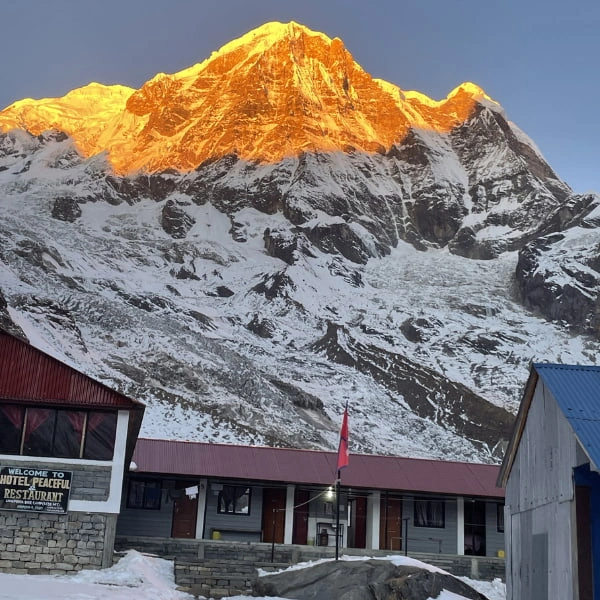
Nepal is also one of the most affordable places in Asia for what you get. A trekking permit, a teahouse bed, a bowl of dal bhat, and a view of Annapurna at sunrise. The cost is modest. The experience is not.
Nepal tourism has grown steadily over the past decade, and for good reason. Whether you're looking for Nepal adventure travel, a Nepal family tour, or a quiet Nepal cultural tour, the country delivers on all of it.
Best Time to Visit Nepal
The short version: October to November and March to April.
October to November (autumn): This is peak season, and it earns that label. The monsoon has cleared, the air is clean, and mountain views are at their best. Temperatures are comfortable for trekking. Trails are busy, so book accommodation and permits early.
March to April (spring): Second best. Rhododendrons bloom across the hills, turning entire hillsides red and pink. Slightly warmer than autumn at lower elevations. Everest expeditions typically begin in April, which adds energy to the Khumbu region.
December to February (winter): Cold at altitude, but lower elevations like Pokhara and Kathmandu stay mild. Fewer crowds, lower prices, cleaner skies. Some high passes are closed. Works well for cultural tours and Chitwan.
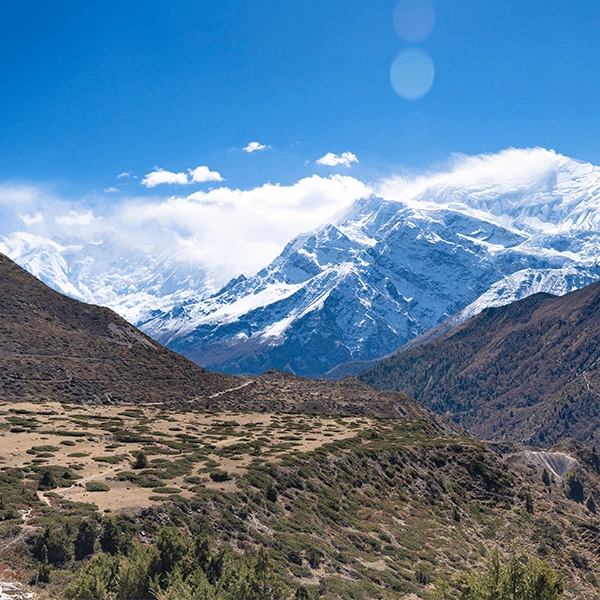
June to September (monsoon): Not ideal for trekking. Trails are slippery, leeches are everywhere, and views are obscured by clouds. Some people enjoy the green landscape and empty trails. The Mustang region is in a rain shadow, so it's one exception worth considering.
Popular Tourist Destinations in Nepal
Kathmandu: Cultural and Historical Wonders
Kathmandu Valley is a lot to take in at once. The streets are narrow, the traffic is real, and there are temples around nearly every corner.
The Kathmandu Valley holds three UNESCO World Heritage cities: Kathmandu, Patan, and Bhaktapur. Spend at least two to three days here before heading elsewhere.
Key sites to visit:
- Pashupatinath Temple on the banks of the Bagmati River, one of Hinduism's holiest Shiva shrines. Open-air cremations happen on the ghats daily.
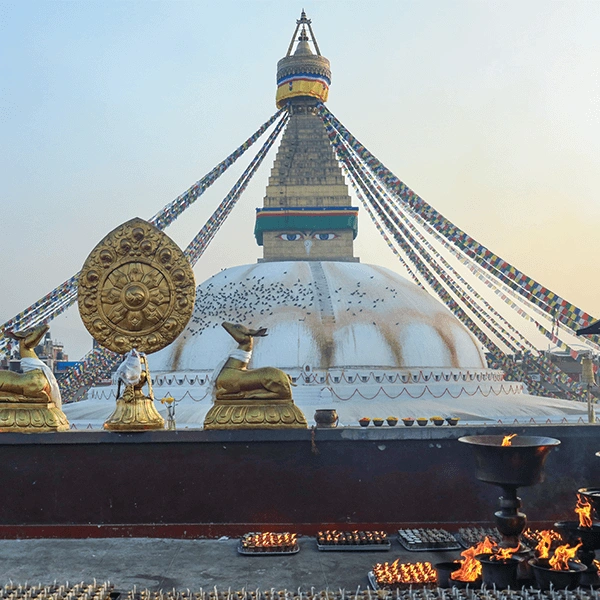
- Boudhanath Stupa, one of the largest stupas in the world, is surrounded by Tibetan Buddhist monasteries and good coffee.
- Swayambhunath (Monkey Temple), a hilltop shrine with panoramic views of the valley. Worth it early morning before the heat.
- Patan Durbar Square, quieter than Kathmandu's main square and, many visitors say, more beautiful.
- Bhaktapur, a preserved medieval city that charges an entry fee and is worth every rupee.
- Kathmandu is also the main hub for permits, gear, and pre-trek logistics. Most Nepal tour packages start and end here.
Pokhara: Lakes, Mountains, and Adventure
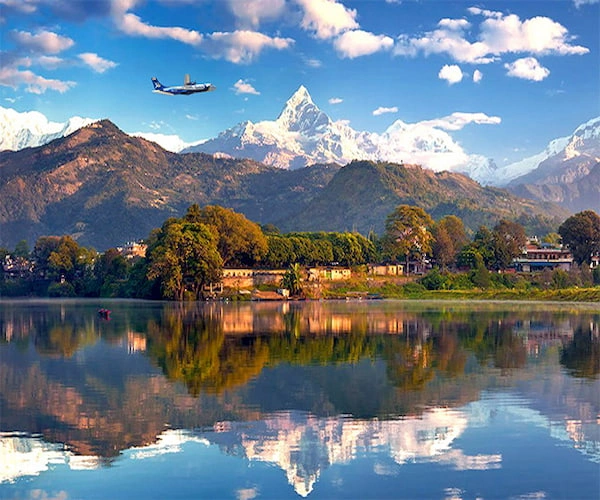
Pokhara Valley is Nepal's second city and, for many people, the most relaxed place they visit. The lakeside area along Phewa Lake is lined with restaurants and cafes, and on clear mornings, the Annapurna range reflects in the water.
Sarangkot is the spot for sunrise over the mountains. Get there by 5:30 AM.
Pokhara is the gateway to Annapurna Circuit and Annapurna Base Camp treks. It's also Nepal's top spot for paragliding, one of the more surreal ways to see the Himalayas. You jump off a hill and spend 20 to 30 minutes floating at eye level with 8,000-meter peaks.
If you're planning a Nepal Himalayas tour that includes the Annapurna region, most itineraries begin in Pokhara.
Chitwan National Park: Wildlife and Jungle Safari Experience
In the Terai lowlands, about five hours south of Kathmandu, Chitwan is Nepal's most visited national park and a UNESCO World Heritage Site.
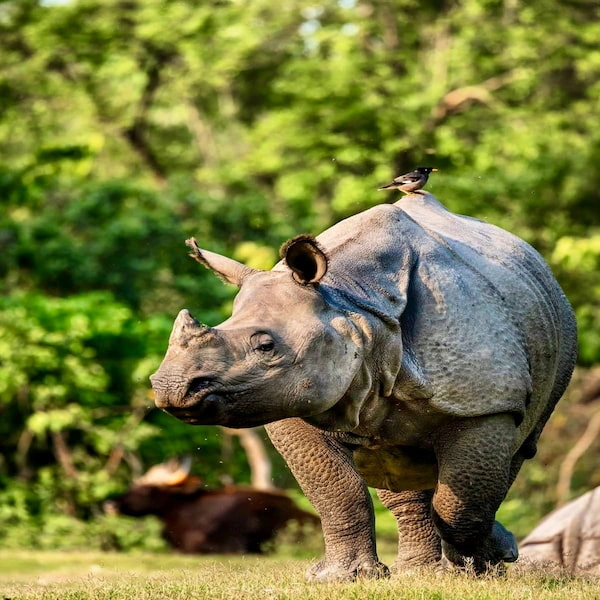
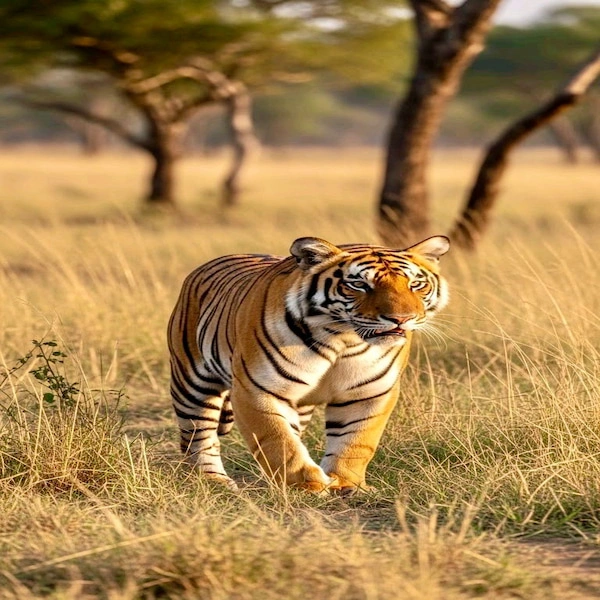
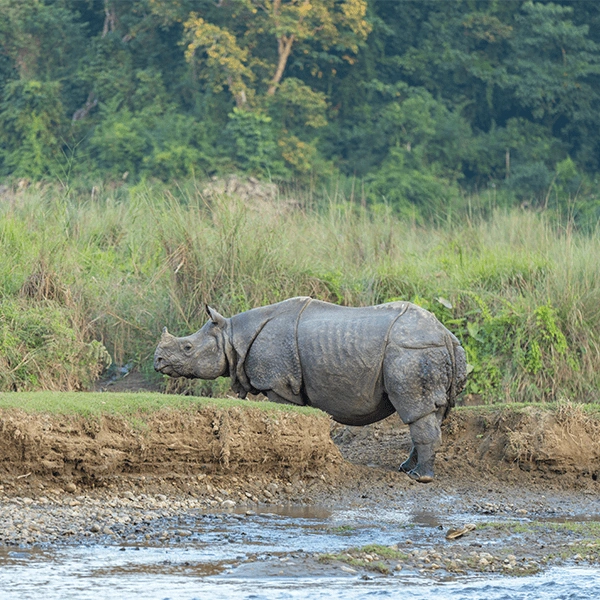
A Chitwan wildlife tour here means rhinos, crocodiles, wild elephants, deer, and if you're patient and lucky, Bengal tigers. The park's conservation efforts have brought the one-horned rhinoceros back from the brink of extinction. There are now over 700 in the park.
Activities include:
- Jeep safaris into the core park area
- Canoe rides on the Rapti River
- Guided walks with armed rangers (the rhinos are not to be underestimated)
- Tharu village visits and cultural programs
The best time is from October to March. The park partially closes from June through August for the monsoon.
Lumbini: Birthplace of Lord Buddha
Lumbini sits near Nepal's southern border with India, in the flat Terai plains. This is where Siddhartha Gautama was born in the 5th century BCE. The site is a UNESCO World Heritage property and one of the most significant Buddhist pilgrimage sites in the world.
The sacred garden at the center houses the Maya Devi Temple, built over the exact spot where the Buddha was born. Around it, countries from Sri Lanka to Japan to Germany have built their own monasteries. Walking through this international monastic zone, quiet and spread across flat green land, is genuinely unlike anything else in Nepal.
Lumbini is a full-day destination from Pokhara or a stop on a longer Nepal cultural tour through the Terai.
Himalayan Mountain Views and Scenic Landscapes
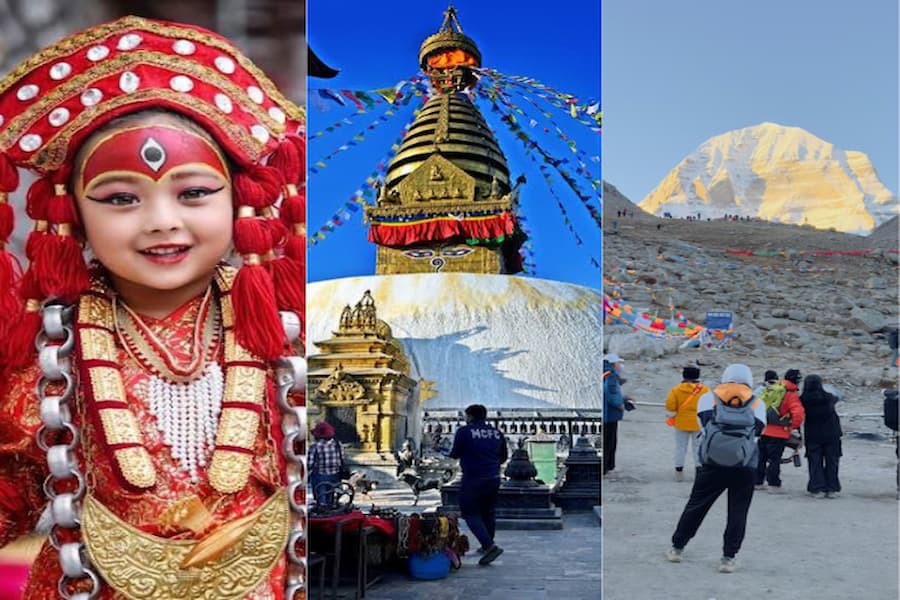
Nepal has views that stop you mid-sentence. Some of the best are not on a trek at all.
- Nagarkot, an hour from Kathmandu, is the easiest place to see the Himalayas from a ridge. On clear days, you can see Everest from here.
- Bandipur, a preserved hilltop town above the Marsyangdi valley, offers views of Annapurna and Manaslu with very little hiking required.
- Ghorepani Poon Hill is a 4 to 5-day trek that delivers a full Annapurna panorama from 3,210 meters. It's the most accessible Himalayan sunrise viewpoint in Nepal.
- Kala Patthar, at 5,545 meters near Everest Base Camp, offers the clearest view of Everest's summit.
Popular Trekking Regions in Nepal
Nepal has dozens of trekking routes. These four get the most attention for good reason.
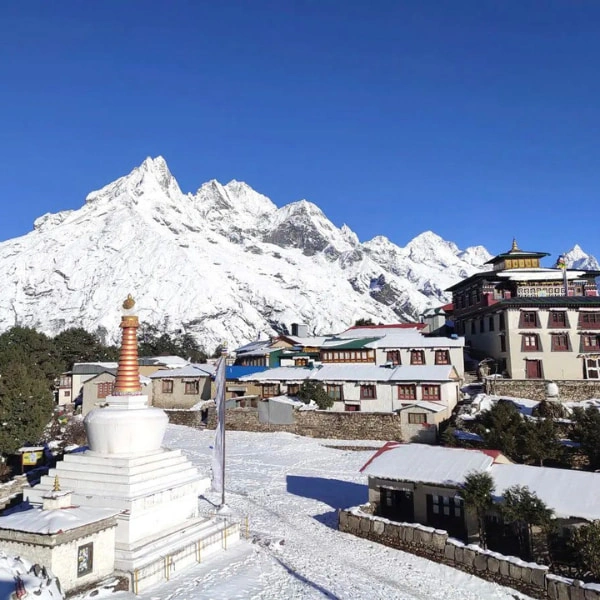
Everest Base Camp Trek Distance: roughly 130 km round trip from Lukla. Duration: 12 to 14 days. The trek passes through Sherpa villages, ancient monasteries at Tengboche, and ends at 5,364 meters with Everest's south face directly above you. Acclimatization days are built into every proper itinerary.
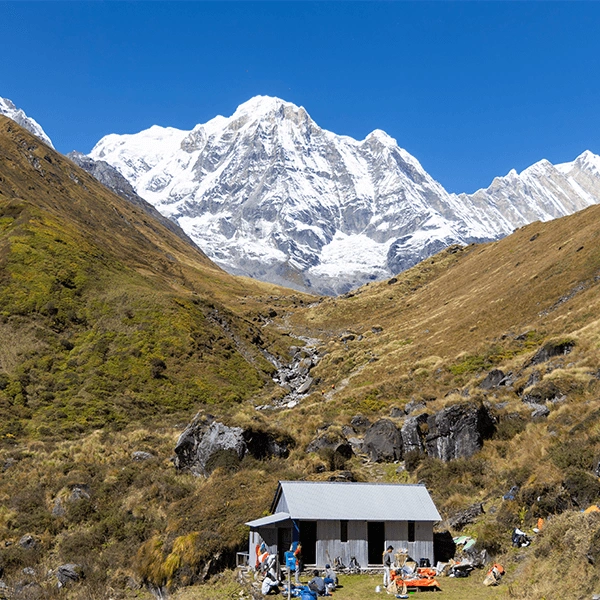
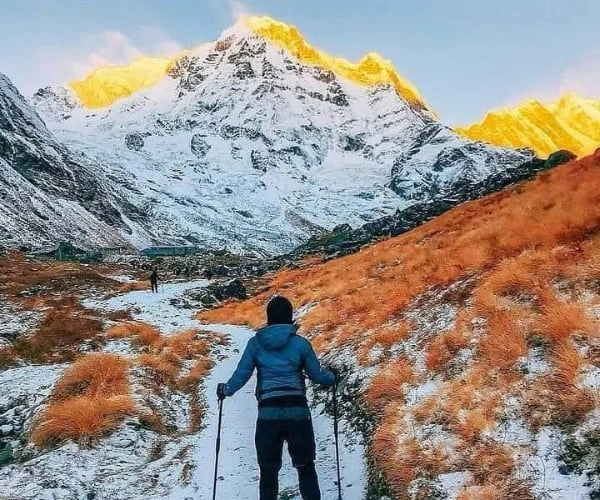
Annapurna Base Camp Trek Duration: 7 to 12 days. Shorter and lower than Everest, but the views from the Base Camp at 4,130 meters are 360 degrees of high peaks. The trail goes through the rhododendron forest and Gurung villages. This is the trek Holy Kailash Tours recommends most for first-time trekkers with limited time.
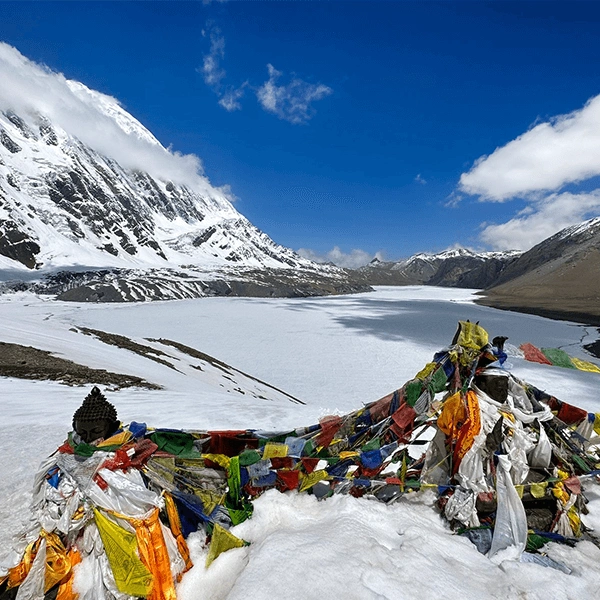
Annapurna Circuit Duration: 14 to 21 days. One of the world's classic long-distance treks. Crosses the Thorong La pass at 5,416 meters. Road construction has changed the lower sections, but the high route remains outstanding.
Langtang Valley Trek Duration: 7 to 10 days. Just two to three hours north of Kathmandu. Fewer crowds than Annapurna or Everest, beautiful valley scenery, and access to Kyanjin Gompa and the Tserko Ri viewpoint.
Spiritual and Religious Sites in Nepal
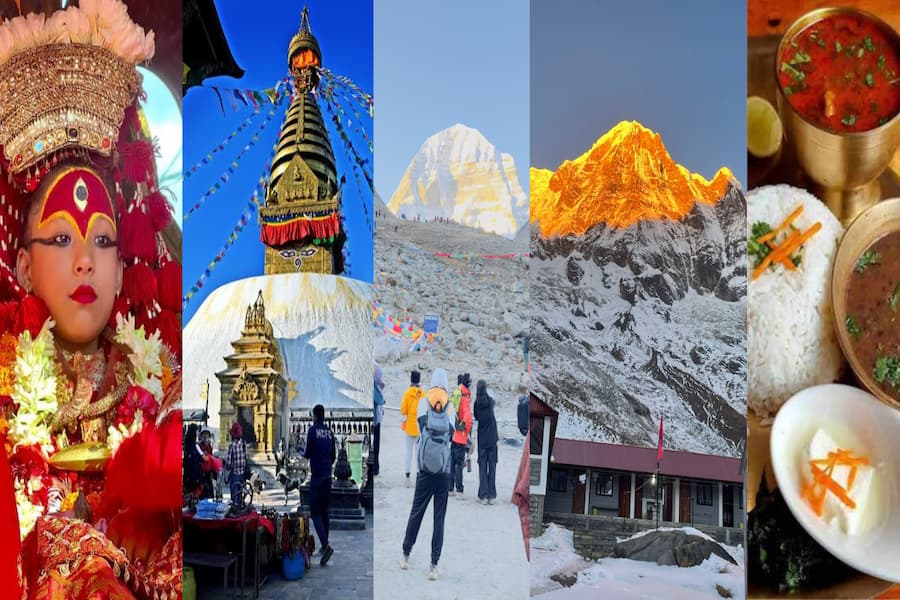
Nepal is deeply spiritual, with spirituality present in daily life, not just in temples.
Beyond Kathmandu and Lumbini, places worth visiting include:
- Muktinath Temple in the Mustang region, sacred to both Hindus and Buddhists, at 3,800 meters. Pilgrims come here from across Nepal and India.
- Kopan Monastery near Boudhanath, which runs meditation courses open to foreign visitors.
- Gosainkunda, a high-altitude sacred lake at 4,380 meters, where thousands of pilgrims gather for Janai Purnima each August.
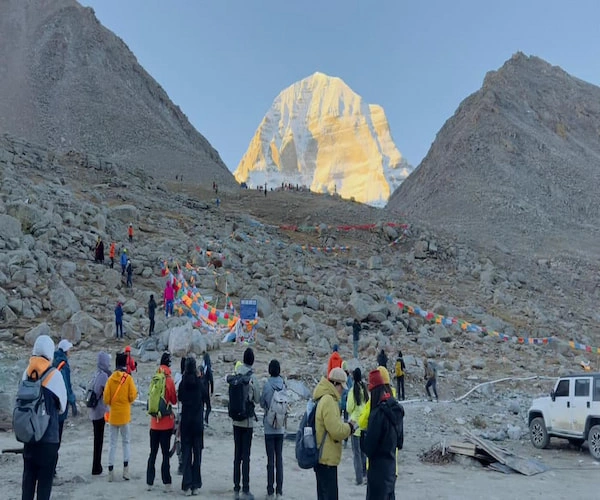
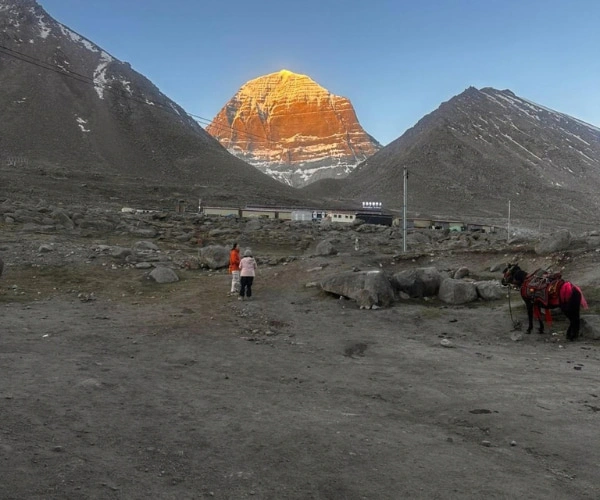
For Tibetan Buddhist pilgrims and spiritual seekers, Nepal is also the main gateway to Mount Kailash in western Tibet. Holy Kailash Tours, based in Kathmandu, specializes in organizing Kailash Mansarovar Yatra departures, helping pilgrims from India, Southeast Asia, and beyond navigate the Tibet permit process, overland routes through Kerung or Purang, and the 3-day kora (circumambulation) around the holy mountain. It's one of the most demanding and meaningful journeys you can make.
Nepalese Culture, Festivals, and Traditions
Nepal runs on two calendars, multiple ethnic groups, and more festivals than most countries manage in a decade. The main ethnic groups include Newars, Tamangs, Gurungs, Sherpas, Tharus, and Madhesis, each with its own language, food traditions, and ritual calendar.
Major festivals worth timing your trip around:
- Dashain (September/October): The biggest Hindu festival of the year. Families reunite, buffalo are sacrificed, and kites fill the sky over Kathmandu.
- Tihar (October/November): Five days of lights, flower garlands, and Laxmi puja. Streets glow at night. The Newari New Year, Mha Puja, falls during this festival.
- Indra Jatra (August/September): A Kathmandu-specific festival centered on Durbar Square, featuring chariot processions and the ceremonial appearance of the Kumari, the living goddess.
- Buddha Jayanti (April/May): The Buddha's birth is celebrated at Boudhanath and Lumbini with thousands of pilgrims.
Food and Accommodation in Nepal
Food
Nepal, we do have international cuisine. Typical Nepali Dal bhat is the national dish. Rice, lentil soup, vegetable curry, and usually a pickle or two. On treks, it comes with free refills, because you need the calories. It's genuinely good and available everywhere.
Other things to try:
- Momos: Dumplings, steamed or fried, with meat or vegetables. Kathmandu has dedicated momo restaurants that do nothing but serve momos.
- Thukpa: Tibetan noodle soup, especially good at altitude.
- Sel roti: A fried ring bread eaten during festivals with yogurt or tea.
Newari cuisine: Specific to the Kathmandu Valley. Includes chatamari (rice flour crepes), bara (lentil pancakes), and various buffalo dishes. Try it at a Newari restaurant in Patan.
Accommodation:
Kathmandu and Pokhara have hotels at every price point, from basic guesthouses under $15 a night to well-run four-star hotels in the $80 to $150 range. Thamel in Kathmandu and Lakeside in Pokhara are where most budget and mid-range options concentrate.
On trekking routes, teahouses provide a bed and meals. The quality varies. Lower trails have comfortable rooms with attached bathrooms. Higher up, expect shared facilities and cold water. Sleeping bags are recommended above 3,500 meters, even if teahouses provide blankets.
Transportation and Getting Around Nepal
Getting to Nepal:
Tribhuvan International Airport in Kathmandu is the main entry point. Direct flights connect from Delhi, Mumbai, Dubai, Doha, Bangkok, Singapore, and several other hubs. No direct flights from Europe or North America; a connection in the Gulf or South/Southeast Asia is typical.
Indian nationals can enter Nepal without a visa. Most other nationalities get a visa on arrival at the airport. Bring a passport photo and USD cash for the fee (around $25 for 15 days, $50 for 30 days).
Getting around:
- Within Kathmandu: Taxis are cheap and widely available. Agree on the fare before you get in or insist on the meter. Ride-hailing apps like Pathao and InDriver work in the city.
- Kathmandu to Pokhara: Tourist buses take 6 to 7 hours and cost around $10 to $15. Private cars take 5 hours. Flights take 25 minutes and cost $80 to $120 one way. Most people fly in at least one direction.
- Kathmandu to Chitwan: Tourist buses take 4 to 5 hours. Private transfers are more comfortable for families.
Trekking approaches to Lukla (for Everest) and Jomsom (for Upper Mustang) require domestic flights. Mountain weather causes delays, so build buffer days into your itinerary.
Travel Tips for First-Time Visitors
A few things that matter and don't always make it into guidebooks:
Altitude is real. Above 3,000 meters, go slow. Drink water. Don't push through a headache. Acute mountain sickness can turn serious fast. Acclimatization days are not optional; they're the plan.
ATMs work but have limits. Most ATMs in Kathmandu and Pokhara dispense between 15,000 and 35,000 rupees per transaction (roughly $110 to $260). USD and EUR cash is easy to exchange. Cards are less accepted outside tourist areas.
Nepal time is GMT+5:45. Yes, 45 minutes. One of only two countries in the world is on a 45-minute offset.
Bargaining is normal in markets, not in restaurants with menus or in licensed shops. Use judgment.
Temple etiquette: Remove shoes at temple entrances. Non-Hindus are not allowed inside some temples, including Pashupatinath's inner sanctum. Dress modestly (shoulders and knees covered) at religious sites. Walk clockwise around stupas and mani walls.
Travel insurance is not optional. If you're trekking above 4,000 meters, get a policy that covers helicopter evacuation. Rescue flights happen. They cost tens of thousands of dollars without insurance.
Permits for trekking: Most popular routes require a TIMS card (Trekkers' Information Management System) and a conservation area or national park permit. Holy Kailash Tours and most registered agencies handle these for you.
Nepal Tour Packages for Every Traveler
Nepal doesn't require a package tour, but having a well-organized itinerary helps, especially for first-time visitors navigating permits, altitude, and logistics.
Common Nepal tour package options:
Short Nepal holiday packages (5 to 7 days) typically include sightseeing in the Kathmandu Valley and either Pokhara or a short trek, such as Poon Hill. Good for people with limited time.
Everest Base Camp Package (14 to 16 days) Includes flights to Lukla, all teahouse accommodation, a licensed guide, porter, and permits. Starts and ends in Kathmandu.
Nepal Himalayas tour with Annapurna Base Camp (10 to 12 days) Combines Kathmandu, Pokhara, the trek to ABC, and a return through Pokhara. One of the most popular itineraries in Nepal.
Nepal wildlife tour with Chitwan (7 to 10 days), Kathmandu cultural sightseeing, plus 2 to 3 nights at Chitwan for jungle activities. Can add Lumbini for a Nepal cultural tour extension.
Nepal family tour (8 to 12 days) Kathmandu, Bhaktapur, Pokhara, and a short, easy trek or Chitwan safari. Paced for mixed ages and fitness levels.
Kailash Mansarovar Yatra (15 to 18 days from Kathmandu). Organized by specialists like Holy Kailash Tours, these itineraries cover Kathmandu, the overland drive through Kerung or Purang into Tibet, Lake Mansarovar, and the 3-day kora around Mount Kailash. One of the most complex and rewarding pilgrimages in Asia.
Why Choose Holy Kailash Tours?
Holy Kailash Tours is based in Kathmandu and has been organizing Himalayan travel for pilgrims and trekkers for years. Their main focus is the Kailash Mansarovar Yatra, which is genuinely complicated to organize: Tibet travel permits, border crossings, high-altitude acclimatization, and logistics through some of the most remote terrain in Asia.
What sets them apart:
- Deep experience with Tibet permit processing and border route logistics (Kerung and Purang crossings)
- Options for the classic overland yatra, helicopter access, and the 3-day kora on foot
- Everest Base Camp and Annapurna Base Camp treks, guided by experienced Himalayan professionals
- Personalized itineraries that include cultural highlights and proper acclimatization days
- Support throughout the trip, not just at the booking stage
For pilgrims, the Kailash journey is something people plan for years. Holy Kailash Tours treats it that way, focusing on logistics so travelers can focus on the experience.
For trekkers, their Nepal packages cover the main routes with licensed guides and practical support.
Final Thoughts
Nepal rewards patience and slows you down in the best possible way. The mountains are bigger than you expect. The cities are noisier than your guidebook says. The people are direct and hospitable in a way that doesn't feel forced.
Come with flexible dates, good hiking boots, and a genuine tolerance for things that don't go exactly to schedule. The flight to Lukla might be delayed a day. The teahouse might not have hot water. The view from the top will still be worth it.
This Nepal vacation guide gives you the framework. The country does the rest.
FAQs About Nepal Travel
Do I need a visa for Nepal?
Most nationalities get a visa on arrival at Tribhuvan International Airport in Kathmandu. You'll need a passport photo and cash in USD. Indian, Chinese, and SAARC nationals have different arrangements. Check your specific nationality before traveling.
Is Nepal safe for solo travelers?
Yes, including for solo women. Trekking routes are well-trafficked, teahouses are used by independent travelers, and Kathmandu and Pokhara have active tourist infrastructure. Standard urban awareness applies in cities.
What currency does Nepal use?
The Nepalese Rupee (NPR). As of 2024 to 2025, around 130 to 135 NPR to 1 USD. Indian Rupees are also accepted in some areas, but at informal exchange rates.
How fit do I need to be for the Everest Base Camp trek?
Reasonably fit, not elite athlete fit. The challenge is altitude, not technical difficulty. The trail is a walk, never a climb. You need to be able to walk 5 to 8 hours a day for 12 to 14 days with a light day pack. Start a cardio routine 3 to 4 months before the trip.
What is the Kailash Mansarovar Yatra?
A Hindu and Buddhist pilgrimage to Mount Kailash in western Tibet and the adjacent Lake Mansarovar. It involves overland travel from Nepal into Tibet, a stay at the lake, and three days of walking the 52-km kora around the mountain. Holy Kailash Tours organizes this journey from Kathmandu with full logistics support.
Can I trek without a guide?
Some areas allow independent trekking, but the Khumbu (Everest) region now requires a licensed guide. Even where guides are optional, having one adds safety, local knowledge, and a significantly better cultural experience.
How much does a trip to Nepal cost?
Budget travelers can manage on $30 to $50 per day in Kathmandu and on popular trekking routes (teahouses, dal bhat, local transport). Mid-range trips with better accommodation, domestic flights, and guides typically run $100 to $200 per day. Trekking permits and flights to Lukla are added to most budgets separately.
When should I book a Nepal tour package?
For October and November travel, book 3 to 6 months in advance. This is peak season, and permits, guides, and accommodation fill up. For spring (March to April), book 2 to 4 months ahead. Other seasons have more flexibility.
Email: [email protected]
WhatsApp: +977-9851254672 — Feel free to reach out anytime for fast, friendly, and personalized assistance