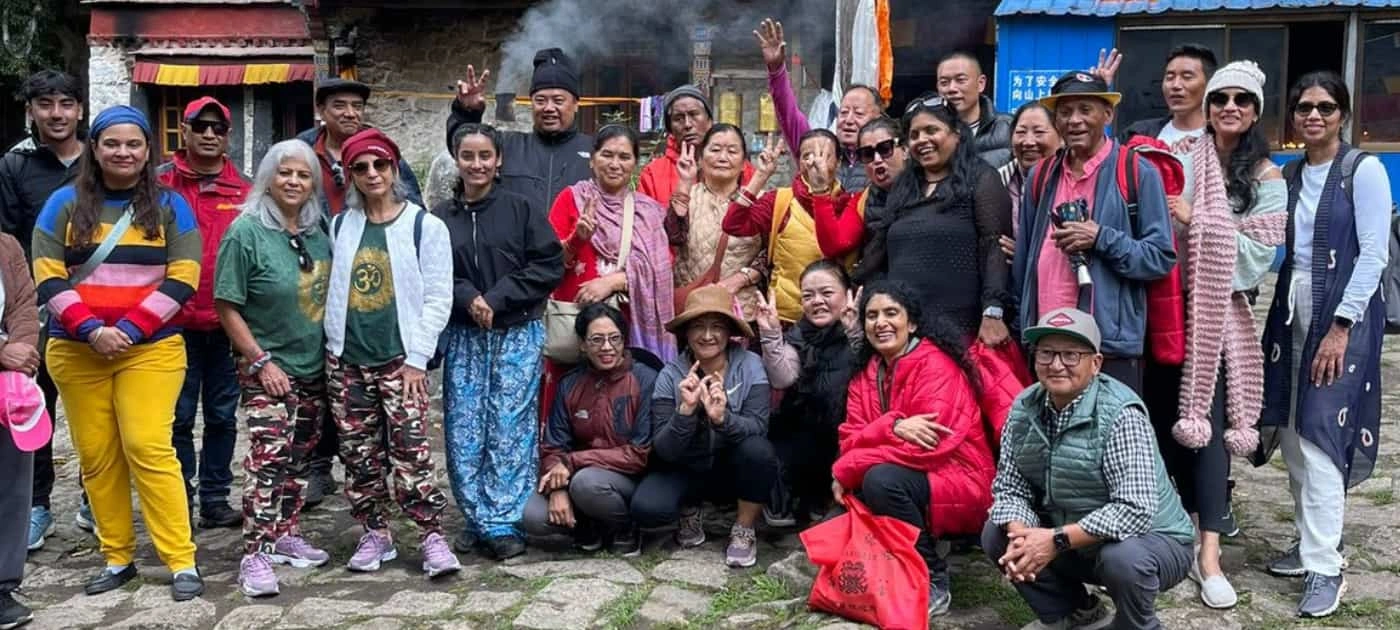
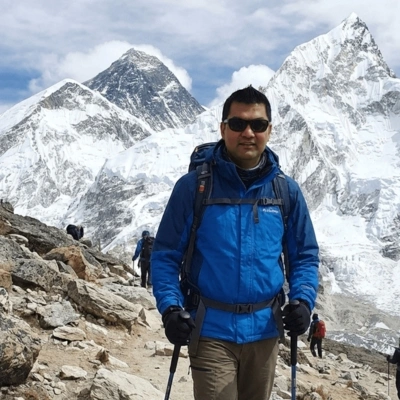
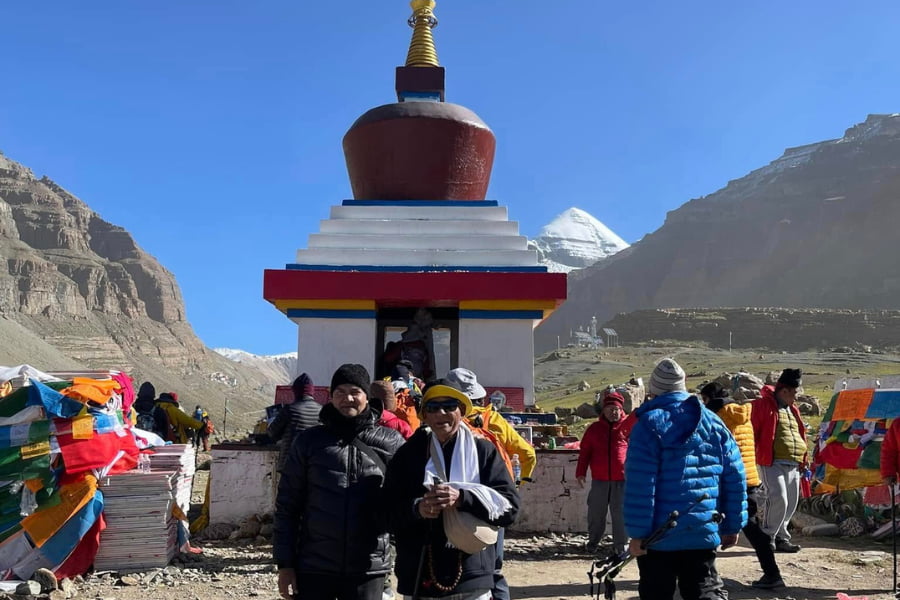
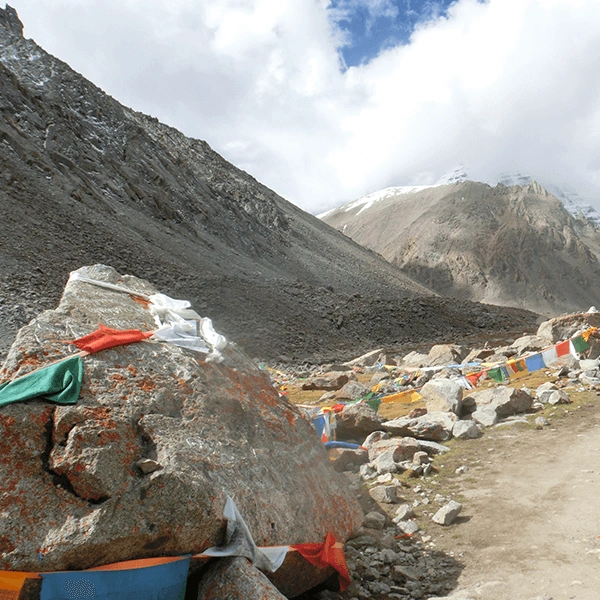
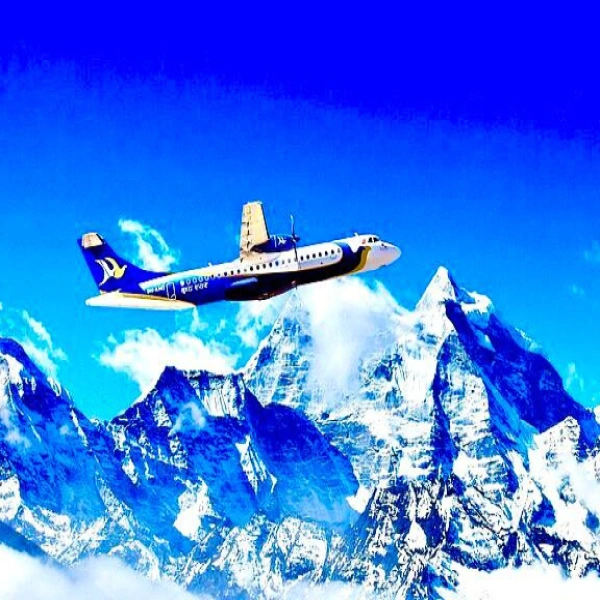
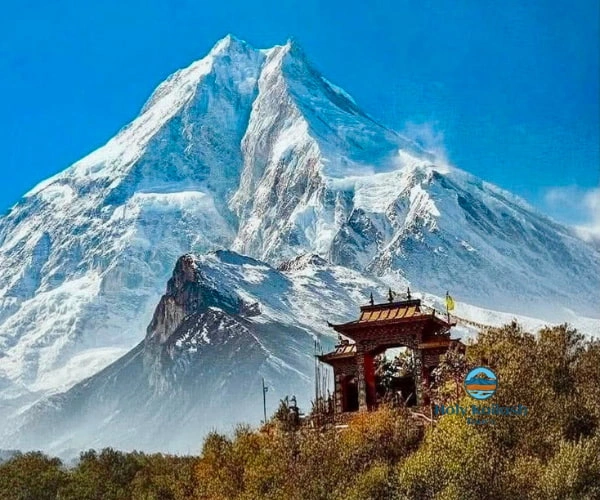
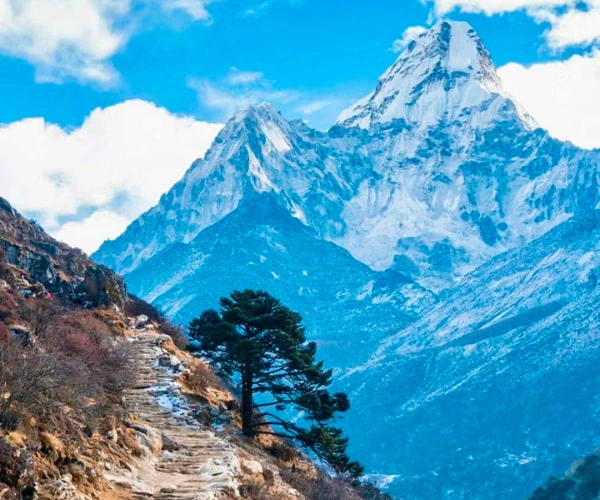
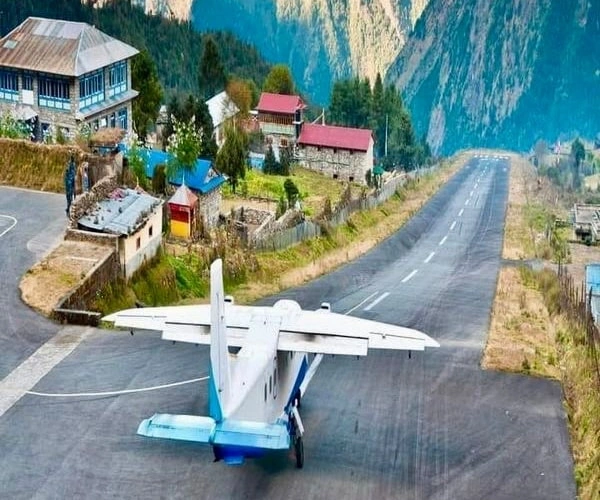
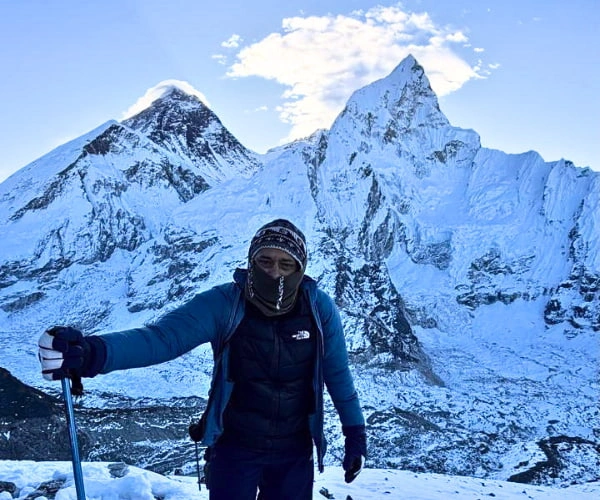
The Kailash Mansarovar Yatra is one of the world's most sacred pilgrimages, drawing millions of devotees and adventurers to its remote Himalayan valley on the Tibetan Plateau. In the midst of this rugged terrain lies the mountain of spiritual significance, Kailash, which is worshipped unanimously by followers of Hinduism, Buddhism, Jainism, and Bon and is a symbol of peace and enlightenment.
This journey will deeply affect spiritually passionate people who love the stunning beauty of these high mountains and the unforgettable experience of undertaking the holy Kailash Kora pilgrimage. Dramatic mountain views and the holy experience of the Kailash Kora will give you spiritual depth while you travel.
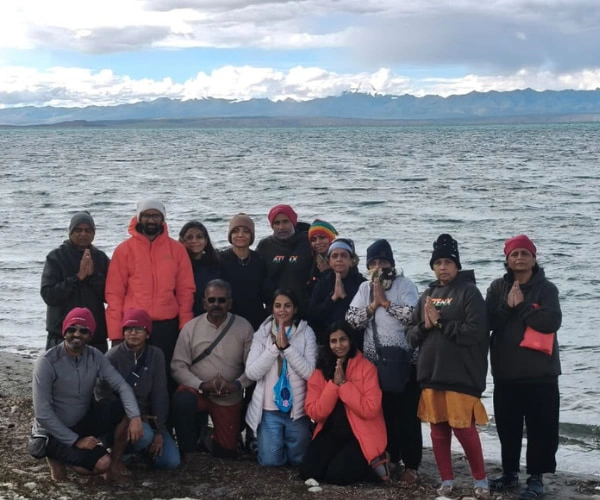
When you arrive at the holy pilgrimage site, Lake Mansarovar will be an amazing visual treat for you. The lake is one of the four sacred sites associated with Mount Kailash, and there's a sacred lake in India for each of the four main religions. The locals believe that water from Mansarovar carries away sins, purifies the soul, and brings inner peace.
Holy Kailash Tours will make the entire trip to Kailash and Mansarovar a perfect blend of relaxation, adventure, and culture. The travel company will plan a very safe, enjoyable, and spiritually uplifting tour.
The Kaurava Kora, or the circumambulation of the holy mountain Kailash, is one of the most difficult and important spiritual activities of the journey. As far as spiritual seekers are concerned, their souls will be cleansed through the symbolic act of throwing stones at Mount Kailash and Lake Mansarovar. With Holy Kailash Tours, you can witness this most sacred and spiritually elevating pilgrimage to the remote corners of the world.
The Kailash Yatra is designed to offer a spiritual experience for devotees of Hinduism and Buddhism and to serve as a place of meditation for followers of these two religions. And through this sacred journey, followers of these religions will have the opportunity to witness deep-rooted spiritual and cultural heritage.
The Kailash Mansarovar Yatrais planned around faith, and comfort has to wait its turn. The Kailash Mansarovar Yatra takes you to a mountain nobody has ever climbed and a lake sitting above 4,500 meters, and it asks a lot of your body before it gives anything back to your spirit.
Holy Kailash Tours, we've watched pilgrims arrive at Darchen exhausted, cold, and unsure they can finish the kora, and we've watched those same people walk out the other side changed.
The Kailash Mansarovar yatra guidecovers what the Kailash Mansarovar spiritual journey actually involves: the history, the religions that consider this mountain sacred, the route from Nepal, the permits, the costs, and what you need to pack.
Why Is the Kailash Mansarovar Yatra Known as the World's Greatest Spiritual Journey?
The Kailash Mansarovar yatra is a religious pilgrimage, with hundreds of millions of people drawn to it, all pointing to the same mountain and calling it the center of the universe. That alone makes the Kailash Mansarovar Yatraunlike almost any other pilgrimage on the planet. Add in the fact that Mount Kailash has never been climbed, out of respect rather than lack of skill, and you start to understand why this Mount Kailash pilgrimage carries so much weight.
Then there's the difficulty. You're not driving up to a shrine and taking a photo. You're crossing a pass above 5,600 meters on foot, sleeping in unheated guesthouses, and dealing with thin air for close to two weeks. The yatra doesn't let you take shortcuts to a spiritual experience. You earn it, step by step, breath by breath.
The Sacred History of Mount Kailash and Lake Mansarovar
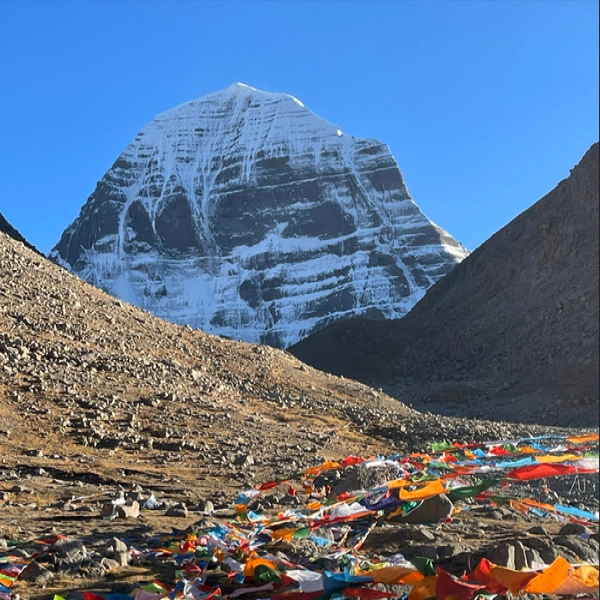
Mount Kailash sits in the Ngari region of western Tibet, in a part of the world so remote that reaching the base of the mountain takes days of travel on its own. Hindu texts describe it as the home of Lord Shiva, where he sits in eternal meditation with Parvati. Tibetan Buddhists call it Kang Rinpoche, and their stories tell of the demon king Naro Bon chung, who tried and failed to reach the summit before the great yogi Milarepa did.
Lake Mansarovar is nearby, fed by glacial melt and considered one of the highest freshwater lakes in the world. Ancient texts across several traditions treat the lake as a place of purification, somewhere a single touch of the water can wash away lifetimes of accumulated sin. Whether or not you take that literally, standing at the edge of Mansarovar with Kailash rising behind it tends to quiet even the most restless mind.
Why Millions of Pilgrims Visit Kailash Mansarovar Every Year
The heading isn't quite literal, and it's worth being honest about that. Only a few thousand people actually complete the Kailash Mansarovar Yatra in any given year, since Tibet limits the number of permits and the terrain limits how many people can physically make the trip. But the number of people for whom this mountain matters runs into the hundreds of millions, across Hindu, Buddhist, Jain, and Bon communities worldwide.
That gap, between how many people revere Kailash and how many actually reach it, is part of what makes the journey feel significant. You're not one face in a crowd of tourists. You're part of a small, determined group who decided this mattered enough to deal with permits, altitude, and long overland travel. For a lot of pilgrims, just being accepted into a season's yatra feels like the first blessing of the trip.
The Spiritual Importance of Mount Kailash in Four Major Religions
Hindus consider Kailash the home of Shiva and the axis of the universe, a place where heaven touches earth. Buddhists see it as the abode of Demchok and as a mandala made physical, sacred enough that circling it is believed to accumulate merit toward enlightenment. Jains associate the mountain with Ashtapada, where their first Tirthankara, Rishabhanatha, is believed to have reached liberation. Followers of Bon, Tibet's pre-Buddhist religion, regard Kailash as the seat of all spiritual power and the origin point of their own tradition.
Four belief systems, four different stories, one mountain. Few places on earth carry that kind of layered devotion, and it's part of why any honest Mount Kailash travel guide has to spend as much time on religion as it does on roads and permits.
How the Kailash Kora Becomes a Path to Inner Transformation
The Kailash Kora is the walk around the base of the mountain, roughly 52 kilometers, usually done over three days. It starts and ends in Darchen, climbs to Dirapuk on day one, crosses the Dolma La Pass at around 5,630 to 5,670 meters on day two, and descends to Zutrul Puk before finishing back at Darchen on day three.
On paper, it's a trekking route. In practice, most pilgrims describe it as more of a reset. The altitude strips away small talk. Conversation gets simple, or stops entirely, and you're left alone with your own thoughts for hours at a stretch. By the time you're coming down from Dolma La, legs shaking and lungs working overtime, most people aren't thinking about work emails anymore.
A Kailash Kora guide can give you the distances and elevation numbers, but it can't tell you exactly what you'll feel out there. That part is yours to find.
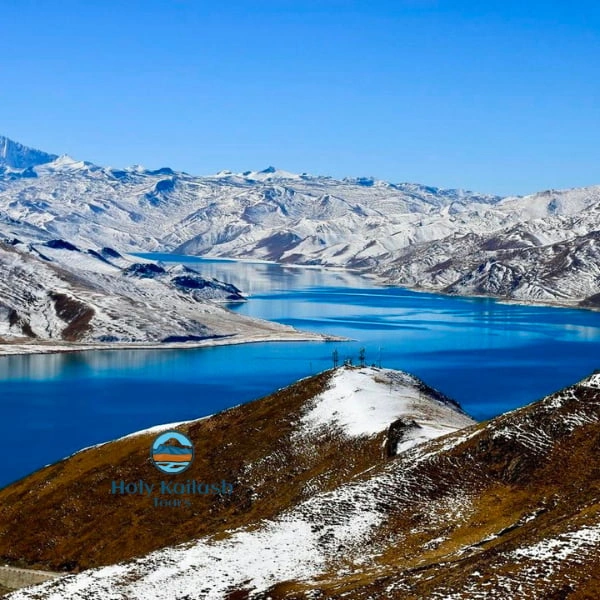
Lake Mansarovar is at roughly 4,590 meters, just southeast of Mount Kailash, and its clear blue water is considered some of the purest in the region. In Hindu belief, the lake was created in the mind of Brahma before it ever appeared on earth, which is where its Sanskrit name, meaning lake of the mind, comes from. Pilgrims traditionally bathe in the lake, or at least touch the water to their forehead, as an act of purification before beginning the kora.
Right next to Mansarovar is Rakshas Tal, a darker, saltier lake associated with the demon king Ravana. The contrast between the two, one sacred and life-giving, one linked to darkness, is something local guides love pointing out on a Lake Mansarovar tour. It's a reminder that this landscape has always been read as more than scenery. People have found meaning in these shapes and waters for thousands of years.
Physical Challenges That Strengthen Faith and Devotion
Nobody finishes this yatra without noticing what it costs their body. You'll spend most of the trip above 4,000 meters, where oxygen levels sit at roughly 60 percent of what you're used to at sea level. Nights are cold even in summer, toilets are basic at best, and the roads connecting Kathmandu to western Tibet are long, rough, and occasionally closed by weather.
None of this is meant to scare you off. It's meant to set expectations. The physical demand is part of the point. Pilgrims across all traditions connected to Kailash have long believed that suffering, when willingly taken on, carries spiritual value. Every labored breath on the Dolma La Pass becomes its own kind of prayer. People who've done a fair amount of Mount Kailash trekking will tell you the discomfort is exactly what makes the arrival mean something.
What Makes the Kailash Mansarovar Yatra a Life-Changing Experience?
Ask ten pilgrims what changed for them, and you'll get ten different answers. Some talk about one specific moment, maybe reaching Dolma La Pass at sunrise, or the first sight of Kailash's north face from Dirapuk. Others talk about something slower and harder to name, a shift that only became obvious weeks after they got home.
What we hear most often from people who've traveled with Holy Kailash Tours is a kind of clarity. Away from phones, deadlines, and daily noise, a lot of pilgrims find themselves thinking clearly about their lives for the first time in years. The mountain doesn't hand you answers. It just gives you the quiet and the distance to ask better questions.
The best time for the Kailash Mansarovar Yatra runs from May through September, since the routes into western Tibet are typically closed the rest of the year due to snow and cold. Late May and June bring clear skies and cooler temperatures, though some snow may still linger on the higher stretches of the kora. July and August are peak season, milder in temperature but with a higher chance of rain, since this window overlaps with the monsoon season further south.
September is often the quiet favorite. Crowds thin out, the air turns crisp, and visibility tends to be excellent. Whatever month you choose, expect daytime temperatures somewhere between 5 and 15 degrees Celsius and nights that drop well below freezing. If you're planning around the Kailash Mansarovar Yatra 2026/27 season, June through early September remains the safest window in which to plan a trip.
Complete Kailash Mansarovar Yatra Route From Nepal
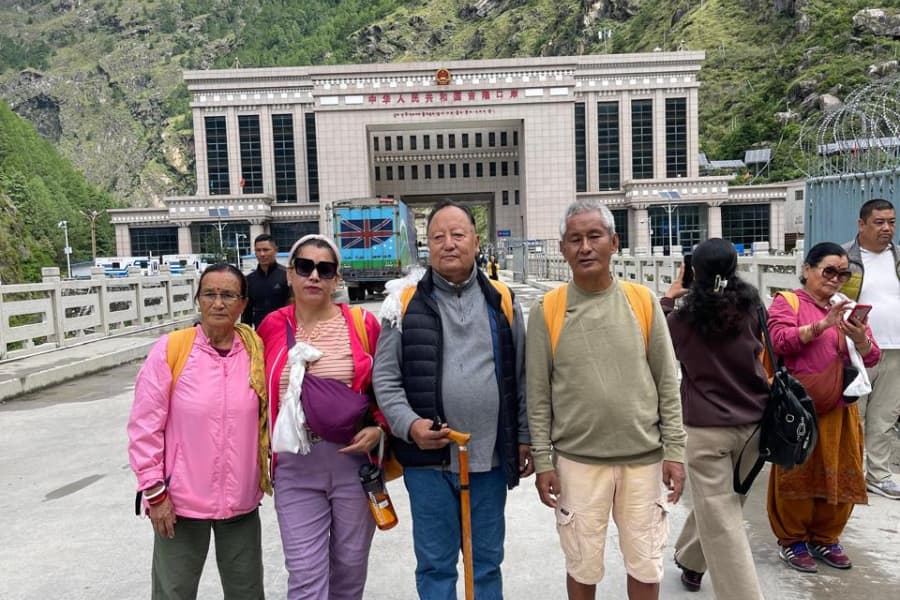
Most pilgrims doing the Kailash Mansarovar Yatra from Nepal start in Kathmandu and travel overland to the Nepal-Tibet border at Kerung, also spelled Gyirong. From there, the route runs through Saga and across the high Tibetan plateau before reaching Lake Mansarovar near Chiu Monastery. Darchen comes next, the small town that serves as base camp for the Kailash Kora, followed by the three-day trek around the mountain and the return drive back through Saga and Kerung to Kathmandu.
This is Kailash Mansarovar by road, and it's a long one. Round-trip driving distance often exceeds 1,600 kilometers, on roads that range from paved highways to rough gravel tracks, depending on the stretch. A standard Nepal-to-Mount Kailash tour lasts 10 to 15 days, though some operators extend the trip to include Lhasa, Everest Base Camp, or the ancient Guge Kingdom ruins for pilgrims who want to turn the yatra into a longer overland tour of Tibet.
Border conditions along this route can change with little warning, as crossings occasionally close for road repairs or seasonal conditions. At Holy Kailash Tours, we track these conditions closely and adjust routing when needed, so it's worth asking your agent for the current border status before locking in your dates.
Tibet doesn't allow independent foreign travel, so every part of this trip must go through a registered agency. For the Kailash Mansarovar Yatra, that typically means four separate documents: a Chinese Group Visa, a Tibet Travel Permit issued by the Tibet Tourism Bureau, an Alien's Travel Permit from the Public Security Bureau for travel outside Lhasa, and a Military or Border Defense Permit, since the Kailash region sits close to the borders with Nepal and India.
None of these can be applied for on your own. Your passport and documents are handled by your tour operator, who submits them to the relevant offices in Kathmandu and Lhasa. Processing usually takes several weeks, longer during peak season, so booking early matters more than most people expect.
Handling Kailash Mansarovar travel permits is genuinely one of the more tedious parts of planning this trip, which is exactly why it's worth leaving to a team that does it constantly instead of trying to sort it out on your own two weeks before departure.
Altitude sickness is the single biggest health risk on this trip, and it doesn't care how fit you are. Symptoms usually start with a headache, nausea, or trouble sleeping, and they can hit marathon runners just as easily as first-time trekkers. The best defense is a slow ascent, which is why a well-planned itinerary builds in rest days at Kerung and Saga before pushing higher toward Darchen.
Drink more water than feels necessary. Avoid alcohol for the first few days. Walk slower than your instinct tells you to, especially on the kora itself. Some travelers talk to their doctor before departure about altitude medication, and that's a conversation worth having well in advance, not something to figure out once you're already in Tibet.
If symptoms worsen rather than improve with rest, the only real fix is to descend, so listen to your guide if they tell you to turn back. There's no shame in it. Plenty of experienced trekkers have had to skip a day or turn around partway through the kora, and they came back the following season to finish what they started.
Essential Packing List for the Kailash Mansarovar Yatra
Layers matter more than any single piece of gear. Mornings can start near freezing, and afternoons can feel almost warm in direct sun, so a base layer, a fleece or down mid layer, and a windproof, waterproof outer shell will cover most of what the weather throws at you. Bring trekking boots that are already broken in, not fresh out of the box, along with wool socks, a warm hat, and gloves for the pass crossing.
On the health side, pack any personal medication you need, a basic first-aid kit, sunscreen rated for high-altitude sun, and lip balm, since the combination of wind and thin air dries everything out quickly. A sleeping bag rated for temperatures below freezing is worth the extra weight, since guesthouse bedding along the kora is basic at best. Bring cash in Chinese yuan for small purchases, since card payments are nearly nonexistent once you're outside Lhasa or Kathmandu.
Documents deserve their own mention. Carry photocopies of your passport, visa, and permits separately from the originals, and keep a few passport-sized photos on hand in case anything needs replacing along the way.
Cultural Experiences During the Journey Across Tibet
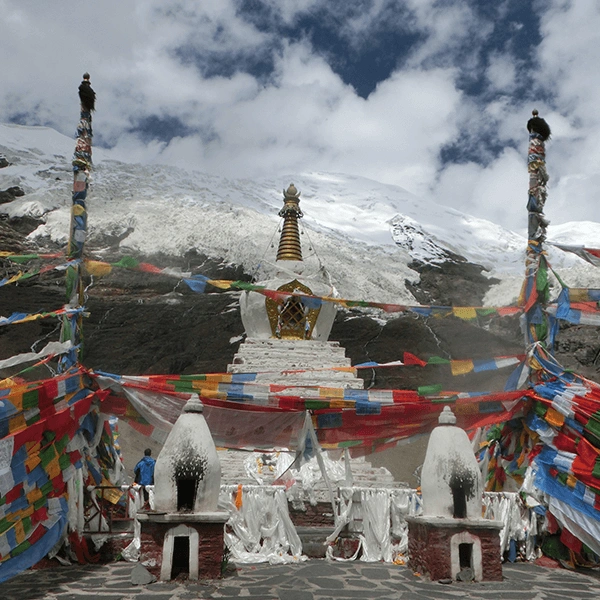
The drive from Kathmandu to Darchen passes through a version of Tibet that most travelers never see. Prayer flags stretch across mountain passes, faded by wind and sun into soft pastel colors. Mani stones, carved with Buddhist mantras, sit stacked in piles at the edge of villages, placed there over generations by pilgrims who passed the same way before you.
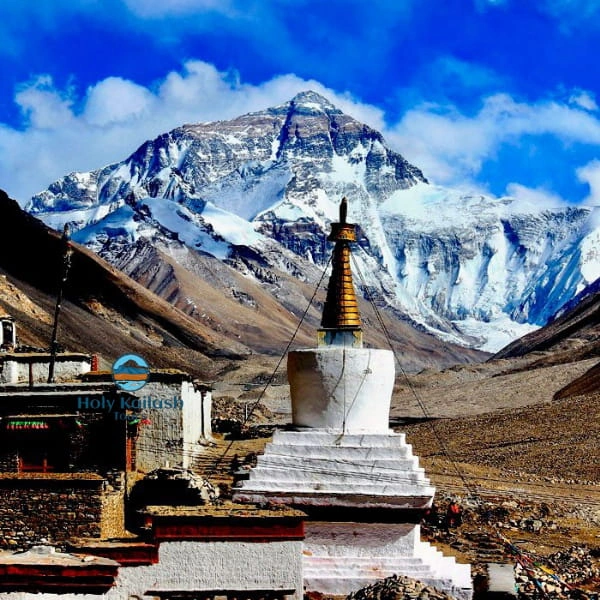
Monasteries along the route, including stops near Saga and around Lake Mansarovar, offer a chance to sit with monks, watch butter lamp offerings, or simply take in centuries-old architecture. Nomadic herders still move yak and sheep across the high plateau, and it's common to share a meal of tsampa or butter tea with a family along the way.
A Tibet pilgrimage tour centered on Kailash isn't just about the mountain. It's a window into a way of life shaped by this landscape for a very long time.
There's a reason people keep coming back to this pilgrimage, generation after generation, religion after religion. Mount Kailash doesn't ask you to believe anything specific. It just asks you to show up, put in the physical work, and pay attention to what happens along the way.
Holy Kailash Tours, we build every Kailash Mansarovar Tour Package around that idea: solid logistics, honest information about what the trip demands, and guides who've walked this route enough times to know when a pilgrim needs to rest, push on, or just sit quietly by the lake for a while. If you're looking for a Mount Kailash travel guide, or a Kailash Mansarovar complete guide that tells you what this journey actually involves, permits included, consider this your starting point. Everything else is up to the mountain.
What is the best time for the Kailash Mansarovar Yatra?
May through September works best, with June to early September offering the most stable weather for both the drive and the kora itself.
How much does the Kailash Mansarovar Yatra cost?
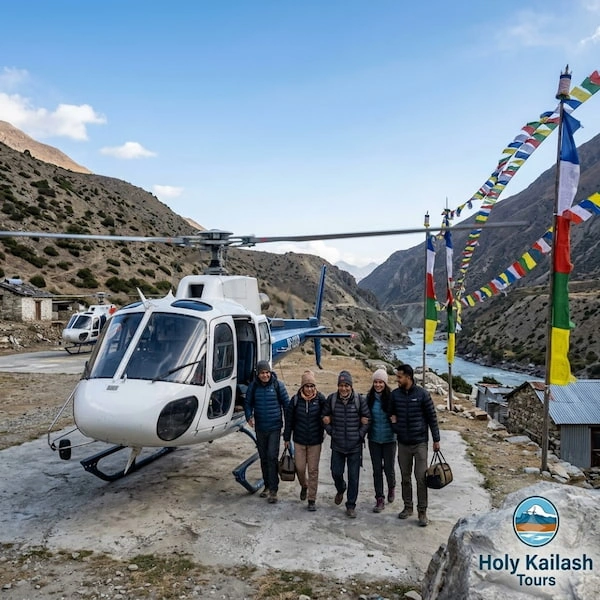
Kailash Mansarovar costs vary by route and group size, but most standard packages from Nepal range from 1,800 to 3,500 US dollars per person, covering permits, transport, food, and guesthouse accommodation. Private tours, helicopter options, or trips combined with Lhasa and Everest Base Camp cost more.
How long is a typical Kailash Mansarovar itinerary?
Most Kailash Mansarovar itineraries from Nepal run 10 to 15 days round-trip, including acclimatization stops and the three-day kora. Extended versions that include Lhasa or other Tibetan sites can stretch to nearly three weeks.
Can I do the Kailash Mansarovar Yatra from Nepal without a group?
No. Tibet requires all foreign travelers to travel through a registered agency, whether you join a fixed-departure group or book a private tour. Independent solo travel through this region isn't permitted.
Is the Kailash Kora difficult?
Yes. It covers about 52 kilometers over three days and crosses a pass above 5,600 meters. Fitness helps, but altitude affects everyone differently, so pacing and acclimatization matter more than raw athletic ability.
What permits do I need for the Mount Kailash pilgrimage?
You'll need a Chinese Group Visa, a Tibet Travel Permit, an Alien's Travel Permit, and a Military or Border Defense Permit for the border region. All four are processed by your tour operator, not by you directly, so your job is mostly gathering the right documents on time.
Is the Kailash Mansarovar Yatra safe for beginners?
It can be, provided you prepare properly and travel with an experienced operator. First-time trekkers complete this yatra every season. What matters more than prior trekking experience is honest physical preparation in the months before departure, a realistic pace during the kora, and a guide who knows when to slow things down.
Written by the Holy Kailash Tours travel desk, Why Is the Kailash Mansarovar Yatra Known as the World's Greatest Spiritual Journey?
Email: [email protected]
Author: Ram Sharan Adhikari
WhatsApp: +977-9851254672 — Feel free to reach out anytime for fast, friendly, and personalized assistance.