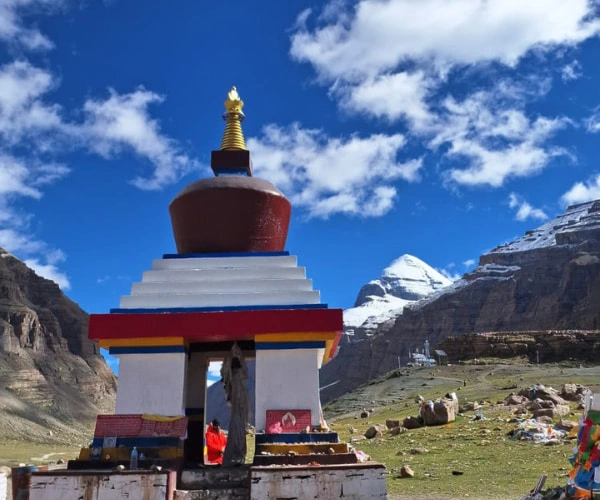
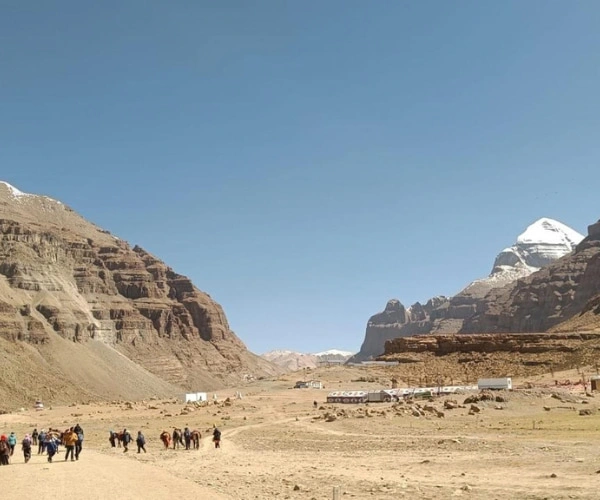
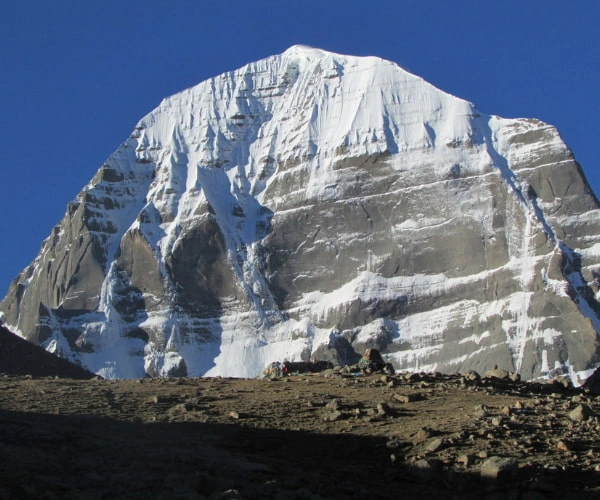
Why No One Has Ever Climbed Kailash?
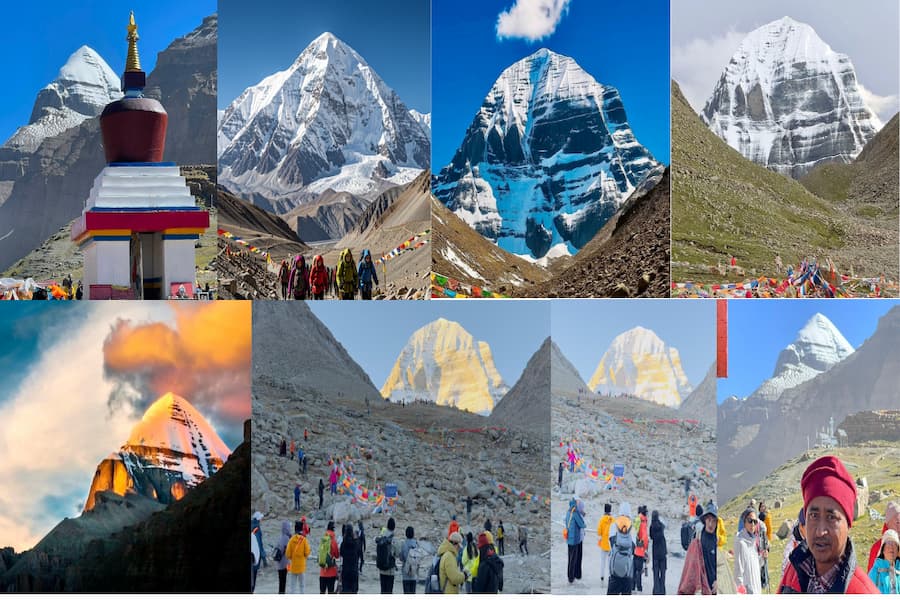
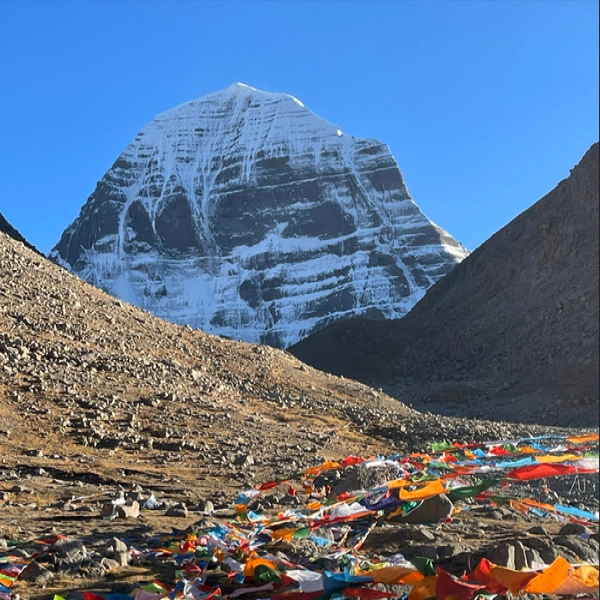
Mount Kailash rises to 6,638 meters, which is modest by Himalayan standards. K2 and Mount Everest dwarf it. Yet unlike its taller neighbors, Kailash has no confirmed summit attempt in recorded history. That's not an accident of geography. It's policy, backed by belief.
The Chinese government, which administers this part of Tibet, has restricted climbing on the mountain out of respect for its religious status to Hindus, Buddhists, Jains, and Bon practitioners.
Reinhold Messner, one of the greatest mountaineers alive, was reportedly offered the chance to attempt it and turned it down, saying that if he defiled this holy summit, something inside him would break. That's not a small statement coming from a man who soloed Everest without oxygen.
Beyond the permit issue, climbers who've studied the mountain describe strange disorientation on its lower slopes. Compasses drift. Distances feel wrong. Whether that's altitude, geomagnetism, or something else entirely depends on who you ask. What's certain is this: in a century where humans have stood on every other major peak on Earth, Kailash remains untouched.
A Natural Wonder or Man-Made Pyramid? The Geometric Mystery
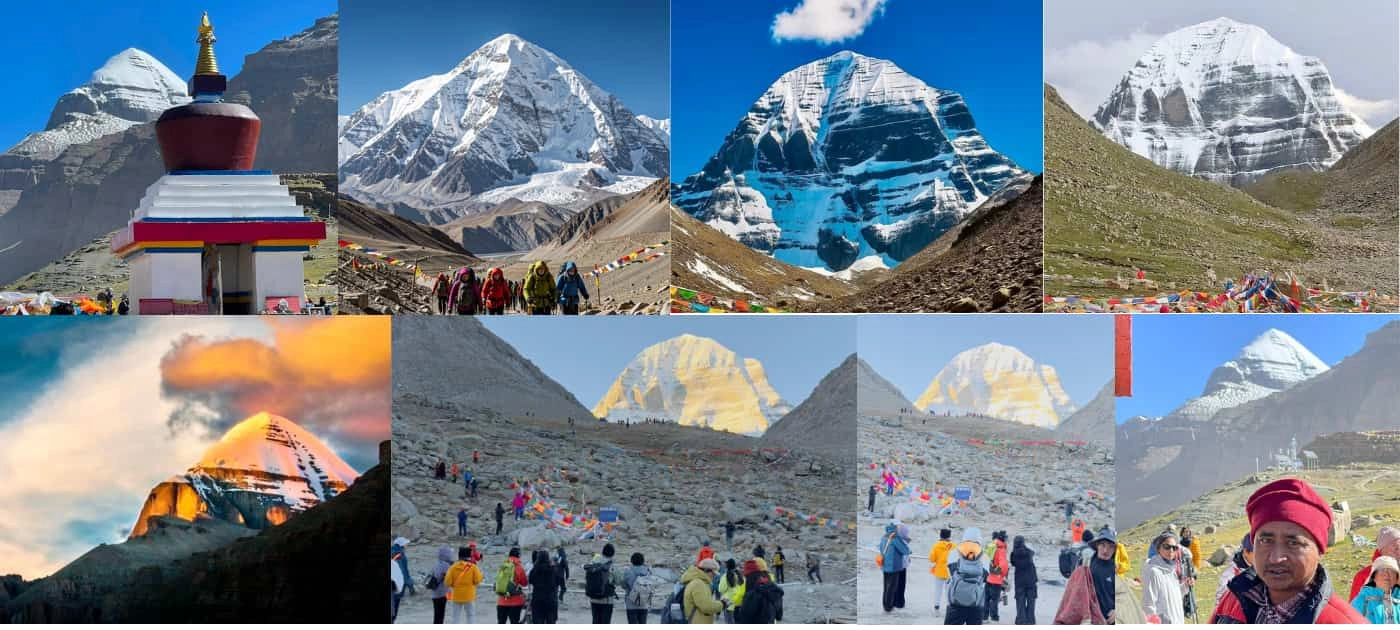
Kailash doesn't look like the surrounding mountains. It's a near-perfect four-sided pyramid, with faces that roughly align with the cardinal directions. Russian researchers who studied it in the 1990s proposed that it could be an artificial structure, or at least a natural formation shaped by forces we don't fully understand, possibly linked to a larger network of pyramids they claimed to identify across the planet.
Most geologists reject the artificial-structure theory outright. They point to the mountain's conglomerate rock layers, formed over millions of years, as clear evidence of natural sedimentary and tectonic processes. The symmetry, they argue, comes from how the rock has eroded along its fault lines.
Still, standing at the base and looking up, it's hard to shake the feeling that something about the shape is too deliberate. That tension between what geology says and what the eye sees is part of why Kailash keeps pulling people back.
The Abode of Shiva: Exploring the Mountain's Divine Presence
In Hindu tradition, Kailash is where Shiva sits in eternal meditation with Parvati beside him. Tibetan Buddhists know it as the home of Demchok, a tantric deity representing supreme bliss. Jains believe their first Tirthankara, Rishabhanatha, achieved liberation here. Followers of Bon, Tibet's pre-Buddhist religion, consider it the sky-stairway their founder descended to earth.
Four major faiths, with almost nothing else in common theologically, all point to this same mountain as sacred ground. That kind of convergence doesn't happen randomly. Pilgrims who complete the Kora often describe a shift they can't quite name, not euphoria exactly, more like the sense that they've been let in on something.
Whether that's the altitude, the exhaustion, or genuine presence, the mountain has earned its reputation across cultures that otherwise diverged thousands of years ago.
Time Distortion: Does Time Really Move Faster at Kailash?
This is one of the most repeated claims about Kailash, and one of the hardest to verify. Pilgrims and researchers have reported that watches and mechanical clocks run faster near the mountain, sometimes by hours over the course of a day. Some trekkers say their bodies feel like they've aged during the short trek around the peak, only to feel normal again once they've left the region.
Skeptics point out that extreme cold affects mechanical watch mechanisms and that high altitude messes with human perception of time in ways that are well documented in mountaineering literature. Sleep deprivation, thin air, and physical exhaustion all distort how the brain tracks the passage of time.
That explains part of it. It doesn't fully explain why the stories are so consistent across decades, cultures, and instruments, or why some pilgrims report the opposite, time slowing to a crawl during the Kora. Nobody has run a controlled study at 18,000 feet in a restricted military zone, so the mystery stays open.
The Rapid Aging Phenomenon: Unexplained Biological Changes
Related to the time distortion stories is something stranger: pilgrims claiming their nails and hair grew unusually fast during their short time near the mountain, as if days of biological time had compressed into hours. A few even describe feeling physically older after the trek, only for the sensation to fade once they returned to a lower altitude.
There's no peer-reviewed research confirming accelerated aging near Kailash. What does exist is solid science on how extreme altitude stresses the human body, cell regeneration, hormone levels, and circulation, all of it shifts under low oxygen. That stress can plausibly accelerate superficial growth, such as nails and hair, in the short term.
Whether that fully accounts for what pilgrims report, or whether something about this specific place amplifies it, is a question science hasn't closed. I find that gap more interesting than either extreme answer.
Axis Mundi: Why Kailash Is Called the Centre of the Universe
Ancient cosmologies from India, Tibet, and beyond describe a central world axis connecting heaven and earth, often called Mount Meru. Many traditions identify Kailash directly with this axis, treating it as the literal center point around which the rest of the cosmos is arranged.
This isn't a fringe idea confined to one obscure text. It shows up independently in Hindu Puranas, Tibetan Buddhist cosmology, and Bon scripture, each describing a towering, four-faced mountain at the world's core with striking similarity to Kailash's real geography. Rivers, lakes, and continents are said to radiate outward from their base in these accounts.
Modern geography backs part of this up in an odd way. Kailash sits near the headwaters of four of Asia's greatest rivers, a hydrological fact that ancient civilizations, without satellite maps, somehow understood centuries before anyone could have surveyed it from above.
Sacred vs. Demon: The Duality of Lakes Mansarovar and Rakshastal
Two lakes sit almost side by side near the base of Kailash, and they could not feel more different. Lake Mansarovar is freshwater, calm, nearly circular, and considered one of the holiest bodies of water in the world. Bathing in it is said to cleanse a lifetime of sin. Rakshastal, just a few kilometers away, is a saltwater, crescent-shaped lake traditionally associated with the demon king Ravana, who is said to have performed penance on its shores.
Pilgrims almost universally describe Kailash Mansarovar as peaceful and Rakshastal as unsettling, even without prior knowledge of the mythology. Local guides working the Kailash Mansarovar Yatra route often mention that birds avoid Rakshastal while flocking to Mansarovar, a pattern some attribute to water salinity and food availability rather than anything supernatural.
Geologically, the contrast is real and measurable. One lake is fed by glacial freshwater and has an outlet stream; the other is a closed, saline basin with no natural drainage. Whether that chemistry alone explains the very different feeling each lake gives off is something you'll have to decide for yourself when you stand between them.
The Mysterious Humming: Do You Hear the Mountain Chanting?
Some trekkers on the Kora describe hearing a low, steady humming sound, almost like a chant, coming from the mountain itself, particularly in quiet weather near dawn. Others describe it as closer to a drone, present but nearly imperceptible until you stop moving and really listen.
Wind moving through narrow rock formations and ice fissures can produce exactly this kind of low-frequency hum, a phenomenon documented on other high peaks and known among geologists as aeolian tones. That's the leading physical explanation, and it's a reasonable one.
What keeps the mystery alive is how specific and consistent the descriptions are, pilgrims from different countries, different decades, different faiths, describing something that sounds less like random wind noise and more like a rhythm. Maybe it's pattern recognition doing what human brains do best. Or maybe there's something about this mountain's structure that produces a genuinely unusual acoustic signature.
Geographic Coincidences: The Eerie 6,666 km Alignment
One claim that circulates widely among Kailash researchers involves distance. Measured from Kailash, the South Pole sits almost exactly 6,666 kilometers away. So does Stonehenge in one direction and the Great Pyramid of Giza in another, according to the figures cited in this theory. Some researchers have tried to connect these distances to a broader grid of ancient sacred sites spanning the globe.
Mainstream geographers are skeptical, noting that with enough sacred or historically significant sites on Earth, you can always find numerically satisfying distances between some of them if you're willing to round generously. That's a fair critique, and it applies to many sacred-geometry claims worldwide.
Still, the repeated use of similar figures by independent researchers, rather than by a single person's calculation, is part of why this theory hasn't fully died out. Whether it's a meaningful pattern or a coincidence dressed up as a mystery depends on how much rounding you're willing to accept.
The Origin of Four Great Rivers: A Hydrological Puzzle
Four of Asia's most important rivers, the Indus, the Brahmaputra, the Sutlej, and the Karnali (which feeds into the Ganges system), all originate within roughly 100 kilometers of Kailash. Together, these rivers supply water to well over a billion people across South Asia.
Ancient texts described this pattern long before modern surveying existed, naming Kailash as the source point of the world's great rivers in language that matches what hydrologists have since confirmed on the ground. That's not myth outpacing science. In this case, myth got there first.
What still puzzles researchers is why this specific, relatively modest peak became the convergence point for four separate river systems that don't share a single obvious watershed, contrary to what the geography would suggest at first glance. The glacial and tectonic explanation covers most of it, but the precision of the ancient descriptions remains striking.
Invisible Cities and Underground Tunnels: The Legends of Shambhala
Tibetan Buddhist tradition speaks of Shambhala, a hidden kingdom of enlightened beings said to exist somewhere near or beneath Kailash, accessible only to those spiritually prepared to find it. Some accounts describe a network of tunnels running beneath the mountain, connecting it to other sacred sites across Asia.
No expedition has ever located physical evidence of these tunnels, and the restricted, high-altitude terrain around Kailash makes serious excavation nearly impossible in any case. Most scholars treat Shambhala as a symbolic concept, representing an internal spiritual state rather than a literal geographic location, a reading supported by how the texts describing it are written.
That symbolic reading doesn't stop pilgrims from feeling, at certain points on the Kora, that they've passed somewhere the ordinary landscape doesn't fully account for. Whether that's Shambhala or simply what thin air and sacred architecture do to the mind, nobody's settled it.
The Swastika and Om Parvat: Nature's Divine Signatures
Near Kailash, a smaller peak called Om Parvat displays natural snow patterns that form what looks unmistakably like the sacred syllable "Om" written across its face. It's not carved, not painted, just snow settling into rock crevices in a shape that photographs almost too perfectly to seem accidental.
Similarly, some pilgrims and researchers have described swastika-like patterns, an ancient auspicious symbol across Hindu, Buddhist, and Jain traditions long before its twentieth-century political corruption, appearing in snow formations and rock striations around the wider Kailash region.
Geologists explain both as pareidolia combined with the specific way snow accumulates in the rock crevices of this terrain, a real phenomenon that produces recognizable shapes without any need for design. Believers see confirmation. Skeptics see snowmelt. Both are looking at the same mountain.
Magnetic Anomalies: Why Compasses Spin Wildly Near the Peak
Trekkers and researchers have long reported that compasses behave erratically on and around Kailash, spinning without settling and giving inconsistent readings from one spot to another just meters apart. Some have attributed this to a strong magnetic anomaly centered on the mountain itself.
The most likely scientific explanation involves iron-rich mineral deposits in the surrounding rock, which can create localized magnetic disturbances strong enough to throw off a standard compass. This kind of magnetic anomaly isn't unique to Kailash; similar effects show up around other mineral-dense mountain ranges worldwide.
What makes Kailash's case notable is the degree of disturbance reported relative to the region's known mineral composition, and the fact that some pilgrims describe effects at distances that seem to exceed what local iron deposits alone should produce. It's a case where the mainstream explanation is solid but perhaps incomplete.
The Legend of Milarepa: The Only Human to Reach the Summit?
Tibetan Buddhist legend tells the story of Milarepa, an eleventh-century yogi who engaged in a spiritual contest with a Bon priest named Naro Bon-chung over control of Kailash. Naro Bon-chung attempted to fly to the summit on a drum. Milarepa waited, then reached the peak riding a beam of sunlight, arriving before his rival and winning the mountain for Buddhism.
No historical record confirms that Milarepa physically climbed Mount Kailash in any conventional sense, and most Buddhist scholars read the story as a parable about spiritual mastery overcoming ritual power, not as a literal account of mountaineering. The tale is still told to every pilgrim walking the Kora today, usually near Dira-puk monastery, where the contest is said to have taken place.
Even as a legend, the story reinforces what shows up across every tradition connected to Kailash: the summit isn't meant to be reached by ordinary means. If anyone has stood there, it wasn't through climbing gear.
Energy Meridians: Is Kailash the Earth's Spiritual Powerhouse?
Practitioners of various energy-based traditions, including some strands of Tibetan Buddhism and modern spiritual movements, describe Kailash as sitting at the intersection of powerful energy lines, sometimes compared to acupuncture meridians running through the earth itself. The mountain is described as a kind of planetary chakra point.
There's no instrument that measures "spiritual energy" in a way science currently recognizes, which keeps this claim firmly outside testable territory. What is measurable is the effect reported by a striking number of pilgrims, a sense of heightened clarity, emotional release, or physical lightness that arrives during the Kora and doesn't fully match what altitude exhaustion alone typically produces.
I don't think you need to accept the energy-meridian framework to take those reports seriously. Something happens to people on that walk. What you call it depends on your own framework.
The Divine Face of Shiva: Pareidolic Patterns in the Rock
Certain angles and lighting conditions on Kailash's south face reveal what many pilgrims describe as a face resembling Shiva, formed by natural rock shadow and snow patterns. Photographs of this formation circulate widely among Kailash pilgrims and are often shown to first-time trekkers before they even see the mountain in person.
This is a documented case of pareidolia, the same mental process that lets people see faces in clouds or the Man in the Moon. That doesn't make the experience less powerful for someone standing there in freezing wind, looking up at a shape their mind insists is deliberate.
Whether the human brain is projecting meaning onto random rock, or whether the mountain's association with Shiva has shaped the rock formations people notice and remember, is genuinely hard to separate after a few thousand years of shared belief.
The Kora Test: Why the Mountain "Selects" Its Pilgrims
Local guides and longtime pilgrims often say Kailash "chooses" who completes the Parikrama and who doesn't. Sudden weather turns, unexplained altitude sickness in otherwise fit trekkers, or a strong, sourceless urge to turn back are all described as the mountain testing whether someone is ready.
Altitude medicine has clear answers for most of this. Acute mountain sickness doesn't correlate cleanly with fitness level, and it can hit strong athletes while sparing less prepared trekkers, which is exactly the kind of unpredictability that feeds the "selection" narrative. The weather at 18,000 feet shifts fast regardless of anyone's spiritual readiness.
Still, guides who've walked the Kora dozens of times insist there's a pattern to who struggles and who doesn't that goes beyond fitness and altitude alone. I can't verify that claim, but I've heard it from enough independent sources, working for different companies, in different decades, that I don't think it's simply superstition repeating itself.
Unlocking the Secrets: Why Kailash Remains an Eternal Enigma
Put all of this together, and a pattern emerges that's rare for a place this remote and this heavily studied. Kailash sits at the meeting point of four major religions, four great rivers, and a long list of physical anomalies that science can partly explain but not fully close out. No one has climbed it. No one has confirmed what's beneath it. No one has proven or fully disproven any of the phenomena pilgrims keep describing across generations.
That combination, a real, physical mountain generating this much consistent, cross-cultural mystery, is genuinely unusual. Most sacred sites accumulate legend over time as stories get retold and exaggerated. Kailash's core stories have remained remarkably stable across centuries and faiths that had no contact with one another when the traditions formed.
Maybe every anomaly here has an ordinary explanation waiting to be confirmed. Maybe some of it doesn't. Either way, the mountain earns its reputation honestly, through direct, repeated experience rather than marketing.
Fact vs. Faith: How to Prepare for the Kailash Experience
None of these mysteries should scare you off the journey, and none of them should be the only reason you go either. The Kailash Mansarovar Yatra is a serious physical undertaking before it's anything else. You'll spend days at altitudes above 15,000 feet, walk a three-day circuit around the mountain itself, and deal with weather that changes faster than most trekkers expect.
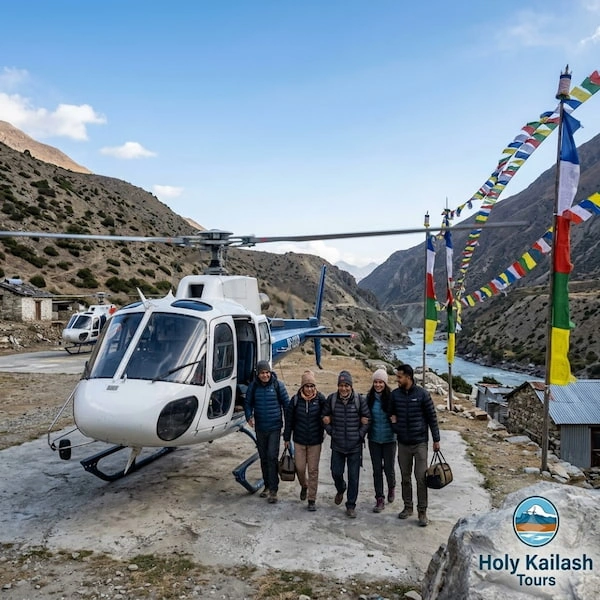
Holy Kailash Tours builds every itinerary around proper acclimatization first, mystery second. That means structured rest days before the Kora, medical checks along the route, and guides who know the difference between normal altitude fatigue and something that needs immediate attention. The legends matter, and the team knows every one of them, but they won't let a good story get in the way of your safety at 18,000 feet.
If you're drawn here for the spiritual weight of the place, that's real and worth taking seriously. If you're drawn here out of curiosity about compasses spinning and clocks running fast, that's fine too, plenty of pilgrims start skeptical and leave with questions they didn't expect to carry home.
Either way, the practical side, permits, altitude planning, route logistics, needs to be handled by people who've walked this ground before. That's the part faith alone can't cover.
Final Thought
Mount Kailash Mansarovar yatra doesn't need embellishment. The rivers it feeds, the faiths it anchors, the summit nobody has touched, all of that is true without a single exaggeration added.
What keeps people coming back, year after year, faith after faith, isn't that every mystery here has been solved. It's that so many of them haven't, and the mountain seems entirely unbothered by our need for an answer.
Walk the Kora once, and you'll understand why explanations feel almost beside the point once you're standing there.
FAQs
Why has no one climbed Mount Kailash?
Climbing is prohibited out of respect for its sacred status across Hinduism, Buddhism, Jainism, and Bon, and the Chinese government enforces this restriction. Several respected mountaineers, including Reinhold Messner, have declined the chance to attempt it on ethical grounds.
What is the best time for the Kailash Mansarovar Yatra?
The main season runs from May through September, with June and September generally offering the most stable weather. July and August bring the monsoon to lower elevations along the route, so conditions can shift quickly.
Is the Kailash Kora difficult?
Yes. The full circuit covers roughly 52 kilometers over three days, crossing the Dolma La pass at over 18,000 feet. Proper acclimatization beforehand makes a significant difference in how manageable it feels.
What causes the reported magnetic and time anomalies near Kailash?
Mineral-rich rock deposits likely explain most of the compass disturbances, while altitude, cold, and exhaustion account for a large share of the reported time distortion. Not every detail in every account has a confirmed scientific explanation yet.
Do you need to be religious to do the Yatra?
No. Many trekkers join for the challenge, the landscape, or general curiosity about the mountain's reputation, while pilgrims make the journey for religious reasons.
Email: [email protected]
WhatsApp: +977-9851254672 — Feel free to reach out anytime for fast, friendly, and personalized assistance.