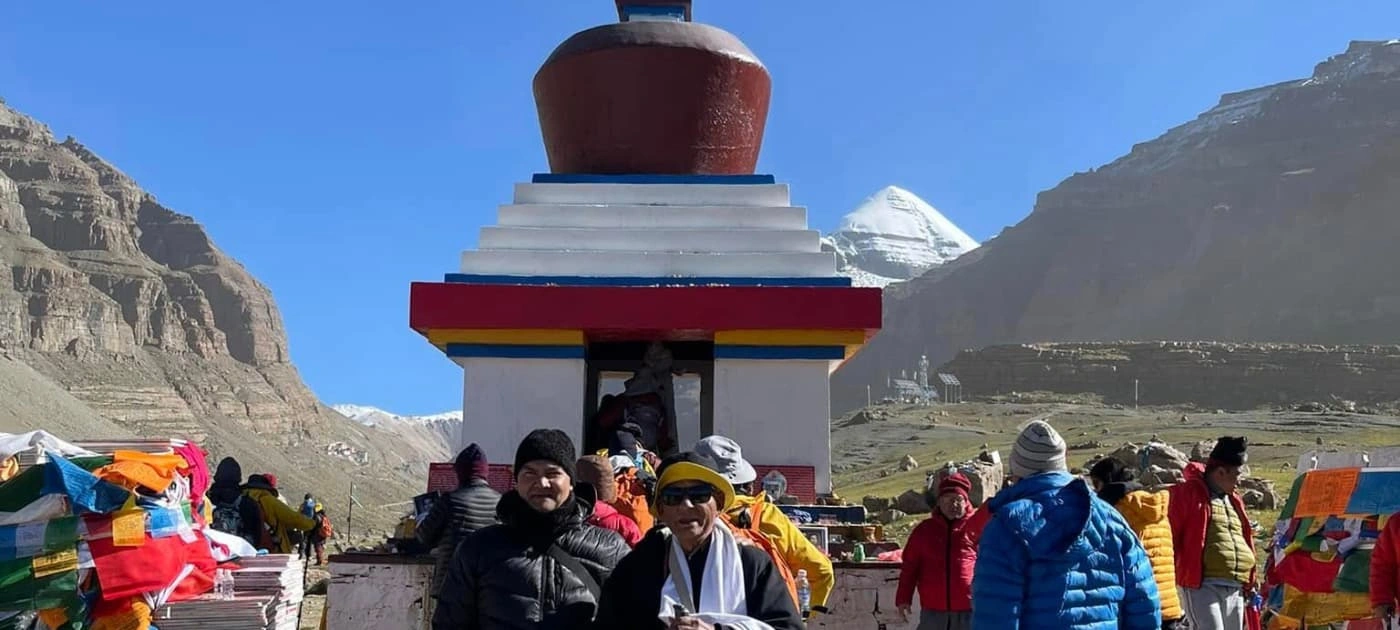
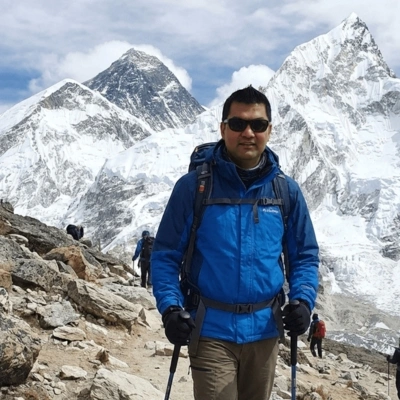
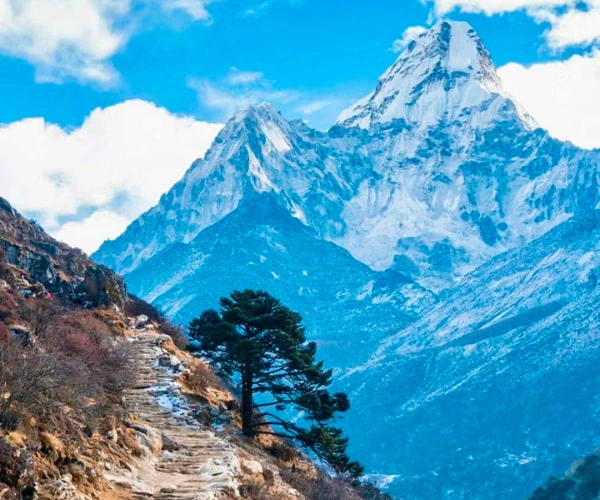
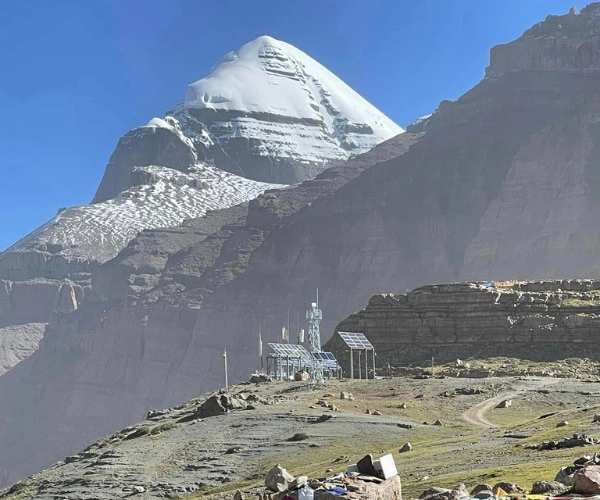
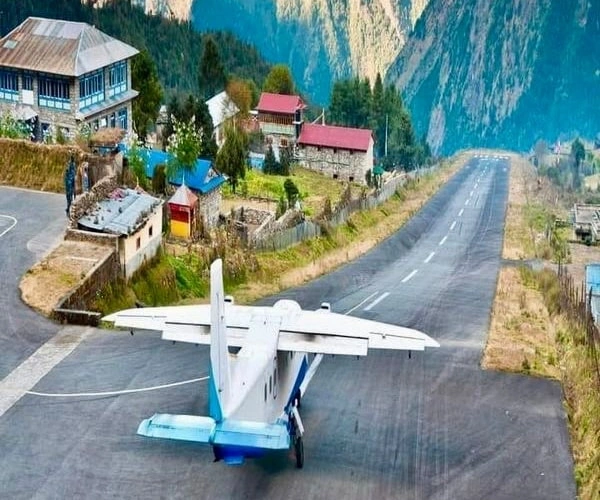
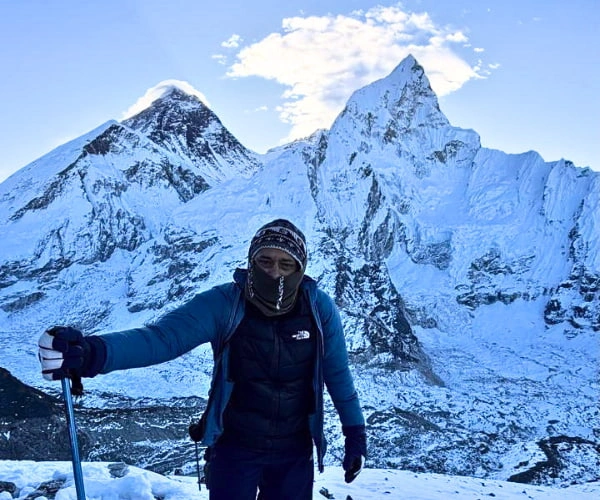
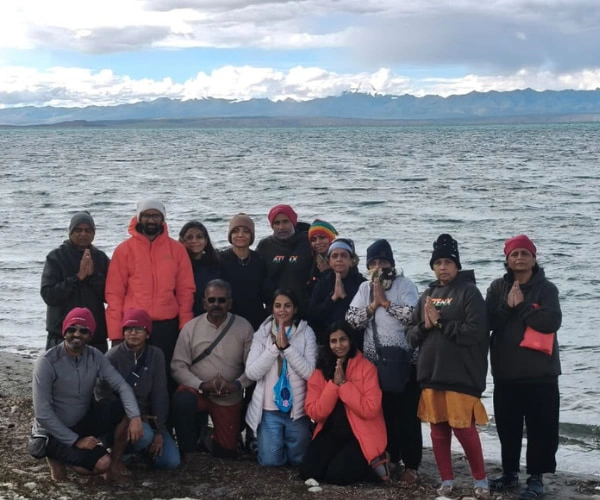
The Kailash Mansarovar Yatra is a Himalayan spiritual adventure site that mixes devotion with cultural enlightenment, taking on a pretty epic altitude challenge. The journey leads pilgrims from Nepal all the way to Mount Kailash and the sacred Mansarovar Lake in Tibet, China. So you've to thoroughly prepare your time, work on the physical aspects of your body getting used to the high altitudes, and this will actually come in mighty handy. Be ready mentally and physically, and get good travel companions that you trust.
What's the Reason Behind the Spiritual Significance of Mount Kailash to Pilgrims?
"Kailash Mansarovar Yatra"
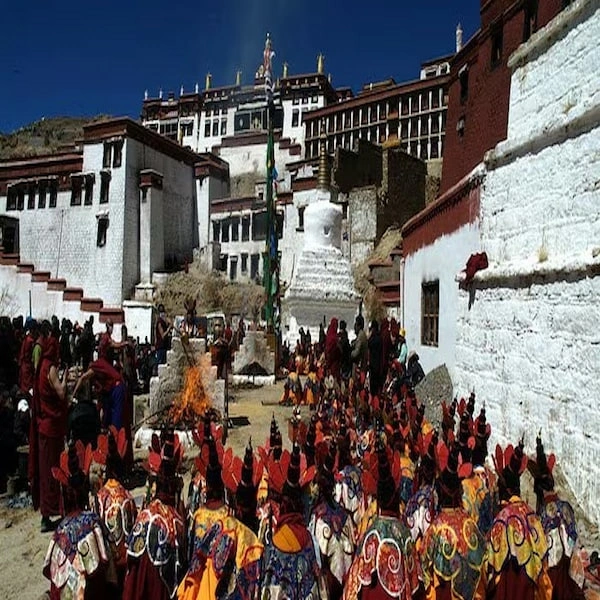
The Mount Kailash Mansarovar Yatra means something a little different depending on who's walking it. Hindus consider Kailash the seat of Lord Shiva, the place he sits with Parvati in eternal meditation. Buddhists know it as Kang Rinpoche and treat it as the home of Demchok, a wrathful deity who represents supreme bliss, and they see the mountain as the literal center of the universe.
Jains hold that Rishabhanatha, the first Tirthankara, reached enlightenment here, and they call the region Ashtapad. Followers of Bon, Tibet's oldest faith, believe the mountain is Tise, home of the sky goddess, and their tradition predates Buddhism's arrival in the region entirely.
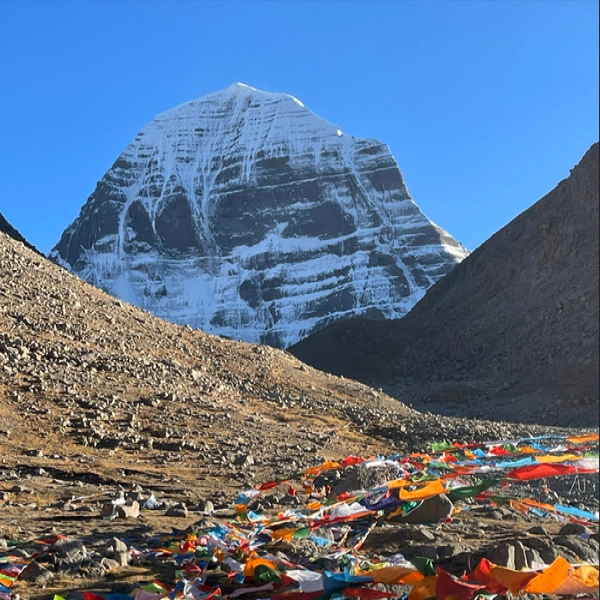
No one has ever recorded a summit of Mount Kailash, and Chinese authorities do not permit climbing attempts on the peak. That untouched status matters to pilgrims. It keeps the mountain exactly as scripture describes it: a place you walk around, not up.
Separate from the government route and standard private tours, Isha Foundation runs its own guided batches, often marketed as the Sadhguru Kailash Mansarovar Yatra 2025 and 2026 editions, with Sadhguru himself leading satsang sessions during the trip. It's a distinct program with its own registration process, not something you book through a general tour operator.
Understanding the Spiritual Value of Lake Mansarovar
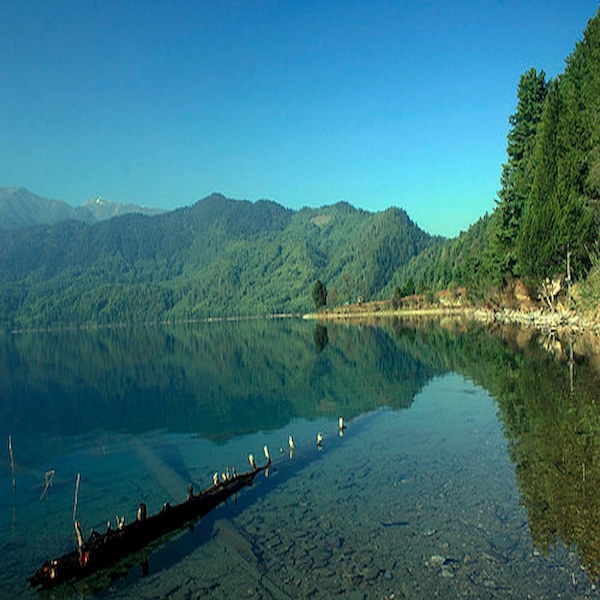
Mansarovar comes from the Sanskrit "Manas" and "Sarovar," meaning lake of the mind. Hindu texts say Lord Brahma first formed the lake in his mind before it appeared on earth, which is why pilgrims treat a dip in its water as a way to wash away accumulated karma. Buddhist tradition adds its own layer: Queen Maya, mother of the Buddha, is said to have bathed here before his birth, so Buddhist pilgrims circle the lake as an act of purification too.
Right next to Mansarovar stands Rakshastal, a saline lake with a darker reputation tied to the demon king Ravana. The two lakes sit almost touching, yet one is described as luminous and the other as forbidding. Pilgrims on the Mansarovar Kailash Yatravisit Mansarovar for puja and a holy bath; almost none go near Rakshastal.
Choosing the Right Time to Visit Kailash Mansarovar
"Kailash Mansarovar Yatra"
The yatra runs from May through September only. Snow and sub-zero temperatures close every route from October to April, so tour operators simply don't run trips then. Late May into June gives you the clearest skies and the most stable weather, which is why most first-time and older pilgrims prefer this window. This period also lines up with the Saga Dawa festival at Tarboche, when local Tibetans gather at the base of Kailash for one of the year's biggest religious events.
August brings monsoon rain to the Nepal-side routes, which can slow down river crossings, though established operators still run trips through it. September offers a quieter alternative with sharp, clear post-monsoon visibility, good for pilgrims who want fewer crowds and a more reflective pace.
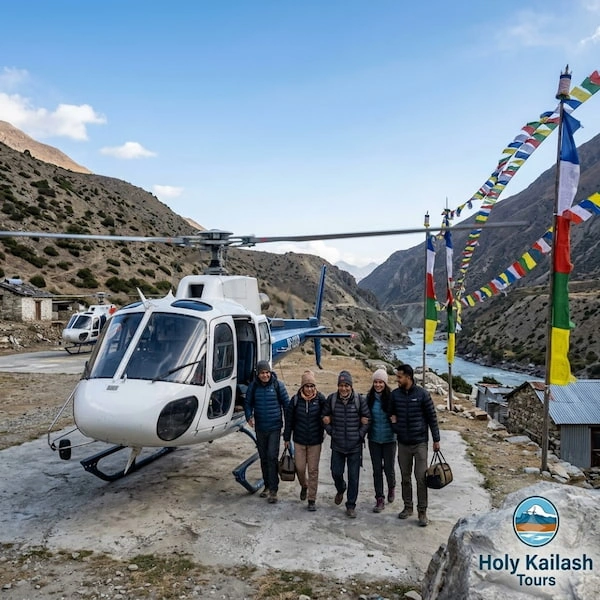
Kathmandu is the main gateway for anyone not going through India's government-run yatra. From here, pilgrims reach Kailash Mansarovar three ways: a road journey across the Nepal-Tibet border overland, Kailash Yatra via Lhasa, or a Kailash Yatra by helicopterride through Simikot and Hilsa. All routes work well for a Kailash Mansarovar Yatra from India booking when you didn't get picked in the Ministry of External Affairs lottery, and they work just as well for a Kailash Mansarovar Yatra from USA or Europe booking, since Nepal-based operators handle the Chinese group visa and Tibet permits directly.
This route has grown into the most flexible way to do the yatra to Kailash Mansarovar, because you're not tied to a government lottery or a fixed national quota. You book with a private operator, pick your season, and go.
Kailash Mansarovar Religious Tour: The Route from Kathmandu
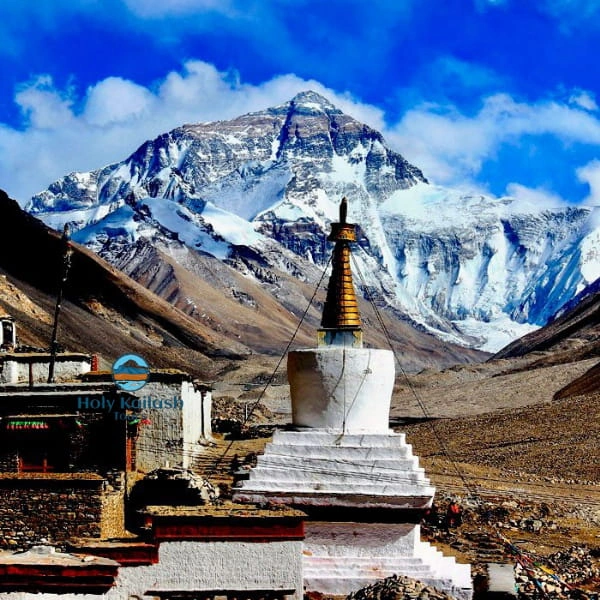
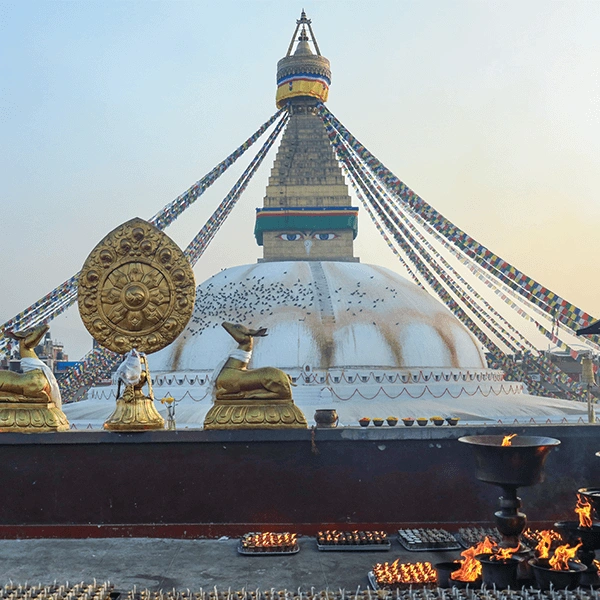
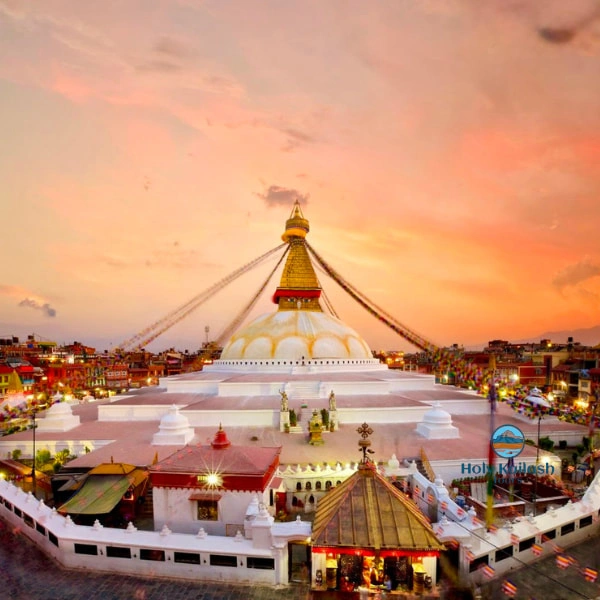
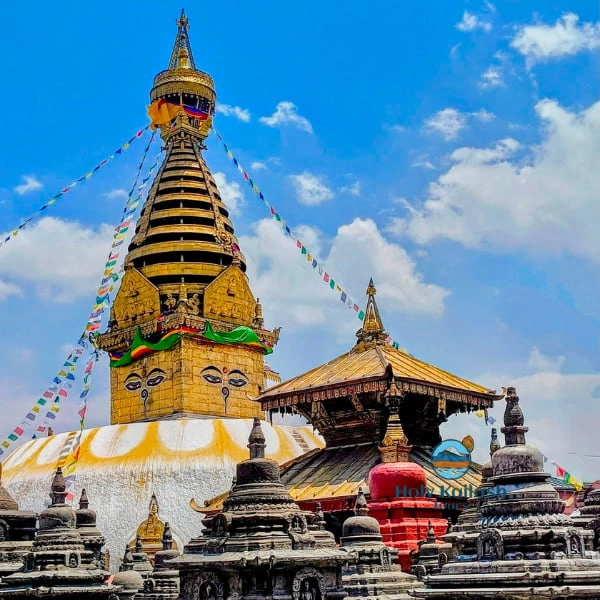
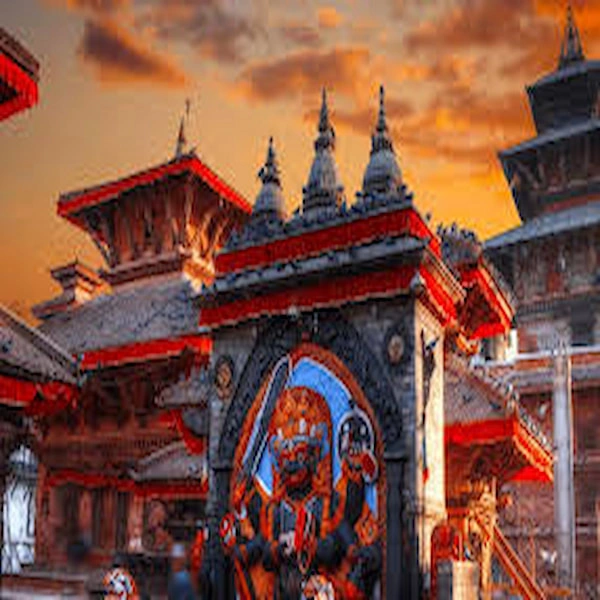
The Kailash Mansarovar overland journey usually opens with two or three days in Kathmandu Valley, visiting Pashupatinath, Boudhanath, and Swayambhunath to prepare spiritually before the harder part of the trip begins.
From there, you drive north through Syabrubesi to the Rasuwagadhi border post, cross into Tibet, and reach Kerung (also spelled Kyirong), where most groups rest a night to start acclimatizing.
From Kerung, the road runs through Saga and then along the shore of Lake Mansarovar itself, with Rakshastal and the peak of Gurla Mandhata visible along the way. The final stretch brings you to Darchen, the small town that serves as base camp for the Kailash Kora.
Overland Tour Plan of the Kailash Mansarovar Pilgrimage
"Kailash Mansarovar Yatra"
A typical overland Kailash Mansarovar yatra package runs 12 to 14 days, and the extra days usually go toward acclimatization rather than sightseeing. After Kathmandu and the border crossing, groups spend a rest day in Kerung, then push on to Saga, then to Lake Mansarovar for puja and a ritual bath, then to Darchen. The three-day kora happens next, followed by the return drive to Kerung and back to Kathmandu, sometimes with an added loop through Lhasa if the package includes it.
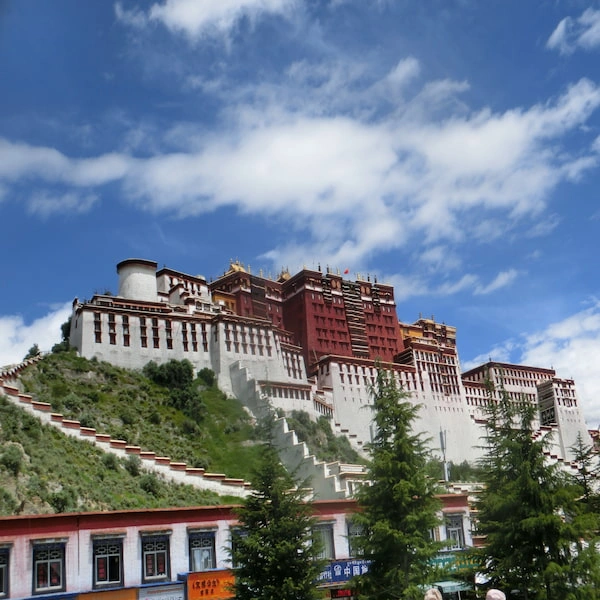
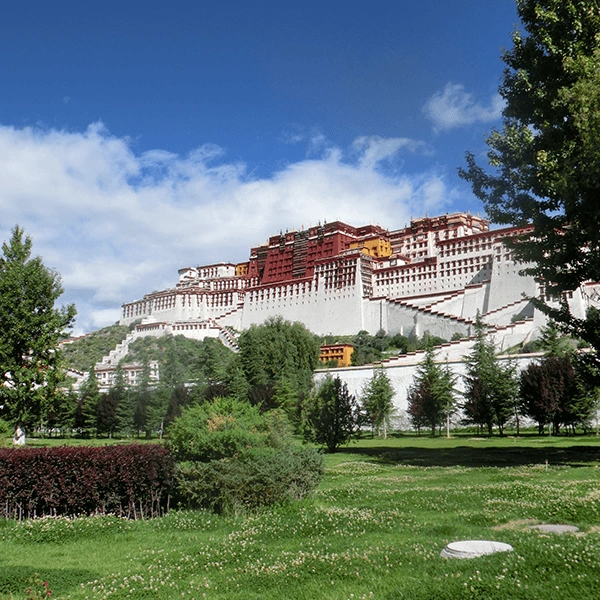
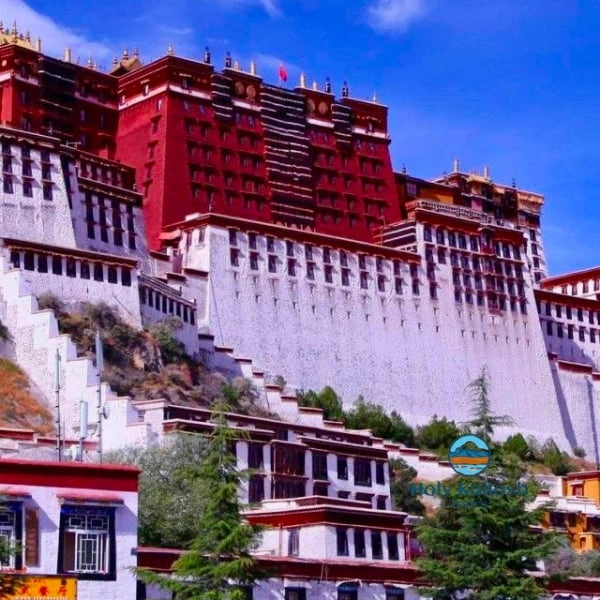
A Kailash Mansarovar Yatra tour built around rest days, rather than driving distance, is what actually gets pilgrims through the kora comfortably. That's the principle Holy Kailash Tours builds every itinerary on, since altitude, not mileage, is what actually breaks a trip. A shorter 13-day version skips the Lhasa extension; an 18-day version adds it back in for pilgrims who want to see the Potala Palace and Jokhang Temple as well.
Kailash Mansarovar: Mounting a Pilgrimage with a Helicopter
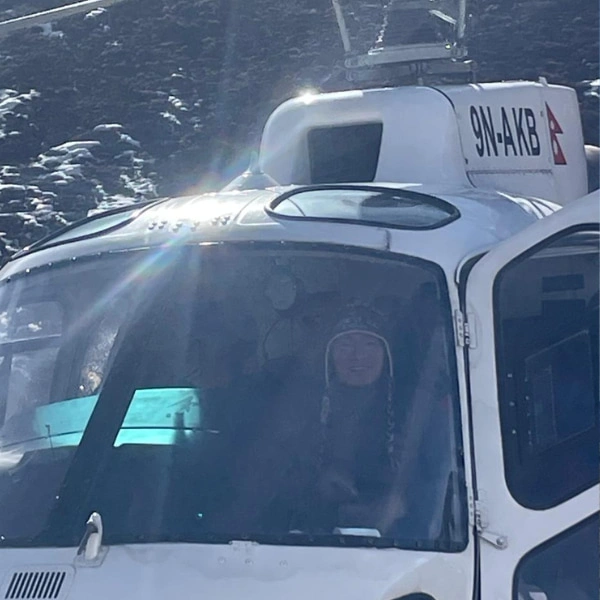
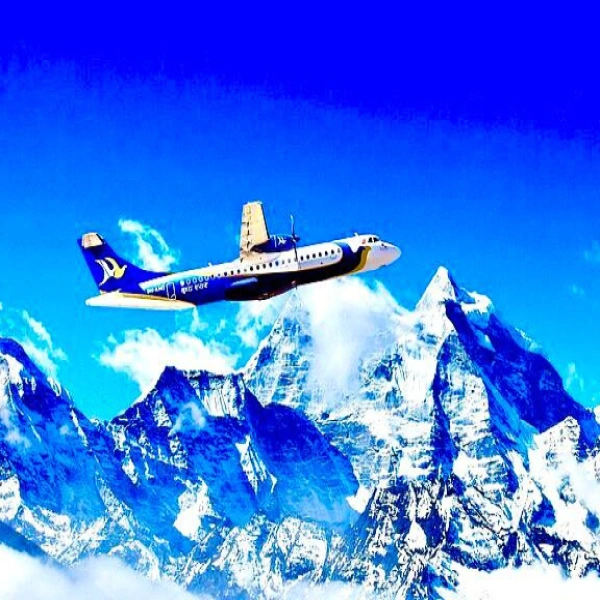
A Kailash Mansarovar Yatra by helicopter compresses the journey into 9 to 11 days. You fly from Kathmandu to Nepalgunj, then from Nepalgunj to Simikot, and then take a short helicopter ride from Simikot to Hilsa right on the Nepal-Tibet border. From Hilsa it's a road journey into Purang and on to Lake Mansarovar and Darchen.
This option runs anywhere from roughly USD 3,700 to 6,000, or about INR 2.5 to 3.5 lakh depending on the operator and departure city. For many working professionals, a helicopter Kailash Mansarovar Yatra is the only realistic way to fit this trip into a two-week vacation, and it suits older pilgrims who'd rather skip several days of rough road travel too.
The trade-off is real, though: it's the priciest option, the Simikot-Hilsa helicopter leg is weather-dependent and can get delayed by a day or two, and you get far less time to acclimatize before reaching altitude.
How Many Days Would the Kailash Mansarovar Mountain Be Completed?
There's no single answer, since it depends entirely on your route. The helicopter option finishes in 9 to 11 days. The Nepal-Overland route via Kerung takes 13 to 18 days. The kora itself, the walk around the mountain, takes most people two to three days on foot regardless of which route brought them to Darchen.
The Kailash Kora, also called the Parikrama, is a 52-kilometer loop around the base of the mountain, walked clockwise by Hindus, Buddhists, and Jains and counterclockwise by Bon practitioners.
Most pilgrims complete it over three days, starting and ending at Darchen, at roughly 4,560 to 4,670 meters. Local Tibetans sometimes do the whole circuit in a single day, but that pace isn't realistic for most visitors coming from sea level.
Tradition holds that one full kora clears the sins of this lifetime and that 108 circuits bring liberation. Whatever your belief, walking this Mt. Kailash Mansarovar Yatra kora is physically serious business: you're circling a mountain at altitudes where every step takes real effort.
Dolma La Pass: One of the Most Difficult Sections of the Kora
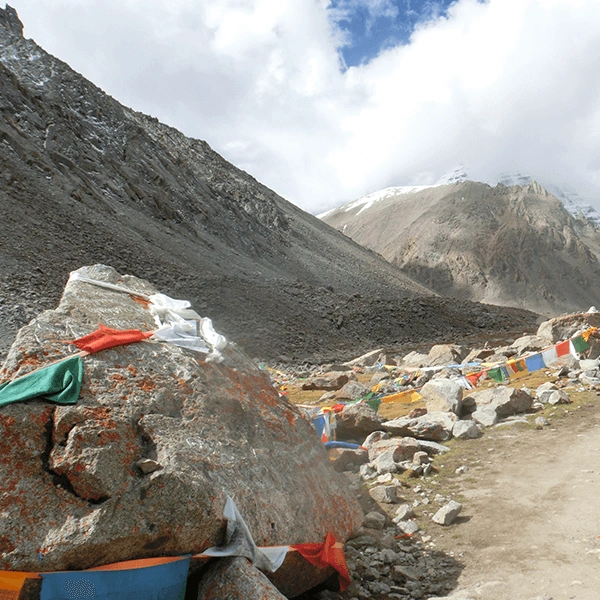
Dolma La stands at 5,630 to 5,643 meters and marks the highest point of the entire kora. Pilgrims typically leave Dirapuk before dawn, around 5 or 6 a.m., to cross before high winds pick up later in the day. The final approach includes a stretch locals call the "hell slopes," about three kilometers of steep, loose gravel that's genuinely tough on tired legs.
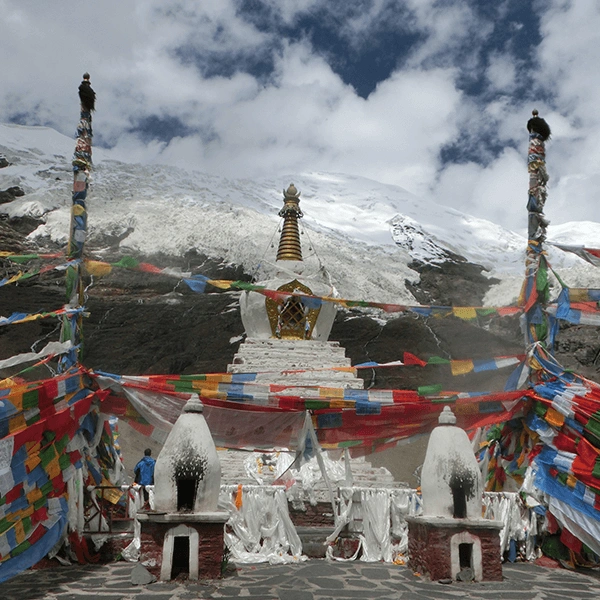
At the top, prayer flags cover almost every surface, and many pilgrims leave a coin, a piece of clothing, or a lock of hair as an offering. Just past the summit sits Gauri Kund, known as the Lake of Compassion in Hindu tradition. The descent from Dolma La toward Zuthulpuk is steep and loose underfoot for the first stretch, so trekking poles earn their keep here.
Darchen, Dirapuk, and Zuthulpuk as Pilgrimage Stops on the Kailash Kora
Darchen is where the kora begins and ends, a small settlement with guesthouses, basic shops, and your last real comfort before three days on foot. Day one covers about 13 kilometers to Dirapuk Monastery at 5,210 meters, a gentle uphill walk through the Lha Chu valley that gives you the best close-up views of Kailash's north face, including what guides call the "silver Kailash" at night and "golden Kailash" at sunrise.
Day two is the hard one: roughly 18 to 22 kilometers over Dolma La and down to Zuthulpuk Monastery at 4,790 meters, a stretch that takes most pilgrims 9 to 11 hours. Day three is the easy day, a 3- to 4-hour walk of about 14 kilometers back down to Darchen, where a hot meal and a real bed feel like the biggest reward of the trip.
Lake Mansarovar and Its Place Beside the Sacred Sites of Tibet
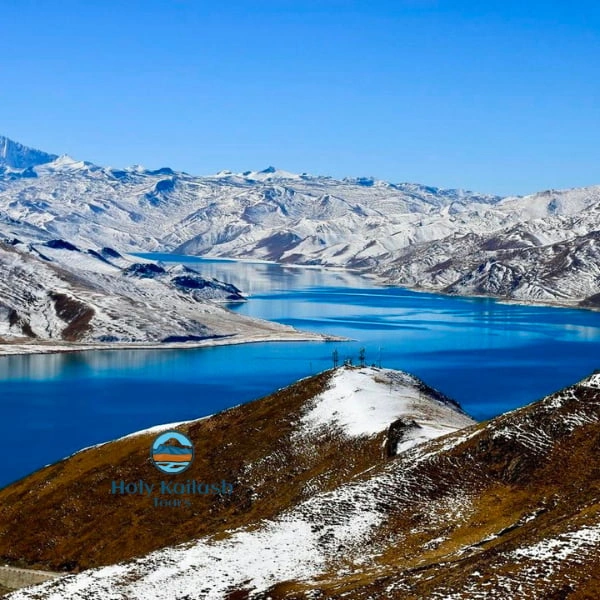
Lake Mansarovar is at roughly 4,590 meters and covers about 320 square kilometers, making it one of the highest freshwater lakes on earth. It's worth clearing up a common mix-up here: Mansarovar has no geographic link to India's Kumbh Mela, which takes place thousands of kilometers away at Haridwar, Prayagraj, Nashik, and Ujjain. What the two do share is purpose. Both draw pilgrims for the same reason, a ritual bath believed to cleanse the soul of accumulated sin.
The lake's darker neighbor, Rakshastal, is sometimes loosely called a "lake of the dead" in local legend because of its association with Ravana and negative energy, but Mansarovar Lake carries no such reputation. It's the opposite: pilgrims describe it as the most serene, clear water they've ever stood beside, and the puja performed on its shore is one of the emotional high points of the entire yatra.
Getting a Permit to Travel in Tibet: Pilgrimage to Kailash Mansarovar
On the Kailash Mansarovar Yatra, on the China side of the border, the whole belt is treated as a restricted military zone, so independent travel isn't an option here, no matter your nationality. Every pilgrim needs a Tibet Travel Permit, an Alien's Travel Permit for the border areas, and a Military Permit specific to the Kailash-Mansarovar zone, since it is close to the India-Nepal-China frontier.
Most nationalities also need a Chinese Group Tourist Visa, arranged through a Kathmandu-based agency, though citizens of several European countries, Australia, New Zealand, Japan, and a handful of others can enter with just the Tibet Travel Permit.
If you're arranging a Kailash Mansarovar Yatra from Tibet's Nepal-border side rather than through the Lhasa route, your tour operator handles all of this as a package, usually within three working days once your passport and documents are in hand.
Travel Requirements for Pilgrims to Kailash Mansarovar
You'll need a passport valid for at least six months beyond your travel dates, several passport-sized photos on a plain white background, and a medical fitness certificate from a licensed doctor confirming you're fit for high-altitude travel. Most operators also ask for a signed medical self-declaration listing any pre-existing conditions, since heart and lung issues carry real weight in this environment.
How Much Does a Pilgrimage to Kailash Mansarovar Cost?
Kailash Mansarovar Yatra cost is the question everyone asks first and fairly, since it swings widely depending on route and comfort level. A basic Nepal overland package via Kerung runs from around USD 2,600 to 2,900 for a no-frills group departure, and can climb to USD 4,500 to 7,500 for smaller groups, better hotels, or a Lhasa extension. The helicopter route sits higher, typically USD 3,700 to 6,000, or roughly INR 2.5 to 3.5 lakh. If you're chasing the cheapest Kailash Mansarovar Yatra option, this overland Kerung route booked into an existing fixed-departure group is usually it.
A large share of every package goes straight to Tibetan authorities as permit and tourism fees, which is why quotes are often given in USD even for Indian operators. Kailash Mansarovar Yatra 2026 packages from private operators are already open for booking, well ahead of the government's own registration window, and established names like Kesari Tours run fixed departures each season alongside regional Nepal-based agencies.
Type Kailash Mansarovar Yatra Kesari Tours into a search bar, and you'll find them listed as one of the older, more established Indian operators on this route, alongside newer specialists like Holy Kailash Tours. When you're comparing Kailash Mansarovar Yatra and other best tour operators, price alone won't tell you much, since a dramatically cheap quote almost always means something's been left out. Ask exactly what it excludes before you book.
Much of the drive across the Tibetan plateau runs on the paved Friendship Highway, but stretches near Saga and the high passes can still be rough, dusty, and slow. Expect travel days of 6 to 10 hours in a shared land cruiser or small bus, crossing passes like Mayum La along the way. Facilities are basic once you're past Kerung: simple guesthouses, shared bathrooms, and food that leans toward Tibetan and Nepali staples rather than variety.
Weather changes fast at this altitude, and a clear morning can turn into wind and snow flurries by afternoon. Good operators build buffer time into the schedule for exactly this reason, since a single closed pass can shift the whole itinerary by a day.
Affected by Altitude and Acclimatization while on Pilgrimage
Nearly every stop on this yatra sits above 4,500 meters, and Darchen itself is higher than most trekking base camps in Nepal. That's why a well-built itinerary includes rest days at Kerung and Saga before you ever reach the kora, giving your body time to adjust to thinner air gradually rather than all at once. Skipping these rest days to save a day or two of travel is one of the most common mistakes we see, and it's almost always the reason a pilgrim struggles later on the trail.
Getting Yourself Physically Ready for the Pilgrimage to Kailash Mansarovar
Start training two to three months out. Walking or hiking with a loaded daypack a few times a week builds the leg strength and stamina you'll actually use on Dolma La, and general cardio work, whether that's brisk walking, cycling, or stairs, helps your body handle low oxygen better than any gym routine focused purely on strength.
We get asked to compare the Amarnath Yatra and Kailash Mansarovar a lot, and if you've already done Amarnath, the altitude and stamina work will already feel familiar, since your body has been through something similar before.
Get a full medical checkup before you commit, particularly if you have any history of heart or lung issues, since the fitness certificate requirement exists for good reason.
Altitude Sickness: Signs, Symptoms, and How You Can Avoid It?
Acute mountain sickness shows up as headache, nausea, dizziness, fatigue, and trouble sleeping, usually within a day of reaching a new altitude. A headache at 4,500 meters is not something to shrug off as normal; it's the first sign your body is struggling to keep up. Left unaddressed, AMS can progress into high-altitude pulmonary edema or high-altitude cerebral edema, both serious and both treated with immediate descent.
Prevention starts with ascending gradually and never sleeping at a higher altitude while symptomatic. Staying well hydrated, eating smaller and more frequent meals, and avoiding alcohol all help your body cope.
Many pilgrims start a course of acetazolamide (Diamox) a day or two before reaching altitude, on their doctor's advice, since it speeds up acclimatization by changing how your blood carries oxygen.
Portable oxygen canisters are widely available in Kathmandu and along the Tibet route and are worth carrying for genuine peace of mind, especially for older pilgrims or anyone with a history of breathing trouble.
Items You Need to Pack While Going for Pilgrimage to Kailash Mansarovar
Layer your clothing rather than relying on one heavy coat: a moisture-wicking base layer, a warm mid-layer, and a windproof, waterproof outer shell cover the wide temperature swings between a sunny midday and a freezing dawn crossing of Dolma La.
On footwear, people ask us constantly what the best shoes for Kailash Mansarovar Yatra actually are, and the answer is simple: broken-in, ankle-high waterproof hiking boots with real ankle support. Brand-new boots on a three-day kora is a recipe for blisters at the worst possible moment, so wear yours on a few practice hikes first.
Beyond clothing, pack trekking poles, a warm sleeping bag liner, sunscreen and sunglasses rated for high UV exposure, a headlamp, a basic first-aid kit with any personal medications, water purification tablets, and cash in small denominations since ATMs disappear once you leave Kathmandu. A portable oxygen canister and a couple of energy bars for the Dolma La crossing round out the list.
Are Elderly People Allowed to Take Part in the Pilgrimage?
Yes, within limits. The age limit for Kailash Mansarovar Yatra under India Passports holders is a strict 70 years as of January 1 of the travel year, along with a BMI cap and a mandatory medical exam at a government hospital. Private Nepal-based operators are generally more flexible, often accepting pilgrims up to 70, and occasionally with a strong medical fitness certificate and a doctor's sign-off.
Plenty of pilgrims in their late 60s complete this yatra successfully every single year. The real deciding factor isn't age on paper; it's cardiovascular health, blood pressure control, and a genuine two- to three-month period of physical preparation beforehand. For older pilgrims, we generally recommend the helicopter route, since it cuts out several days of rough road travel and multi-hour trekking.
Can First-Time Pilgrims Undertake the Kora Around Kailash?
Yes, and most people doing the Kailash Kora are first-timers. What matters more than prior trekking experience is honest physical preparation and a realistic sense of your own limits. Groups travel with a guide, support staff, and often a doctor or medic, and the pace is set to accommodate pilgrims of mixed fitness levels rather than the strongest walker in the group.
Porters, Ponies, and the Physical Toll of the Kailash Kora
The Kailash kora is genuinely demanding on the legs, and sore knees, blisters, and heavy breathing are normal by day two for almost everyone, not a sign anything's gone wrong. Porters and pony operators are available at Darchen to carry your main luggage or even carry you part of the way on horseback, which takes real pressure off tired legs on the longer stretches.
The one exception is Dolma La Pass; animals cannot cross it, so that final steep climb and the descent past Gauri Kund have to be done on your own two feet, whatever arrangement you've made for the rest of the route.
Rules and Behaviors that Pilgrims Must Follow While at Holy Places
Walk the kora clockwise, unless you're following the Bon tradition, which moves counterclockwise by custom. Never step on prayer flags; if you're hanging new ones, bend down and pass underneath existing lines rather than stepping over them.
Dress modestly, ask before photographing monks or local pilgrims, and keep noise down inside monasteries and near ritual sites. Climbing or touching the summit of Kailash Yatra isn't something any pilgrim does; the mountain is meant to be circled, not climbed, and that rule is respected without exception.
Expected Happenings During a Pilgrimage to Kailash Mansarovar
Expect a puja and a ritual bath at Lake Mansarovar, often at sunrise when the water is glass-calm and the surrounding peaks are reflected on its surface. Expect to see Kailash from several angles as you circle it, including the striking "silver" night view and "golden" morning view from Dirapuk.
Expect real physical exhaustion mixed with moments of genuine awe, sometimes within the same hour. Phone signal is patchy to nonexistent past Kerung, so tell your family in advance not to worry about silence for a few days. Most pilgrims describe a strong sense of group bond by the end, forged by shared discomfort as much as shared devotion.
How much does Kailash Mansarovar Yatra cost overall?
Depending on route and operator, expect anywhere from USD 1,600 for a basic overland package to USD 6,000 or more for a helicopter tour or premium departure.
Can I book a Kailash Mansarovar Yatra package from Delhi outside the government lottery?
Yes. Several agencies with a Delhi office sell seats on the Nepal overland and helicopter routes, which don't depend on the MEA draw at all, so a Delhi departure doesn't mean you're stuck waiting on a lottery result.
What is the cheapest way to do the Kailash Mansarovar yatra?
The overland route from Kathmandu via Kerung with a fixed-departure group tends to be the most budget-friendly option, since costs are shared across a larger group.
Is the Kailash Mansarovar yatra open to pilgrims from the USA?
Yes. Non-Indian pilgrims, including those from the US, book through Nepal-based operators who arrange the Chinese group visa and Tibet permits directly, since this route doesn't depend on India's MEA lottery.
Do I need to register for the 2025 or 2026 government yatra separately from a private tour?
Yes, completely separately. India's MEA yatra runs its own annual registration and lottery process through the government portal, while the Nepal overland and helicopter routes are booked directly with private operators like Holy Kailash Tours.
What are the best shoes for Kailash Mansarovar Yatra?
Waterproof, ankle-high hiking boots with a firm sole and good ankle support, broken in on at least two or three practice hikes before you fly out. Avoid anything brand new.
Is the Kailash Mansarovar yatra safe for someone in their late 60s?
Generally yes, provided blood pressure and heart health are good and a doctor has cleared high-altitude travel. The helicopter route is usually the more comfortable choice for senior pilgrims.
How is the Kailash Mansarovar yatra different from the Amarnath Yatra?
Amarnath is a shorter, India-based pilgrimage to a cave shrine in Kashmir, while Kailash Mansarovar is a multi-day international journey into Tibet involving Chinese permits, a full circumambulation of the mountain, and considerably higher, more sustained altitude exposure.
Which tour operators run reliable Kailash Mansarovar yatra packages?
Established names in this space include Kesari Tours and a number of Nepal-based agencies with years of fixed departures, alongside dedicated operators like Holy Kailash Tours who specialize specifically in this route.
If you're ready to put real dates against this plan, Holy Kailash Tours puts together Kailash Mansarovar Yatra packages and Kailash Mansarovar Yatratour packages across every route in this guide, from budget overland groups to helicopter departures, built around proper acclimatization rather than the fastest possible schedule. Reach out to us and we'll walk you through which option actually fits your fitness, your budget, and your season.
Note: Mount Kailash stands quiet and unclimbed in a corner of western Tibet, and yet it pulls people from four different faiths across a border, a border that was closed for five straight years.
After the 2020 shutdown, the Kailash Mansarovar Yatra 2025 season finally brought pilgrims back, and Kailash Mansarovar Yatra 2026 batches have already crossed into Tibet through Lipulekh and Nathu La.
Holy Kailash Tours, we've spent the last decade helping pilgrims sort through the real questions behind this trip: which route to pick, what it actually costs, how the permits work, and what your body needs to handle 5,630 meters. This guide answers all of it in plain language, so you can plan your Kailash and Mansarovar yatra with facts instead of guesswork.
Written by the Holy Kailash Tours travel desk, explore the Kailash Mansarovar yatra. What Is a Truly Sacred Pilgrimage Tour?
Email: [email protected]
Author: Ram Sharan Adhikari
WhatsApp: +977-9851254672 — Feel free to reach out anytime for fast, friendly, and personalized assistance.